Local weather advisory
Coastal Flood Advisory: Commercial Roof Help in Richmond
The National Weather Service has issued a coastal flood advisory covering Richmond. Heavy rain and drainage loading can expose roof leaks, blocked drains, and ponding water. This is a weather exposure advisory; it does not establish damage to a specific roof.
Do not access a roof during hazardous weather. Protect people first, avoid water near electrical equipment, and request roofing help when conditions permit.
National Weather Service · Updated Oct 28, 2026, 7:20 AM UTC
Commercial Roof Leak Repair in Richmond, CA
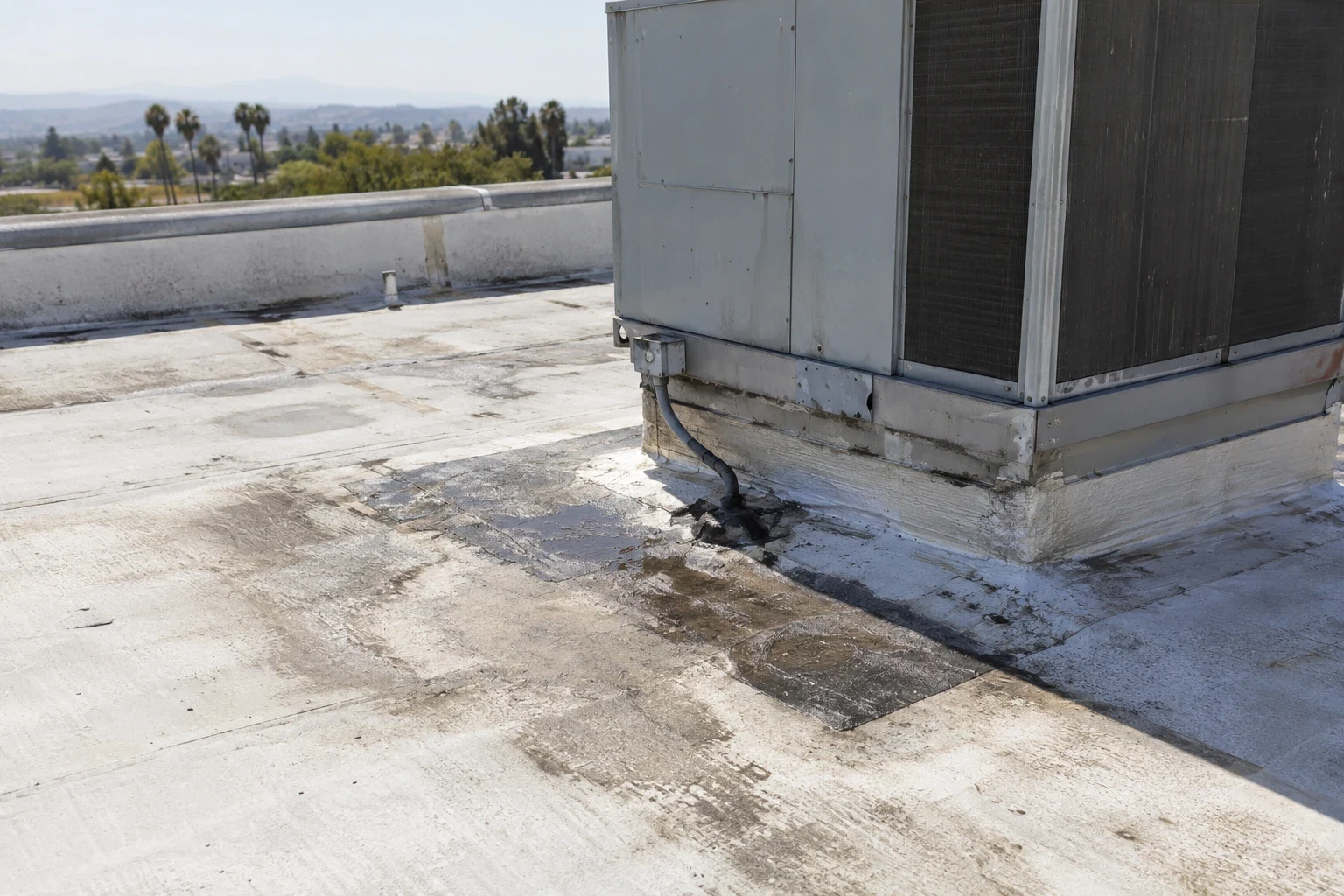
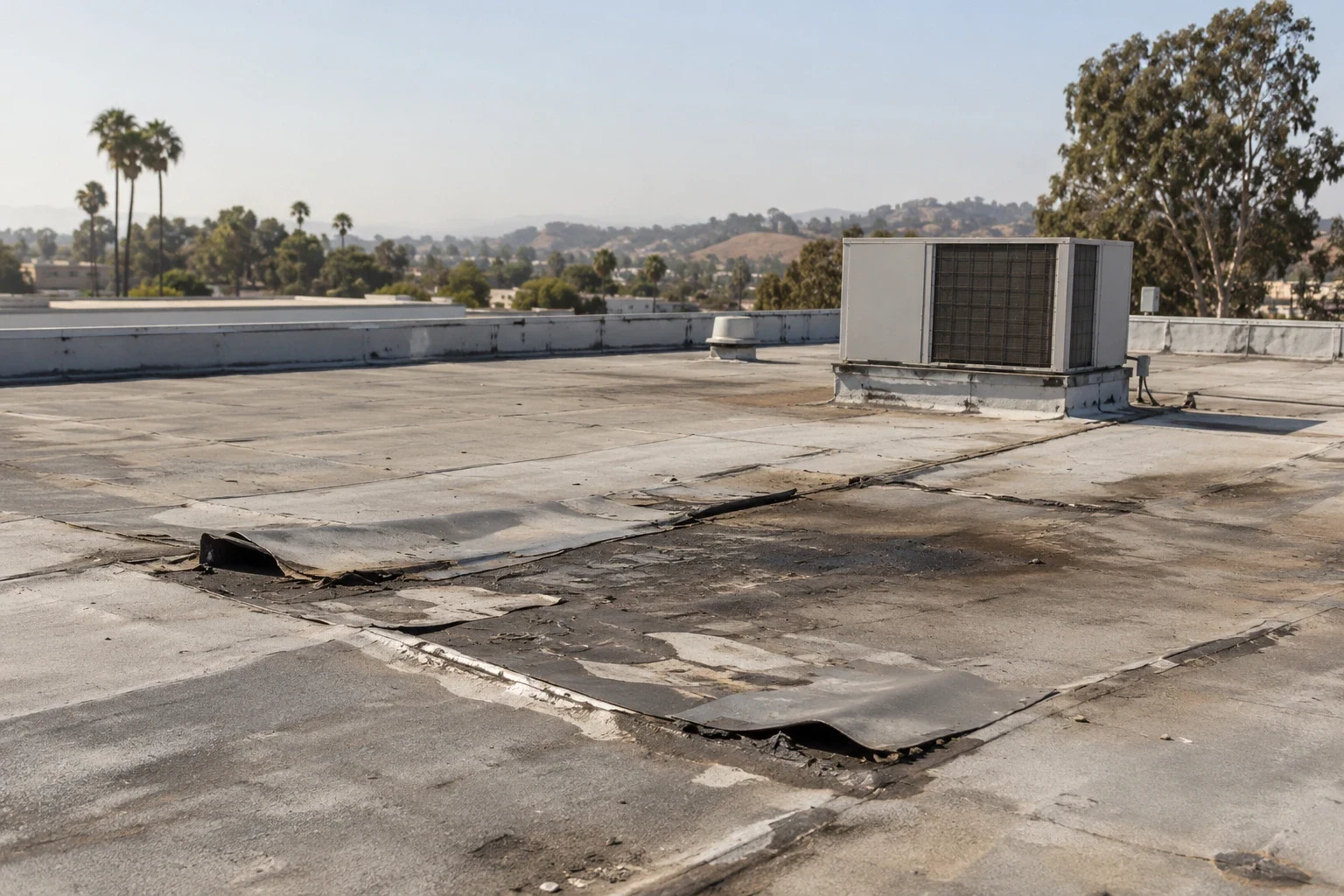
A drip over a ceiling tile in a Richmond medical office is rarely directly below the hole in the roof. Water gets in at a seam, a curb or a wall flashing, runs along the deck or the top of the insulation and comes through wherever it finds a gap. Leak repair starts by tracing that path back to its source, so the repair goes where the water actually enters instead of over the nearest spot that looks bad. We check the seams, flashing and equipment curbs in the area, and we tell you if the source turns out to be something other than the roof, such as a rooftop unit or a wall above the roof line.
A medical office leak also has to be worked around patients and staff. We need to know which rooms are affected, when we can get in to look at the ceiling and whether any rooftop equipment can be shut down if we need to work around it. At the Port of Richmond and other secured sites, we also plan around gate access and escort rules. We review any past repair records you have, then compare them with what is on the roof now. The goal is a repair that stops this leak for good, with a clear note on anything we could not reach.
Compare timing with the path
When the drip shows up tells us a lot. A leak that only appears in heavy, wind-driven rain points to different places than one that shows up when the air conditioning is running. Condensation from a rooftop unit or a clogged condensate line can look exactly like a roof leak from inside. Timing alone does not prove the source, but it tells us where to look first.
We pair that information with a roof inspection of the area above and around the drip: curbs, pipe boots, wall flashings, drains and nearby seams. Because water can travel several feet before it drips, the ceiling stain does not tell us where to cut or how much material to replace. If you have photos from earlier leaks, they help us see whether the pattern has changed. When equipment or stored material blocks the likely entry point, we say so and explain what has to move before we can confirm it. That is better than throwing another patch on the closest visible flaw and hoping it holds.
Check the insulation around the leak
An open seam can let water soak into the insulation well past the visible opening. Wet insulation loses much of its insulating value, can rot the cover board and can keep feeding leaks even after the surface is sealed. So before we set the size of the repair, we check how far the wet area actually goes, using core cuts or a moisture meter where needed.
We replace the wet material we find and leave dry material in place. If we open the roof and find more damage than expected, we stop, show you the photos and the new measurements, and get your approval before the scope changes. The roof stays sealed and watertight while you decide. A new seam laid over wet insulation only hides the problem, and it often fails again within a season or two. Measuring the wet area first means you are comparing estimates that fix the whole leak, not a low bid that patches the surface and leaves soaked material underneath. Disposal of the old material and the new insulation are part of the price from the start.
Fix the detail that failed
Older patches can hide what kind of membrane is actually on the roof, and not every repair material bonds to every membrane. We identify the existing roof and look at how the leaking detail was built before choosing materials. An EPDM roof repair, for example, needs EPDM-compatible primers, tapes and flashing. Using a product made for a different membrane because it looks close enough is a common reason repairs fail.
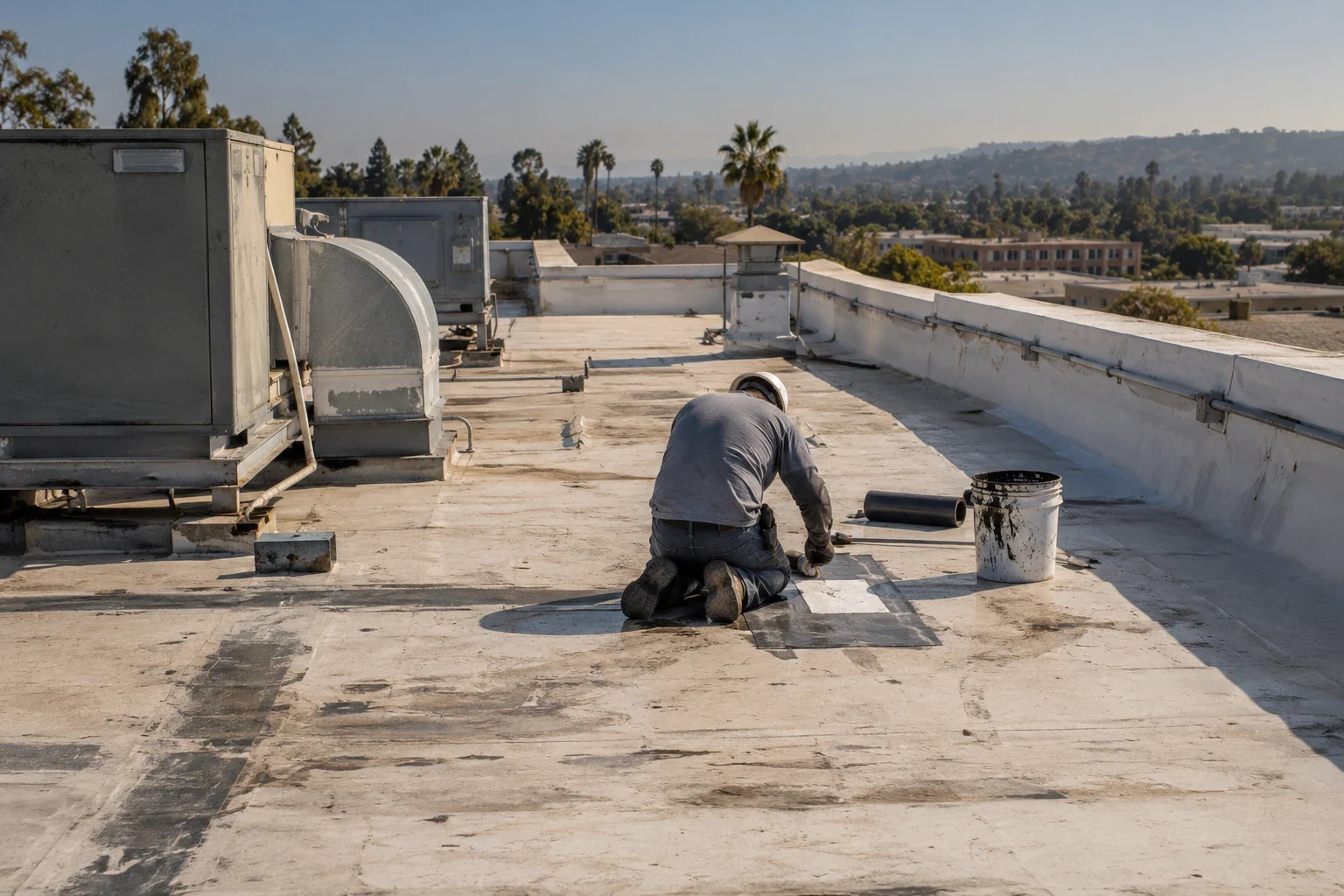
The estimate should say exactly what the repair includes. Resealing a short section of open seam is a small job. Rebuilding a failed flashing around a curb or at a wall is a bigger one, with more labor and more parts, even if the leak looks about the same size from inside. We test new seams after they are welded or taped. If the leak is at an equipment curb and the unit has to be lifted or disconnected first, we coordinate that with your mechanical contractor. Until the unit is moved and the curb is flashed, that leak is not fixed, no matter how much other work is done nearby.
Separate protection from repair
Sometimes a leak needs to be stopped today and fixed properly later. If the right materials are not on hand or the weather will not allow a proper repair, we make a temporary seal over the opening to keep water out. An emergency roof repair like that buys time, but it does not dry out wet insulation or repair the flashing underneath.
We list temporary work separately from the permanent repair, so nobody mistakes a tarp or a quick patch for a finished job. The permanent fix may depend on other people. A mechanical contractor may need to move a unit, a tenant may need to clear a room so we can work above it, or a wall may need repair before new flashing can attach to it. We sort out who does what before we lock in a date. Having the parts delivered does not help much if the unit is still sitting on the curb. On older buildings near the Richmond Inner Harbor and Cutting Boulevard, we often trace leaks from the ceiling back through several generations of seams, curbs and wall flashings before we find the one that is actually letting water in.
Keep a record of the fix
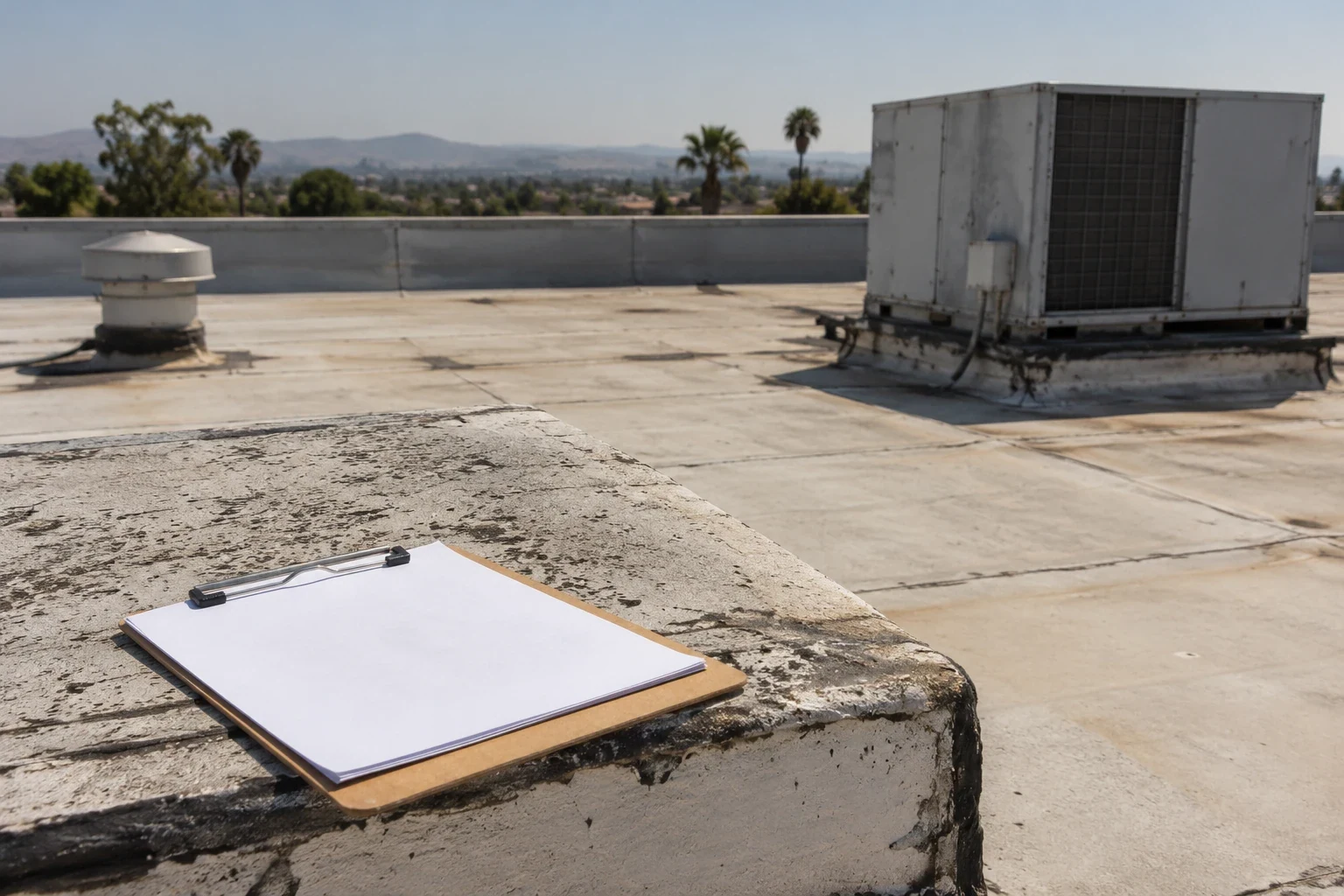
Once the permanent roof repair is done, you should have a record of what was fixed and where. For Port of Richmond buildings, we also note which roof section was repaired and any work that still belongs to another trade, such as equipment that was not moved. Please give us a site contact who can unlock the rooms and roof access we need, so the visit does not stall at a locked door.
Our records show when the leak was reported, where we looked, what we found and what we repaired, with photos of the damaged area and the finished work. If another leak appears later, you can check right away whether it is coming from the area we repaired or from a different part of the roof. Areas we did not inspect are labeled that way, so the record does not suggest the whole roof was checked. If the roof has a manufacturer warranty, check its repair terms, because some require approved contractors or specific materials. Your record should show what was fixed and what still needs attention.
Commercial Roofing Questions
How do you find where a ceiling leak is coming from?
We start with when and where the drip shows up, then check the seams, curbs, flashing and drains above and around it. Water often travels before it drips, so the source can be several feet away from the stain.
Does the size of the hole tell you how much insulation to replace?
No. Water can soak insulation well past the opening. We check the wet area with cores or a moisture meter and replace only what is actually wet.
What happens after a temporary leak patch?
The temporary seal keeps water out while we schedule the permanent repair. We list it separately so everyone knows the flashing or seam underneath still needs a proper fix.
What if the roof leaks again after a repair?
Our repair record shows exactly what we fixed and where. We compare the new leak with that record to see whether it is the same spot or a new problem somewhere else.





Tell us where it is leaking and how we can get to the roof