Roof Recover and Overlay in Richmond, CA
A retail roof covered in old seam repairs can look like a good candidate for a recover, where a new membrane goes over the existing roof instead of tearing it off. Sometimes it is. But if the insulation underneath is wet, or the HVAC curbs are already short, laying a new roof on top can cause more problems than it saves. Before recommending a recover, we check what is under the existing membrane and how much room is left at the curbs, edges and drains.
On a shopping center roof, we also look at where material can be hoisted and how the crew will work around storefronts and customer parking. A recover saves money mainly on tear-off and disposal, so those savings are real only if the old roof is sound enough to stay. We take cores, run moisture checks and look at the existing seams and details, then give you a straight comparison between recovering and replacing. Building codes also limit how many roofs can be stacked on one deck, so we confirm how many layers are already up there.
Check the layers staying
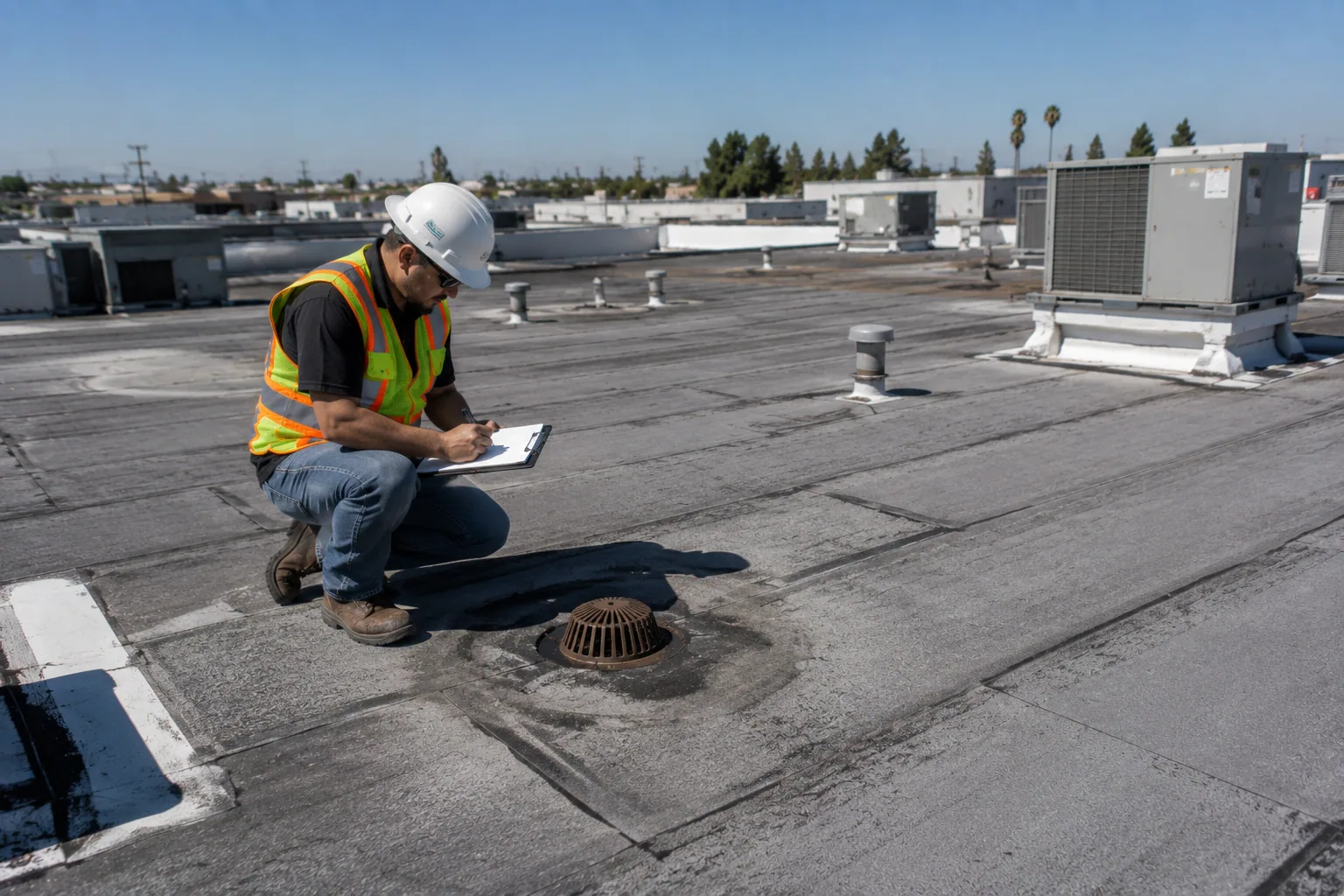
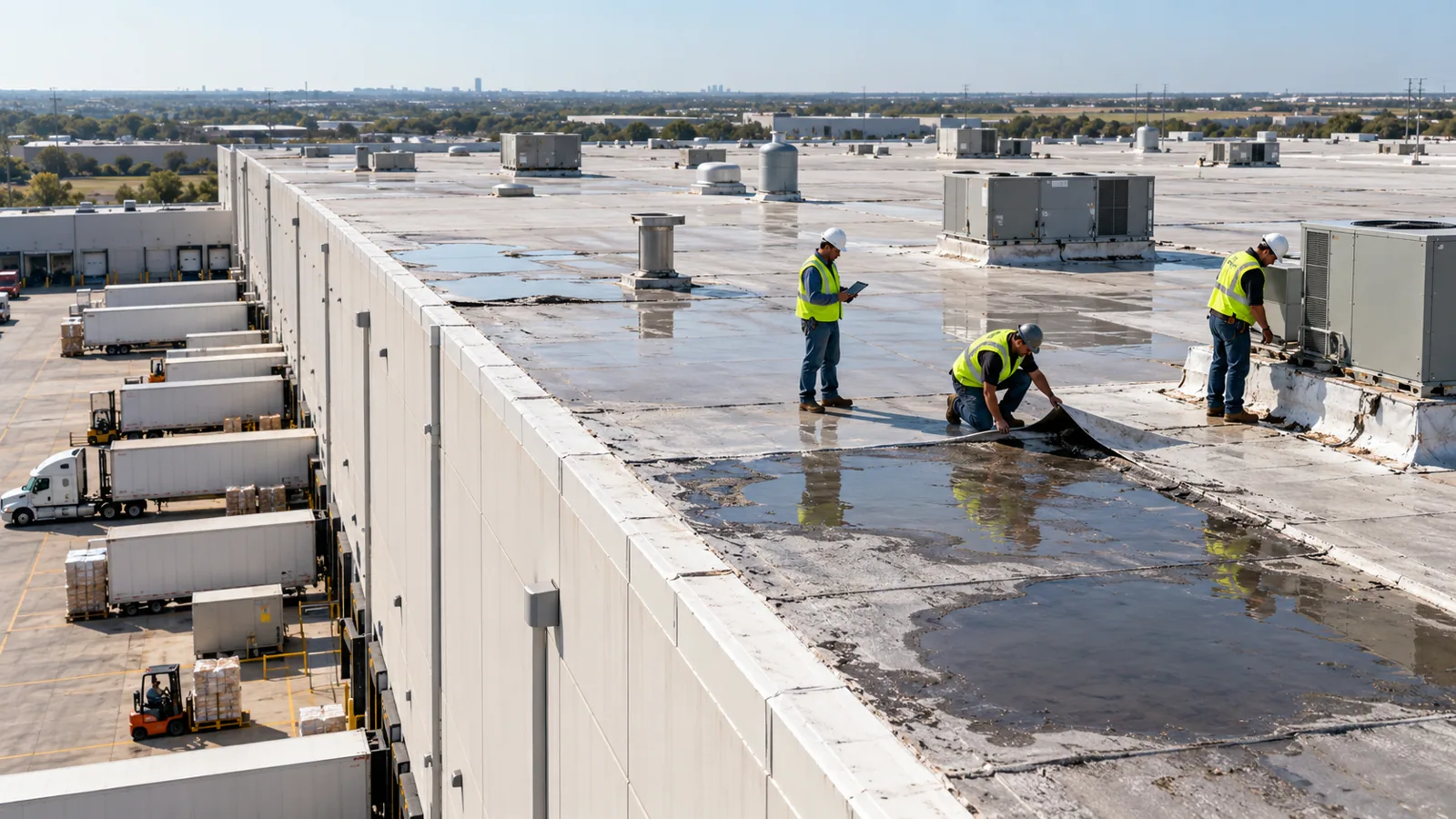
Putting a new membrane over wet insulation does not dry it out. It traps the moisture, and that leads to blistering, rusted deck and fasteners that lose their grip. We take core samples and use moisture scans to find wet areas, then confirm them before deciding what can stay. A roof inspection before a recover maps the wet spots, checks how the old roof is attached and tells us whether the existing membrane will hold the new system.
The estimate shows how much of the old roof stays and how much gets cut out and replaced. A bid that assumes the whole existing roof is dry, without any cores, is pricing a different job than one that includes replacing wet sections. We mark the areas that still need testing and settle them before ordering material. A smooth, intact-looking surface tells you nothing about the insulation under it. If parts of the roof are too wet to keep, the recover price has to include fixing them, or a full tear-off may be the better choice.
Measure the changed heights
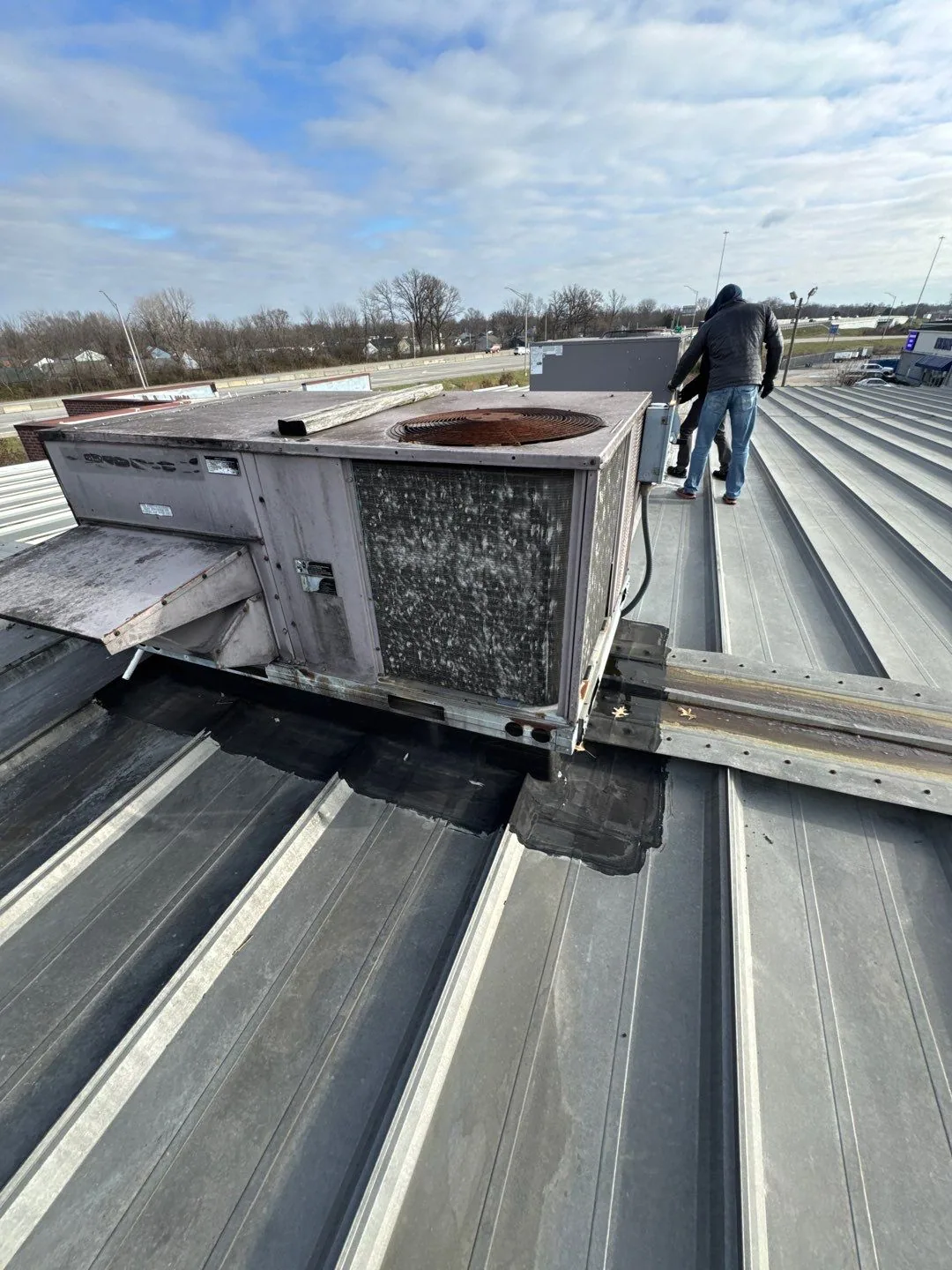
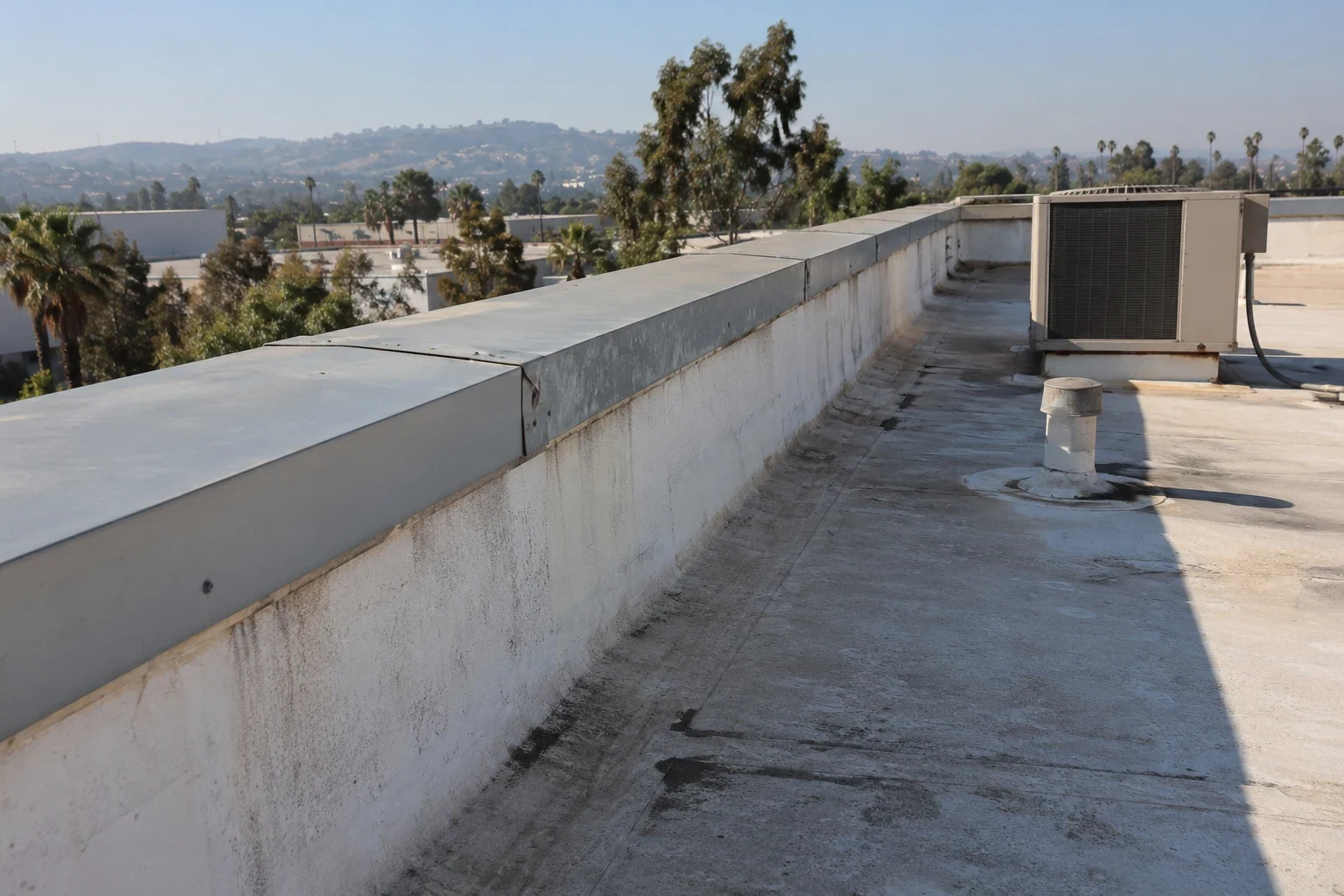
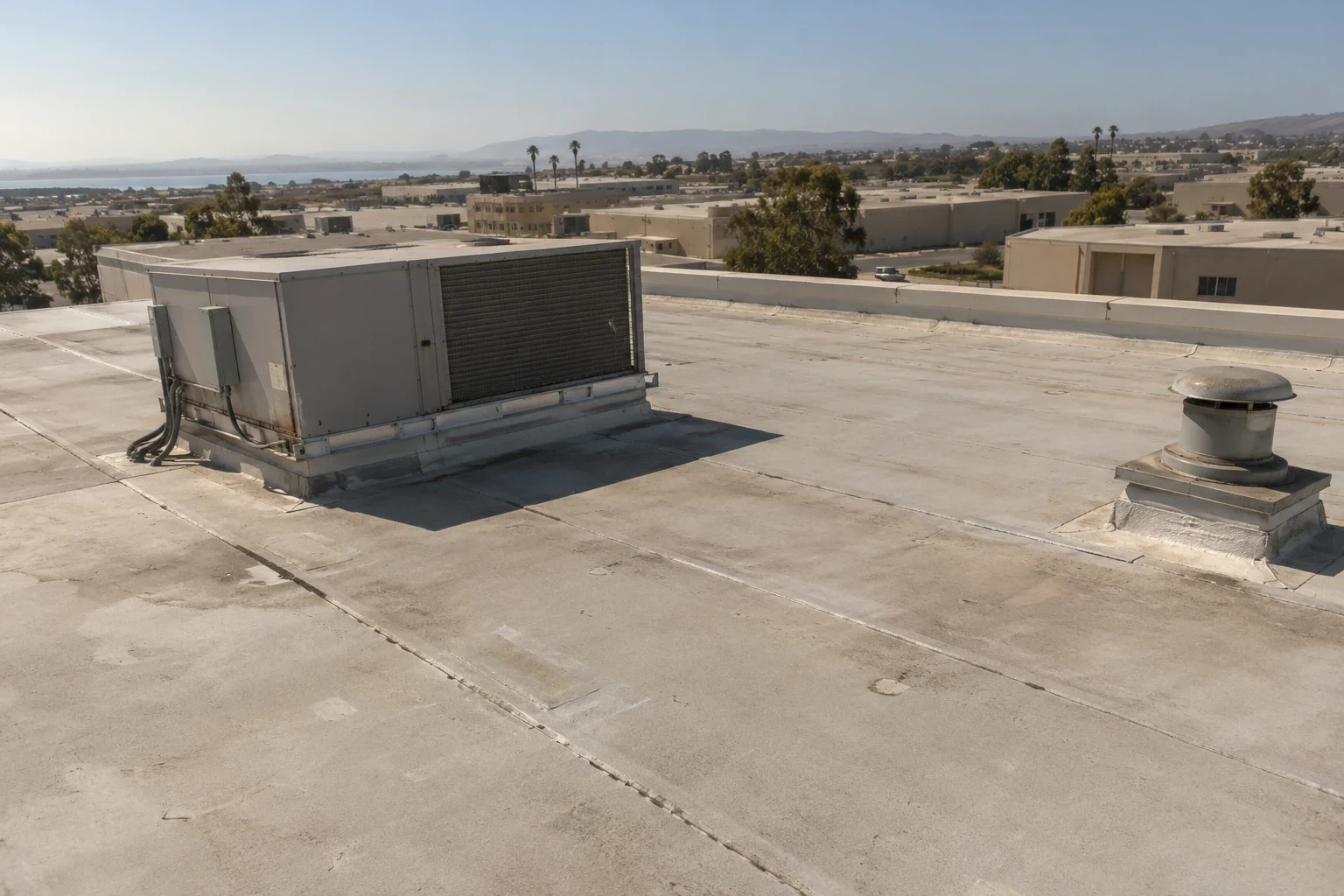
A recover adds thickness: new insulation or cover board plus the new membrane. That raises the roof surface and leaves less flashing height at curbs and walls. We measure those heights before choosing details. If a rooftop unit’s curb ends up too short for a proper flashing, it may need to be raised, which means curb and equipment support work and an HVAC contractor to disconnect and reset the unit.
Drains, scuppers and edge metal change too. A drain that sat flush with the old roof may end up below the new surface and need an extension ring. Edge metal may need a taller nailer. The estimate says which existing details can stay and which need to be rebuilt. Where a unit blocks our view of a curb, we note it and confirm the height before ordering. That way you can see how the added height affects flashing, edge work and equipment, instead of comparing membrane prices while those costs stay hidden. A complete recover price covers the roof as it will actually be built, details included.
Choose the new roof system
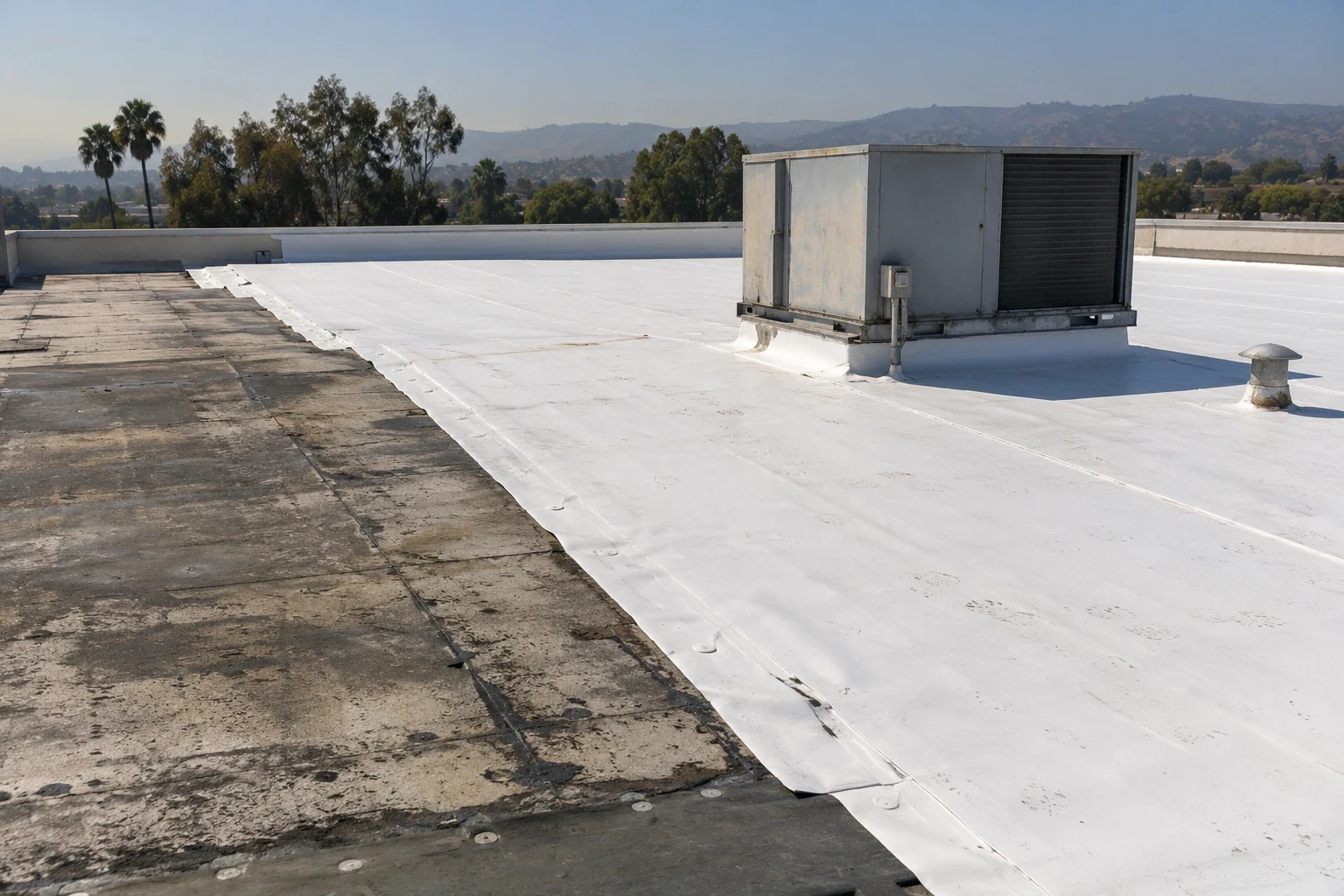
The new system has to work with what is staying underneath. A TPO recover typically goes over a new layer of cover board or insulation, fastened through to the deck, with new flashing at every curb, wall and edge. Old repairs can hide different materials, such as a modified bitumen patch on a built-up roof, so we confirm what is there before choosing products that bond to it or sit next to it.
When we compare membrane options, we keep everything else the same: the same wet-insulation repairs, the same curb and edge work. That way the price difference reflects the membrane, not a smaller scope. Different membranes have different seam methods and accessories, but the repair work underneath is the same either way. If the manufacturer needs to approve the assembly for a warranty, we get that approval before ordering. Having the membrane on site does not mean the work underneath is ready; we finalize materials only after the wet areas and detail heights are settled.
Compare retention with removal
A recover can save the cost of tearing off and hauling away the old roof when that roof is sound enough to keep. But raised curbs, new drain extensions and wet-insulation repairs still add to the price. We price a full roof replacement next to the recover, with the same finished details on both, so you can see the real difference. Less tear-off does not automatically mean an equal roof for less money.
Access affects either choice. Limited hoisting spots, phased work around open stores and protected walkways all add setup time, so we include your building’s rules in both prices. If some areas are blocked by equipment that has to be moved first, we show those separately from the areas ready to go. A target start date does not mean the whole roof can be opened at once. Comparing complete scopes shows you where a recover truly saves money and where the old roof needs work before either option can be finished.
Extra height can also affect door thresholds onto the roof, edge metal and drain bowls. We check those before calling a recover simple field work. Some details need extension pieces or rework, and those costs belong in the recover price. Both options should show drainage, attachment and edge details as complete systems. For roof overlays in El Cerrito, we check the added height against drains, curbs, walls and roof edges the same way.
Record retained and new work
When a recover is done, you should know exactly what is under the new membrane. For owners near the Port of Richmond, our closeout shows which parts of the old roof were kept, which were cut out and replaced and what new materials went on, with photos of rebuilt curbs, drains and any wet areas we replaced.
Anything left open, such as a unit an HVAC contractor still needs to reset, stays on the list so nobody assumes it was finished. Keep the inspection checks and product data sheets with that record. If there is a manufacturer warranty, read its requirements for installation and future changes, and get any unclear terms answered in writing before you rely on it. A good record explains why we chose to recover, what repairs went with it and what still depends on other trades. Years from now, when someone opens the roof for a new unit or a repair, they will know what they are cutting into.
Commercial Roofing Questions
How do you know the existing roof is good enough to recover?
We take core samples and run moisture checks. Dry, well-attached sections can stay; wet areas get cut out and replaced. Any area we have not tested yet is marked before we price it.
Can my existing curbs stay the same under a recover?
Sometimes. The new layers raise the roof, so we measure each curb. If there is not enough flashing height left, the curb needs to be raised, and the HVAC contractor has to disconnect and reset the unit.
Is a recover always cheaper than a tear-off?
Not always. It saves tear-off and disposal, but wet-insulation repairs, raised curbs and drain extensions add cost. We price both options with the same details so you can compare fairly.
What records should I keep after a recover?
Which parts of the old roof were kept, the new materials installed and photos of repairs and rebuilt details. Keep any open items and warranty requirements with that record.

Tell us about the existing roof