Local weather advisory
Coastal Flood Advisory: Commercial Roof Help in Richmond
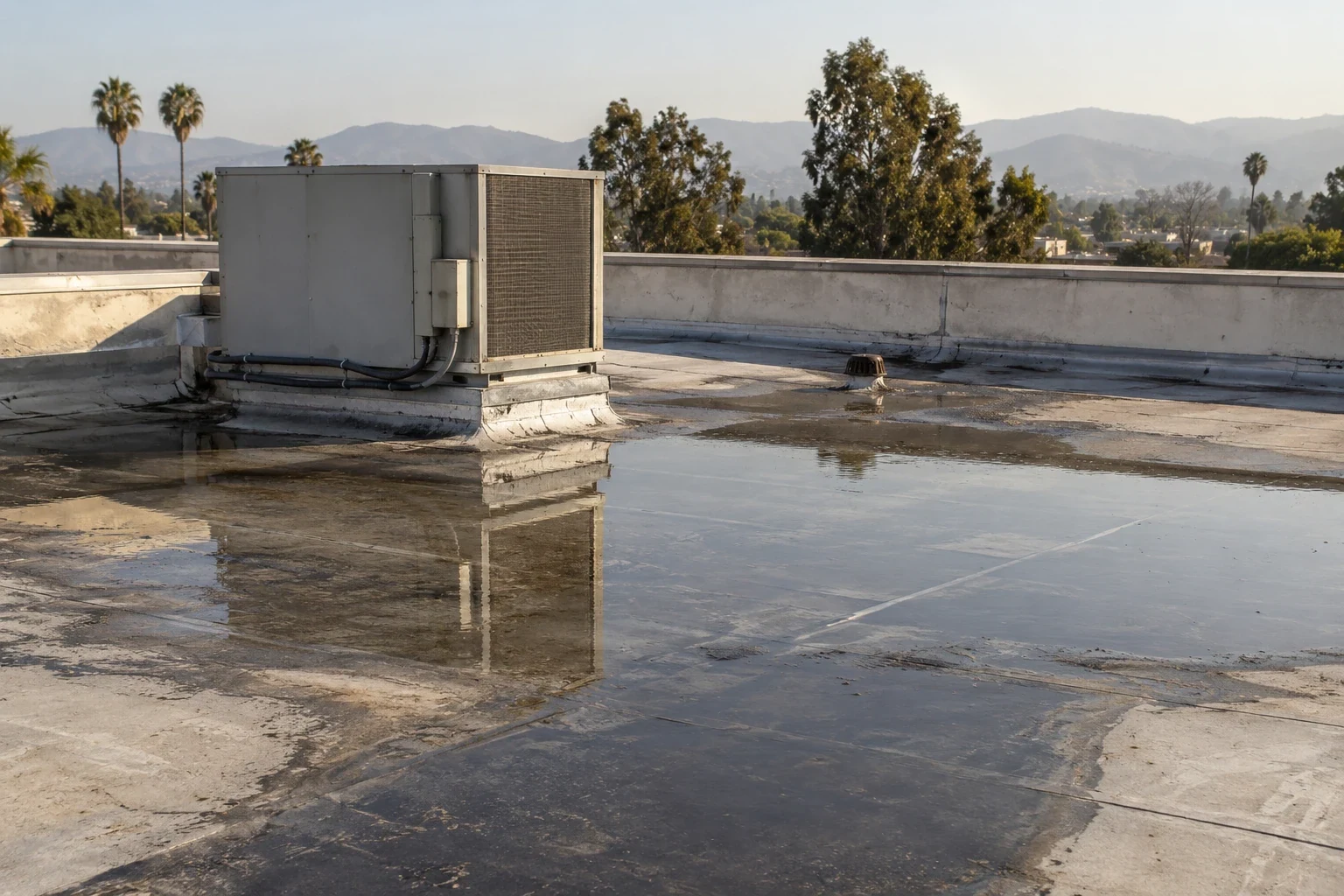
The National Weather Service has issued a coastal flood advisory covering Richmond. Heavy rain and drainage loading can expose roof leaks, blocked drains, and ponding water. This is a weather exposure advisory; it does not establish damage to a specific roof.
Do not access a roof during hazardous weather. Protect people first, avoid water near electrical equipment, and request roofing help when conditions permit.
National Weather Service · Updated Oct 28, 2026, 7:20 AM UTC
Commercial Roof Inspection in Richmond, CA
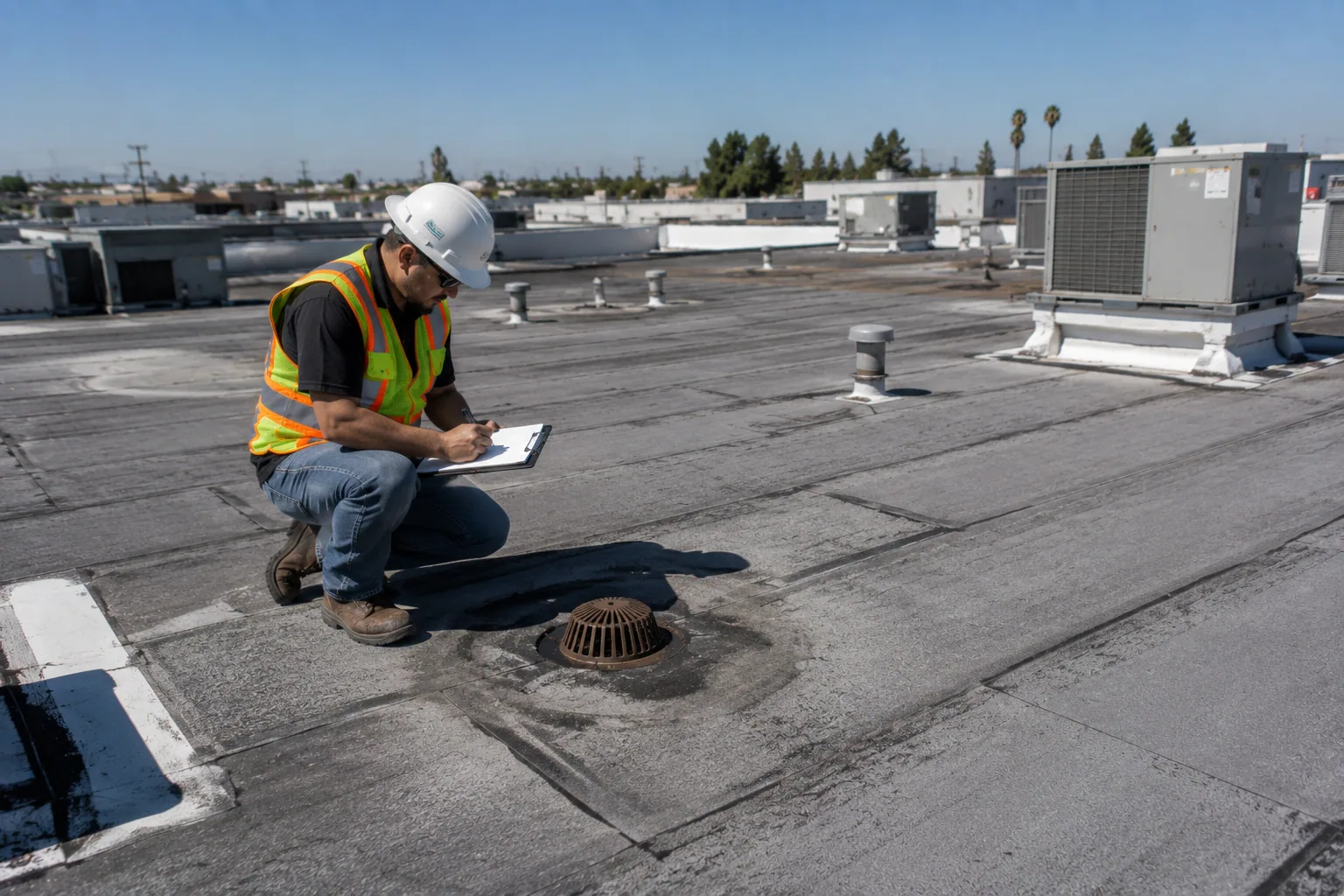
A wall flashing that has pulled loose on a Richmond retail roof raises two questions at once. How do we fix the flashing, and is the insulation behind it still dry? A good inspection answers the first question on the spot and tells you honestly whether the second one needs a core cut or a moisture scan before anyone can be sure. We walk the field, the perimeter, the drains and every curb, and we note which parts of the roof we could reach and which we could not.
For a shopping center roof inspection, we also plan around the storefronts below. Tenants are open, deliveries come and go, and the best ladder or hatch location is not always the one closest to the problem. We pull whatever roof records you have, such as the original installer, past repair invoices or an old warranty, and compare them with what is actually on the roof today. Before we schedule the visit, it helps to know which roof sections you want covered and whether we will need someone to unlock a mechanical room or a roof hatch. That keeps the inspection focused on the decision you actually have to make next, instead of a general walk-around that leaves the important questions open.
Define the decision needed
Inspections are more useful when we know why you are asking. If you have one leak over a back office, you need a repair recommendation. If you are weighing a recover instead of a tear-off, you need to know whether the existing insulation is dry enough to stay, and that takes more than a visual walk. We ask up front what decision is on the table so we look at the right things.
A roof recover only makes sense when the layers underneath can stay. A roof that looks smooth and continuous on top can still hide wet insulation, and laying new membrane over it traps that water. So when a recover is on the table, the inspection includes enough testing to answer that question, and the report shows which areas were tested and which were not. If an area was blocked by equipment or stored material, we say so plainly rather than assuming it looks like the rest of the roof. The cost of the inspection follows the question: a quick leak check is a short visit, while a recover decision may need cores or an infrared scan.
Read the details we can reach
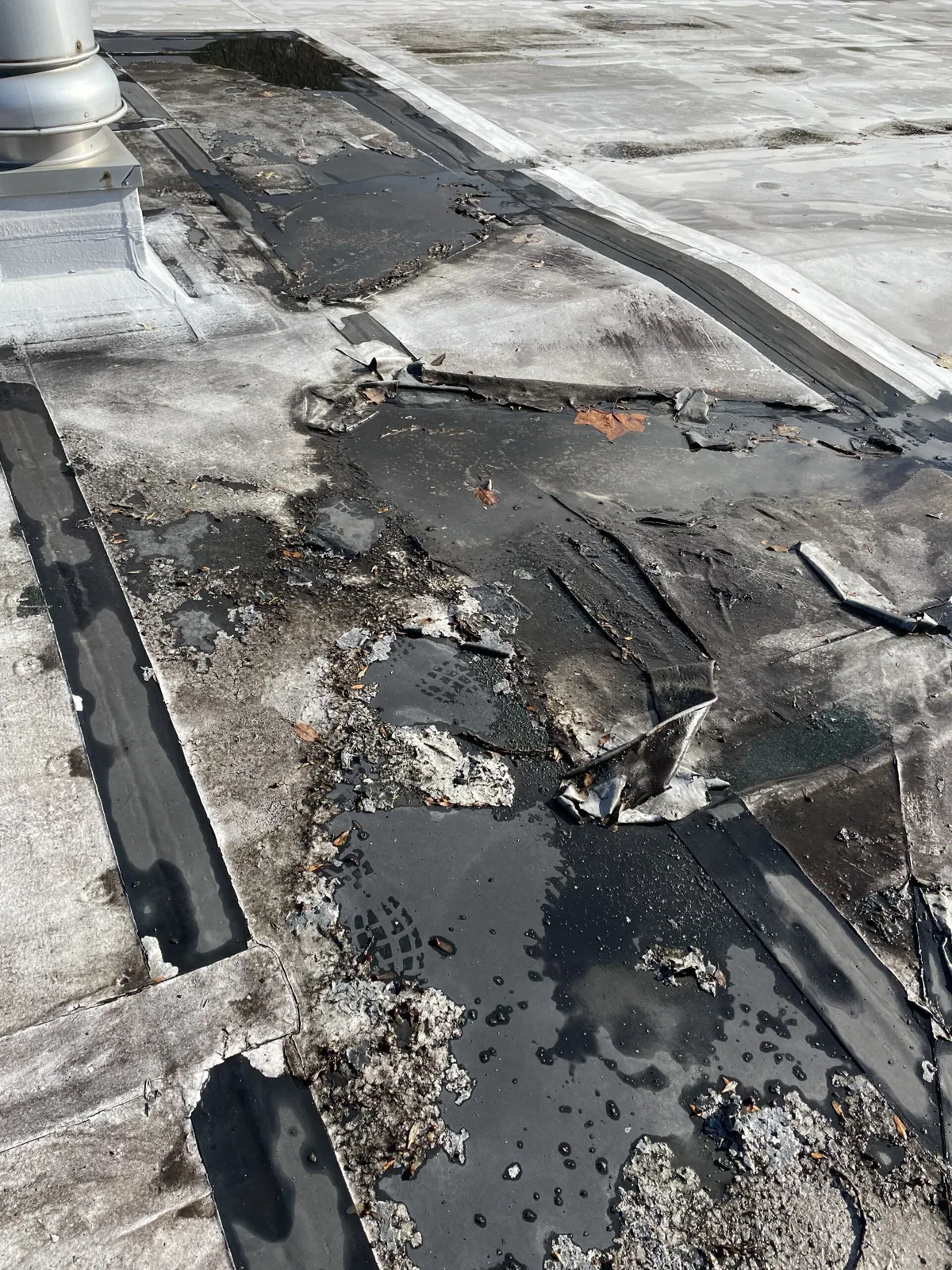
Most problems leave a visible clue: an open seam at a wall, a dented edge, a puncture near a walkway, a soft spot by a drain. We start there, identify the membrane type and look at how the detail was built, including any old patches that may not match the original material. A commercial roof repair recommendation should describe the actual fix at that detail, not just the size of the hole on the surface.
We also use what you tell us. The time a leak shows up, which room it shows up in and whether it only happens in heavy rain all help narrow down where to look. A ceiling stain alone does not tell us where water entered the roof, because water often travels along the deck before it drips. And sometimes the source is not the roof at all. A rooftop unit, a condensate line or a wall above the roof can be the real cause, and we say so when that is what we find. The report then explains what we saw, what it likely means and what repair it supports, without stretching one finding into a conclusion about areas we did not look at.
Keep hidden questions in the open
Some questions cannot be answered from the surface. Wet insulation, loose fasteners and a deteriorating deck all sit below the membrane, and they need a different kind of check than an open seam does. We keep those questions separate in the report, so a visible problem and a hidden one do not get rolled into a vague statement that the roof is in fair condition.
Choosing a new system does not settle them either. If you are leaning toward TPO roofing, the board and insulation under it still have to be sound, and the inspection should say whether they are. When cutting a core sample is the only way to know, we tell you where we would cut, get your approval and seal the cut the same day. Wet or damaged material we actually find gets measured and goes into the repair scope. Areas we did not test stay labeled as untested until someone checks them. That way you know exactly why more information would change the plan, and what it would cost to get it.
Plan access to every area
A lot of roof problems sit right next to rooftop equipment, and that equipment can block the very detail we need to see. If an HVAC unit sits tight against a curb, or a panel has to come off to see the flashing beneath it, we may need your mechanical contractor on site at the same time. We ask about those limits when we schedule, so the inspection covers the spots that matter.
Interior access matters too. Reaching the roof through an occupied suite, a locked mechanical room or a secured warehouse area takes coordination, and it can add time to the visit. If part of the roof is still out of reach on inspection day, the report lists that area and what it would take to get to it, rather than assuming it matches the sections we did walk. That gives you a clear picture of what we know now and what still needs a return trip. On larger buildings along the Richmond Parkway Industrial Corridor, we tie each photo to its roof section, the type of roof system there and any area we could not reach, so a big roof does not turn into a pile of unlabeled pictures.
Make the report usable
A roof condition report should let anyone at your company find a problem on the roof without us standing next to them. Every finding gets a location, a photo, a short description of the material and what we recommend doing about it. For Port of Richmond buildings, where roof access and site security are tightly controlled, we also note which roof was inspected and any site rules that affected the visit.
We keep recommended work separate from completed work, so the report never suggests a problem was fixed when it was only noted. If you have a manufacturer warranty, read its inspection and repair requirements before you hire anyone, because some warranties require approved contractors or specific materials. We can point out where a recommended repair may need the manufacturer's sign-off. The goal is a report that turns straight into a work list: what failed, what it will take to fix, what still needs a closer look and what has to happen before the work can start.
The best reports are easy to use years later. We note the roof section, the component and the edges of the damage, and we say clearly what we could not confirm without opening the roof. Photos include a wide shot to show where the problem is and a close shot to show what it looks like. That lets you hold a contractor's repair proposal up against the actual inspection instead of a one-word rating like fair or poor.
Commercial Roofing Questions
What should an inspection be set up to answer?
The decision you need to make next. A leak repair, a recover and a full replacement each call for different checks, so we ask what is on the table before we schedule the visit.
If the roof looks fine on top, is the insulation underneath fine too?
No. A roof can look fine on top and still have wet insulation underneath. If the answer affects your decision, we recommend cores or an infrared scan and mark any untested areas in the report.
What happens when equipment blocks part of the roof?
We note the location and what it would take to see it, usually a visit from your mechanical contractor. We do not assume a hidden detail is in the same shape as the rest of the roof.
What makes an inspection report useful?
Each finding has a photo, a location and a recommendation. You should be able to hand the report to any contractor and have them find the problem and price the fix.

Tell us about the problem and the decision ahead