Local weather advisory
Coastal Flood Advisory: Commercial Roof Help in Richmond
The National Weather Service has issued a coastal flood advisory covering Richmond. Heavy rain and drainage loading can expose roof leaks, blocked drains, and ponding water. This is a weather exposure advisory; it does not establish damage to a specific roof.
Do not access a roof during hazardous weather. Protect people first, avoid water near electrical equipment, and request roofing help when conditions permit.
National Weather Service · Updated Oct 28, 2026, 7:20 AM UTC
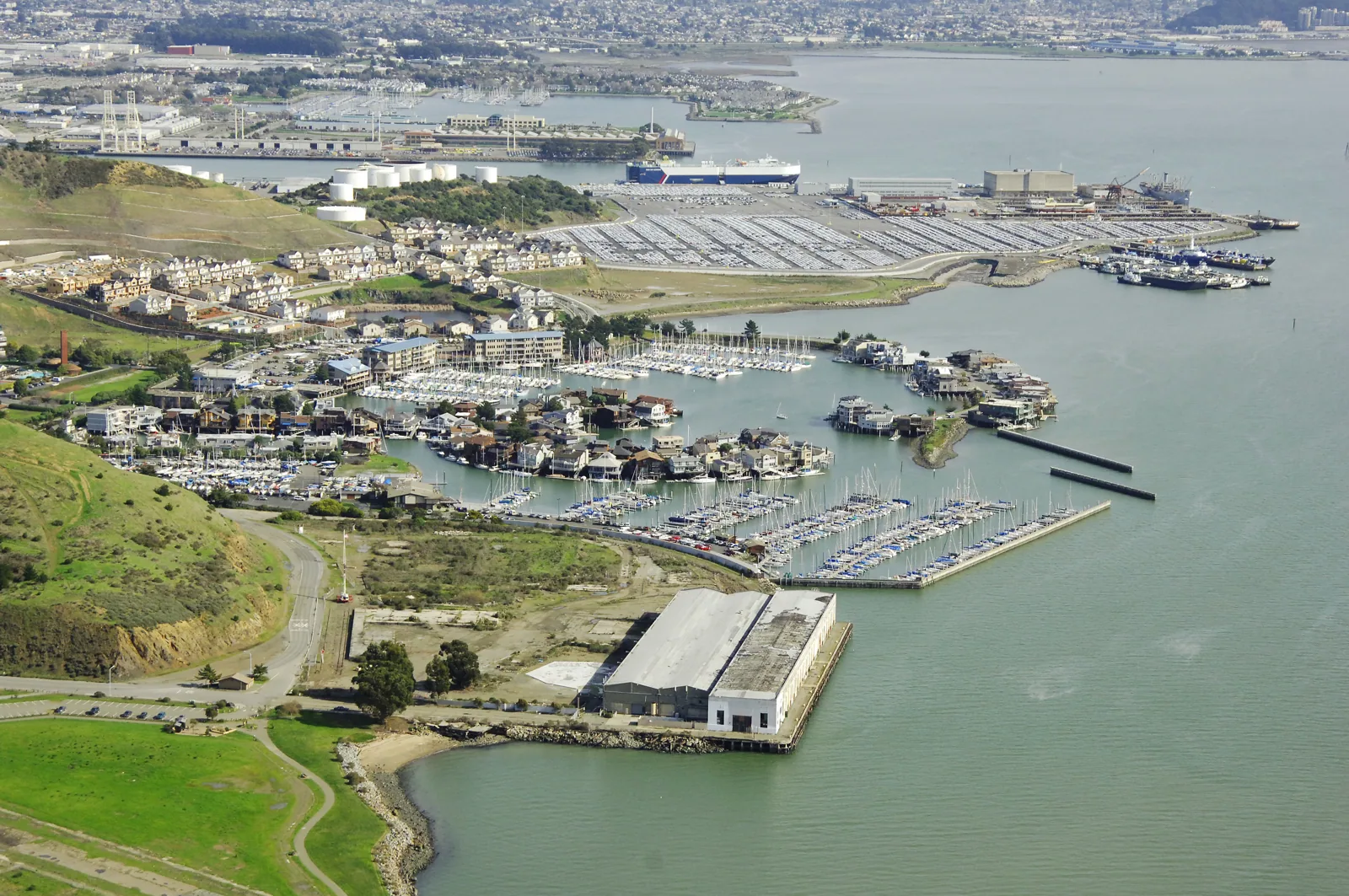
Commercial Roofing near Cutting Boulevard in Richmond, CA
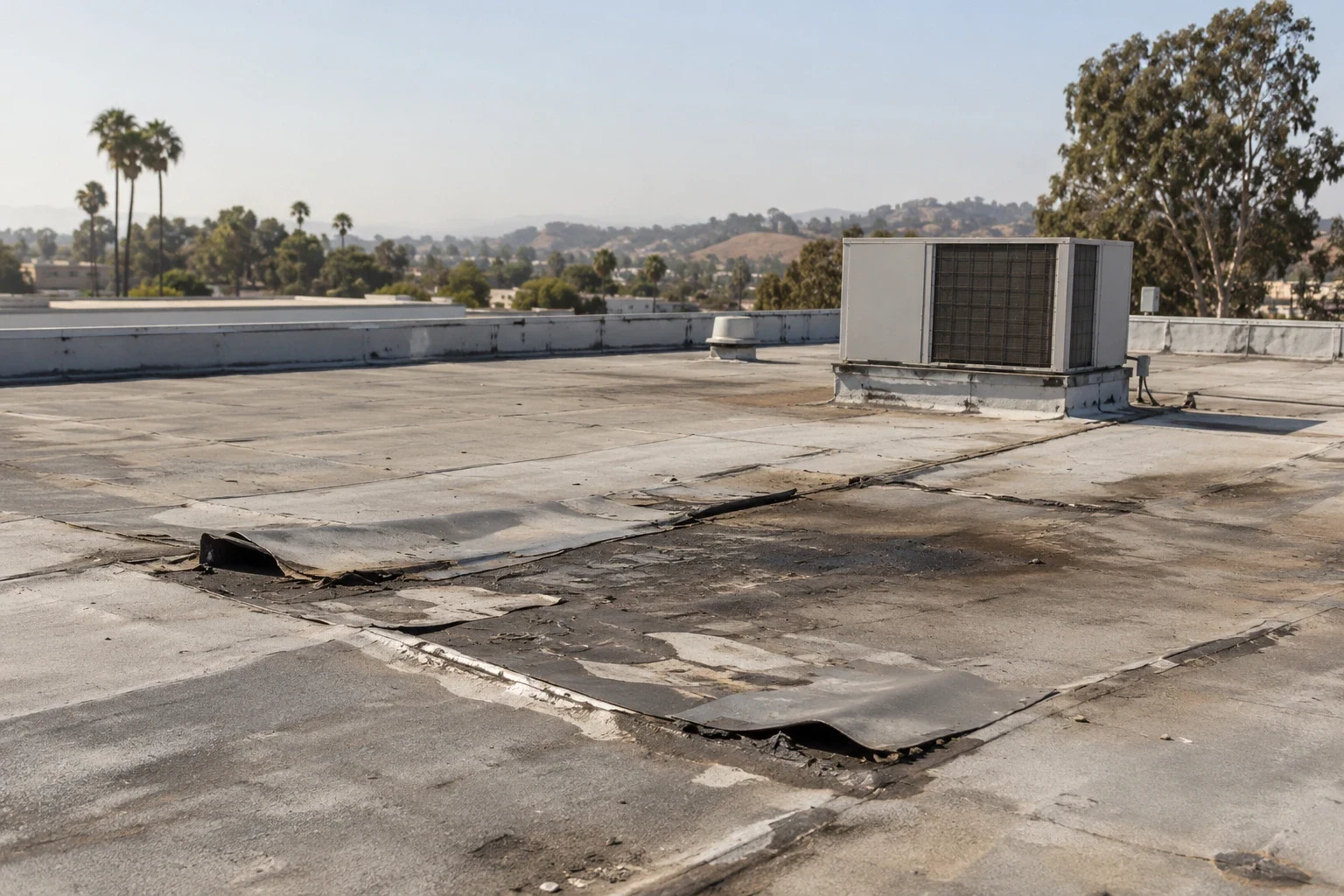
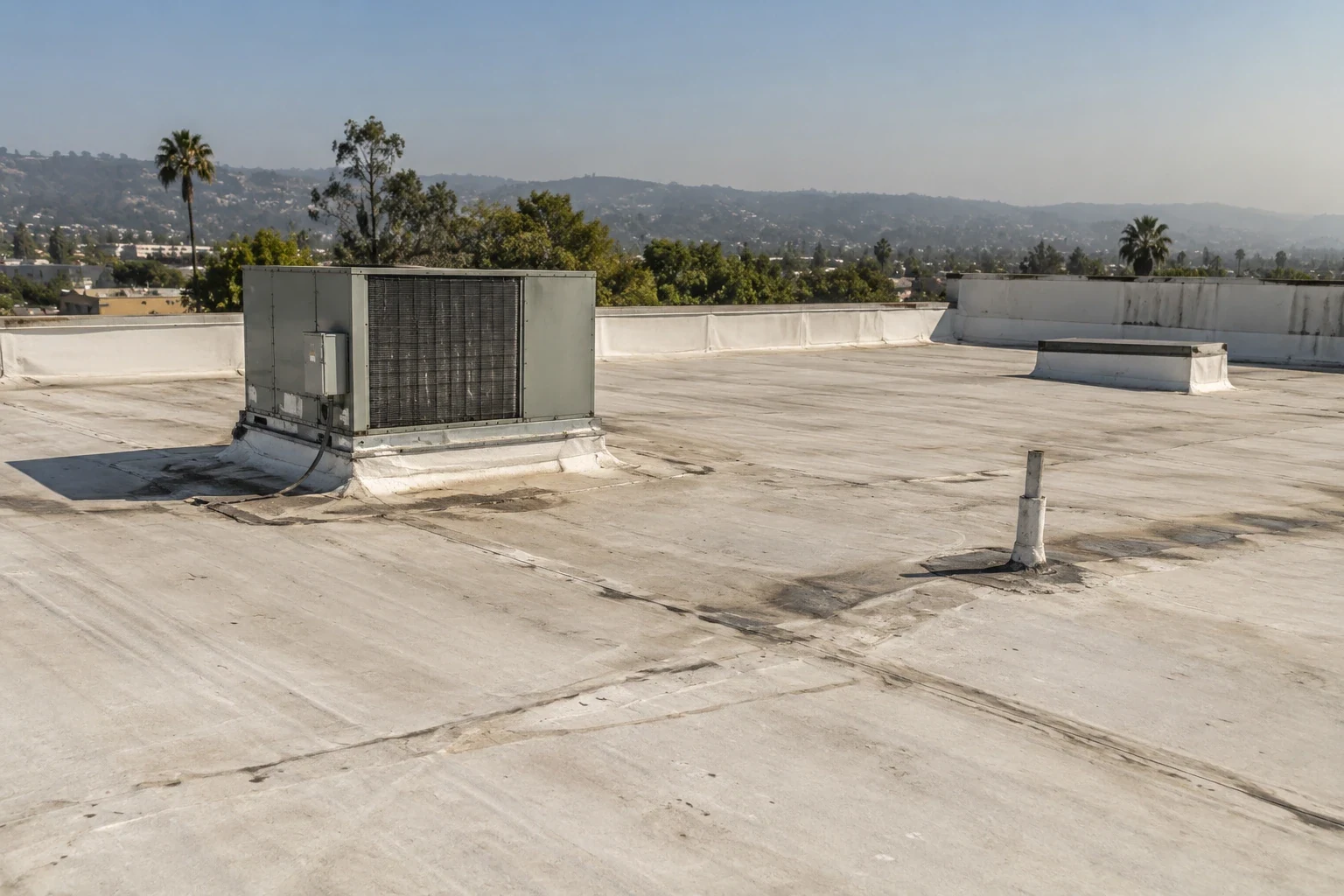
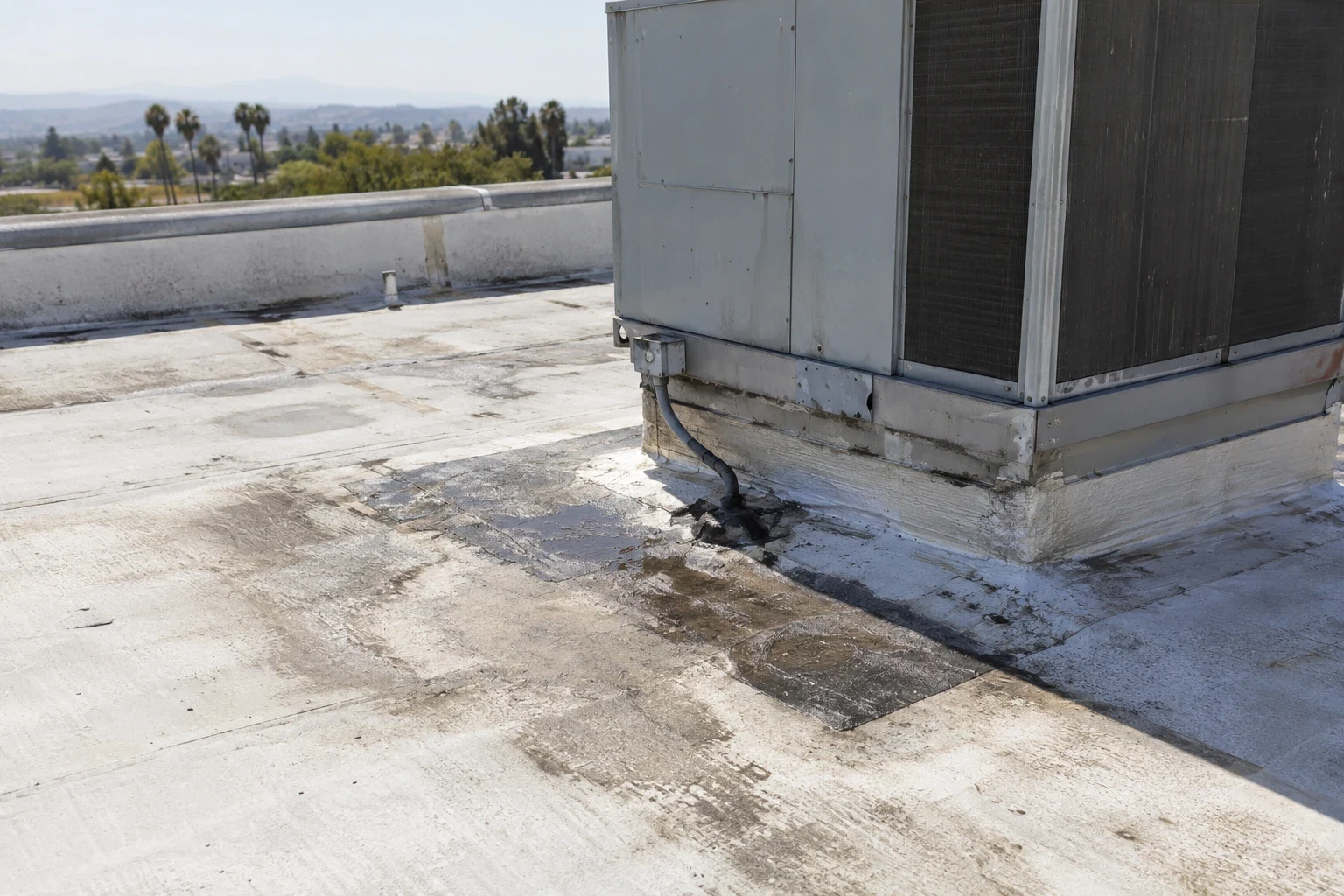
Most punctures we find on Inner Harbor and Cutting Boulevard roofs sit along the path technicians walk to reach rooftop units. A dropped tool, a boot heel on a gravel stone or a panel corner set down on the membrane can open a hole no bigger than a coin. The hole is easy to patch. The harder question is how far the water travelled into the insulation before anyone noticed the stain inside. We inspect, repair, restore and replace commercial roofs throughout Richmond, and on a puncture call we look at both the hole and what sits under it before we write a price.
The area runs along Cutting Boulevard, Hoffman Boulevard and Harbour Way South, with a mix of warehouses, shops and light industrial buildings. Every one of those roofs is different, so we start with the building in front of us: how the crew gets up, where materials can be staged, and which rooms below need protecting. The estimate covers the repair, any opening needed to check the insulation, and a watertight close at the end of each day. That way you can compare a local fix against a larger tear-off on equal terms.
The hole is only the start
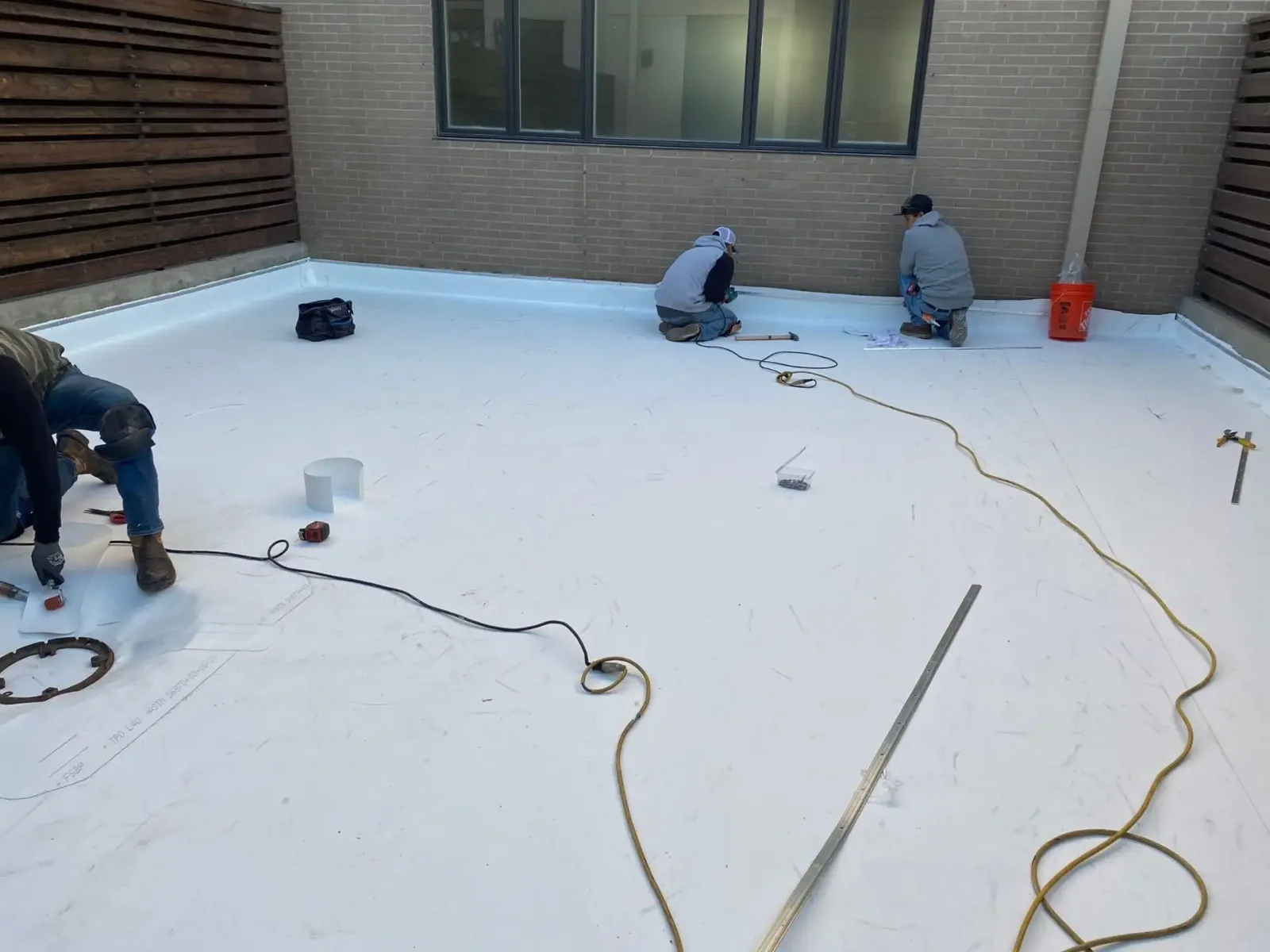
A cut in the membrane tells you where water got in. It does not tell you how big the repair needs to be. We check the membrane around the hole for weak spots, loose seams and soft insulation before choosing how to patch it. A patch has to bond to sound membrane on every side. A standard-size patch laid over wet or weak material underneath will look finished and still fail.
Our membrane puncture repair includes cutting out and replacing whatever the inspection shows is damaged. We tell you what can stay, and if something is uncertain we explain what a small test cut would answer. The scope follows the condition of the roof, not just the size of the hole, so a local repair and a larger removal can be priced side by side.
Give service techs a clear path
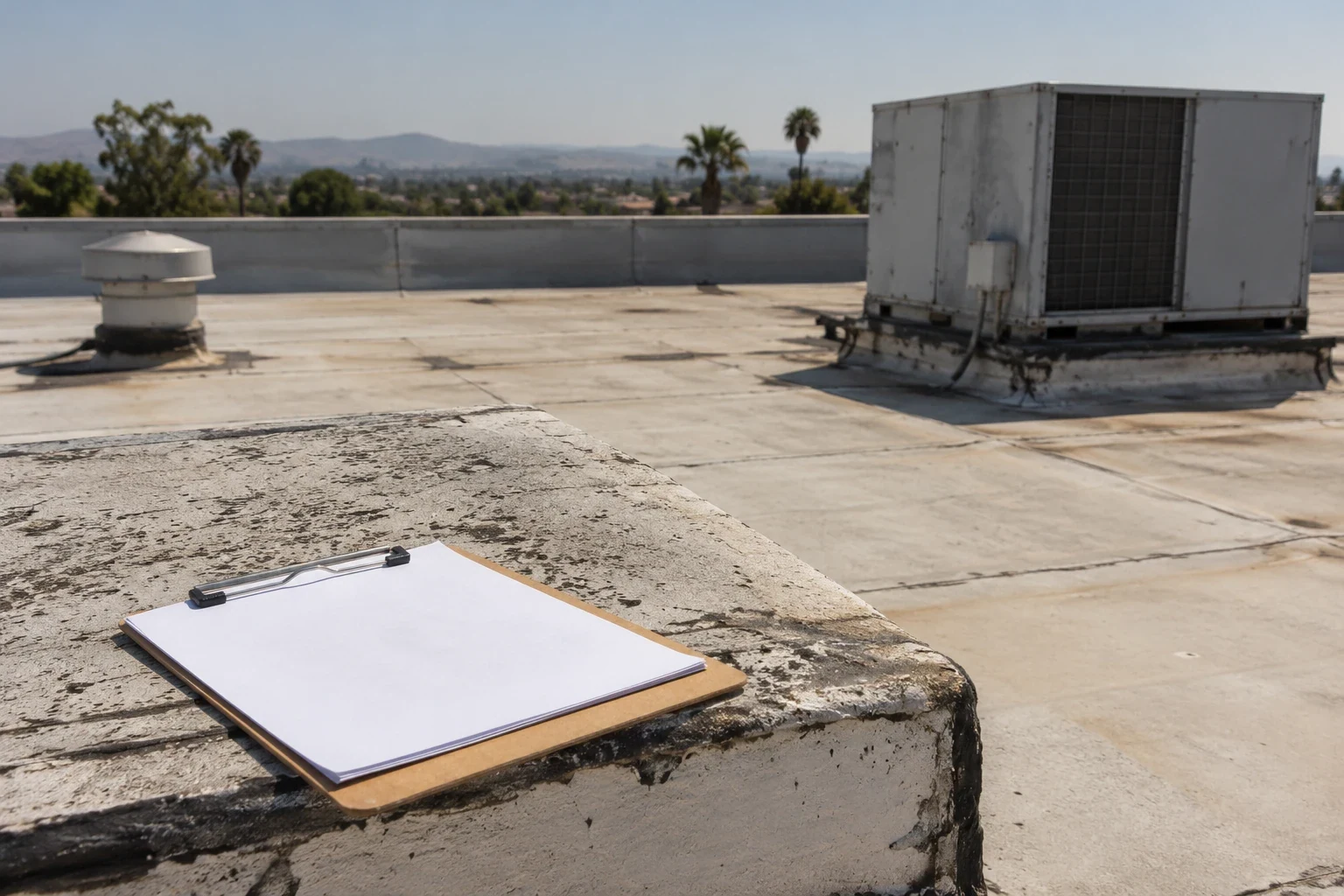
Technicians servicing HVAC units need a clear path across the roof. Without one, they walk wherever is shortest, and that usually means stepping on flashings, seams and the edges of curbs. We look at how people actually reach the equipment and recommend walk pads or another protection that suits the membrane on that roof. Adding a walkway is a separate decision from fixing the damage already there, and the estimate shows both.
Our roof maintenance along equipment routes covers the current condition and the details that get stepped on most. We confirm the walkway material is compatible with the existing membrane before installing it, because the wrong pad can damage the very seam it sits on. You can weigh the cost of the repair against the cost of a walkway that keeps the next hole from happening. We don't blame the damage on service traffic just because it sits near a unit, though; the inspection decides.
After the repair, service techs will still carry tools and parts past that spot. We talk through those trips with the building manager and the mechanical contractor, then place the protection where it will actually be used. The goal is a route that is easy to follow and does not sit on top of a drain or a fresh seam.
Confirm wet insulation before keeping it
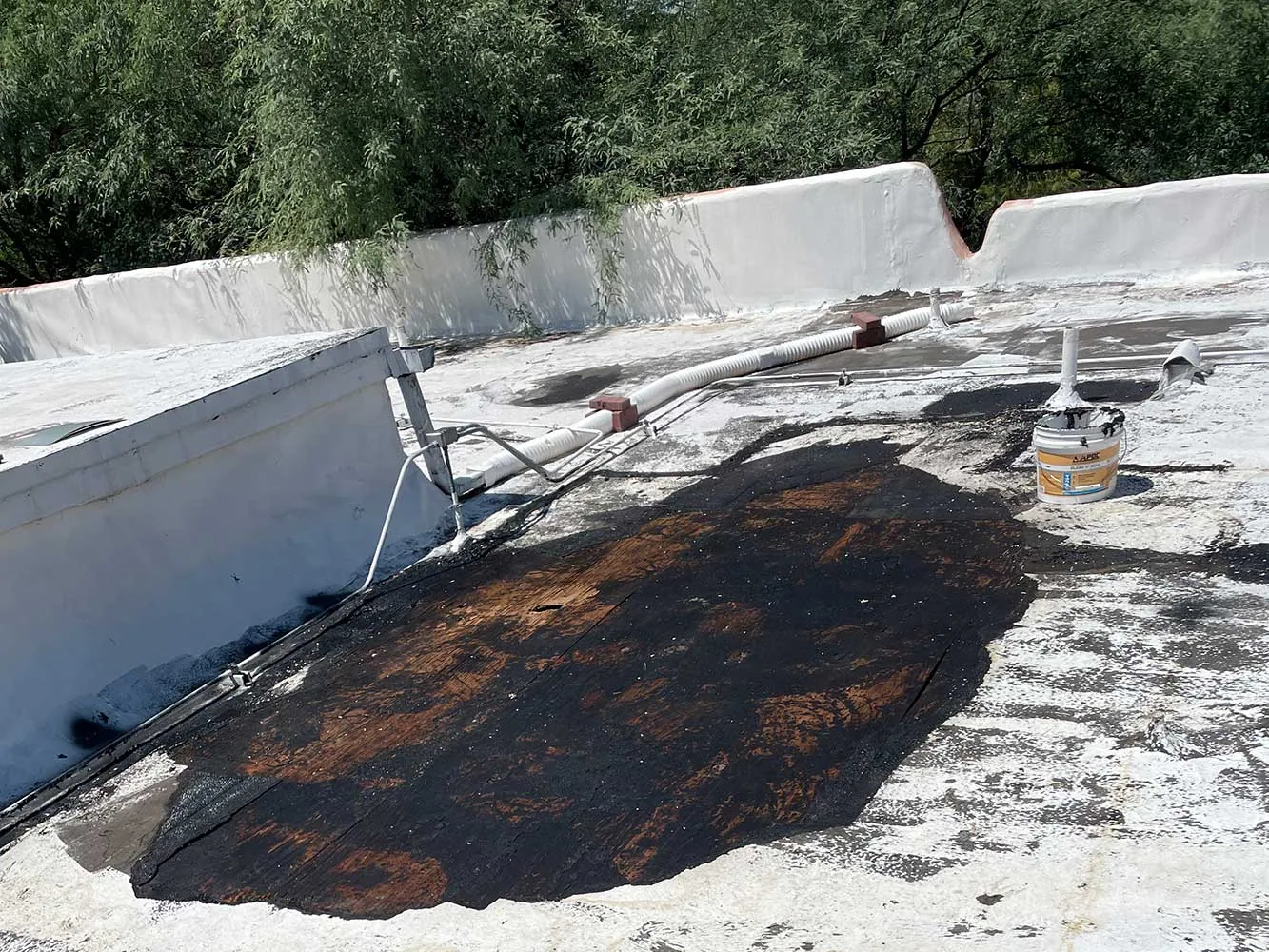
Water that comes through a puncture can spread through the insulation well beyond the hole. We check what we can see and feel, and where the answer matters, we take a core or test cut to find out whether the surrounding insulation can stay. A wet reading points us to the right place to look. It does not set the removal size on its own. The estimate says which finding would change the repair area, and how any opening will be sealed and put back before the job is called complete.
An infrared moisture survey can map likely wet areas when the roof and the weather allow a clear scan. Its results still get confirmed with cores on the actual roof. We tie any wet insulation replacement to the permanent repair, then compare a local fix with a larger removal. You end up deciding what to keep based on what is really under the membrane, not putting a new patch over a soaked board.
Buildings in this corridor have different roof hatches, ladders, service paths and insulation. We treat each one on its own and decide whether the leak needs a test cut before we set replacement quantities. Every test opening is temporarily sealed and then rebuilt. That gives a clear path from the leak report to a lasting repair without assuming the whole corridor shares one roof type.
Access and cleanup stay in the repair price
Getting repair materials onto the roof can need a different route from the one tenants use every day. For a building in the Inner Harbor and Cutting Boulevard area, we agree the entry point, where materials go up, and which rooms below are affected with the building manager. Even a short repair may need debris control and a tarp or temporary seal while we open and check the roof. Those costs belong in the repair price, even when the hole itself is small.
For roof work over occupied space, we compare a separate investigation visit with doing the check and the repair in one trip. Two visits let you see the quantities before you commit, but you pay for setup and protection twice. One visit can save that, once we know what the roof is made of and how far the damage goes. You pick the sequence with the full costs in front of you.
Other buildings get their own plan
A roof near the Port of Richmond may have a different membrane or a different way of reaching the equipment. We inspect it separately before suggesting the same repair materials or walkway details. Two similar-looking punctures can need different patch methods and can have very different insulation underneath. Each roof gets its own prep list and its own access plan.
If you also own a building in North Richmond, we can look at buying materials together once both roofs are inspected and both access plans are set. Wet insulation replacement, patch prep and protection are still priced per roof. The comparison shows whether sharing a crew setup actually saves money or whether separate visits make more sense. Each building's daily operations and its end-of-day weather seal still set the order of work.
Commercial Roofing Questions
Does a puncture need only a surface patch?
Sometimes, but only if the membrane around it is sound and the insulation underneath is dry. We check both before choosing a patch method. If material needs to be cut out and replaced, that goes in the repair price instead of being left outside a small patch allowance.
Can walk pads be installed over the repair right away?
Usually, once the repair has bonded and the pad material is compatible with the membrane. We confirm that first, then place the walkway where technicians will actually walk so future service trips don't open a new hole.
How does wet insulation affect the repair price?
Wet insulation has to come out, which can make the repair larger than the visible hole. We use cores or a test cut to confirm how far it goes, then price the full fix. A wet reading by itself doesn't settle the size.
Is one visit better than an inspection followed by a repair?
A separate inspection answers questions before you commit money, but it means setting up and protecting the roof twice. One visit can be cheaper once we know the roof's build-up. Either way, every opening is sealed watertight before we leave.
Can repairs on several of our buildings share materials?
Possibly, after each roof is inspected. Membranes and insulation vary from building to building, so we confirm what each one needs, then see whether a combined order makes sense. Similar-looking damage doesn't mean the repairs are identical.
Tell us where the hole is and how you get to it