Local weather advisory
Coastal Flood Advisory: Commercial Roof Help in Richmond
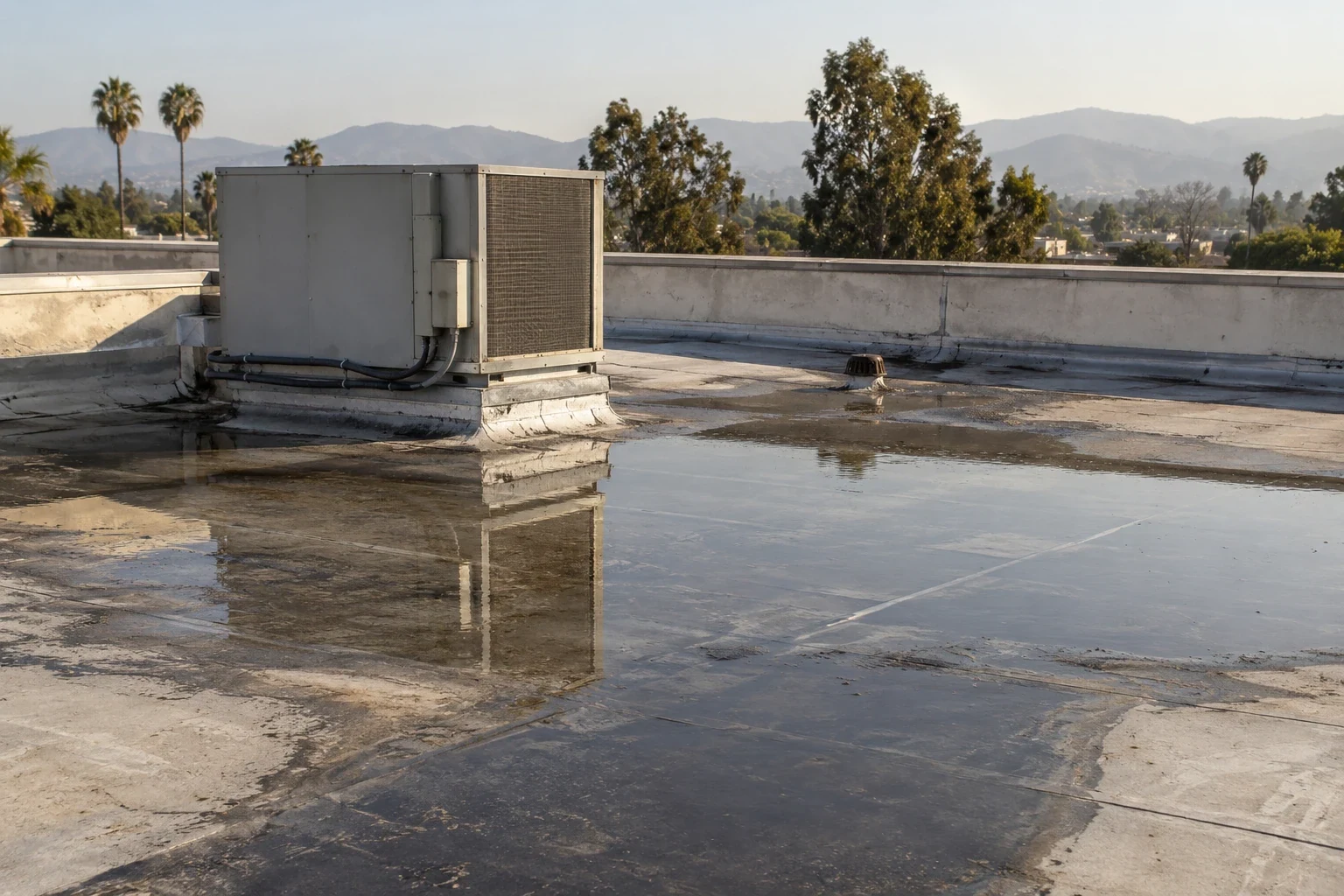
The National Weather Service has issued a coastal flood advisory covering Richmond. Heavy rain and drainage loading can expose roof leaks, blocked drains, and ponding water. This is a weather exposure advisory; it does not establish damage to a specific roof.
Do not access a roof during hazardous weather. Protect people first, avoid water near electrical equipment, and request roofing help when conditions permit.
National Weather Service · Updated Oct 28, 2026, 7:20 AM UTC

Commercial Roofing in Downtown Richmond and Civic Center, CA
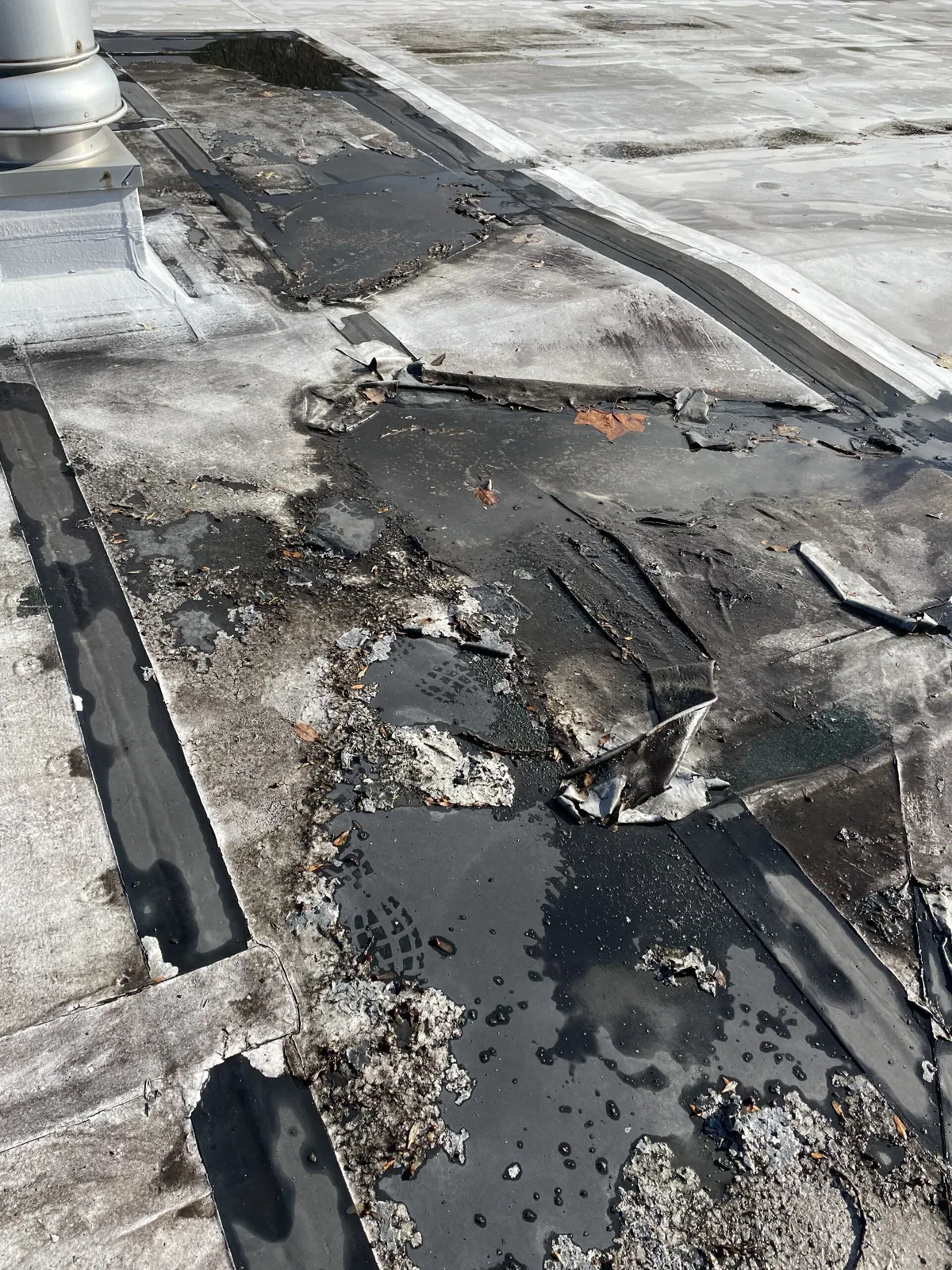
Where a flat roof meets a parapet or a taller wall, the flashing that seals that joint takes a beating. When it pulls loose above a downtown Richmond office or storefront, water can run down behind the wall finish and show up in a room below while the roof itself still looks fine. We inspect, repair, restore and replace commercial roofs in Richmond, CA, and with this kind of leak we trace the joint first and figure out what needs to be opened before recommending a fix. The Civic Center area includes City Hall, the former Hall of Justice and the Civic Auditorium, and the blocks around it hold a mix of older masonry and newer buildings. That is exactly why we do not assume one wall detail fits the whole district. Each building gets its own inspection, its own access plan and its own plan for protecting the rooms underneath while the flashing is open.
A stain on the ceiling near an exterior wall might come from the roof, from a crack in the wall above it, or from a window or vent higher up. At parapets we check the coping cap and its joints, the counterflashing tucked into the wall and the membrane where it turns up the wall, because water can get past any of them and each one gets repaired differently. If we need to open a small area or bring in a masonry or stucco contractor to be sure, we will say so. The price includes prep, a watertight close-up and protection for the room below, so you can compare a targeted flashing repair with a larger tear-off honestly.
The wall junction has a specific entry route
Water that gets behind wall flashing can travel a long way before it shows up, so the wet spot inside is often not under the leak. We look at the flashing, the wall above it and the roof membrane next to it before blaming the roof. If the wall itself has a crack or open joint, that needs its own repair and someone has to own it. We spell that out so you are not paying for new flashing while the real leak keeps going.
Our roof leak repair connects what we see on the roof with the work it will take to fix it. If cutting a small inspection hole would answer the question, we will tell you why and seal it the same day. Then you can compare the flashing repair with a larger replacement, with any wall work listed separately, based on where the water actually gets in rather than how big the ceiling stain is.
Movement affects the permanent termination
Roofs and walls move differently. The roof deck flexes and expands with heat, while a masonry wall barely moves at all. The flashing between them has to handle that. We look at how the existing joint is built, how the membrane is fastened at the base of the wall and how the top edge is held in place, then choose a detail that will flex instead of crack. More caulk on top rarely works for long if the flashing underneath has already pulled away from the wall.
Our flashing repair shows exactly how the new flashing ties into the wall and the roof and how it handles movement. We separate the roofing work from any wall coating, sealant or mechanical work it affects, and list those items before calling the price complete. That way you compare a local repair with a larger one based on the real job, not just the thin line of flashing you can see from the roof.
Wet insulation can change the repair size
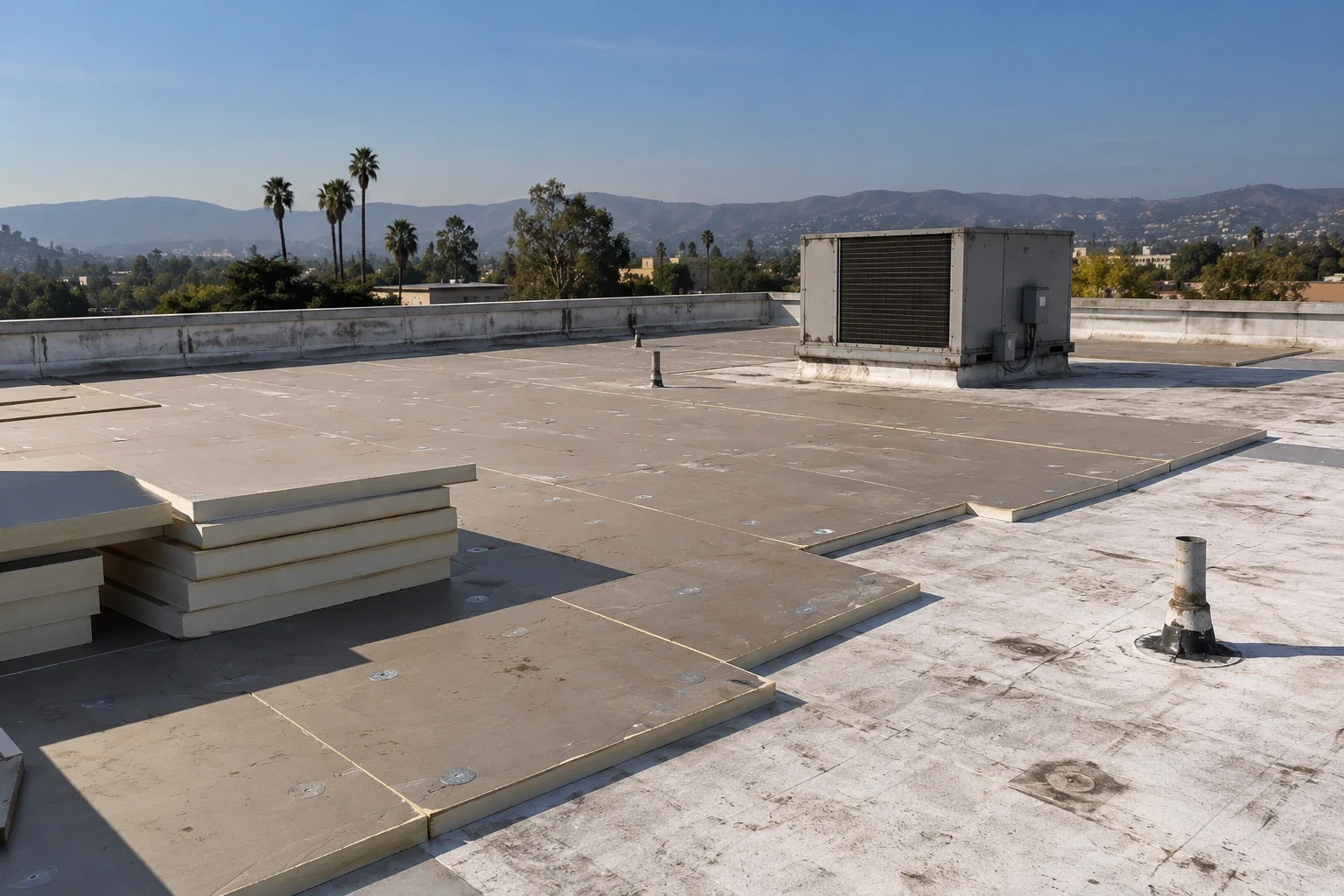
A leak at a wall joint often soaks the insulation and sometimes the deck beyond the damaged flashing. A dry-looking roof surface does not tell you what is happening underneath. Where it matters, we take a core sample or open a small area to check the layers we plan to keep. Anything wet or soft gets cut out and replaced before new flashing goes on, and the size of that tear-out is based on what we find, not a guess.
Our commercial roof repair includes cutting out damaged material, replacing insulation and patching the membrane around the opening. We tell you what can stay and what further testing might add to the job. Temporary protection is in the price too. You get a full picture, instead of new flashing installed over wet insulation that will need another tear-off and another visit later.
The room below defines the protection work
Opening a wall flashing detail can put the room right below it at risk, even if the rest of the roof stays closed. For each downtown or Civic Center building, we agree with the property manager on which room is affected, how the crew gets to the roof and what interruptions the tenants can live with. Debris removal, plastic and tarps, and a temporary seal at the end of each day all match the size of the opening. The aim is to keep roof work and building use separate while the flashing is open.
Our roofing plan for occupied buildings weighs doing the whole wall run at once against splitting it into shorter sections. Short sections limit how much is open at any time, but each one adds setup cost. A longer single phase can save money once roof and wall responsibilities are clear. We show you both, with the full flashing repair included either way, so you can pick the timing that fits the building.
Sometimes it pays to do a small investigation first, before pricing the full repair. We will tell you what it is meant to answer and how the spot will be sealed afterward. That keeps the building from being opened up more than necessary and lets you see the protection plan and the follow-up work before committing to a full tear-off.
Each building gets its own inspection
A building in the Iron Triangle may have a different wall type and a different flashing detail entirely. We inspect it separately before recommending the same materials. Two stains that look alike can have different causes and need different fixes. Each estimate lists its own prep, any wall work and how material gets on and off that roof.
If you also manage a building in San Pablo, we can look at buying materials together once both roofs have been inspected and access is sorted out. Each roof keeps its own quantities and protection plan, and active leaks come before cosmetic upgrades. We will show you where combining the jobs saves money and where running them separately makes more sense, so the repairs follow what we found, not the fact that the leaks look similar.
Commercial Roofing Questions
Does a stain at the wall prove a flashing failure?
Not on its own. Water can come in through the wall, a window or the coping above and show up in the same place. We check both the roof and the wall, and if a wall contractor is needed, we tell you. The repair targets the actual leak.
Can the flashing just be recoated without tearing it off?
Sometimes. If the existing flashing is still bonded to the wall and the membrane, a recoat or a reinforced repair can work. If it has pulled away, is brittle or sits on wet material, it needs to come off so the new flashing bonds to something solid.
How does movement affect a localized junction repair?
The roof and the wall move at different rates, so the flashing between them has to flex. A stiff caulk joint or a rigid patch will crack and leak again. We use a detail that allows for that movement at the base and top of the flashing.
Would staged investigation add unnecessary cost?
It adds a little setup, but it can save money by answering questions before a big commitment. Once we know what needs repair, we compare a staged approach with doing it all at once, based on the building's schedule and what we still need to learn.
Can neighboring wall-flashing jobs share materials?
Yes, if the roofs and walls are similar enough. We inspect each building first, then group material orders where it makes sense. Similar-looking stains do not mean the same repair, so each job keeps its own scope.



Fix the wall leak at its source