Flashing Failure Repair in Richmond, CA
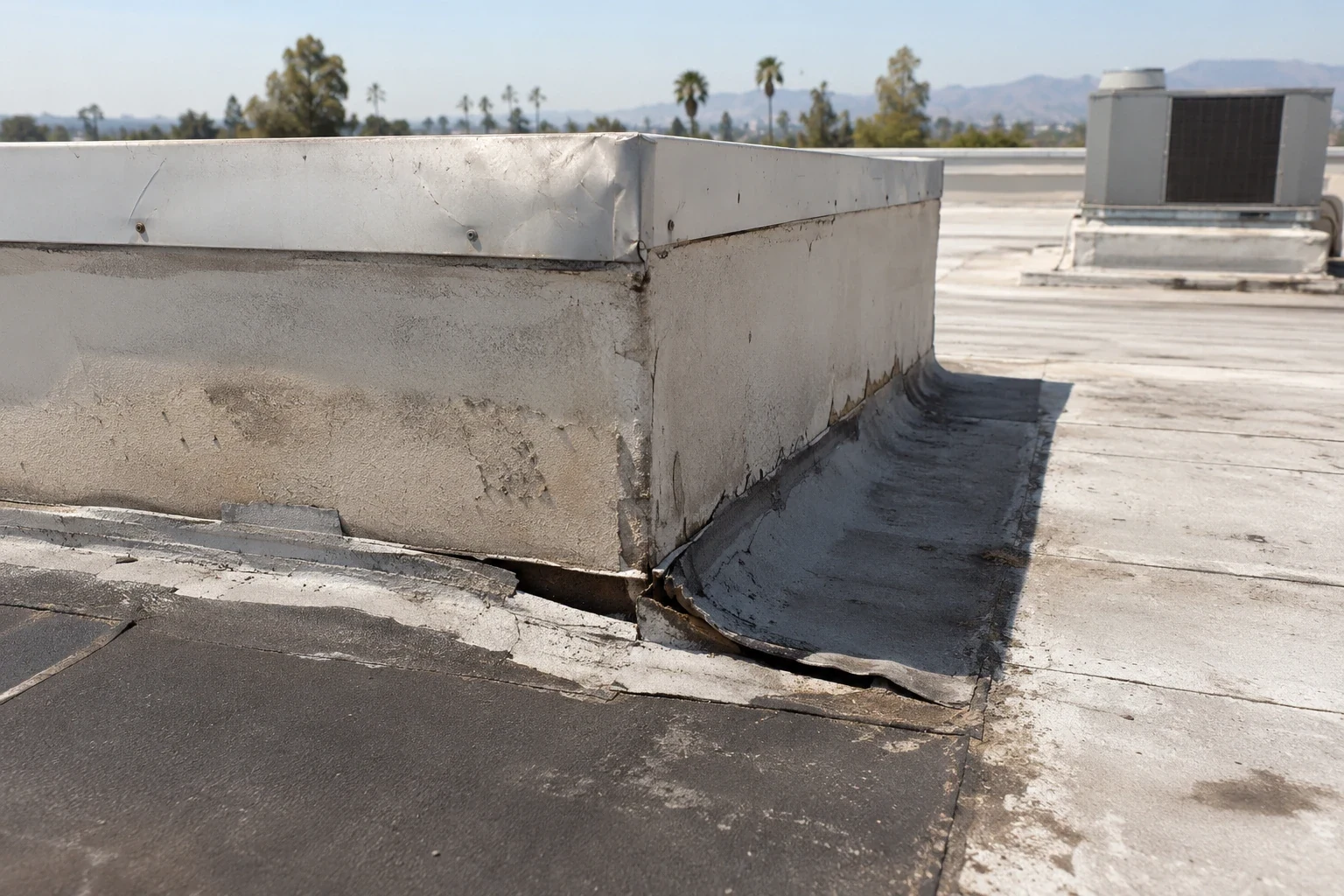
A parapet on a Richmond office building can keep leaking long after someone has patched the membrane below it. That usually means the water is getting in higher up, at a loose counterflashing, an open termination bar or a cracked corner. Flashing failure repair starts by finding that opening instead of adding another layer of sealant where the stain shows. We trace the leak from the interior symptom up to the roof, check the wall finish and the backing behind the flashing, and then tell the owner exactly what needs to be rebuilt and where the new work ties into the old.
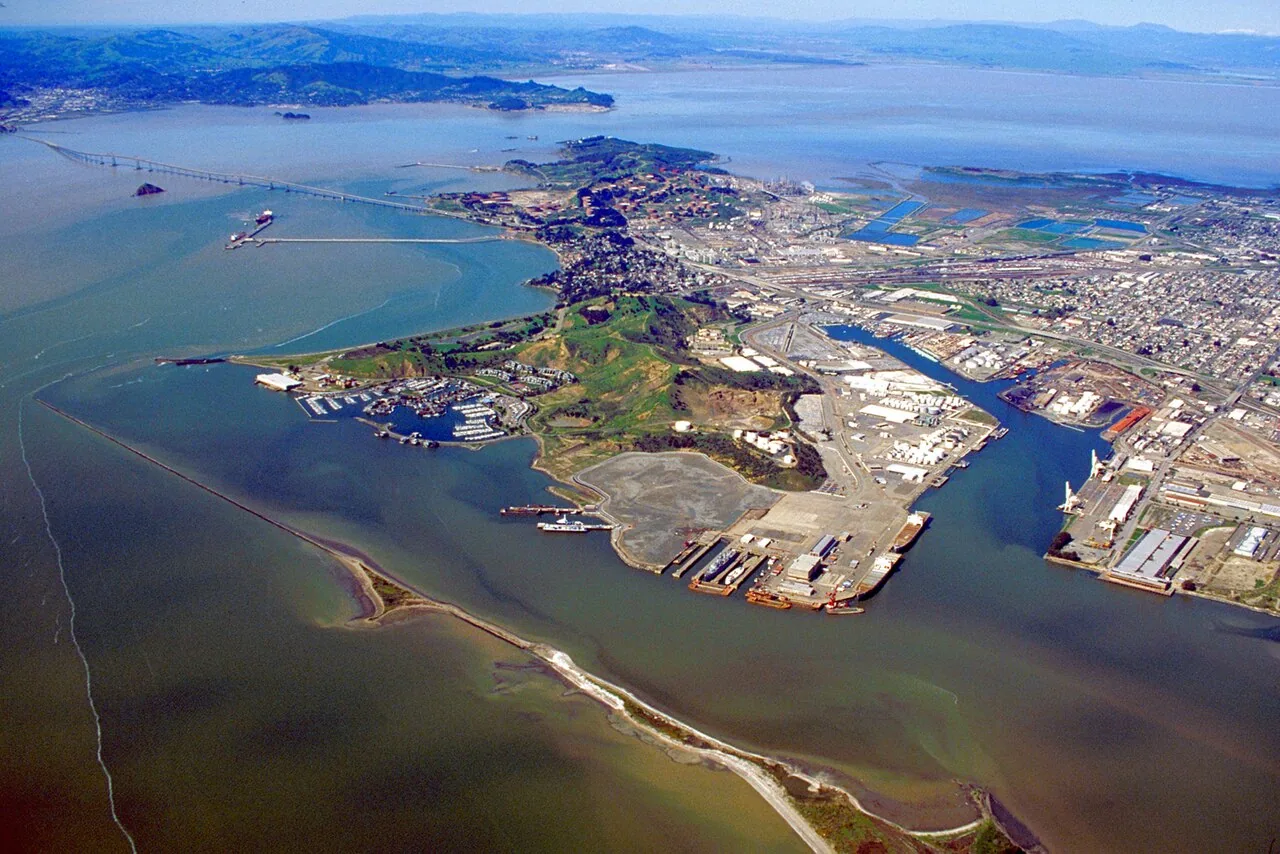
Marina Bay buildings sit right on the open Bay, where wind and salt air work on edge metal and fasteners year after year. We still look at the actual metal, screws and substrate on each building rather than assuming the exposure has caused a particular failure. Before we go up, the property manager confirms roof access and points us to the area of concern. On office building roofs, we tie every finding to a corner, drain or unit someone can find again. Older photos help when they clearly show the same spot. A stained ceiling tells us where to start looking; the roof itself tells us what to fix.
Find the part of the flashing that opened
Wall and curb flashing has several parts: the base flashing that laps onto the roof, the counterflashing or termination at the top, and the inside and outside corners. Any one of them can fail on its own. Water often gets behind a top edge that has pulled away while the patch at the bottom looks fine. A loose stucco or siding finish above the flashing can also leave nothing solid to fasten a new termination to. Our report names the specific part that failed, so the owner can see whether the proposed repair actually closes the leak or only addresses the most visible gap.
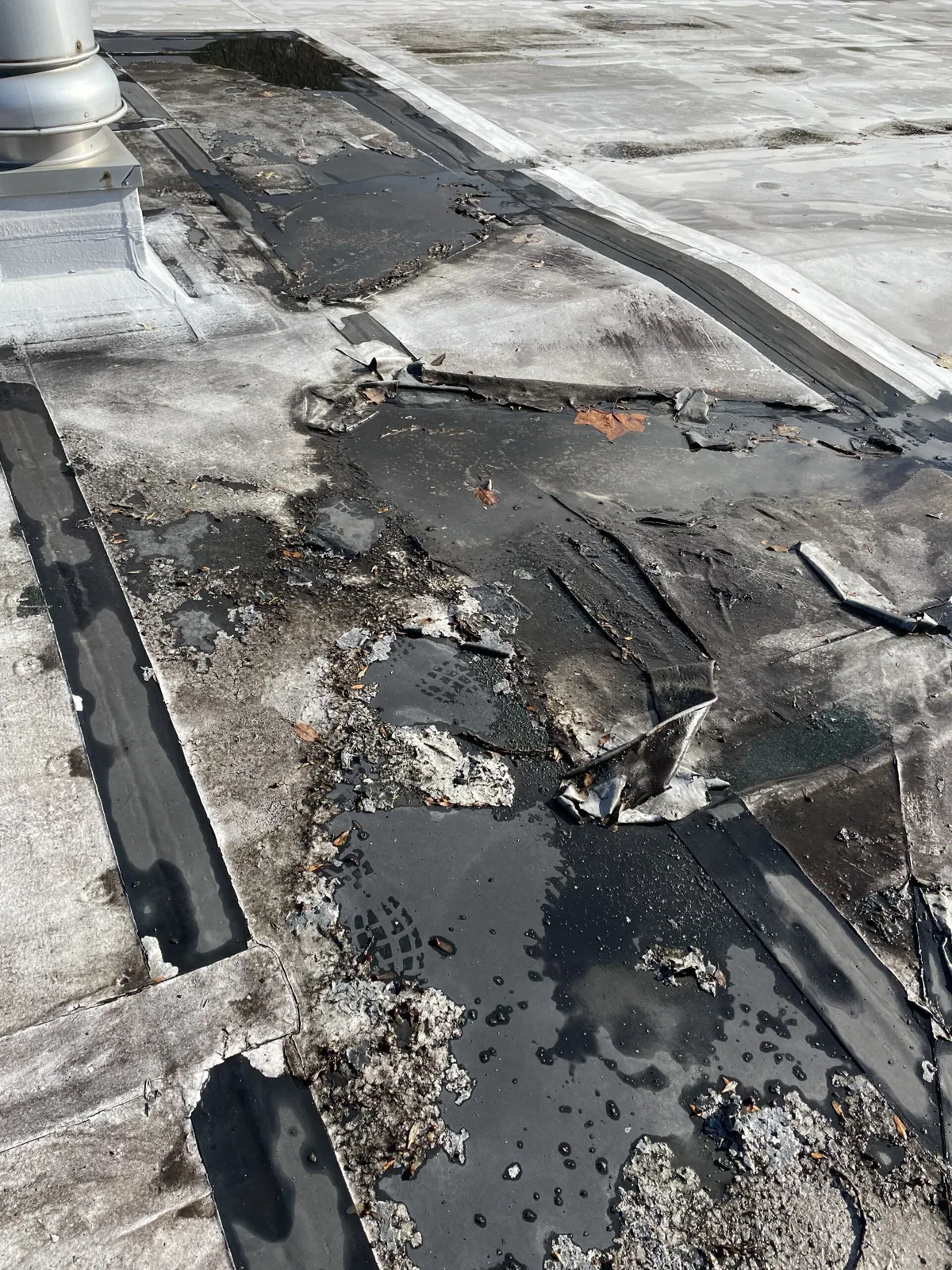
Sometimes the leak is a failed seam right where the field membrane meets the wall, not the flashing itself. The membrane and the flashing may need different cleaning and primers, and old coatings or patch materials can stop new material from bonding. We note those conditions where they affect what can be used. A bead of sealant along an edge says nothing about the condition of the wood or metal behind it. We check each spot on its own, so one open corner does not turn into a claim that the whole roof is failing.
Check the backing and allow for movement
Once a loose flashing is pulled back, the wood blocking, sheathing or masonry behind it often turns out to be wet or rotted, and that changes how the repair is built. We probe what we can reach and open small test areas where we cannot see the condition. If rot is present, we say where and how far it runs. Cracks that suggest the wall is moving are flagged as a question, not a conclusion, and anything structural goes to an engineer. The owner sees what the new flashing will fasten to and what could still change the plan before materials are ordered.
Flashing failures near the roof edge often come with wind damage to the perimeter, such as lifted edge metal or peeled membrane. We note how that damage relates to the wall detail and treat any separate opening as its own repair. The date someone first noticed the leak helps us look in the right place but does not settle who is at fault. If removal uncovers more rot than expected, we measure it and send a change for approval before we keep going. Meanwhile the opening gets a temporary seal so the building stays dry.
New flashing only works if it is fastened to something solid and built to move with the wall. We look at the wall surface, termination, fasteners and adjacent roof before deciding how far the replacement runs. A stiff detail can crack where the building moves, and caulk cannot replace missing backing. The estimate spells out the corner-to-corner limits of the new flashing and any wall or blocking repairs that have to happen first.
Plan roof access and staging
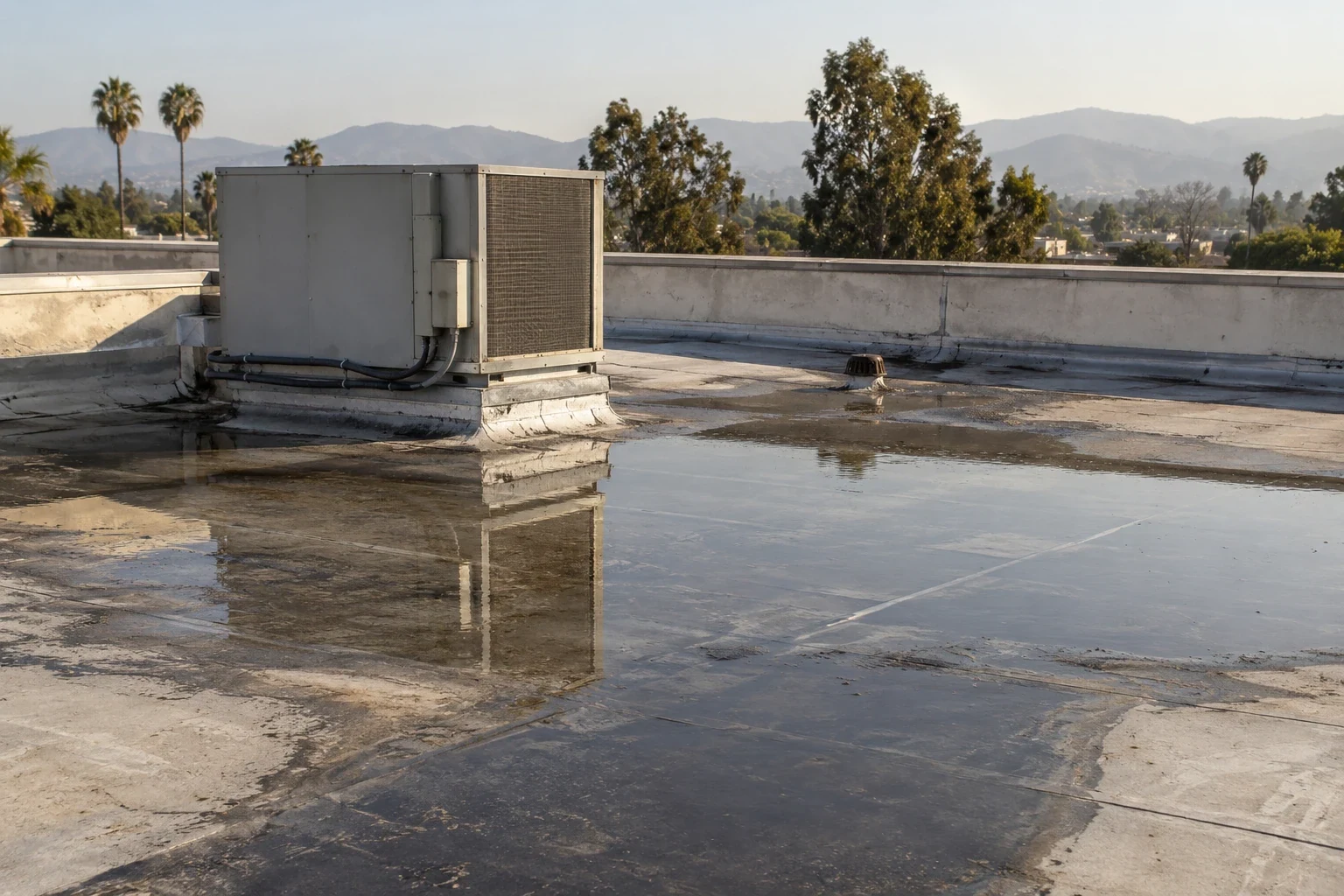
Fixing a parapet usually means working from the roof and sometimes from the ground below, so we talk with the building manager about how materials get up, where the crew can stage and which spaces stay occupied. Permission to inspect is not the same as approval to tear off flashing, use a lift or open up the wall, and we ask for each step separately. Where access work, such as a lift rental or sidewalk protection, is part of the job, it appears as its own line in the estimate. That way the owner knows what is needed to reach the top of the wall before the crew shows up.
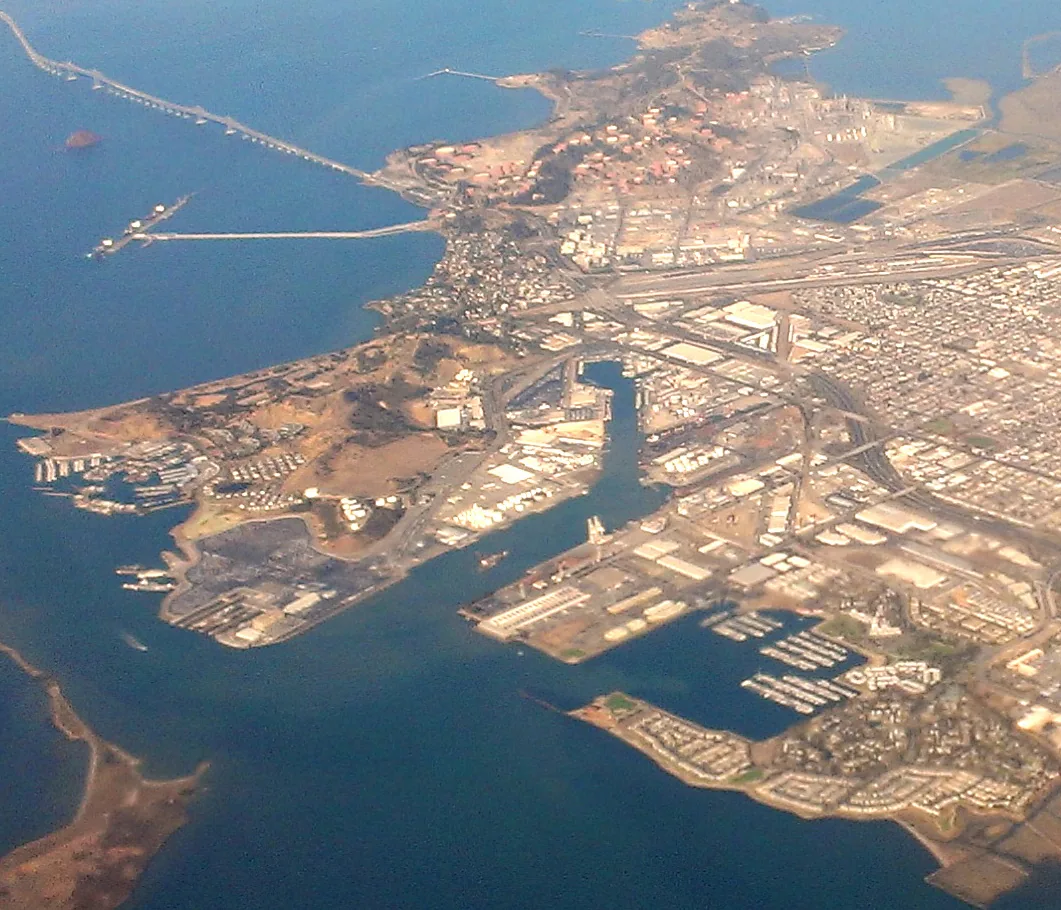
The Port of Richmond has seven city-owned and 11 privately operated terminals, each with its own operating rules. When a flashing repair is on or near port property, we plan deliveries and roof access around those rules. A building in Point Richmond gets its own access plan and site contact too; we do not assume one neighborhood works like the next. We agree on where materials will be dropped and how they move across the roof. Heavy loads in one spot or moving a rooftop unit may need an engineer's sign-off, and we sort that out before delivery day.
Rebuild the flashing in the right order
The finished repair has to join sound roof membrane to a solid wall or curb. If the roof is getting thicker insulation, the flashing height and the top termination change, and the wall finish above may need adjusting. We work all of that out before ordering parts. When a mechanical contractor has to disconnect or lift a unit, we schedule around them. The owner knows what has to happen first and how the opening stays sealed until then. Patching the bottom of a wall does not count as a finished flashing repair while the top edge is still open.
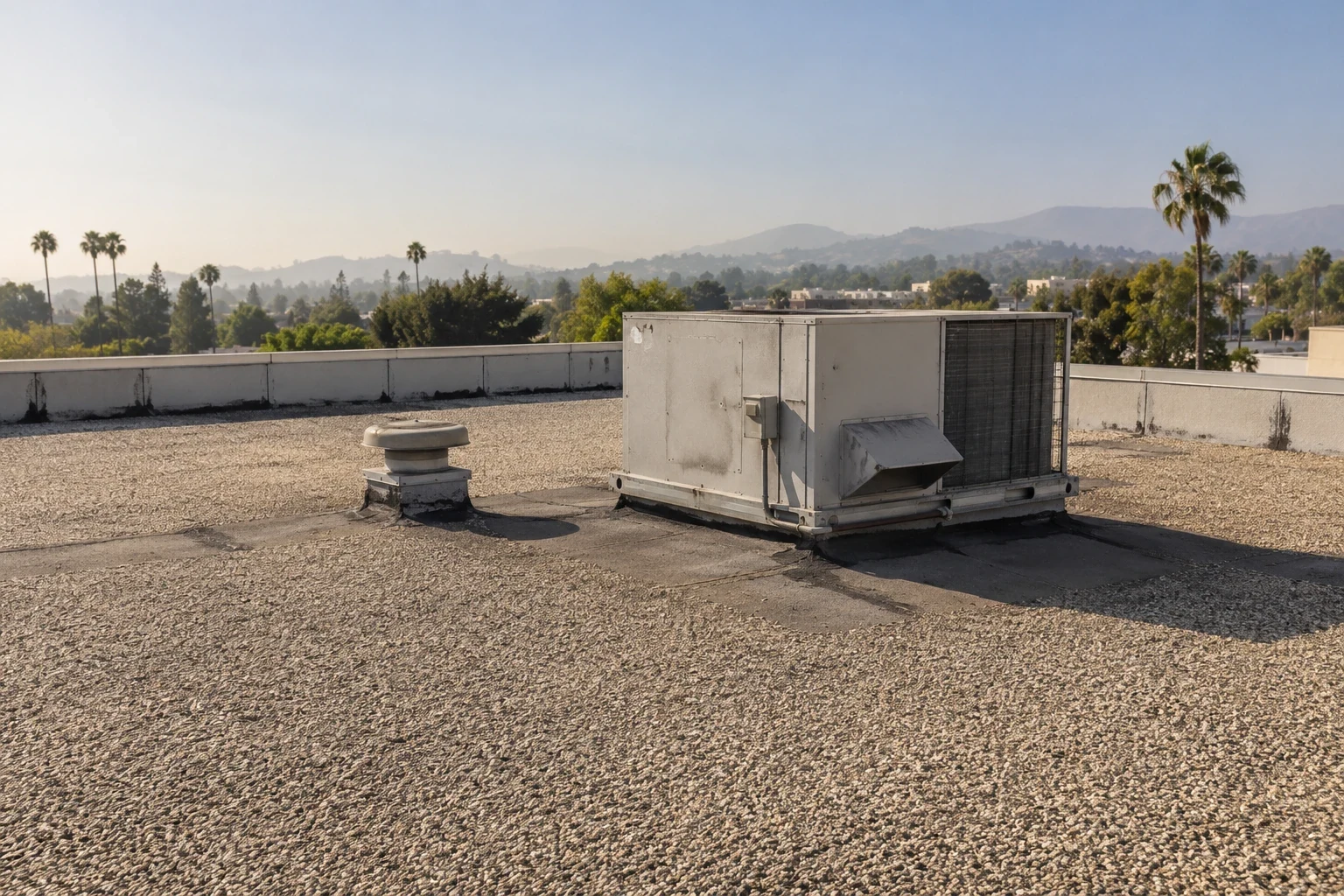
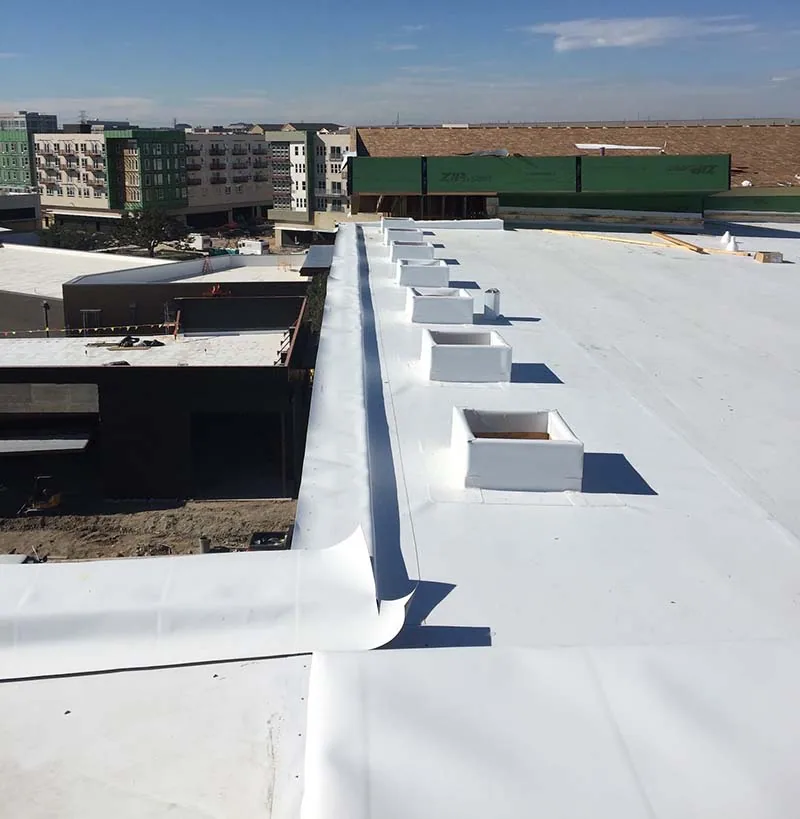
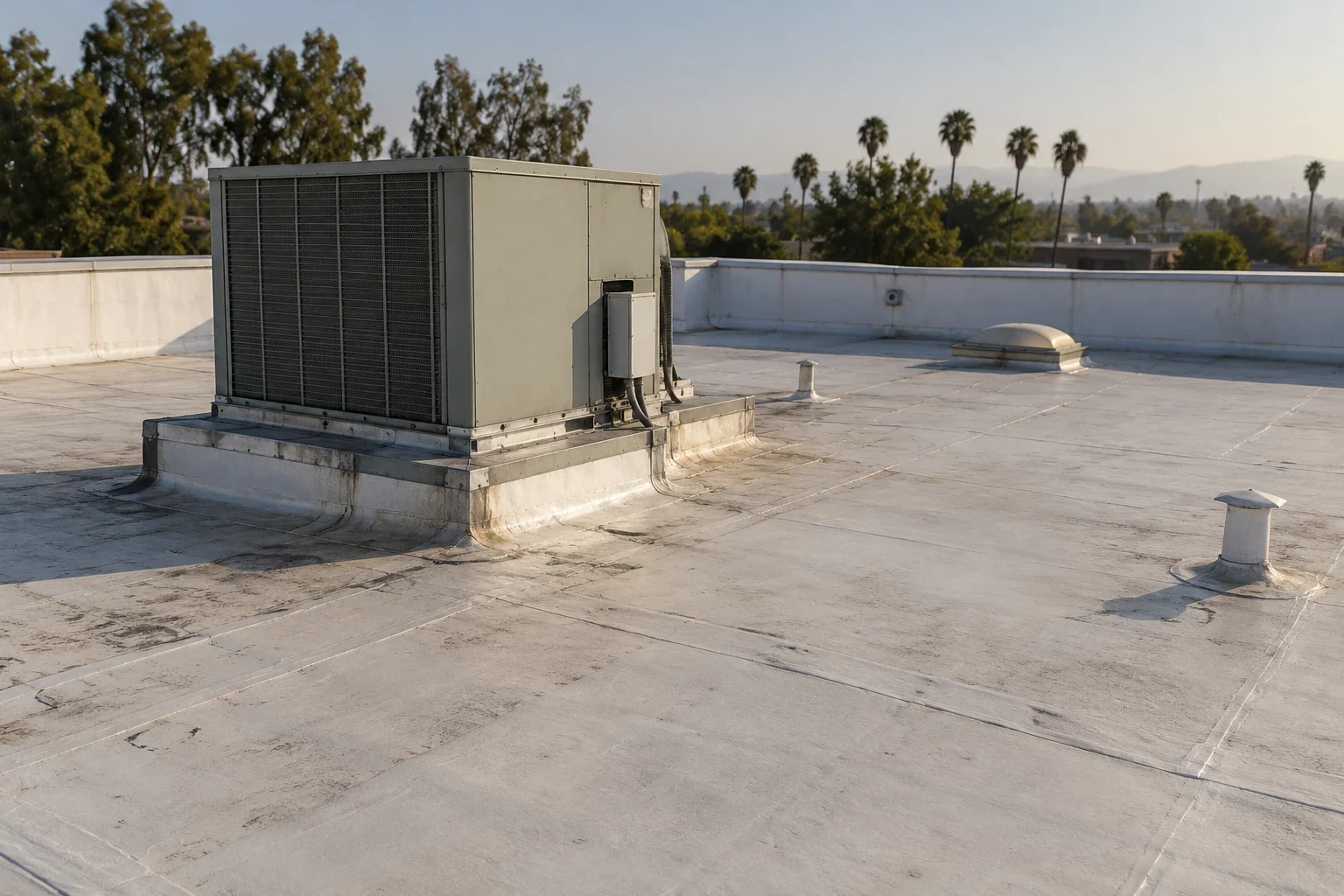
Skylight and penetration flashing near the failed wall detail needs the actual curb height and pipe layout checked. If a unit is going to be replaced next year, new flashing installed today may get torn up, so we ask about equipment plans before setting the schedule. The scope lists the prep work, what existing material stays and the detail that will be installed. Where the same flashing has failed again and again, a larger replacement may make sense, and we price it as a separate option so the owner can compare.
Photos and records after the repair
When we finish, the owner gets photos of the original opening, the repaired backing and the completed flashing. Pictures taken during tear-off matter most because the finished detail hides the wood or blocking we replaced. If wall, mechanical or structural work still needs another trade, we list it separately. We point out any concerns we left alone instead of calling the whole roof fixed. A facility manager who takes over the building later can see exactly what was done and what is still waiting on someone else.
If another leak shows up, those records help with the next commercial roof repair. A cracked wall finish, a new opening or a unit swapped out since our work can create a different path for water. We inspect the roof as it is now before blaming the earlier repair. The old photos show what was rebuilt and how far it ran, which saves time tracing the new leak. The owner ends up with a clear history of the roof that makes future repairs faster and cheaper to plan.
Commercial Roofing Questions
Can a patch at the bottom of a wall stop a leak coming from higher up?
No. If water is entering at an open top edge or corner, a patch lower down will not stop it. We find the actual entry point and repair that part of the flashing.
What happens if the wood or blocking behind the flashing is rotted?
We show you where the rot is and how far it goes, then send a change order for replacing it. The new flashing needs solid backing to fasten to.
Should rooftop equipment be replaced before the flashing is repaired?
If a unit is due for replacement soon, it usually makes sense to do that first or at the same time. Otherwise new flashing around its curb can be damaged when the unit is swapped.
Does approving an inspection mean you can start the repair?
No. We inspect first, then ask for separate approval to remove flashing, bring in lifts or work on the wall. Each step is agreed before it happens.
What photos will we get after the repair?
Photos of the original problem, the backing repairs made during tear-off and the finished flashing, all marked by location so anyone can find the spot later.

Get the failed flashing fixed at the source