PVC Roofing in Richmond, CA
On a big retail building, the leak that gets everyone's attention is often the one over the back service entrance, where a pipe, a roof hatch or a run of flashing sits right above the doors that deliveries come through. On a big-box retail roof with PVC membrane, those leaks usually trace back to a seam that was never fully welded, a flashing that shrank and pulled loose, or an old patch made with the wrong material.
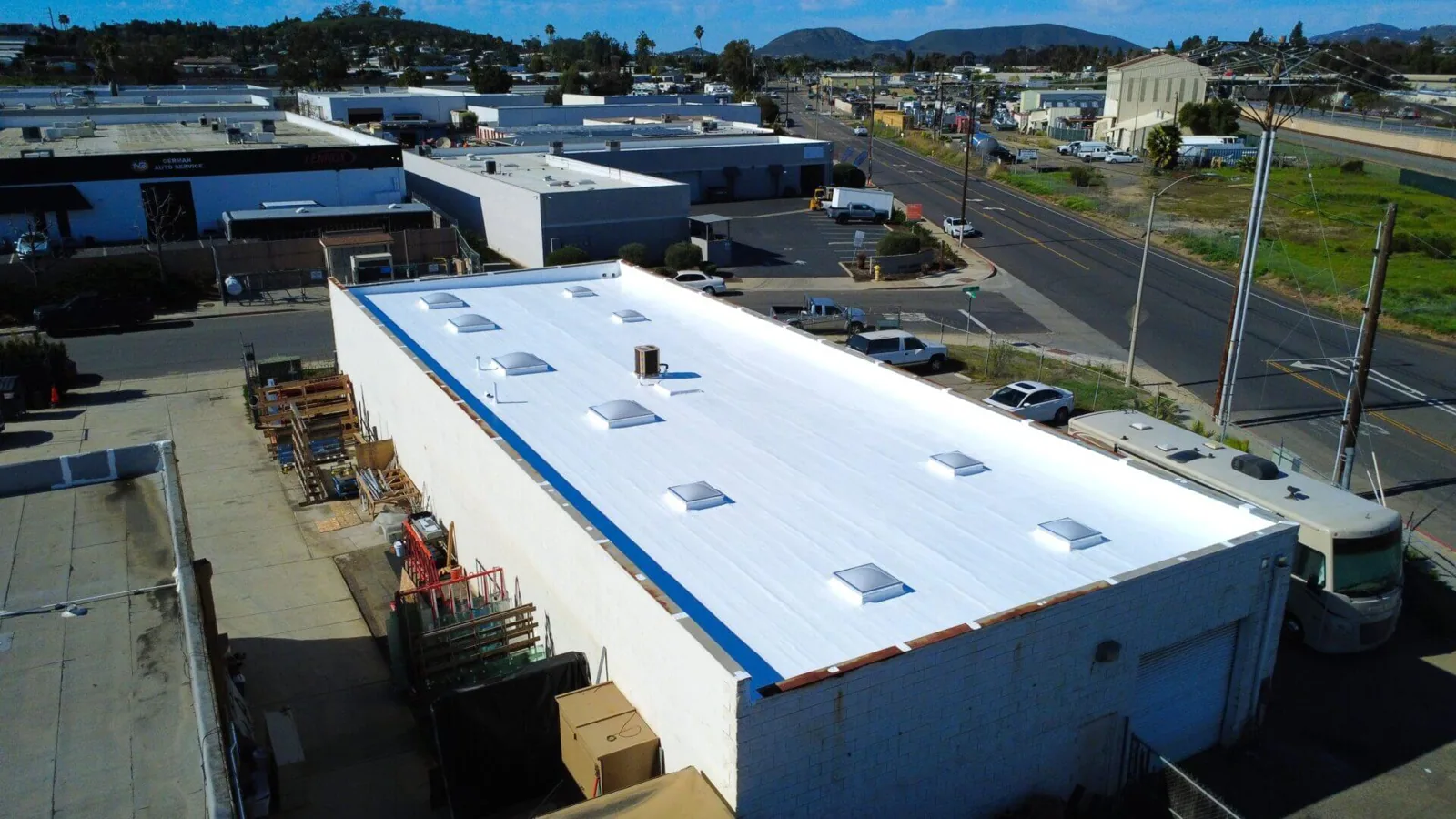
PVC is a good roof for Richmond's commercial buildings. It welds with hot air into seams that, done right, hold as well as the sheet itself, it resists grease from restaurant exhausts better than many membranes, and it reflects heat. A repair only works, though, if it welds to clean, compatible PVC. We find where the water is getting in, check the sheet and any old repairs around it, and test the insulation below. The owner gets a price for fixing the detail properly and, if the roof is near the end of its life, a comparison with replacement.
Check what the new PVC will weld to
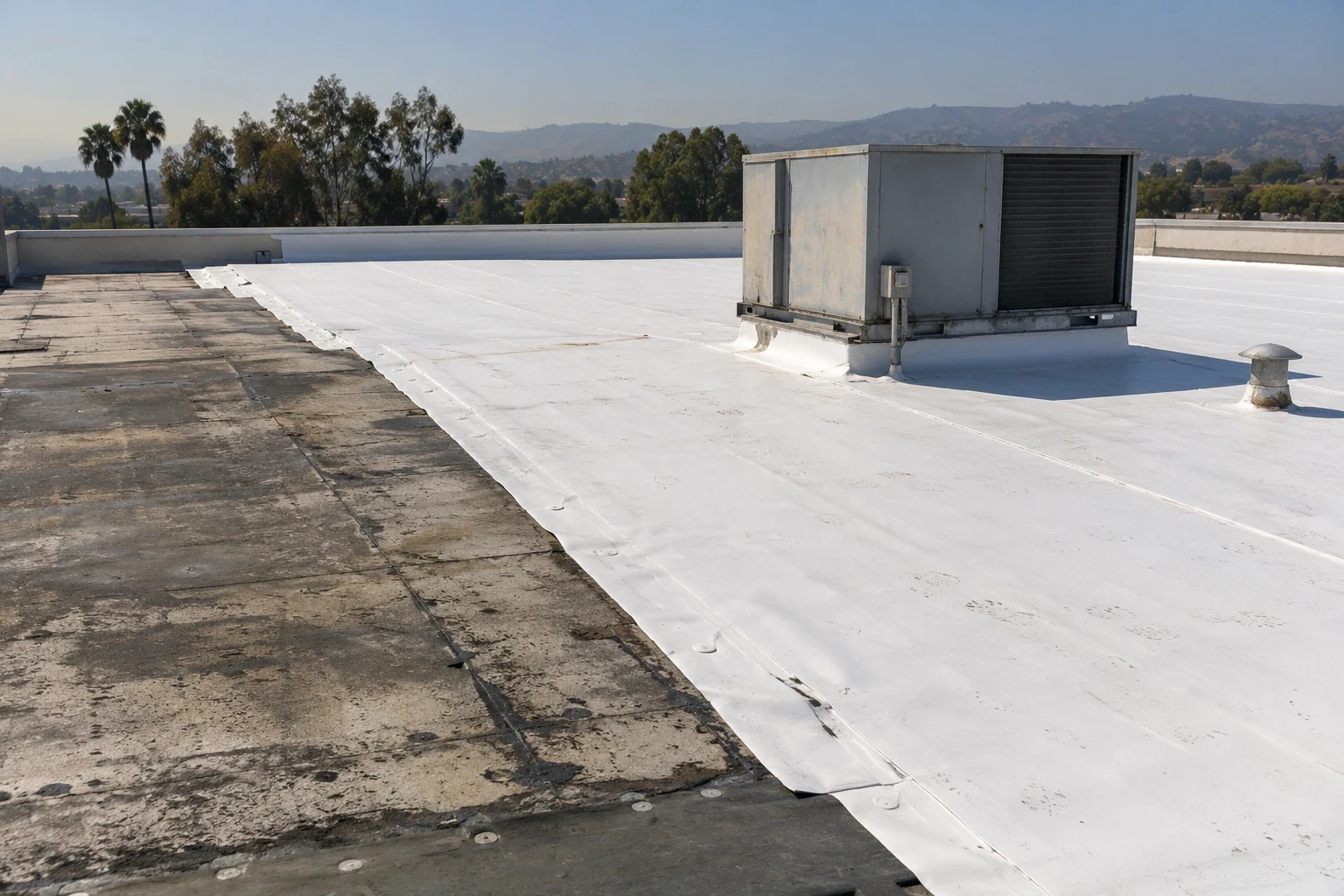
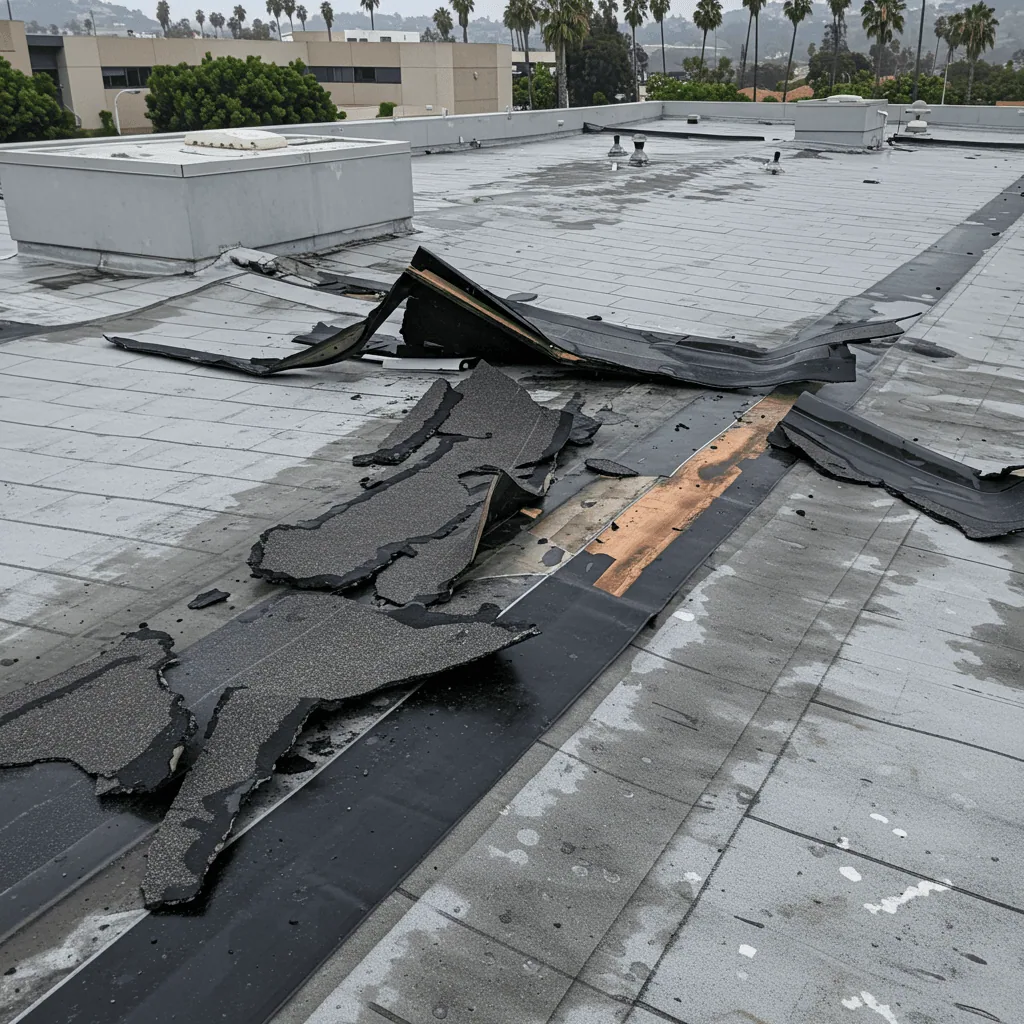
Older PVC roofs often carry a history of quick fixes: a strip of tape, a dab of caulk, a patch of a different single-ply sheet, or a coat of something silver. None of those will accept a hot-air weld. During a roof inspection we look at each patch and the membrane around it, then decide whether we can weld to clean sheet nearby or need to cut the old material out first.
Age matters too. A PVC membrane that has lost its plasticizers turns stiff and may crack when it is folded or heated. We test-weld a small piece and pull it to see if it holds. If it does, a repair makes sense. If the sheet will not take a weld, patching is a short-term fix at best, and we say so. We also look for printed markings that identify the product, because flashings and accessories should come from a compatible line. All of this is written into the estimate, so the owner knows why we chose a certain repair and not a cheaper-sounding one.
Weld each detail the right way
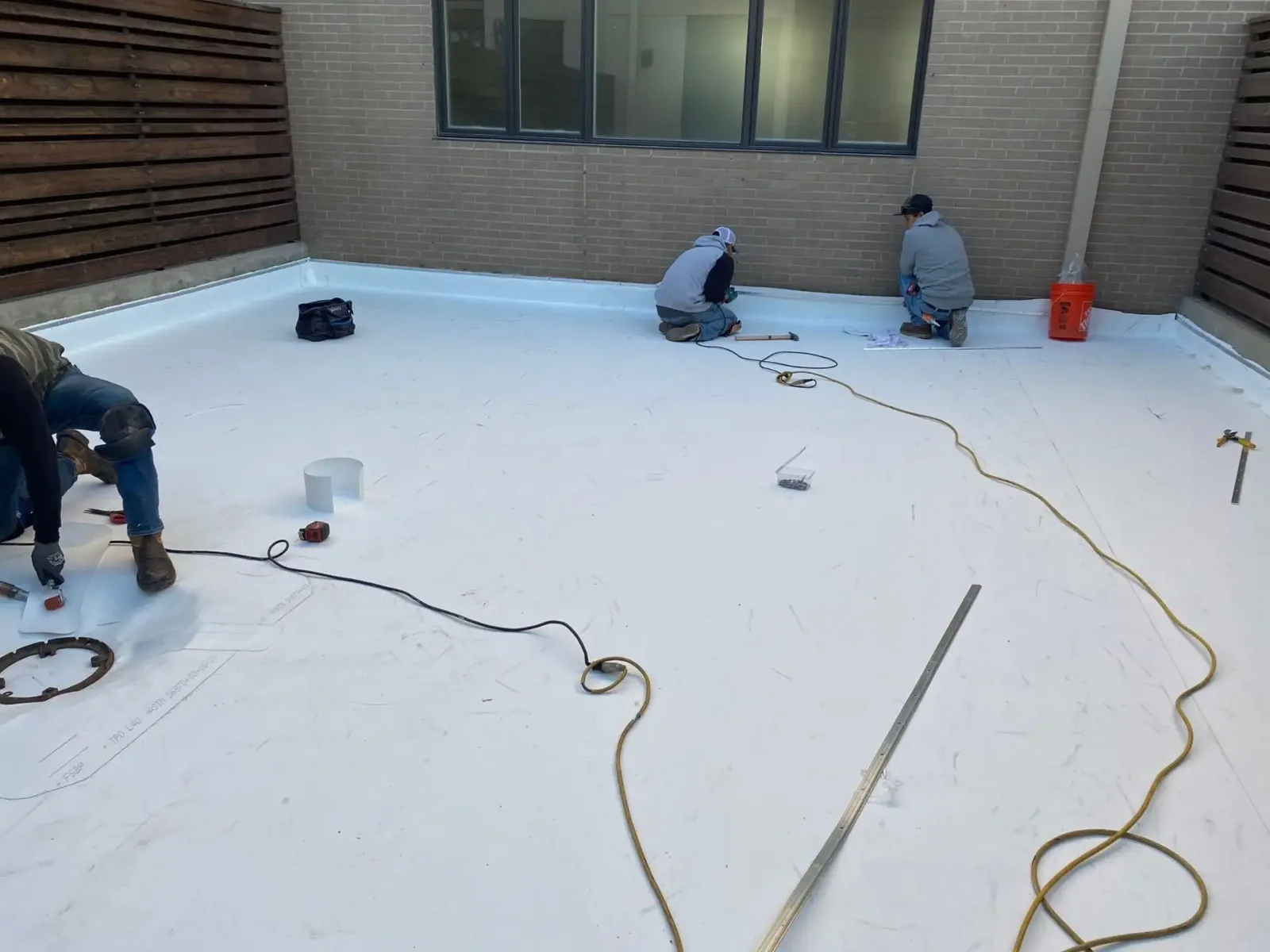
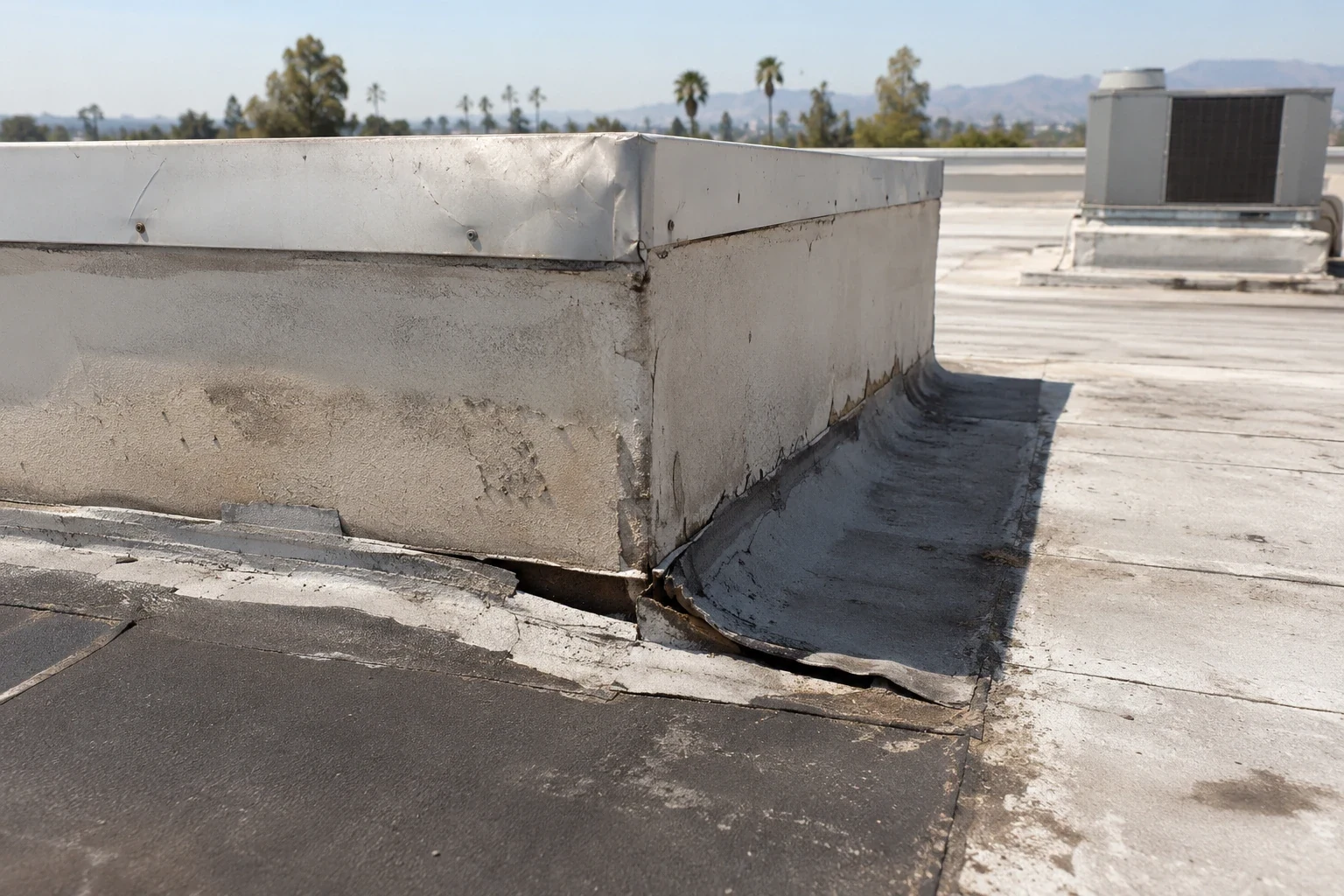
Most PVC repairs are welded with a hand-held hot-air gun and a roller. Sika, for example, specifies hot-air welding for both its PVC membranes and flashings. The details are where it gets tricky: inside and outside corners, pipe boots, drain sumps, curb corners and edge metal. Each one needs the right pre-formed piece or a field-fabricated flashing, cleaned and welded in a set order. Our skylight and penetration flashing work covers pipes, hatches, skylights and curbs on PVC roofs.
After welding, we probe every seam with a pick to find gaps. A seam that looks fine can still have a channel that lets water in. We also check the wall and curb heights, because if new insulation raises the roof the flashing may end up too short to work.
We keep a small local repair separate from wider work in the estimate. If only one pipe boot failed, we fix that boot. If every boot of the same age is cracking, we tell the owner and price replacing them all. The goal is a clear list of what was wrong, what we will fix and how it will be done, so the owner is not paying for a guess.
Replace wet insulation under the leak
Water that gets past a failed seam or flashing often spreads under the membrane, soaking insulation well beyond the visible tear. We check moisture around the leak with core cuts, a meter or an infrared scan, then mark the boards that are confirmed wet and the ones that are only suspect. Our insulation and cover board replacement is priced from those findings, not guessed from the size of the stain inside.
A new PVC patch over wet insulation will look good for a while, then blister or let fasteners rust. If the crew opens the roof and finds more damage than expected, we stop and walk the owner or store manager through the area and the added quantity. Nothing goes forward without approval, and the roof stays watertight in the meantime. When comparing a repair with a full replacement, both options should include the insulation work they really need. A cheaper bid that leaves wet board in place is not saving money in the long run.
Get blocked details ready to work on
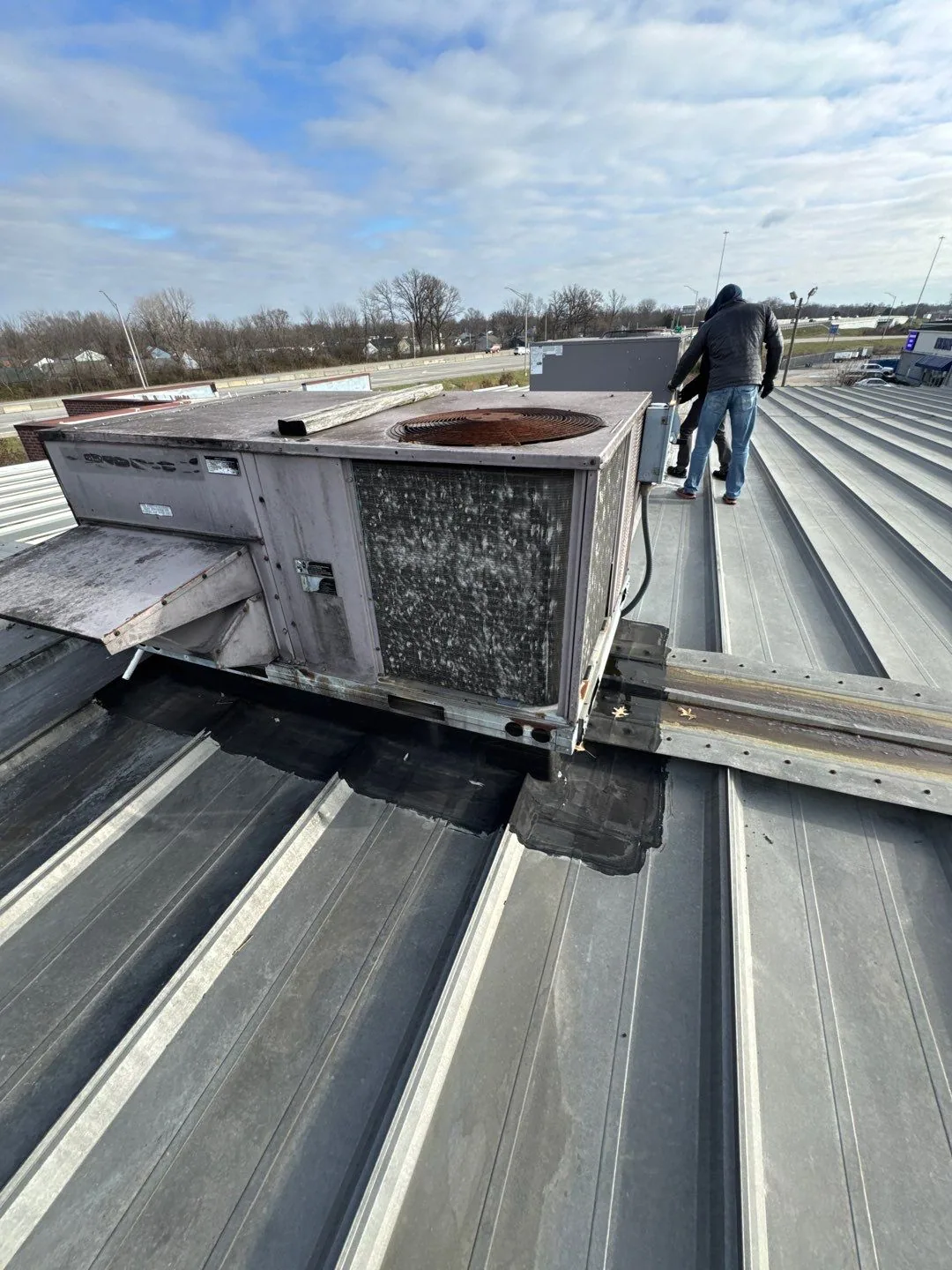
Some details cannot be repaired until another trade does its part. A rooftop unit may need to be disconnected and lifted, a sign contractor may need to take down a bracket, or a store may need the service entrance closed while we work above it. We list each of those steps in the estimate and schedule our flashing right after them.
On an occupied retail building, deliveries, customers and staff all have to keep moving. We agree with the store or property manager on working hours, safe access for the crew and protected walkways near entrances. Breaking the job into phases can add setup costs, and we show that difference before anyone picks a schedule. Each night the roof is closed and sealed so nothing gets wet below. Finishing the open field areas quickly does not help if one blocked detail is still leaking, so we plan the sequence around the hard spots first and keep the owner updated on what is waiting on whom.
Compare PVC with other single-ply roofs
Owners comparing replacement options often look at a TPO roof, which is also a heat-welded white single-ply membrane but uses different flashings and accessories. A KEE roof is a PVC-based membrane with an added ingredient that keeps it flexible longer. We price each option on the same tear-off area and the same insulation repairs so the numbers can be compared fairly, then explain the differences in seams, grease resistance and long-term care.
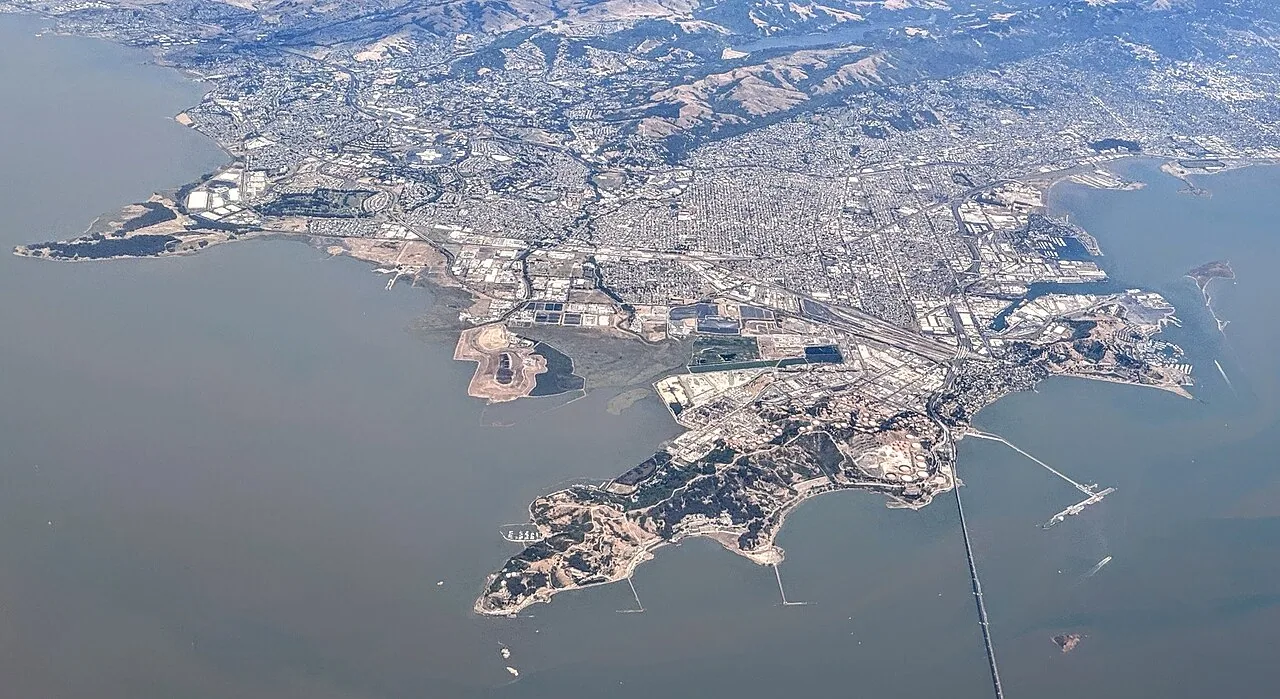
For Port of Richmond properties and other industrial and retail sites around the city, we leave the owner with photos of each repaired detail, a note of the membrane we identified, the seam checks we did and any areas we did not inspect. If a warranty applies, read the terms before adding new penetrations or coatings. Benicia's industrial park, built on the old Benicia Arsenal grounds, is a reminder that many Bay Area commercial roofs outlive their original owners; a clean record helps the next one.
Commercial Roofing Questions
Does a good PVC weld mean the insulation underneath is dry?
No. A weld only seals the top. We test the insulation around the leak separately and replace any boards that are confirmed wet.
Can you weld new PVC over an old patch?
Usually not. Tape, caulk, coatings and other membranes will not take a hot-air weld. We weld to clean PVC or cut the old patch out first.
If most of the roof is done, can the blocked entrance detail wait?
It can be scheduled later, but it still has to be finished. We plan the job around those hard spots so the leak is actually stopped.
What records should we keep after a PVC repair?
Photos of each repaired detail, the membrane we identified, seam test notes and any warranty terms. That helps when the roof is altered later.

Tell us about the PVC roof and the leak