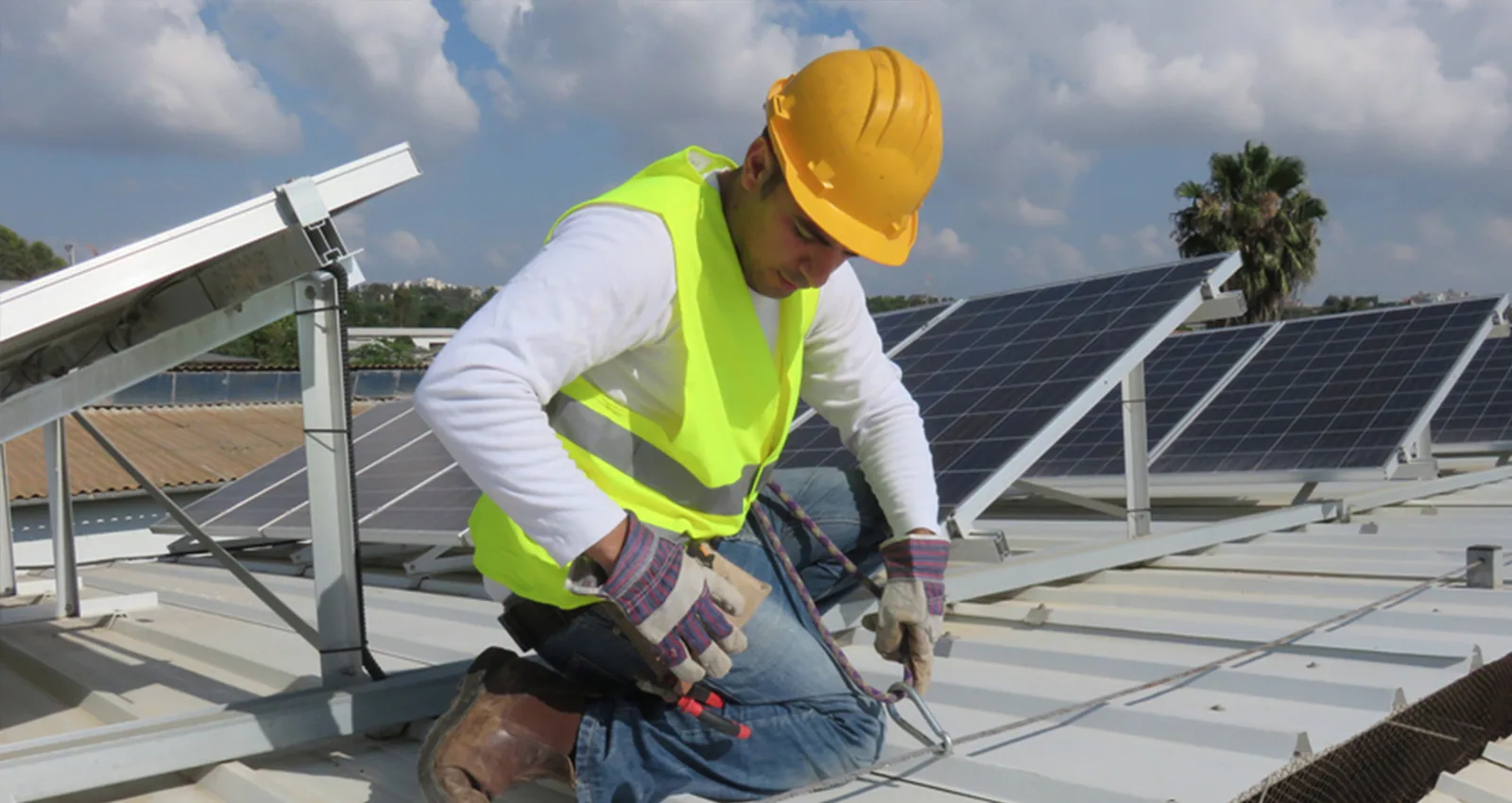
Preventive Roof Maintenance in Richmond, CA
Most commercial roofs don't fail all at once. They fail at a clogged drain, a cracked flashing or an open seam that nobody looked at for a few years. Preventive maintenance catches those small problems while they're cheap to fix. On a Richmond roof, a pile of leaves and grit over a drain can hide a torn membrane around the drain bowl, so clearing the debris is only half the job. On a self-storage roof, where long runs of metal or low-slope roofing drain to a few outlets, one blocked drain can back water up across a large area.
A typical visit includes clearing drains and gutters, checking seams, flashing, curbs and penetrations, and making small repairs like resealing a pitch pan or re-securing loose edge metal. We also note how the crew reached the roof and anything that slowed access. At the end, you get a short report: what we cleaned, what we fixed on the spot, and what needs a bigger repair.
Drains come first
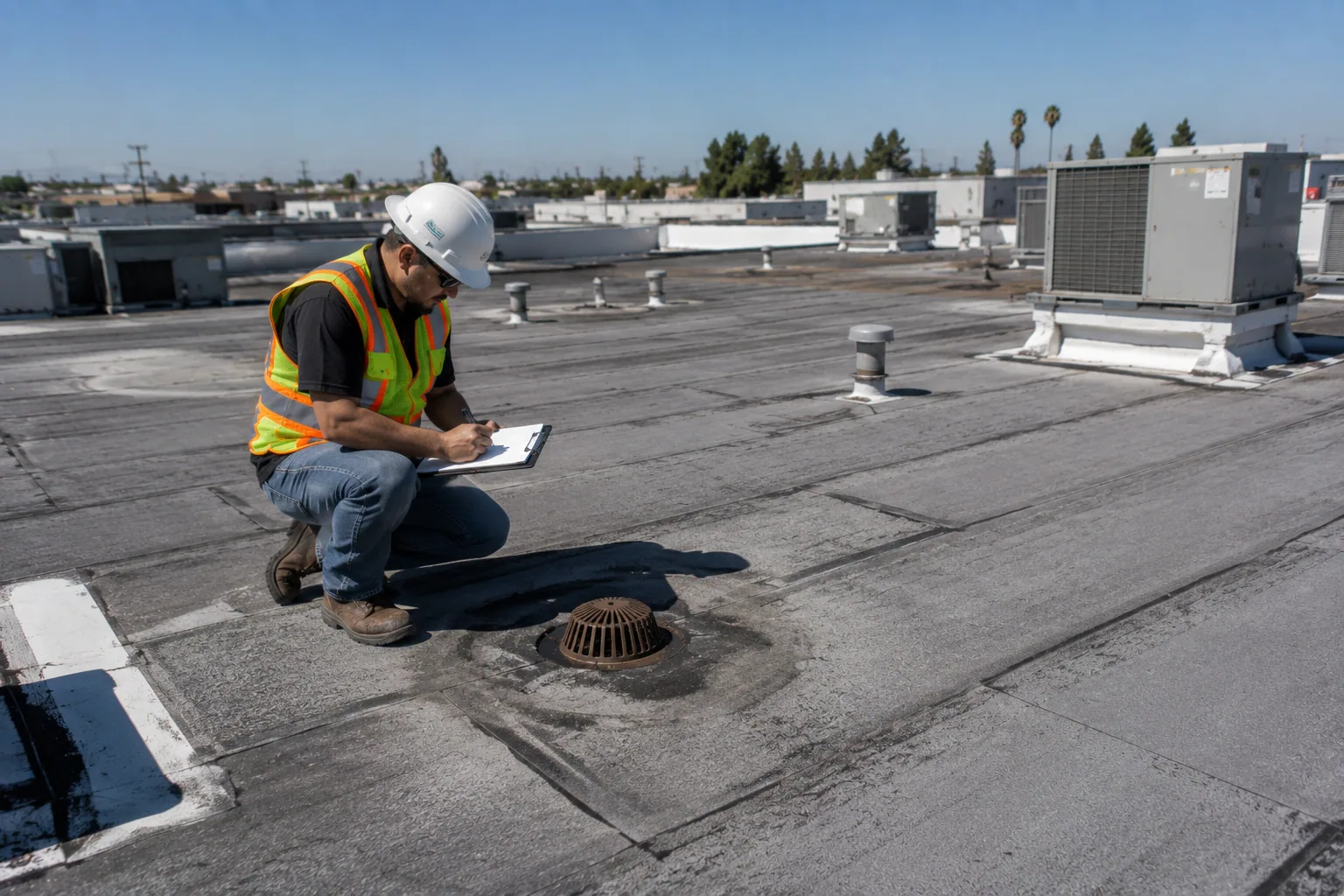
Drains, scuppers and gutters are the first thing we check, because standing water speeds up wear on every roof type. We clear debris, look at the drain bowl, clamping ring and strainer, and check the membrane where it meets the drain. If the strainer is missing or the clamping ring is loose, we fix it while we're there. A torn membrane at the bowl or a cracked scupper needs a proper roof drain and scupper repair, which we price separately.
Standing water after cleaning tells us something else is going on. The roof may have sagged, insulation may have compressed, or the pipe below may be partly blocked. We note where the water sits and how deep, then tell you what it likely means and who should look at it. A plumber may need to scope the drain line, or the roof may need tapered insulation at the next replacement. We don't claim a whole roof drains properly just because one outlet is clear.
Check around rooftop equipment
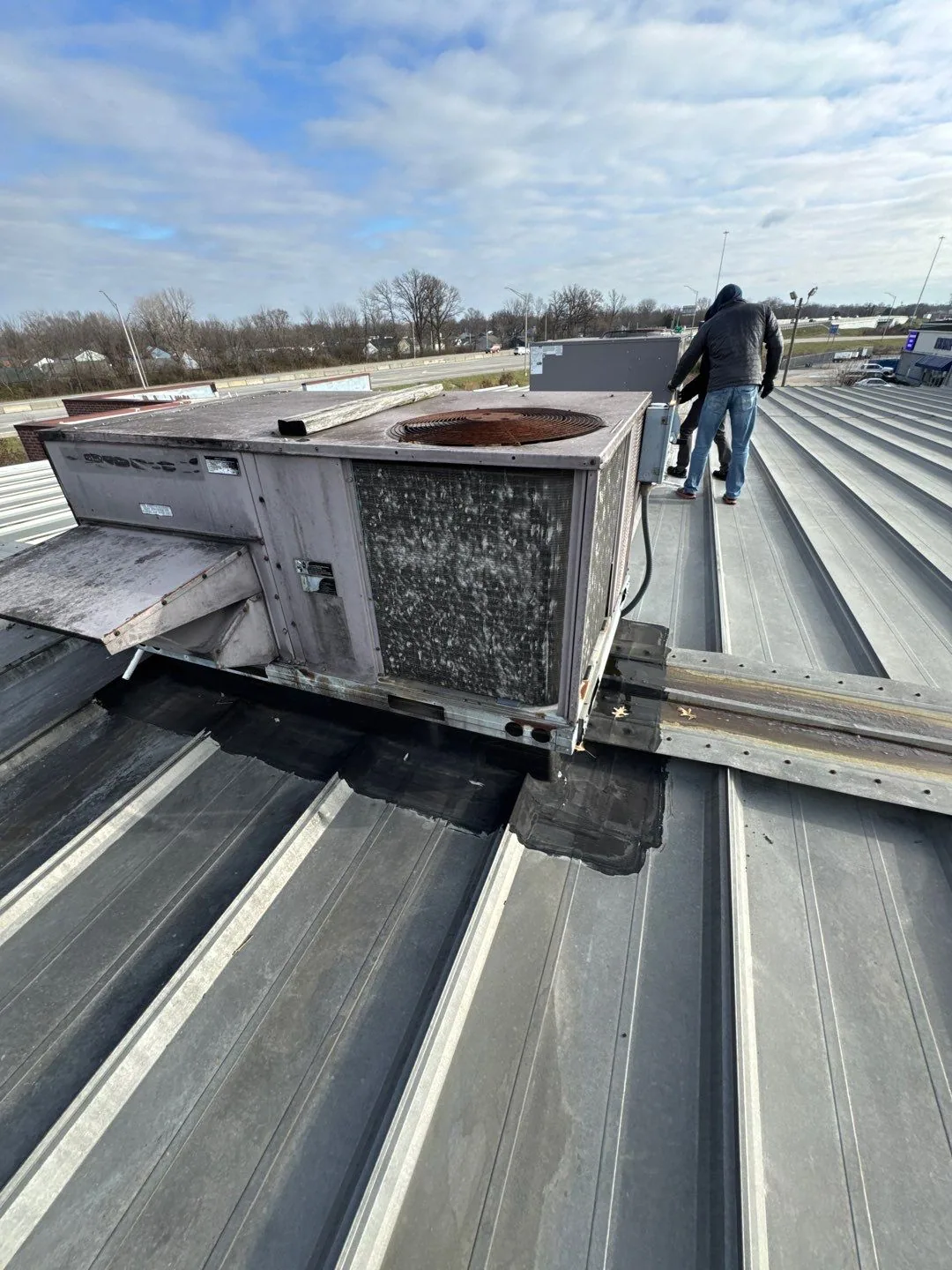
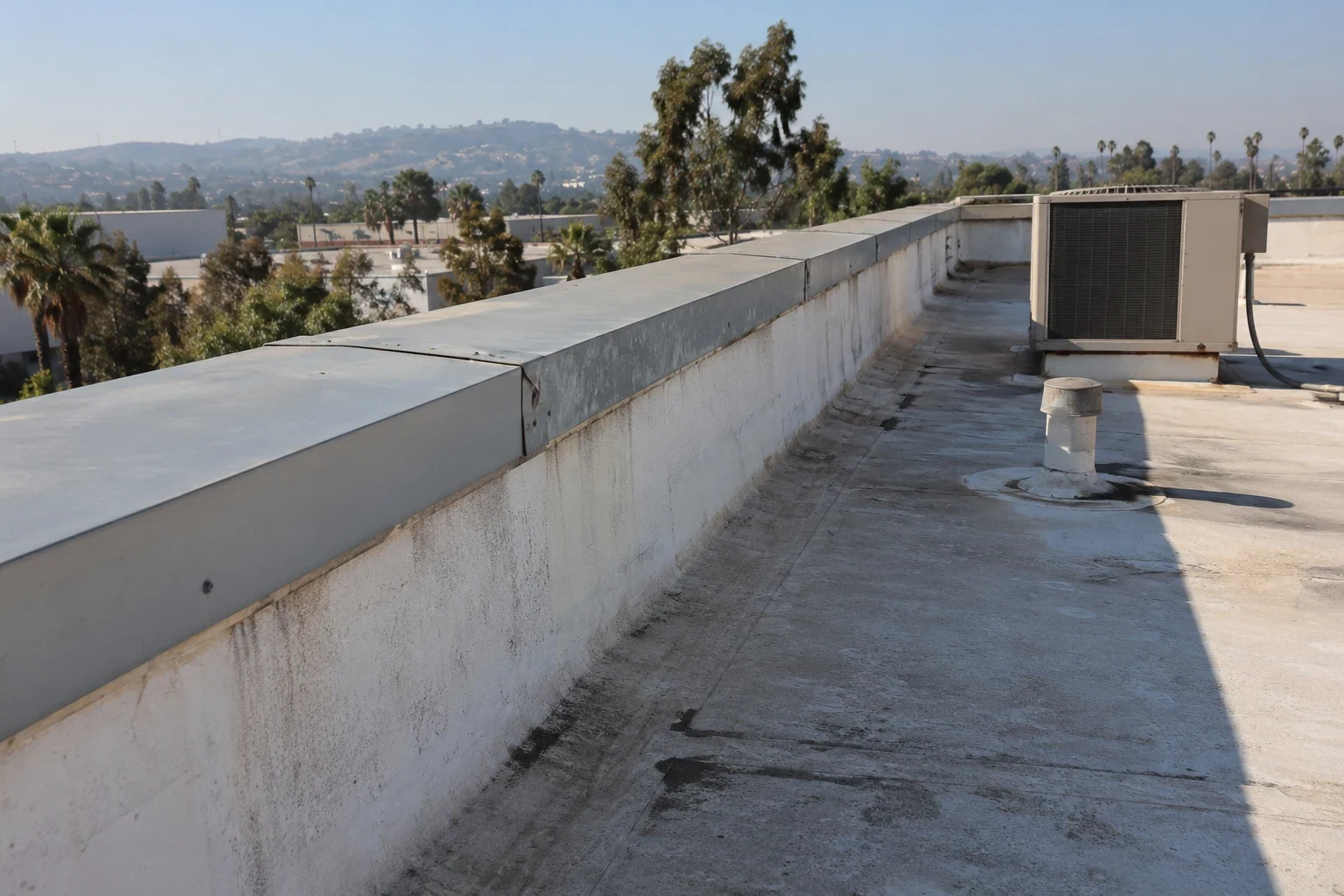
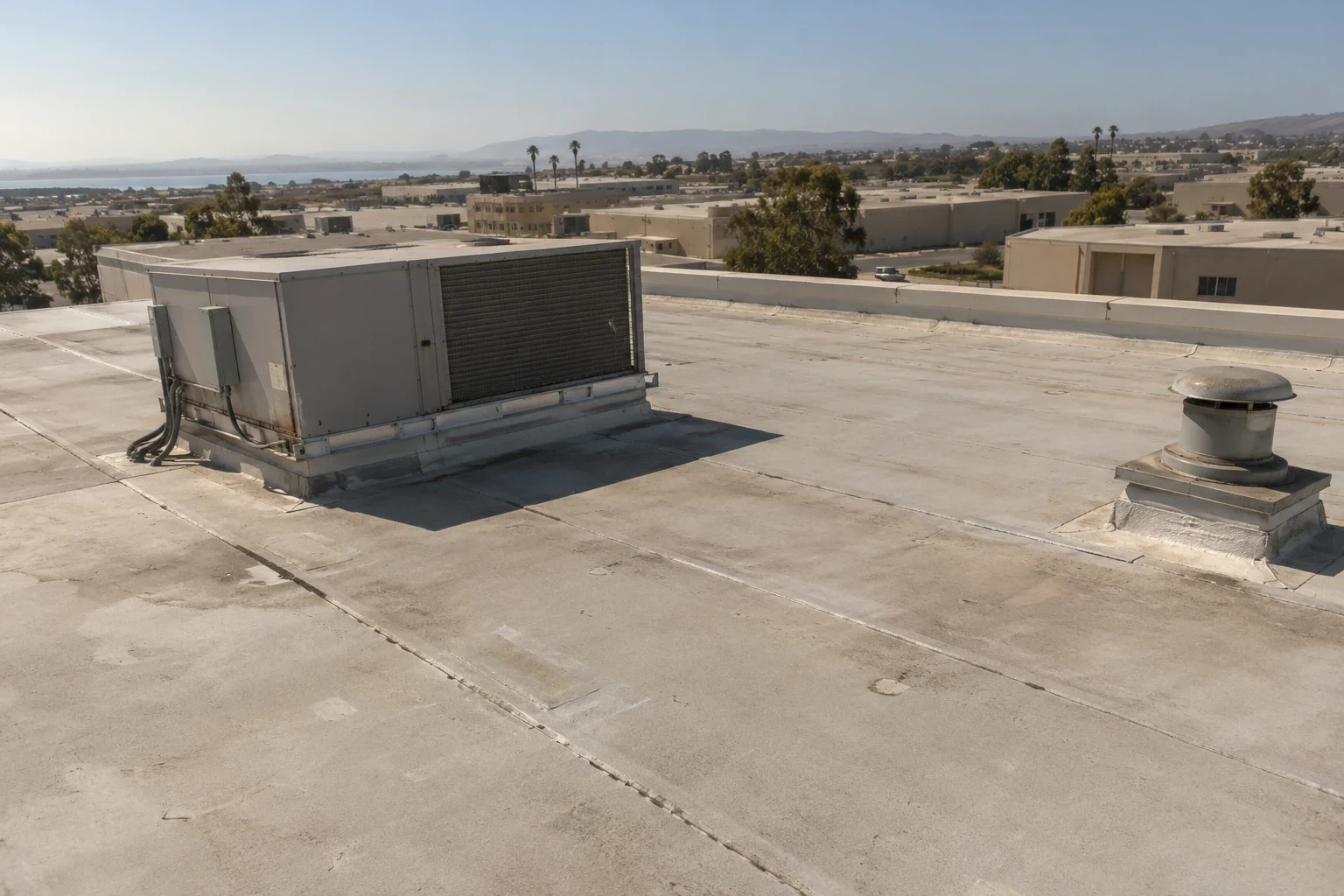
Rooftop equipment is where many leaks start. HVAC units, exhaust fans and pipe supports all cut through the roof, and their flashing takes a beating from vibration, heat and service technicians walking around them. We check curb flashing, pitch pans, pipe boots and the membrane around each unit. Loose screws on access panels and debris left by service crews get noted too.
Some problems sit under or behind equipment we can't safely move. When that happens, we say so in the report instead of marking the area as checked. If a unit has to be lifted to repair the curb, we coordinate with your mechanical contractor so the repair happens in one trip. Moving equipment adds time and cost, and it's better to know that up front. We also ask about tenant spaces or interior areas we may need to reach, so the repair isn't delayed when the crew arrives.
Look past the surface
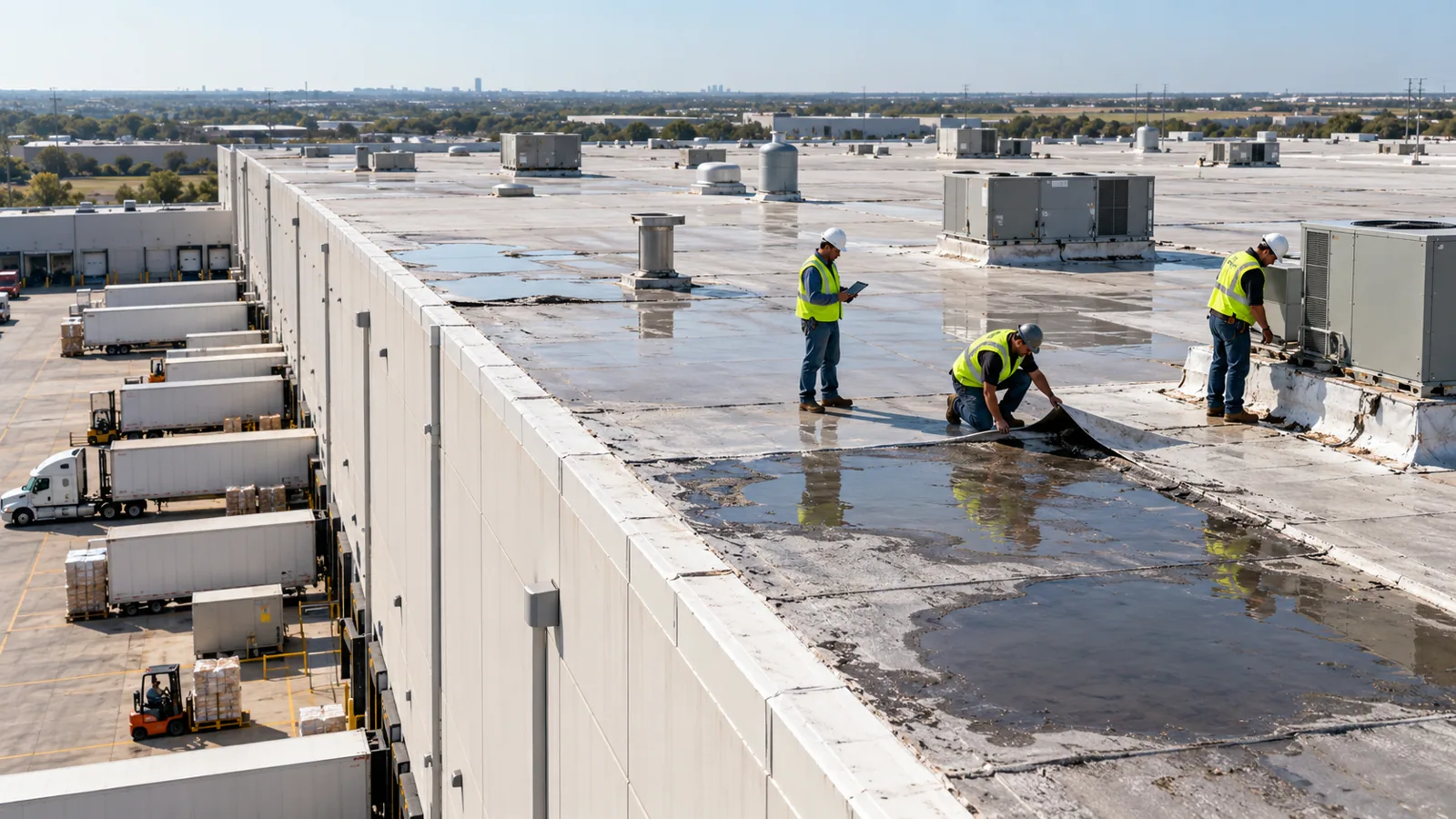
A roof can look fine on top while water is spreading underneath. A soft spot underfoot, a blister in the membrane, or a stain on a ceiling tile can all point to wet insulation. When we see those signs, we recommend a roof inspection with core cuts or a moisture survey to find out how far the water has gone. That's a separate step from routine maintenance, and we tell you why it's worth doing.
Wet insulation has to come out and be replaced, and the repair has to include the flashing or seam that let the water in. Coating or patching over the top doesn't dry anything out. If we open an area and find more damage than expected, we stop, take photos and get your approval before going further, and we keep the area watertight in the meantime. This keeps small repairs from turning into a guessing game.
Each visit ends with a fix list in priority order, not just a folder of photos. We separate routine items like debris and sealant from drainage problems, loose attachment and open flashing, then schedule the follow-up by how much damage each item could cause.
Fix the worst problems first
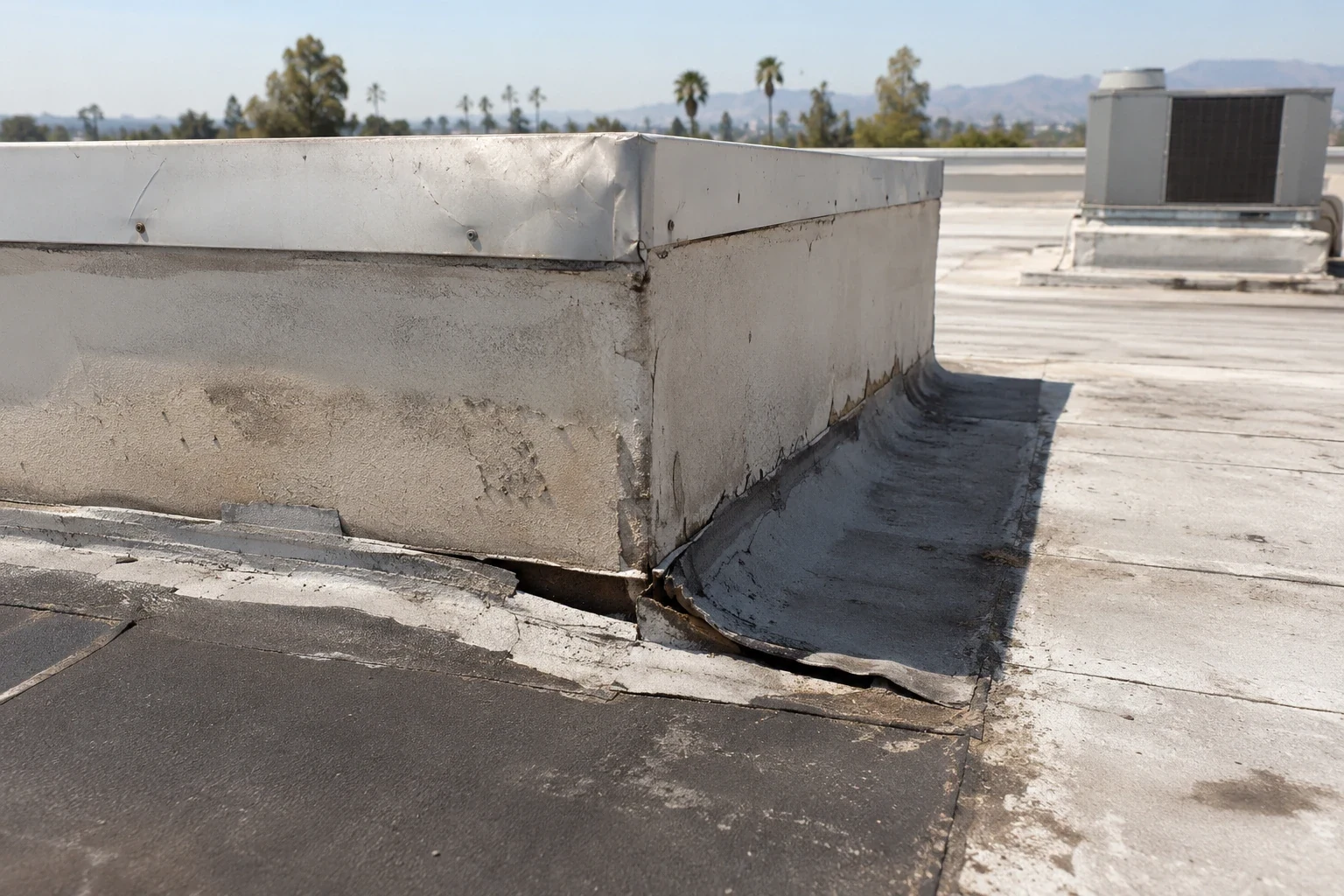
An open curb flashing that's letting water in today matters more than a roof section that's simply getting old. A commercial roof repair at that curb should come before any coating or restoration project. We explain what the repair involves, including the curb, wall or drain around it, and what it costs, so you can budget the urgent items first.
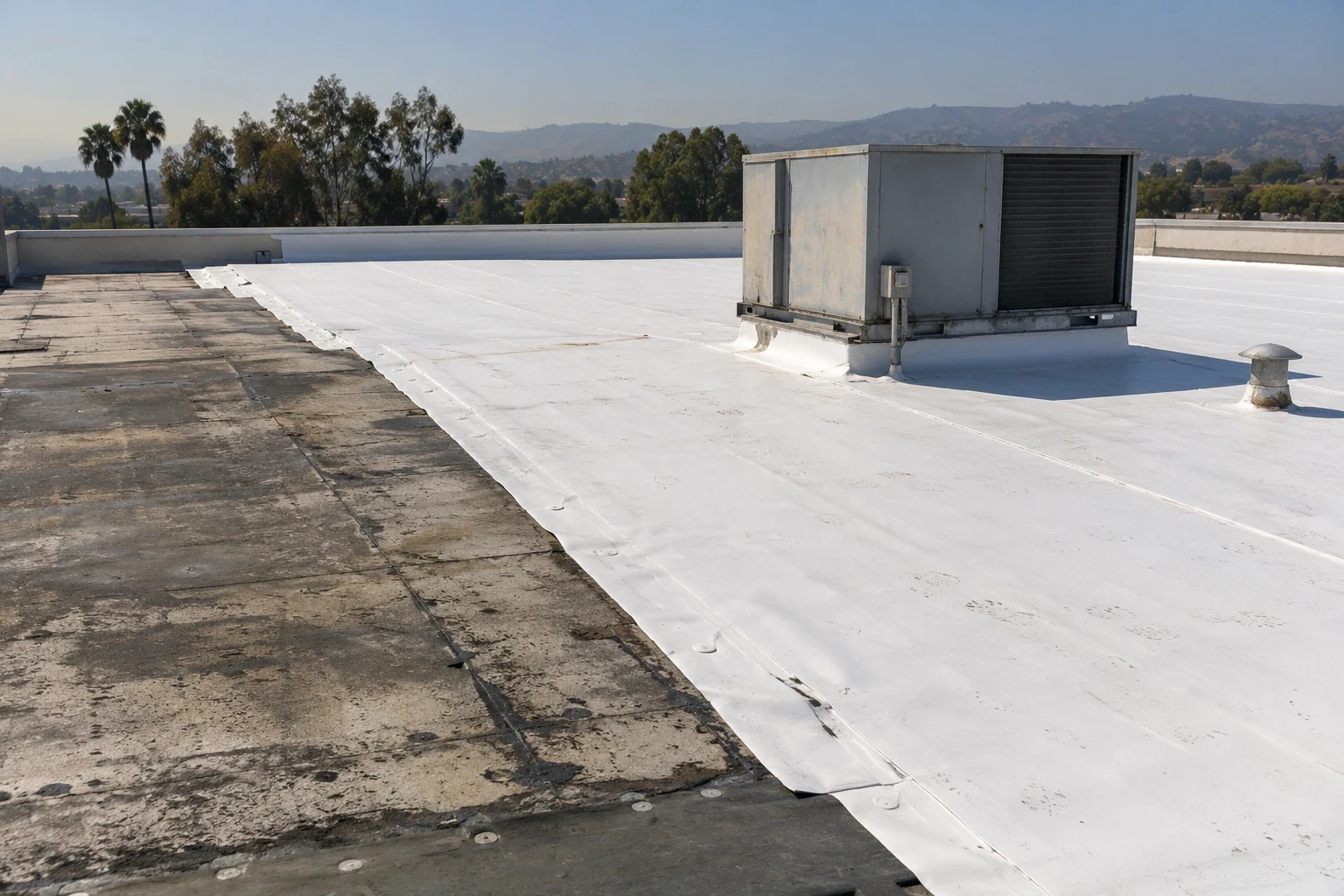
Some findings point to a bigger decision. If many seams are failing or the insulation is wet in several areas, a repair may only buy a little time, and it may be worth looking at restoration or replacement. We'll tell you when we think that's the case, and what further testing would confirm it. When you compare options, every one should include the same necessary repairs, so the cheapest number isn't hiding work. Equipment that has to be moved or areas that are hard to reach get listed so they don't surprise you later. At buildings around Point Molate and Winehaven, we track drain condition, seam separation and debris separately on each visit so changes over time are easy to spot. That history makes it much easier to decide when repairs stop making sense.
Keep a record that builds over time
Each visit adds to a roof condition report with photos, a roof plan showing where problems were found, and what was done about them. For buildings near the Port of Richmond and across the area, the report also notes access routes and any site rules. Over time, you can see which areas keep needing attention and which have held up.
When we make permanent repairs, we record the materials used and where they went. Areas we couldn't reach are marked as not inspected, so nobody assumes they're fine. If your roof has a manufacturer warranty, check its maintenance requirements; many warranties require regular inspections and documented repairs to stay valid, and some require an approved contractor for any work. We can help you match our visits to those requirements. Good records also help when you sell the building, file an insurance claim, or plan a replacement budget. Most owners schedule maintenance visits in the spring and fall, plus a check after any major storm, but the right frequency depends on the roof's age and condition.
Commercial Roofing Questions
Does clearing a drain mean the drainage problem is fixed?
Not always. Clearing debris restores flow at that outlet, but a torn membrane at the drain, a sagging roof or a blocked pipe below needs its own repair or a plumber's inspection.
Which maintenance findings should we fix first?
Anything letting water in now, such as open flashing, torn seams or damaged drains, comes first. Cosmetic wear and aging surfaces can usually wait for planned work.
Can a maintenance visit tell us the insulation is dry?
No. A visual check can spot warning signs like soft areas or blisters, but only core cuts or a moisture survey confirm whether the insulation is wet.
What should we get after each maintenance visit?
A short report with photos, a roof plan of problem areas, what was cleaned and repaired, a prioritized list of remaining repairs, and any areas we couldn't reach.

Set up a maintenance plan for your roof