Standing Seam Metal Roofing in Richmond, CA
When a standing seam roof starts leaking where the panels meet a wall, the first question isn't what sealant to use. It's which panel profile is on the building and how it's held down. Standing seam panels are attached with concealed clips that let the metal expand and contract, and every manufacturer's profile seams and clips a little differently. If we don't know the system, we can't order the right replacement panels or trim, and we can't tell whether a section can come off without damaging the panels next to it.
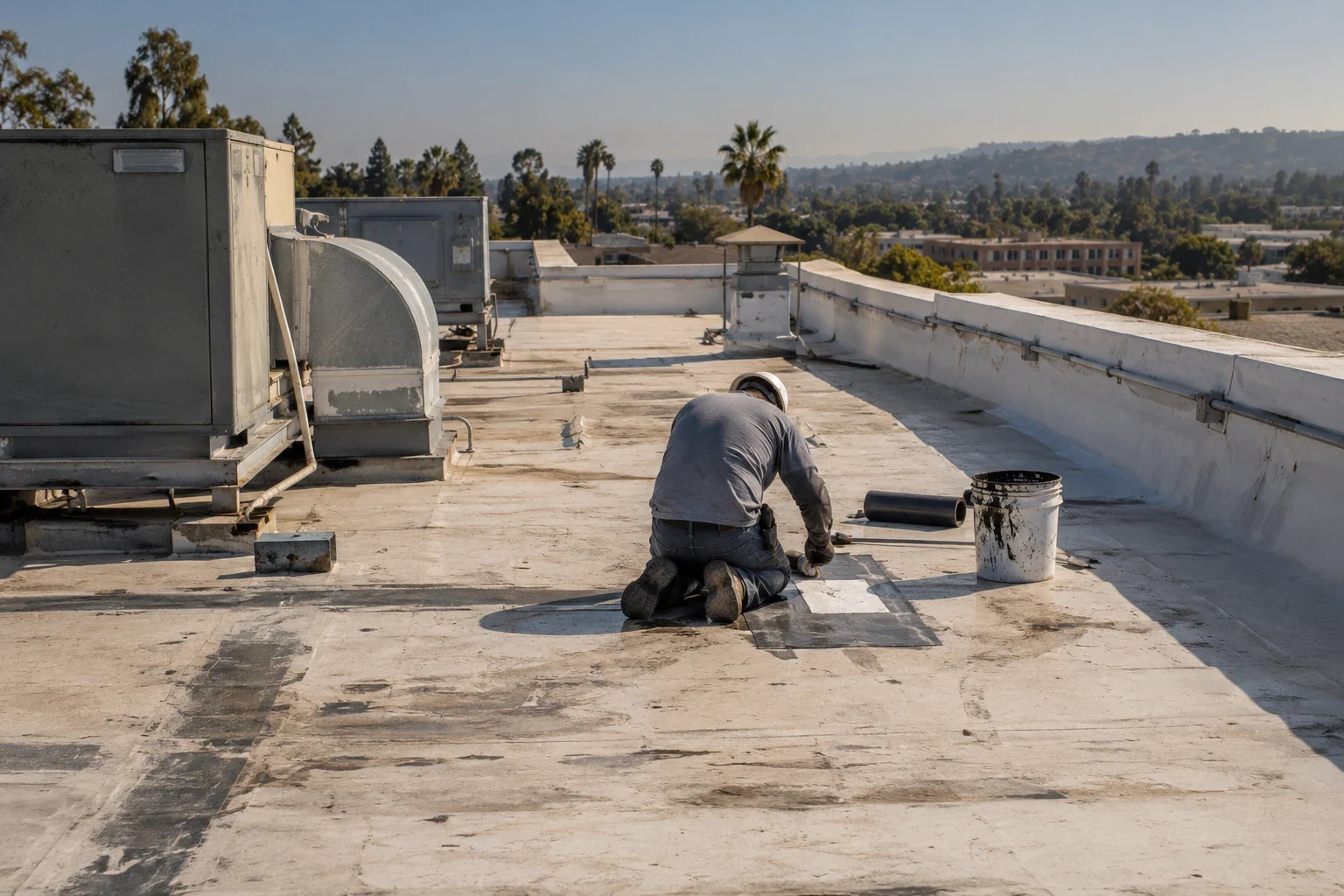
On a Richmond flex industrial building, we start by getting on the roof, opening up the failed detail where we can, and comparing what we find with any drawings or product records the owner has. If a curb, a piece of equipment or a wall panel is in the way, we say so up front, because that work has to happen before the metal can be closed back up. Our estimate lists the panels, clips, flashings and trim together, so you're comparing a complete repair and not a strip of new sealant over an old problem. We also ask early about tenant hours, loading areas and anything inside that needs protecting.
Identify the profile and clips
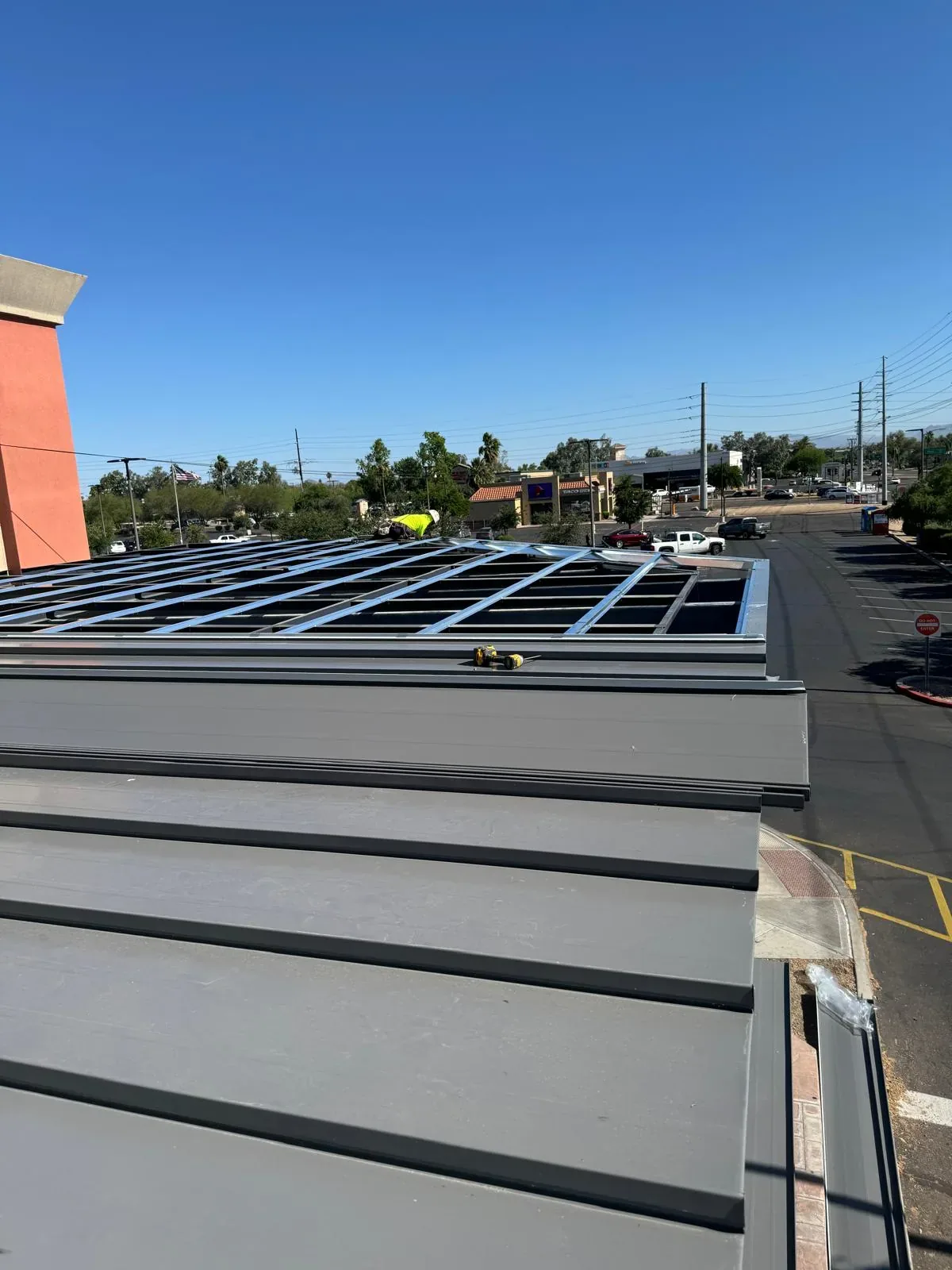
Standing seam profiles look alike from the ground, but they aren't interchangeable. Seam height, seam type, panel width and clip design all vary. McElroy's Medallion-Lok, for example, is a hidden-clip profile with its own seaming method, and it's only one of many systems on the market. During a commercial roof inspection we measure the panels, look at the seam closely and, when we can, lift a section near the leak to see the clip.
Getting this right matters for cost and schedule. If the profile is discontinued or hard to match, a repair may need custom-formed panels or a transition detail, and you should know that before anything is ordered. Sometimes the panel that leaks can't come out until the panels next to it are unseamed, which adds labor. We spell those steps out in the estimate. If we can't confirm the clip type without opening more of the roof, we tell you that plainly and explain what it could change. Guessing at the system is how a simple repair turns into a change order halfway through the job, and nobody wants.
Preserve movement duties
Metal roofs move. A long run of panels can grow and shrink noticeably between a cool Bay Area morning and a sunny afternoon, and the clips are designed to let that happen. Problems start when someone fastens through a panel to stop a leak, or installs a stiff flashing that pins the metal in place. The roof keeps moving, the fastener holes elongate, and the leak comes back somewhere new.
At walls, ridges and roof edges, we look at how the panel ends are trimmed and whether the existing flashing allows movement. Our edge metal, coping and gutter work is matched to the panel profile so the perimeter seals without locking the roof down. A bead of caulk or a tightened screw might stop water for one season, but it rarely fixes why the joint opened. We'll tell you what actually failed, whether it was a torn seam, a backed-out fastener, a cracked closure or a flashing that was never detailed for movement, and we'll price the repair that addresses that cause instead of the symptom you can see.
Examine backing and receiving support
When water has been getting in at a panel seam or wall joint for a while, the damage usually goes beyond the metal. Insulation under the panels can be soaked, wood blocking at the eave can rot, and purlins or decking near the leak can rust. A new panel on top won't dry any of that out. During the work we check what's underneath and separate the areas we've confirmed are wet or damaged from the areas we only suspect.
If insulation or cover board has to come out, our roof insulation and cover board replacement is priced as its own line, with removal, disposal and new material shown. If we open the roof and find more damage than expected, we stop, photograph it, show you where it is and agree on the added quantity before going further, with the roof temporarily sealed in the meantime. When rusted framing or a sagging purlin points to a structural question, we'll recommend getting an engineer to look at it, because that's outside a roofing contractor's call. Either way, you'll know what's under the new metal before the job closes up.
A proper panel replacement also needs matching profile and clips, ridge and eave closures, and a transition detail that still lets the metal move.
Release the adjoining details
On many metal roofs, the leak sits right where a rooftop unit curb, an exhaust fan or a wall meets the panels. We can't always fix the metal until the equipment is lifted, disconnected or reflashed, and that's typically the mechanical contractor's work. We'll tell you which parts need another trade, in what order, and what we do once the detail is open.
For buildings that stay in use, our occupied building reroofing approach plans the job around tenants: working in sections, keeping interior areas protected and avoiding noisy work during sensitive hours. Splitting the job into several visits can mean extra setup and temporary protection each time, so we show you that cost next to the option of doing it all at once. If new panels or added insulation change the height at a curb or wall, the flashing at that spot has to be redone too, and we include it rather than leaving it as a surprise. We also work on buildings along the Carquinez Strait, including Port Costa, where we check the panel profile, the clips and the expansion detail at every connection before quoting.
Compare complete correction options
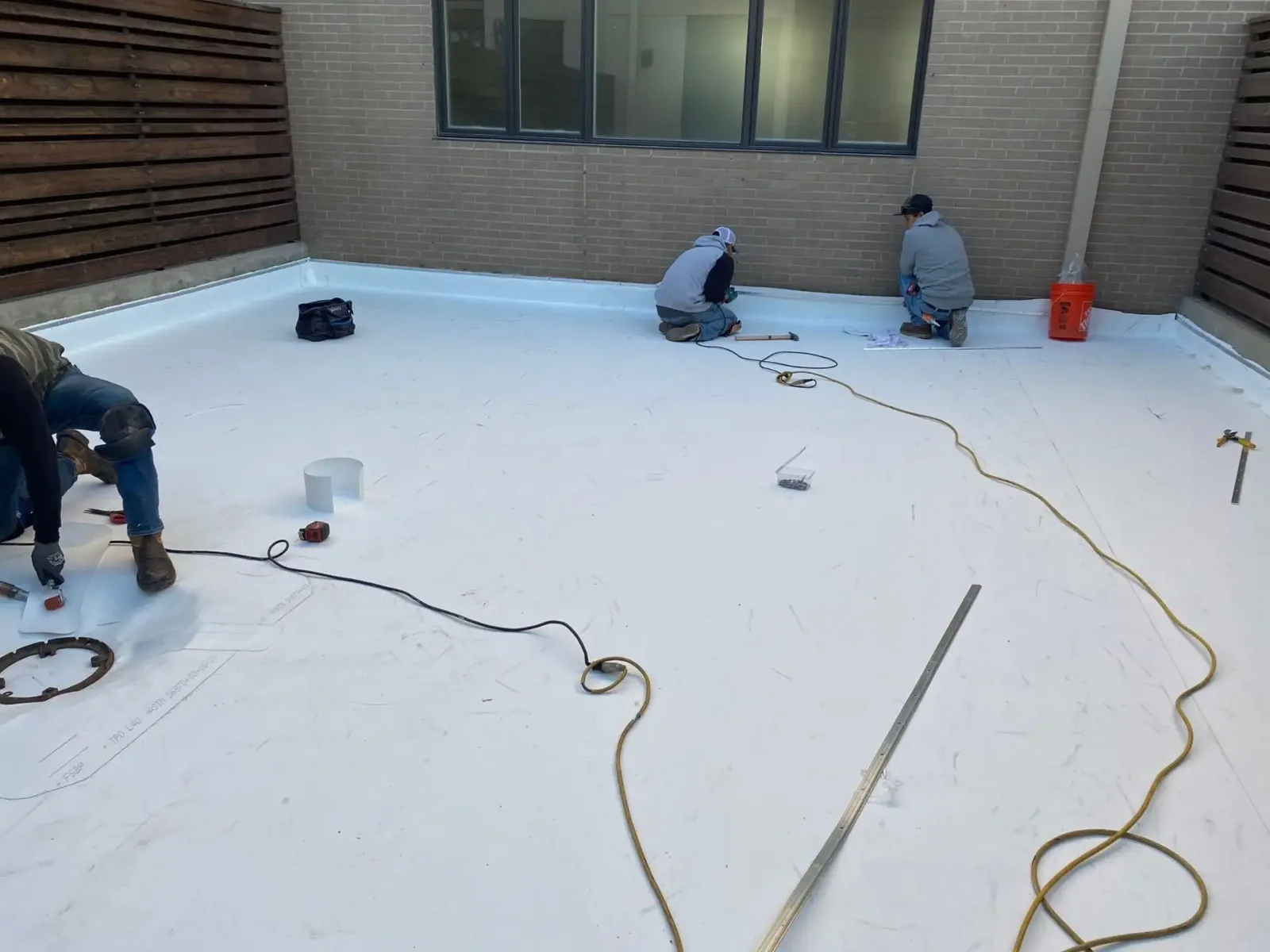
Not every leaking metal roof should get new standing seam panels. Sometimes a metal roof retrofit, with new framing and panels over the old roof, makes more sense, especially on older through-fastened roofs. On low-slope sections a single-ply membrane such as TPO roofing can be an option, though it comes with its own insulation, attachment and flashing requirements. We price each option against the same findings, including any damaged insulation or framing that has to be fixed no matter what goes on top, so the numbers can actually be compared.
For owners near the Port of Richmond, where industrial roofs get steady wind and salt air off the Bay, we keep a clear closeout record: the panel profile and clip type installed, the locations we repaired or replaced, and photos taken during the work. Any items we didn't finish, such as an equipment curb waiting on another trade, are listed separately. If a manufacturer or installer warranty is part of the job, we go over the maintenance terms and what kinds of later changes could affect it. That record helps the next contractor know exactly what was done and where.
Commercial Roofing Questions
Does panel appearance identify the concealed clip arrangement?
No. Many standing seam profiles look nearly the same from the ground. We measure the seam and panel, check records if you have them, and open a section near the leak when needed to see the clip before ordering anything.
What should govern a perimeter repair on standing seam panels?
The panel profile and how the metal expands and contracts. Edge, wall and ridge flashings need to seal the joint while still letting the panels move. Fastening through the panels to stop a leak usually causes a new one.
Can a new panel surface accept concealed support?
Not without checking it. Wet insulation, rotted blocking or rusted framing under a leak stays a problem even with new metal on top. We look underneath, price any replacement separately and photograph what we find.
Which record supports later metal roof alterations?
A closeout package with the profile and clip type installed, the repaired locations and photos from the work. It should also list any open items and the warranty maintenance terms, so future work doesn't void coverage.


Tell us about the leaking panel seam