Edge Metal, Coping and Gutters in Richmond, CA
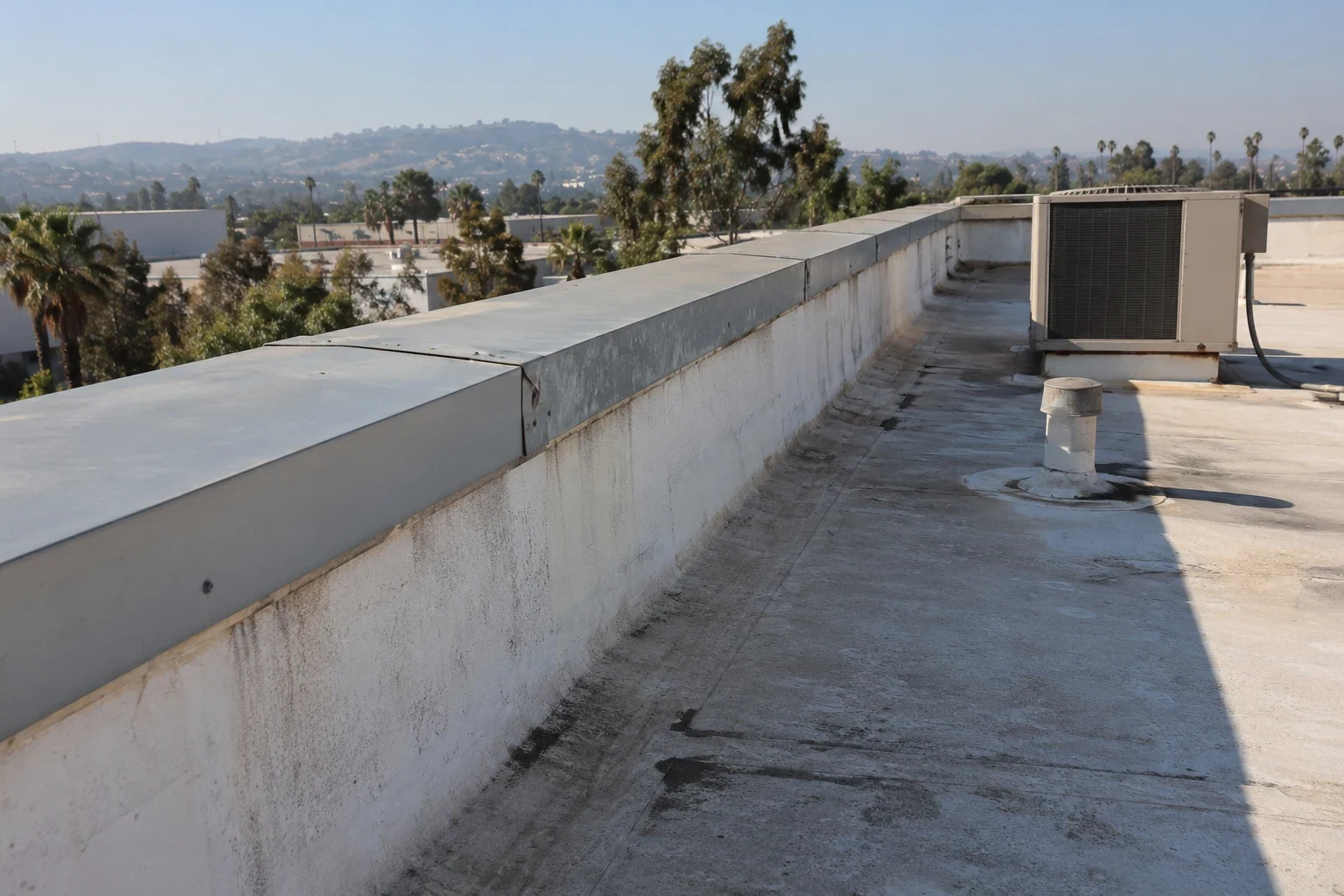
A loose coping corner over the front entrance of a Richmond office building is more than a cosmetic problem. In wind it can flap, let water into the parapet wall and eventually tear free. Often the real cause is underneath: wet or rotted wood blocking, a cleat that has pulled out, or a membrane termination that has let go. We look at the whole roof edge as one system, the metal, what it is fastened to and how the membrane ties into it, so a shiny new cap does not hide a failed base.
An office building roof edge over an entrance also means planning for safety below. We may need to close a doorway for a few hours, set up overhead protection or work early before staff arrive. We figure out which pieces can be repaired, which need replacing and how we will keep the wall dry while it is open. You get an estimate for the actual edge failure, including the wood, fasteners and flashing beneath the metal. If part of the fix belongs to another trade, such as wall repair, we say so up front. Before anything is staged, we confirm who at the building needs to approve access to the entrance and the yard.
Check what holds the metal down
You cannot see most of what holds coping in place. The screws on top tell you little about the cleat, the wood nailer and the wall beneath. We open up the edge where it has failed and check whether the wood is solid and dry and whether the fasteners are still holding. A roof inspection of the full perimeter helps show whether the problem is limited to one corner or is spread along the edge. Rotted blocking has to be cut out and replaced along with the metal, and removal and disposal belong in the price.
You should know why the edge failed before you pay for a new one. Sometimes the metal is fine and only the cleat or the wood needs work. Sometimes the metal itself is bent, rusted or too short to cover the wall properly. Those are different jobs at different prices. We also look at where the roof membrane runs up the wall and under the coping, and at the wall itself, because a crack in the parapet can let water in no matter how good the cap is. If we find more damage once the edge is open, we show you before going further.
At the edge, we check the wall, the cleat or nailer, the metal laps and the corners as one system. New metal over a weak base still fails if the wood has rotted or will not hold a fastener. Our scope names each piece that needs work and how far the repair runs to reach solid wood. It includes corners and end caps too, since water often gets in there, not along the straight run that first caught your eye.
Gutters, scuppers and drainage
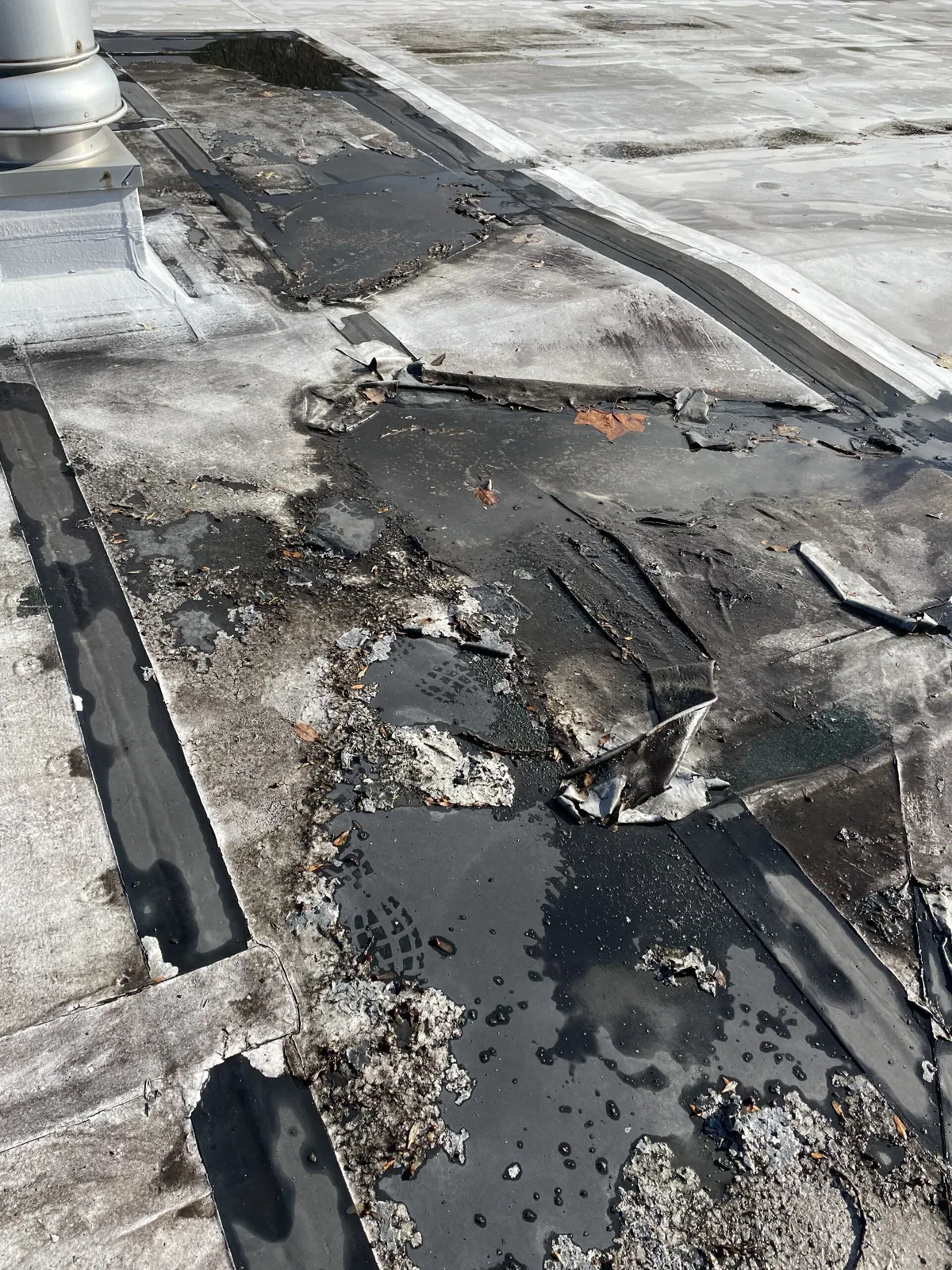
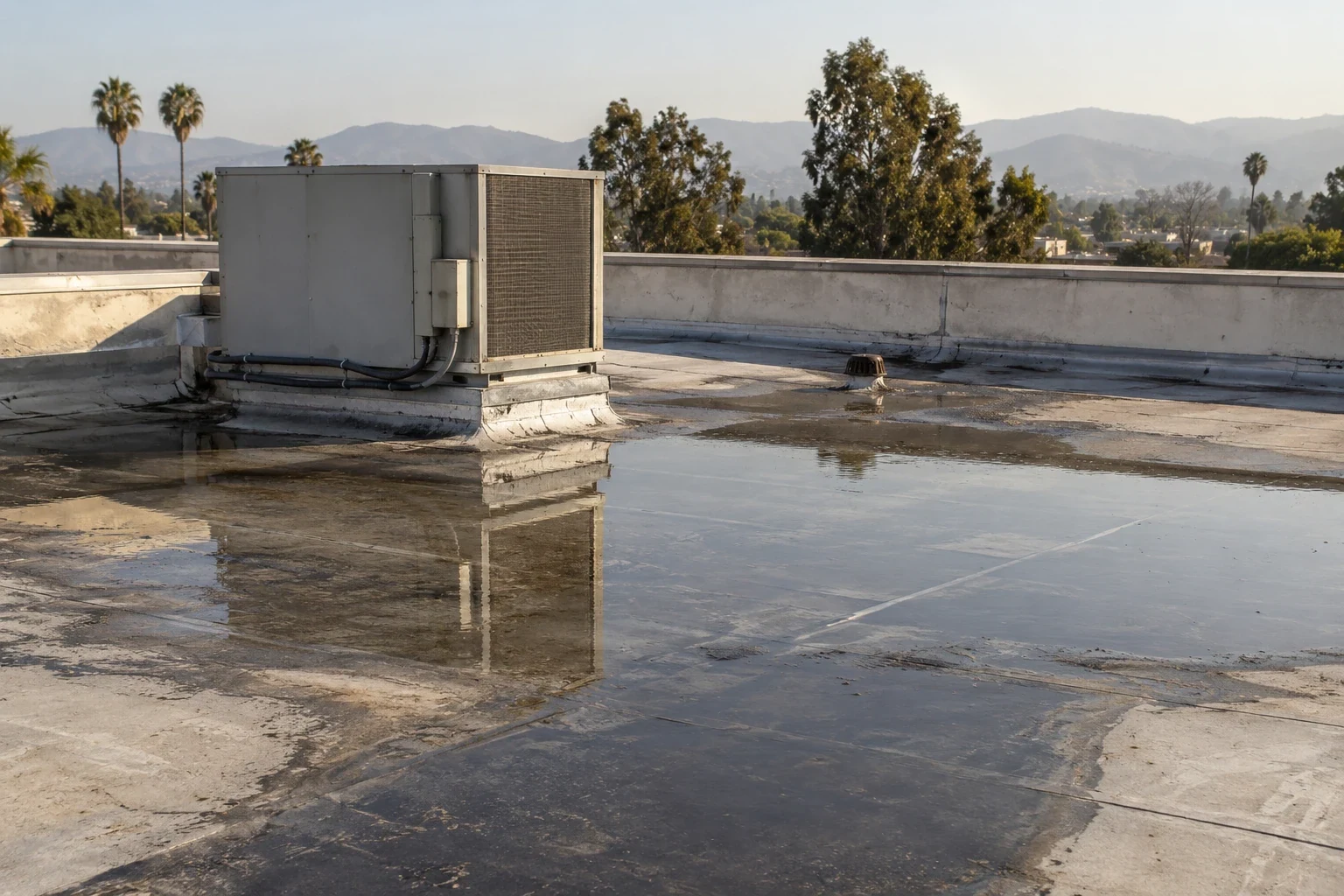
A gutter outlet can look clear and still leak where it joins the roof. Clearing debris, resealing a joint and fixing a drainage problem are three different jobs, and we price them separately. Our roof drain and scupper work checks how water leaves the roof, where it goes next and whether the outlets sit low enough to drain the roof fully. Water stains on a wall tell us where to look, but they do not tell us whether a downspout is blocked underground or whether the gutter is too small for the roof area.
The roof flashing at the edge has to be compatible with the membrane and sit on solid wood. When coping, gutter and flashing work are bid separately, small gaps between those jobs are where leaks start, so we make sure every joint has an owner. Some joints only become reachable after another piece comes off, and we plan for that. New gutters cannot fix rotted blocking or a cracked wall. Those problems need their own repair, and our estimate is clear about what it covers and what it does not.
Plan access to the edge
Edge work usually happens from the outside, from a lift, scaffold or the roof itself, so the route matters. Coping, flashing and gutters all have to be finished together for the edge to stay watertight. We work with your yard, entrance and parking limits to find a safe setup, and we tie each step of the repair to the access it needs.
If we can only work certain hours or certain sections, the job may need more setups and more protection than the length of metal suggests. That should show up in the price so you can compare bids fairly. New metal sitting on a pallet does not help if the section behind it is still blocked. On an occupied building, we confirm which doors and lanes must stay open and what has to happen before we can close up each section. Any open edge gets a temporary seal at the end of the day. Access planning gets the crew to the work. It does not replace the fastening and flashing that make the edge last.
Compare complete perimeter options
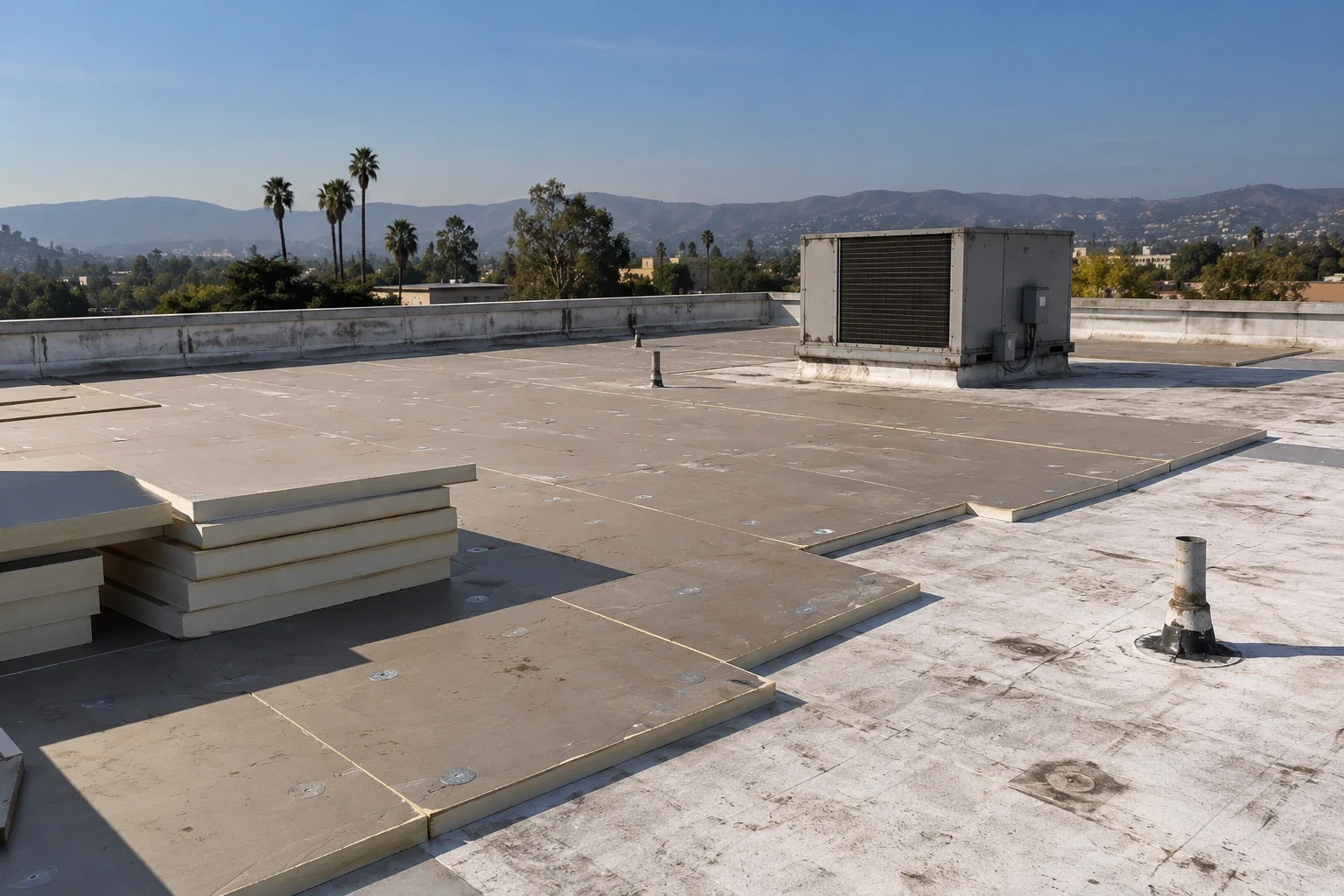
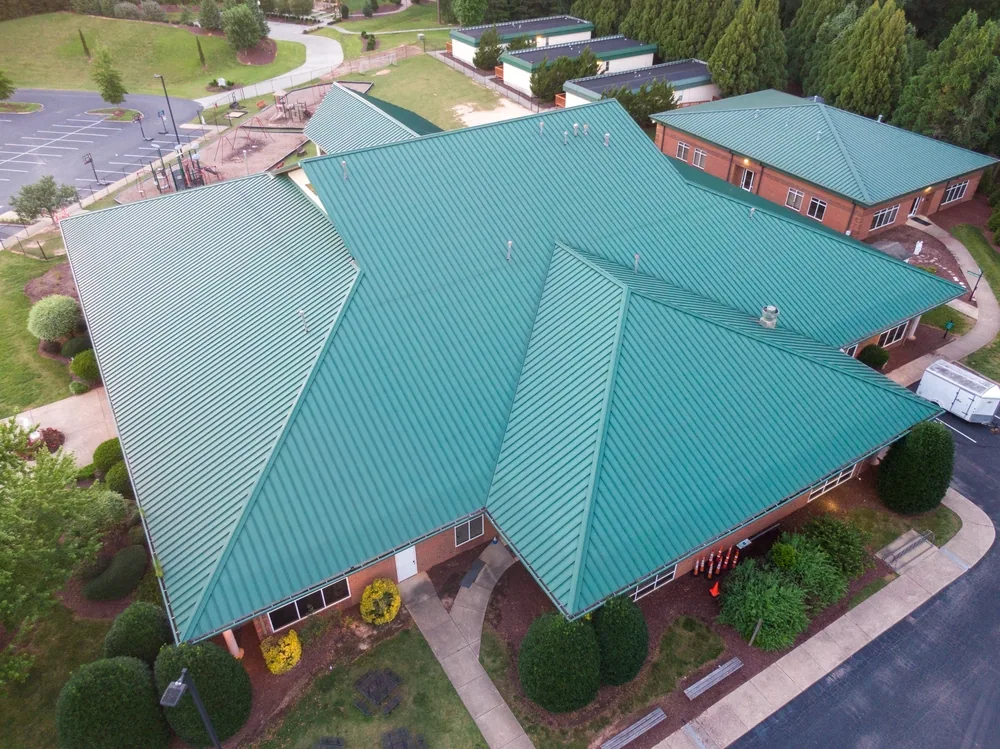
The roof system you choose changes how the edge has to be built. A standing seam metal roof ends at the perimeter with its own trim, closures and clips. A TPO roof needs its membrane flashed up the wall and secured under the coping with TPO-compatible parts. Each needs solid wood and the right fasteners. We compare the full edge detail for each option instead of letting a single line for metal stand in for either one.
When two options overlap, both should include the same wood and wall repairs. Differences in parts, fastening and access are listed next to their quantities, so you can see what you are paying for. A bid with cheaper metal may simply leave out the rotted blocking that still has to be replaced. We point that out before you choose. If a structural or drainage question goes beyond roofing, we flag it for the right professional instead of folding it into our price. Materials are ordered only after the edge detail and project requirements are settled. On older Point Richmond buildings, we treat the metal attachment, coping joints and membrane termination as one connected detail, because a failure in any of them lets water into the wall.
Record the finished edge
For Port of Richmond buildings and other perimeter jobs, the closeout record shows where we replaced wood blocking, which metal and fasteners we installed and where the roof flashing was redone. We take photos while the edge is open and after it is closed up, because once the new coping is on, nobody can see the work underneath. The checks we agreed to are listed with the work they cover.
If the roof carries a manufacturer warranty, check its repair and alteration terms before choosing materials, and ask the manufacturer to confirm anything that is unclear. Keep that answer with the job record. If a problem shows up later, you can compare it with the exact section we repaired rather than a general note that the edge was fixed. Any remaining wall, drainage or hidden-wood issues are listed so your maintenance team knows what is still open.
Commercial Roofing Questions
Does new coping fix a failed roof edge?
Only if the wood and fasteners underneath are sound. We check the blocking, cleats and membrane termination and repair them along with the metal.
What should a gutter estimate include?
The gutter and downspouts, the outlets, the flashing where the gutter meets the roof and any wood repairs behind it. Drainage problems beyond the roof, like a blocked underground line, should be listed separately.
Can you work on the edge above a busy entrance?
Yes, with planning. We set up overhead protection, schedule around peak traffic and agree on access with your property manager before work starts.
What records should I keep after edge work?
Photos of the wood and fasteners while the edge was open, the materials installed and where the flashing was redone. That makes later problems much easier to diagnose.

Tell us where the edge is failing and how we can reach it