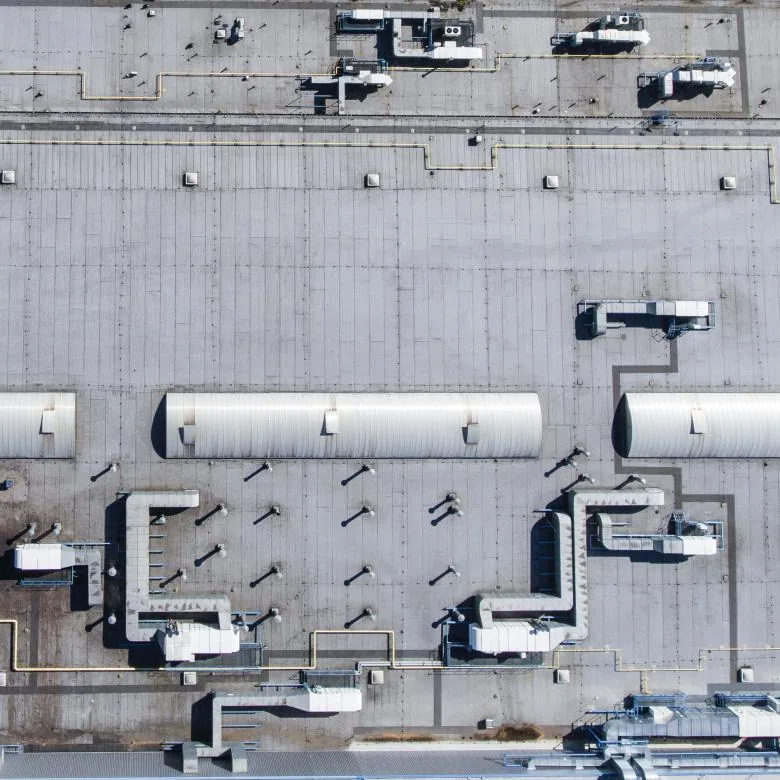
Manufacturing Roof Repairs in Richmond, CA
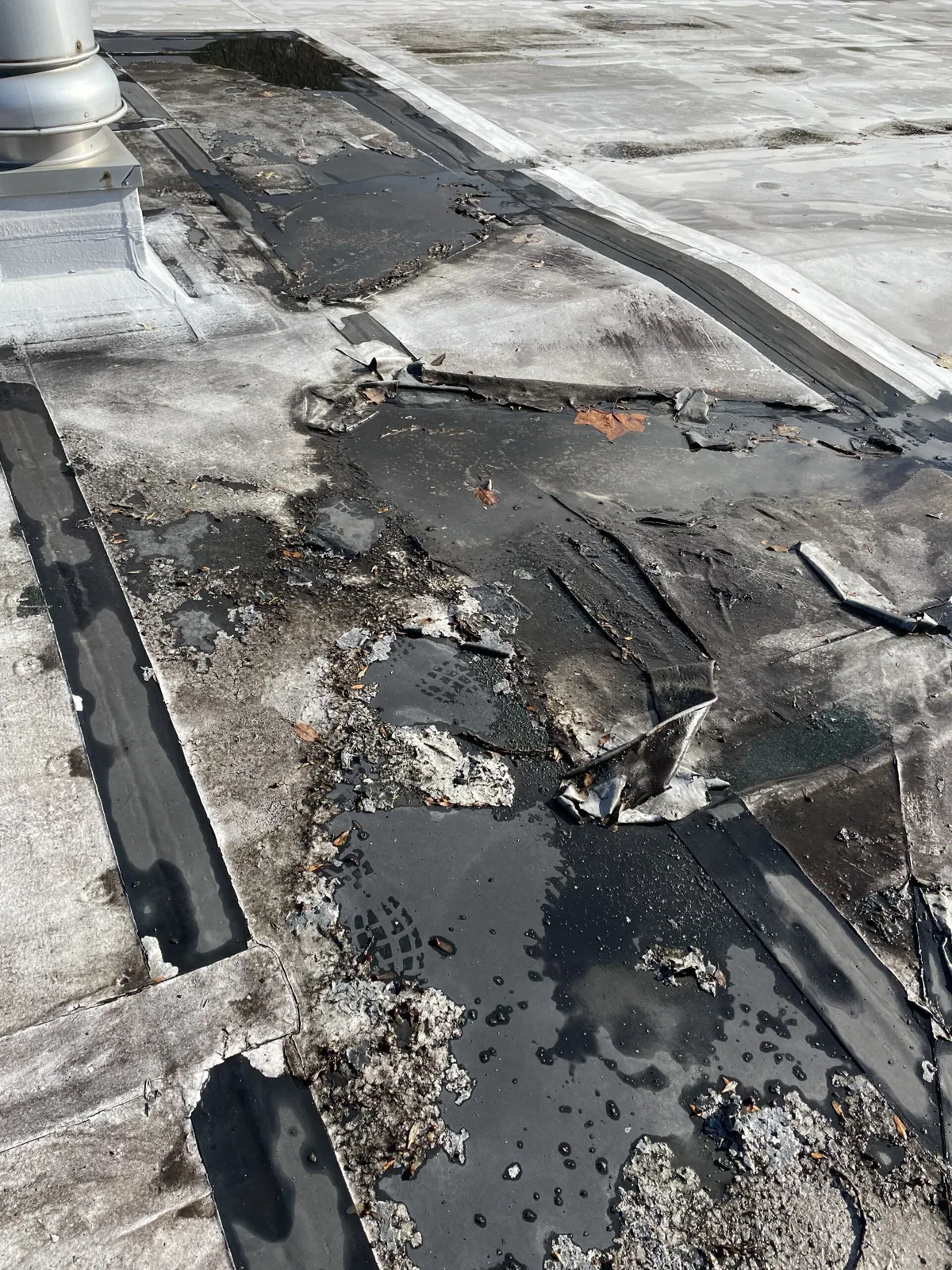
A torn flashing around a process pipe leaves a manufacturing plant with two questions: how to stop the leak, and how to keep the equipment running safely during the repair. The roof leak gets checked separately from the equipment itself. We find the membrane failure, the condition of what it is sealed to and any work by other trades that has to come first. In Richmond, CA, the owner gets a repair schedule that accounts for all of that before materials are lifted onto the roof.
Around the Port of Richmond, manufacturing roof repairs depend on knowing what roof is installed and planning access around working areas. Richmond's waterfront terminals handle many kinds of freight, but every roofing job still needs its own delivery point and access approval. At a plant, the actual roof and the owner's operating rules set the scope. Our work with logistics and 3PL companies also starts with the access rules for that property, not with how a neighboring site happens to move goods.
The penetration has more than one responsibility
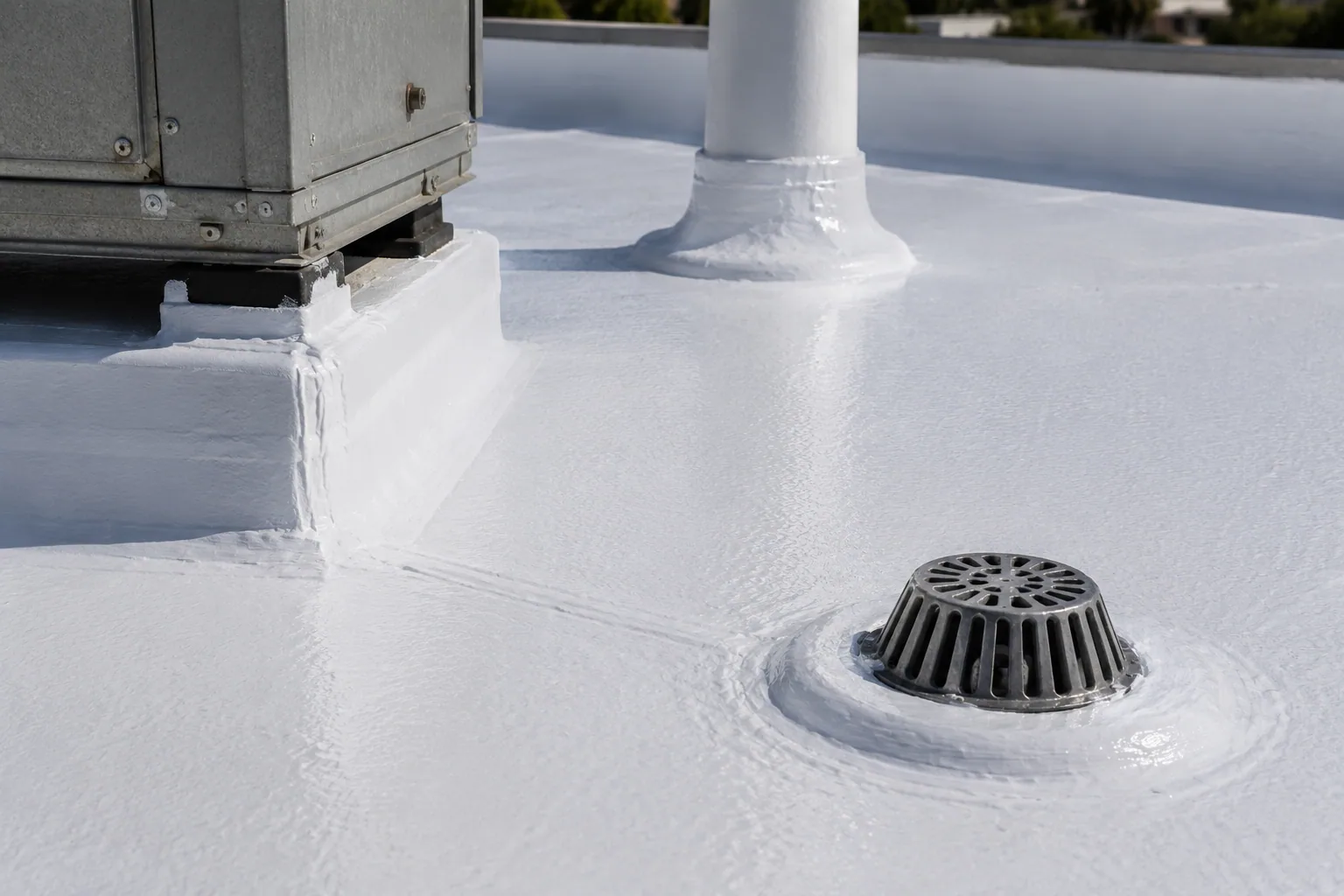
A pipe or duct passing through the roof can involve a roofing transition, a support and an equipment connection. Water near the opening does not identify which part failed. We inspect the membrane flashing and note anything that needs another trade to look at it. A roof patch does not fix an equipment seal or prove a pipe support is sound. Our findings separate those parts so the roofing repair is not expected to solve every problem at the opening.
The membrane around the penetration has to be sound enough to take the repair. Damaged material may need to come out before permanent flashing goes on. Our skylight and penetration flashing repairs cover the base flashing, the top seal and how far the new material laps onto good membrane. Any support or equipment work is listed as its own task, scheduled before the roofing where it has to be done first.
The operating arrangement needs confirmation
Before we work near process equipment, the owner and the plant's engineers or contractors tell us what is required. We describe the roof work and our proposed route, then line up any equipment access, lockout or prep work. Those rules come from the plant and its systems, and a roofing scope cannot decide how production should run during the job. The schedule records who handles what before the roof is opened or new material goes down.
The Port of Richmond includes terminals on Harbour Way South and Canal Boulevard. At each plant, the site managers tell us where deliveries can go and which areas must stay open. Working with general contractors on related work keeps that tied to the roofing schedule. The plan shows the order of equipment work, deck prep and membrane repair, so no trade covers up a detail that still needs attention.
Production lines, exhaust systems and overhead handling can occupy the same route needed for roof materials. We identify which activity can continue, which component needs release and who confirms that it is ready before the opening is made. The proposal separates roofing tasks from process-equipment work, with debris protection and closure included. That lets the facility compare a staged repair with a combined shutdown arrangement using complete responsibilities.
The layer finding changes the removal
A torn flashing can let water under membrane that looks fine nearby. We check the area around it and take cores or scans where we suspect wet insulation. Any reading is confirmed before we decide how much comes out. Our report separates the visible tear from the wet material we confirmed underneath. That makes the repair size easy to understand and keeps a small surface patch from leaving wet insulation in place while looking finished.
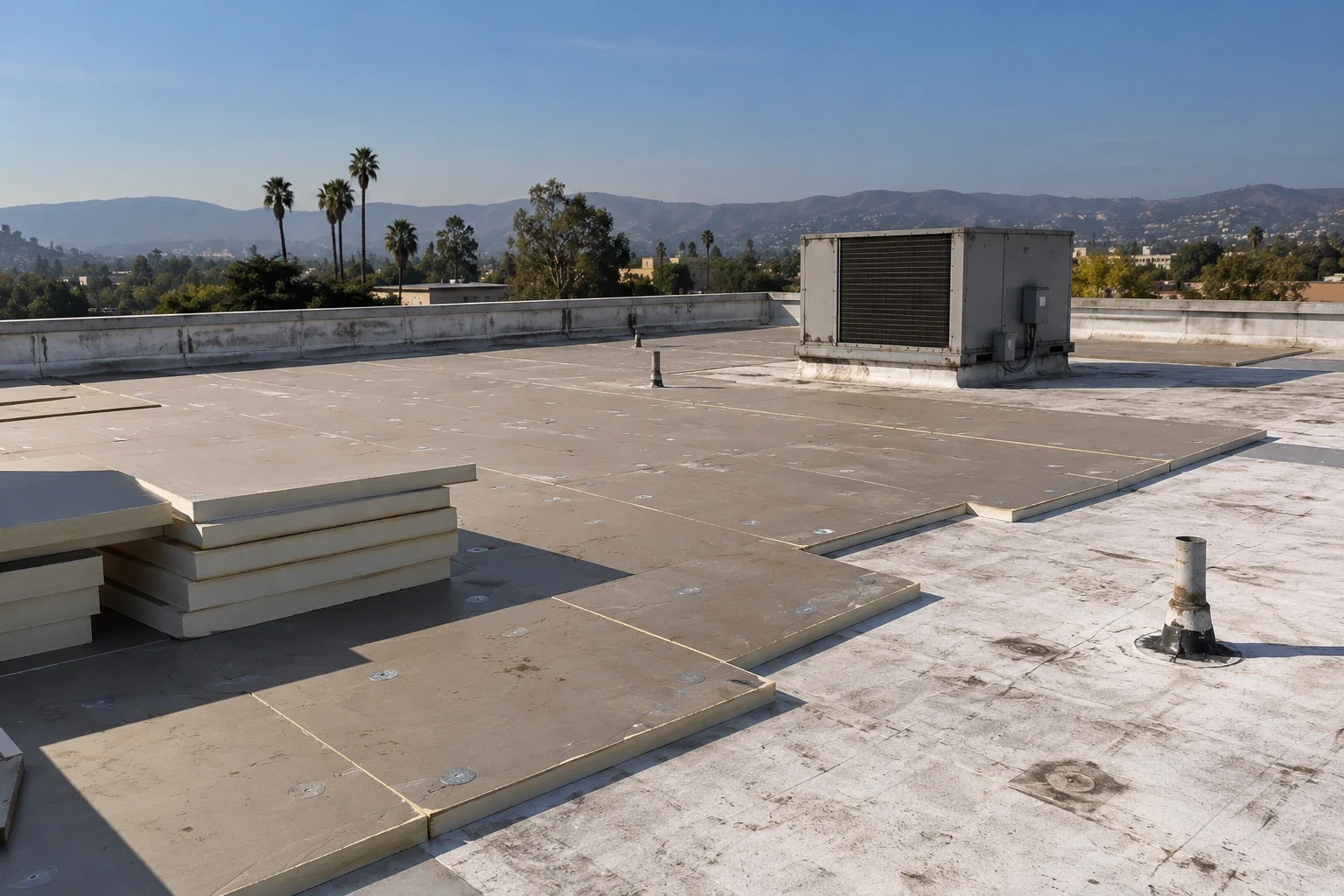
When tear-off exposes the deck, we check it before new layers go down. A damaged deck or a support problem has to be fixed or reviewed by an engineer before the roof is closed. Our insulation and cover board replacement explains what gets rebuilt around the penetration and how it ties into the dry material around it. The owner can tell that work apart from the equipment work and the flashing itself, even when all three happen in the same small area.
The route needs room for the repair
A plant roof can have equipment crowded around the failed detail with no clear path for carrying in new material. We look at where the units sit, the roof hatch or access point and the working space before deciding how to deliver materials. The owner tells us which aisles and work areas below must stay open. Materials, crew and debris need a route that respects those limits. We set that route before opening a detail that has to be sealed again quickly.
On roofs around the Port of Richmond, we confirm the roof section, materials and approved route with the property contact for each manufacturing job. We explain which parts must be removed or prepped first and where equipment work fits in. Any limit on handling or access is listed before the permanent repair is approved, so the owner can sort it out while the scope is still simple.
The finished detail needs a suitable assembly
New membrane has to tie into sound existing roof and a clean penetration surface using a compatible method. We identify the roof system and the available lap area before specifying materials. EPDM, TPO or PVC and asphalt-based roofs each have their own procedure. The rebuilt flashing includes its corners and top seal where they apply. A patched-over opening is not a proper repair unless the material underneath and the prep were dealt with as part of the job.
When the same penetration problems keep coming back, a wider inspection makes sense before paying for another patch. We compare the details and note what affects the next decision. A roof condition report separates the immediate repair from additional work and other trades' tasks. Emergency response is available overnight, on weekends and through holidays when protection is urgent. Temporary repairs are described separately from permanent roofing and any equipment work still needed before the roof is closed.
Commercial Roofing Questions
Can a roof repair fix an equipment leak at the same opening?
No. The equipment connection needs its own inspection. We repair the roof flashing and note anything that needs another trade, so the owner can see the equipment work separately from the roofing.
Who sets the process requirements during roof work?
The owner and the plant's engineers or equipment contractors. We describe the roofing work and plan our route and schedule around their rules, so production equipment is never left to a roofing scope to decide.
Why can wet insulation make the repair bigger?
Wet insulation often spreads past the visible tear. The new material has to tie into dry, sound roof, so we explain what we confirmed and remove what is actually damaged, not just the area around the hole.
What happens before roofing covers a damaged pipe support?
The support is checked and assigned to the right trade first. If it needs an engineer's review, that happens before permanent flashing hides it, and the roofing is scheduled after.
How do you compare repeated penetration failures?
We inspect each detail rather than assume the same fix works everywhere. The report notes what the failures share and how they differ, so you can decide on more testing or repairs with each task clearly defined.

Plan your plant roof repair