Cold Storage Roofing in Richmond, CA
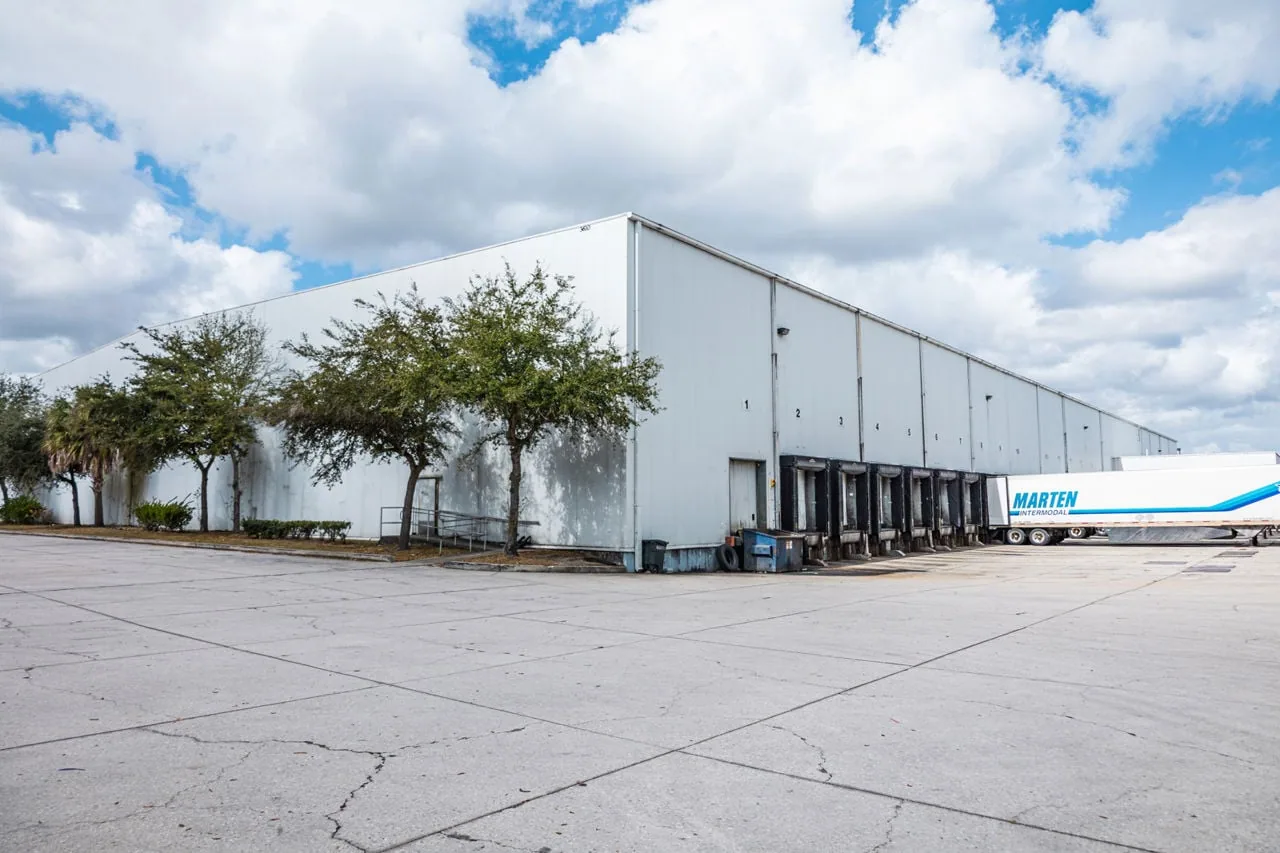
Cold storage buildings are hard on roofs in a way most buildings are not. The inside is kept cold and the outside sees warm afternoons, so moisture is always trying to push into the roof from the warm side. A split seam lets rain in from above, but water inside a freezer or cooler can also come from condensation, a failed vapor barrier or a refrigeration problem. Before we fix anything, we need to know which one we are dealing with. A patch over a seam will not help if the real problem is condensation, and it will not last if the insulation under it is already soaked.
For cold storage buildings in Richmond, the refrigeration side and the roof side are reviewed separately. We inspect the roof and compare what we find with any drawings or records you have. Refrigeration contractors handle cooling equipment, and the building's designer or an envelope consultant looks at vapor barrier and wall issues. Your operations team decides how product is protected and moved during the work. Send us where you are seeing water or frost inside, any roof records, and which rooms hold product. The scope will show what closes the roof seam and what other questions still need an answer.
Repairing a split seam the right way
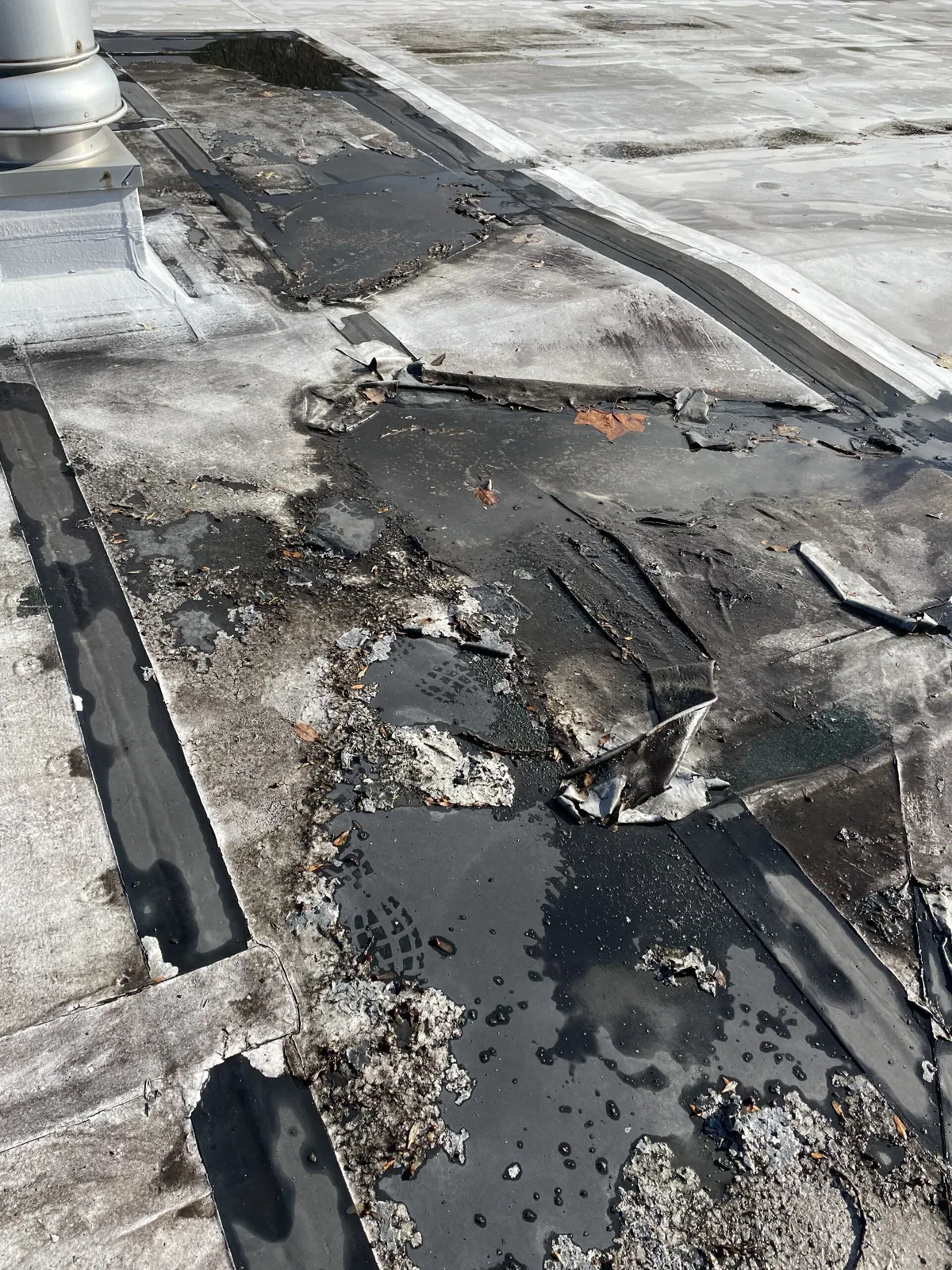
When a field seam opens, the membrane on either side is often damaged farther than the visible split. Seam failure repair starts with finding where the membrane is still sound enough to bond to. TPO and PVC seams are heat-welded and need clean, flexible sheet; EPDM and modified bitumen use their own methods. If the existing membrane cannot hold a lasting seam, we cut it out and replace it. The repair is priced to that point, so a patch does not end up sitting on membrane that will fail again next season.
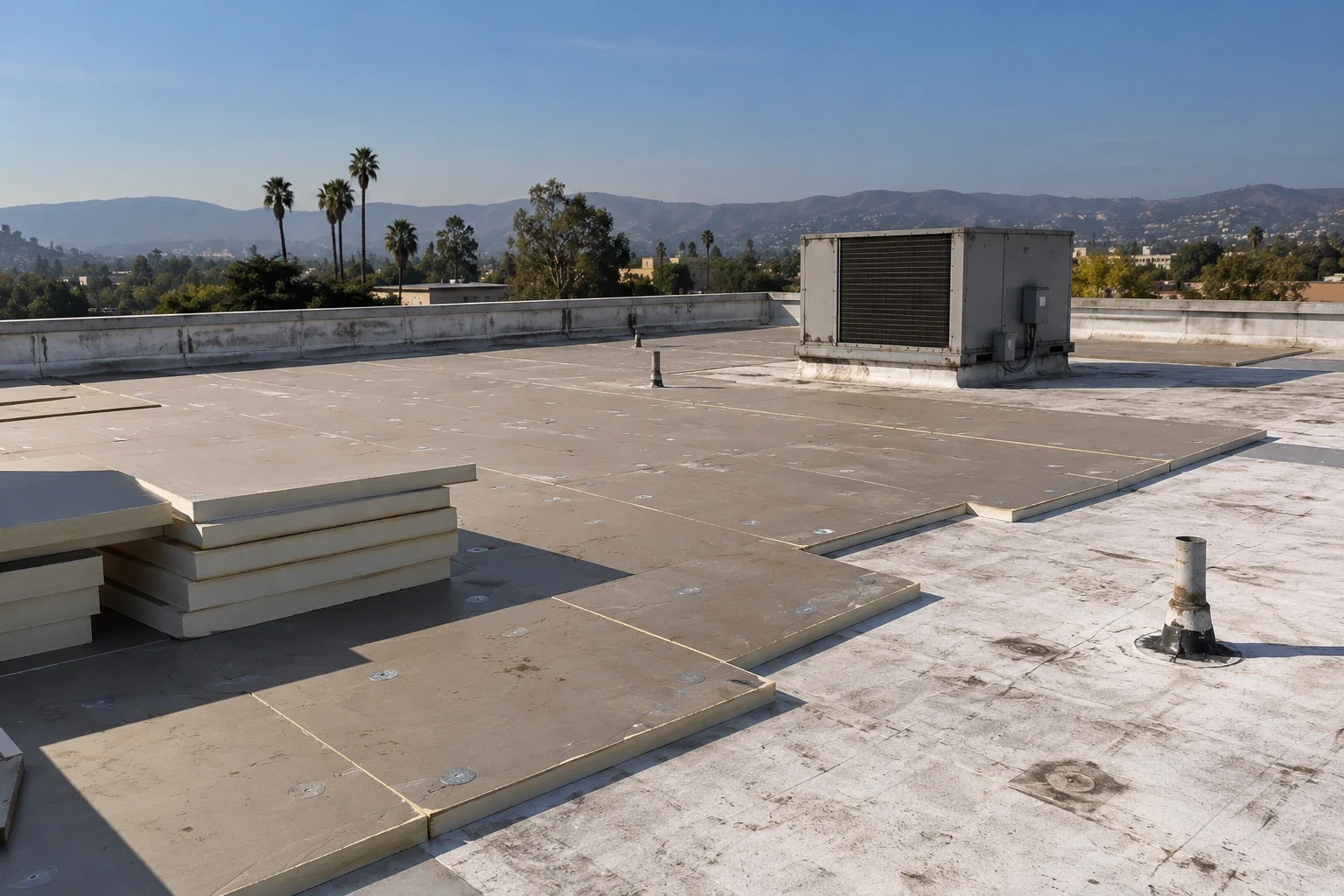
The insulation underneath matters even more on a cold storage roof, because it keeps the cold in and wet insulation does almost nothing. Insulation and cover board repair starts with confirming which areas are wet. Structural or roof-assembly questions go to the building's designer. Any opening we make to check gets patched. A damp spot inside or a seam opening on top cannot tell you how much insulation is wet. You get a clear answer on what can stay and what has to be replaced.
Leak or condensation?
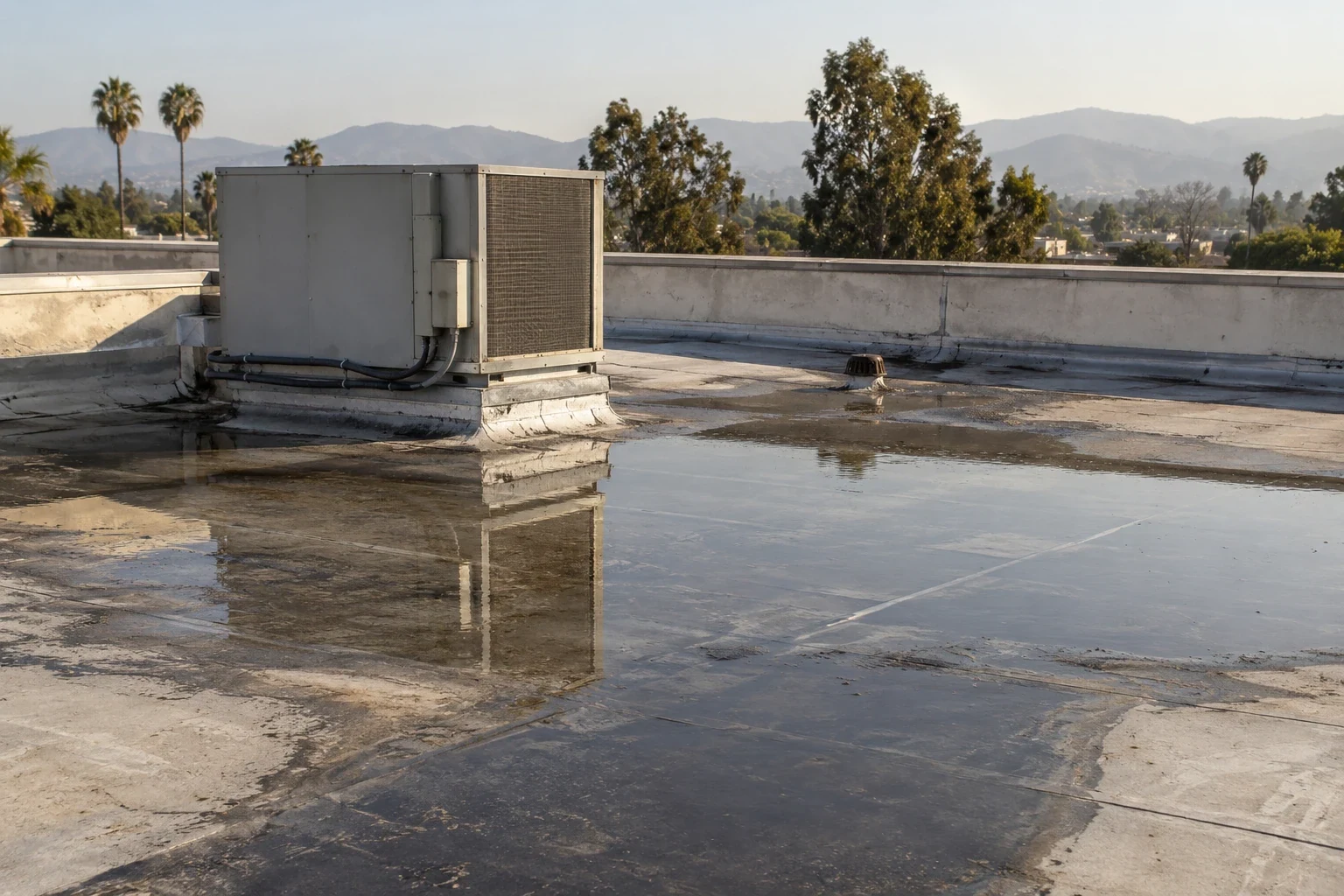
Water in a cold room can come from the roof, from condensation forming on cold surfaces, or from refrigeration equipment. Refrigeration and envelope specialists should look at the second and third possibilities. Commercial roof leak repair compares the seams, curbs and penetrations on the roof with where the water shows up inside. We identify which roof details need repair and which moisture questions are still open. The roofing recommendation follows what we actually find, rather than assuming every wet spot inside is a roof leak.
Infrared scans can help find wet insulation, but cold storage roofs are tricky to scan because the cold interior changes the readings. Results have to be read against how the roof is built and the conditions during the scan. Where the decision to keep insulation depends on it, we confirm with core cuts. Each test spot is patched, and your operations team knows what product sits below. A thermal image alone cannot explain an interior moisture problem. We keep the roof repair, the insulation question and any vapor barrier issue separate, so one fix is not expected to solve all three.
Protecting stored product
Opening a roof over stored product can put more of the room at risk than the area where water was first reported. For reroofing occupied buildings like this, we share the planned openings, debris routes and material access with your operations team. They decide how product is covered, moved or kept away from the work zone. Refrigeration, electrical and equipment work stays with those trades. Patching test openings is included in our price. The bid should not assume one protection setup works for every cooler, freezer and loading area.
If we find more wet insulation, the opening may grow and change how product needs to be protected. We explain the larger area before removing more roof and show how it affects the work route. Temporary roofing may stay in place while a structural or equipment issue is sorted out. Before a roof opening reaches the insulation, your team confirms cold storage operations and interior protection. Electricians check any affected equipment. Temporary patches are recorded separately from finished seam work, so everyone knows which spots still need attention.
Comparing a repair with a larger reroof
Keeping the existing roof and adding a new layer only works if the insulation underneath is dry and suited to the new system, and the curbs, drains and walls can be properly flashed. A thicker roof can affect drainage, clearances and how the roof meets the walls. Those design decisions belong to the project's designer and the other trades. We list those items next to the roof price instead of treating a new top layer as the whole job. A seam repair and a larger reroof should each include everything needed to finish properly, so you can compare real options.
When the work is done, final photos show the repaired seam and the insulation that was kept. Any interior moisture questions that need another specialist are listed separately, along with temporary patches. Future maintenance can go straight to the repaired area instead of applying another coating over the whole roof. We record the finished work and the open items together, so your next budget starts from an accurate picture. You can see which work stopped the roof leak and which vapor or equipment questions still need follow-up.
Cold storage roofing in Richmond
For cold storage roofing in Downtown Richmond and the Civic Center area and around the port, refrigeration operations and the roof's condition are reviewed separately. Send us your roof records and the contact who arranges access. We inspect the roof before proposing a seam repair method. Your team reviews protection for product below, and refrigeration and envelope specialists handle their own items. The price follows what we actually find on that building, with test openings and their repairs listed.
Other buildings face similar seam problems with different contents below. A manufacturing plant roof often has process equipment and exhaust curbs to work around. A grocery store roof combines refrigeration equipment with a busy sales floor. We document the cold storage repairs on their own, because another roof's appearance does not tell you about this building's insulation or moisture issues. Future decisions can start from the finished work and the open items we recorded here.
Commercial Roofing Questions
Does water inside the cooler mean the roof seam is the only problem?
Not always. It could also be condensation or a refrigeration issue. We inspect the roof details, and refrigeration or envelope specialists look at the interior causes.
How do you decide if the existing insulation can stay?
We confirm it is dry with core cuts where the decision depends on it. Each test spot is patched and your team protects the product below during the check.
How can a larger reroof change the other work needed?
A thicker roof can change curb heights, drain levels and clearances at walls. Those items need to be priced and coordinated with other trades before the option is ready to compare.
What should be documented after the seam repair?
Photos of the finished seam and the insulation kept in place, plus a list of temporary patches and any moisture questions still open with other specialists.

Tell us about the roof and the product below