Roof Insulation and Cover Board in Richmond, CA
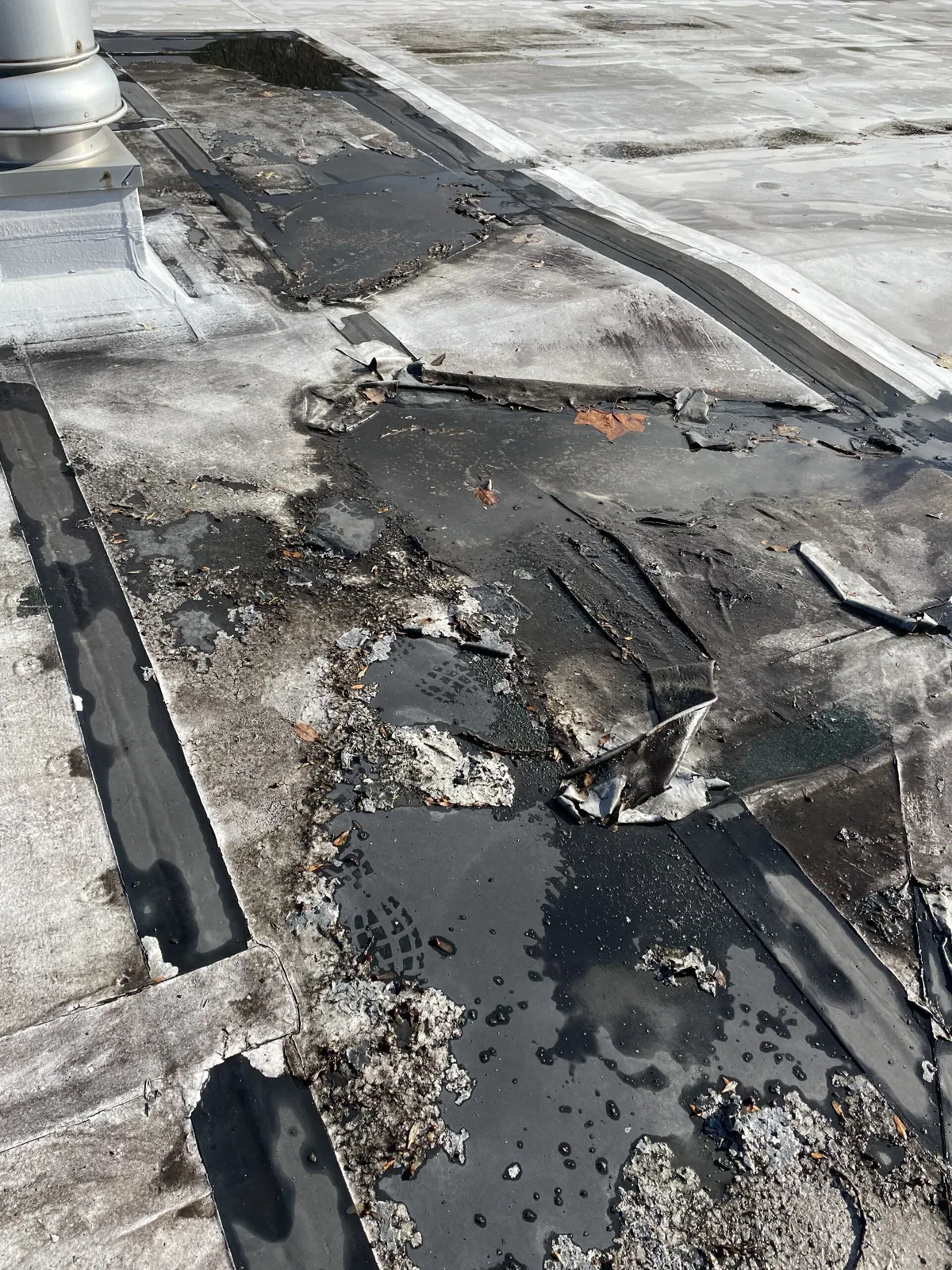
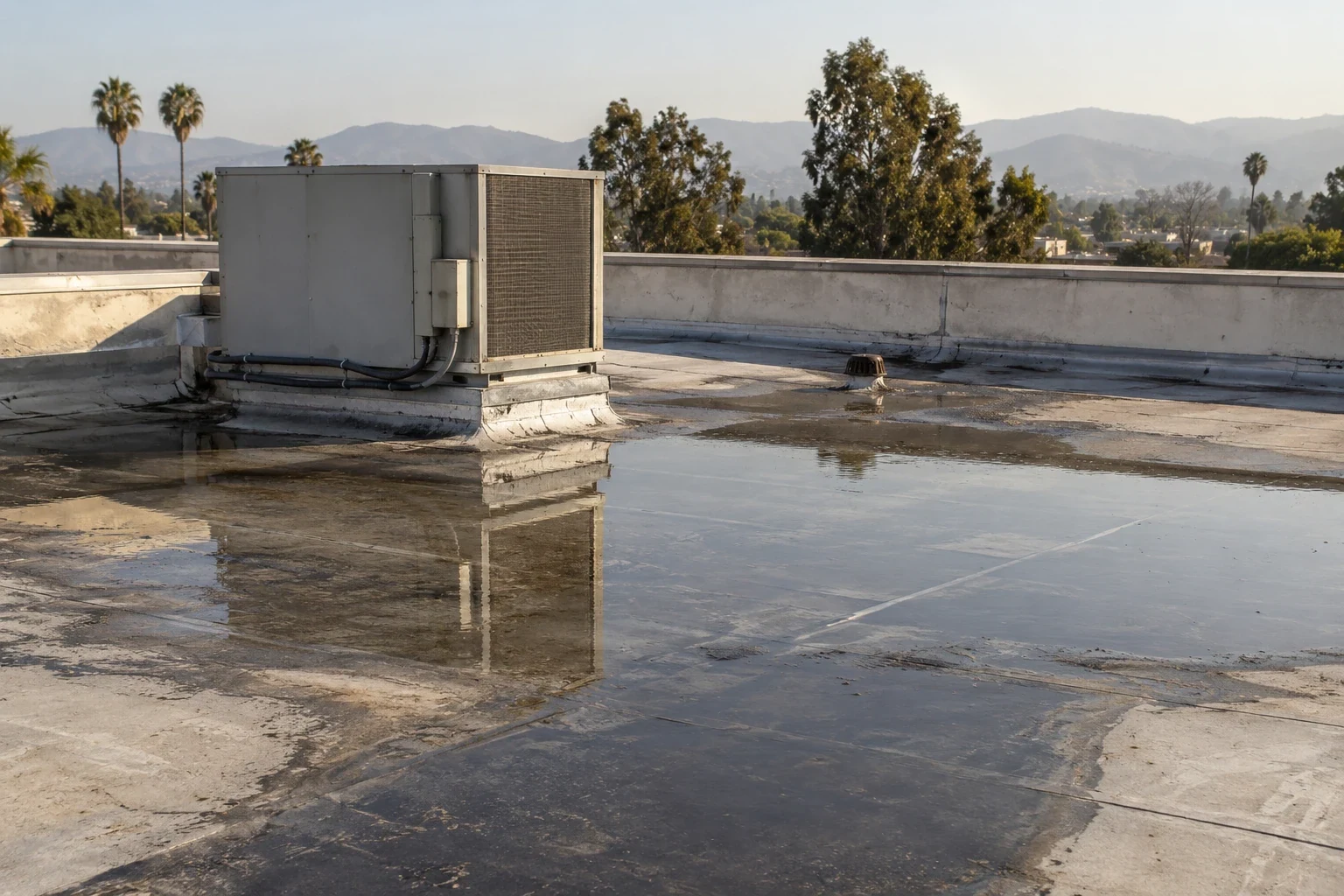
When a seam fails on a Richmond warehouse roof, the leak is rarely the whole story. Water that gets under the membrane soaks into the insulation and cover board, and wet insulation turns soft, loses its R-value and stops holding fasteners. A new patch laid over that soggy layer will not stay down for long. Before we price a repair or a new membrane, we cut into the roof and find out how far the wet material actually runs.
On a warehouse roof, that usually means a few test cuts around the leak, a moisture check across the surrounding field and a look at the deck from below where we can get to it. The estimate then spells out how many squares of insulation and cover board come out, what stays and why, and which areas we still want to open before ordering material. You get a clear picture of the layers you are paying to replace, not just a price for the top sheet. We also ask early about forklift lanes, stored inventory and roof access, since tearing out insulation means more material moving across the roof than a simple patch.
Separate suspected and established damage
A soft spot underfoot, a ceiling stain or a cold patch on a thermal image tells us where to look. It does not prove the insulation under it is ruined. We treat those readings as leads and confirm them with cores or probe cuts before anything goes into the removal count. An infrared moisture survey is a good way to map suspect areas across a big roof in one night, but the core samples are what tell us whether a given spot is wet through, damp on top or dry.
That distinction matters for your budget. If an estimate treats every suspect area as confirmed damage, you overpay. If it ignores wet insulation because the leak looked small, you pay twice when the new membrane blisters or the fasteners back out. We mark each confirmed wet area on a roof plan and list the ones that still need a core. Once the roof is open, we sometimes find more wet material than the cores showed. When that happens we photograph it, show you the extra area and get your approval before we expand the tear-out, and we keep the opening dried in while you decide.
Replace the wet layers
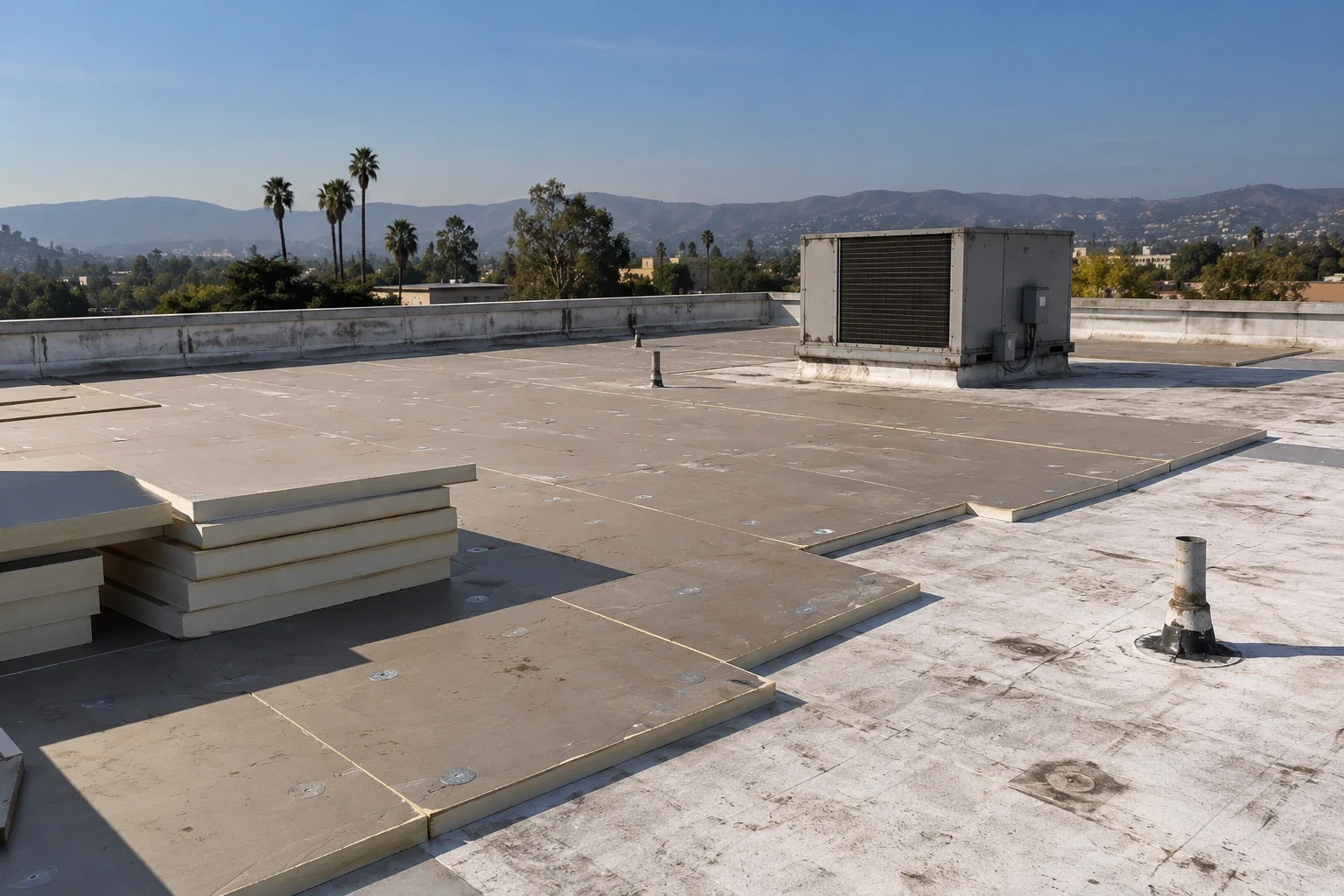
Where the insulation is confirmed wet or crushed, we remove it down to the deck, check the deck for rust or rot, haul the debris off and install new layers that suit the membrane going on top. Sometimes the edge of the repair needs its own tie-in detail where new meets old. When a full roof replacement is on the table, we price the insulation work as its own line so you can see what the membrane costs and what the layers underneath cost. Even the insulation we keep has to be sound enough to hold fasteners or adhesive for the new roof.
Insulation and cover board do different jobs. Polyiso or EPS board provides the R-value. Cover board, usually gypsum or high-density polyiso, goes on top to protect the insulation from foot traffic, hail and heat during installation, and gives the membrane a firm, flat surface to bond to. Which products and thicknesses make sense depends on the membrane, the attachment method and what the roof sees day to day. A seam test on the new membrane tells you the seams are welded properly. It does not tell you anything about the layers under them, so we check both.
New layers need a solid deck, the right fasteners or adhesive and a finished height that lines up with the rest of the roof. We note whether we are replacing insulation only, cover board only or both, then match the new section to the old edge. On a partial repair that can mean a tapered piece or a wider tie-in so you do not end up with a step or a soft lip where water collects.
Check altered connection heights
Adding insulation, or replacing thin wet board with thicker dry board, raises the roof surface. That changes how the roof meets its drains, curbs, scuppers and perimeter edge. We measure those heights before ordering, because a drain that sits an inch above the new surface will pond water around it instead of draining it. Drain and scupper work often has to be part of the same job, with tapered sumps or new drain extensions to keep water moving to the outlet.
Curbs work the same way. If the new roof comes up too close to the top of an HVAC curb, there is not enough room for proper flashing height, and the curb may need to be raised. Edge metal and coping can need a taller wood nailer for the same reason. These items are easy to leave out of a low bid, and they are exactly where a new roof starts leaking a year later. We list every drain, curb and edge that the new thickness affects, so the estimate covers the whole job and not just the flat field in the middle.
Organize removal and protection
Tearing out wet insulation generates far more debris than a patch, and all of it has to come off the roof and go into a dumpster. That takes planning when the building is open, especially where the only roof access runs past offices or loading docks. If you have tenants underneath, our occupied-building reroofing approach applies: we schedule tear-off by section, cover skylights and intakes, and dry in every opening before the crew leaves each day. Working in smaller sections can add setup time, and we price that honestly.
You should also know up front what happens if we open the roof and find more wet material than expected. We stop, mark the extra area, photograph it and give you the added cost before going further, with the roof temporarily sealed in the meantime. Having material on the truck does not mean we can start; the area still has to be clear and safe to work. If you are going with TPO roofing, the board and fastening pattern below it need to match the manufacturer’s requirements for that system. On older buildings in the Iron Triangle, we often find wet insulation in some areas and dry, reusable board a few feet away, so we core before we decide what stays.
Record what was replaced
When we finish insulation work for clients around the Port of Richmond, you get a marked roof plan showing where insulation and cover board were replaced, where existing board was kept and what went back in. We take photos at each stage: the wet material coming out, the deck underneath and the new layers before the membrane goes down. That record shows exactly which areas we checked and which ones we did not touch.
If your roof carries a manufacturer warranty, repairs and alterations usually have to follow that manufacturer’s rules to keep the coverage in place. We check those terms before we start, and if something is unclear we get an answer from the manufacturer in writing. Any nearby work we did not do, such as a curb another trade still needs to raise, stays on the list as open. That way, if a leak shows up later, you can see right away whether it falls inside the area we rebuilt or somewhere we never opened.
Commercial Roofing Questions
Will a new cover board fix wet insulation underneath it?
No. Wet insulation has to come out and be replaced. A cover board over wet material just traps the moisture, and the new membrane will blister or lose its attachment over time.
How do you decide which insulation can stay?
We take core samples and probe cuts in the suspect areas. Board that is dry and firm can stay; anything wet or crushed gets replaced. Areas we have not tested are listed separately on the estimate.
Does adding insulation affect my drains and curbs?
Usually, yes. A thicker roof raises the surface, so drains may need tapered sumps or extensions and curbs may need to be raised to keep enough flashing height. We measure these before ordering material.
What records do I get after the work?
A roof plan showing where layers were replaced and where existing board was kept, the materials installed and photos from tear-off through the new layers. Any open items from other trades are listed too.

Tell us where the roof feels soft