EPDM Roofing in Richmond, CA
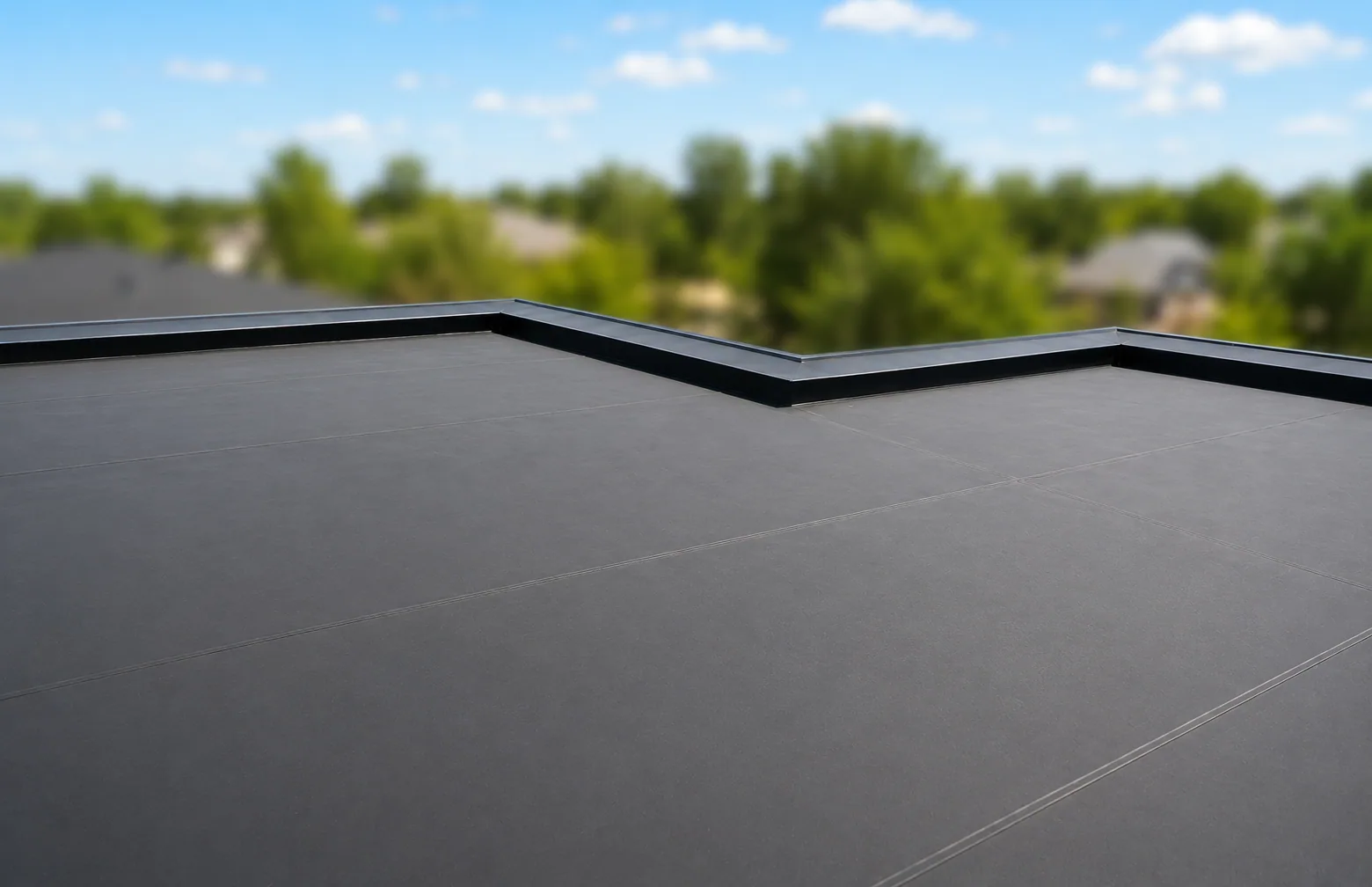
EPDM, the black rubber membrane on many older low-slope roofs, usually fails at its laps and seams rather than in the open field. A common call is a lifted lap around a curb on a storage building: the adhesive or seam tape has let go, the edge curls up, and wind-driven rain gets underneath. Fixing it well means knowing which seam materials are already on the roof, cleaning and priming the rubber properly, and making sure the insulation under the open lap is still dry. A self storage roof also needs a plan for reaching the curb and protecting the units below while we inspect and repair the lap.
Buildings around Marina Bay sit right on open bay frontage with steady wind and salt air, so we also check the edge metal and fasteners near any lifted lap. The membrane and how it is attached still decide the repair method. Before work relies on interior or roof access, we confirm the roof section and contacts. What we see on the roof and any construction records guide the repair, and any area we have not checked stays on the list until we do. You get a repair or replacement option that will actually last, not a lap patch that assumes everything underneath is fine.
Know what is already on the roof
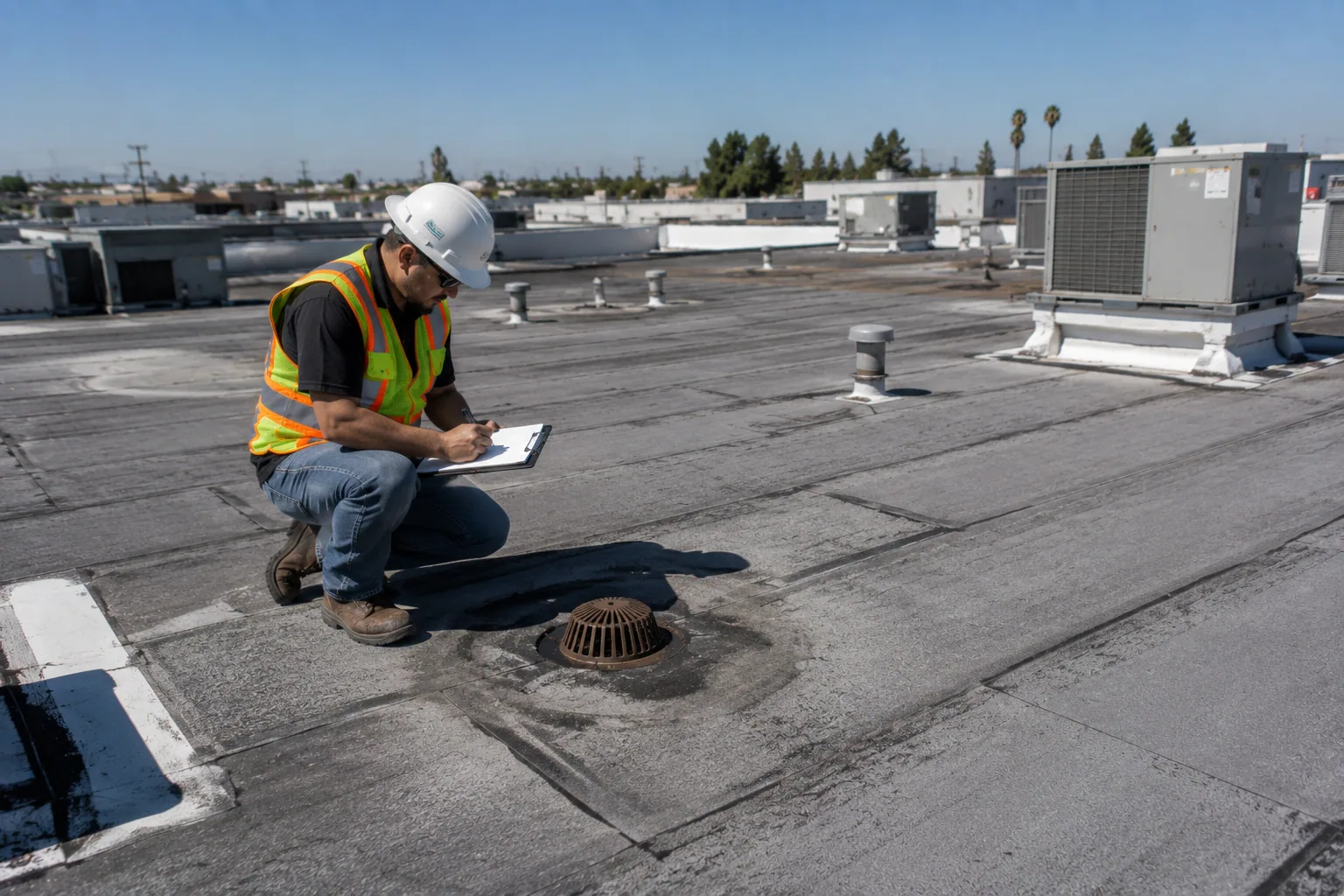
Calling a roof EPDM does not tell us which seam tape, adhesive or flashing products were used on it. We check the existing materials and any records before choosing repair products. A commercial roof inspection on an EPDM roof separates what we have confirmed from what still needs to be checked. An old patch that looks like rubber may not bond with the repair products we plan to use.
You should know where the repair will end and what surfaces the new seam will bond to. If a wall or a piece of equipment has to be dealt with before the detail can be finished, we list it. Some EPDM membranes come with factory-applied seam tape, but that does not tell us what is on your roof or set one repair method for every situation. We check the specific product requirements before ordering. That keeps the estimate tied to your actual roof, with any open questions about materials or insulation clearly stated.
Seams and insulation are separate questions
A good EPDM seam repair depends on proper cleaning, primer and the right tape or adhesive. That is separate from whether the insulation under the seam is dry. We check both and list them separately. A commercial roof repair on an EPDM lap should say exactly what it fixes, instead of letting a freshly sealed seam stand in for everything else around it.
A local repair only makes sense if the insulation underneath is sound and the new materials match the existing membrane. Dry roof nearby does not prove the insulation under the open lap is dry or that the membrane is still properly attached. Where it matters, we confirm with a core cut and tell you what findings would make the repair bigger. The product manufacturer's requirements govern how the repair is installed. A strip of seam tape does not settle the condition of the whole roof, and anything we have not checked is listed as unknown.
EPDM seams are usually joined with adhesive or seam tape, and patches need clean, sound rubber, the correct primer and enough overlap to hold.
Replacing wet insulation
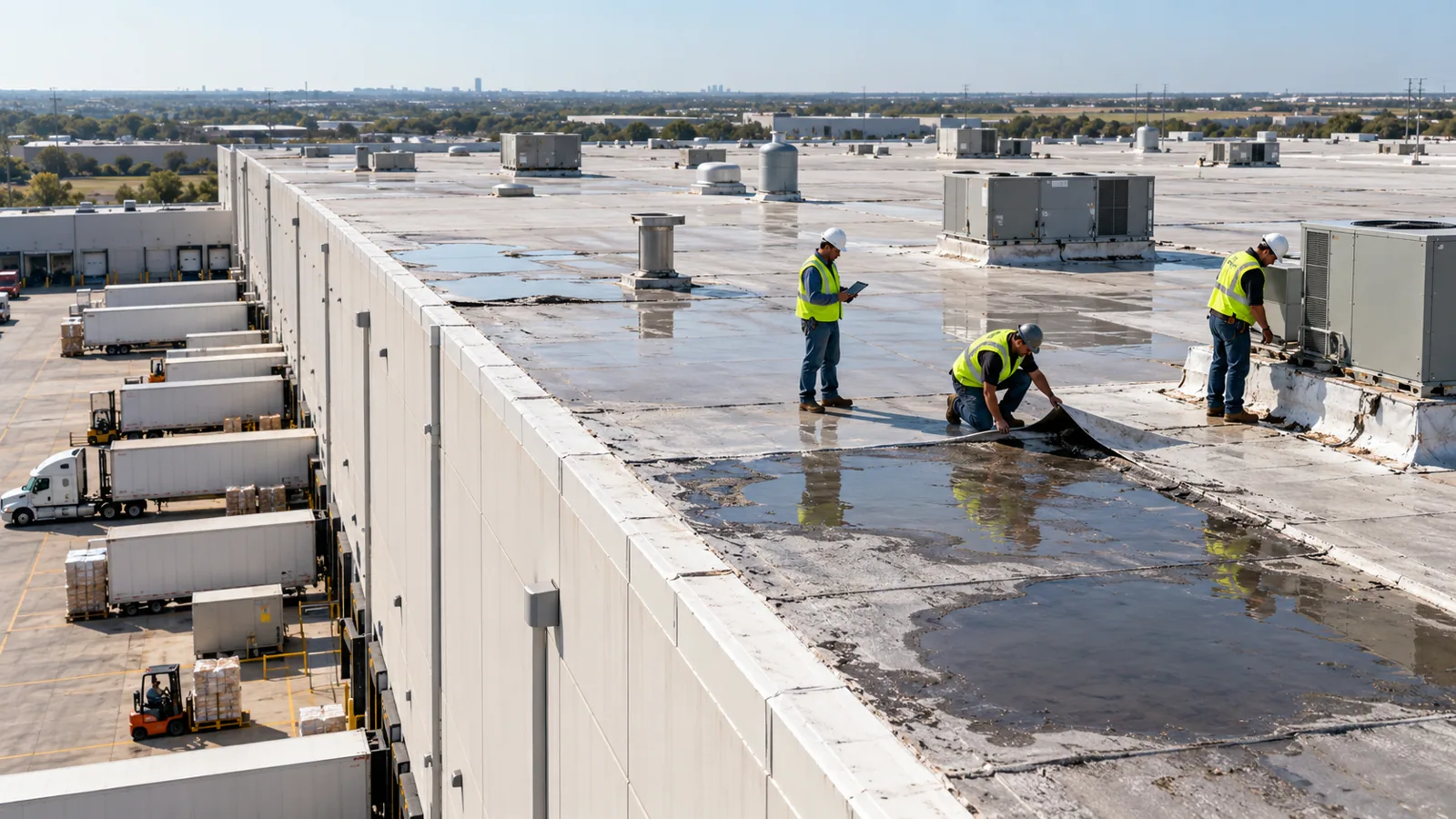
Water that gets in through an open lap can spread through the insulation well beyond the visible damage. We confirm which areas are wet before setting removal quantities, keeping suspected areas separate from confirmed ones. An insulation and cover board replacement under the failed lap should say what stays and why. A new seam on top does not dry out wet insulation, and wet material should not be left in place just because removing it is inconvenient.
Opening the roof sometimes reveals more damage. When that happens, we mark the area, explain the added quantity and get your approval before going further, with the opening kept dry in the meantime. When you compare options, make sure each one includes the same insulation replacement where they overlap. A cheaper bid may leave out disposal or new insulation the roof still needs. We explain those items before ordering and list untested areas as unknown until we check them. That way the EPDM repair covers the whole damaged section, not just the surface.
Getting to the curb
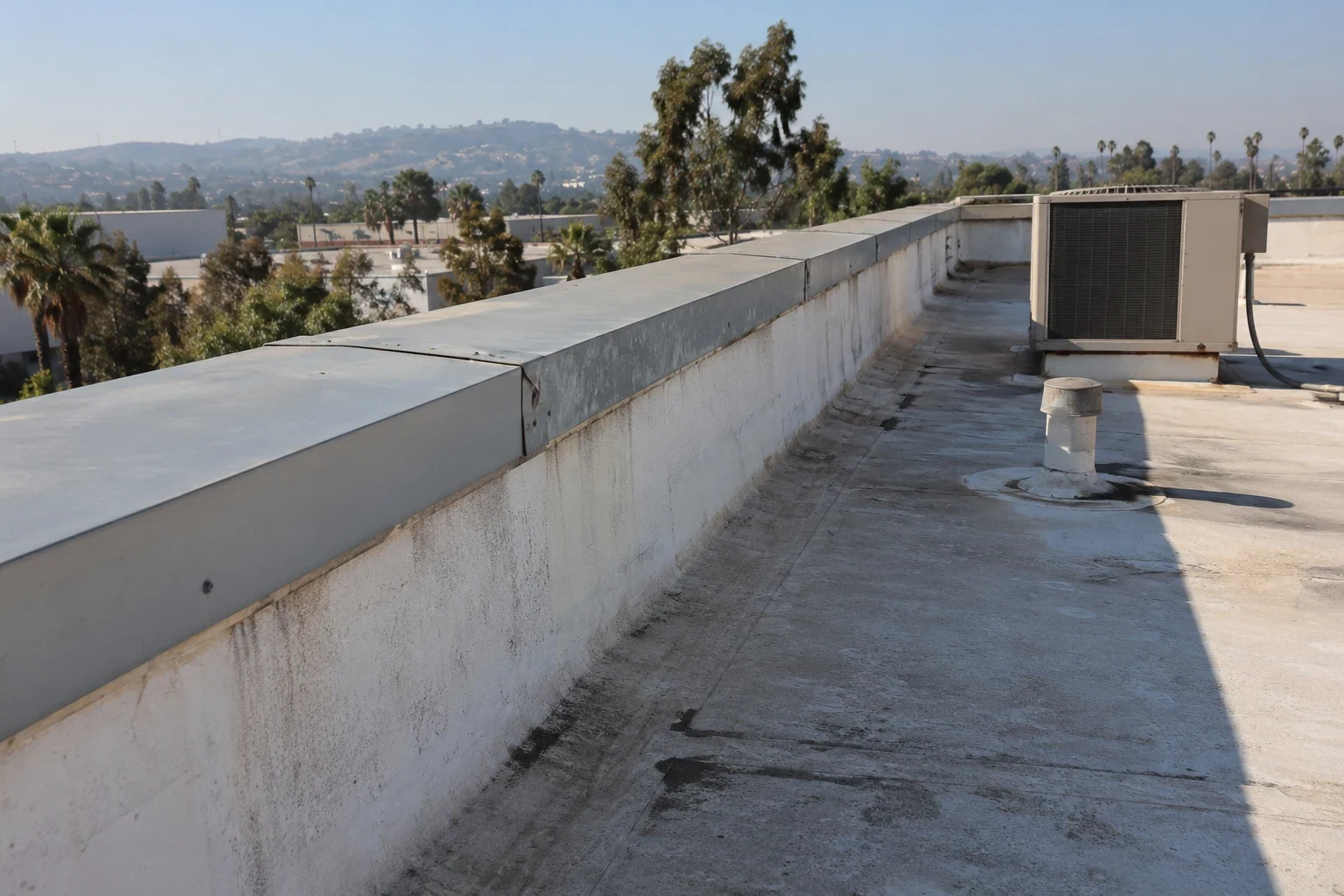
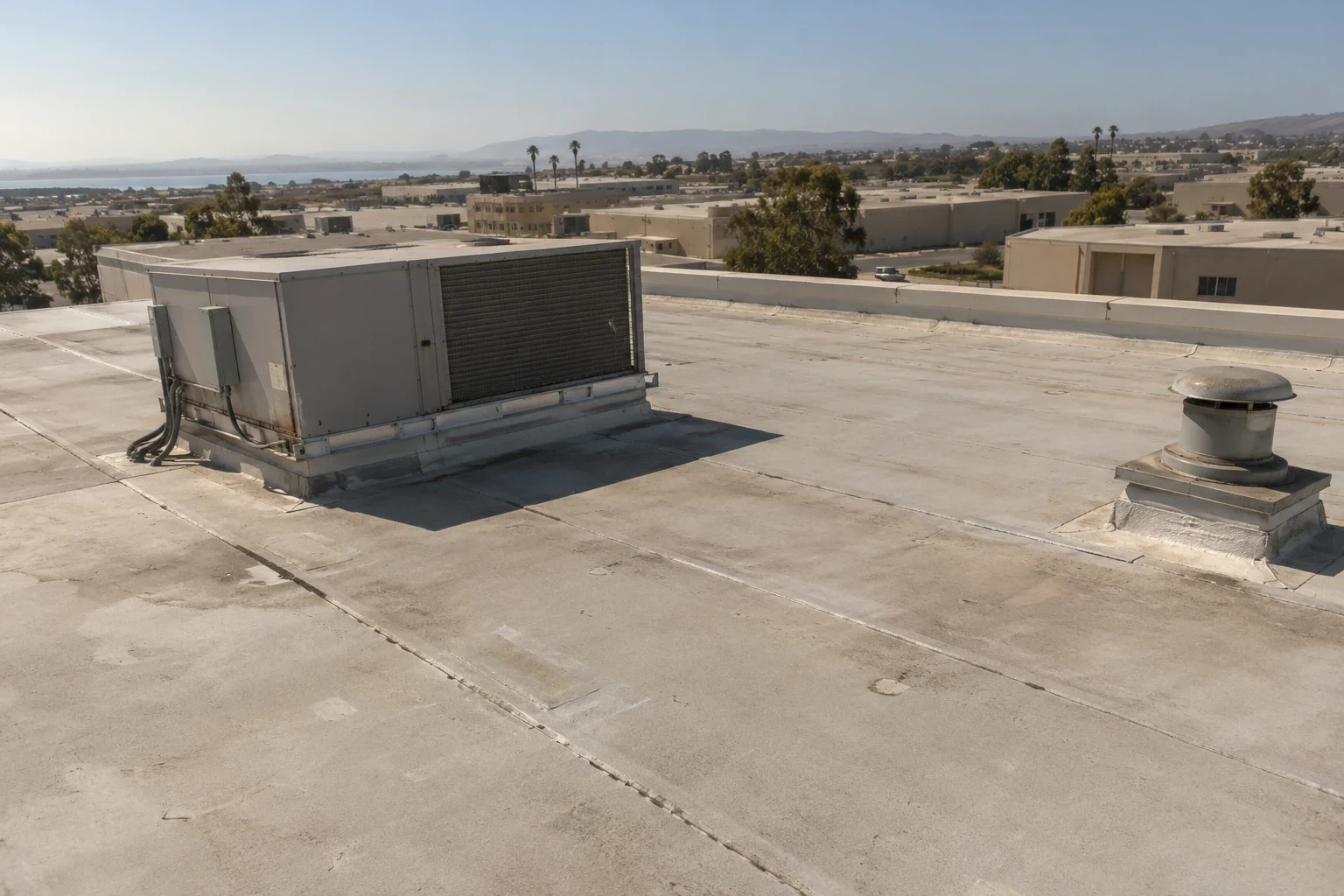
Equipment on a curb can block the EPDM flashing even when the rest of the roof is ready, so the unit may need to be moved or shut down first. The Port of Richmond has city-owned and private terminals that handle bulk cargo, metals, vehicles and break-bulk goods, and roof access and material movement there follow each site's own rules. We identify which details can be worked on now and which have to wait for another trade.
Reroofing an occupied building around an equipment curb should include material handling and protection in the work plan. Working in separate windows can add setup beyond the size of the lap repair. You should know who will move or shut down the unit and what roofing work follows, because having materials on site does not make the curb accessible. New insulation can also change the curb height, which may require rebuilding the flashing before the new roof can be finished. We include those steps in the estimate, keeping finished field work separate from a curb that is still blocked.
Comparing EPDM with other roofs
A TPO roof is a common replacement for EPDM, but it is heat-welded and has its own seam and accessory requirements. A PVC roof also welds and has its own prep and flashing needs. We compare options with the same tear-off and flashing work included, and explain the real differences instead of treating membrane names as interchangeable. You should see what each option fixes along with its material cost.
For EPDM work in the Port of Richmond area, keep photos of the materials used and the insulation that was replaced. Seam tests go in the record with their locations, while untested areas and equipment work still pending are listed separately. If the roof has a warranty, check its maintenance and alteration terms before anyone does later work on it. Note anything still unresolved. A good record shows exactly which parts of the EPDM roof were repaired and what still needs work, so future maintenance follows real locations instead of assuming one fixed lap means the whole roof is sound.
Commercial Roofing Questions
Does knowing the roof is EPDM tell you which repair products to use?
No. We check the existing membrane and old repairs, then choose tape, primer and adhesive that match what is actually on the roof.
How do you decide how much insulation to replace?
We confirm wet areas with core cuts and moisture readings around the failed lap, keep suspected areas separate and replace what is confirmed wet.
Can the rest of the roof be finished if equipment blocks a curb?
Yes, but the curb stays open on the list until the unit is moved or shut down. We repair the curb flashing as soon as it can be reached.
What records help with future EPDM maintenance?
Photos of the repaired laps and replaced insulation, the products used, seam test locations, warranty care terms and any items still waiting on other trades.
Tell us about the lifted lap and roof access