Healthcare Roof Repairs in Richmond, CA
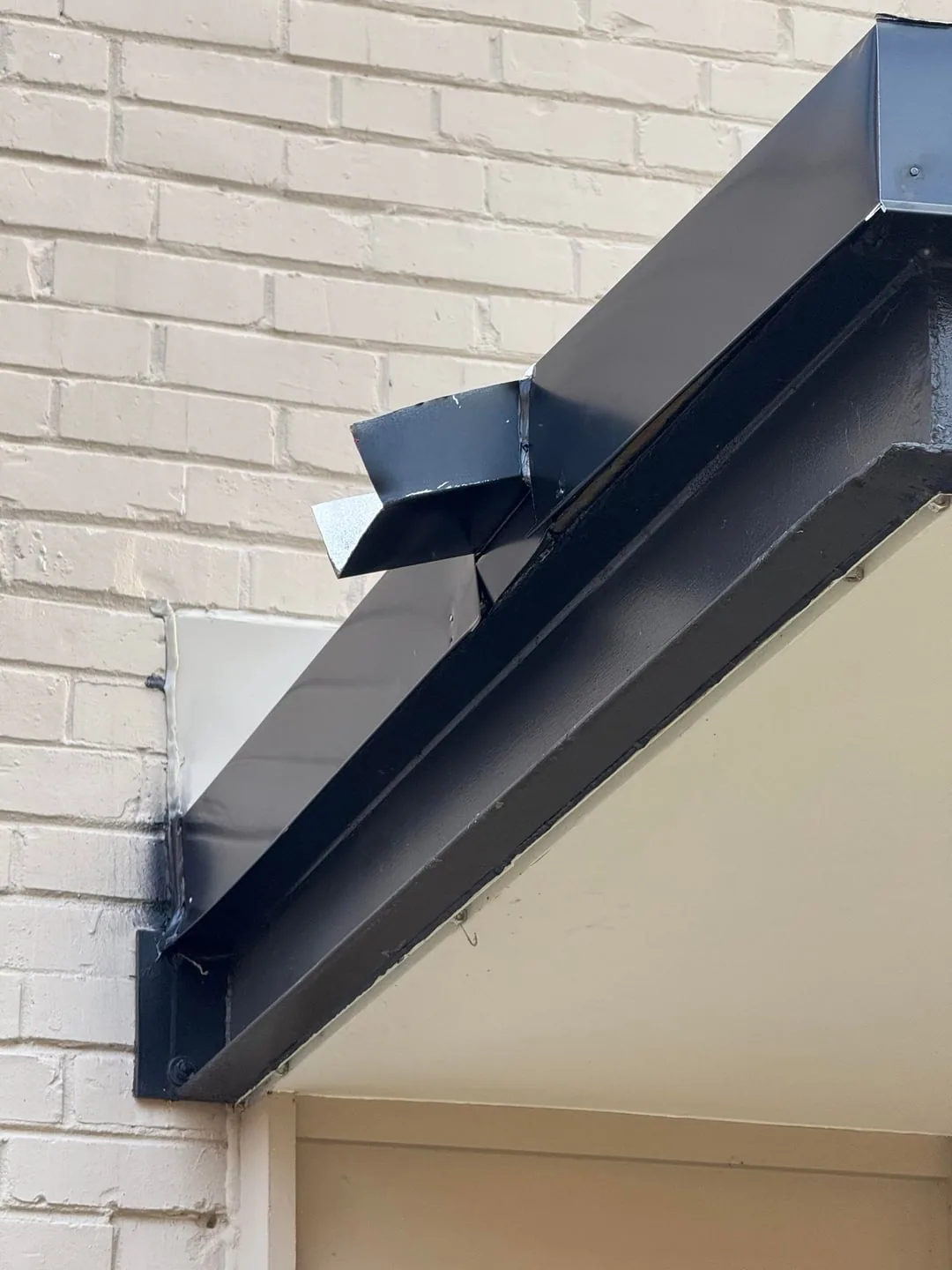
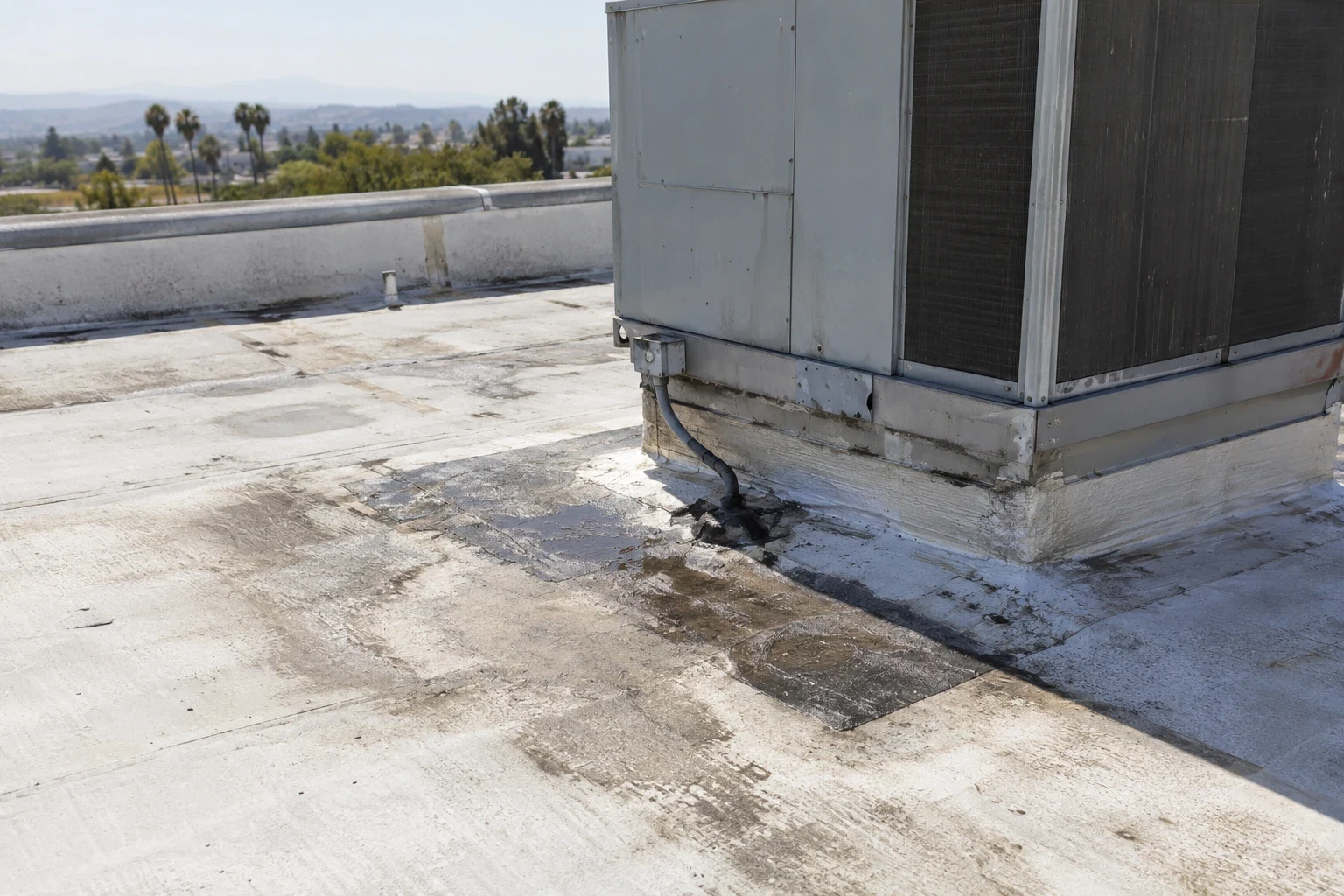
A split flashing joint above a healthcare building needs a clear repair limit and an access plan before roofing materials reach the area. The leak may involve the membrane, the curb it is sealed to or another connection at the same spot. We check each of those separately and identify what must be repaired. In Richmond, CA, the owner gets an order of work that accounts for how the building is used and who needs to sign off on each step.
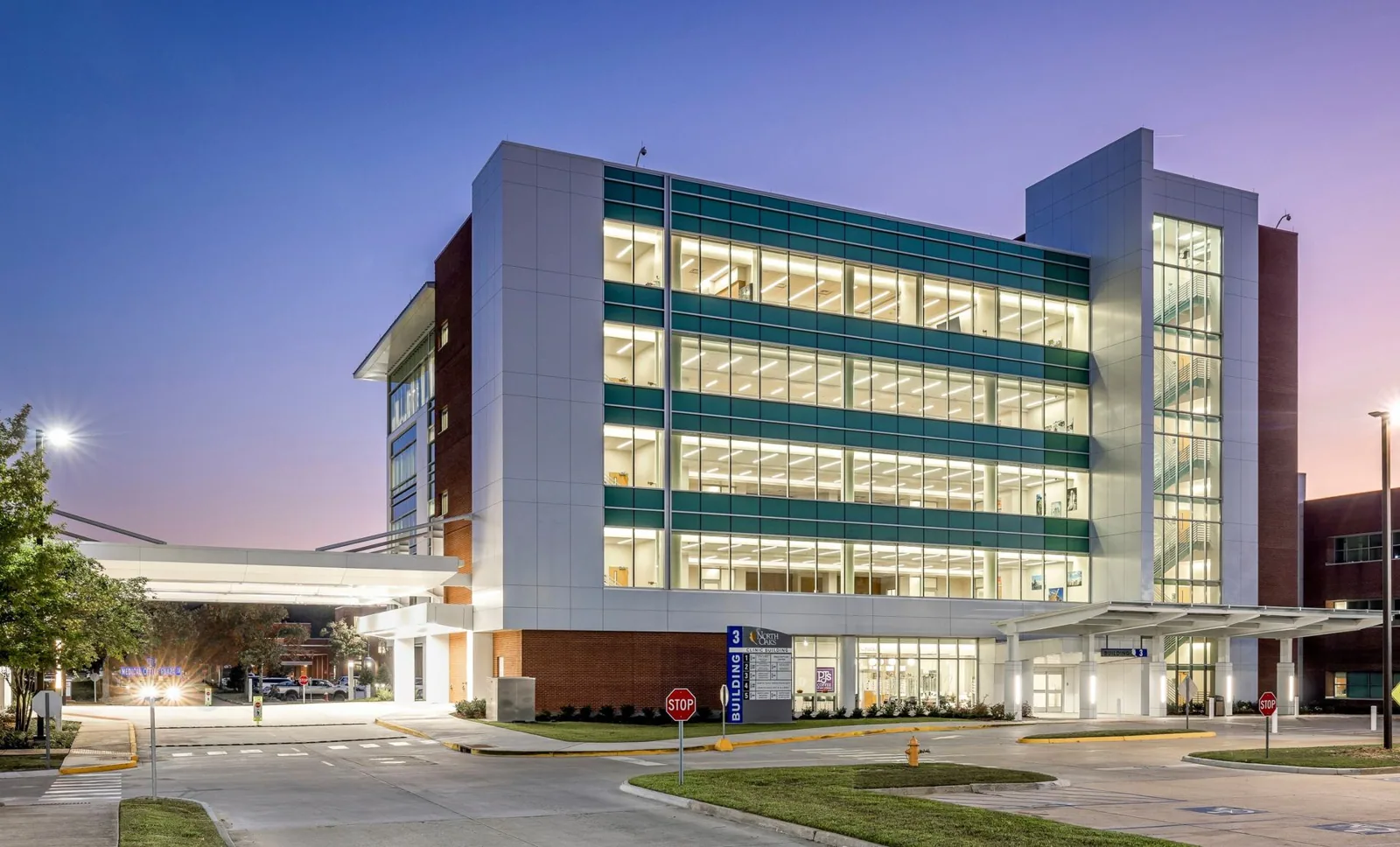
Kaiser Permanente is among Richmond's leading employers, and its Richmond facilities and the VA medical center are very different healthcare settings. Either way, each building's roof and access have to be checked in person. At the building we are working on, the facility managers set the access and operating requirements. Our work with property management companies runs the same way: we start with what we find on the roof and the arrangements that building actually needs.
Pin down exactly what failed
A stain reported inside a healthcare building does not establish which roof component admitted water. We examine the available roof evidence and the detail connections, keeping equipment defects and roofing defects distinct. A split in membrane, a loose upper termination and a damaged curb may sit near one another while requiring different tasks. The written finding identifies the observed defect and any further examination needed before removal or a permanent connection is specified.
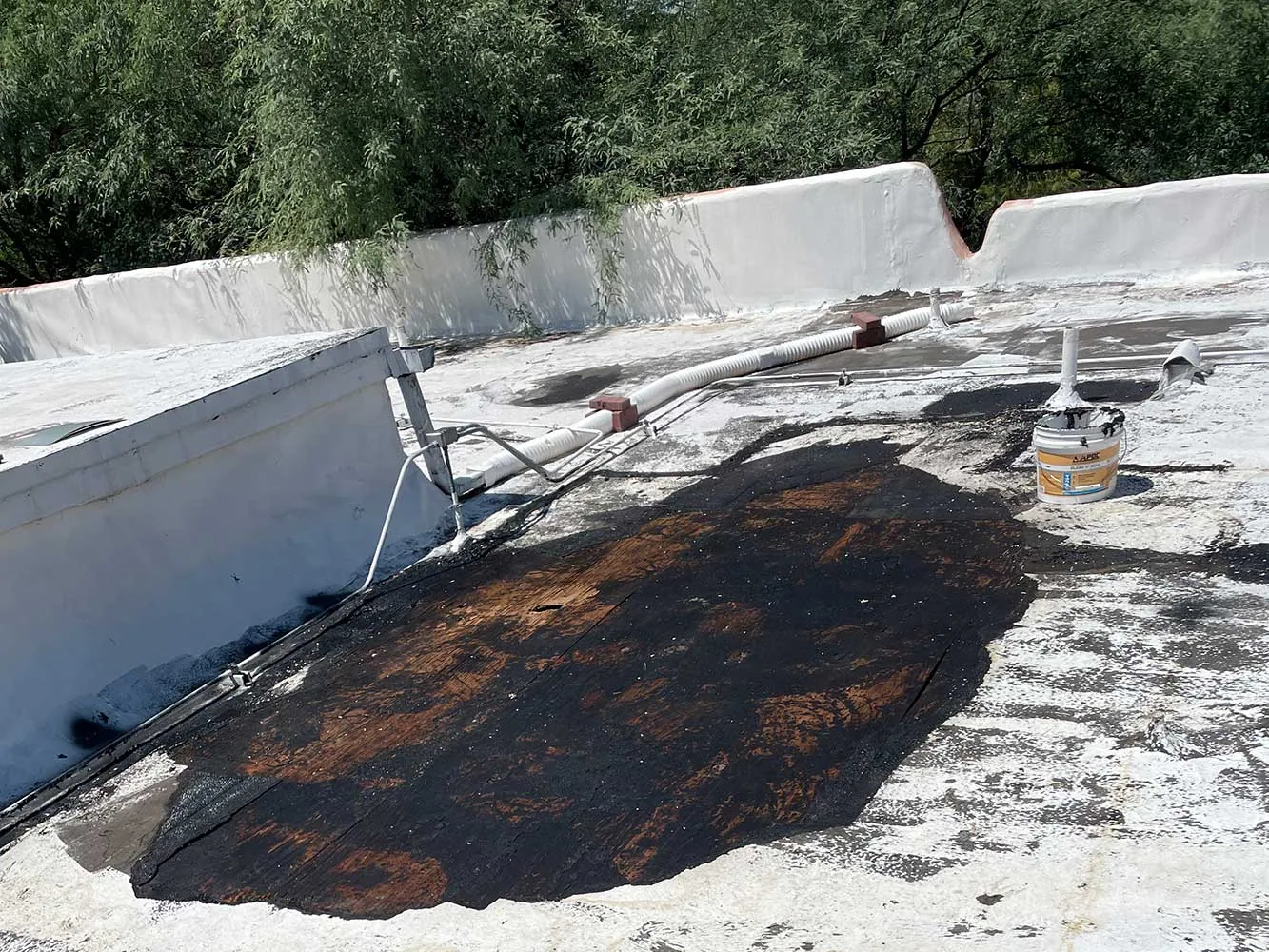
The surrounding roof layers may need investigation if the condition suggests concealed moisture. Suitable methods can indicate affected areas, with confirmation required for the assembly before deciding how much to tear off. Our inspection of the existing roof and its details distinguishes visible damage from confirmed lower-layer conditions. That distinction helps the owner authorize a suitable repair rather than a surface patch whose limits are defined only by the apparent size of the opening.
A roof repair next to active patient spaces needs a bounded work area, protected air intakes, and a clean route for removed materials. We agree those controls with facility representatives before opening a section.
The building requirements come from its representatives
Getting through an occupied healthcare building has to be planned with the people who set its rules. We describe the roofing work and the route we would like to use for materials, then get the building's requirements. Anything involving patient rooms, medical equipment, ventilation or other building systems is handled by the facility's own staff and contractors. A roofing scope alone cannot decide how those systems need to run during construction.
The facility manager confirms the entry point, room protection and material route before the roof is opened. A hospital and a medical office can have very different rules, and the roof work follows the ones set for that building. Coordinating with general contractors handling related work keeps everyone's tasks clear. The plan shows which work or approval has to come first, where materials can move and how the roofing fits in before any area is opened.
The layers underneath decide the repair
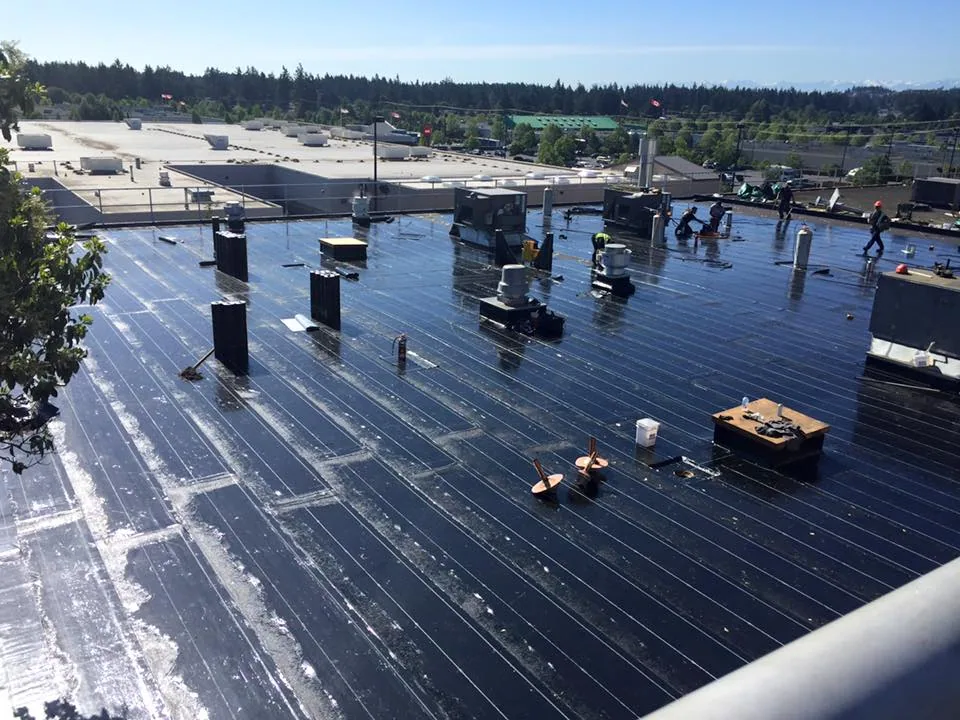
Covering a damaged roof layer does not fix it. Where investigation confirms unsuitable insulation or cover board, removal and replacement need clear limits. The exposed deck is examined before new material is installed. Any problem with the deck is fixed or referred to an engineer. We identify those tasks distinctly so the new membrane goes over a sound roof instead of hiding a problem under a fresh surface.
Our insulation and cover board replacement describes the rebuilt arrangement and its connection to retained material. The surrounding system, layer condition and detail geometry determine that transition. An owner can then understand which work replaces damaged material and which work rebuilds the curb or wall flashing. Related equipment or building-system tasks remain separate, with their place in the sequence recorded so a finished roof surface is not mistaken for every task being complete.
The material route is part of the repair
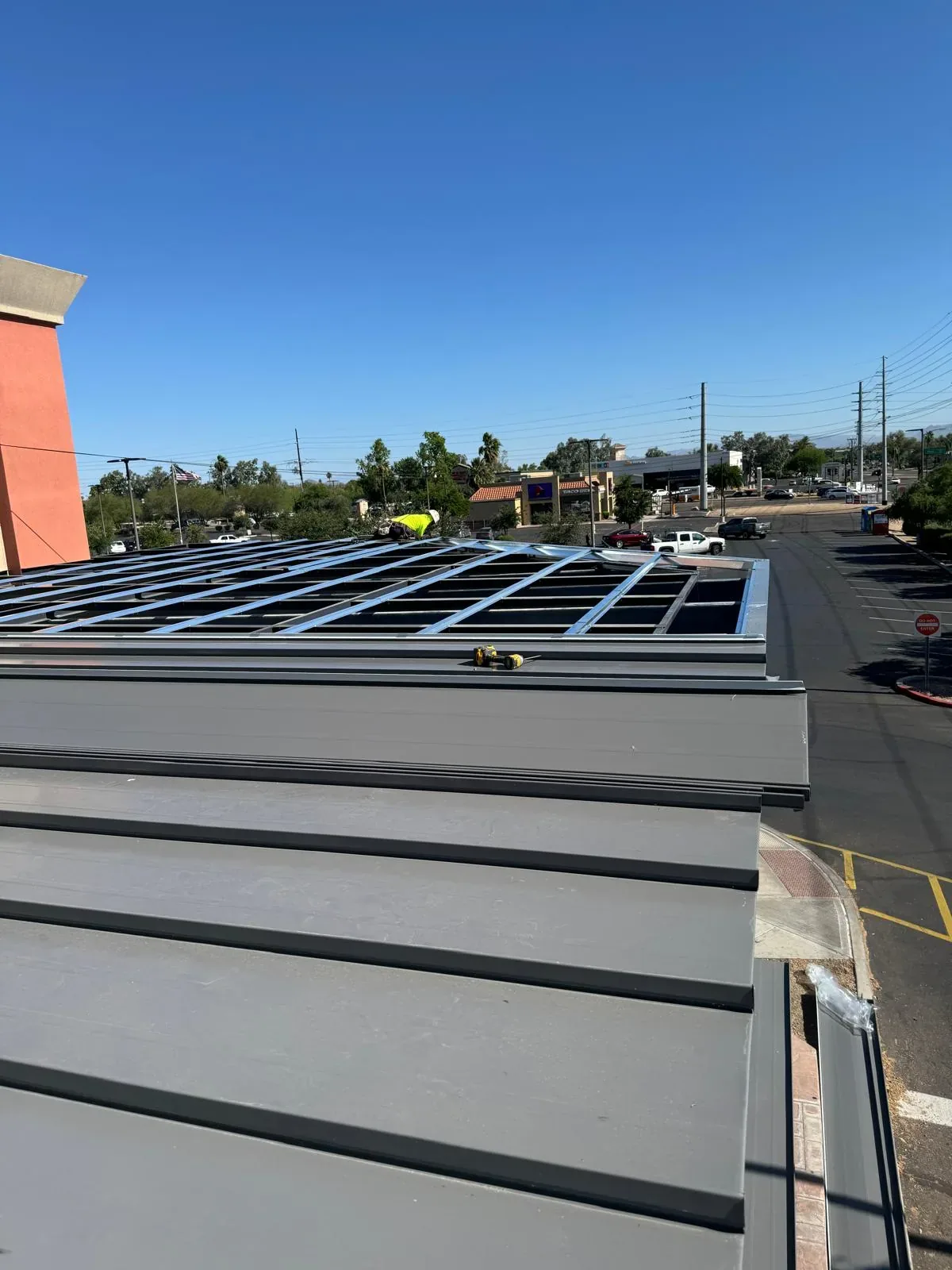
Getting a crew onto the roof does not mean there is a good way to bring up new material. We look at the roof hatch or access point, any level changes and the working space next to the repair. Facility staff tell us how materials can move through the building and which areas must stay open. The plan then covers delivery, hoisting, debris removal and protection along that route. Anything that changes the repair schedule is flagged before the roof is opened.
Downtown Richmond's Civic Center includes public buildings, but healthcare roof repairs need their own controls for roof access and clinical spaces. For healthcare buildings, the facility's own requirements decide how the work is set up. Roofing work in the Downtown Richmond Civic Center area also starts with the access route at that building. We schedule related work and deck prep first, then the permanent roofing, with the agreed access kept open throughout.
A roof opening near an air intake or patient-care area can require coordination beyond the membrane detail. We identify the affected zone, the right facilities contact and any rules that limit debris handling or access. Roofing work and building-system work stay separate in the scope. Before the roof is closed up, the deck and insulation must be ready and the agreed interior protection must stay in place through the last roofing task.
The finished detail needs a usable record
A finished repair should come with a record of what failed, which layers were replaced and how the new membrane ties in. We photograph the deck and insulation before they are covered again and distinguish material retained from material removed. Any related responsibility assigned elsewhere remains identifiable. The owner then has a clear repair record rather than only an image of a smooth finished surface, which cannot explain the condition handled beneath it.
A broader pattern of failures may require a comparison of repair and replacement options. We examine those findings before recommending more extensive work. A written roof condition report can identify the immediate repair and subsequent decisions. Any temporary protection is arranged with the facility and kept separate from the permanent repair and any open items.
Commercial Roofing Questions
Who sets the rules for roof work near healthcare operations?
The facility's managers and its building-system staff. We describe the roofing work and route we need, and the schedule includes their requirements before any tear-off.
Can a membrane patch fix every problem at an equipment curb?
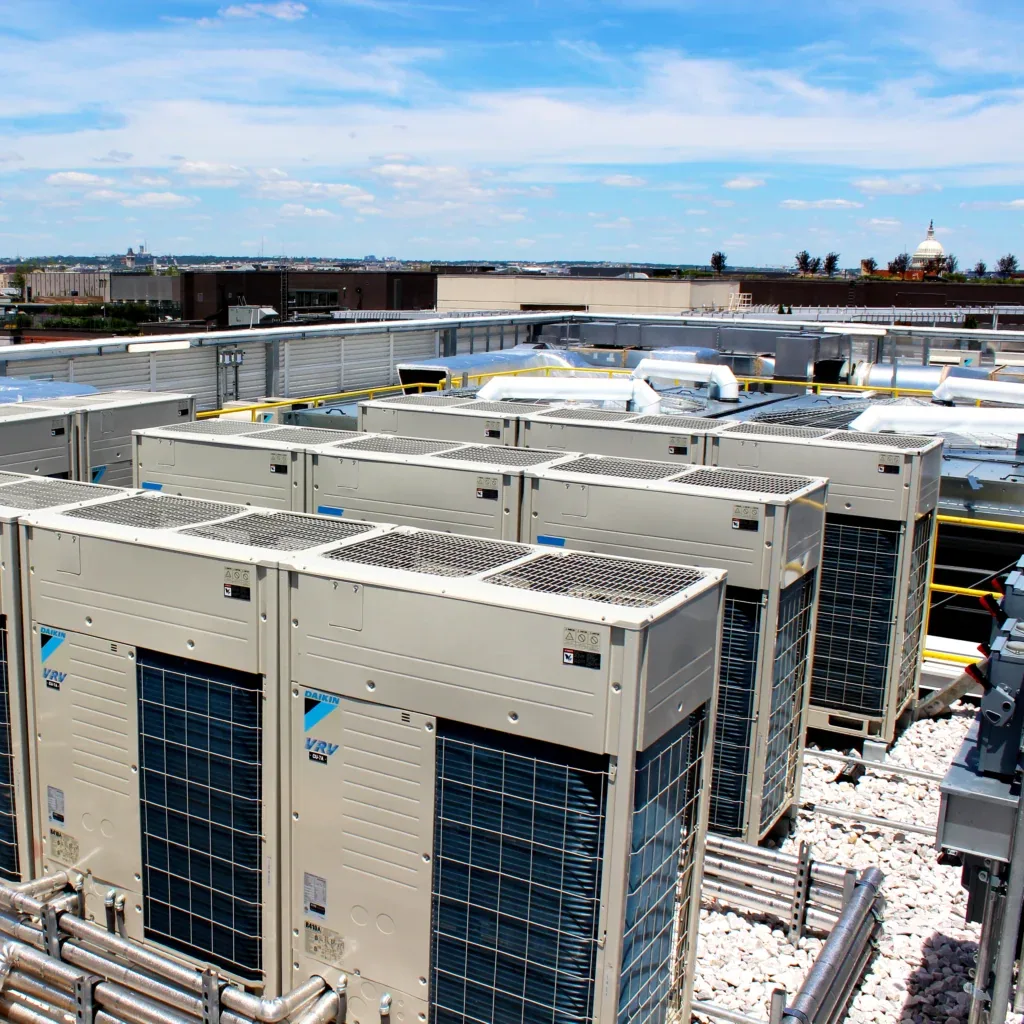
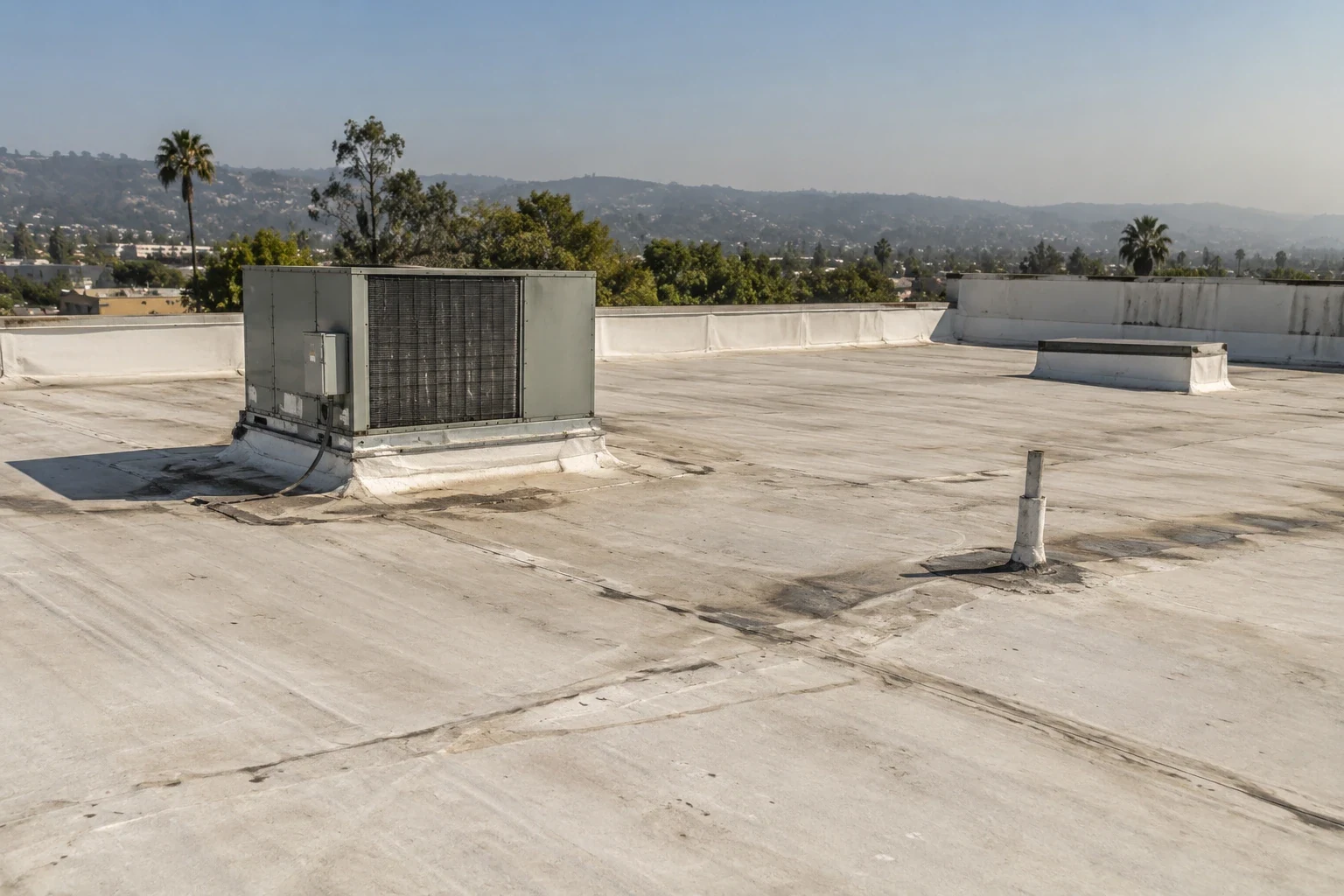
No. The membrane, the curb and the unit's connection each need checking. A patch only fixes the membrane; any curb or equipment work is listed separately so it does not get covered up.
Why confirm moisture before tearing off insulation?
A moisture scan shows likely wet areas but not exact limits. Core samples tell wet insulation from dry, so we only remove what is actually damaged.
What should the repair record show?
Which layers were replaced, what was kept and how the new membrane ties in, with photos of the open roof. Work assigned to other trades is listed separately.
How is emergency protection handled?
We seal the opening using the facility's access rules and explain what the temporary fix does. Testing, deck work and the permanent repair are then planned and approved separately.
Plan your healthcare roof repair