Local weather advisory
Coastal Flood Advisory: Commercial Roof Help in Richmond
The National Weather Service has issued a coastal flood advisory covering Richmond. Heavy rain and drainage loading can expose roof leaks, blocked drains, and ponding water. This is a weather exposure advisory; it does not establish damage to a specific roof.
Do not access a roof during hazardous weather. Protect people first, avoid water near electrical equipment, and request roofing help when conditions permit.
National Weather Service · Updated Oct 28, 2026, 7:20 AM UTC
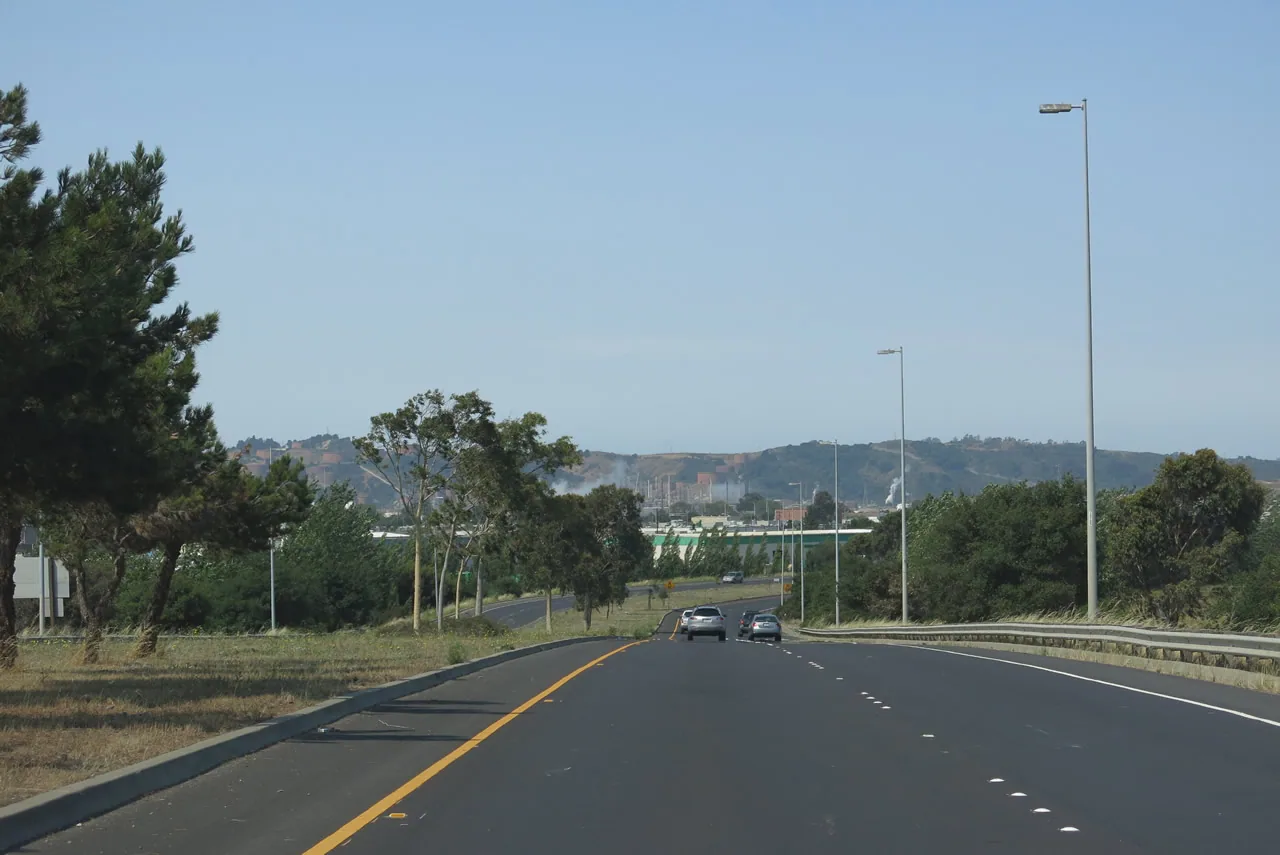
Commercial Roofing along the Richmond Parkway, Richmond, CA
A loose roof edge along the Richmond Parkway can let wind drive water beneath metal that still looks attached from the ground. Commercial Roofing Contractors Richmond inspects, repairs, restores, and replaces commercial roofing in Richmond, CA, and plans how crew, materials, and temporary protection reach the affected zone. The repair follows what we actually find at the opening, the condition of the membrane around it, and the hours and areas the property can give us.
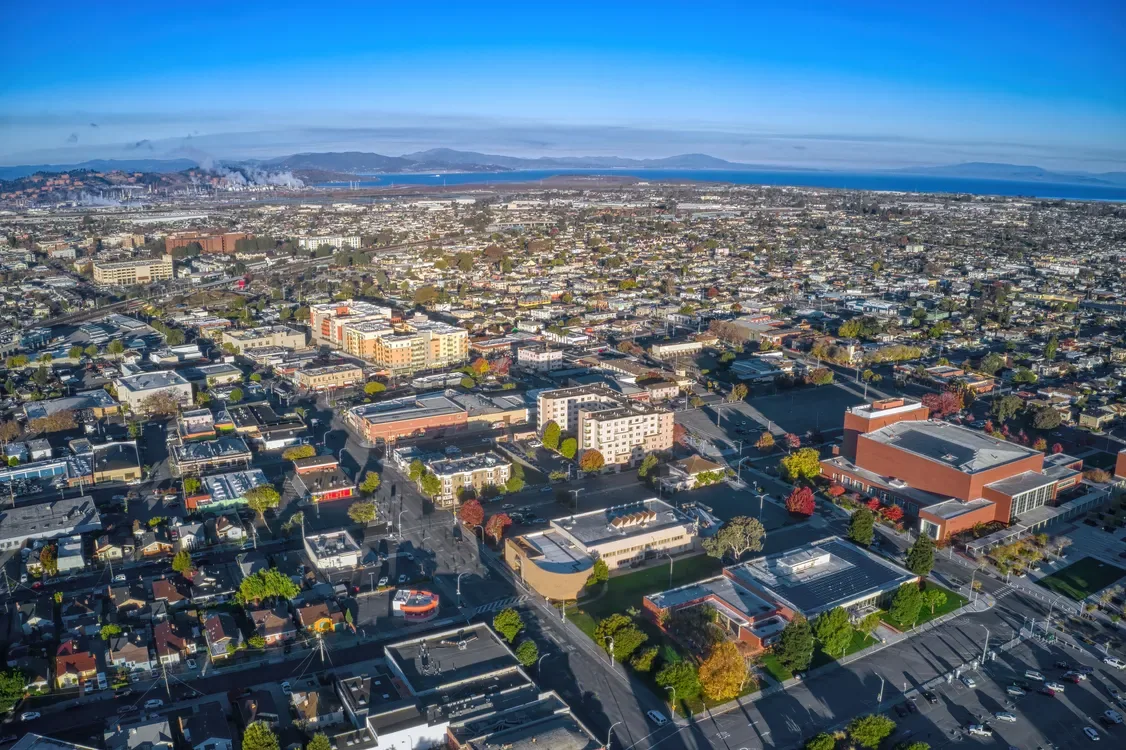
The roughly seven-mile Richmond Parkway connects I-580 at Point Richmond to I-80 near the Richmond-Pinole line, passing the refinery area and North Richmond logistics buildings. That geography defines a service corridor, not one roof type. We start with the property, visible conditions, and an access plan agreed with its representative.
Start at the failed connection
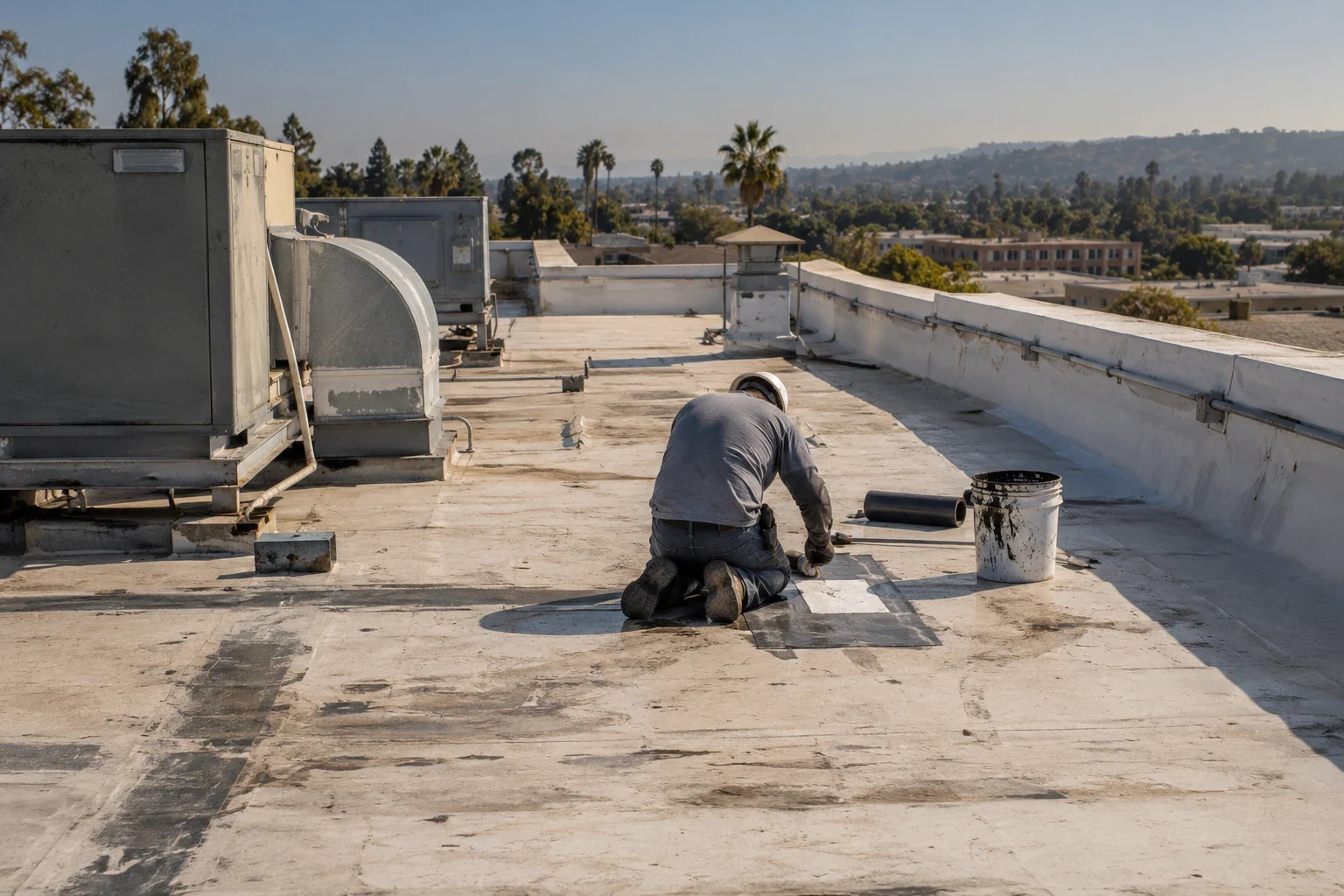
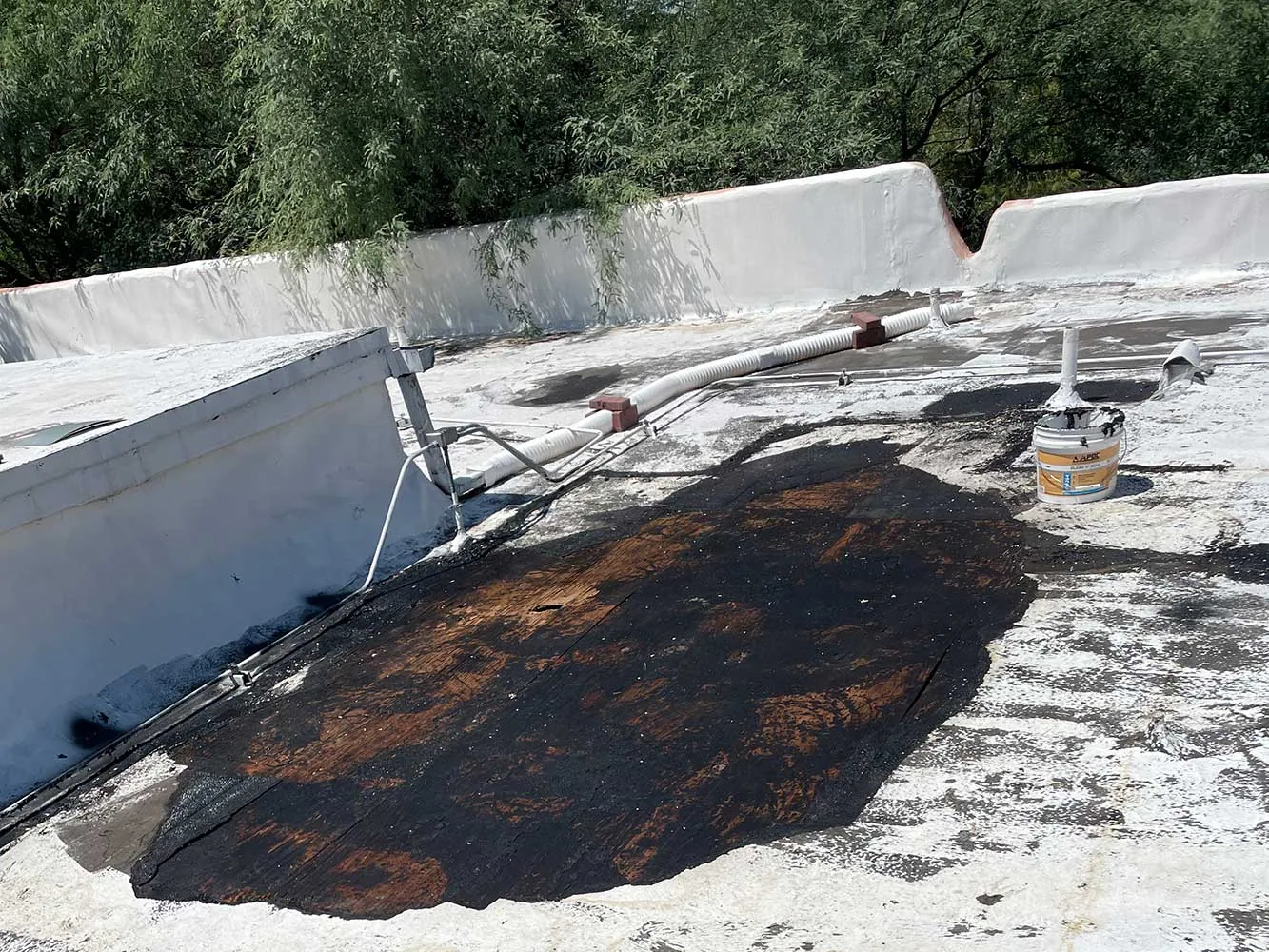
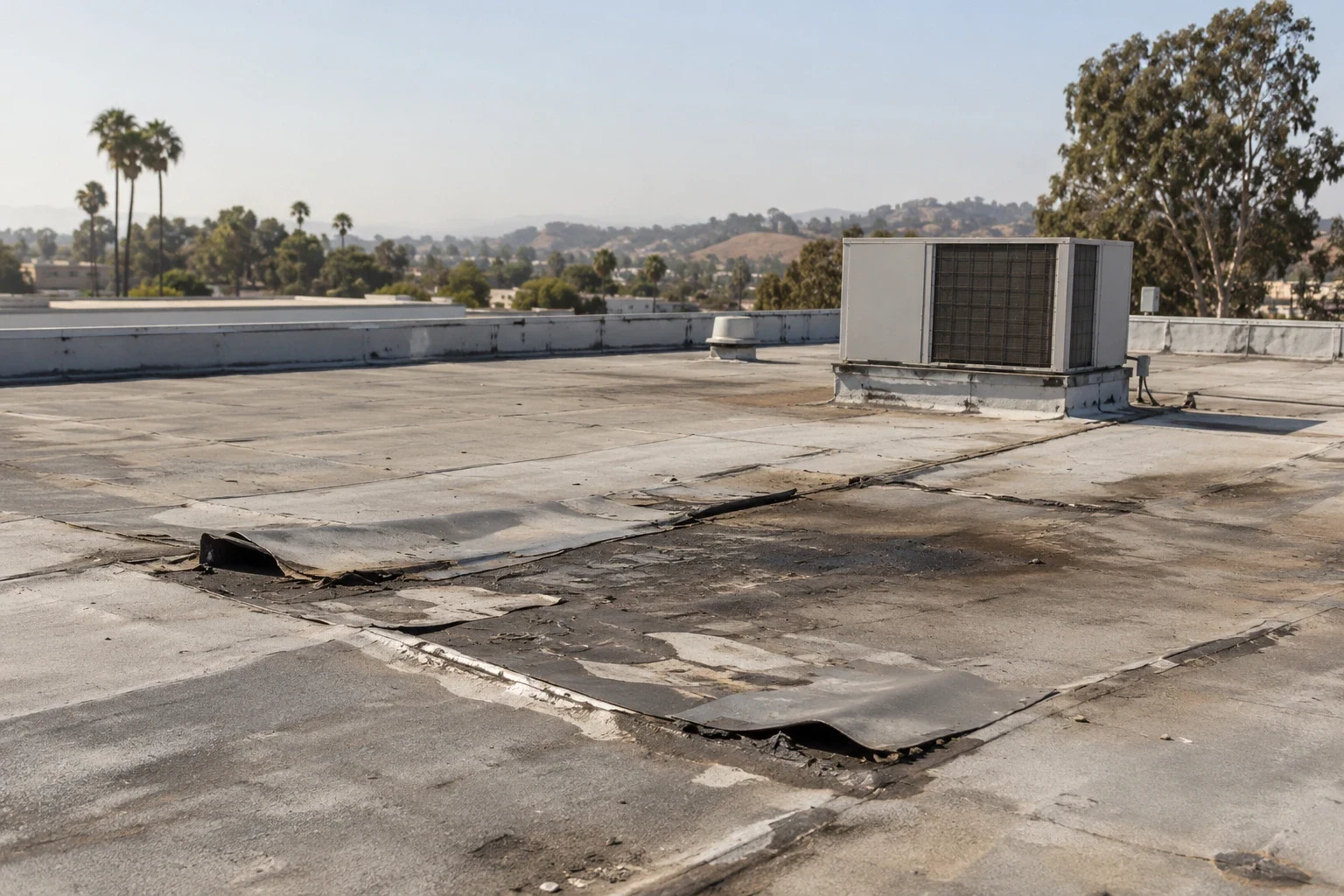
A lifted edge, open lap, separated curb flashing, or puncture can admit water while the interior mark appears elsewhere. We inspect above the symptom, then trace seams, penetrations, drains, wall transitions, and perimeter metal. The goal is to find where the water actually got in and how far the damage goes. A small opening may connect to wet insulation or weak attachment beyond its outline, so the repair boundary follows what inspection confirms.
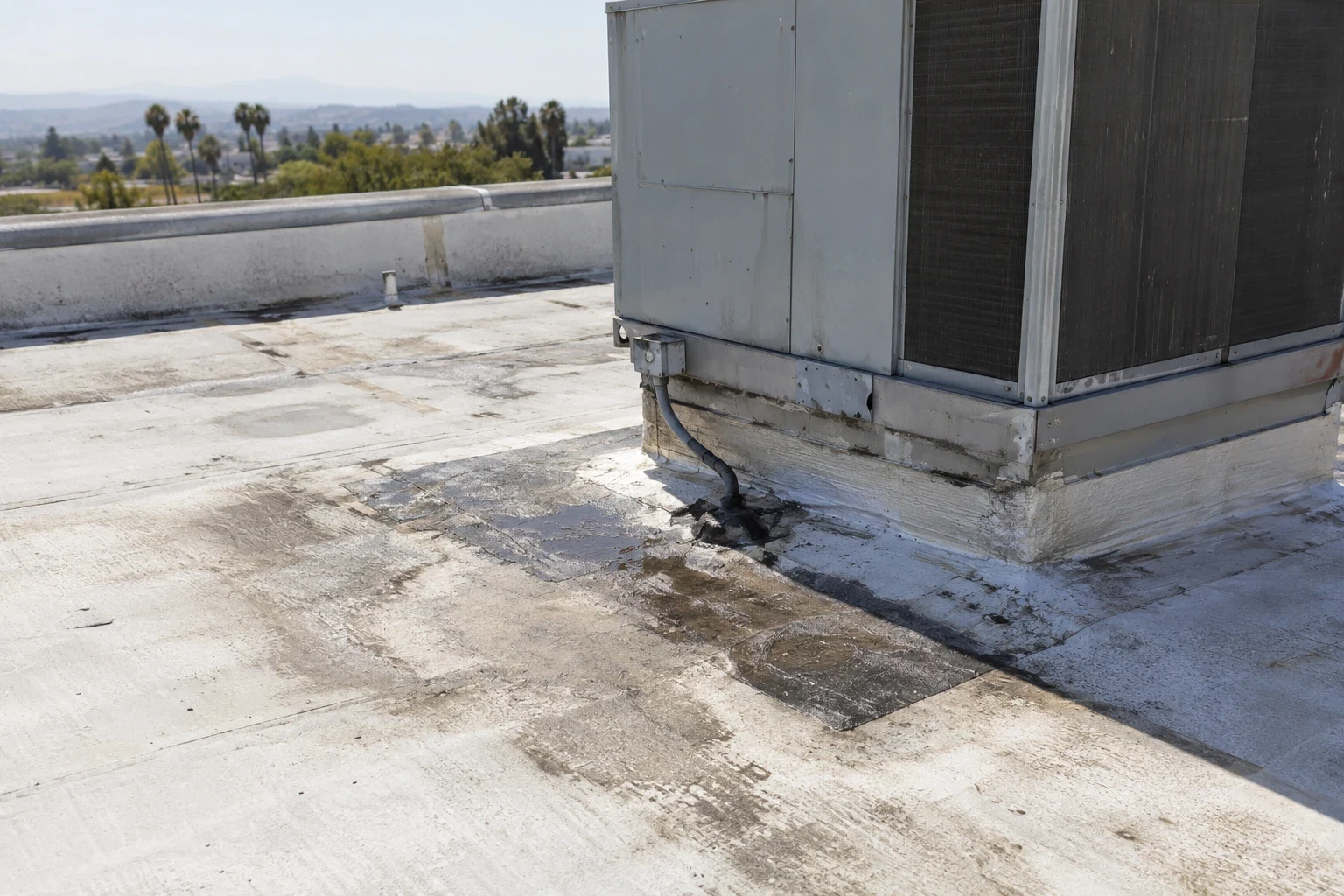
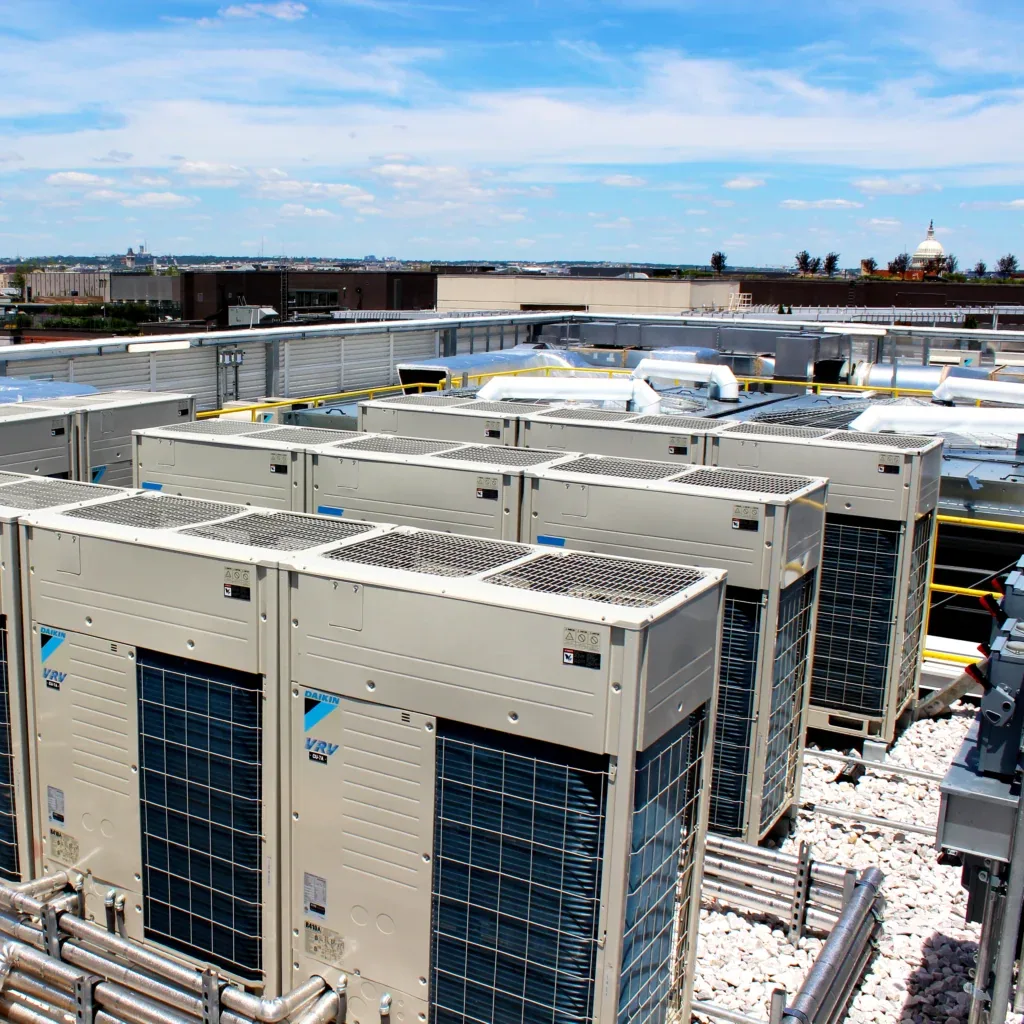
Industrial roofs bring equipment, exhausts, loading operations, and access points that shape the sequence. The roof flashing around a rooftop unit is checked separately from the unit itself. We note the flashing condition and flag any mechanical or support problem for the HVAC contractor. That keeps us from sealing a flashing before the curb or support underneath it is ready. Our commercial leak investigation records confirmed findings and open questions.
Read the corridor as a set of conditions
The Richmond Parkway passes North Richmond logistics buildings and the refinery, linking properties with different operating needs. Trucks moving through industrial sites make gate coordination, safe delivery, and an agreed work area practical requirements. The street name doesn't tell a crew where it can enter; the property contact does. We set access building by building and keep any roof opening sealed at the end of each work period.
Near the Bay, exposure can affect metal details. The refinery’s process buildings, warehouses, and shops are described as sitting in salt-laden marine air. That's a good reason to check for corrosion on bay-side buildings, but it doesn't tell us the condition of any one Parkway roof. We inspect actual fasteners, edge metal, and dissimilar-material transitions to determine whether corrosion, movement, or another failure needs correction.
A property in North Richmond may share the logistics geography while keeping its own gate and truck-yard arrangement. Closer to Point Richmond, perimeter and access conditions differ. We inspect each property independently.
Set access before material delivery
The way in can control a repair as much as the damaged detail. We confirm the entrance, delivery point, route to the roof, equipment restrictions, operating hours, and areas that must stay clear. The property contact identifies the permitted approach. We match material handling and temporary protection to that route rather than assuming a nearby facility entrance belongs to the building.
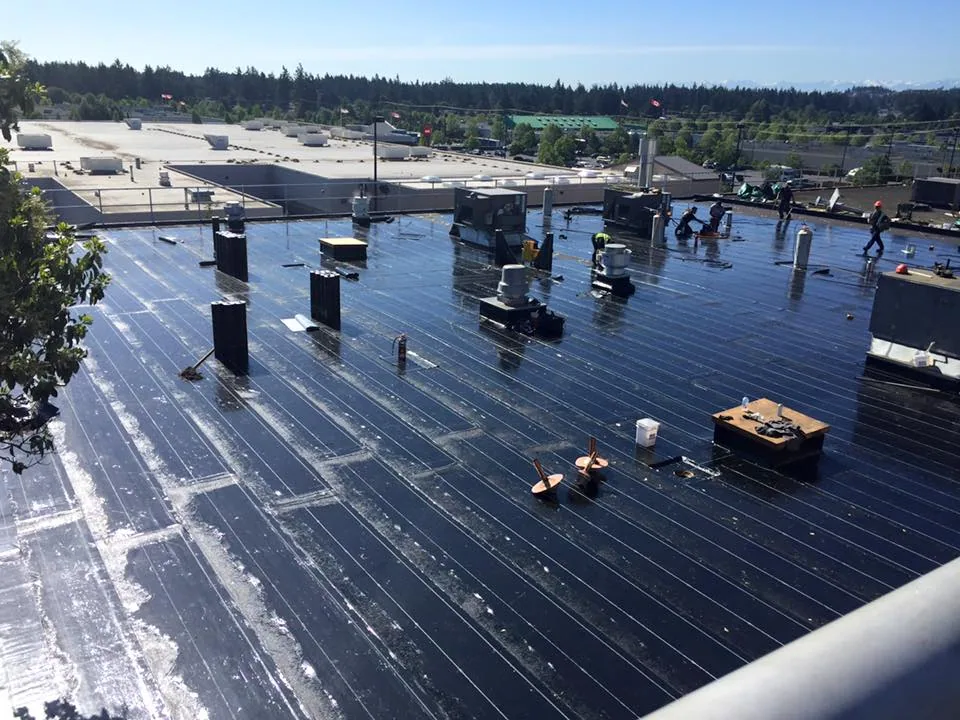
A small repair may fit in one visit once we know the roof's condition and whether other trades are involved. If equipment service or a test opening must come first, we separate those tasks from roofing reinstatement. For work above occupied rooms, a roofing sequence over active space can divide the building into sections with each section sealed at the end of the day. Repeated handling and setup remain visible if multiple visits are required.
Port and rail movements rely on coordinated access. A roof near the port terminals still has its own entrance and safety rules; the Parkway does not establish a shared route. We confirm access with the property representative.
Match the correction to the assembly
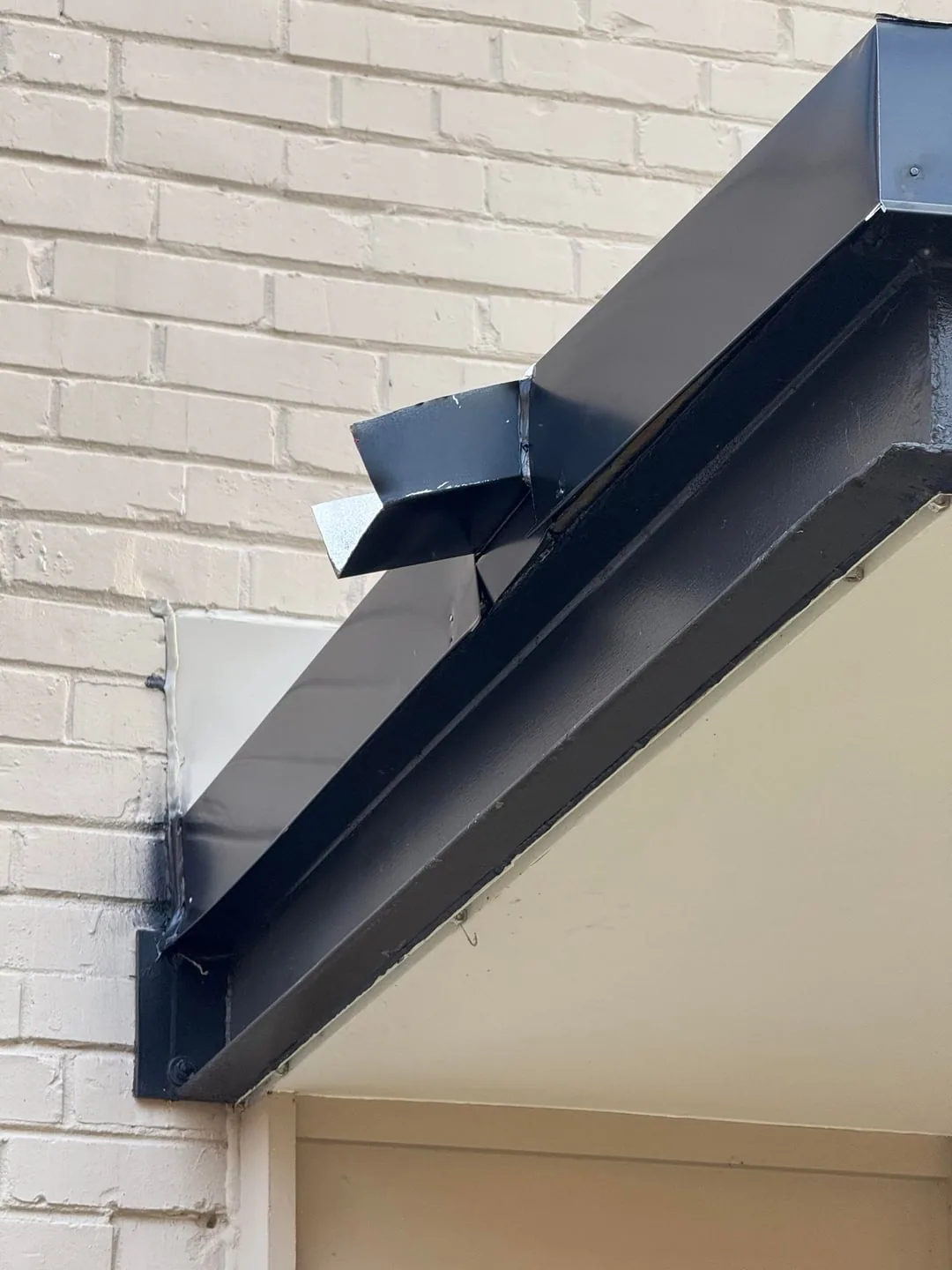
At a roof edge, the metal termination, membrane attachment, and adjoining wall or coping detail work together. Replacing visible metal without restoring the connection below can leave the water path open. We check the fastening and the membrane around it, remove what the scope calls for, and look for soft or wet insulation that would make the repair larger. The edge-metal repair includes preparation, attachment, compatible tie-in, and closure.
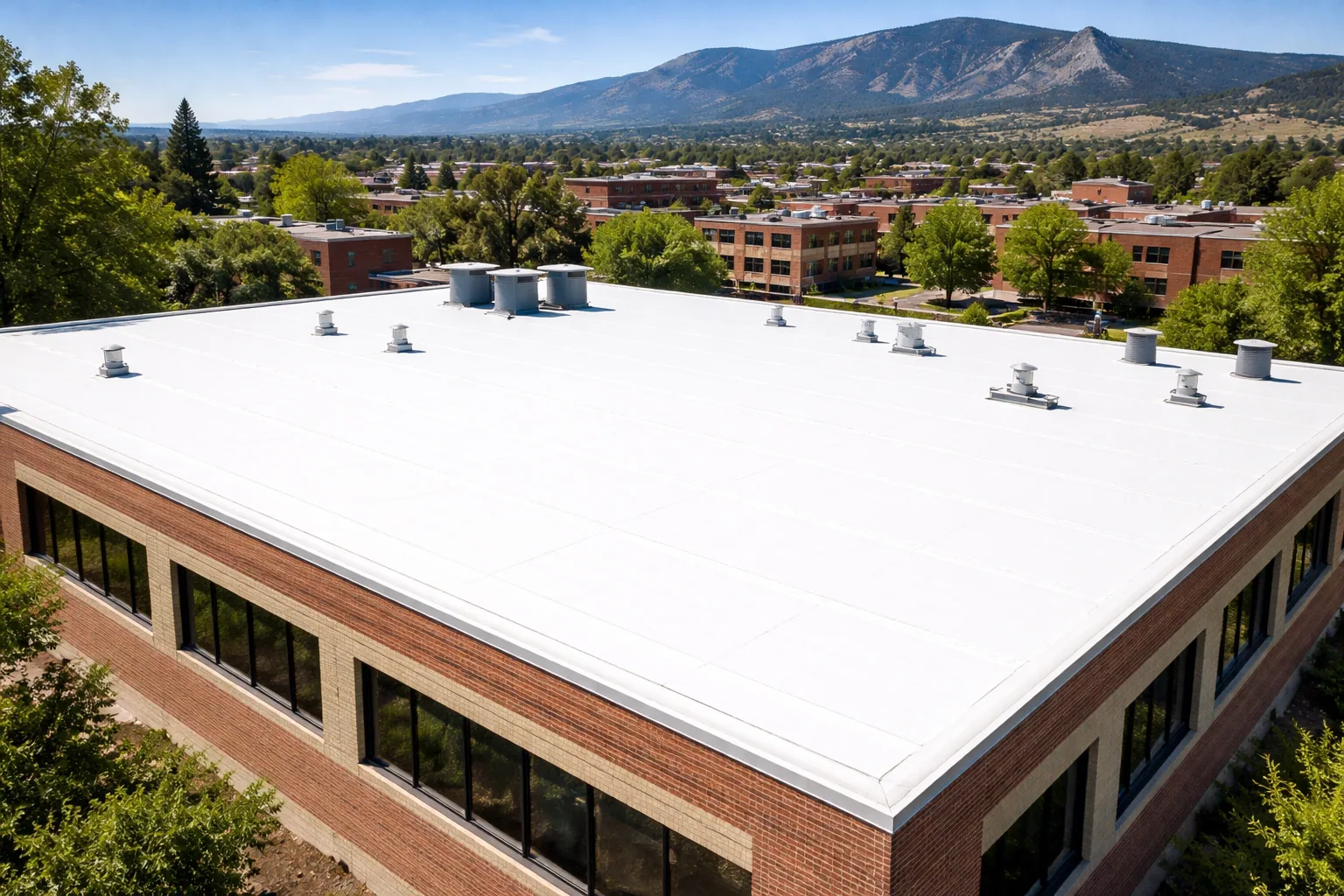
Membrane type affects the detail. A TPO assembly needs a compatible seam or flashing connection; other systems use different methods. If water traveled beneath the surface, a moisture survey can help map conditions for confirmation, but a surface reading does not replace a test opening when the assembly is uncertain. We distinguish confirmed removal from investigation allowances.
Where a repair touches an edge, parapet, or rooftop unit, we check past the first visible split. We look for loose attachment, movement, open laps, and wet material that could keep the tie-in from holding. If the condition cannot be confirmed from the surface, the scope identifies a controlled opening and how it will be closed. That keeps the price tied to this roof instead of a standard detail that may not fit.
If the wear is widespread or the surrounding membrane is too weak to tie into, a localized repair may not be the right endpoint. We compare repair, recovery, restoration, or replacement after moisture and roof zones are understood, then state what remains outside the inspected area.
Protect the roof through changing conditions
Rain entering an open seam can wet insulation and expand the investigation area. We plan temporary protection around the conditions and time needed to expose, prepare, and close the detail. If permanent material cannot be installed safely, the opening is secured and remaining work is rescheduled. This matters at working properties where indoor operations cannot absorb an avoidable leak path.
Wind can lift perimeter metal or expose a weak termination. After a windstorm, we photograph any metal that moved and note which areas we inspected. A storm passing through the area doesn't by itself mean a particular roof was damaged. Our storm-damage review ties every finding to what we saw and photographed, and says when testing is needed.
Close the work with a usable record
A repair report shows what was opened, what was kept or replaced, and where the work stopped. Photographs and Diligence Notes give the property team a follow-up reference and distinguish completed work from areas outside the scope. If we couldn't see a hidden layer, the report says so.
Before a visit, share building use, leak or damage location, roof plan, equipment constraints, and access hours. We can define accessible zones, testing needs, and material routes. A clear sequence helps industrial activity continue while the repair addresses the entry point. To arrange inspection, send the property details and operating limits.
Commercial Roofing Questions
Does the Richmond Parkway name identify one building or roof type?
No. It describes a regional arterial connecting I-580 and I-80 through several commercial and industrial settings. We confirm the property, roof assembly, access route, and operating limits before writing a scope.
Can a loose roof edge be repaired without replacing the field membrane?
Often, yes, as long as the membrane and fastening around the edge are still sound. We check the edge termination, nearby seams, and any wet or weak insulation before setting the size of the repair.
Will proximity to the refinery determine what the roof needs?
No. The location offers context, but the roof inspection establishes the property’s condition. We examine the actual metal, membrane, and transitions and report what we find.
How do you coordinate a roof repair at an active industrial property?
We agree on entry, material delivery, work area, equipment restrictions, and operating hours with the property contact. If the HVAC or another trade has to fix something first, we schedule our roofing work around it.
What if water has moved beyond the visible roof opening?
We trace the water path and inspect adjacent roof zones. Testing or a controlled opening may be needed to confirm concealed moisture. The report shows what was checked and what still needs a look.
Plan the access and the repair