Occupied Building Reroofing in Richmond, CA
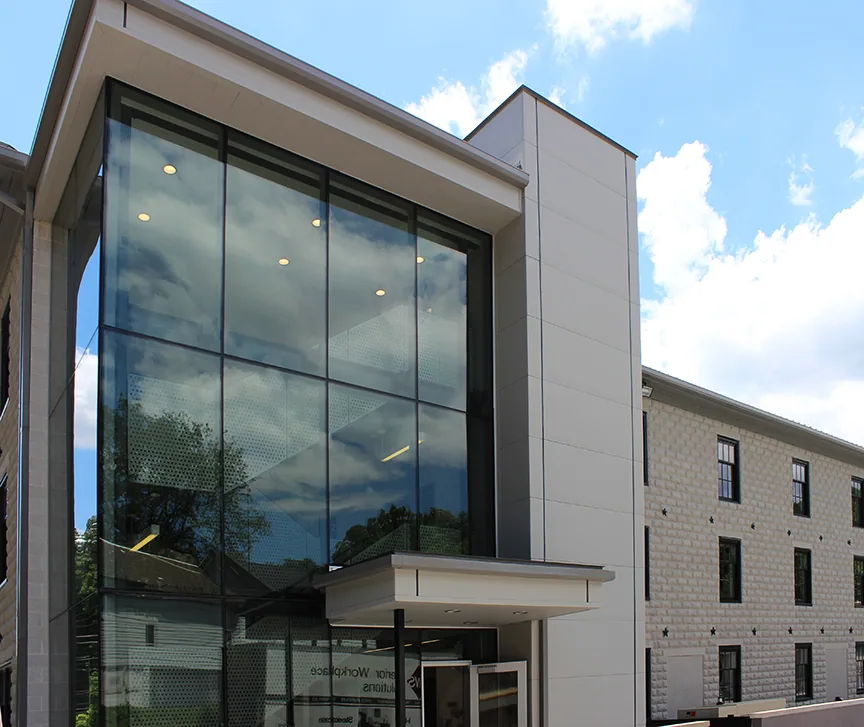
Replacing a roof over an apartment building, office or clinic that stays open is mostly a planning job. A failed seam above a busy Richmond apartment corridor still has to be fixed, but the crew also has to keep residents safe, keep the hallway dry, and keep debris and noise under control. On an apartment roof, that means planning where materials come up, where old roofing goes down, and which entrances stay open each day.
We start by looking at the existing roof and any records you have, then work out what has to be torn off, what can stay, and how each section gets closed up watertight at the end of the day. We also ask who on site can approve access to units, mechanical rooms or roof hatches. A roof that looks simple from above can still need careful scheduling when people are living or working below it. The estimate should reflect that work, not just the square footage of new membrane.
Know the existing roof first
Before we decide how much roof comes off, we need to know what's there. A roof inspection with a few core cuts tells us how many layers exist, what the insulation is, and whether it's wet. Wet or crushed insulation has to be replaced. Dry, sound insulation can often stay, which saves money and shortens the noisy tear-off phase for the people inside.
We mark which areas we tested and which we didn't, so the estimate is honest about what's known. If confirmed wet areas need removal, the estimate includes tear-off, disposal and new insulation for those spots. New membrane laid over wet insulation traps the water and shortens the roof's life. An occupied building can make testing inconvenient, since a core cut is noisy and needs access, but skipping it usually costs more later. When tear-off reveals more damage than expected, we photograph it, explain it to you, and get approval before adding work.
Plan around the people inside
Occupied buildings come with rules: quiet hours, tenant notices, locked areas and entrances that must stay open. We get those rules from you before the schedule is set. A roof replacement over occupied space may need covered walkways at entrances, protection over parking, and HVAC intakes shut down or shielded during adhesive or torch work to keep odors out.
Working in short windows takes more setup and cleanup than one long continuous push, and we include that time in the price. If a unit or room has to be cleared under a work area, the building manager arranges it and we plan the roof work around that date. A delivery of materials doesn't help if the area below isn't ready, so the schedule shows which sections can start right away and which are waiting. Tenants should get notice of work dates, expected noise, and any parking or entrance changes before the crew shows up.
Keep every opening watertight
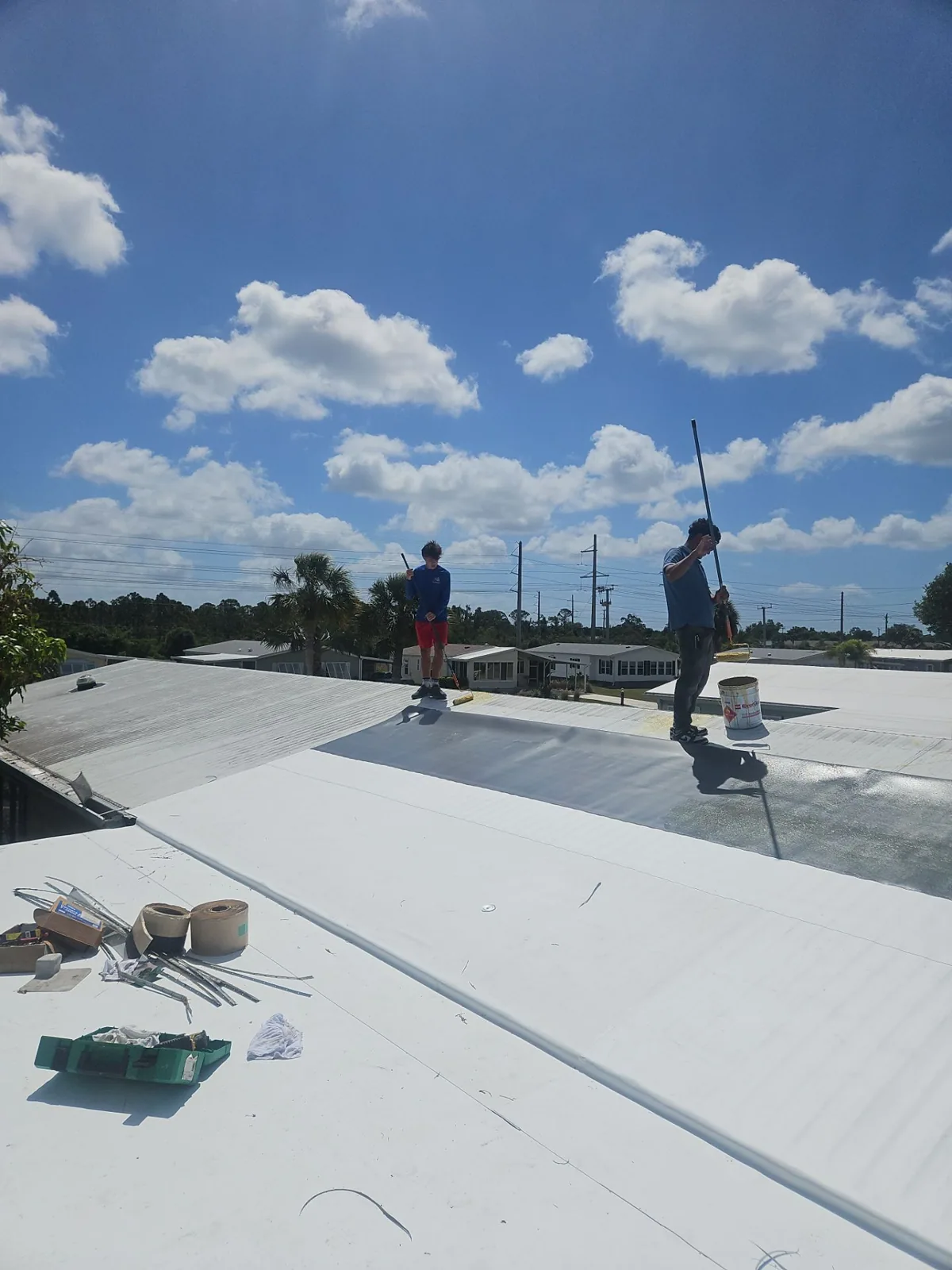
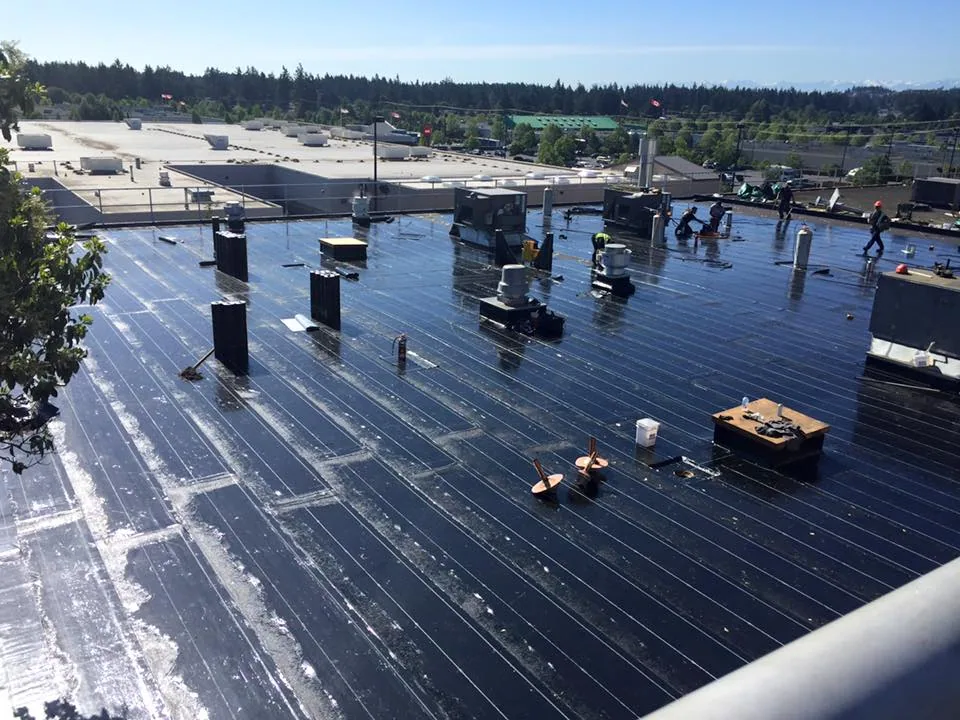
On an occupied building, no section gets left open overnight. Each day the crew tears off only what it can dry in, meaning sealed with new membrane or watertight temporary protection, before leaving. If weather changes during the day, the crew closes up early. Our emergency roof repair crews can respond if a storm hits while a section is in progress.
Temporary protection is just that. It keeps water out while a decision is made or the next section is prepared, but it isn't the finished roof. When tear-off uncovers rotted deck or extra wet insulation, the area stays protected while you review photos and approve the repair. Some areas need more prep than their size suggests, such as an edge over an entrance or a section next to a tall wall. We plan those carefully because a leak there lands on people, not just on storage. Our crews also clean the site daily, sweep for fasteners around entrances and parking, and keep walkways clear.
Coordinate curbs and equipment
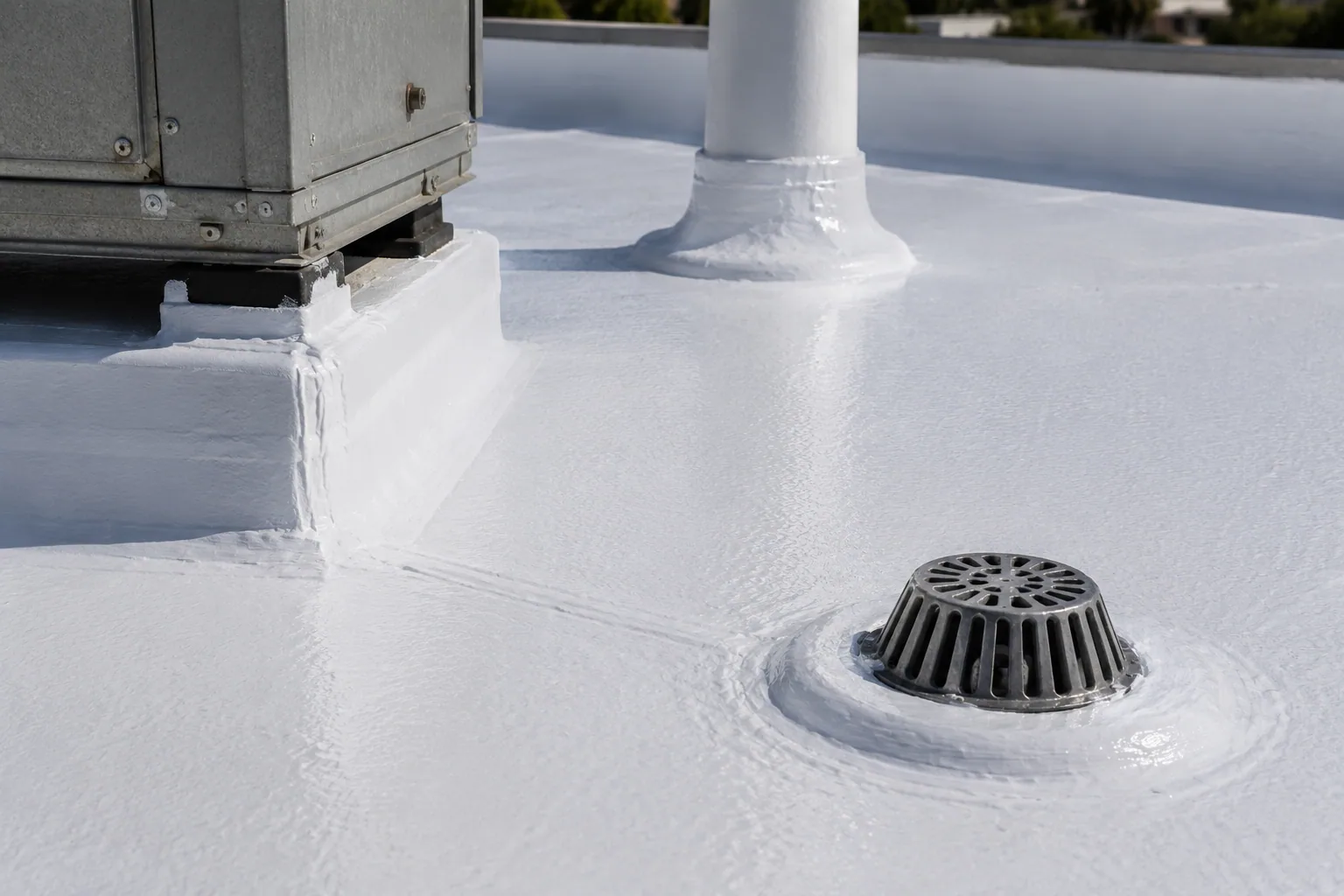
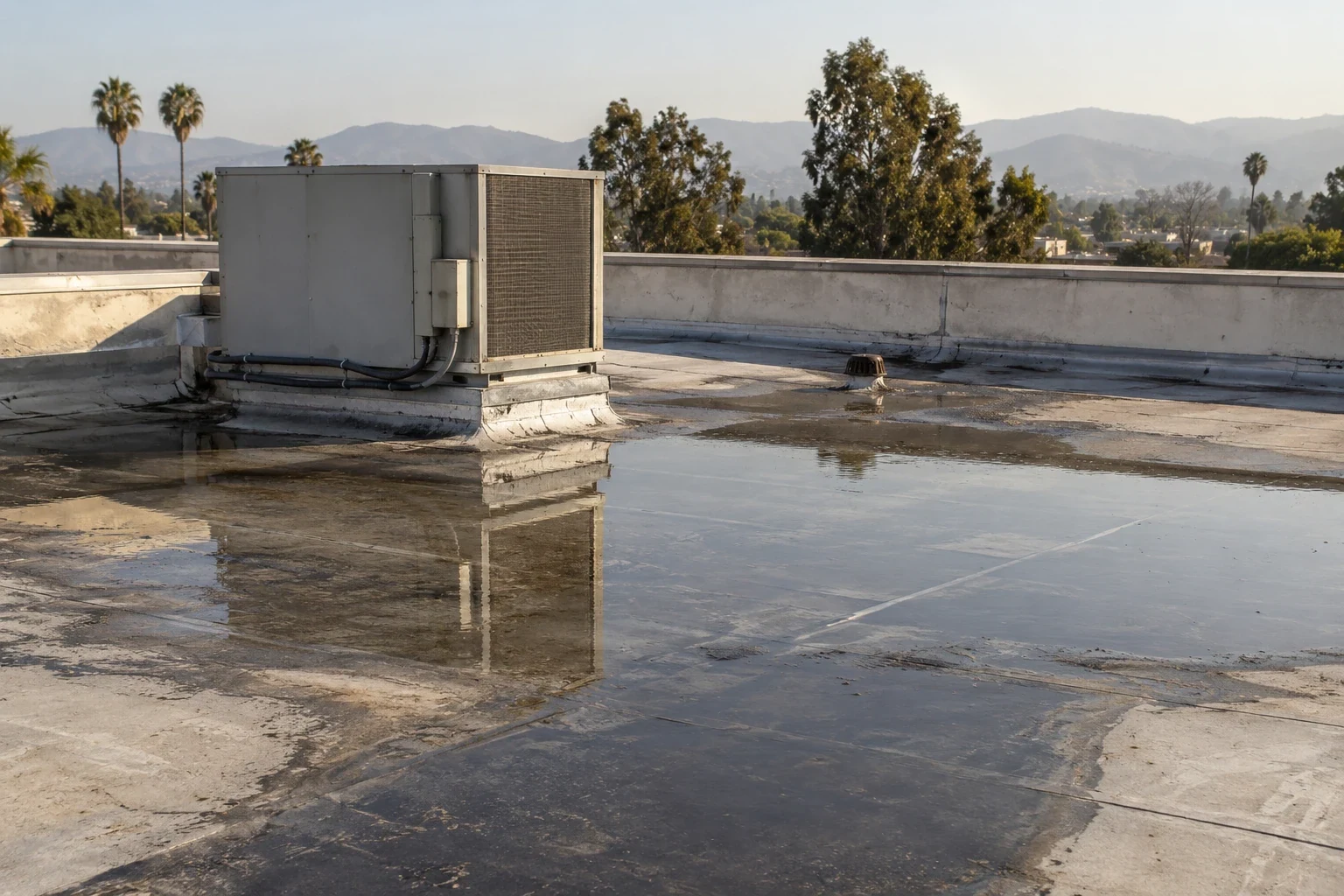
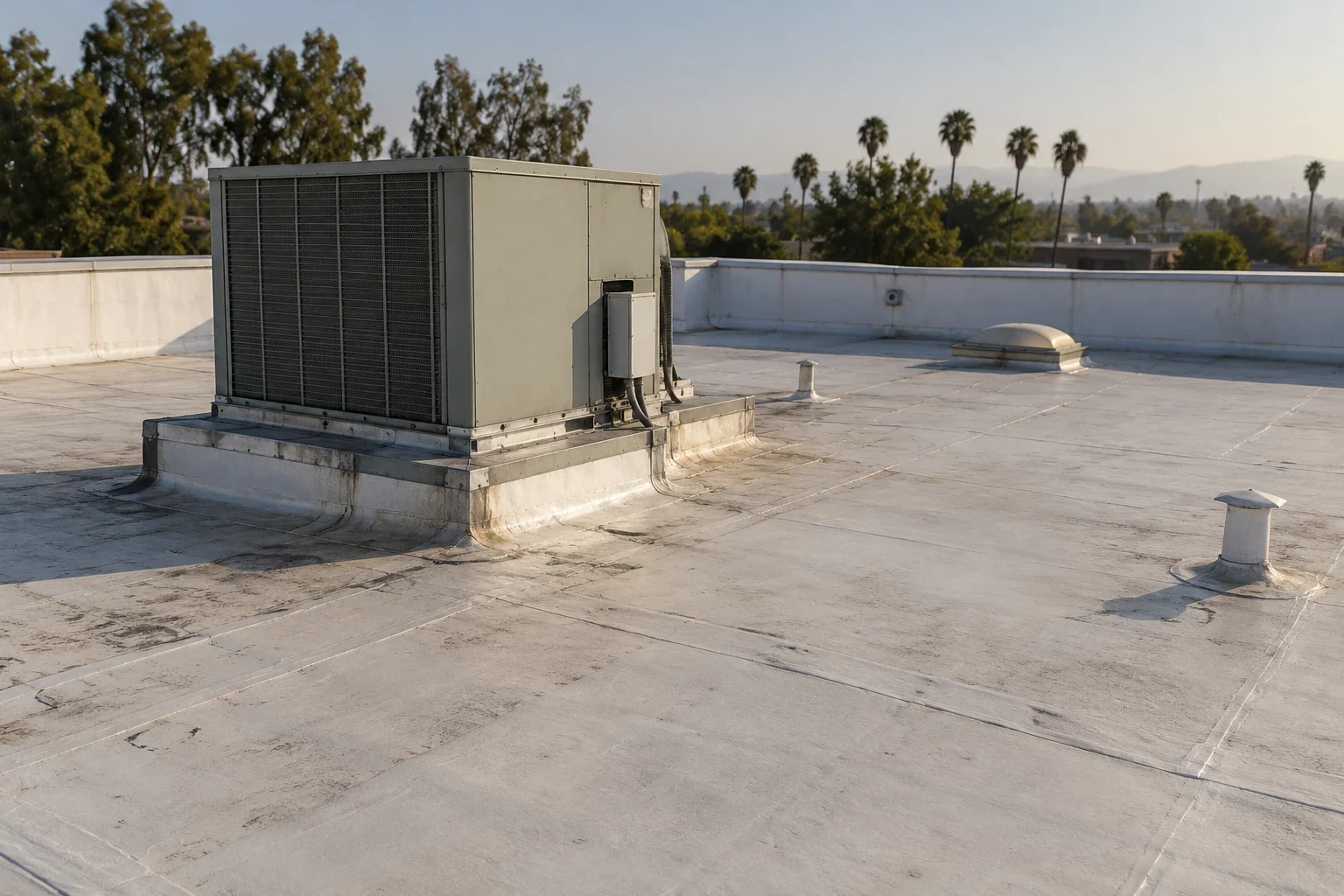
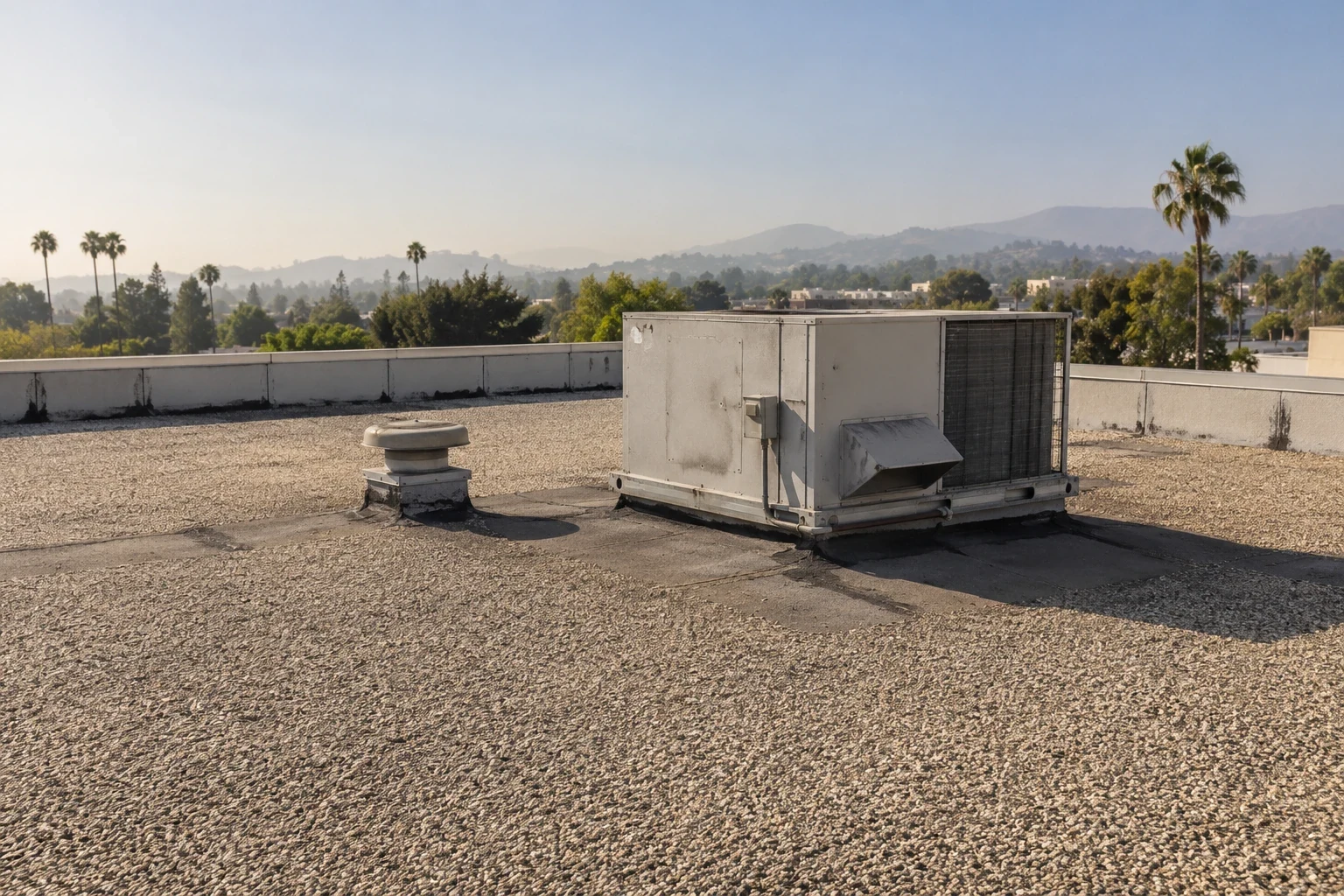
The roof field is usually the easy part. Curbs, wall flashings and equipment take most of the coordination. If an HVAC unit has to be disconnected and lifted, the mechanical contractor's schedule sets ours. On rooftop equipment curbs and supports, we plan the shutdown with you so tenants aren't left without heat or cooling longer than needed.
New insulation raises the roof, which can leave curbs and wall flashings too short. We check those heights before ordering and include curb extensions or new flashing where needed. Equipment that can't be moved yet gets flashed last, with its own date on the schedule, so the rest of the roof keeps moving and nothing is left half finished.
Compare roof systems fairly
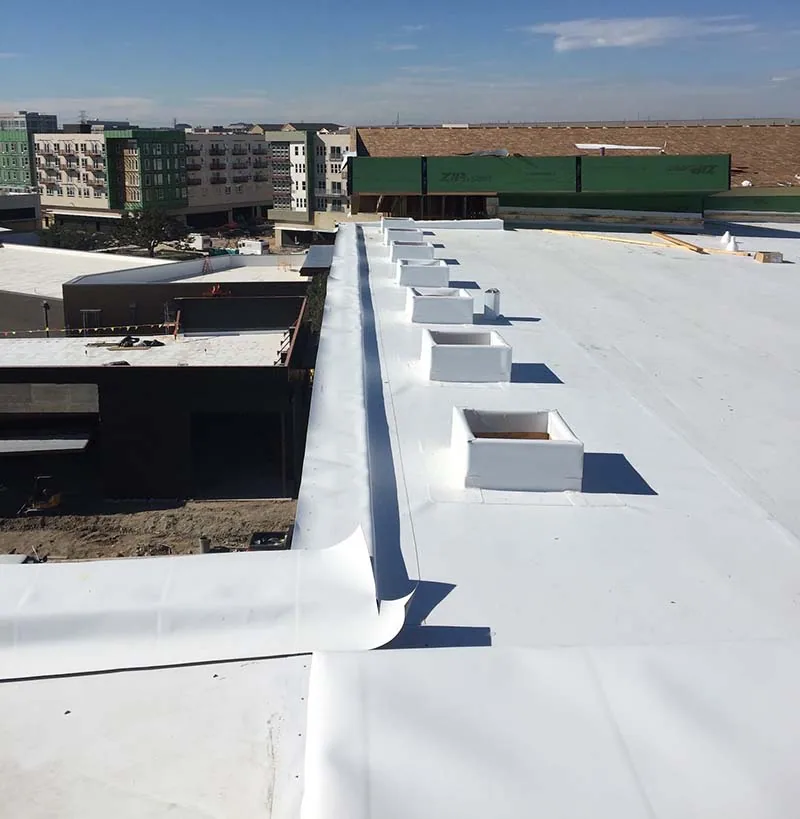
A TPO roof and a PVC roof are both common choices on occupied buildings because their seams are heat-welded rather than glued, which can reduce odors inside. Each system still has its own attachment, seam and flashing requirements. We price them on the same roof area with the same tear-off and insulation work, so the comparison shows real differences in materials and labor rather than different scopes.
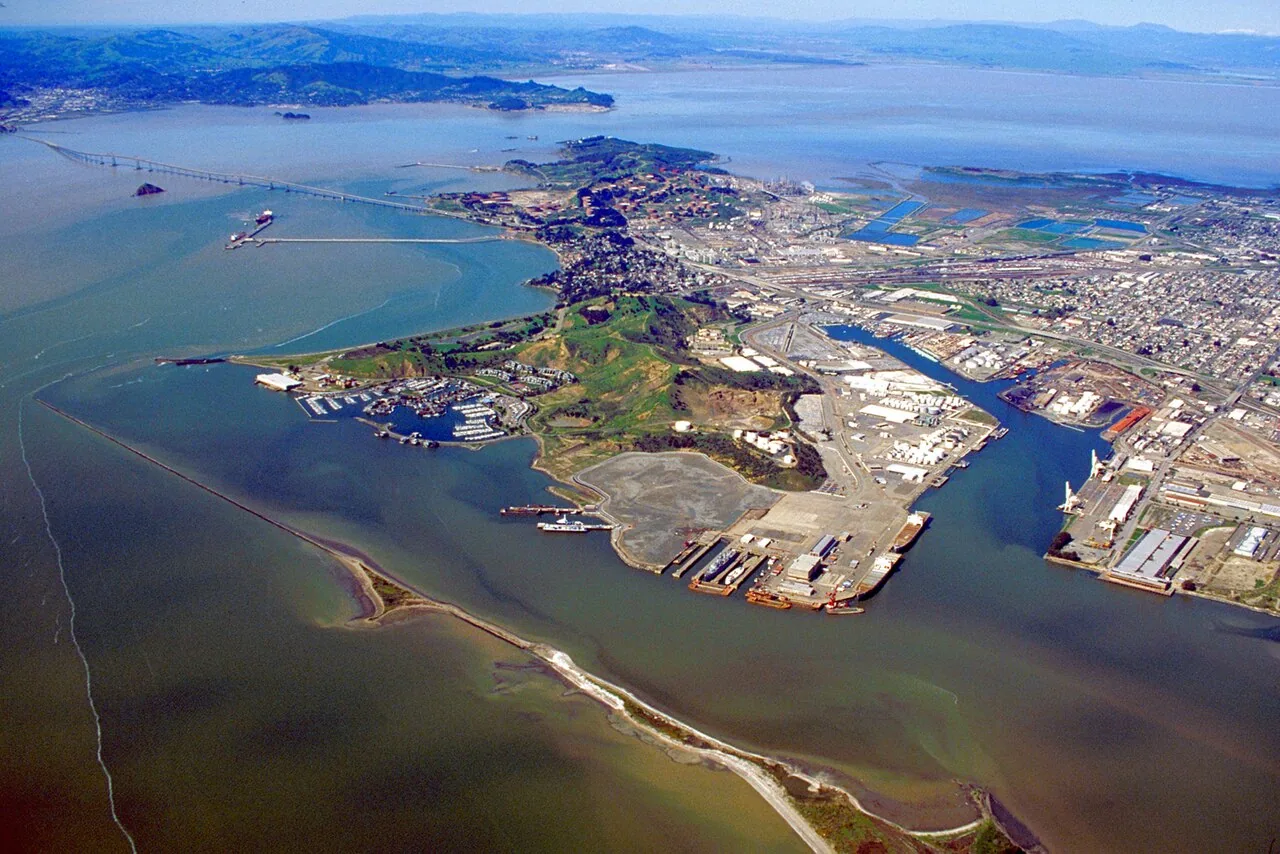
The occupied-building costs, such as protection, short work windows, extra cleanup and tenant coordination, apply to either system, and a quote that leaves them out isn't cheaper in the end. We also review the manufacturer warranty terms for each option so you know what's covered and what maintenance is required. At places like Richmond Field Station and the Regatta area, where buildings stay busy, we plan sections so people below can keep getting in and out safely throughout the job. The goal is a fair side-by-side that shows what each roof costs to install correctly while the building stays open.
Hand over a clear record
On Port of Richmond projects and everywhere else, we finish with a closeout package: photos of repaired deck and insulation areas, the installed materials, finished flashing details and any items left for other trades. That way it's clear what was done and what wasn't.
Keep the maintenance and warranty requirements with the building's records, along with roof access routes and contacts, so future contractors can get up safely and know what's allowed. If a leak or equipment change comes up later, the record shows exactly what was installed where. That makes future repairs faster, cheaper and less disruptive for the people inside, and it helps the next roofer avoid damaging work that's already in good shape.
Commercial Roofing Questions
Does keeping the building open change how much roof gets torn off?
No. The roof's condition decides that. Being occupied changes how we schedule, protect and stage the work, not what needs replacing.
What should a complete occupied-building reroof estimate include?
Tear-off and new roof, wet insulation replacement, protection at entrances and parking, daily dry-in, cleanup, work-window limits, and coordination with tenants and other trades.
Is temporary protection the same as a finished roof?
No. Temporary protection keeps water out between work days or while a decision is made. The section is finished only when the new membrane, insulation and flashing are installed.
What records should we keep after the reroof?
Photos of repaired areas and details, installed materials, warranty and maintenance terms, roof access routes and contacts, and any work left for other trades.


Tell us about the roof and the people below it