Rooftop Equipment Curbs and Supports in Richmond, CA
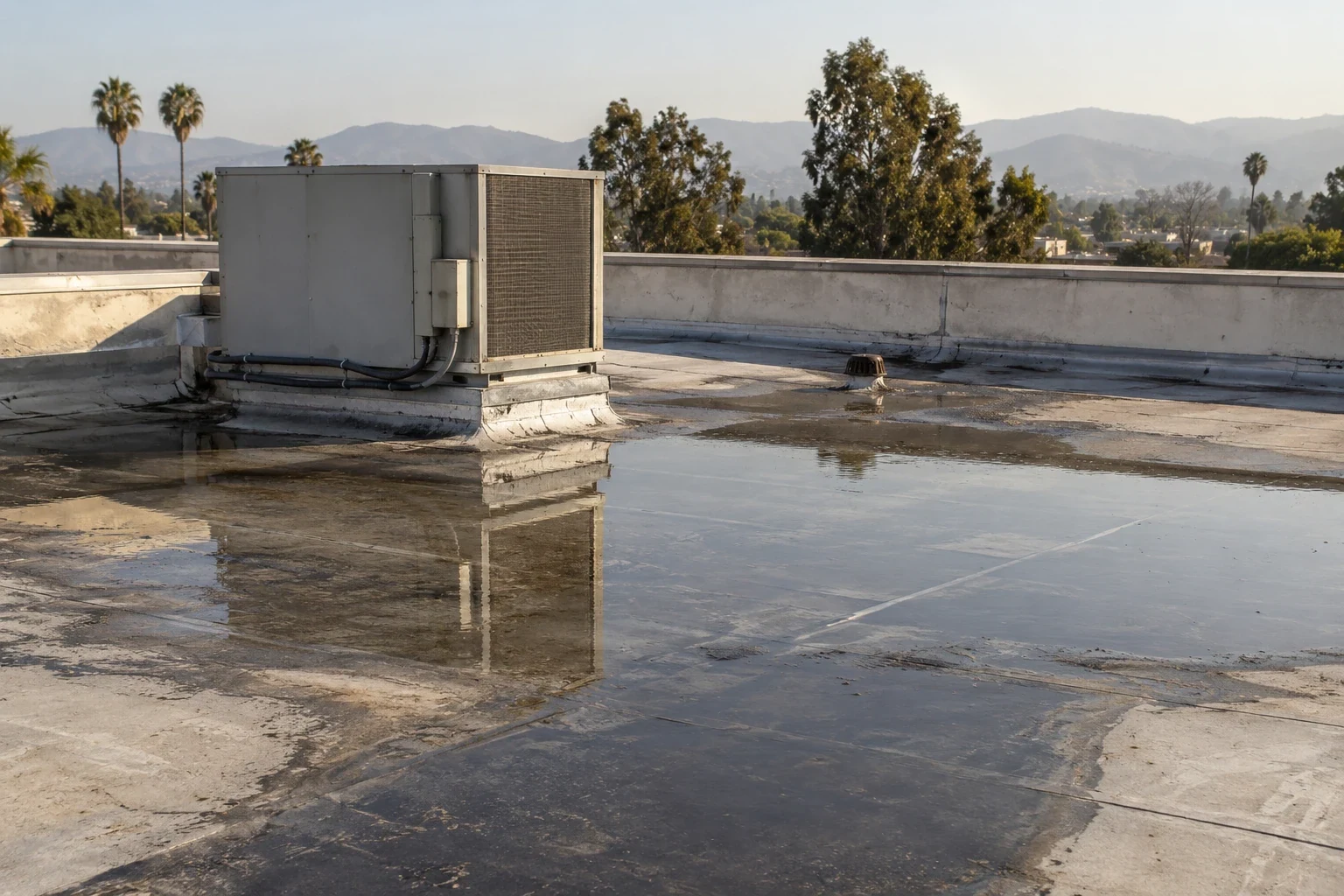
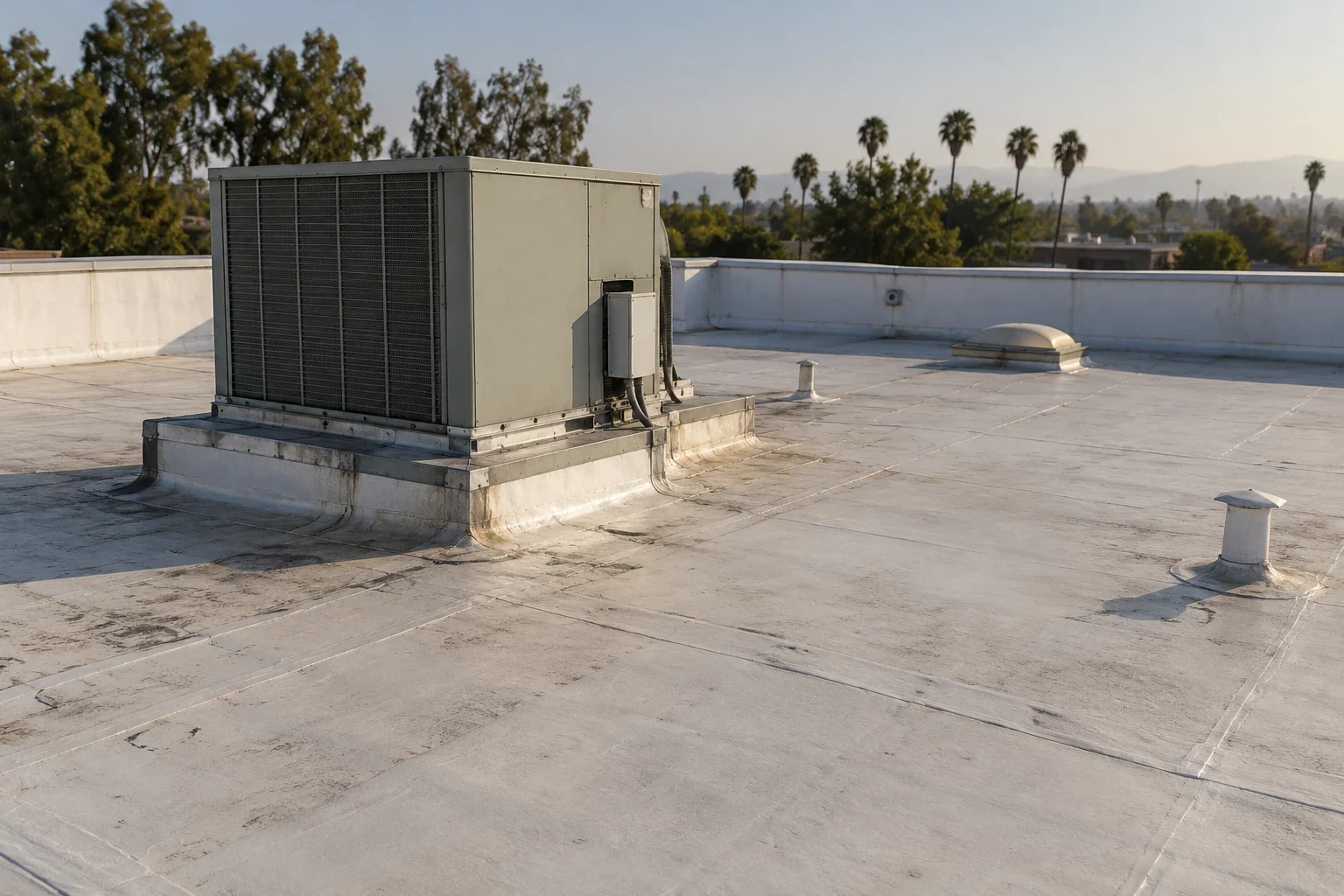
When the flashing pulls away from a rooftop unit curb on a Richmond grocery store, the fix is usually bigger than the gap you can see. The curb itself may be rotted or out of level, the insulation around it may be wet, and the refrigeration or HVAC unit on top may have to be disconnected before anyone can reach the base of the curb. A tube of sealant around the gap will not hold. We look at the whole curb, from the deck up, before writing the repair.
On a grocery store roof, that also means working around store hours, refrigeration lines and units that cannot be shut down for long. We check the curb, its wood nailers, the membrane and the flashing, and we note anything that needs your mechanical contractor or a structural engineer. The estimate covers the roofing work and lists the other trades’ tasks next to it, so you know who does what and in what order. Before we come out, we ask who manages the equipment and when units can safely be turned off.
Sort out who fixes what
A curb, an equipment rail and the membrane around them can all meet at one spot, but each one may need a different fix. We inspect each part before choosing materials. A roof inspection around rooftop equipment looks at the flashing height, the condition of the curb and nailers, the seams nearby and whether the unit sits level. A split flashing tells you water is getting in. It does not tell you whether the curb or the deck under it is still solid.
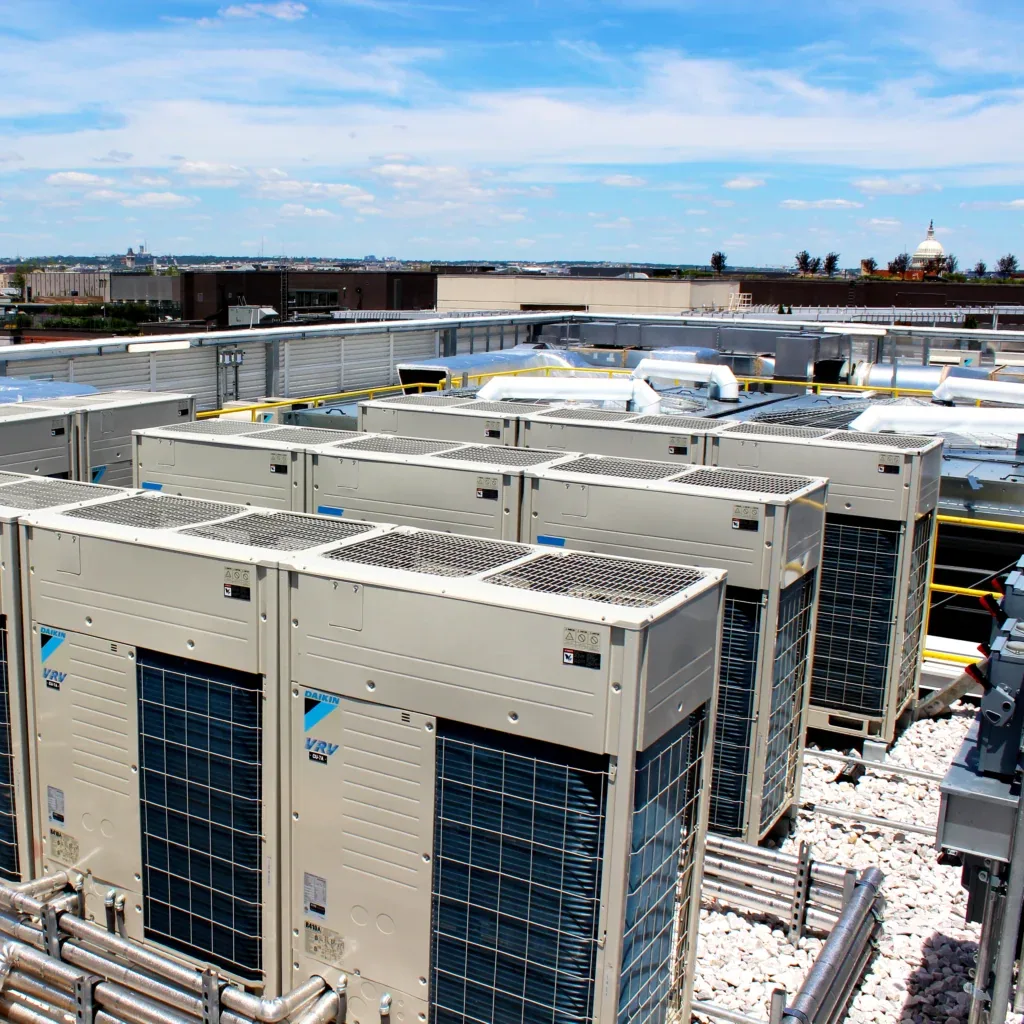
You should know who handles the unit and what roofing work happens after it is moved. If the unit needs to be lifted, disconnected or reset, that is your HVAC or refrigeration contractor’s job, and we schedule our work around it. If the curb or supports need to carry a new, heavier unit, a structural engineer should confirm the deck can take the load. A new curb from a catalog does not answer that question. Our estimate covers the full roofing repair and the curb it ties into, without pretending the other trades’ work is included.
The unit, curb, supports and roof membrane each belong to someone. We note who can shut down or move the equipment, what support questions need an engineer and which flashing and membrane work is ours. A new membrane should never hide a loose support or an open unit connection. The work order lists the equipment step first, then the curb and insulation repair, then the final flashing around the unit.
Check the insulation around the curb
Water that gets in at a curb often spreads into the insulation around it, well past the flashing you can see. We take cores around the curb and confirm which insulation is wet before deciding what stays. Wet insulation around the curb gets cut out and replaced with new insulation and cover board, and if we find more wet material once the roof is open, we show you and get approval before expanding the repair.
Brand-new flashing over wet insulation still leaves a problem: the moisture stays trapped, the board softens and fasteners lose their hold. The estimate shows which insulation is confirmed bad and which tested dry. While you decide on any added work, the opening stays sealed against weather. The membrane and flashing products have to suit the roof system you have, and the flashing details go in on top of the new insulation. If the repair raises a structural or equipment question that roofing cannot answer, we flag it for the right person rather than guess.
Plan around the equipment
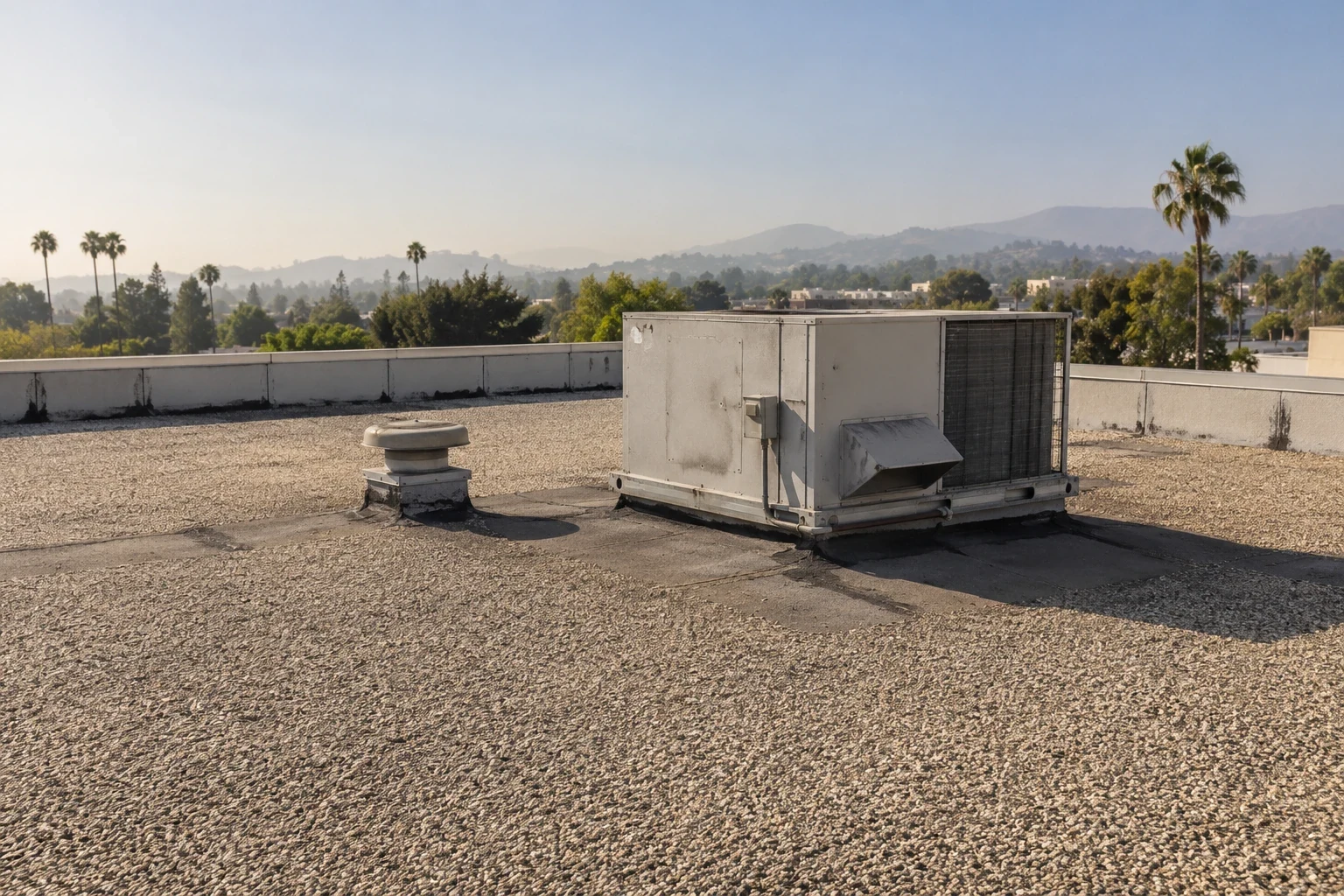
A unit sitting on its curb can block the flashing even when the rest of the roof is ready to work on. We figure out what has to be moved or disconnected to reach each curb and schedule our crew right behind that step. Your HVAC contractor handles the unit; we handle the curb, insulation and flashing. Your building’s rules on access, hours and noise decide how we reach the work area.
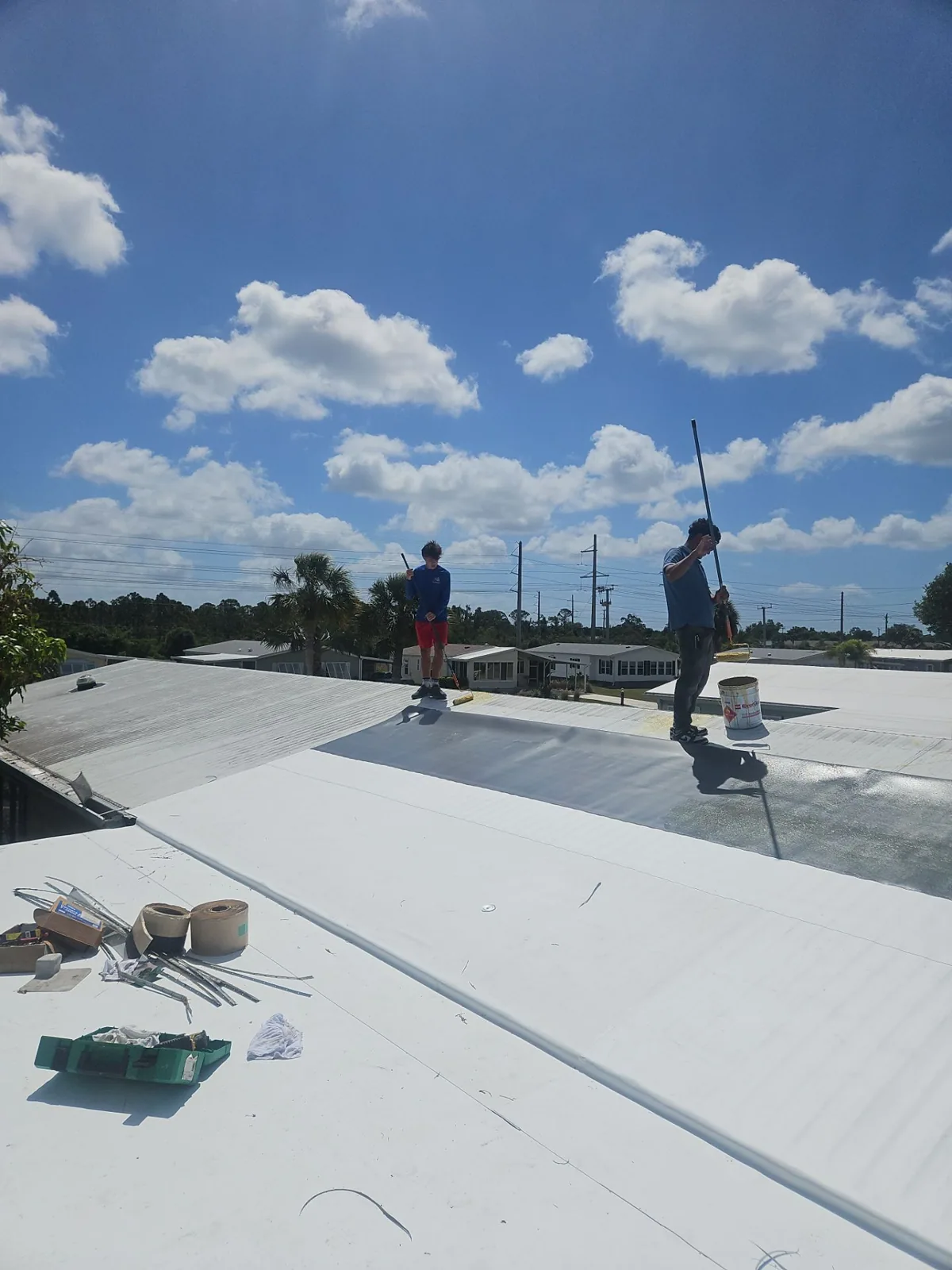
For stores and other spaces that stay open during the work, our occupied-building reroofing approach keeps the job organized: equipment shutdowns during slow hours, protected walkways and openings sealed at the end of each day. Working around separate shutdown windows can add setup time and handling beyond the flashing itself. You should see those costs before comparing a flashing price with the full job. A pallet of curb flashing on the roof does not mean the unit is ready to move. We lay out what happens first and when the roof gets closed up, and we treat the mechanical work as a separate trade’s task.
Choose the curb flashing detail
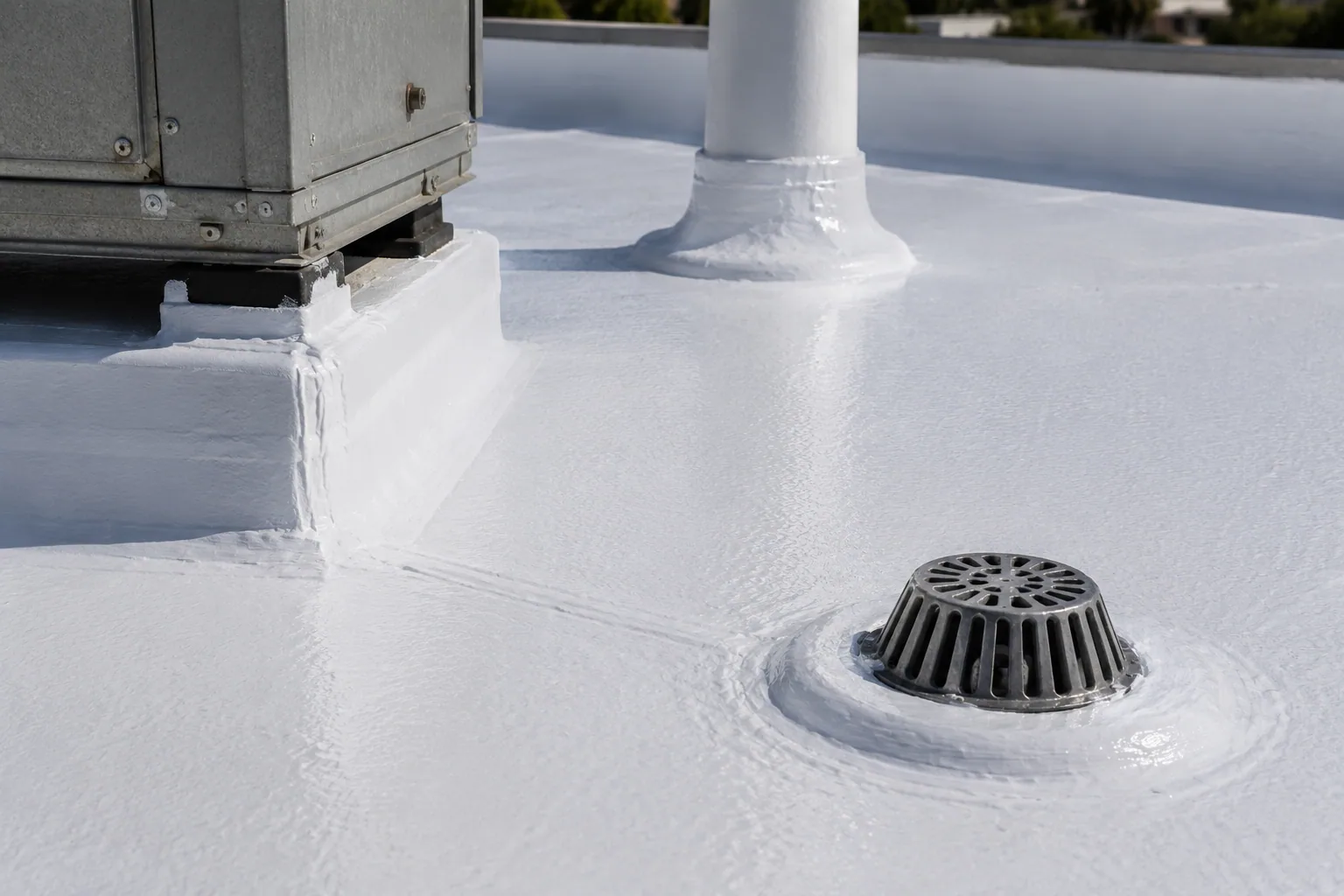
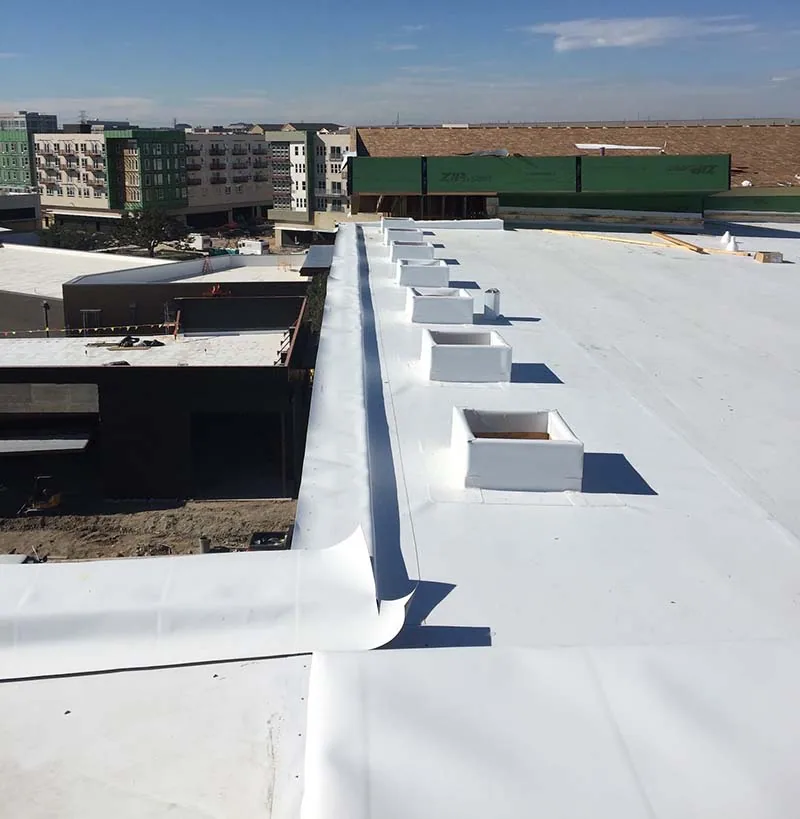
On a TPO roof, curb flashing is usually done with matching TPO membrane and corners, heat-welded to the field sheet and fastened at the top of the curb. On a PVC roof, the method is similar but uses PVC flashing and accessories. These materials are not interchangeable, so we confirm what is on the roof before ordering. Either way, you should see the curb repair, insulation work and flashing listed alongside the membrane choice.
Curb height matters. If the roof has been built up, or a new unit sits differently on the curb, there may not be enough height left for a proper flashing, and the curb may need to be raised. We measure those details before ordering rather than assume a standard size. A low bid can leave out the curb rebuild that makes the flashing work, even when both bids cover the same area on paper. We explain what each option fixes, what work is needed either way and what has to happen first from another trade. On jobs in Hercules, the same approach applies: the HVAC contractor releases the unit, any support questions get reviewed and then we finish the curb flashing.
Keep roof and equipment records apart
After the work, you get photos and a record of the curbs we repaired, the insulation we replaced and the flashing materials installed, the same kind of record we keep for skylight and penetration flashing jobs. For owners near the Port of Richmond, the record also notes the roof system and any equipment work done by others. Questions about the unit itself or the structure under it stay with the HVAC contractor or engineer.
If your roof carries a manufacturer warranty, check its rules for adding or changing equipment before the next unit swap, since unapproved cuts can void coverage. Where the terms are unclear, get an answer in writing. You then have a clear record of what the roofing work fixed and what other trades still need to handle. When a unit is serviced or replaced later, or a leak shows up near a curb, you can check it against the exact repair. A finished roof area does not mean every unit, support and layer around it was inspected.
Commercial Roofing Questions
Does new curb flashing mean the curb structure is sound?
No. New flashing keeps water out, but the curb, supports and deck under it need their own check. If there is a structural question, an engineer should review it separately from the roofing work.
What should a rooftop unit repair estimate include?
Who disconnects and moves the unit, any wet insulation that needs replacing, the curb repair and the new flashing. Handling and protection costs should be listed too, not just the flashing material.
Can you finish the roof if a unit has not been moved yet?
We can finish the open roof areas, but the curb under that unit stays open until your HVAC contractor moves it. We list that curb as unfinished so nobody assumes it is done.
What records help when we change equipment later?
Photos and locations of the curbs we repaired and the materials installed, plus the warranty rules for roof alterations. Keep the HVAC and structural records separate from the roofing record.




Tell us which unit is leaking