Medical Office Roofing in Richmond, CA
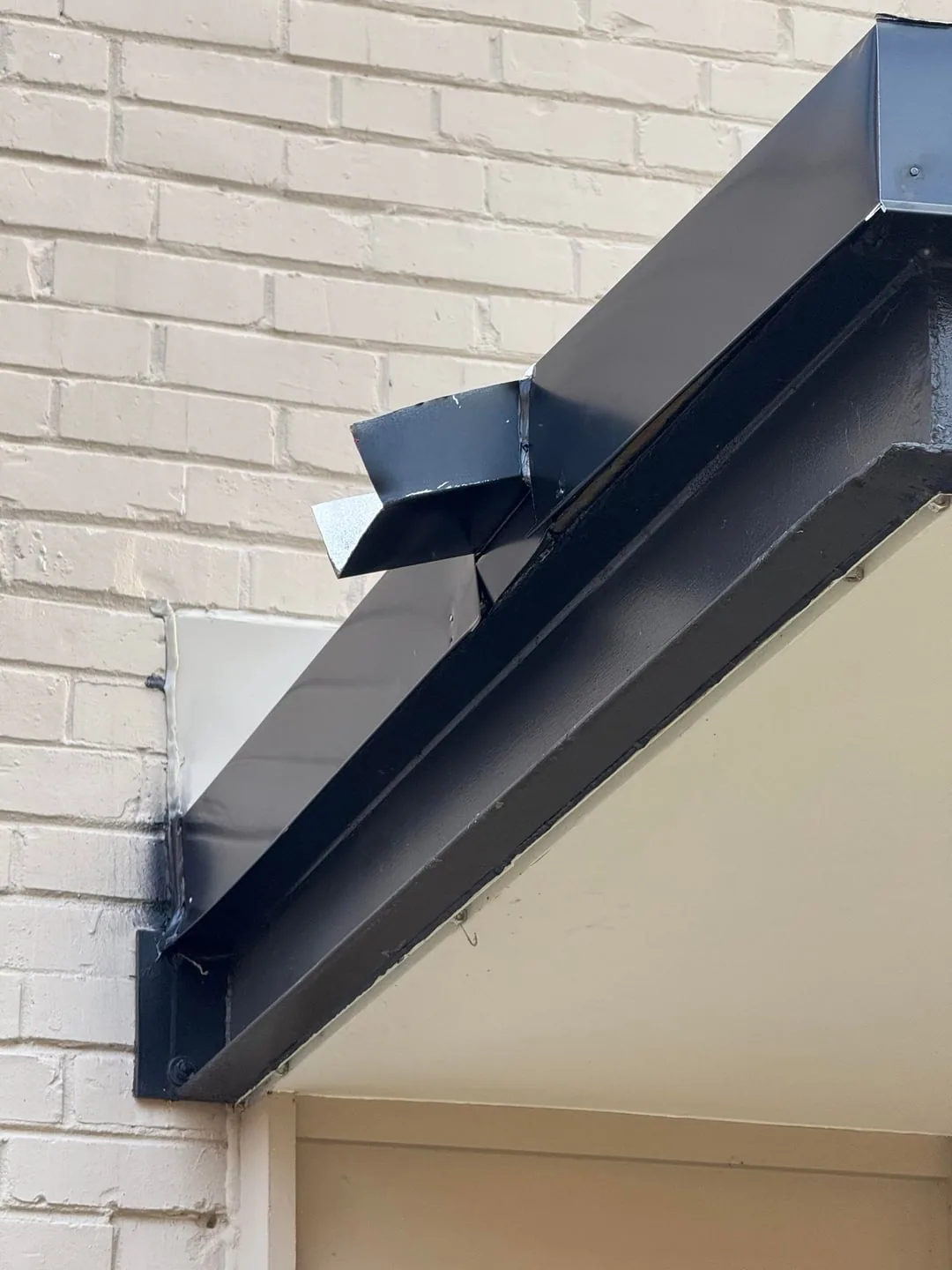
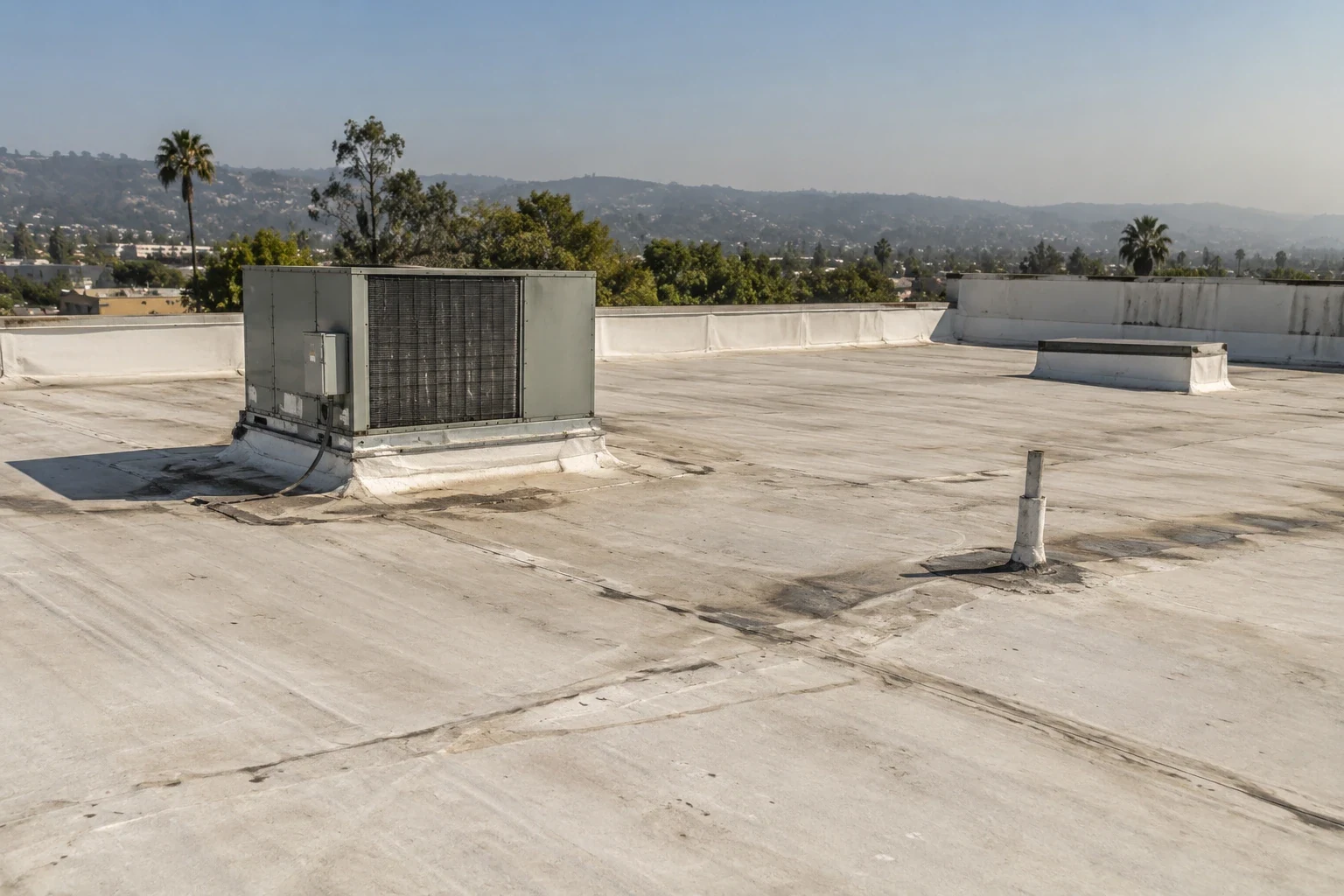
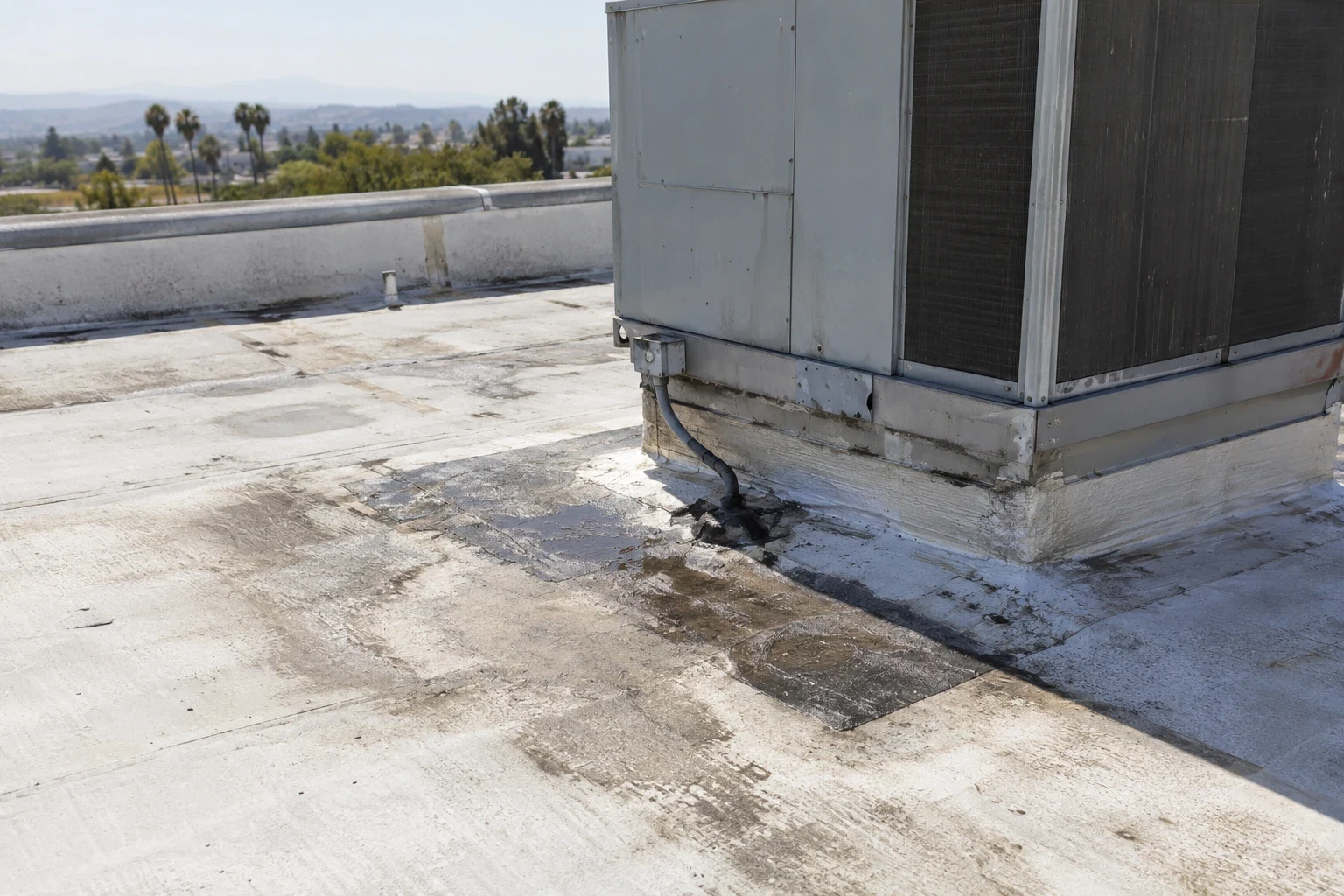
Medical office roofs are crowded with pipes: plumbing vents, gas lines, exhaust stacks and conduit, many of them sealed with old pitch pans or rubber boots that have dried out. When one of those flashings splits, the leak tends to land over an exam room or a waiting area, which means rescheduling patients until it is fixed. The visible crack does not tell us how far the damage goes, whether the pipe itself is loose, or whether the insulation around it is wet. We inspect the pipe, its flashing and the membrane around it before choosing a repair, and plumbing or gas work goes to the trades who handle it.
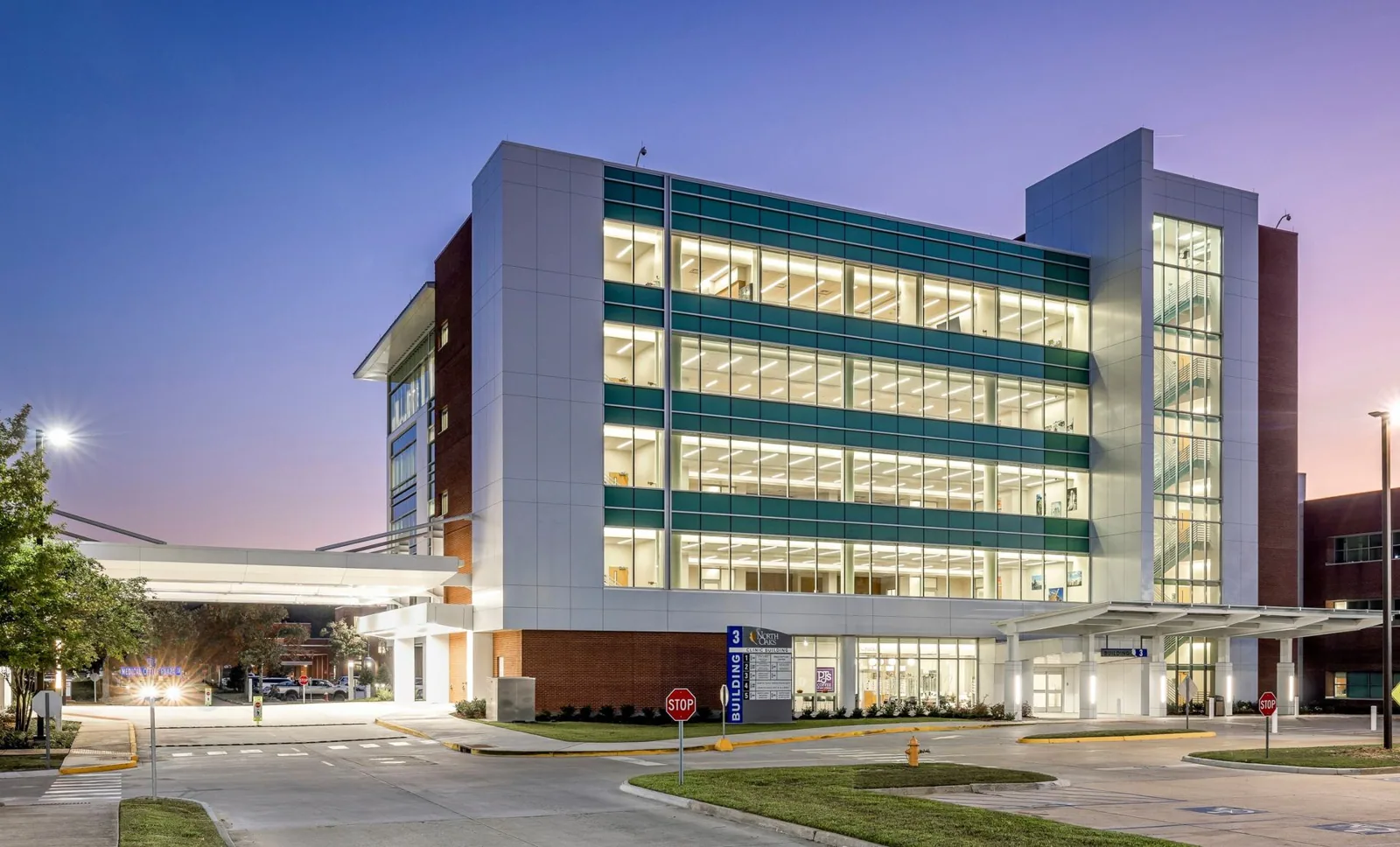
Richmond has a large healthcare presence, including Kaiser Permanente's medical office building at 901 Nevin Avenue, but every medical office roof needs its own inspection and access plan. Affected rooms and roof details each get their own protection plan. Send us the pipe locations near the leaks, any roof records and the clinical areas below. We inspect the roof before recommending a flashing repair. Your office manager or facility contact decides on protection and access, and equipment issues stay with the right contractors. The price is based on what we find at that pipe, not on assumptions about medical buildings in general.
Fixing the pipe before the flashing
A pipe flashing often fails because the pipe is loose, corroded or no longer supported properly. Our penetration flashing inspection checks the pipe, the flashing and the membrane around it. Plumbers and gas contractors handle repairs to the pipe itself, and support questions go to the right trade or engineer. We tell you what needs to happen before we can flash it properly. Sealant over the crack will not fix a loose pipe, so the proposal separates pipe repairs from the roofing work that follows.
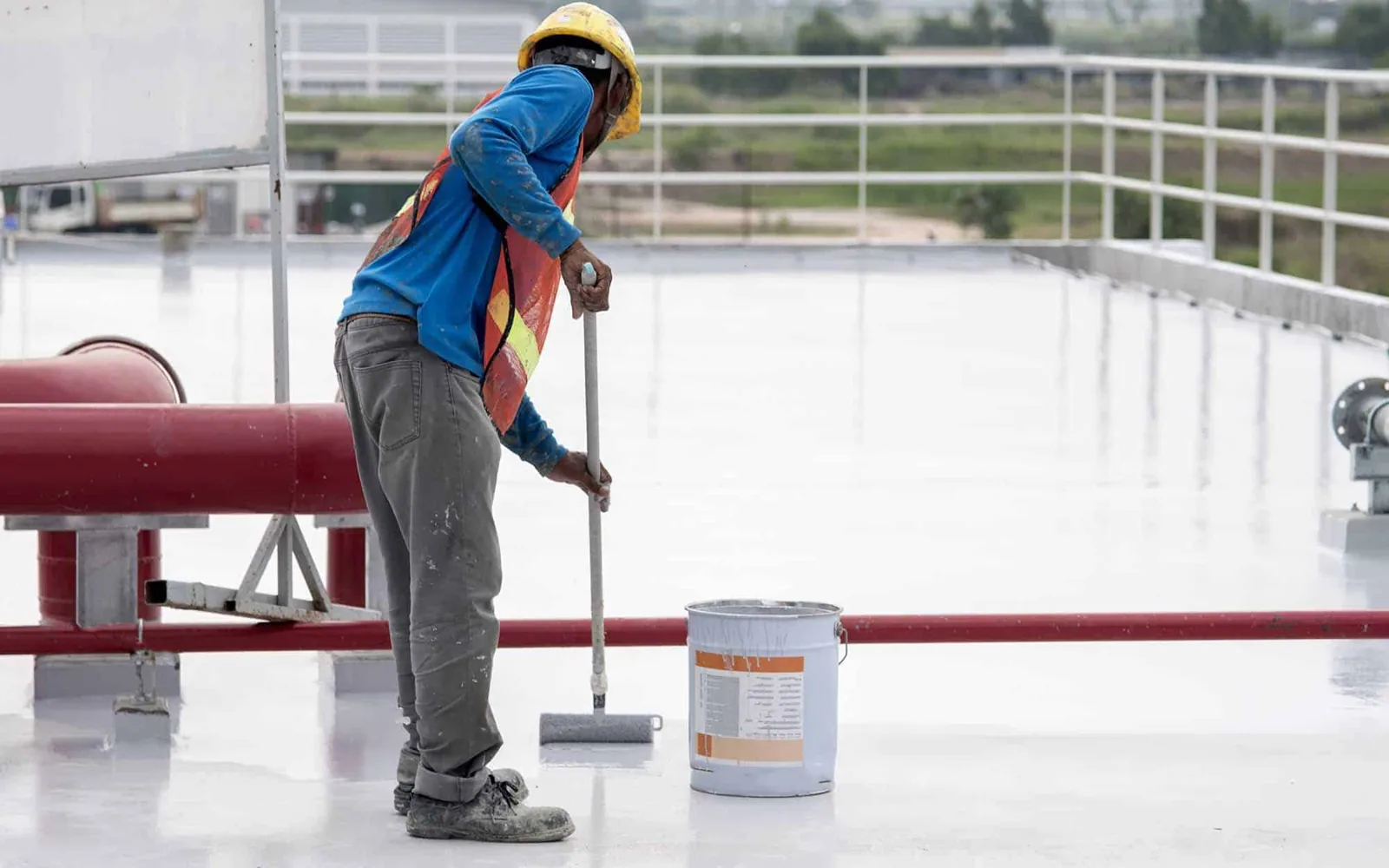
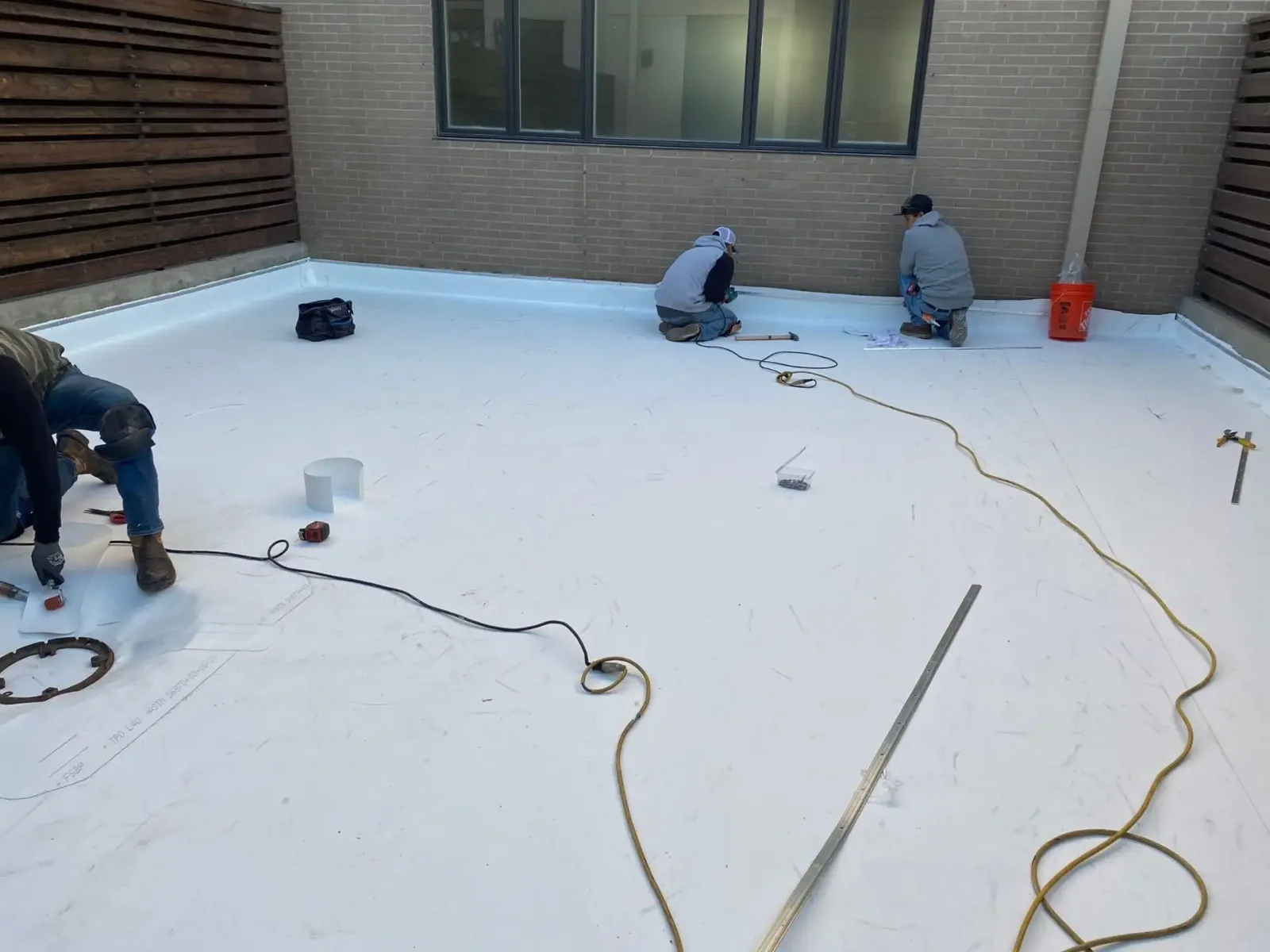
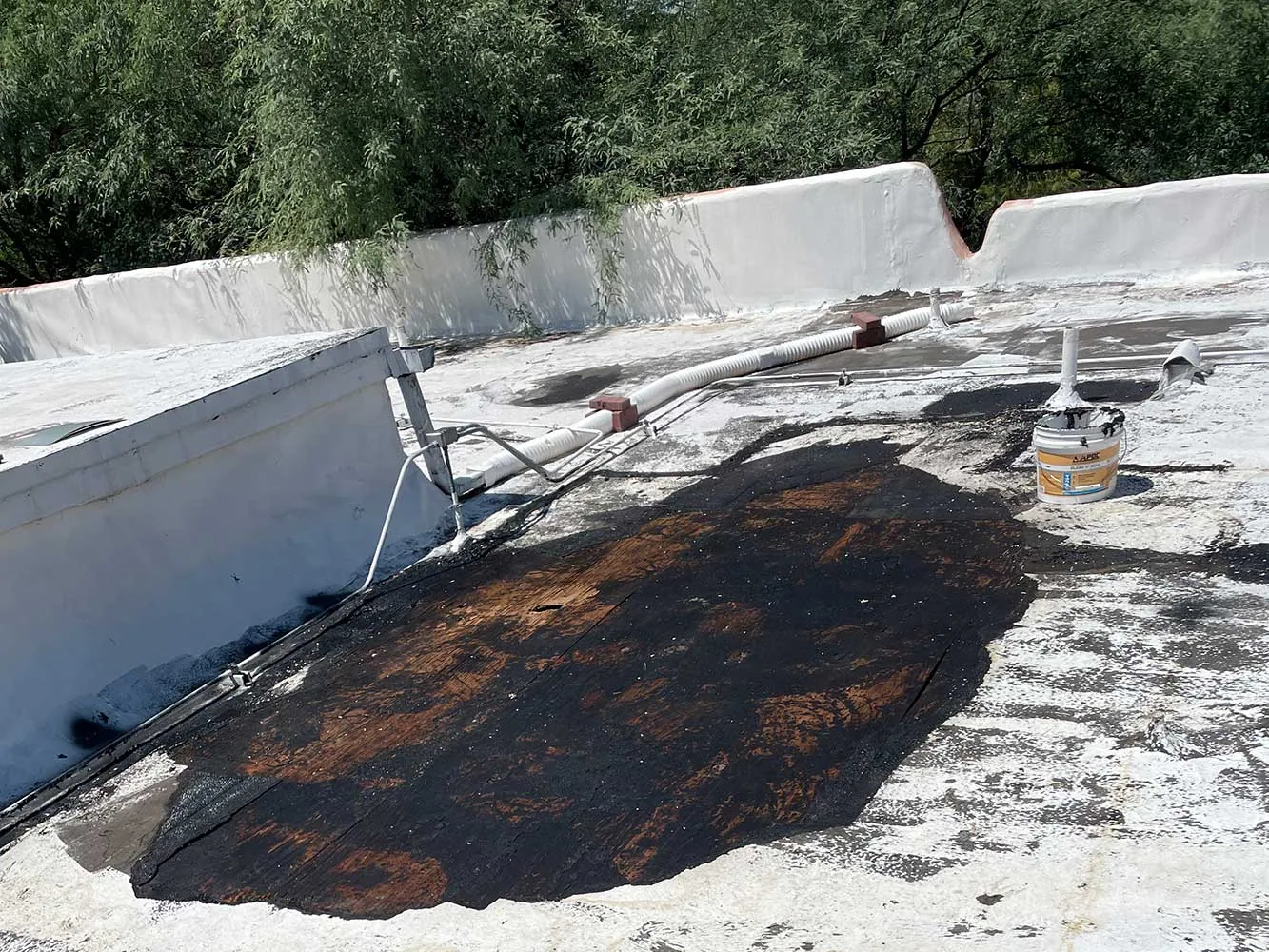
The membrane around the pipe also needs its own proper repair. Flashing failure repair at penetrations uses a method that suits the roof. TPO and PVC are heat-welded to clean, sound sheet; other roofs use their own methods. Old pitch pans are often replaced with prefabricated boots or new flashing that does not depend on sealant that dries out. Membrane damaged by old sealant or debris is cut out and replaced; sound membrane is cleaned and kept. Structural questions go to an engineer. The price includes the insulation and pipe work needed to make the repair last.
Protecting exam rooms and patients
An opening above an exam room can affect more space than the room that reported the leak. For reroofing occupied buildings like medical offices, we share the planned openings, debris routes and material handling with your facility contact. They set protection for clinical and waiting areas. Patient care, medical equipment and electrical work stay with the right staff and trades. Patching any test openings is included in our price, so protection is planned for the actual rooms instead of one allowance based on the building type.
If more wet insulation turns up, the work may reach another room or change how we get to the pipe. Before opening more roof, we explain the larger area and the protection it needs. Temporary roofing may stay in place while a plumbing or design question gets resolved. Your facility contact tells us which rooms are in use and what equipment depends on power or quiet before we plan an opening. Electricians handle any affected equipment. Temporary patches are recorded separately from finished flashing work, so it is clear which spots still need a permanent repair.
Is the insulation still dry?
The roof away from the pipe may look fine, but that does not tell you the insulation is dry. An infrared moisture survey can find likely wet areas, but readings depend on the roof build-up and the conditions during the scan. We confirm with core cuts wherever the decision to keep insulation depends on it. Each test spot is patched, and the office knows which rooms are below. A scan helps target the inspection but cannot show every layer. You get a specific finding and what it means for the repair, rather than a guess based on one pipe.
We also compare where leaks show up inside with the pipes, curbs and walls on the roof and any repair records. Some leaks come from a window, wall or HVAC unit and need a different trade. We identify the roof details that need repair and the other items still open. A local flashing repair and a larger reroof should each include all the prep they need. You can then compare options that will actually stop the leak, instead of treating every water stain inside as the same roof problem.
How a larger reroof affects the pipes
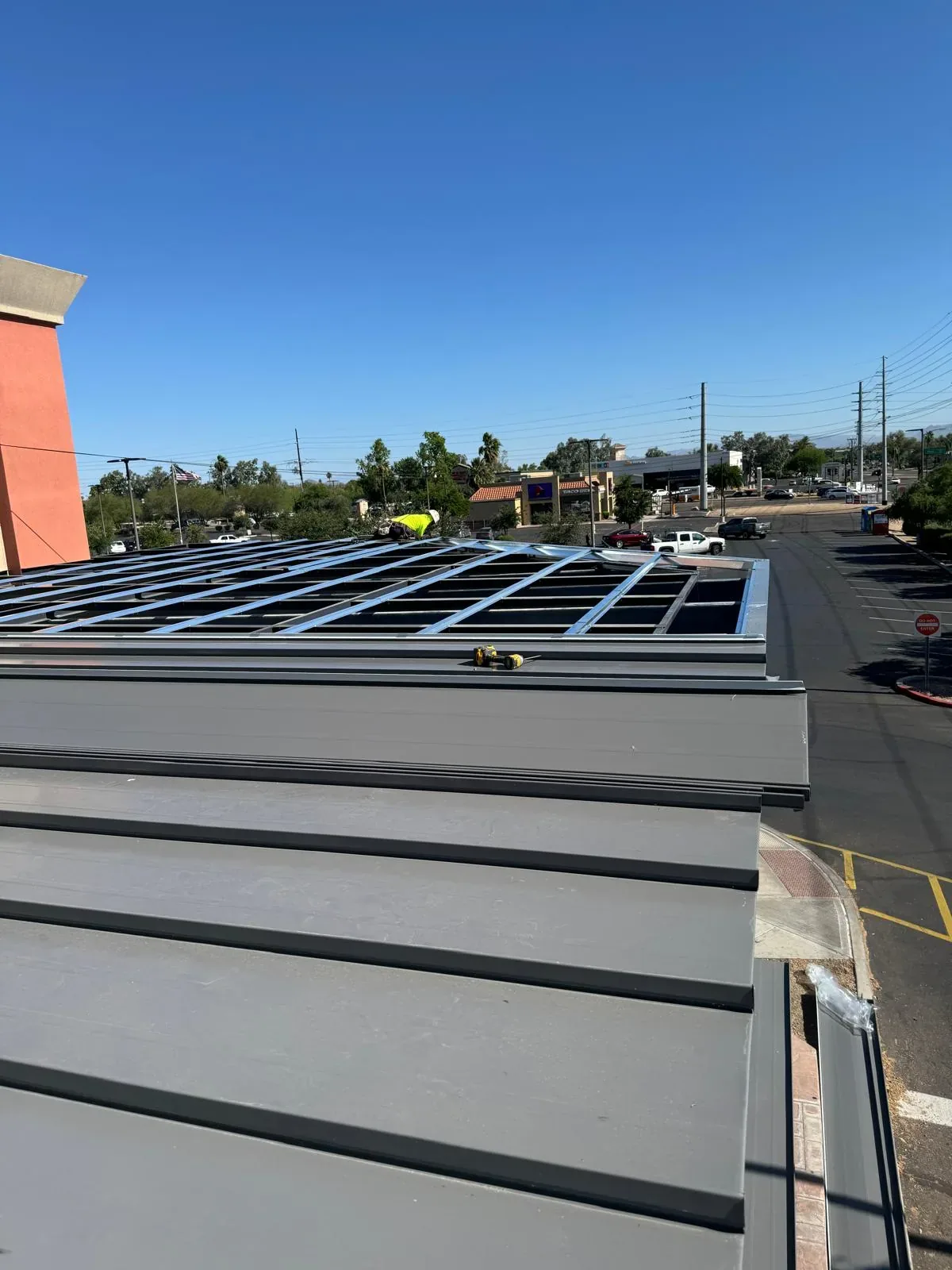
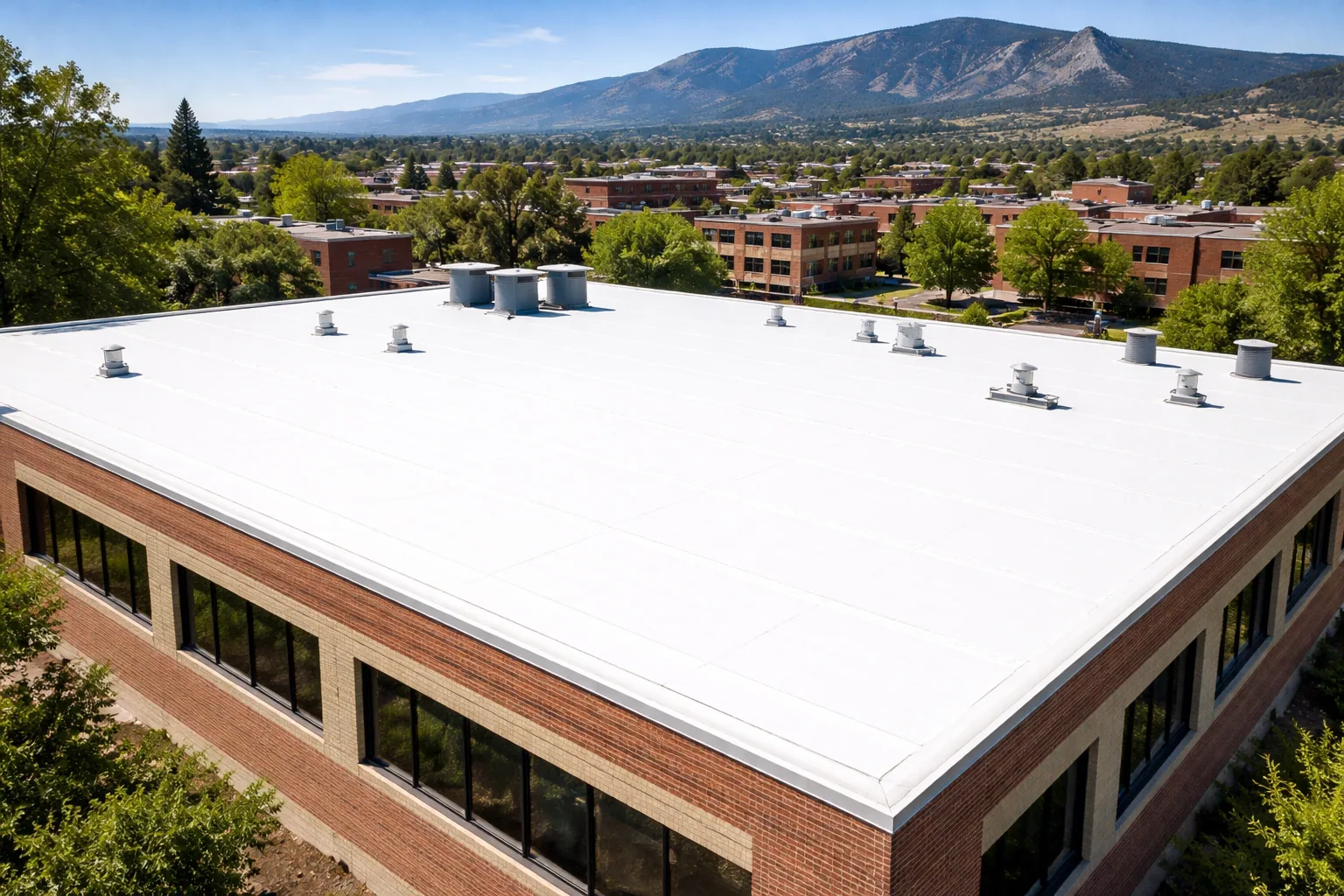
Adding insulation or a new roof system can change pipe flashing heights, equipment clearances and nearby details, even when a local repair would work. The project designer and other trades make those decisions. We list the work at each penetration next to the larger roof price, so the new roof does not stop at a pipe still waiting on a plumber. Each option should show the insulation it keeps and how every penetration will be flashed. That way you can see why a larger option costs more and needs different access.
Final photos show the rebuilt pipe flashing and the membrane around it. Plumbing or design items still pending are listed separately. Future work can go straight to the repaired pipe instead of guessing from the surface. We keep finished roofing separate from temporary patches, so your next budget starts in the right place. You can see which work stopped the leak and which item is still waiting, in the right order: pipe repair, then flashing, all planned around your clinical areas.
Medical office roofing in Richmond
For medical office roofing in Downtown Richmond and the Civic Center area, affected rooms and roof details each get their own protection plan. Send us your roof records and how the interior is laid out. We inspect the roof before choosing a repair method, and your facility contact reviews clinical protection and access. The repair is tied to the roof area we confirmed and the pipe work it needs, since similar buildings can have very different roofs.
Other buildings face similar penetration leaks with different needs inside. A hospital roof has 24-hour operations and infection control requirements. An office building roof often has skylights and tenant spaces to protect. We document each medical office's pipe repairs on their own, so future work starts from what we actually fixed here. Open items stay with this building and are not assumed to apply to other properties.
Commercial Roofing Questions
What has to happen before a pipe flashing can be fixed?
If the pipe is loose or damaged, a plumber or gas contractor repairs it first. Then we install new flashing on sound membrane around it.
Which rooms need protection during roof work?
Any room under the opening or along the material route. If we find more damage, the protection plan is updated before we open more roof.
Can the size of the crack tell you how big the repair is?
No. We check the insulation with core cuts where needed, and each test spot is patched and protected below.
What records should we keep after the repair?
Photos of the finished pipe flashing and the insulation we kept, plus a list of temporary patches and any plumbing or design items still open.
Tell us about the pipes and rooms below