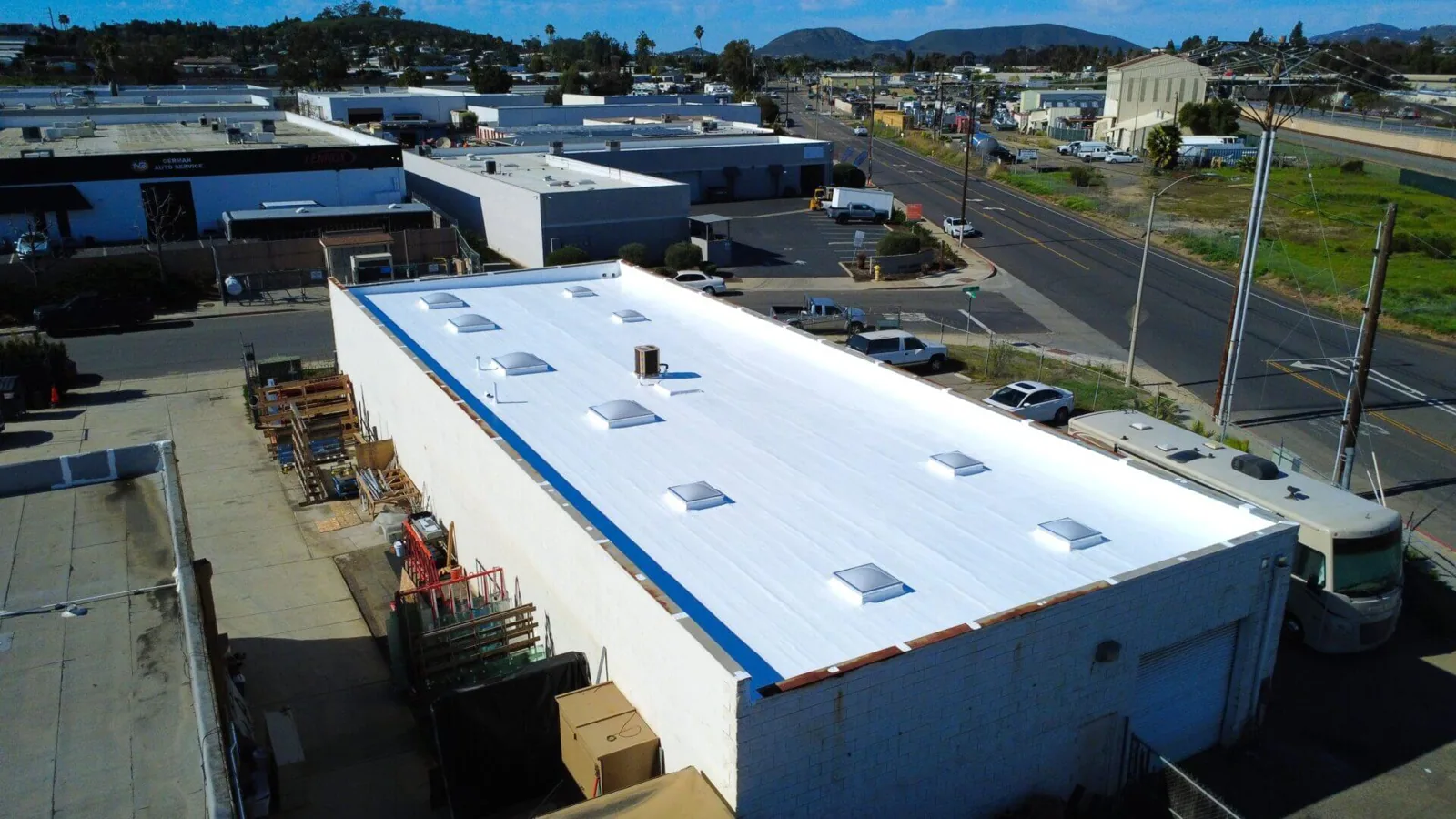
Roof Coating and Restoration in Richmond, CA
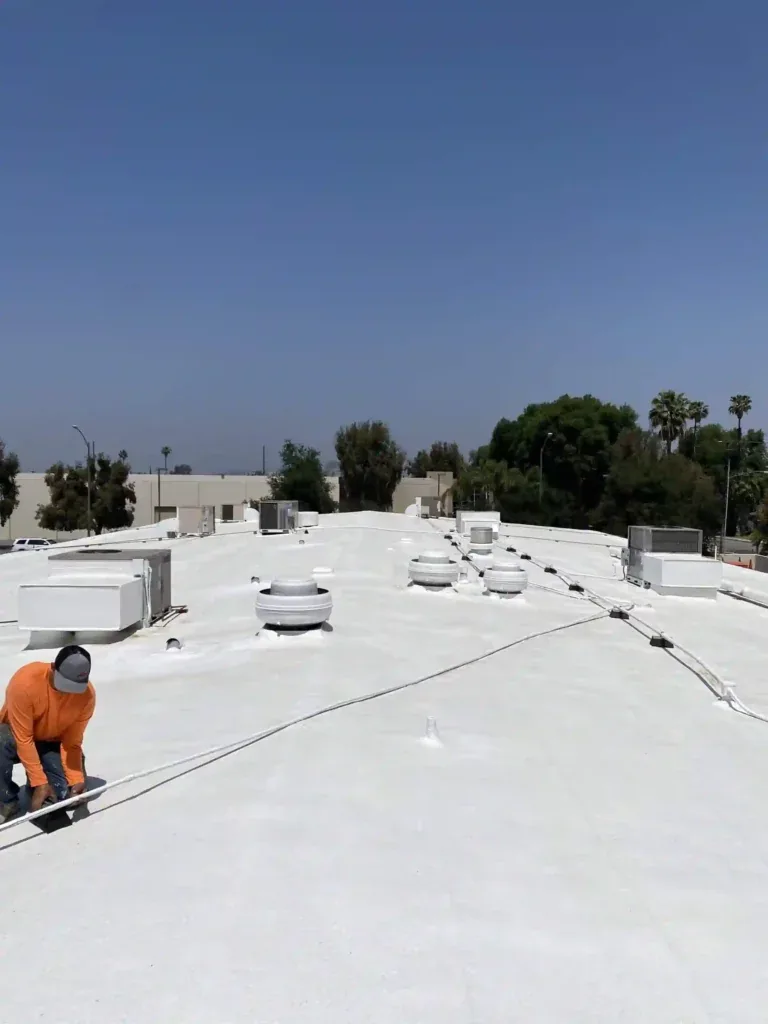
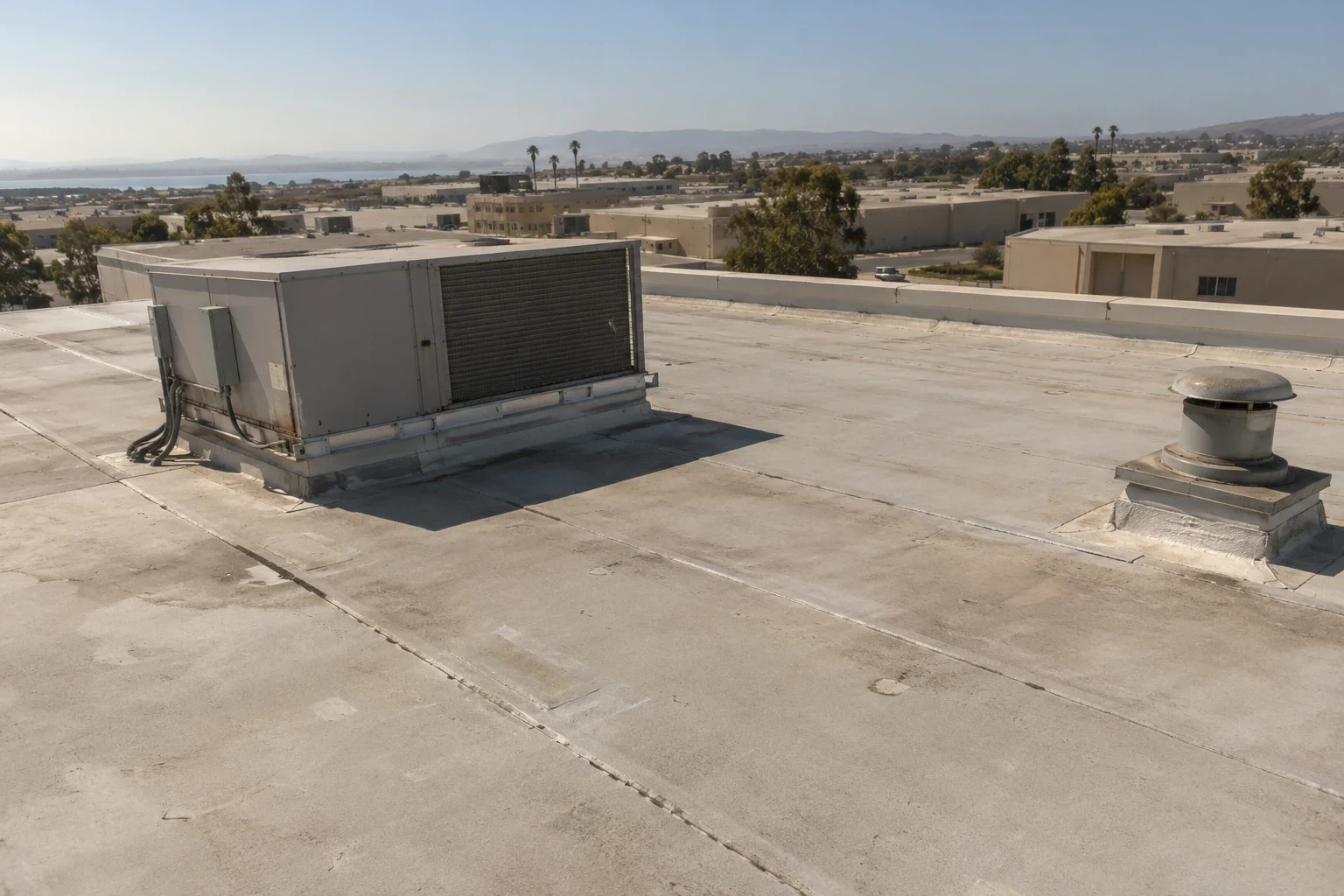
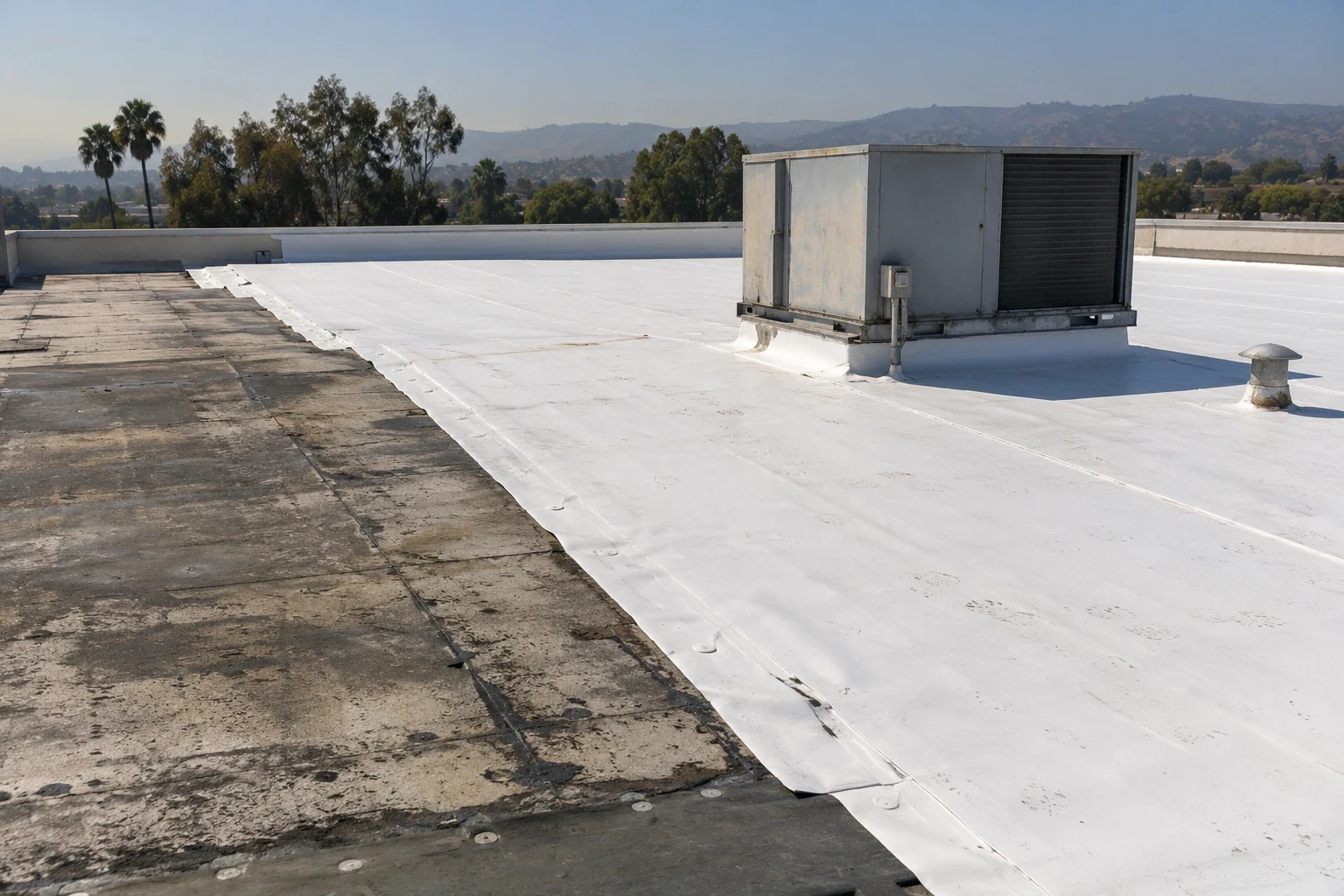
A coating can add years to an aging flat roof, but only if the roof underneath is a good candidate. On a Richmond industrial roof with a peeling old coating and a leaking curb, spraying new product over the top won't stop the leak or fix wet insulation. Restoration starts with checking how well the existing surface holds together and repairing the spots where water is getting in. On a manufacturing plant roof, we also plan around exhaust equipment, process vents and where material can be lifted to the roof.
We look at what's on the roof now, including the membrane type, old coatings and past repairs, and test whether a new coating will bond. Then we tell you which areas can be coated, which need repairs first, and which may be too far gone. The estimate lists cleaning, repairs, primer and coating so you can see what you're paying for, not just a price per square foot.
Make sure the coating will stick
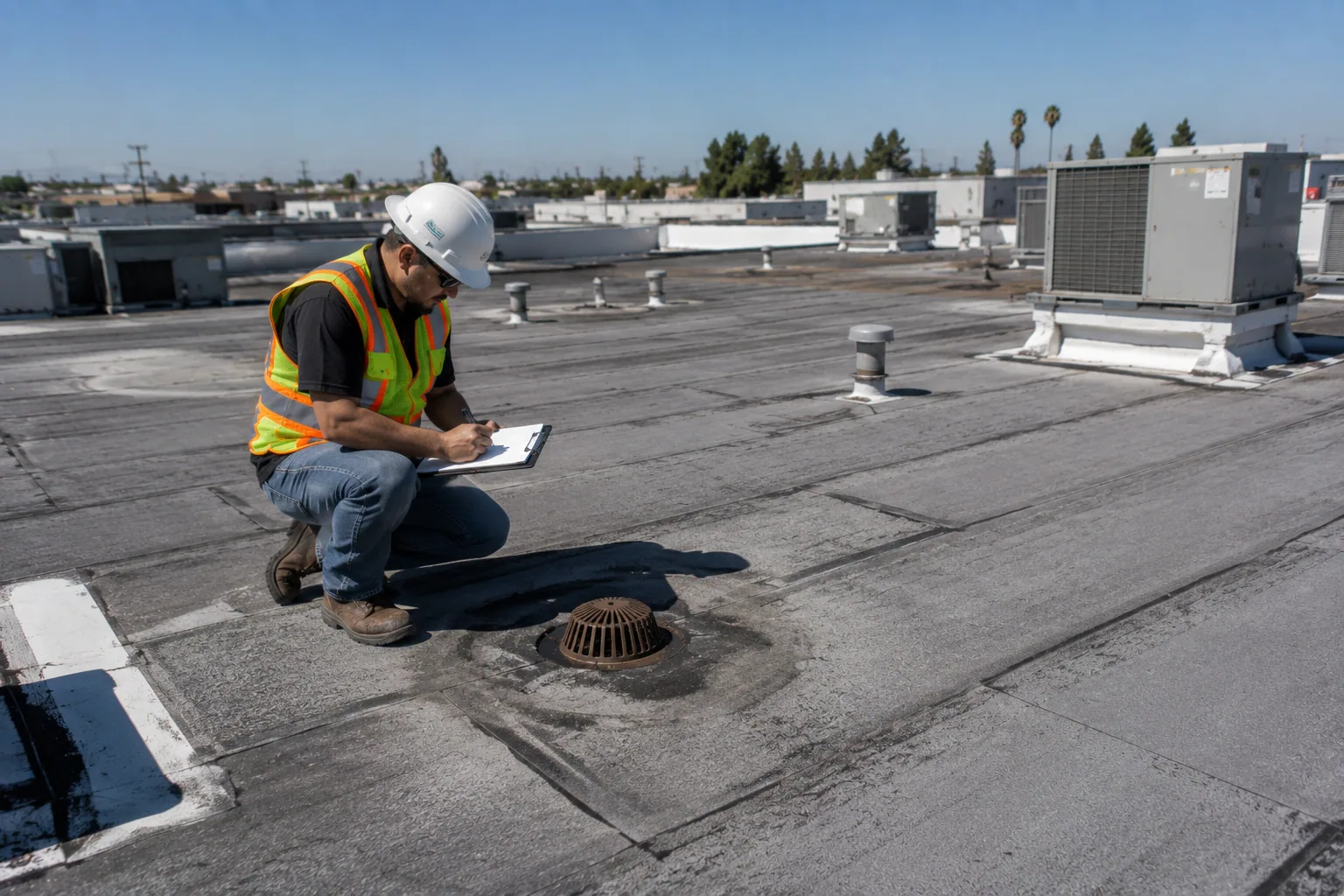
Coatings need to bond to the surface below. Old coatings, aged membranes and prior patches all affect that bond, so we identify them before choosing a product. A roof inspection checks the surface condition, seams, flashing and whether there's wet insulation underneath. A surface that looks uniform can hide several different repair materials, and some of them won't take a coating without special primer or removal.
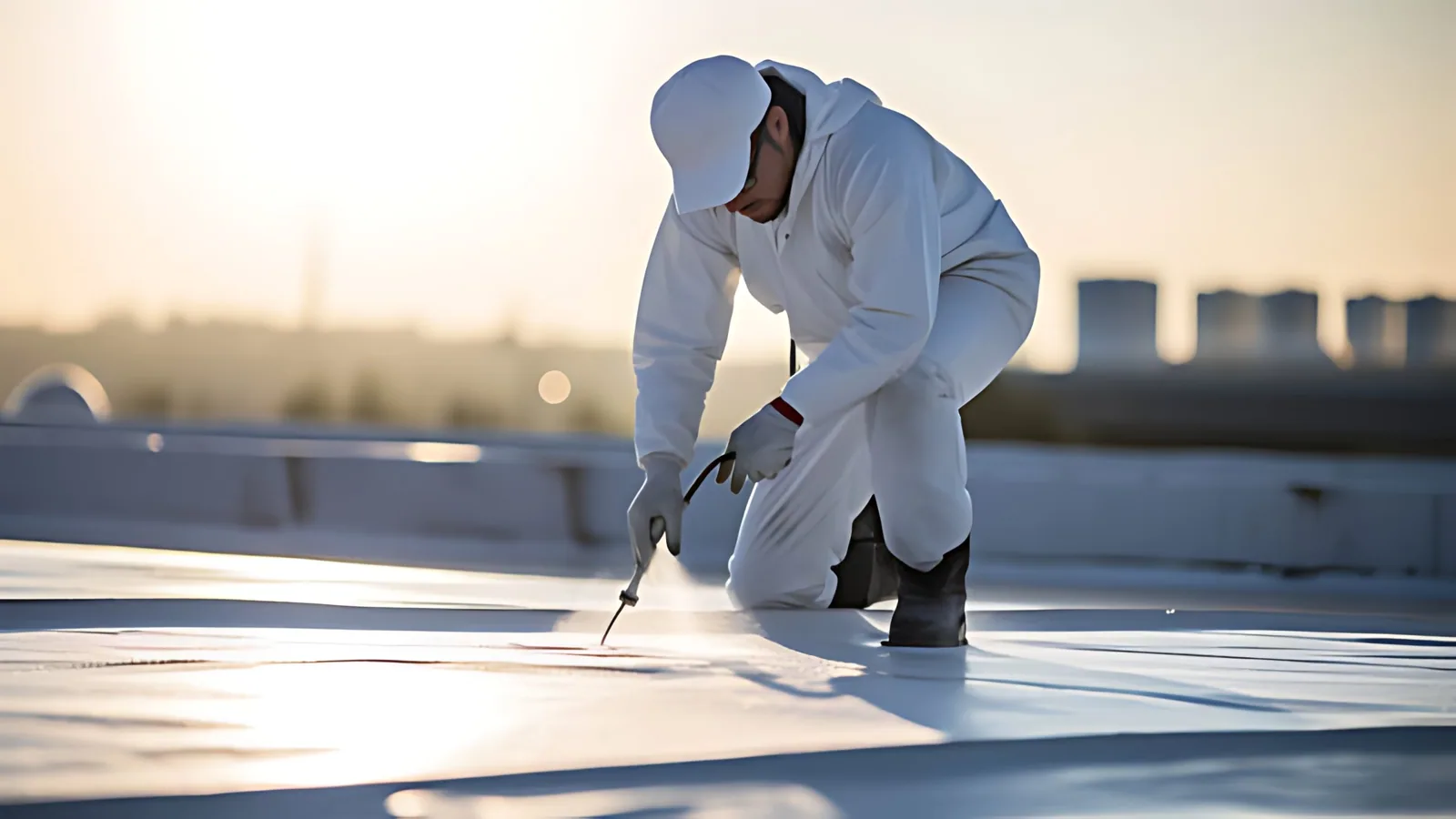
We usually do adhesion tests: small test patches of the coating are applied, allowed to cure, then pulled to see how well they hold. The results tell us which primer, if any, is needed and whether the product is a good match for the roof. If a spot fails the test, we plan to clean it more aggressively or remove the old material there. A surface check doesn't tell us if the insulation below is dry; that takes cores or a moisture survey.
The coating has to go on a surface that's clean, dry enough for the product and firmly attached. We check for chalking, loose old coating, trapped moisture and incompatible previous treatments, then set the prep plan before application. A thicker coat can't hold together a failed seam or an edge that's loose. Those repairs come first, so the coating goes onto a surface it can actually protect.
Fix the leaks before coating
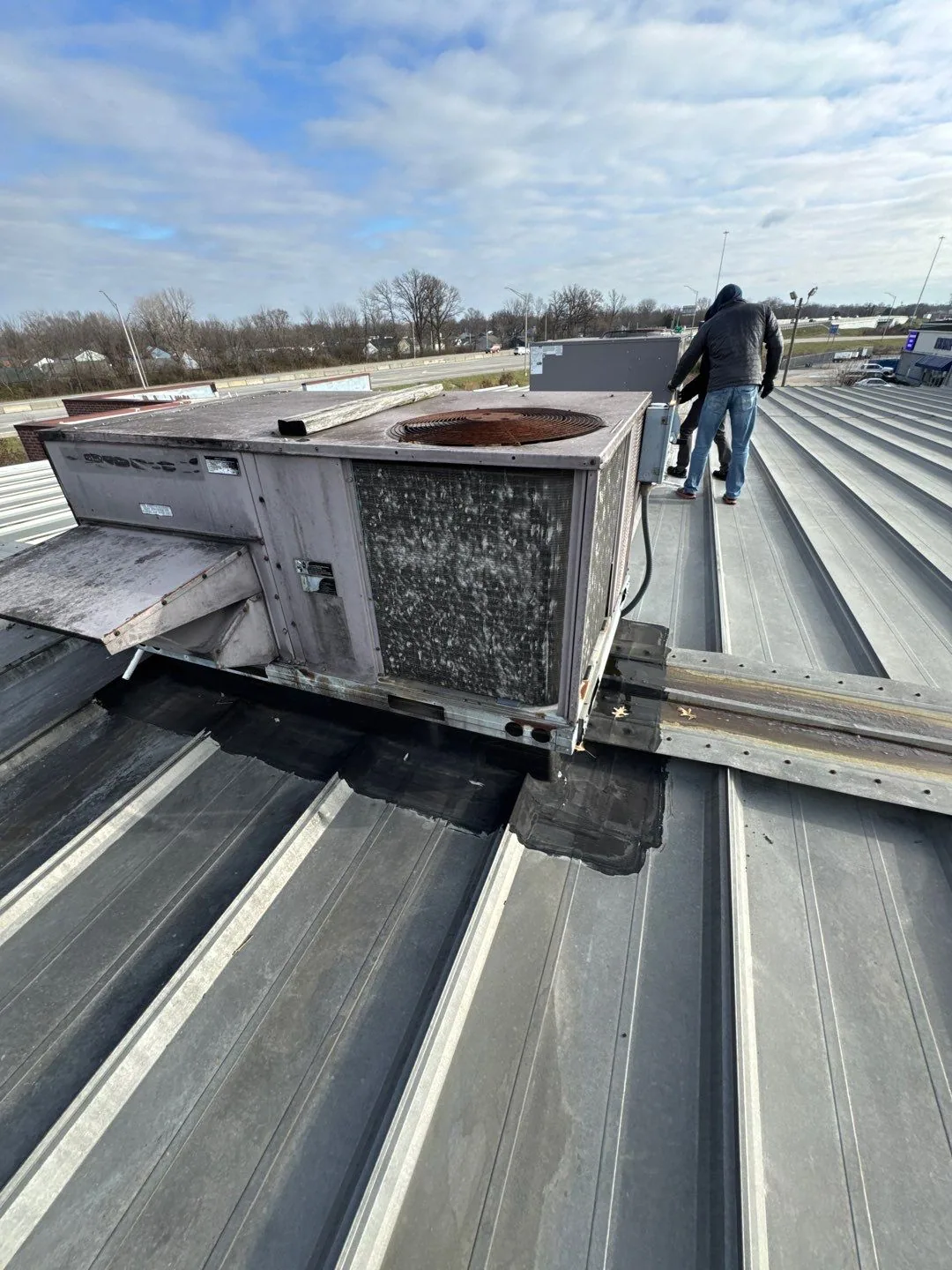
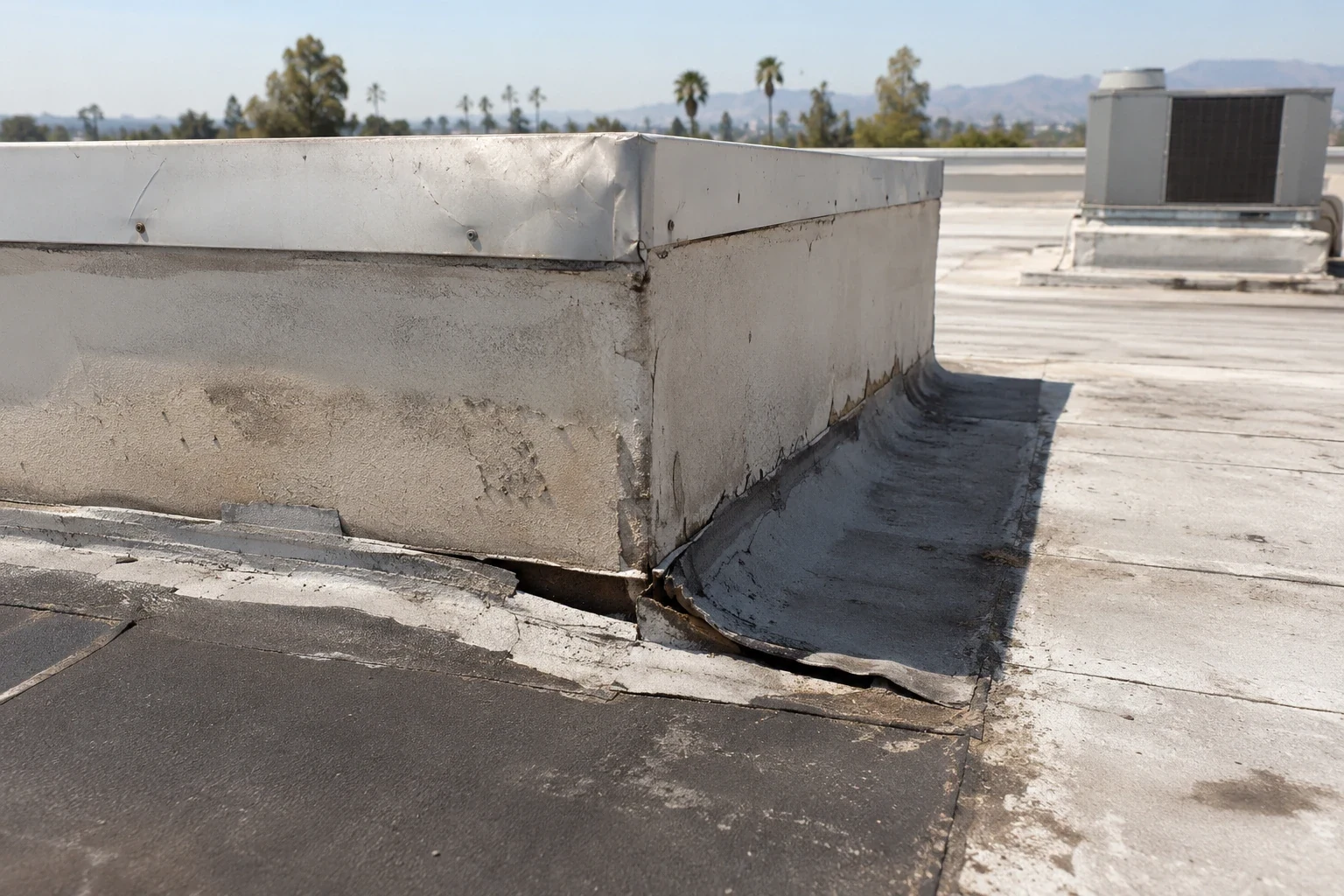
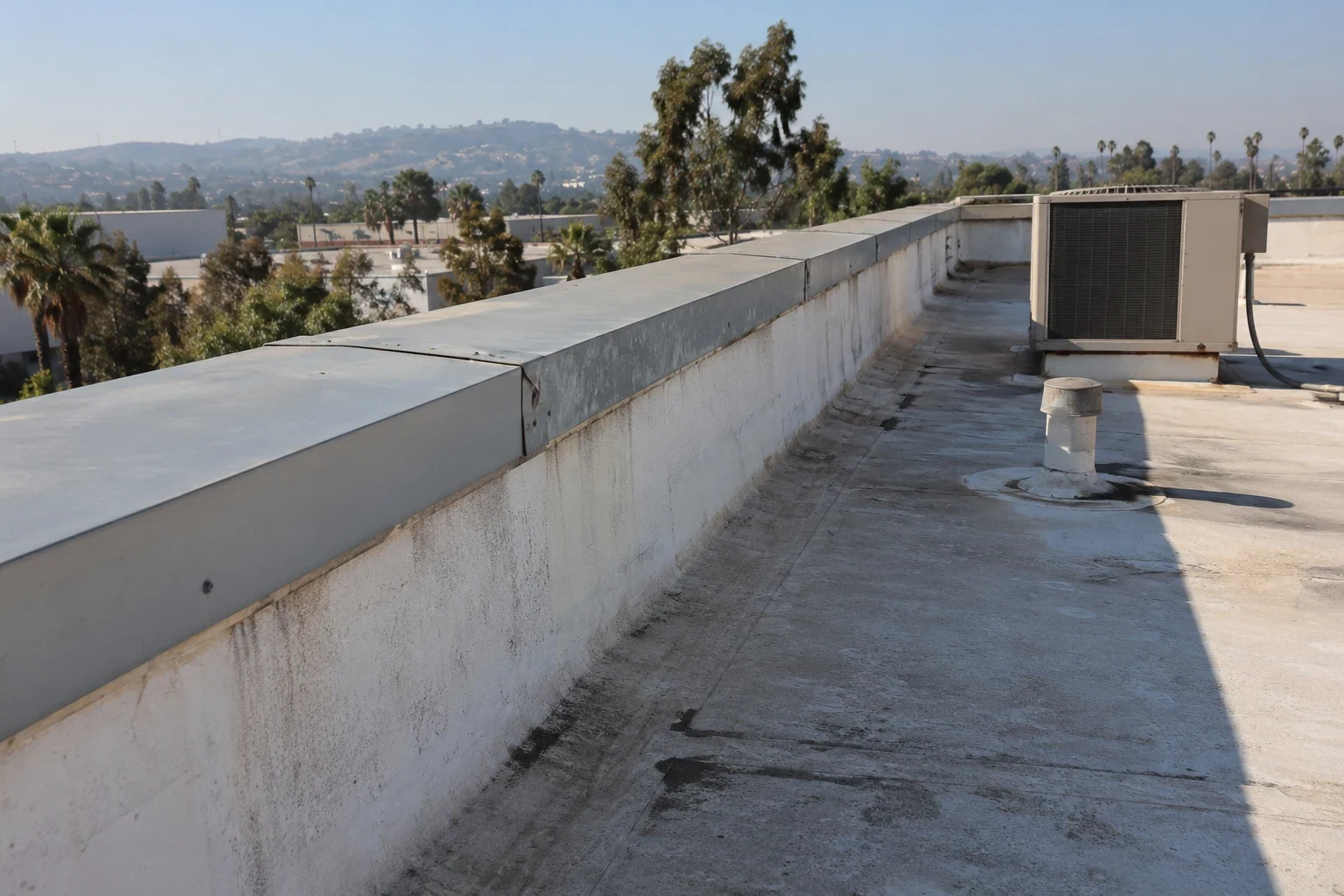
An open wall flashing or split seam around an HVAC curb will keep leaking under a new coating. So the first step is a commercial roof repair at every spot where water is getting in. That means rebuilding failed flashing, sealing or replacing open seams, and resecuring loose edge metal with materials that work with the existing membrane.
If a leak is coming from the equipment itself, such as a cracked housing or condensate line, that's a job for the mechanical contractor. We tell you when that's the case. Units that block access to a curb may need to be lifted, and we coordinate that with your HVAC contractor. When you compare bids, make sure each one includes the same repairs. A low coating price that skips the flashing work isn't a better deal; it just puts off the problem. The repairs are what make the coating worth applying.
Check for wet insulation
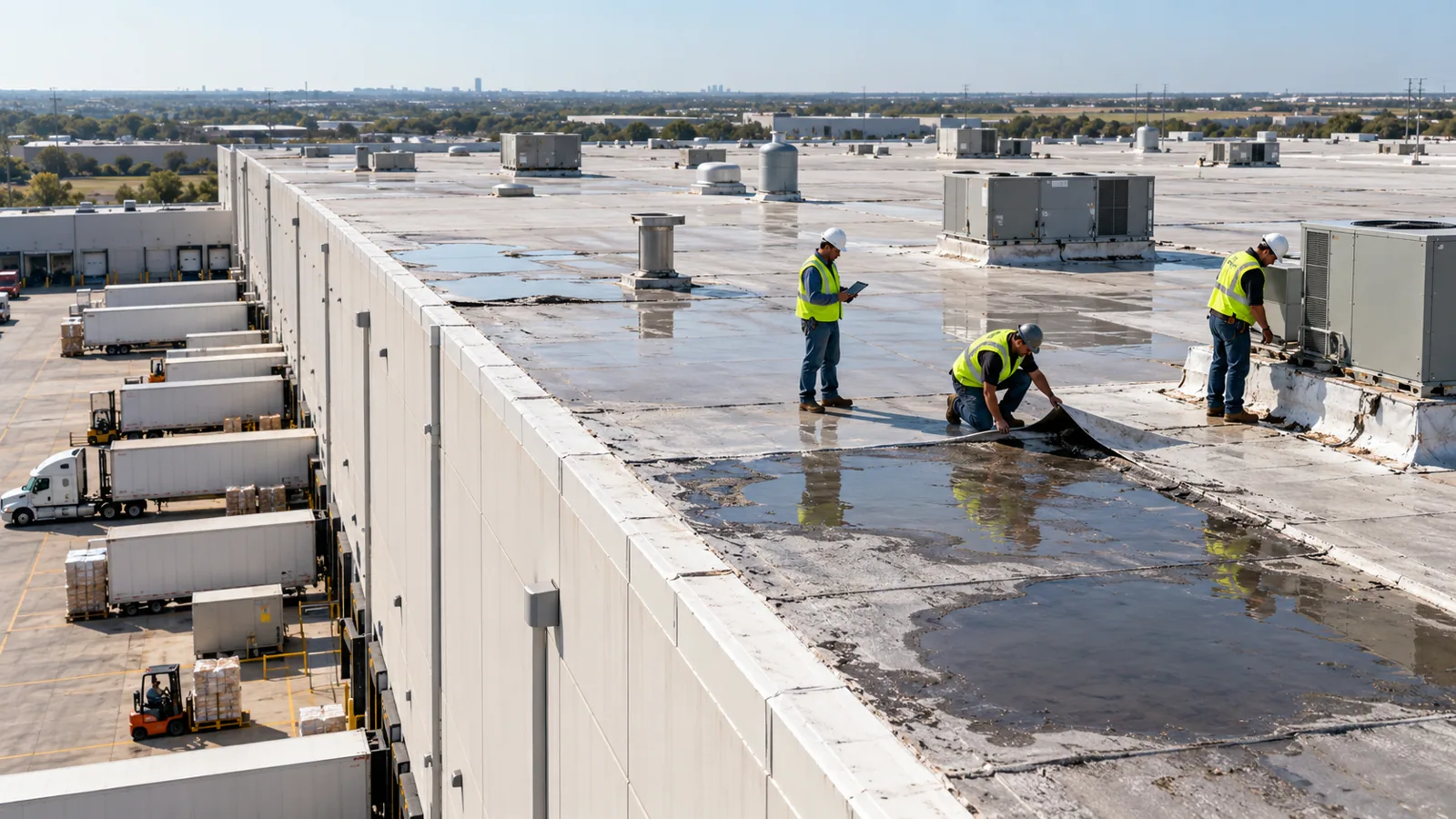
A coating seals the top of the roof, but it can't dry out wet insulation underneath. Water trapped below keeps damaging the deck, reduces insulating value, and can cause blisters that break the new coating loose. Before restoration, we check for wet areas with core cuts or an infrared moisture survey. Many manufacturers also limit how much wet insulation can remain under a warranted coating system.
Wet areas get cut out and replaced with new insulation and membrane before coating. The estimate lists those areas and quantities separately so you can see how much of the roof needs repair. If we open an area and find more damage than the tests showed, we stop, photograph it, and get your approval before continuing, with the area kept watertight in the meantime. If too much of the roof is wet, coating may not be the right choice, and we'll tell you so. It's better to know that before you spend money on product than after the coating starts to blister.
Silicone or acrylic?
The two most common choices are silicone roof coatings and acrylic roof coatings. Silicone holds up well where water ponds and often needs less primer on some surfaces, but it attracts dirt, and later recoats generally need to be silicone too. Acrylic is usually less expensive and stays brighter, but it doesn't handle standing water as well. The right one depends on your roof's surface, drainage and adhesion test results.
We price both on the same roof area with the same repairs and prep, so you're comparing products, not different scopes. Material handling, cleaning and any equipment work apply to either option. Close to the water at places like Brickyard Cove, wind and salt air are part of the picture, so we look closely at bond and surface condition there and repair failed flashing on its own line. Our comparison shows what each coating costs installed and why we recommend one over the other.
Coating versus replacement
Sometimes a roof replacement is the better investment. If large areas are wet, the membrane is brittle, or seams are failing everywhere, a coating won't last. We compare restoration and replacement on the same roof, listing tear-off, insulation and flashing work for each. Restoration usually saves money only when most of the existing roof can stay.
For buildings near the Port of Richmond and elsewhere, we document the job with photos of repaired areas, the coating product and thickness applied, and any items left for other trades. Keep that record with the building's files; it tells future contractors what's on the roof and what they need to use for repairs. If the coating comes with a manufacturer warranty, review its terms before work starts, including inspection and maintenance requirements and what kinds of repairs are allowed later. A well-documented restoration makes the next repair simpler and helps you plan when the roof will need recoating.
Commercial Roofing Questions
How do you know if our roof can be coated?
We inspect the roof, check for wet insulation, and run adhesion tests with the proposed coating. If the surface is sound, mostly dry and the coating bonds well, restoration is usually a good option.
Will a new coating fix wet insulation?
No. A coating only seals the surface. Wet insulation has to be cut out and replaced before coating, or the trapped water will keep damaging the roof and can blister the coating.
What should be the same when comparing silicone and acrylic bids?
The repairs, wet insulation replacement, cleaning and prep should match. Then the difference in price reflects the coating itself and any primer or thickness differences.
When is replacement a better choice than coating?
When large areas of insulation are wet, the membrane is brittle or seams are failing across the roof. A coating can't make up for a roof that's at the end of its life.
Find out if your roof is a coating candidate