Local weather advisory
Coastal Flood Advisory: Commercial Roof Help in Richmond
The National Weather Service has issued a coastal flood advisory covering Richmond. Heavy rain and drainage loading can expose roof leaks, blocked drains, and ponding water. This is a weather exposure advisory; it does not establish damage to a specific roof.
Do not access a roof during hazardous weather. Protect people first, avoid water near electrical equipment, and request roofing help when conditions permit.
National Weather Service · Updated Oct 28, 2026, 7:20 AM UTC
Commercial Roofing in Port of Richmond, CA
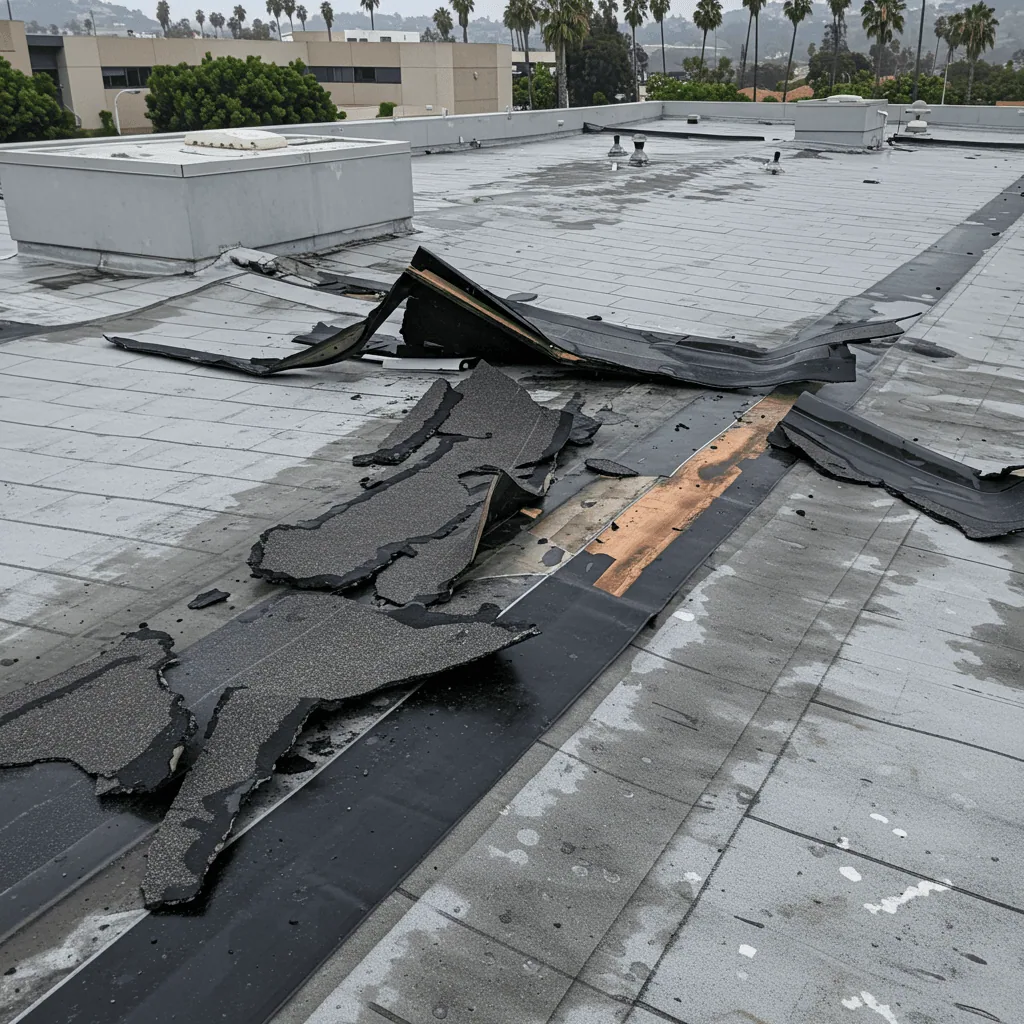
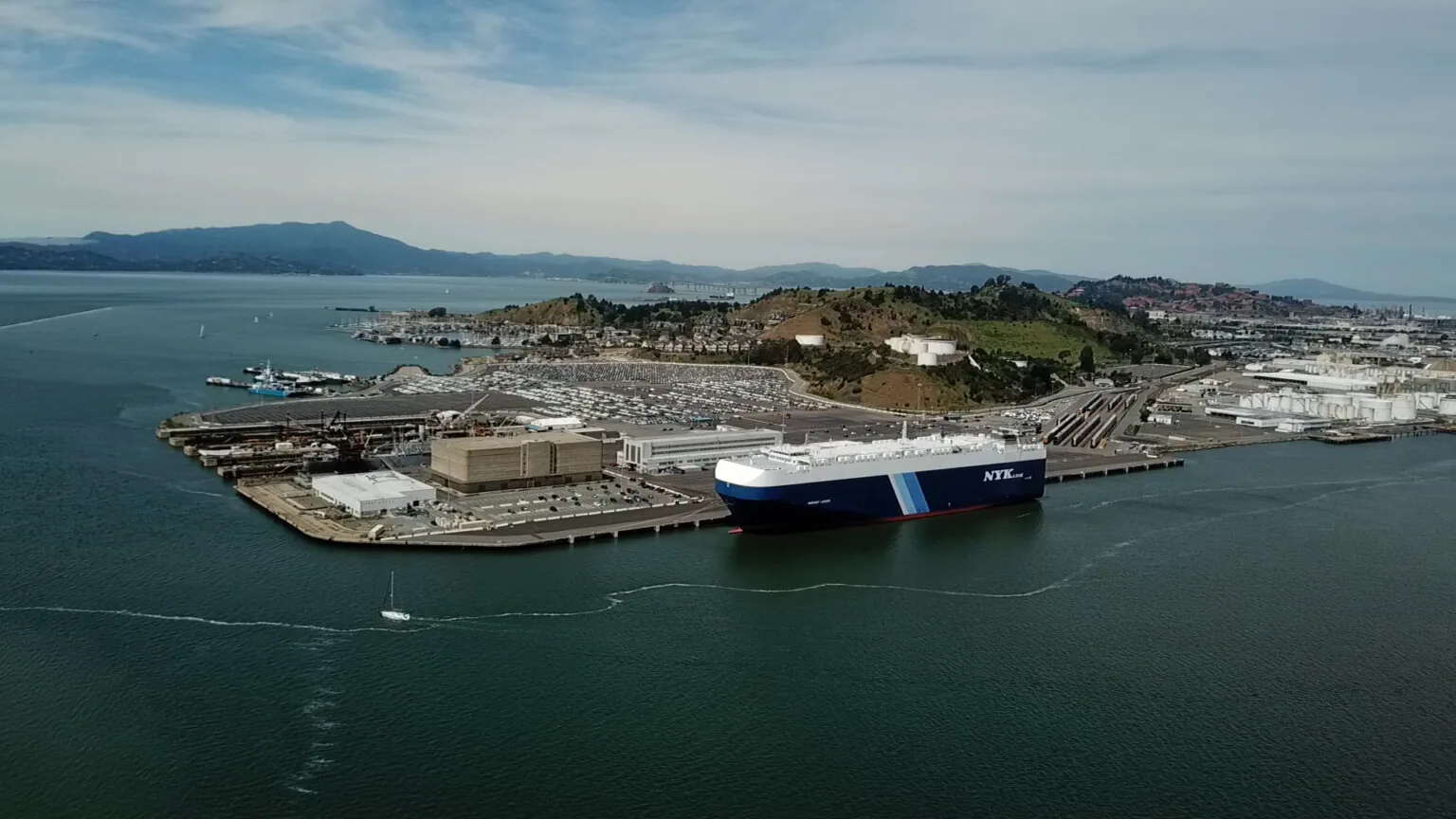
A loose roof edge on a warehouse or shop near the Port of Richmond lets wind get under the metal and water get in behind it, and the fix usually takes more than a new piece of edge. We inspect, repair and replace commercial roofs in Richmond, CA, and we start by checking what that edge fastens to and how the crew will reach it. The port runs along roughly 200 acres of waterfront, with terminals handling liquid and dry bulk, metals, vehicles and other cargo, so truck traffic, rail and yard rules vary a lot from one property to the next. Every roof here gets its own inspection and its own work area.
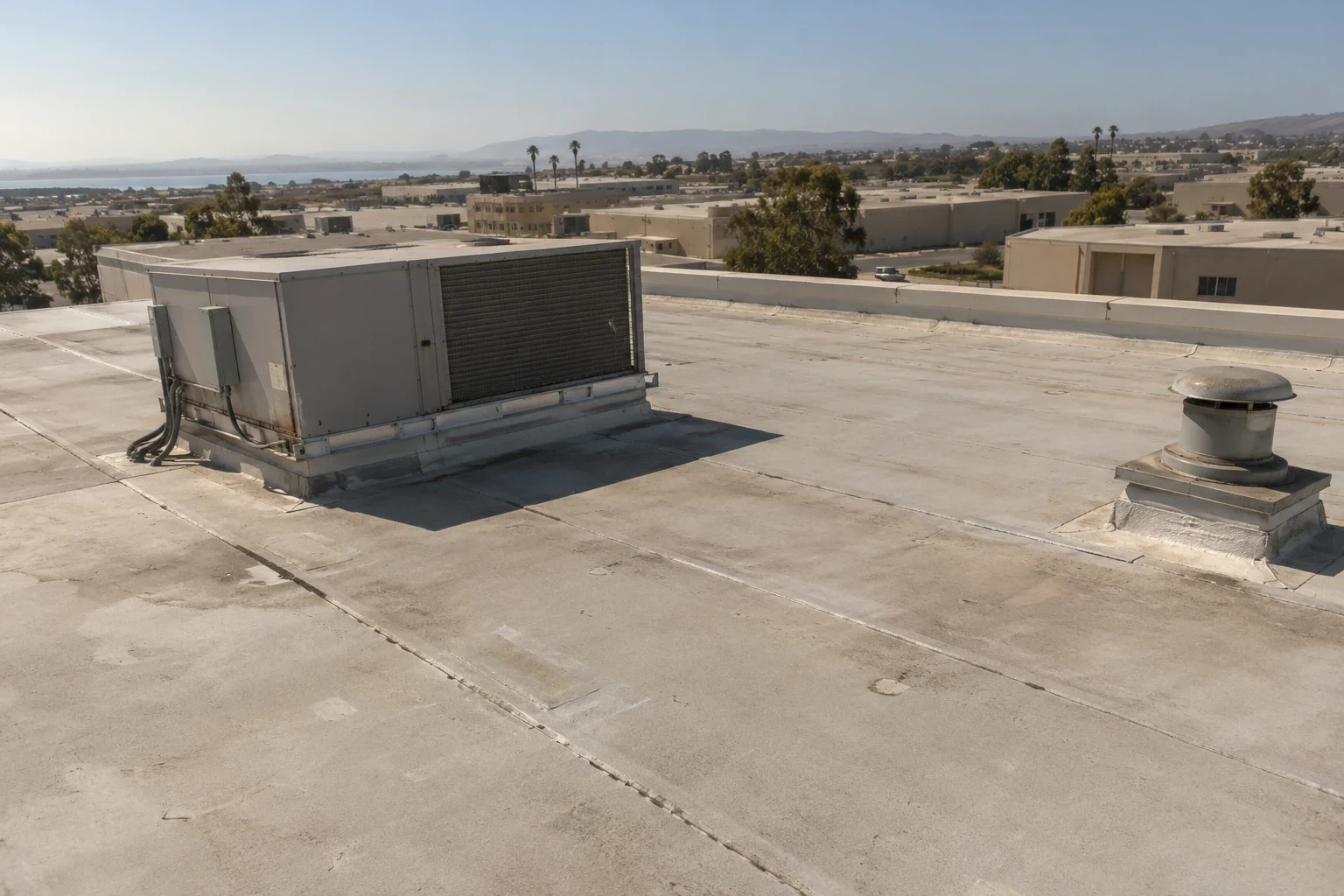
A lifted edge can hide rotted blocking, pulled fasteners or a failed seal to the membrane beside it. We look at all of that together, tell you if any testing is needed and explain the permanent fix. The estimate includes getting material up, protecting the space below and closing the roof at the end of each day, alongside the length of edge. That lets you compare a complete local repair with a bigger edge replacement before access and prep turn into extra charges. With the old edge off, we also check whether the membrane, cover board or wood blocking can take the new fastening pattern. New metal needs solid material to fasten into along its whole length.
What the edge fastens to decides the repair
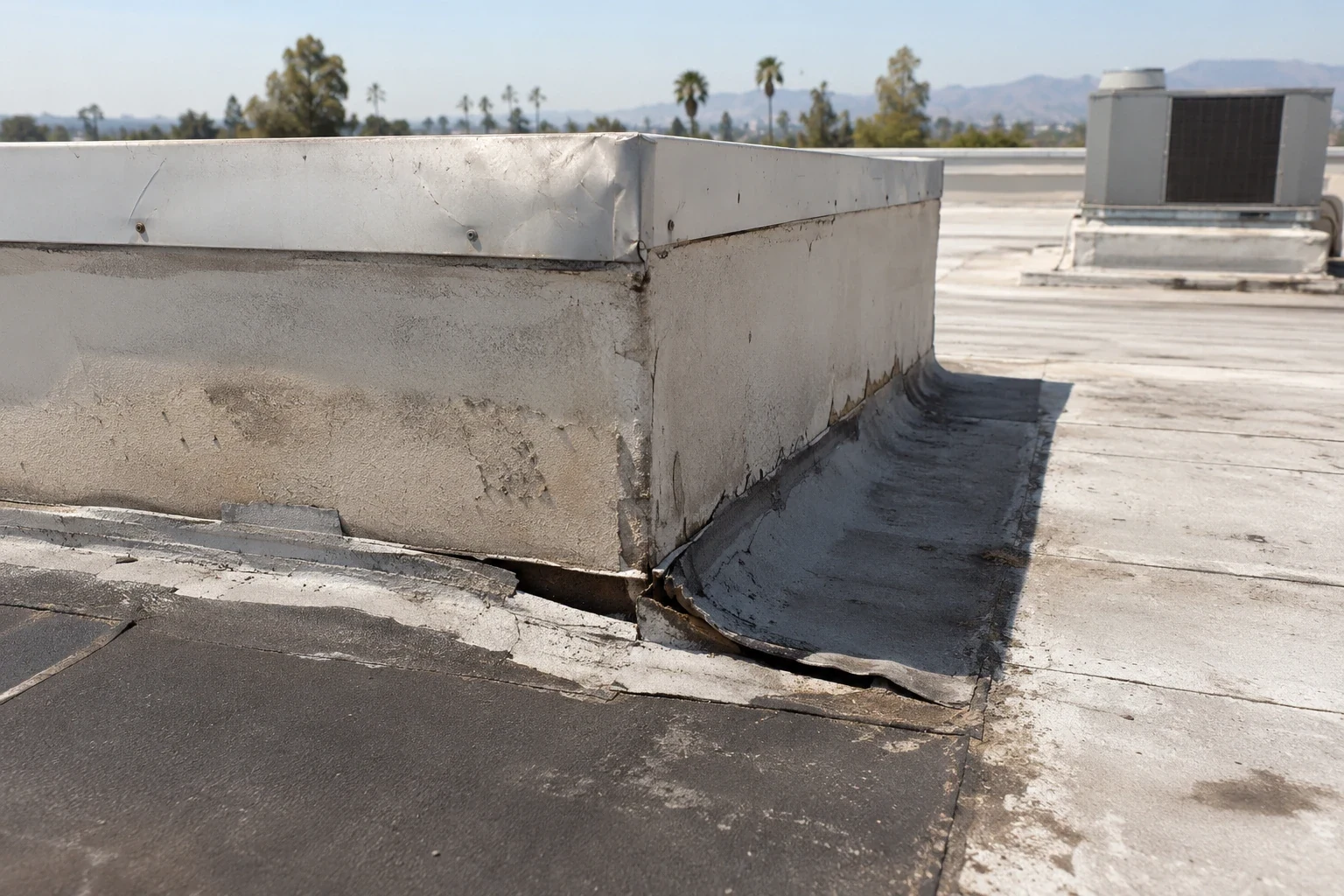
The bent metal looks like the problem, but the real failure is often the fasteners or the wood behind it. We check both before recommending new parts. Rotted blocking may need to come out beyond the section that lifted. If what we find raises a wind-load or structural question, we get that answered by the right designer before the edge detail is final.
Our edge metal and coping repair includes the prep that the roof actually needs. The estimate separates the new metal from the blocking and fastening work underneath it. It shows what has to be replaced and what is sound enough to stay. You can then compare a short repair with a longer run of new edge on the same terms, instead of buying new metal over the same weak fastening.
The membrane needs its own tie-in
New edge metal also has to seal to the roof membrane around it. We check that membrane for open seams, worn areas and signs of water underneath, any of which can make the repair bigger. Shiny metal says nothing about whether the membrane next to it can stay. If we need to cut a small test spot to find out, we tell you what we're checking and how we'll seal it.
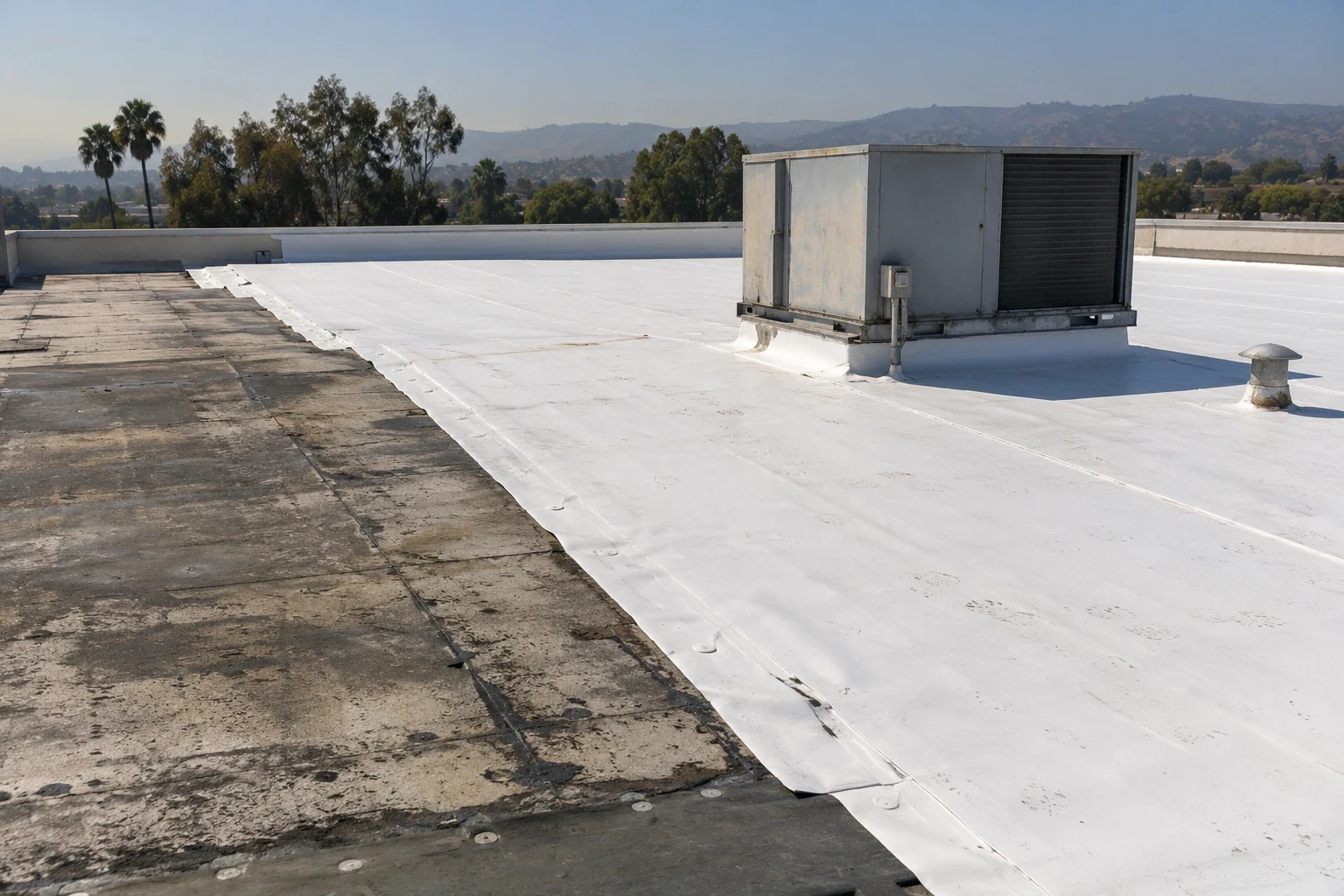
The commercial roof repair at the edge follows the existing roof system and what the tie-in method requires. We check prep and compatibility right where the new work meets the old. Wet or soft insulation comes out before we close the roof. The finished scope shows the new work tied into sound roofing, so the price is based on what we found rather than the few feet where the edge first came loose.
Material handling belongs in the work order
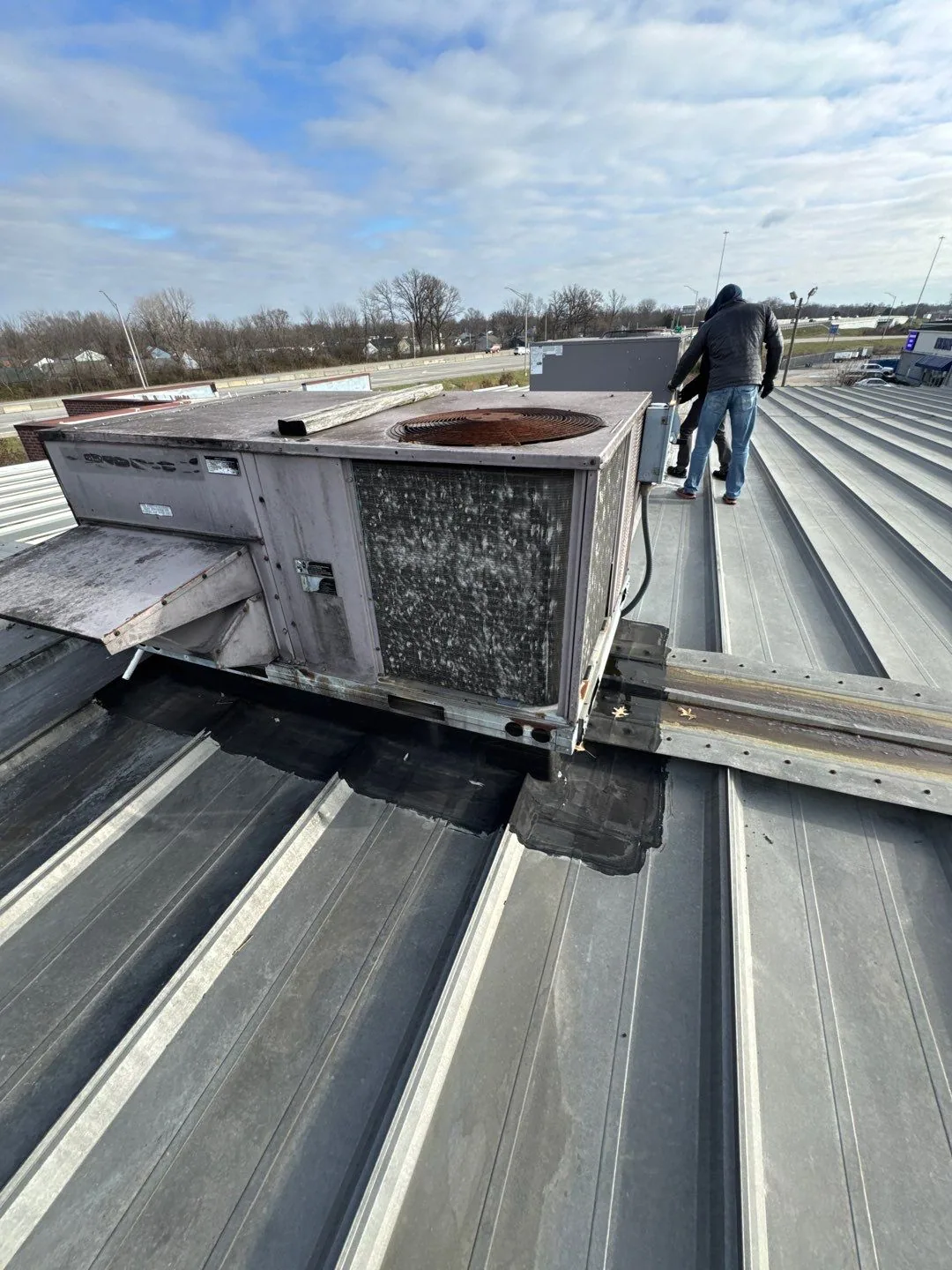
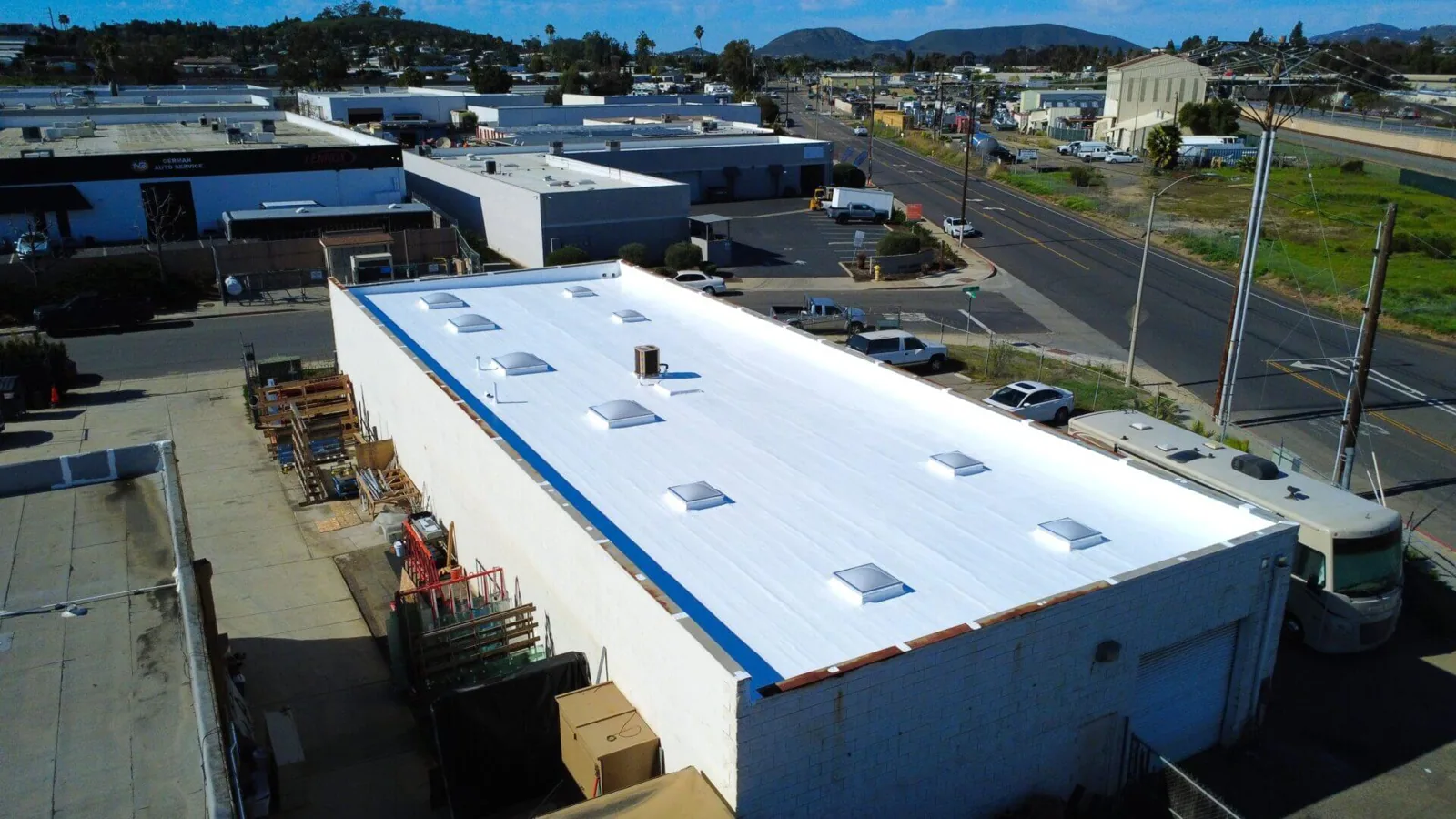
Reaching a roof edge in the port area can mean setting up a lift and a material route that stays out of the way of trucks, forklifts and yard traffic. We work out where materials can be dropped and how the crew moves with the property's site contact before we set the schedule. The drop-off spot decides how material arrives and how debris leaves. Those steps are in the estimate, not assumed.
A tight drop zone can mean smaller deliveries or more carrying before the new edge reaches the roof. We price those steps once the route is agreed and list them next to the edge repair. The open edge has to stay protected while old metal comes off and the blocking is prepped. We also mark where debris will sit, how it leaves the site and how the roof is closed at the end of each day. Terminals here run on very different rules, so we confirm the route for the building we're working on.
Our roofing work on occupied buildings ties that access plan to debris protection and temporary dry-in. Smaller sections may fit around your operations but mean more setups. One larger section cuts the repeat setups once the prep is understood. We show the cost and the daily closeout for each option, so you can choose a schedule with prep and interior protection already included.
Moisture findings establish the removal boundary
Water that gets in at an edge can travel well away from the opening. We check the roof near the edge and test where it would tell us whether insulation is wet. A dry surface doesn't mean the layers below are dry. The recommendation separates what might be wet from what we've confirmed has to come out, and says what's still unknown before the price is called final.
An infrared moisture survey can show where to test, when the roof type and weather allow a good reading. Its results still need core cuts or probes to confirm before anything is torn out. We tie that testing to protection and patching, then compare keeping the dry insulation with a bigger tear-off. That way you're deciding on the edge with real information, not putting a clean finish over wet insulation nobody checked.
Nearby assignments keep separate roof findings
Another roof in the Inner Harbor and Cutting Boulevard area might have a similar loose edge with a different membrane or deck underneath. We inspect it separately before recommending the same materials. A similar symptom helps us find the problem, but it doesn't decide the prep or the tie-in. Each job gets its own quantities and access plan.
A building in Marina Bay can be added to the same conversation once it's inspected and its access is worked out. Ordering together can cut duplicate setup where the work allows. Each roof's protection and tear-off costs still show up separately, with active leaks ahead of nice-to-have upgrades. You can then plan related jobs knowing what was found on each roof, how material gets there and how each one gets closed up.
Commercial Roofing Questions
Does loose edge metal mean the entire perimeter needs removal?
No. If the blocking and the membrane next to it are sound, a local repair often works. We only extend the tear-off where we find rot, failed fasteners or wet insulation.
Can the new metal be installed before the membrane is examined?
We check the membrane first. The edge and the membrane flashing have to be built together to keep water out, so we price them in the same scope instead of leaving the membrane for another visit.
How should terminal-area access enter the price?
The property's site contact tells us the allowed route, drop zone and any yard rules. We price the setup, protection and daily closeout that come with them, and schedule the work around those rules.
Will a moisture survey settle the removal quantity?
Not by itself. An infrared scan shows where to look, and core cuts or probes confirm what's actually wet. The tear-off and patching we price follow those confirmed results.
Can several edge repairs share one material order?
Often, once each roof has been inspected and its prep is known. We keep each building's quantities and access costs separate, then compare a shared order against running the jobs separately.
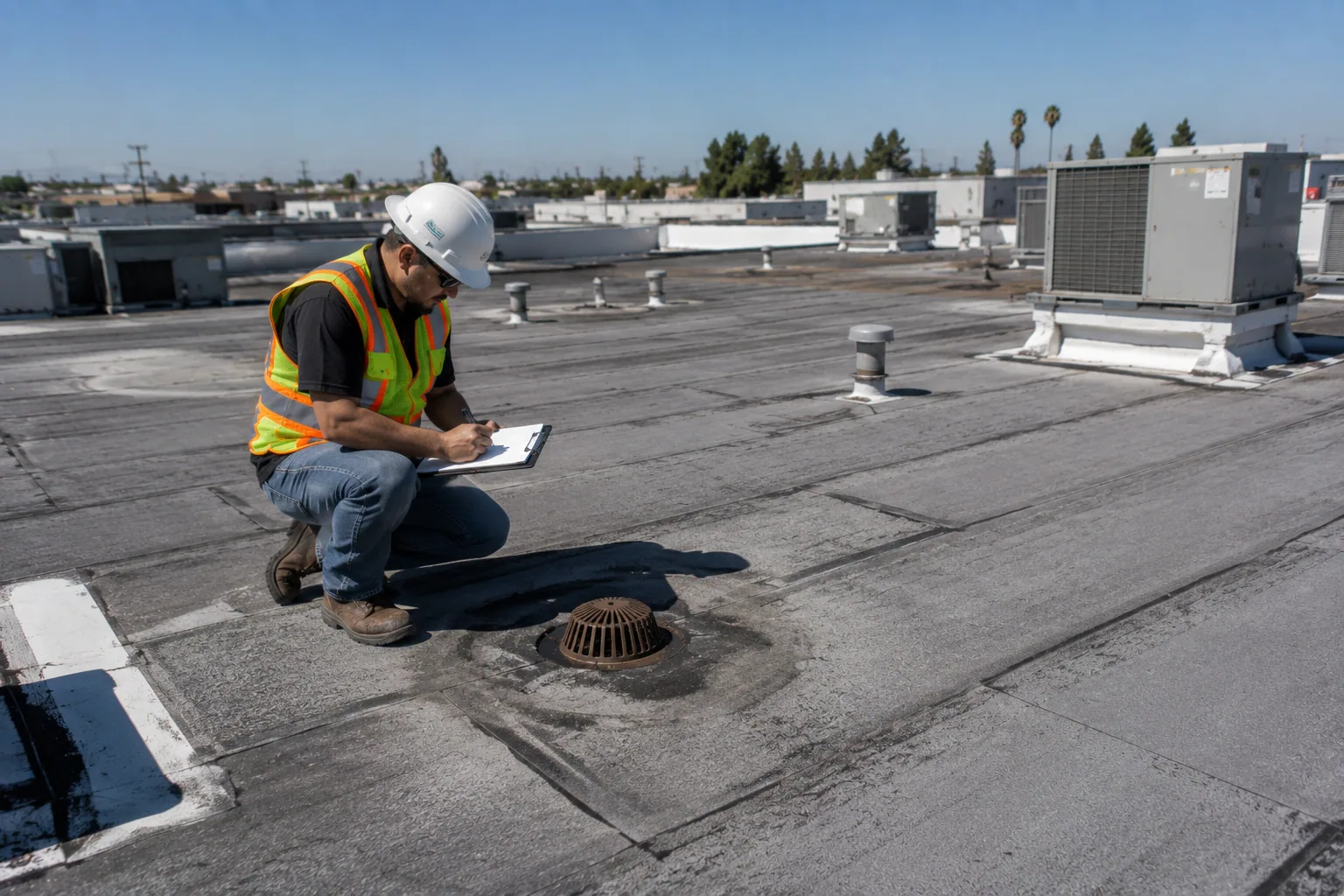
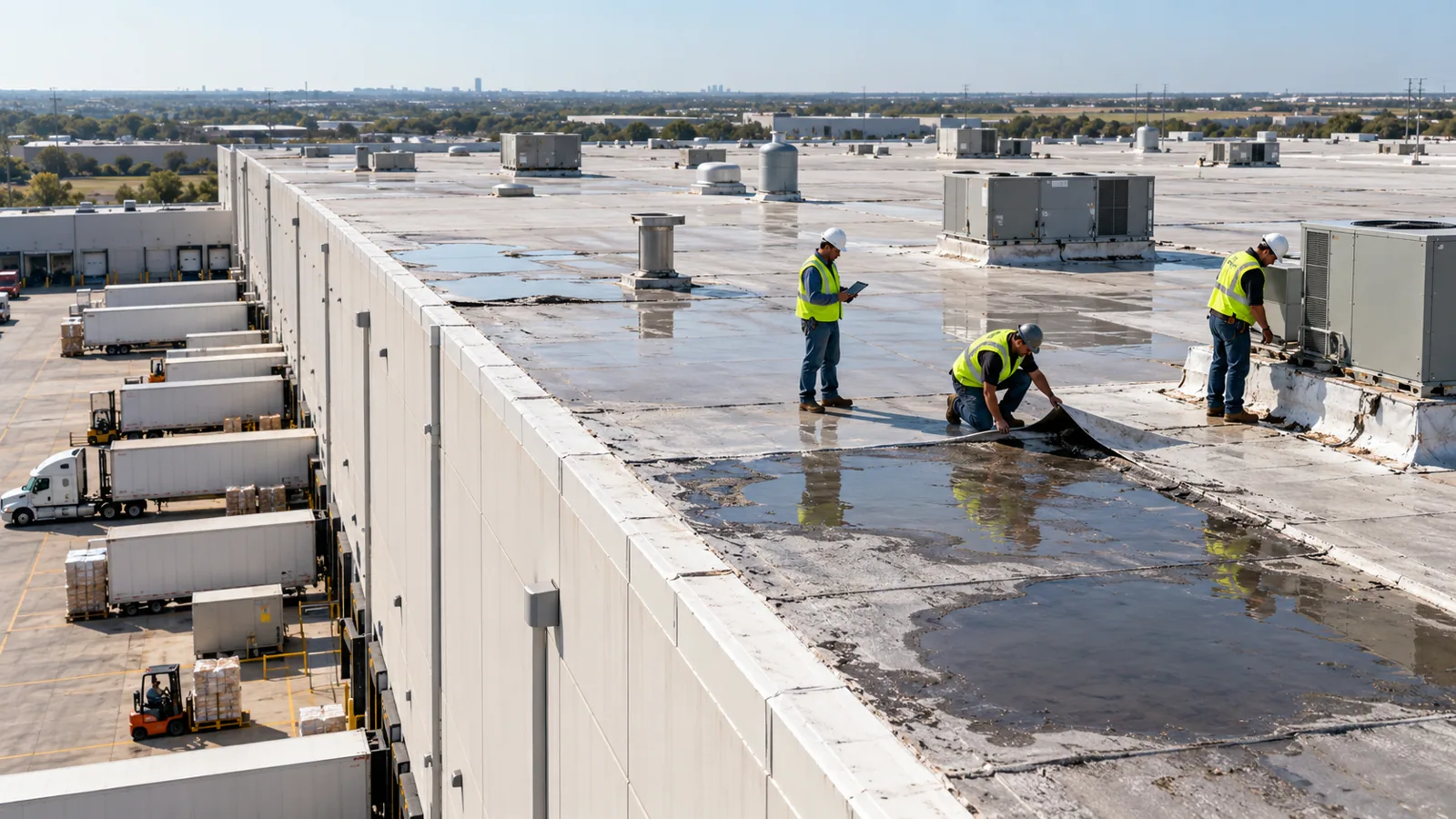
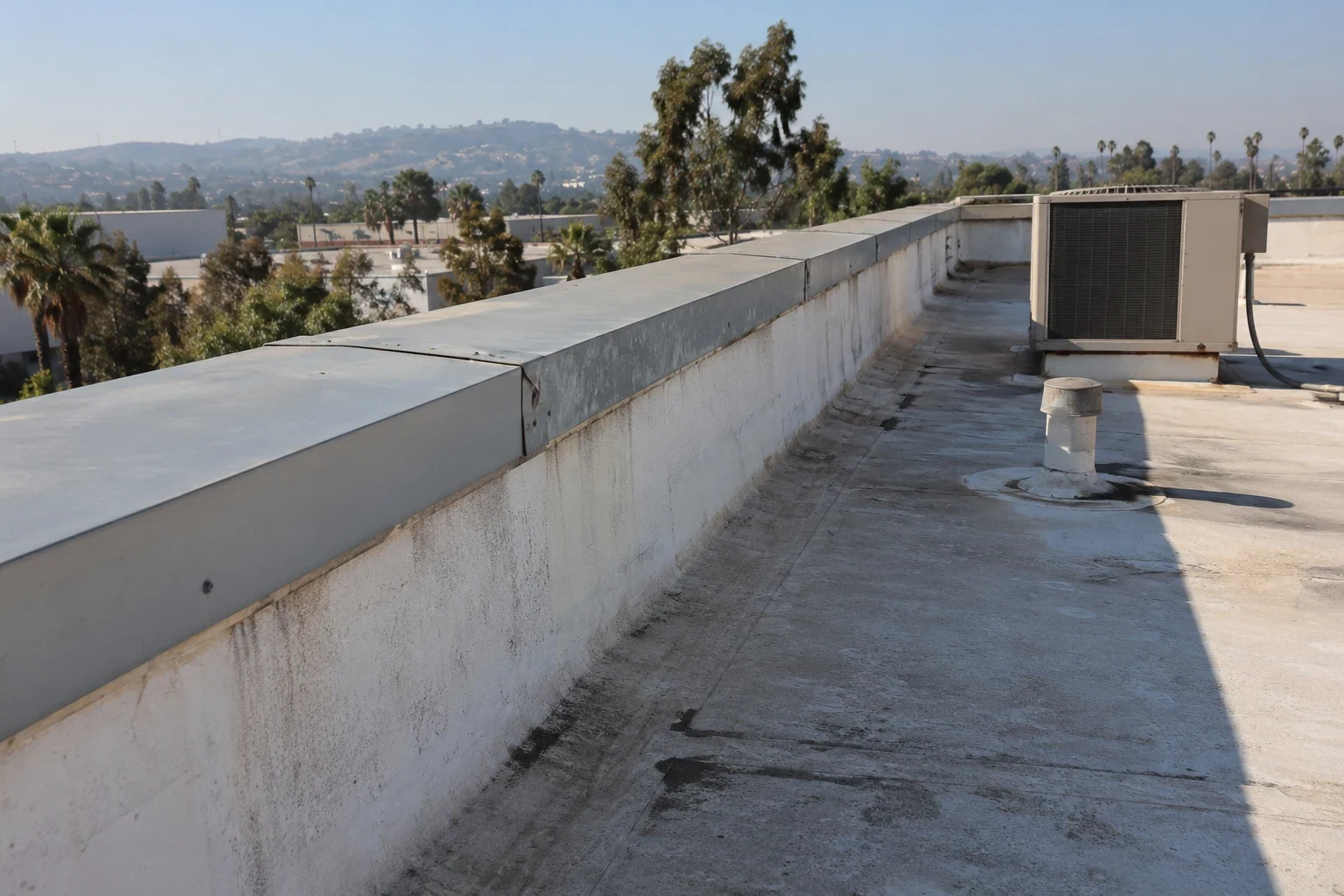

Edge repair starts with what the metal fastens to