Local weather advisory
Coastal Flood Advisory: Commercial Roof Help in Richmond
The National Weather Service has issued a coastal flood advisory covering Richmond. Heavy rain and drainage loading can expose roof leaks, blocked drains, and ponding water. This is a weather exposure advisory; it does not establish damage to a specific roof.
Do not access a roof during hazardous weather. Protect people first, avoid water near electrical equipment, and request roofing help when conditions permit.
National Weather Service · Updated Oct 28, 2026, 7:20 AM UTC
Commercial Roof Repair in North Richmond, CA
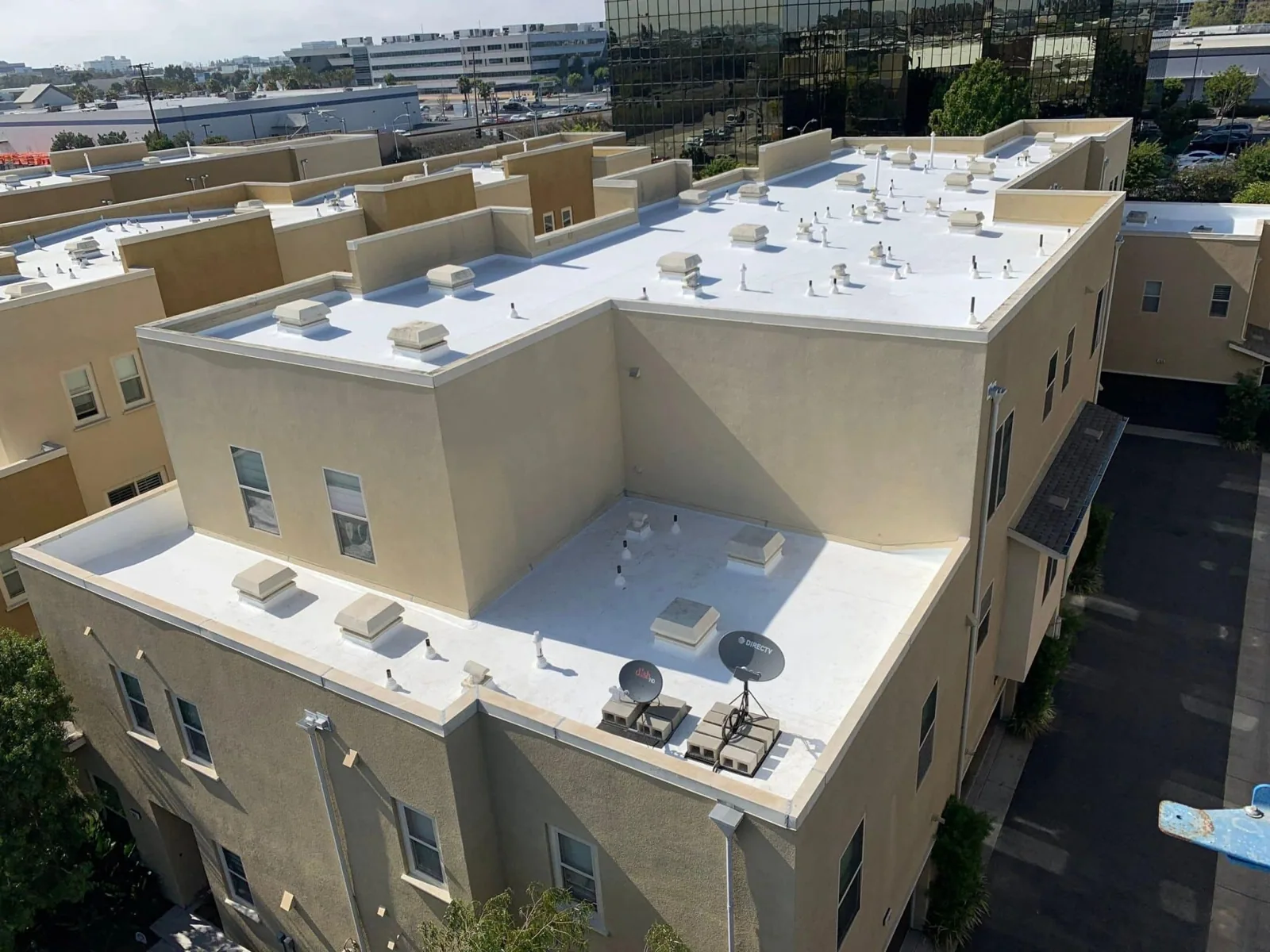
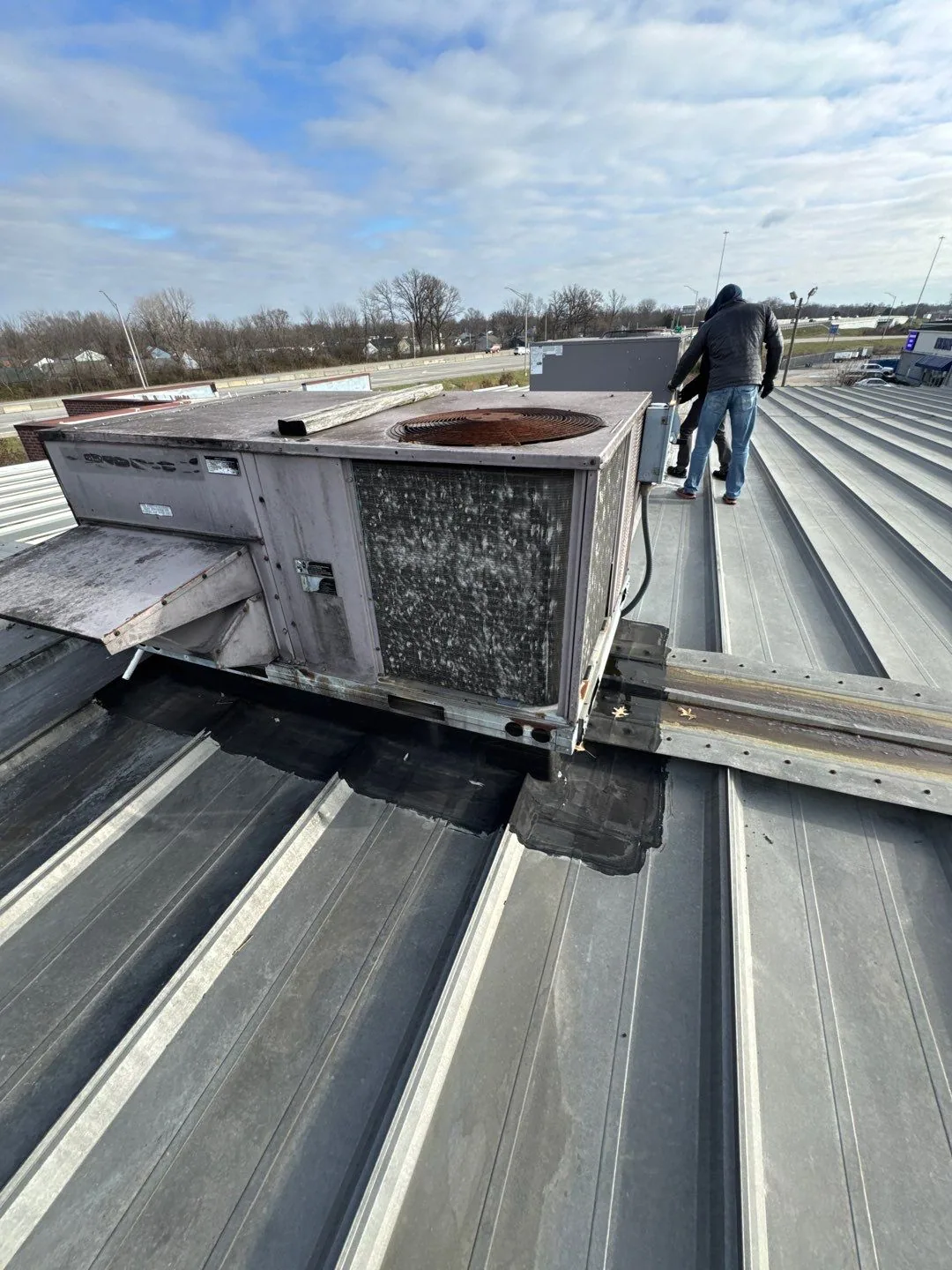
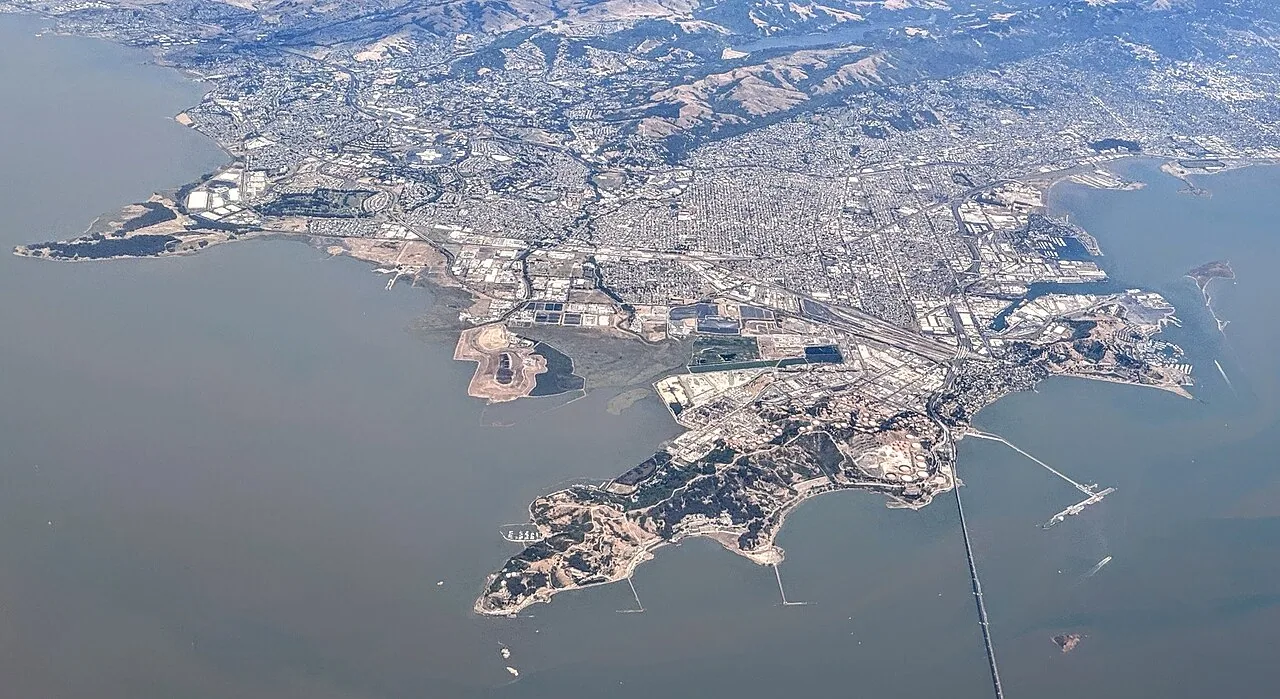
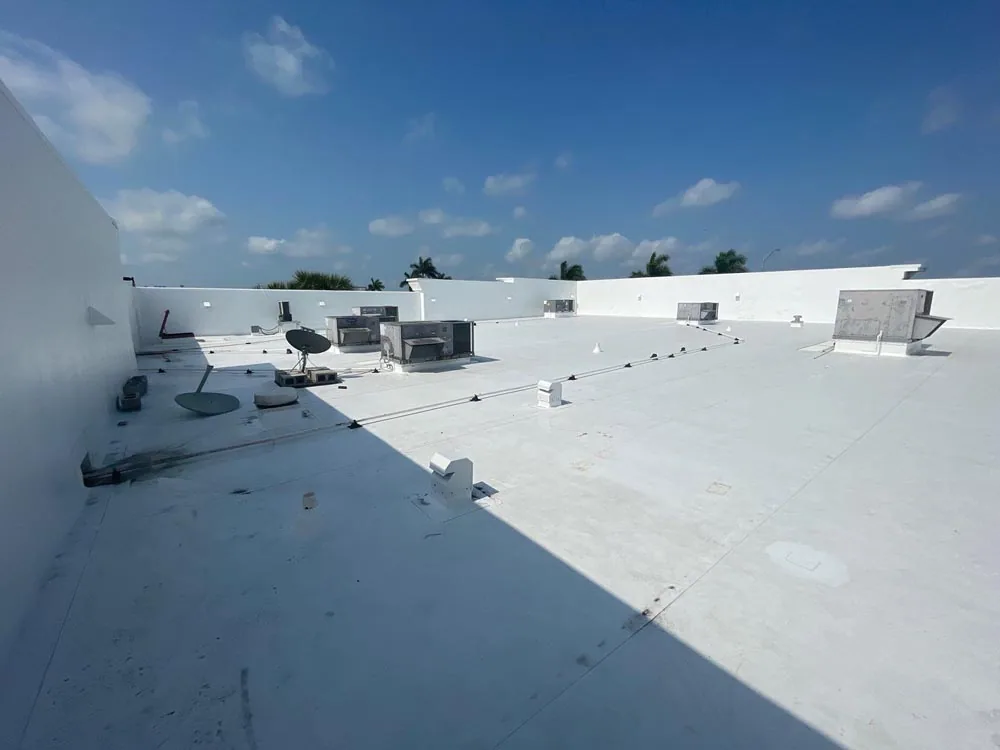
When flashing pulls loose under a rooftop equipment support on a North Richmond building, the first question is where the roofing repair ends and the mechanical work begins. We inspect, repair, restore and replace commercial roofs in Richmond, CA, and we start by finding exactly which connection failed. North Richmond is an unincorporated area nearly surrounded by Richmond, with the Richmond Parkway running through its western side between I-580 and I-80. The area mixes industrial buildings with farms and greenhouses, so roof types and access vary a lot from one property to the next. Before we flash anything, we work out when the equipment can be lifted or shut down and what prep the roof needs.
A leak at a support usually involves three things: the support itself, the equipment sitting on it, and the flashing that keeps water out. We check how the support is fastened, whether it has shifted, and what the surrounding membrane looks like. If the HVAC contractor needs to disconnect or raise a unit, that goes into the schedule. Our estimate includes temporary protection and the finished flashing, so you are not comparing a quick sealant job against a repair that actually holds.
Fix the support before new flashing
New flashing will not last on a support that has moved, rusted or come loose from the deck. We look at the base, the fasteners and the deck around it before deciding what to replace. Sometimes the fix is a reset and reflash; sometimes the support or curb itself has to be rebuilt. If the unit has to be lifted to get at the base, we coordinate that with the mechanical contractor before we cut the roof open.
Our rooftop curb and support repair lists what we will rebuild, what can stay and what the HVAC crew needs to do. We explain the order: equipment off or raised, support repaired, membrane prepped, flashing installed, equipment back in place. You can compare a reset of one support with a wider rebuild of several, each priced with its access, protection and finish work. That keeps you from paying for flashing on a base that will keep moving and tear it again within a season or two.
The membrane around the support has to be sound
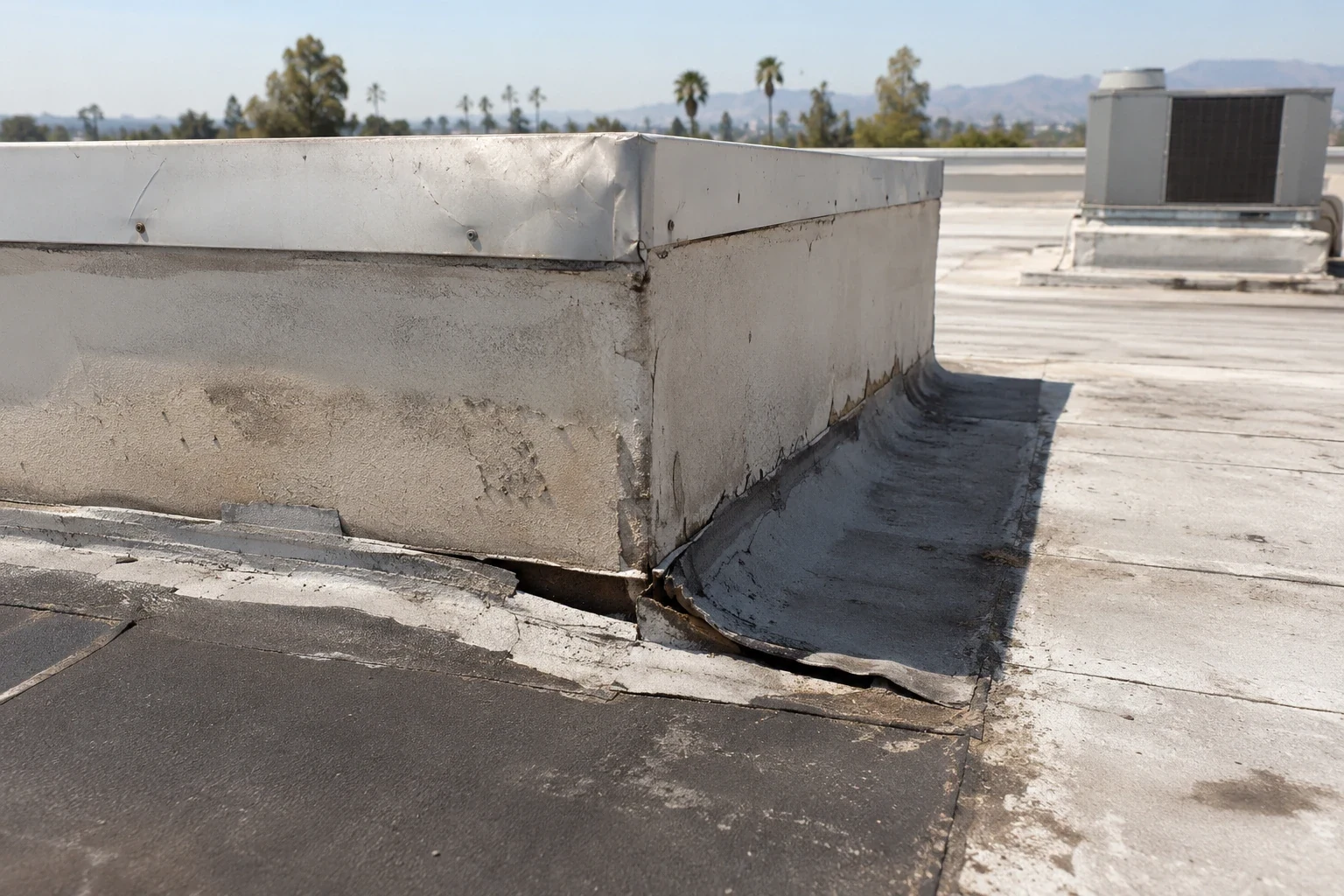
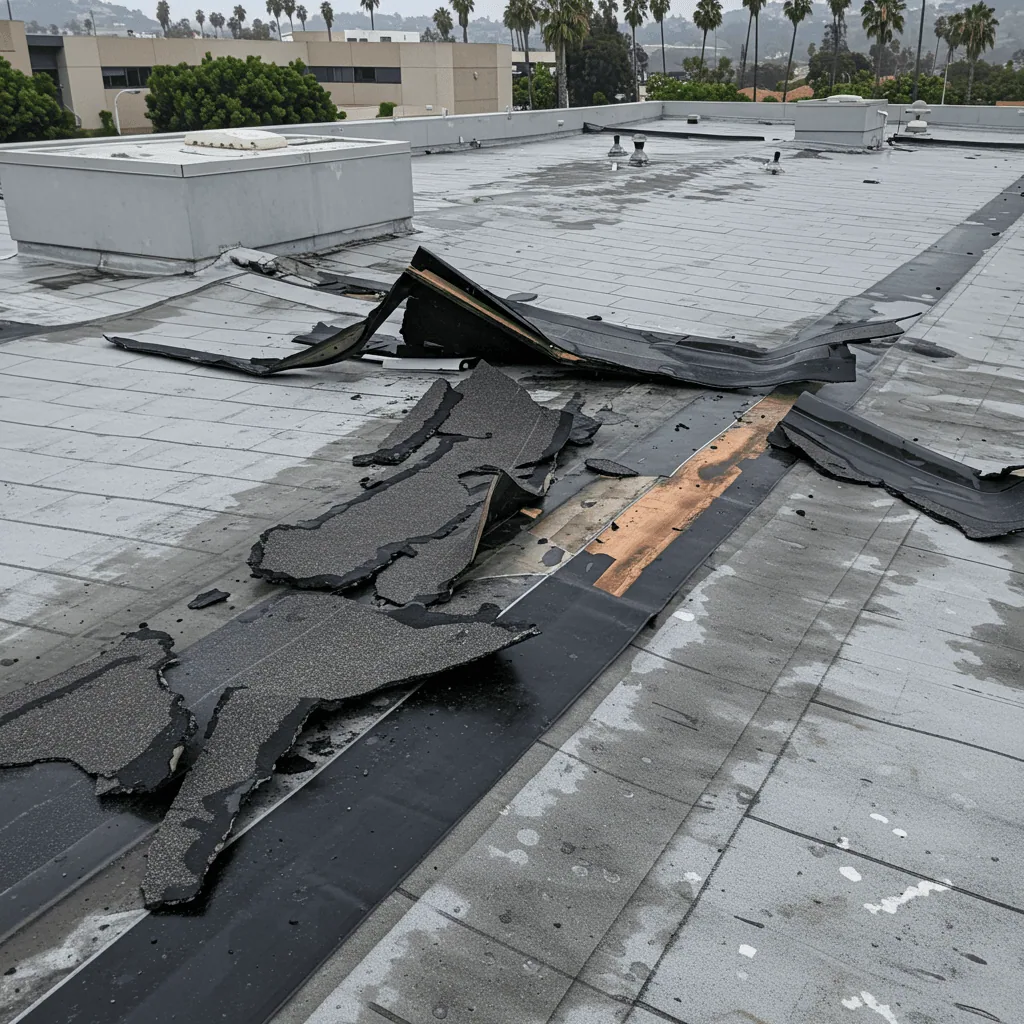
Flashing at a support has to bond to membrane that is still in good shape. We check how far any splits, loose seams or brittle areas extend from the support. If the nearby membrane is worn out, the repair grows past the visible tear. The detail we choose depends on the roof system and the support's shape, not on whatever flashing kit is on the truck.
Our penetration flashing repair shows how much membrane comes off around the support and what replaces it. We tell you where the existing roof is sound and where it is not. A small patch can be compared with a larger section of new membrane, both priced complete. You get a repair sized to the damage, not a narrow price that leaves out the membrane the new flashing needs to grip.
Wet insulation changes how much work is needed
Water that runs down a support leg or through a failed curb often wets the insulation for some distance around it. We check for soft spots, ponding and staining inside, and take cores where we need to confirm what is under the membrane we plan to keep. A soft area points us where to look, but it does not decide how much comes out. Wet or crushed insulation has to be replaced before new flashing goes on.
An infrared roof moisture scan can help map wet areas when conditions allow a reliable reading. We confirm suspect spots with cores before they change the scope and explain what the scan cannot show. That way, a local repair and a wider replacement are compared on real findings, and test cuts get patched during the same visit.
If one test could change the overall recommendation, we tell you what it is for and what it costs before the larger repair is approved. Each support is judged on its own, so a wet area at one unit does not automatically mean tearing out the roof at the next.
Equipment service and roofing need a set order
If the equipment crew reconnects or moves a unit after we have flashed the support, they can damage the new work. On a North Richmond job we schedule the mechanical shutdown, the support repair and the roofing as one sequence. What the building does inside decides how long a unit can be off and how much temporary protection the roof needs. The opening stays dried in until the equipment work is done, and the final flashing goes on last.
For roof work over an operating building, we compare repairing supports one at a time with grouping them into one shutdown. Separate visits keep each outage short but add setup. One combined visit saves mobilization but needs a longer shutdown window. We lay out both options with the full cost, so you pick a schedule that fits operations instead of one that ignores the mechanical side.
Other buildings have different supports
A building along the Inner Harbor and Cutting Boulevard corridor may have heavier equipment, different supports or another roof system entirely. We inspect it on its own before recommending the same parts. Supports that look alike can be fastened differently and need different repairs. Each building gets its own diagnosis and price, and a combined material order only follows once those match.
For a second property in Hilltop, we can look at sharing mobilization once access and repair methods at both sites are clear. Inspection, tear-out and protection stay itemized per building. Active leaks and failed supports come first, and optional coatings can wait. That lets you save on scheduling without forcing one building's repair onto the other.
Commercial Roofing Questions
Can new flashing fix a support that has shifted?
No. If the support has moved or come loose, it has to be reset or rebuilt first. We check the base, fasteners and deck, coordinate any equipment lift with the HVAC contractor, and then flash onto a stable support.
How do you decide how much roof to remove around a support?
We look at the condition of the membrane around it and take cores where we suspect wet insulation underneath. The repair size follows that damage, and the estimate includes the prep and finish work, not just the visible tear.
Does an infrared reading prove the insulation has to come out?
No. A scan shows likely wet areas, which we then confirm with core samples. Only confirmed wet or crushed material changes the scope, and we explain what the scan can miss.
Why should equipment work happen before the final flashing?
Because moving or reconnecting a unit afterward can tear the new flashing. We agree the mechanical work and temporary protection first, keep the roof dried in, then finish the flashing once the equipment is back in place.
Can several support repairs be done in one visit?
Often, yes, once each support has been inspected. We compare one combined shutdown with separate visits and keep each support's repair and protection listed on its own, so grouping the work does not hide differences between them.


Equipment leaks need the support fixed first