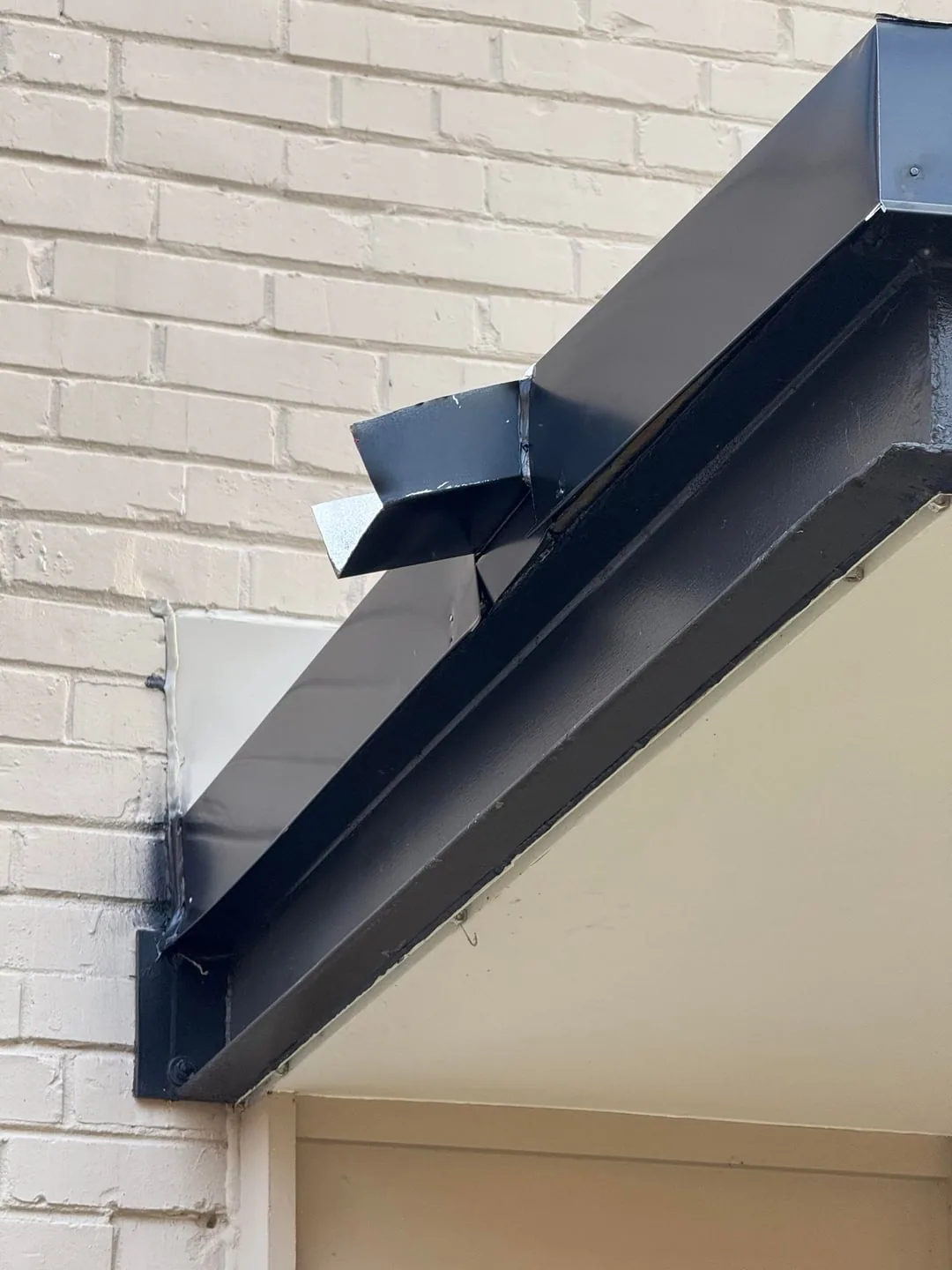
Roof Drains and Scuppers in Richmond, CA
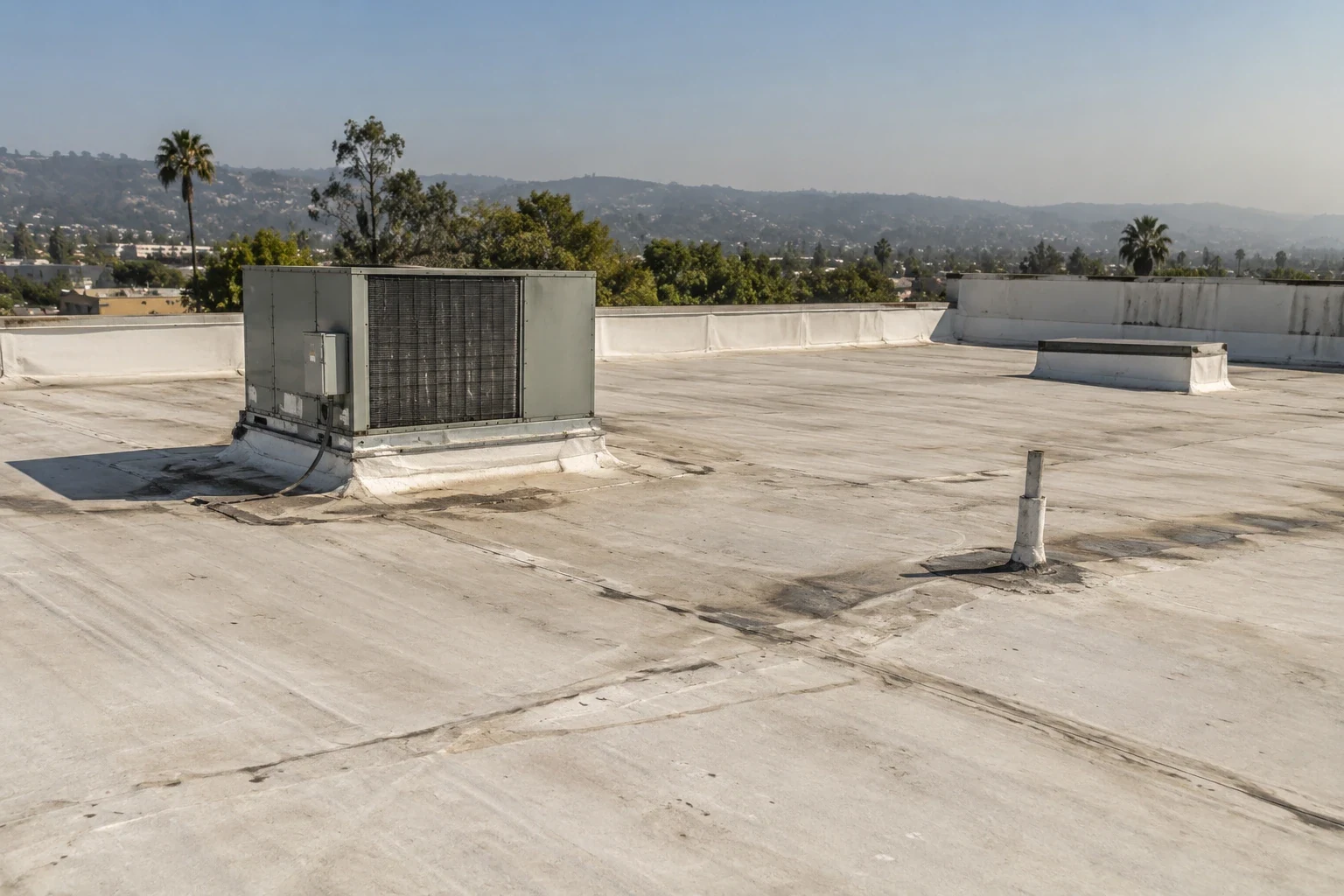
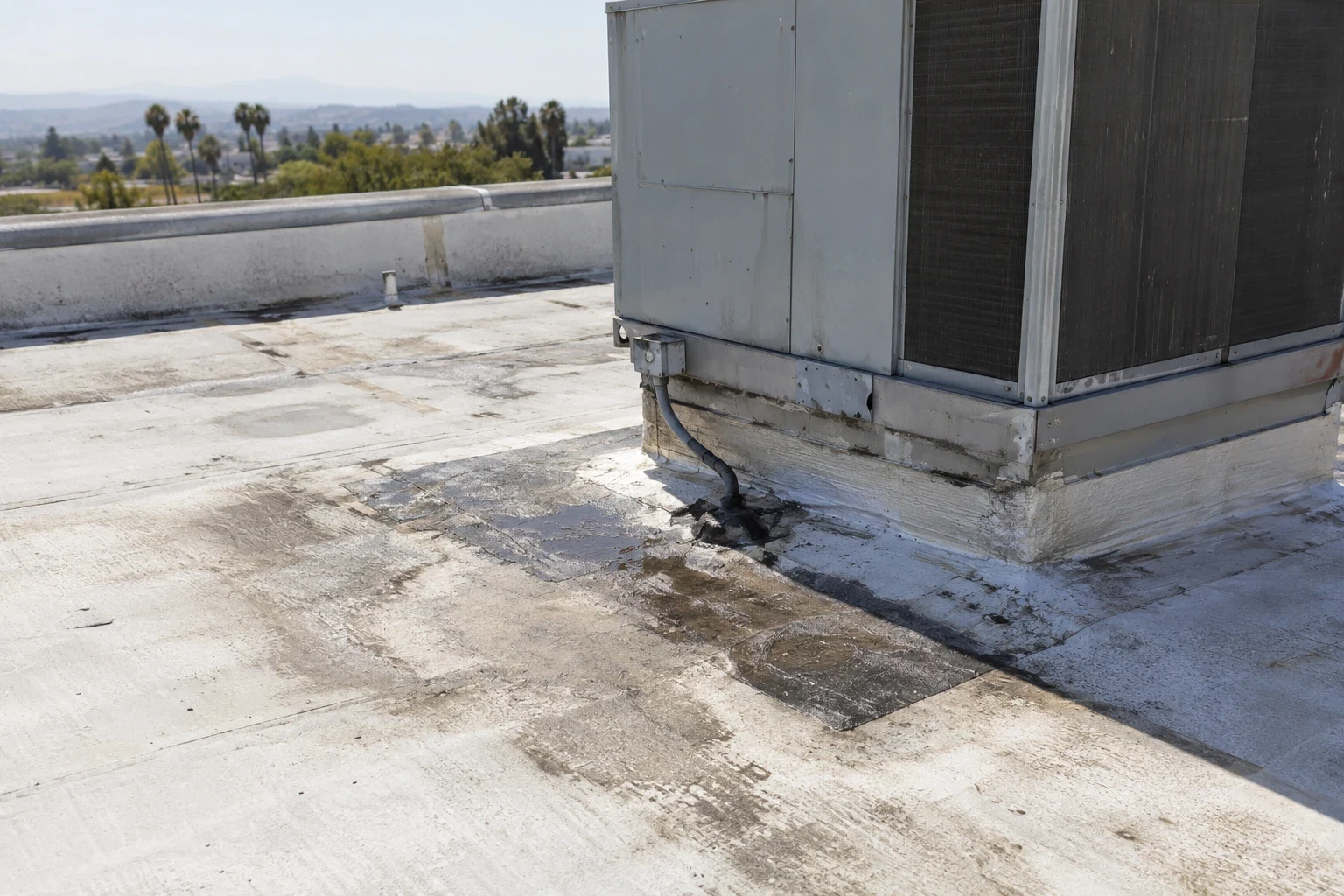
Water sitting around a drain on a Richmond grocery store roof can mean three different things: the drain is clogged, the membrane around it is torn, or the roof slopes the wrong way and water never reaches the drain in the first place. Clearing leaves out of the strainer only fixes the first one. So we look at the drain, the flashing around it, and the roof surface leading to it before recommending anything. On a grocery store roof, refrigeration units and condensate lines often sit close to drains, and they can block access or add their own water.
Around the Port of Richmond, we see plenty of drains and scuppers clogged with wind-blown debris, rusted clamping rings and cracked scupper boxes. We clear what's blocked, check the drain body and membrane seal, and note any spots where water still sits after the roof drains. If the problem looks like a blocked pipe below the roof or a drainage design issue, we tell you who should look at it rather than guess. You get a repair that matches what's actually wrong.
Cleaning versus repair
Clearing a drain is maintenance. Repairing it is different. A drain can flow freely and still leak if the clamping ring is loose, the membrane is split at the bowl, or the flashing has pulled away. Preventive roof maintenance keeps drains clear and catches those problems early, but a damaged drain seal or scupper needs a real repair.
Drains and scuppers come in many styles and ages, so we identify the drain body, clamping ring and membrane type before ordering parts. An older cast-iron drain may need a new ring and bolts, or a retrofit drain insert that seals inside the existing pipe. A scupper may need a new metal box and fresh flashing. If equipment or another trade's work blocks the drain, we note it and coordinate. A clean strainer doesn't prove the pipe below is clear or that the roof drains well overall.
Check the roof heights around each drain
Roof heights matter around drains. If you add insulation during a roof recover, the roof surface rises and the drain can end up sitting above the area around it. Water then ponds instead of draining. Scuppers can end up too high in the parapet wall for the same reason. Before a recover or new roof goes on, we measure drain and scupper heights against the new roof thickness and plan for drain extensions, tapered insulation or lowered scuppers where needed.
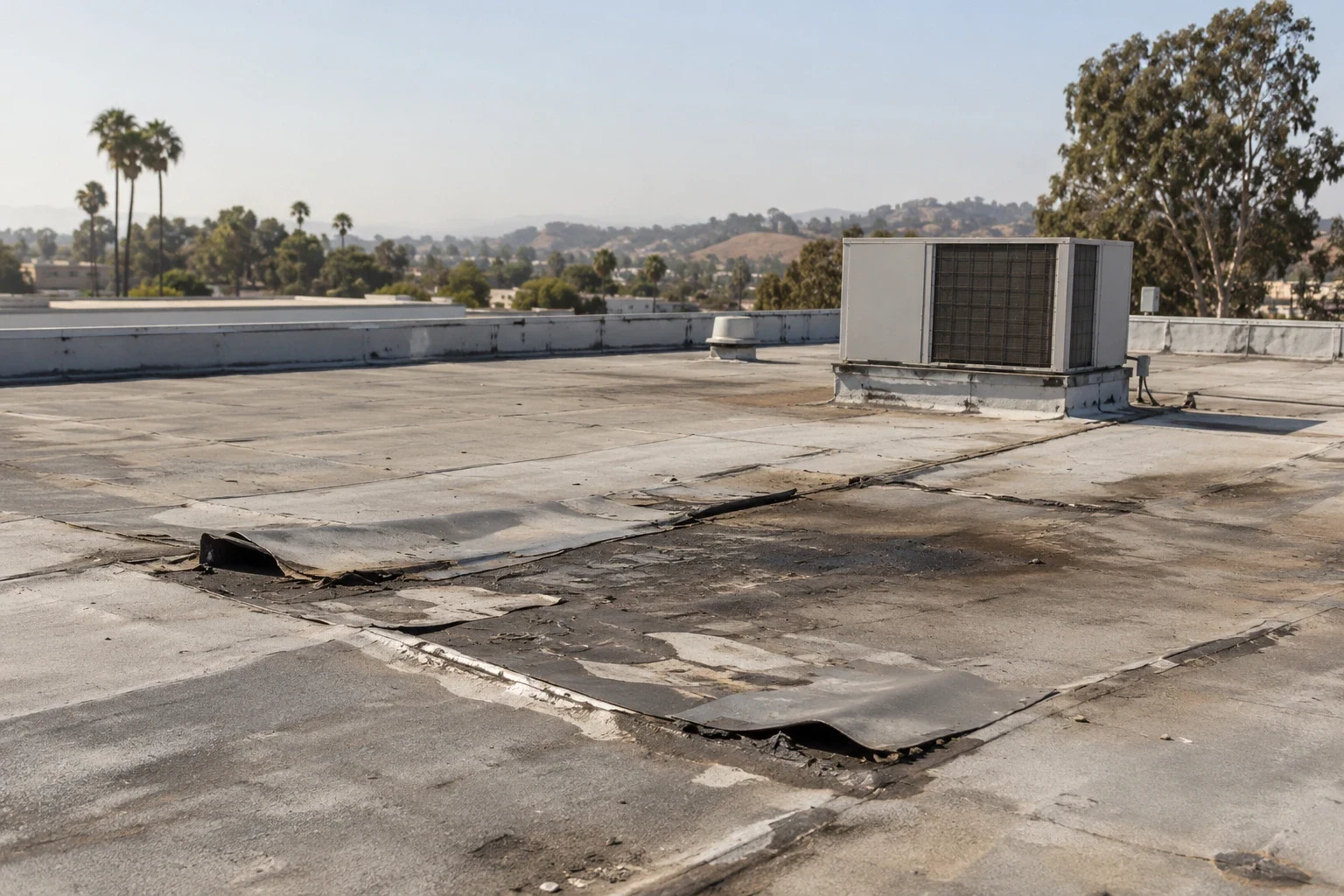
Standing water after the drains are clear tells us something about the roof shape. The deck may have sagged, insulation may have crushed, or the original roof may not have had enough slope. We note where water collects and how deep, and recommend tapered insulation or crickets to push water toward the drains. If the problem looks like undersized drains or overflow requirements, that's a question for a plumber or engineer, and we tell you so. We don't assume every ponding problem has the same cause.
A drain repair covers the drain bowl or scupper, the membrane around it, and the path the water takes after it leaves the roof. We check the clamping ring or flange, the roof field around the drain, and the leader or downspout. If the drain is clear but water still collects, the roof slope or a blockage downstream is the issue, and we treat it separately. The estimate spells out which parts we're replacing and how we'll test the finished drain.
Replace wet material around the drain
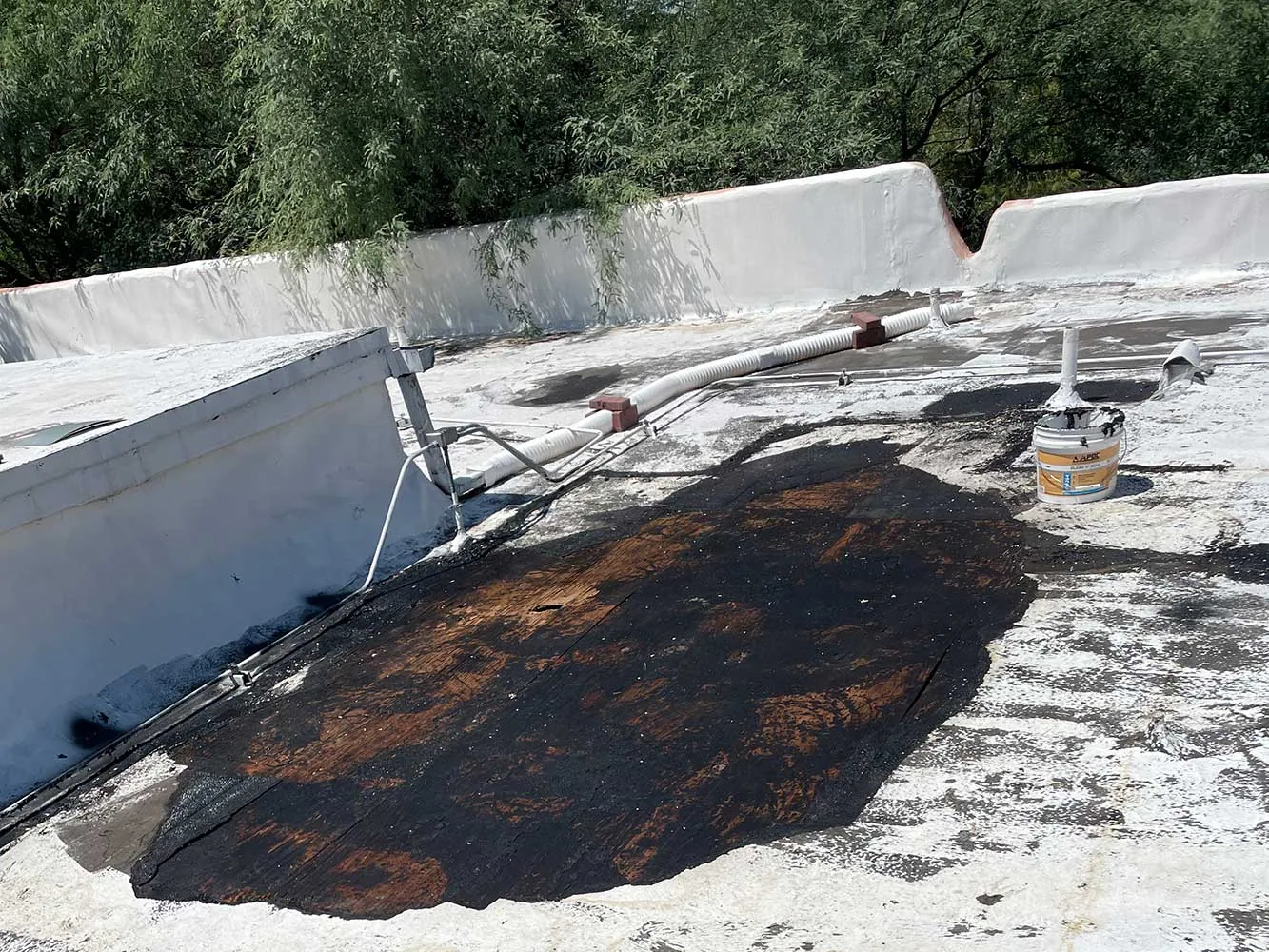
A drain that has leaked for a while usually leaves wet insulation around it, sometimes well beyond the visible damage. We cut cores or probe around the drain to see how far it goes. Wet material gets cut out and replaced with new insulation, often with a tapered drain sump that helps water flow into the drain. Removal, disposal and new insulation are listed in the estimate.
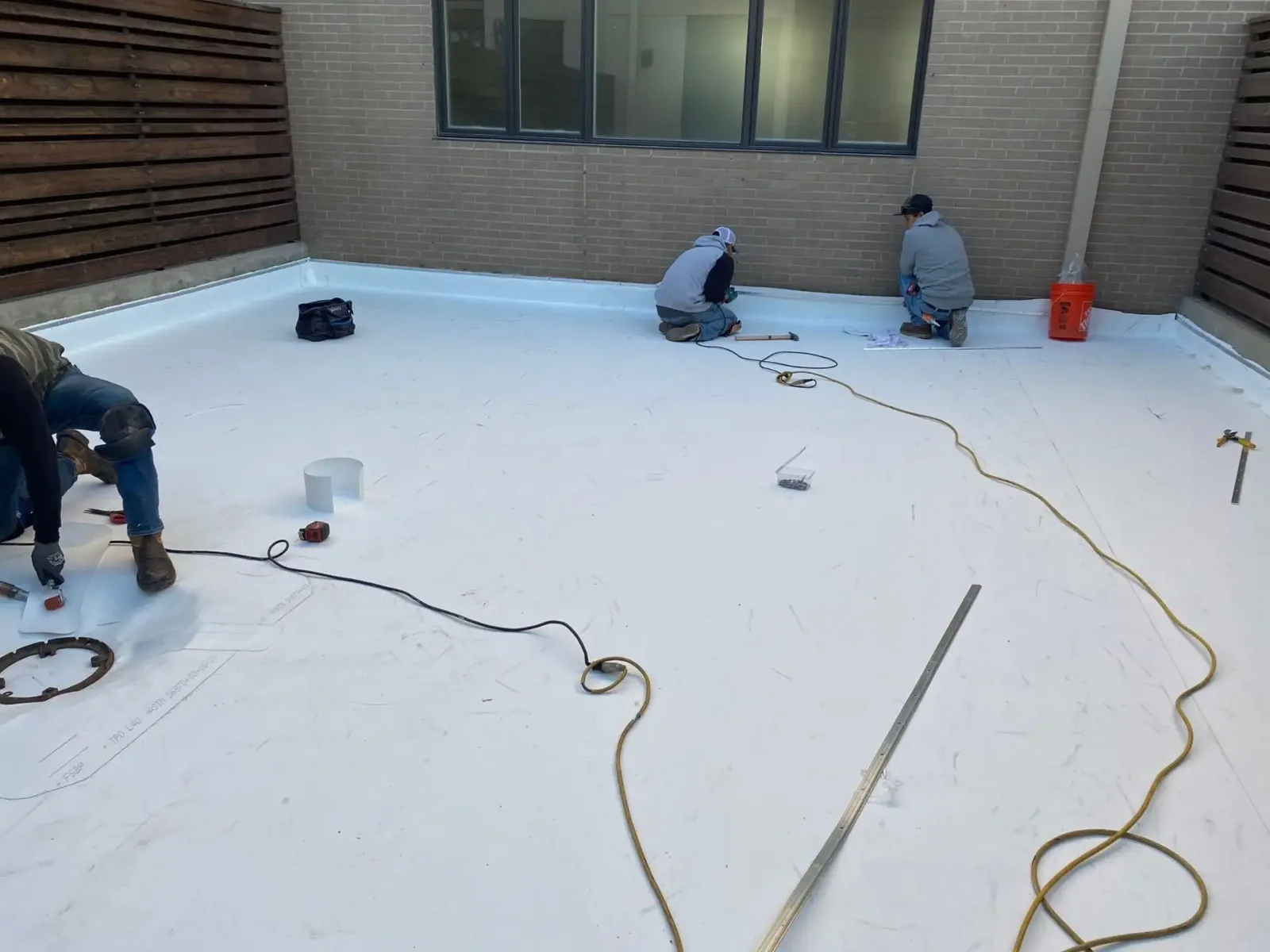
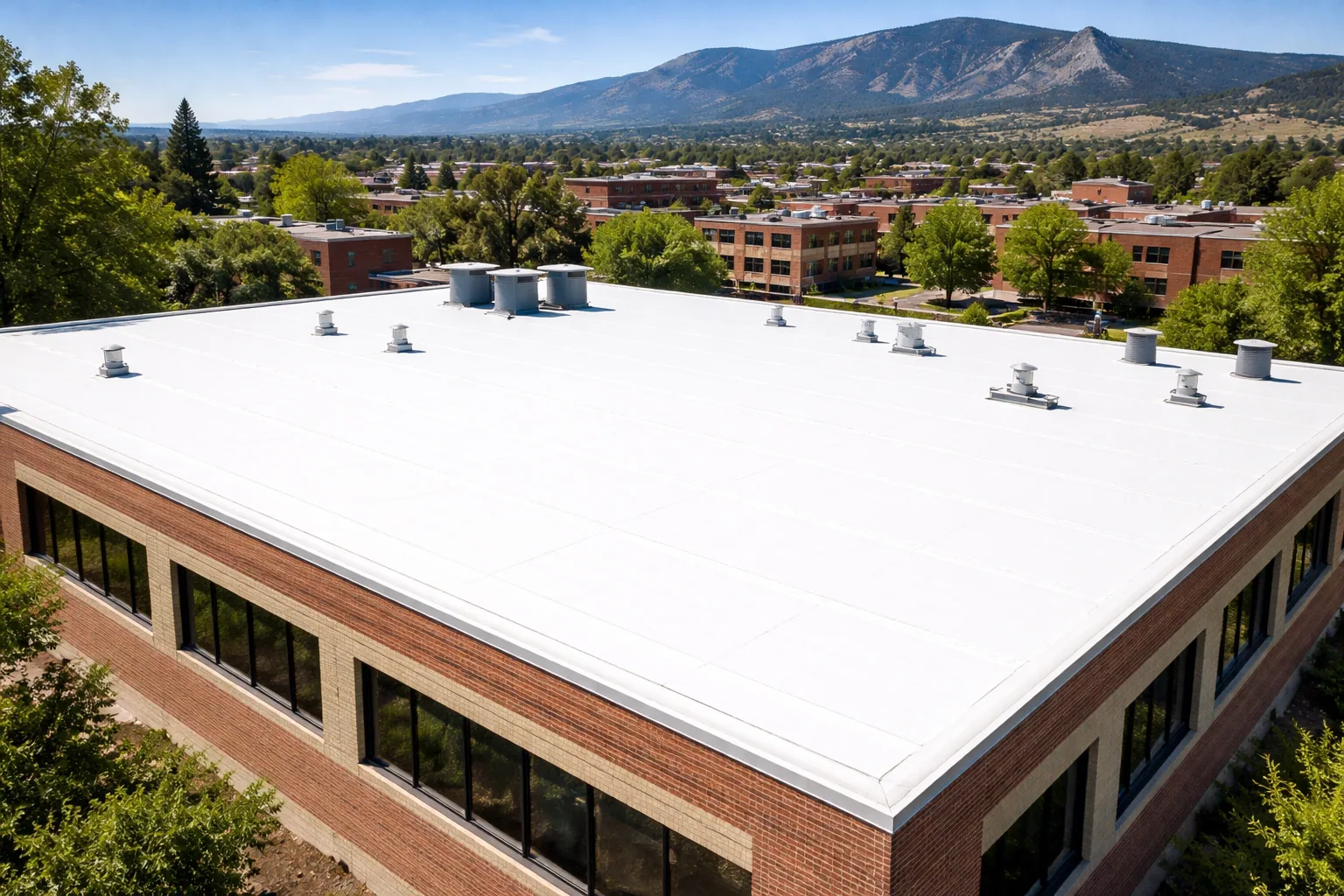
On a PVC roof, we heat-weld a new membrane target and flashing around the drain and use a compatible clamping ring. If we find more wet insulation or deck damage once the area is open, we stop, show you photos and get approval before going further, keeping the opening watertight in the meantime. New membrane over wet insulation just traps the problem, so we don't take shortcuts there. When the project has its own specifications, those govern which drain parts and details we use, not the size of the hole.
Plan access and nearby equipment
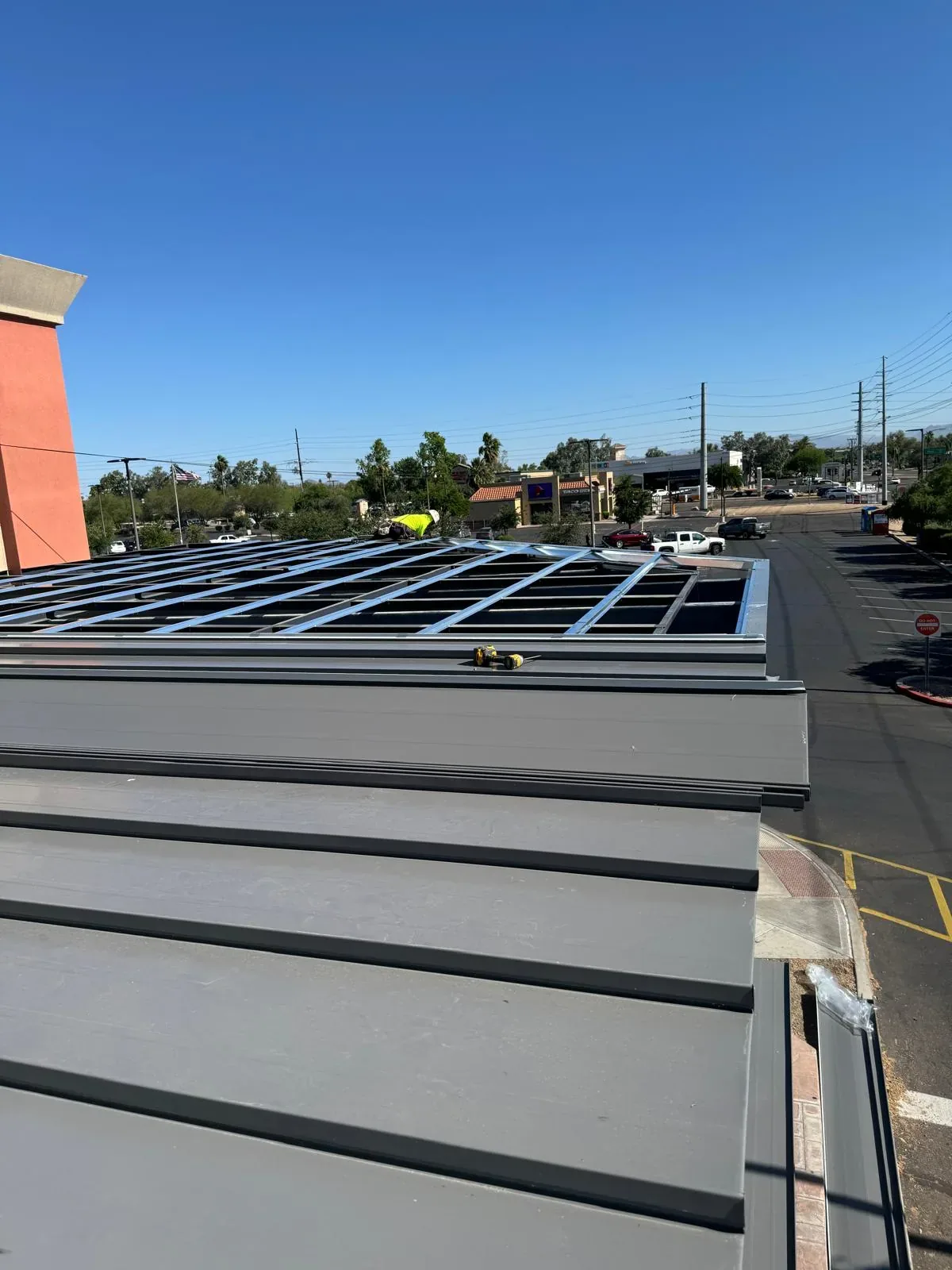
Some drains sit right next to equipment or under piping, and another trade may need to move something before we can reach the drain. Near Marina Bay's open waterfront, wind and salt air can wear down exposed metal parts faster, so we look closely at clamping rings, bolts and scupper boxes. We don't assume damage just because a building is near the water; we check. Before work starts, we confirm roof access, which interior areas may be affected, and any work-hour limits with your building contact.
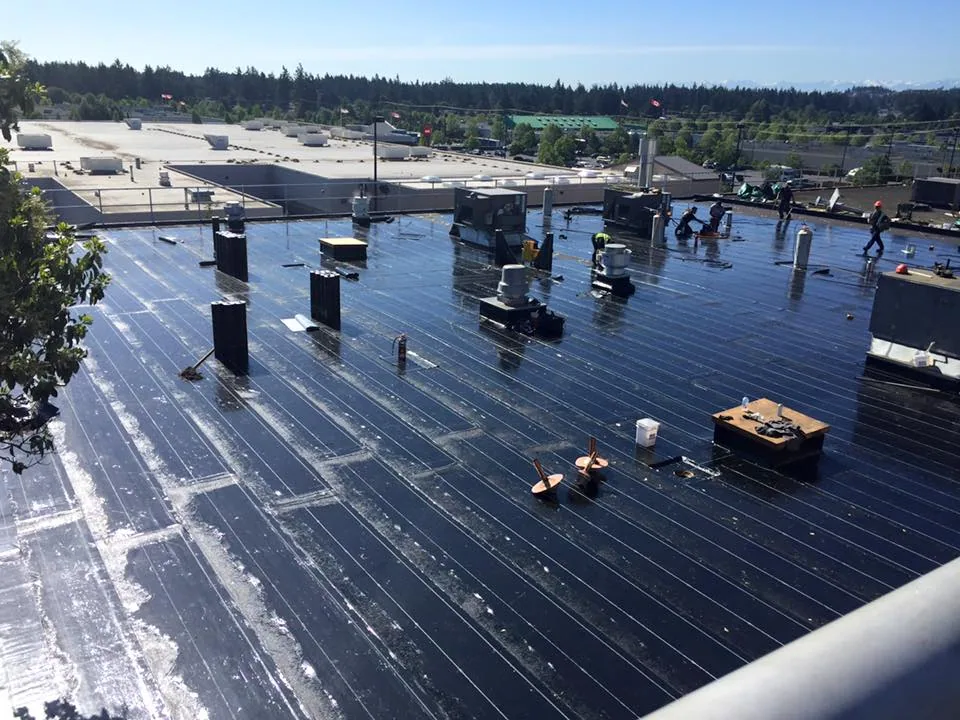
For a commercial roof repair at a drain, the schedule includes any equipment moves, the parts we need and the prep work. Working in short windows can add setup time, and we include that in the price. Parts on site don't help if the drain is still blocked by a unit, so we plan the sequence with everyone involved. If the pipe below the roof needs work, that's a plumbing job, and we coordinate it with your plumber so the roof is closed up as soon as the drain is ready.
Choose materials and keep records
On a TPO roof, the drain flashing uses TPO-compatible materials and heat-welded seams, with the same insulation repairs as any other system. For drain and scupper work around the Port of Richmond and across the area, we document each job with photos of the drain before and after, the replaced insulation and the finished flashing. Anything outside our work, such as a blocked pipe below the roof, is noted separately.
We test finished drains with water where it's safe and practical, so you know they flow and seal. If your roof has a manufacturer warranty, check its repair terms before work begins; some require approved parts or contractors. We can help you confirm that. Keeping a record of drain repairs makes it easier to spot the next problem. If water shows up near a drain later, you'll know whether it's the same drain or something new. Most roofs benefit from having drains checked at least twice a year, especially in fall before the rainy season, when leaves and debris tend to pile up.
Commercial Roofing Questions
If the drain is cleared, is it fixed?
Not necessarily. Clearing restores flow, but a loose clamping ring, split membrane or failed flashing can still let water in around the drain. Those need a proper repair.
What changes for drains during a roof recover?
Added insulation raises the roof, so drains can end up too high and scuppers can sit above the new surface. We measure heights and plan drain extensions, tapered insulation or lowered scuppers before the recover.
Does water ponding near a drain mean the drains are too small?
Not always. Ponding is often caused by a sagging deck, crushed insulation or poor slope. If drain size or overflow capacity is in question, a plumber or engineer should review it.
What records do we get after drain or scupper work?
Before-and-after photos, the parts and materials installed, repaired insulation areas, any water test results, and notes on work outside our scope like pipe problems below the roof.
Tell us where the water is sitting