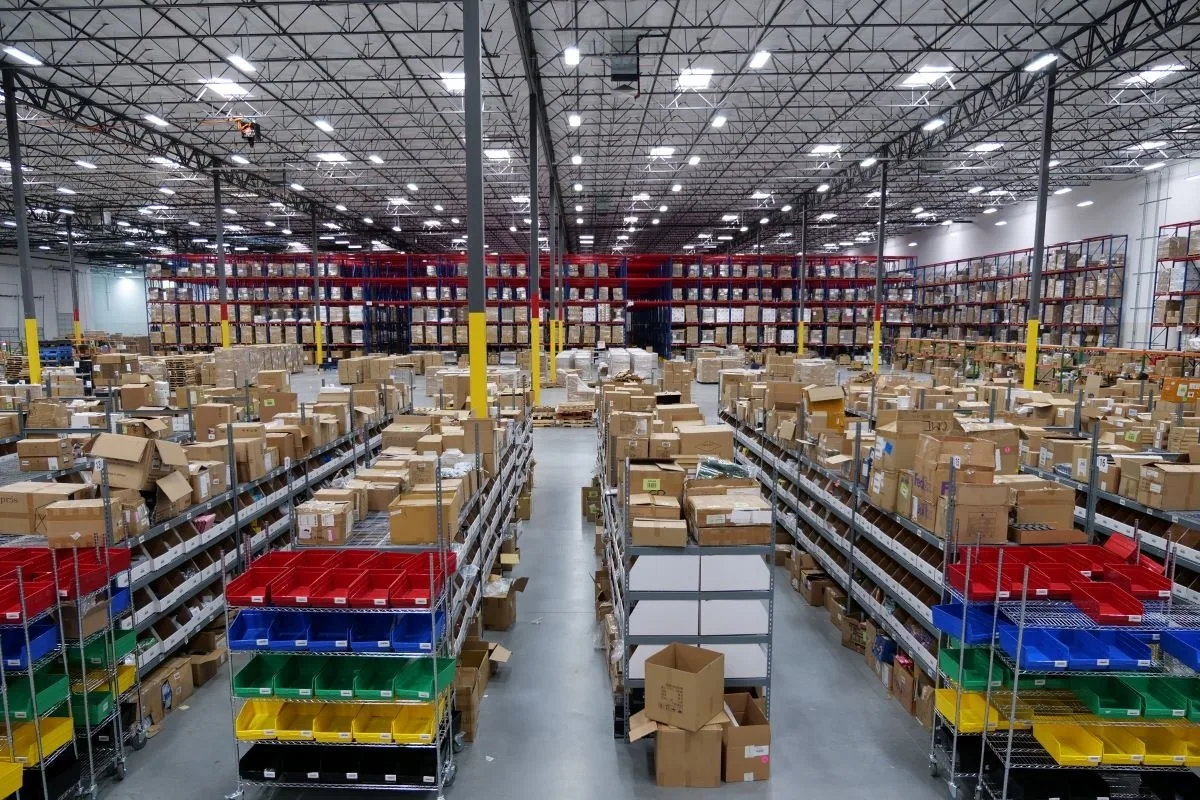
Big-Box Retail Roofing in Richmond, CA
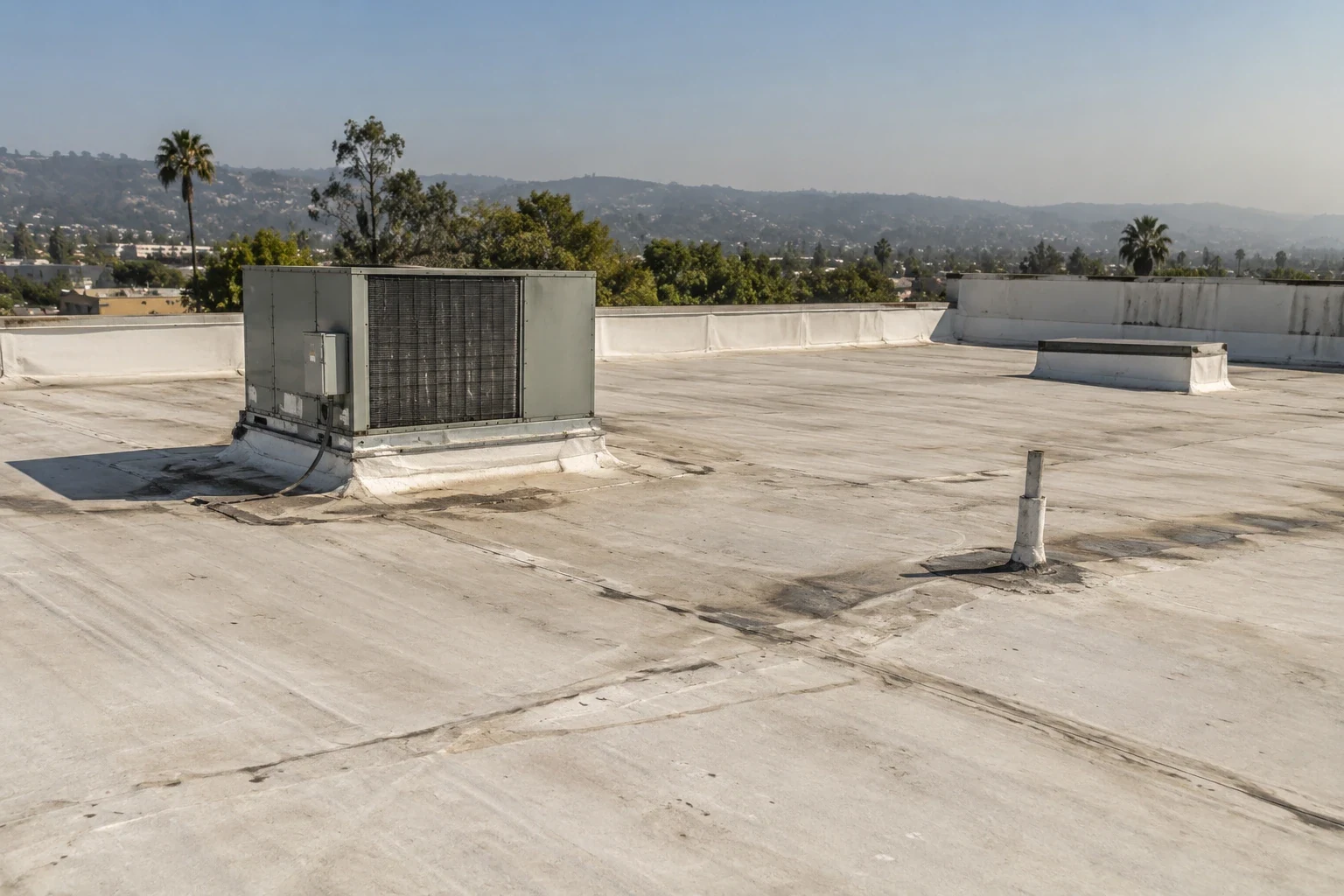
Big-box roofs take a lot of foot traffic. HVAC technicians cross the same path to the same units every month, carrying tools and dropping screws, and over time that path collects punctures, scuffs and small tears. A hole in the membrane along a service route looks small, but the membrane around it is often scraped thin or dirty, and the insulation below may already be wet. Before we can make a permanent repair, we have to find where the membrane is still sound enough to bond to and whether the insulation can stay. Then we work out what sits below that spot in the store, whether it is merchandise, a stockroom or a customer aisle.
Store management decides on protection and access inside the building, and the work order should spell out both roof access and protection for the sales floor. Send us the damaged areas, any roof drawings and the store's operating hours. We inspect the roof before recommending a repair, and store staff review which aisles and stock areas could be affected. The order of work follows this building and what is actually under the membrane. You get a repair price tied to the real problem, not a flat protection allowance applied to the whole store.
Repairing punctures so they stay sealed
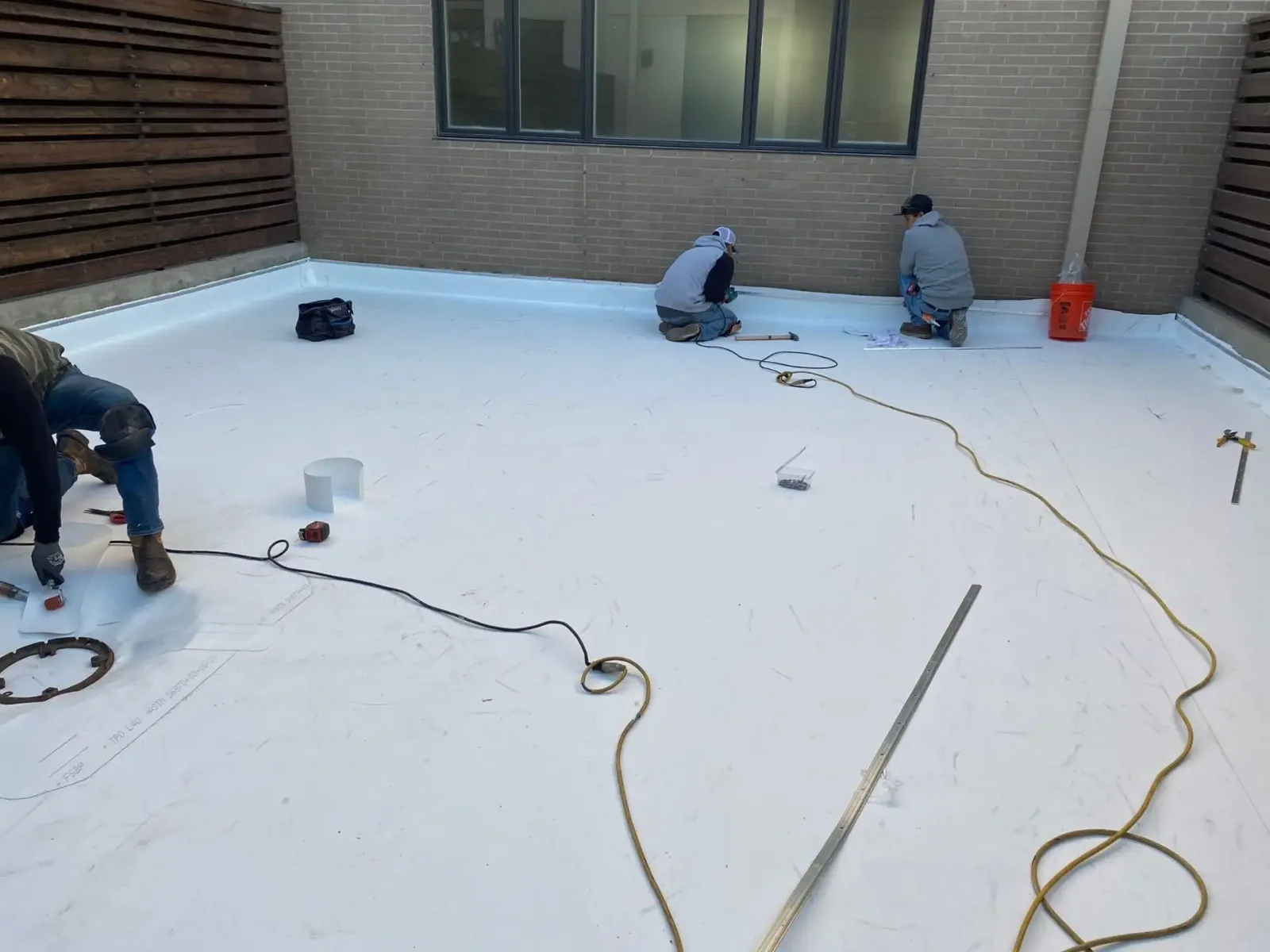
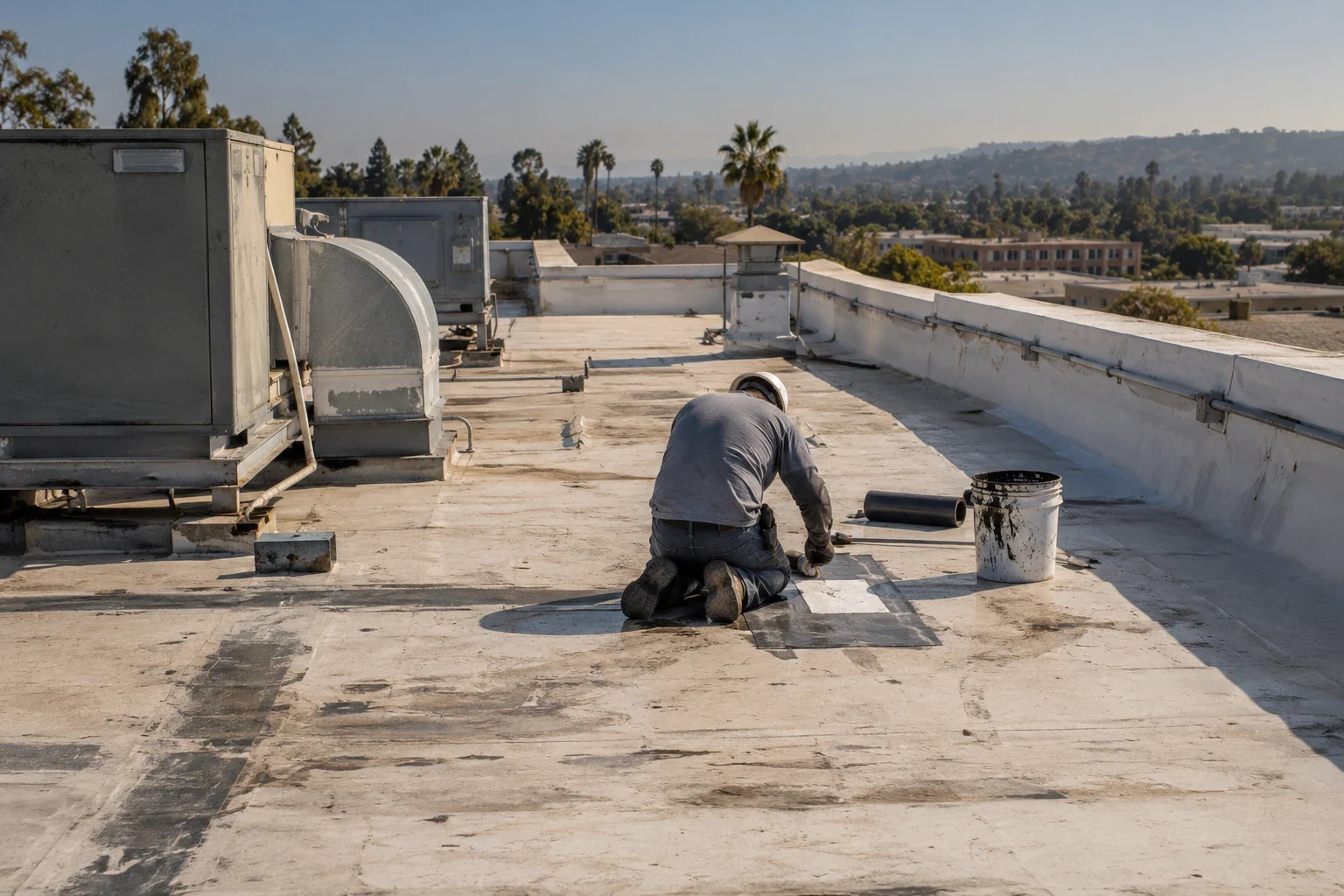
A puncture is rarely just a clean hole. The membrane around it is often torn, scuffed or contaminated with dirt and oil from foot traffic. Membrane puncture repair means cutting back to clean, sound membrane and sealing a patch to it with the right method. TPO and PVC patches are heat-welded; EPDM and modified bitumen each have their own methods. We mark how far the repair needs to reach and price it to that edge, so a small patch over the hole does not leave damaged membrane around it still letting water in.
The insulation under a puncture may also be wet. Insulation and cover board repair replaces what has been soaked or crushed, after a core cut or opening confirms how far the damage goes. If a deck or structural issue turns up, it goes to an engineer. We explain whether the finding keeps the repair local or makes it larger. The hole you see on the surface cannot tell you how the whole roof is built. Any opening we make to check the insulation gets patched, and that is in the price.
Protecting the sales floor and stockrooms
Water and debris can reach more of the store than the spot where the leak was first reported. Reroofing occupied buildings starts with showing store staff how big each opening will be, where debris will come down and how material reaches the roof. Store management sets the protection and access rules for the sales floor. Equipment and electrical work stays with the trades who handle it. Patching test openings is part of our price. The bid should show where that work happens instead of assuming the roof area alone covers what the store needs below.
If we find more wet insulation, the protection area or delivery route may need to change before we open more roof. We explain the larger scope and show which areas of the store are affected. Temporary roofing may stay in place while an equipment or design issue gets resolved. Before tear-off starts, the store tells us which merchandise areas and customer aisles need to be covered or closed. Electricians handle any live wiring at rooftop units. Temporary patches are recorded separately from finished puncture repairs, so everyone knows which areas are still waiting on something.
Walkway pads along the service routes
Walkway pads protect the membrane along the paths HVAC techs use most. They need to be compatible with the roof membrane and installed the way the manufacturer requires, usually welded or adhered. A pad does not fix a puncture underneath it, so we repair the damaged membrane first and then install pads along the route. Mechanical contractors decide how they need to reach their equipment. The estimate lists the pads as their own line, with the material and attachment method, so you can see what fixes the leak and what prevents the next one.
Service routes can also change if a thicker new roof affects clearances around units or curbs. Rooftop equipment curbs and supports are part of that review. Any support or load questions go to an engineer. We explain the curb and equipment items before a larger roofing option is treated as ready. A roof that ends beside a curb nobody can reach leaves a weak spot. Keeping the membrane, the curb flashing and the service access separate in the scope lets you compare complete options for your building.
Confirming what is under the membrane
The roof around a puncture may look fine, but that does not mean the insulation under it is dry. Infrared scans can point to wet areas, but the readings depend on how the roof is built and the weather during the scan. Where the decision to keep insulation depends on it, we confirm with core cuts. Each test spot gets patched, and store staff know what sits below. We explain how the findings change the size of the repair. A scan helps decide where to look; it does not replace actually checking.
Final photos show the repaired areas, the insulation condition and where each repair ends. Equipment or design items still open are listed separately from temporary patches. The next service visit can go straight to the repaired spots and the walkway pads, and any future roof comparison starts with an honest list of what is still unknown. You get a record that separates finished roof work from anything still waiting on another trade. That makes future budgets clearer and avoids paying for another round of patches along the same service path while the real problem stays unfixed.
Big-box retail roofing in Richmond
For big-box retail roofing in Downtown Richmond and the Civic Center area, roof access and protection for the sales floor belong in the work order from the start. Send us your roof drawings and the name of the store contact who approves access. We inspect the membrane before choosing a repair method, and store management reviews the protection plan for each work area. The price follows this building's actual insulation and repair needs. Each visit is tied to specific roof work, with material access and the patching of test openings listed next to the repair.
Other retail buildings have similar roofs with different needs below. A shopping center roof means working over several tenants and storefronts. A grocery store roof carries heavy refrigeration equipment and cannot let water reach food areas. We keep the big-box repairs and walkway layout documented on their own, because a similar-looking roof elsewhere does not mean the same insulation or protection needs. Future comparisons should start from the repairs we actually made here, with any open items tied to their specific locations.
Commercial Roofing Questions
Will a walkway pad seal a puncture underneath it?
No. We repair the damaged membrane first with the right method for the roof. The pad goes on afterward to protect the area from future foot traffic.
What makes a puncture repair bigger than the hole?
Torn or dirty membrane around it and any wet insulation underneath. We cut back to sound material and confirm the insulation condition before setting the repair size.
Which parts of the store need protection during roof work?
Any area under an opening, which can include stockrooms and aisles beyond where the leak showed up. Store staff review each work area with us before tear-off begins.
What should the next service crew look for?
Photos and notes showing where the repairs and walkway pads are, plus a list of any temporary patches and open items for other trades.




Tell us about the store roof and service paths