Local weather advisory
Coastal Flood Advisory: Commercial Roof Help in Richmond
The National Weather Service has issued a coastal flood advisory covering Richmond. Heavy rain and drainage loading can expose roof leaks, blocked drains, and ponding water. This is a weather exposure advisory; it does not establish damage to a specific roof.
Do not access a roof during hazardous weather. Protect people first, avoid water near electrical equipment, and request roofing help when conditions permit.
National Weather Service · Updated Oct 28, 2026, 7:20 AM UTC
Wind Damage Roof Repair in Richmond, CA
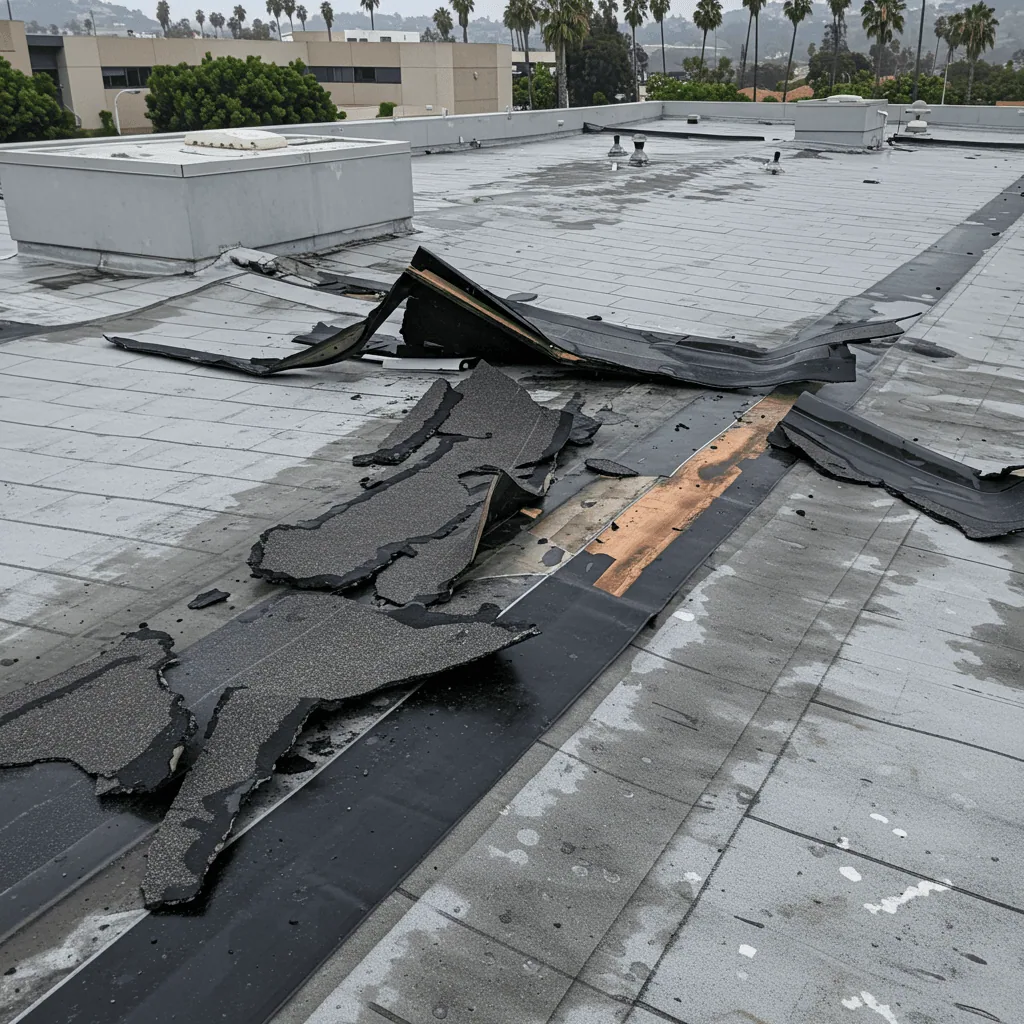
When wind lifts the edge of a warehouse roof, there is usually torn membrane and a fastening problem in the same spot. Wind damage repair starts by looking at that damage closely before deciding how far the permanent repair needs to go. We check the lifted edge, the wood or metal it was fastened to and what is needed to keep water out in the meantime. What the owner heard about the storm is kept separate from what we actually find on the roof. If the cause is still in question, that goes to the insurer or adjuster. Our job is to close the opening with sound material and an edge that will hold.
At the Port of Richmond, we report on how the edge was fastened separately from where water got in. The site manager confirms roof access and any material-handling rules before we inspect. On warehouse roofs, we mark the damage against a corner, drain or hatch so it can be found again. Dated photos help show what changed, as long as they show the same area. We compare them with the roof as it stands and check the membrane and edge on either side. The repair follows the damage we find on this building, not assumptions about waterfront roofs in general.
Inspect the lifted edge
When edge metal lifts, the fasteners, the wood nailer behind it and the membrane attachment all need checking. The lifted section shows where the edge let go. It does not prove the rest of the edge is fastened to solid wood. We check what we can reach and note how the damaged section meets the roof that stays. A screw pulled out of rotted wood needs a different fix than one pulled from sound blocking. The owner should know which case applies before choosing a repair. Screwing the loose strip back down without fixing what it is fastened to will not last.
Wind often causes flashing failure at the edge as well, and that needs its own repair. A wall return, corner or top termination can stay open after the tear in the field is patched. We check those details where they could explain the leak. Old coatings or patches may change how new material is prepared. The estimate says which joint each repair fixes and how it ties into the existing roof, so the owner pays for a complete repair instead of just the most obvious loose piece.
Find sound material to tie into
A torn sheet may need to be cut back past the visible tear if the membrane around it is too brittle or loose to hold a new seam. We check the surface and the insulation within the repair area. Wet or crushed insulation can push the repair wider. Where that decides what stays, we take a core or open a test area. The owner sees what we confirmed and what is still unknown. A marked-up roof plan or photo explains how big the repair is, instead of a neat rectangle on paper that does not reflect the actual roof.
A membrane puncture near the wind damage stays on the list as its own repair if it needs a separate detail. Each opening can sit over different conditions and need different prep. We record each one and explain any link we can actually see. Debris nearby helps guide the inspection but does not prove the cause. The repair size follows what it takes to reach sound material at each opening. Weak spots elsewhere on the roof are listed separately, so the owner can decide on them later.
A lifted edge is often just the visible part of a longer run of poor attachment. We check the metal face, the cleat, the fastener line and the wood behind it, then extend the repair far enough for the new edge to hold. Even where the rest of the roof is sound, the new edge needs a secure tie-in to it. The estimate includes that tie-in, not just the loose piece you can see from the ground.
Get the roof sealed quickly
An opening above occupied space usually needs a temporary seal right away. We talk with the building manager about the damage and how we will get on the roof before choosing the temporary fix. The method has to suit the membrane and how exposed the area is. If equipment has moved or the structure is in question, the right specialist looks at it. The owner should know what the temporary repair does and what permanent work is still needed. A temporary patch is not a finished repair just because the hole is no longer visible.
Emergency roof repair after a windstorm should note where the opening is and what happens next. A building near Point Richmond still needs its own access and material-handling approval. For wind damage, we report on the edge fastening and the water entry separately. Permission to inspect does not mean approval to use a lift or tear off damaged material. We sort out who handles what before scheduling, so the temporary seal holds while the owner arranges the permanent edge repair.
Fix the support before closing up
The new edge needs solid wood or metal to fasten to. Rotted nailers or damaged insulation may have to be replaced before the new edge metal or membrane goes on. We photograph and measure that damage and send a change for approval. If the roof height changes, it can affect drainage and the flashing at nearby walls and equipment, so we check those before ordering parts. The temporary seal stays in place while the owner decides. Any added work comes with a clear reason and shows how it changes the finished repair.
Edge metal and coping on the damaged section has to be fastened to sound blocking and lapped properly into the roof and wall flashing. Fastener spacing and joint details depend on the actual roof and the project's requirements. We describe the blocking repair alongside the new edge so the scope is complete. If the inspection shows the same weak detail all around the building, replacing the full perimeter may be worth pricing. That option still lists exactly what it covers, so the owner can compare it against a smaller repair.
Records of the finished repair
The closeout ties the original damage to the blocking repairs and the new edge. Photos taken during tear-off show work that the finished edge now hides. Anything outside the repair, including work another trade still has to finish, is listed separately. The owner gets location-specific records that make later comparisons easy. A dry ceiling after the next storm is a good sign, but the closeout also lists exactly what was installed. Any warranty question goes through the manufacturer's own review, separate from our description of the new edge.
If a new leak appears, we inspect the roof as it stands then. Later equipment work or a new opening can affect the edge after our repair. We compare what we find with our dated records before blaming the earlier work. Storm dates and fault questions stay with their own paperwork. The owner can use the repair records to find what changed and plan the next step, with our findings, the completed work and any open questions about cause kept clearly apart.
Commercial Roofing Questions
Does a lifted edge prove what caused the damage?
No. We record where it lifted and its condition. Storm timing and insurance questions are reviewed separately.
Can you just screw the edge back down?
Only if the wood behind it is solid. If the blocking is rotted, it has to be replaced or the edge will lift again.
What if tear-off uncovers more damage?
We measure it, photograph it and send a change for approval. The temporary seal stays in place while you decide.
Is a temporary patch the same as a finished repair?
No. It keeps water out for now. We list the blocking and edge work still needed for a permanent repair.
What records help with the next inspection?
Dated photos of the damage, the blocking repairs and the finished edge, plus a list of anything left outside the repair.



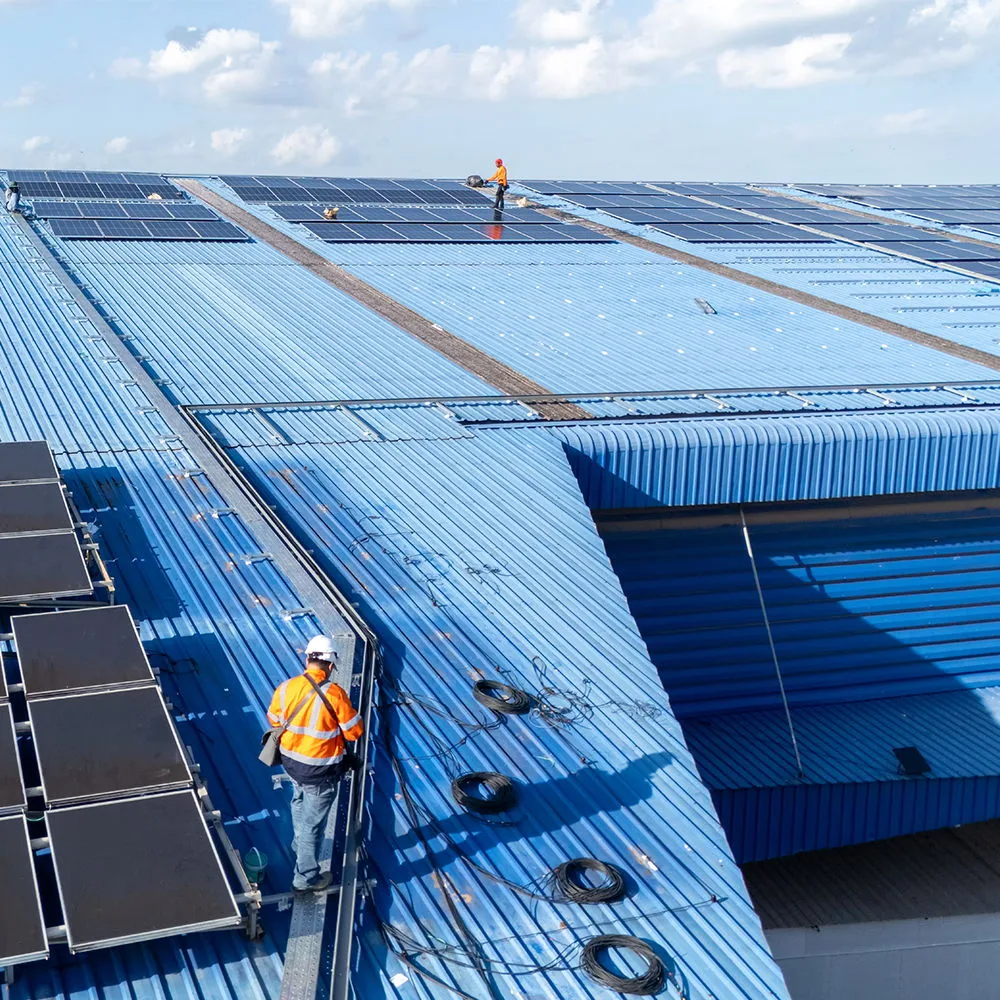
Get the wind-damaged roof edge repaired