Local weather advisory
Coastal Flood Advisory: Commercial Roof Help in Richmond
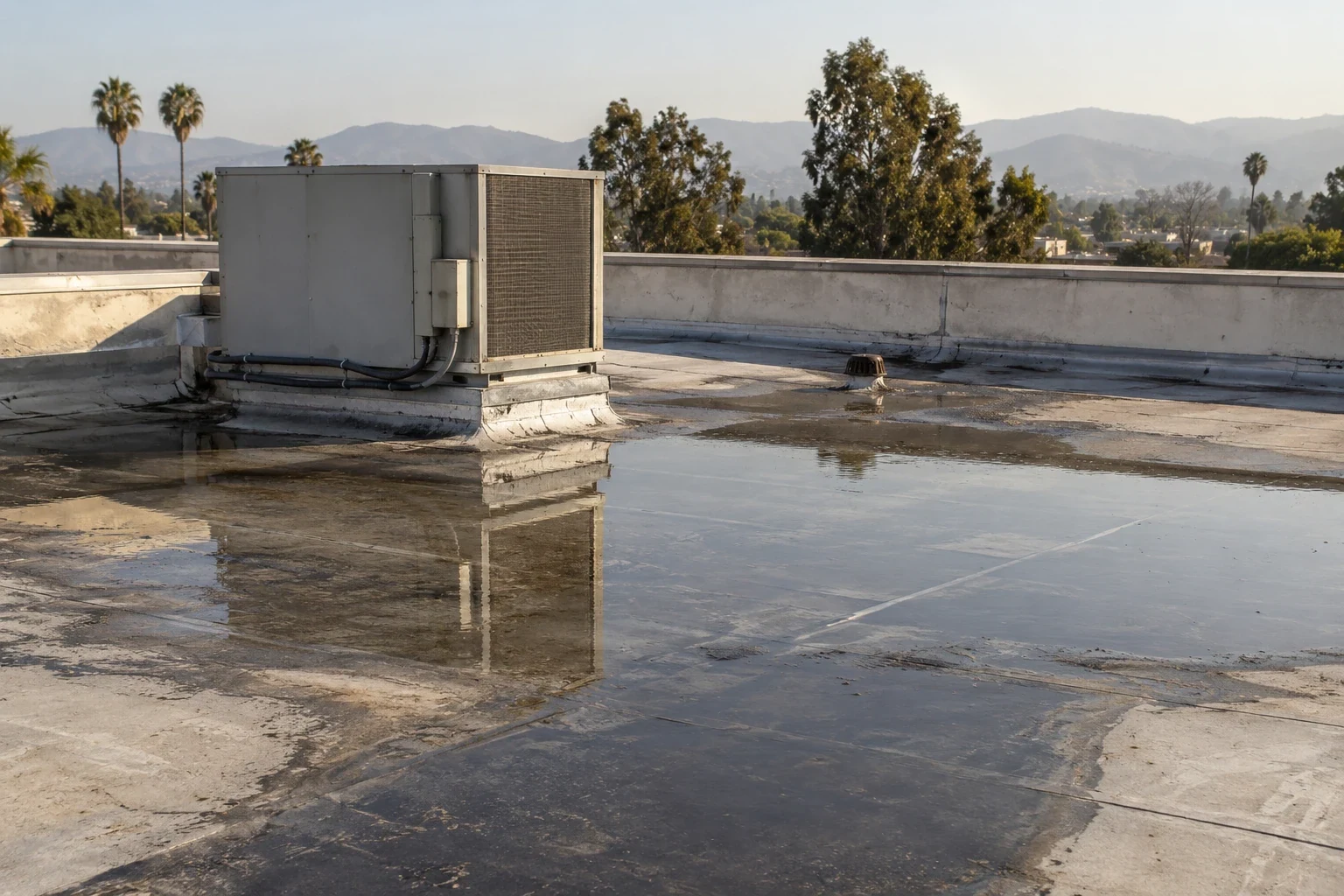
The National Weather Service has issued a coastal flood advisory covering Richmond. Heavy rain and drainage loading can expose roof leaks, blocked drains, and ponding water. This is a weather exposure advisory; it does not establish damage to a specific roof.
Do not access a roof during hazardous weather. Protect people first, avoid water near electrical equipment, and request roofing help when conditions permit.
National Weather Service · Updated Oct 28, 2026, 7:20 AM UTC
Storm Damage Roof Repair in Richmond, CA
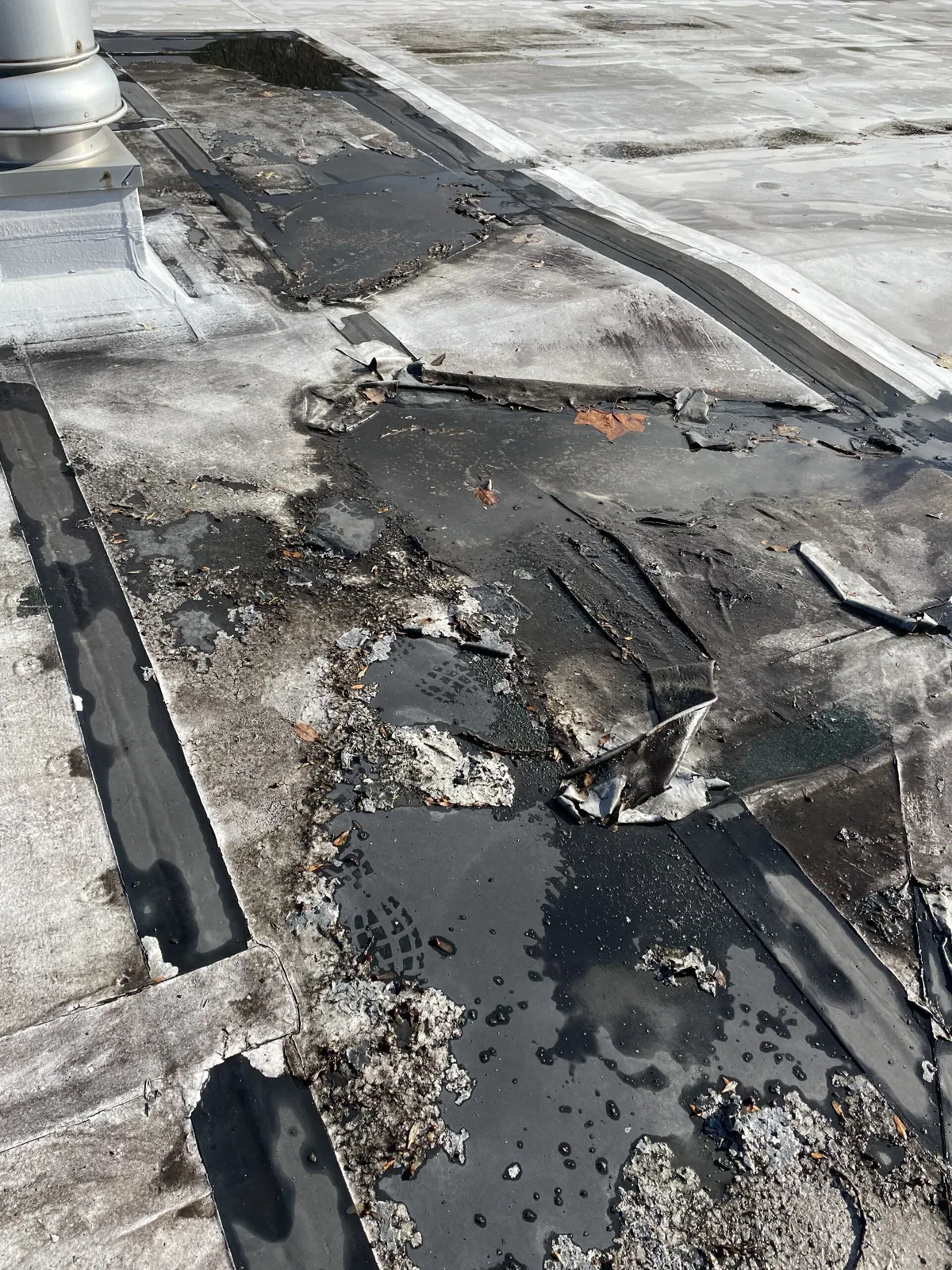
When a school reports a loose roof edge after a storm, the first job is to find out what actually happened up there. Wind can peel edge metal, lift membrane and pull fasteners, but a loose edge can also be years of wear that a storm finally exposed. We inspect the edge, the membrane and the insulation behind it before deciding on a repair. We will not call something storm damage unless the roof shows it.
On a school roof, we also plan around class schedules, student areas and any equipment on the roof. Even a small loose edge can take extra prep if the only roof access runs through a classroom wing. We photograph what we find, note which areas we checked and list anything we could not see. Where there are no earlier photos or records, we say so instead of guessing how the roof looked before. The storm date helps explain why you called; it does not tell us how much of the roof is damaged. Before coming out, we ask which roof area is affected and who can let us in.
Separate old wear from new damage
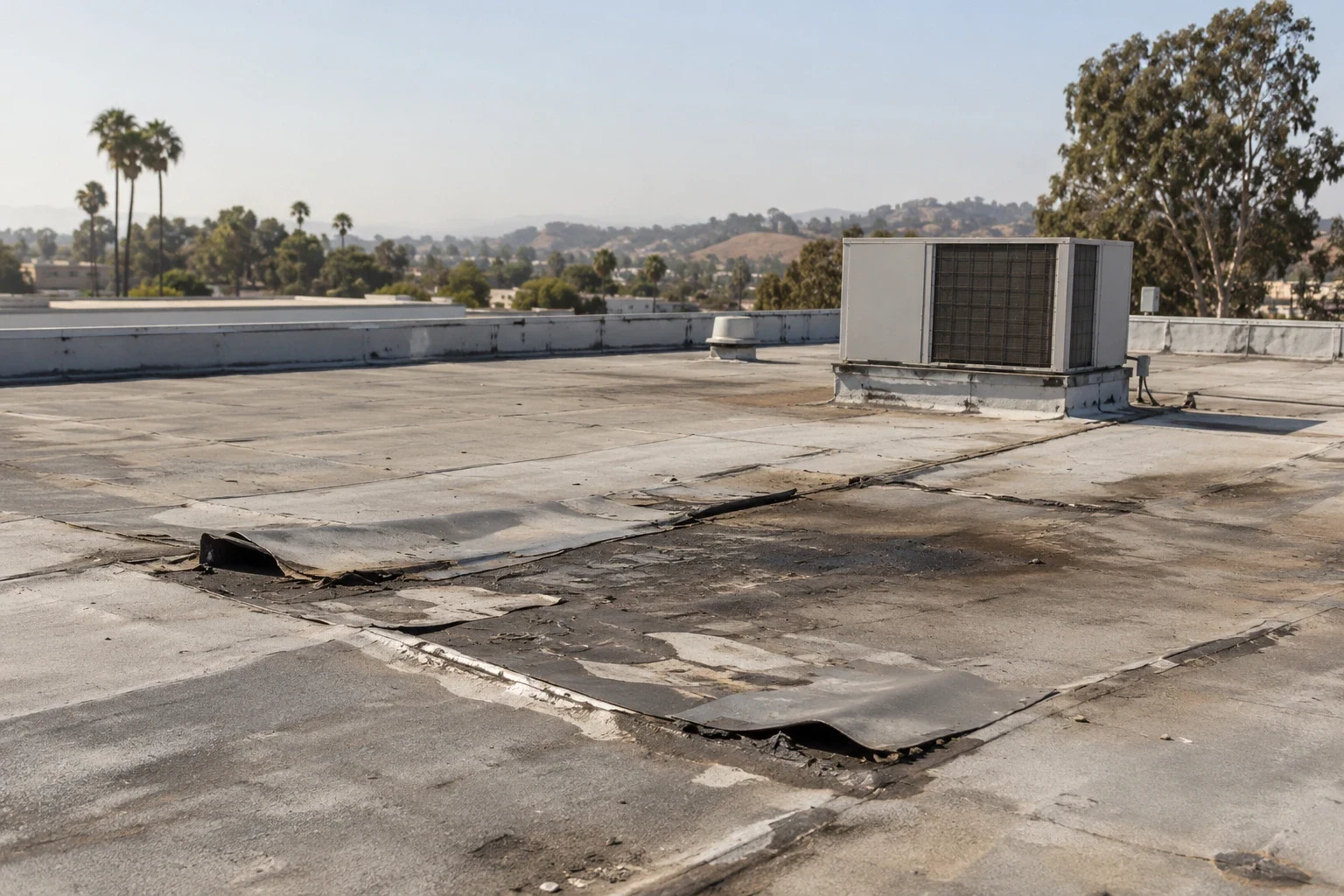
A torn seam or loose edge may need repair right away, even if nobody knows yet whether the storm caused it or just made an old problem worse. We compare any earlier photos and repair records with what we see now. A roof inspection after a storm notes what we could reach, what we could not, and what needs more testing. That gives you a practical repair plan without letting the storm date stand in for a full condition survey.
A loose edge can raise several questions at once: were the fasteners holding, is the edge metal still attached, is the insulation under it wet? Each one needs its own check. We list those, and we note anything that needs your mechanical contractor or another trade. You can then decide on the temporary fix and the permanent repair while the storm history stays in its own notes. That way you pay for repairs based on what the roof actually shows, not a broad damage description that skips the insulation or areas nobody has checked.
Stop the water first
If the edge or seam is open, we seal it first. Temporary protection might be a tie-in patch, a tarp weighted down properly or a quick-set flashing over the open area, depending on the roof. An emergency roof repair after a storm stops the water, but it is not the permanent fix. We note what is still open, what still needs a permanent repair and who handles the next step.
Inside, a water stain may not sit right under the opening. Water can run along the deck or a pipe first, and some leaks after a storm come from rooftop units, walls or windows rather than the roof itself. We trace the leak from inside to the roof and note any other source that needs another trade. A tarped opening does not mean the insulation underneath is dry or that the edge is reattached. Our report shows what the temporary fix covered and what the permanent repair still needs, so nobody mistakes a patch for a finished job.
Check the insulation underneath
Water that gets in under a torn seam or lifted edge often soaks the insulation well past the visible damage. We take cores and confirm which insulation is wet before setting the repair size. Wet board comes out and gets replaced; areas we only suspect stay on a separate list until tested. A new membrane over damp insulation does not dry it out. If we find more wet material once the roof is open, we photograph it, measure it and get your approval, with the roof sealed while you decide.
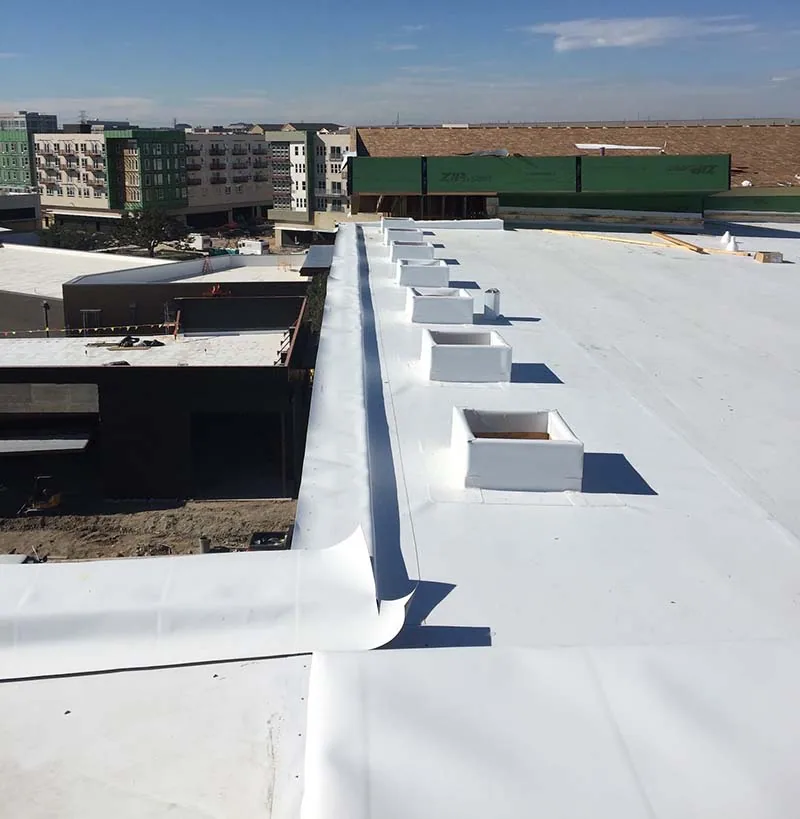
When you compare repair options, each one should include the same insulation work and the same finished edge. On a TPO roof, the repair uses TPO membrane welded to the existing sheet, with matching edge and corner pieces. On a PVC roof, it uses PVC materials with their own prep. The two do not mix. Covering the same area does not mean the labor or the parts are the same. The confirmed insulation repair stays in the scope whichever membrane you pick.
Storms often hit roofs that already have some wear, so we keep fresh damage and older aging separate in our notes. We photograph the edge or penetration before we touch it, then check the fasteners, seams and insulation around it. The repair order lists the temporary seal, any testing and the permanent repair. You end up with a clear picture of what the storm damaged, what was already worn and what we fixed.
Get to the damaged detail
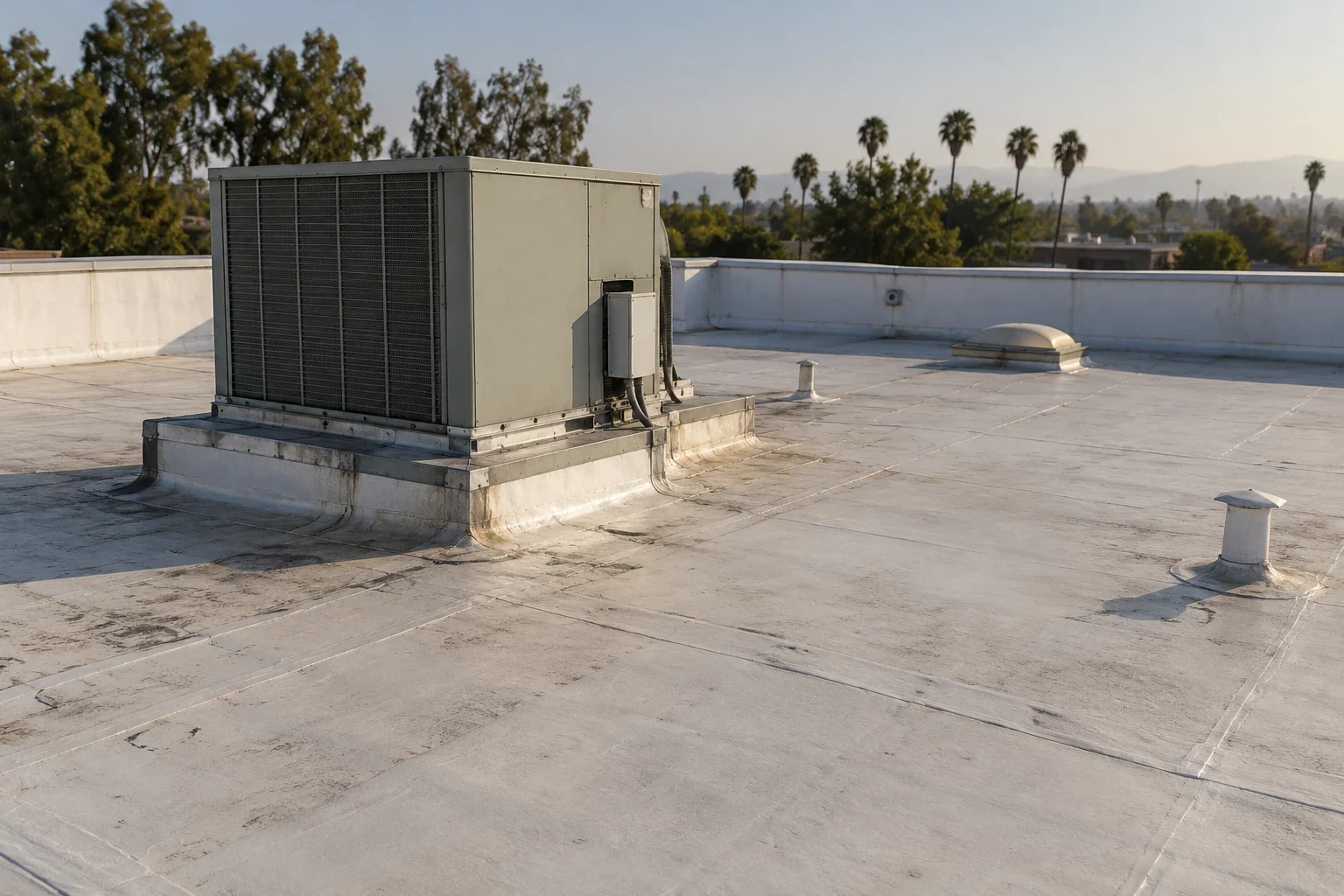
A damaged edge or curb may sit next to equipment or another building element that has to be moved or fixed first. For storm damage roof repair, the visible damage and the solid roof around it set the repair limits. We list blocked areas separately from areas ready to repair and work within the building’s rules on access and timing.
A permanent commercial roof repair after a storm should say who moves any equipment and what we do once it is out of the way. Working in separate time windows can add handling, setup and protection costs beyond the repair area itself. You should see those costs before agreeing on a date. Having parts delivered does not make a blocked detail reachable or solve a leak from a mechanical unit. The permanent repair goes in once the insulation is dry and the area is open, and the estimate shows both the repair and the access it needs. After storms in Rodeo, we follow the same approach: record the roof’s current condition separately from the storm timing and any permanent repair you request.
Records after the repair
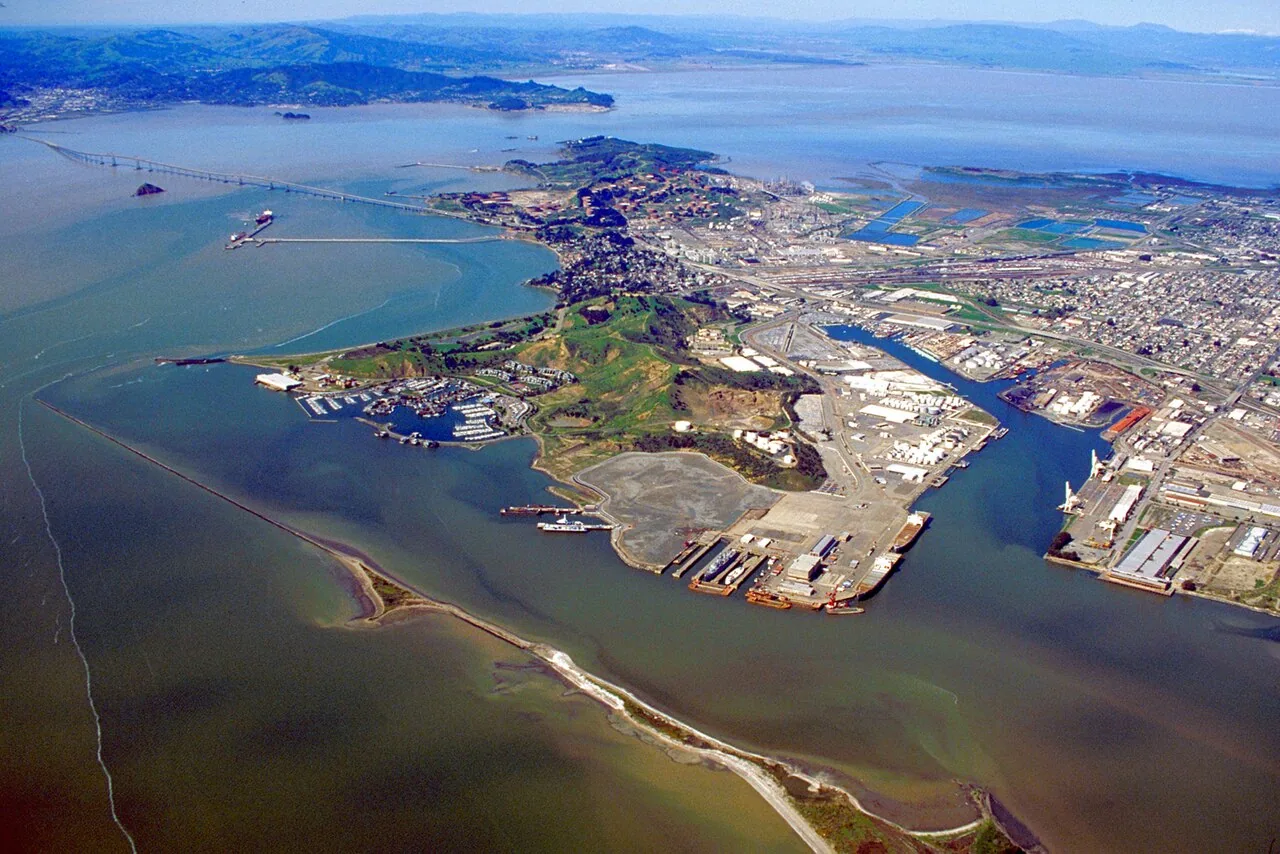
For storm repairs near the Port of Richmond, our record keeps the storm date and any earlier photos separate from what we found and what we fixed. We include photos of the insulation replacement and the finished edge, seams and flashing, with the materials used and where. Anything still open, such as a unit another trade needs to reset, stays on the list so you know what is done and what is not.
Inspection checks stay tied to the specific repair, and areas we never opened are not covered by our findings. If you are filing an insurance claim or relying on a manufacturer warranty, those documents have their own terms and reviewers; our record gives them the roof facts without deciding coverage. Keep the record for future maintenance. If water shows up again or you alter the roof later, you can compare it against exactly what was inspected and repaired, instead of assuming the storm explains everything about the roof’s condition.
Commercial Roofing Questions
Does the storm date tell you how much of the roof is damaged?
No. The date explains when the problem showed up, but the repair size comes from inspecting the roof and coring the insulation around the damage.
Is a temporary storm repair the same as a permanent one?
No. A tarp or temporary seal stops water for now. The permanent repair still has to replace wet insulation and reattach or rebuild the damaged edge or seam.
How do you choose materials for the permanent repair?
We match the existing membrane and edge details, such as TPO to TPO or PVC to PVC, and check that the insulation underneath is dry. Materials that look similar do not always bond.
What if nobody knows the roof’s condition before the storm?
We say so in the report. We record what we found now and what we repaired, and we do not claim the storm caused damage the roof does not clearly show.
Tell us what the storm did to your roof