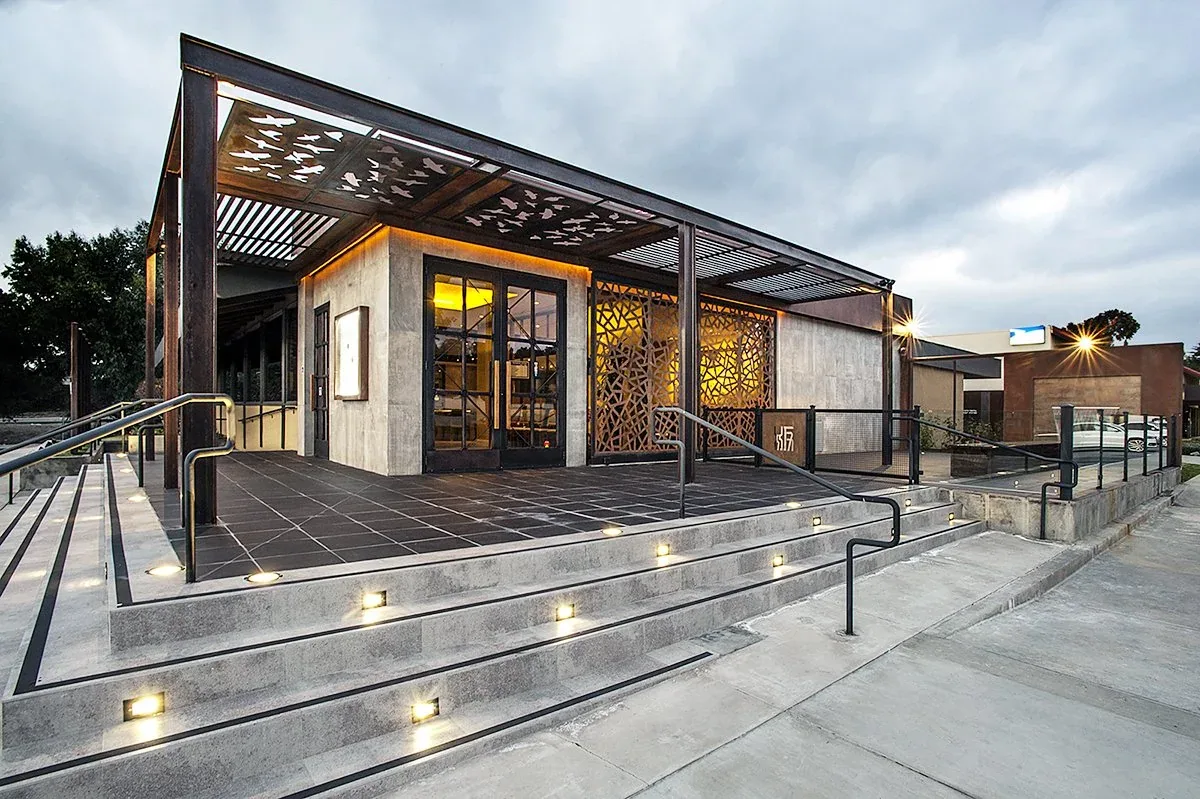
Roofing for Retail and Restaurant Chains in Richmond, CA
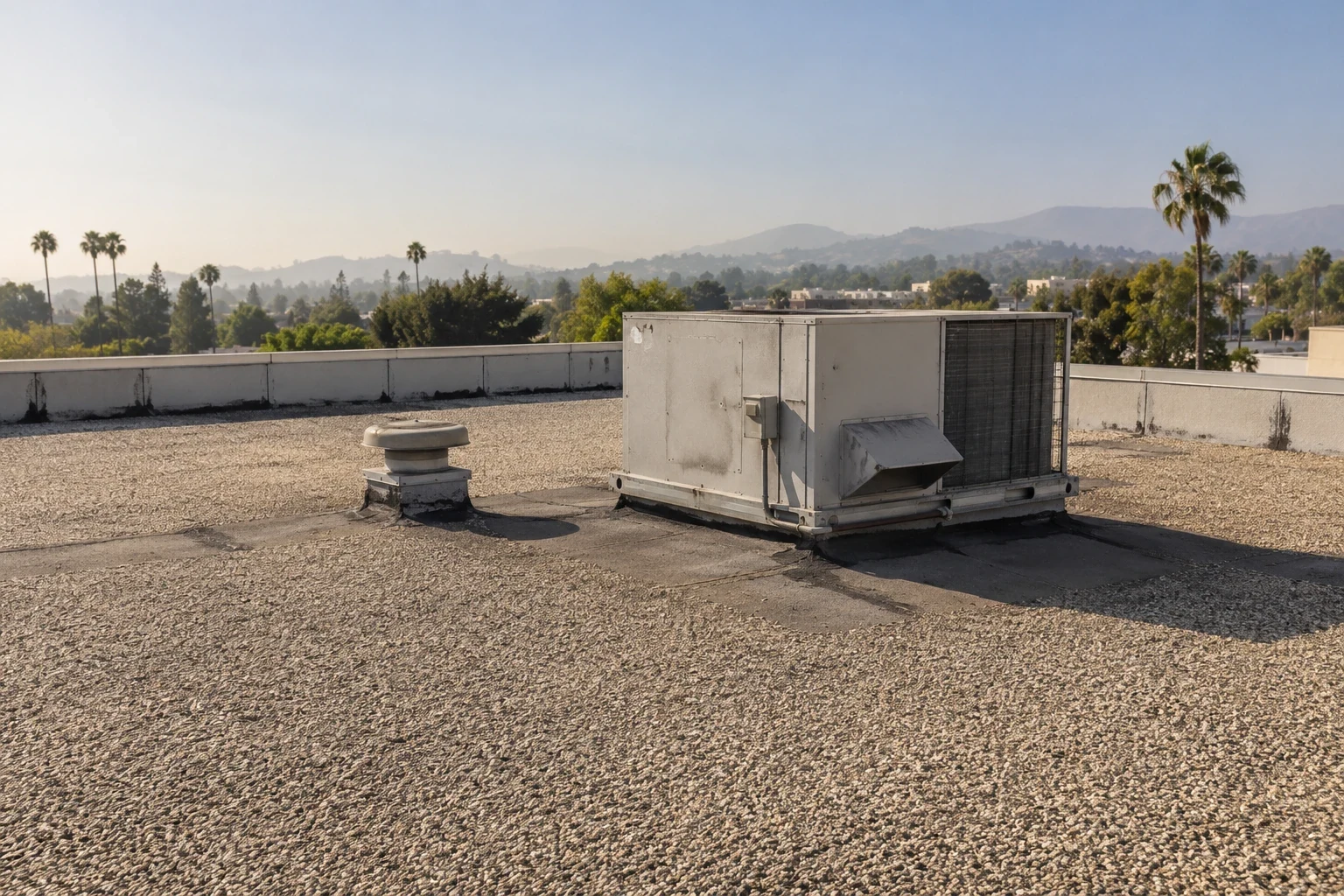
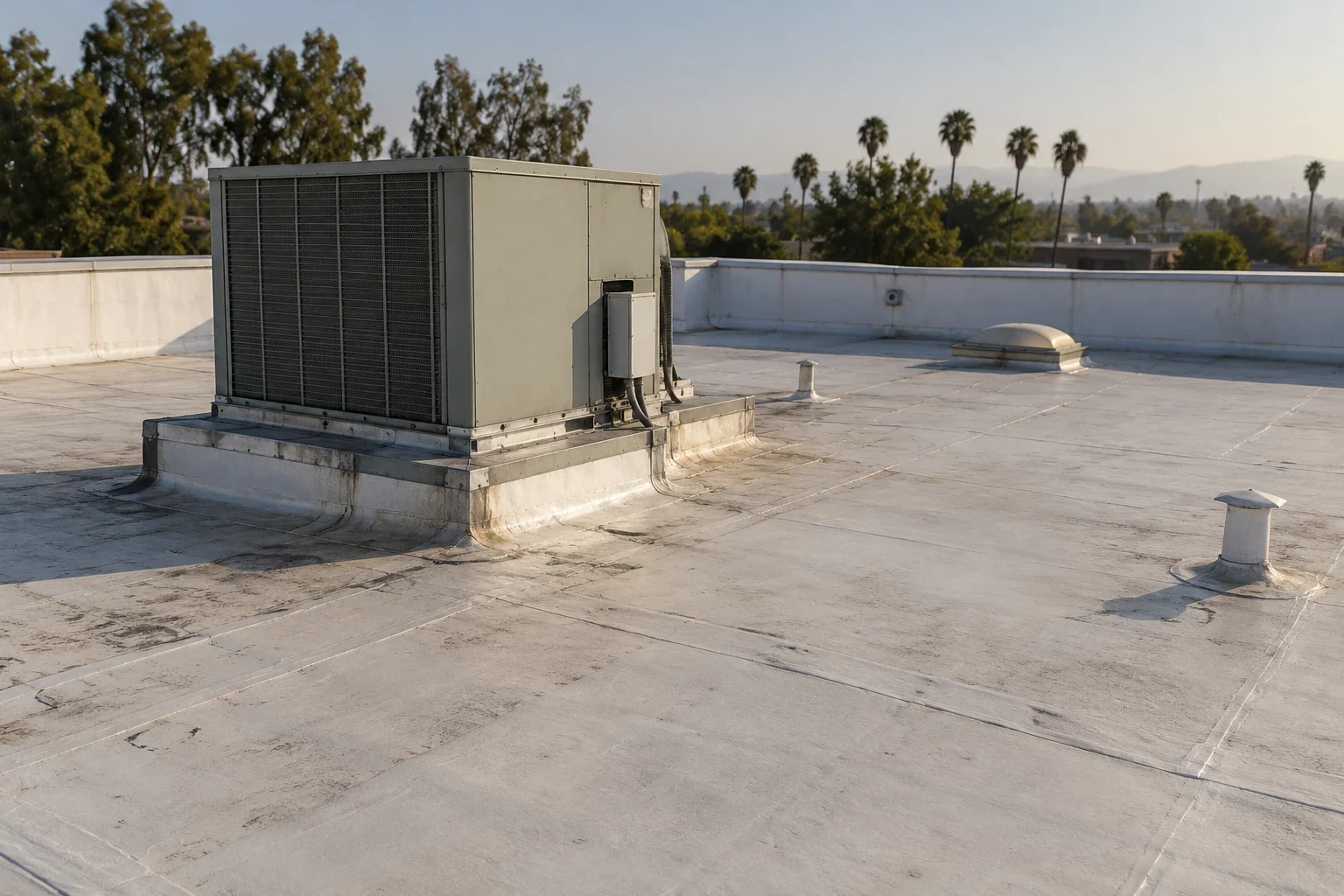
A leaking rooftop curb over a Richmond restaurant often means fixing the flashing and deciding what to do about the unit serving the dining room below. Our chain programs keep each location's roof scope and work schedule separate. We trace the leak and find the roof detail that needs attention. The operator sets limits for the occupied space while we describe the tear-off and nightly dry-in. The owner gets a clear order of work that ties those pieces together, so new flashing is not installed before an equipment change is ready.
On restaurant roofs, we match the leak inside to the curb and roof we actually inspect. Equipment and roof service records help guide the trace when their dates and locations match. The repair follows what is on the roof now, and any open question about the source is noted separately. The operator can then approve a specific job rather than a general promise about every roof and equipment connection above the room. For retail and restaurant roofing in Richmond, we confirm each building and its access with the store's contact.
Separate the unit from the roof
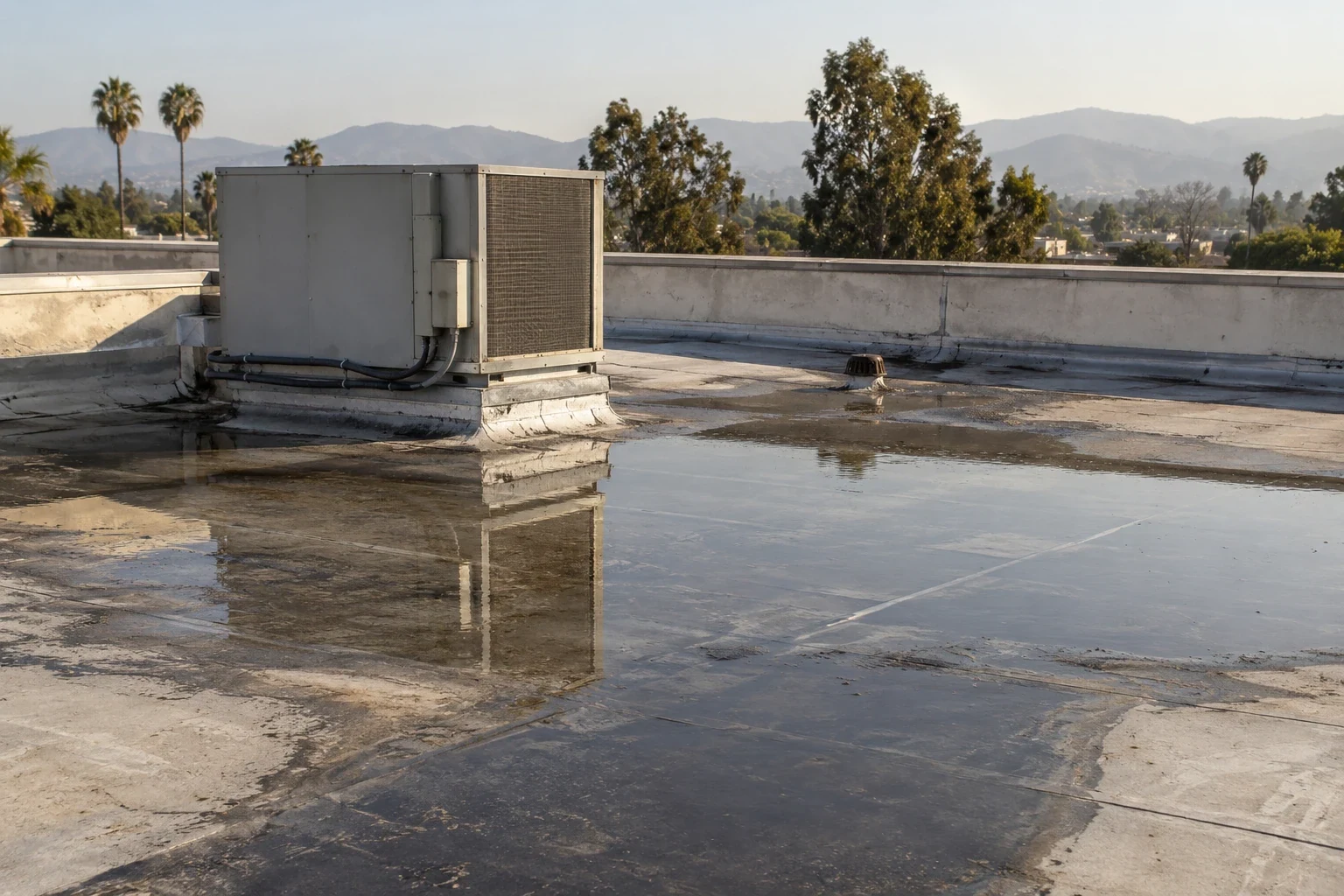
A curb has a base flashing, corners and a top termination, and each may need different prep. The unit's housing, condensate line or service connection can also let water in next to the flashing. We inspect the roof details and explain what they show. If the source looks like the unit, the HVAC contractor needs to check it. A patch over the nearest seam may miss a leak coming from higher up. The owner needs that before approving work, so our repair addresses what we found and the equipment question has a clear next step.
General contractors can coordinate the equipment work with our roof repair. Our scope states what the curb needs and what has to happen before we install. If a unit is lifted later, it can tear up new flashing, so we talk about that before ordering materials. The operator learns what can be fixed now and what has to wait for the equipment work, and a finished roof area is kept separate from the curb still waiting on a unit swap.
Check the roof around the curb
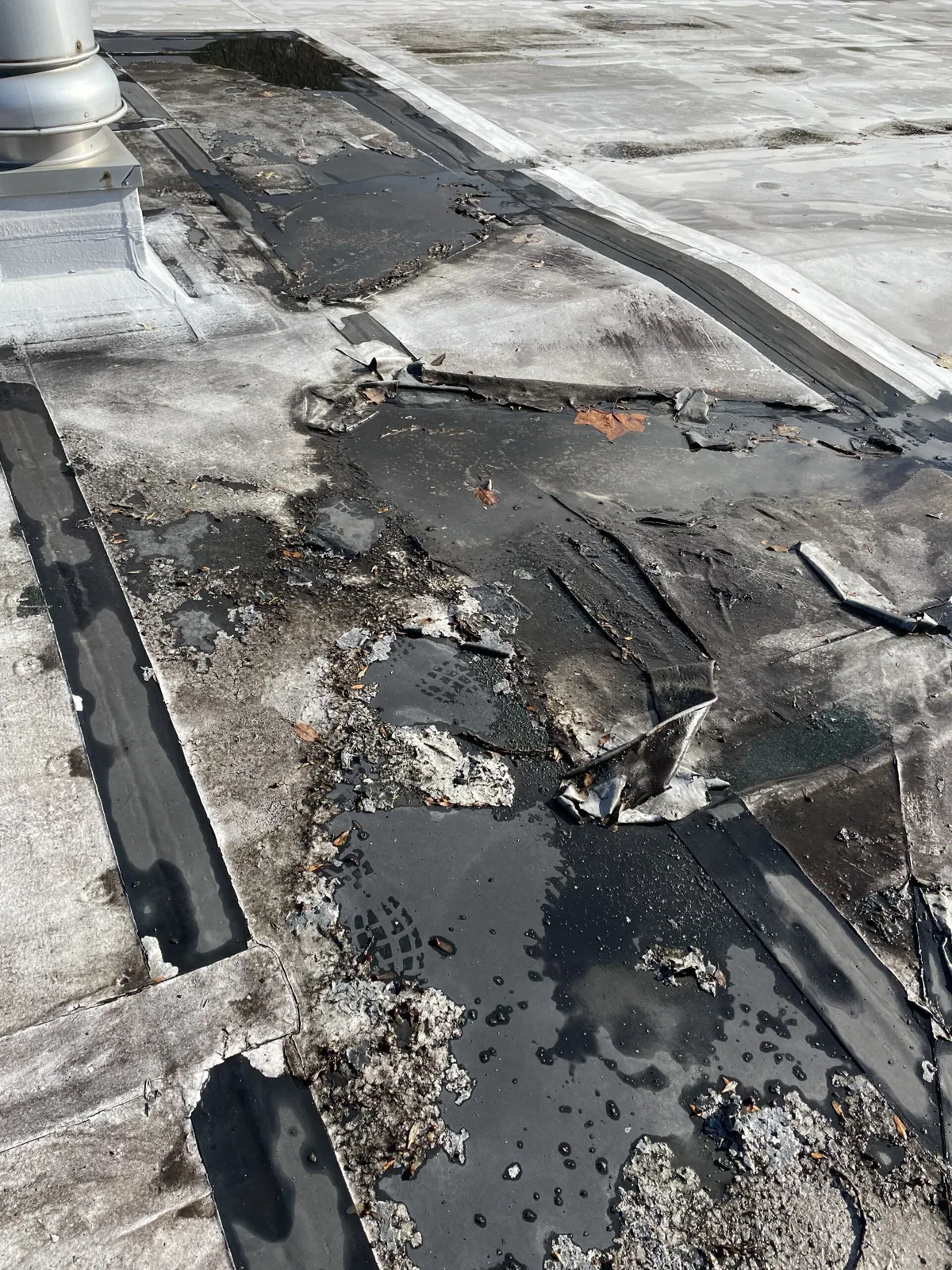
The curb repair needs a surface that will take the new flashing. Old coatings, patches and grease from kitchen exhaust can all change the prep. We check the actual condition instead of assuming every restaurant roof has the same problem. Compatible flashing and sound insulation go together in the repair. Wet insulation may need cores or test cuts where it changes what we keep. The owner gets confirmed findings next to any unknown areas, so the repair size is tied to real conditions rather than the size of the split corner.
Penetration flashing on an occupied retail building has to fit the final curb and pipe layout. Higher insulation can affect nearby drains and wall flashing, so we check those before ordering parts. If tear-off uncovers more damage, we measure it and send a change for approval. Temporary protection stays in place while the owner reviews it. The operator can then plan around the affected space with a scope that shows the full prep and the finished detail.
Plan the route around store hours
The store's manager tells us which areas are occupied and what handling limits apply. We explain the tear-off, material movement, noise and nightly dry-in so their plan matches the actual work. Permission to inspect may not cover crane lifts, unit disconnects or opening the roof. The access plan lists who approves each step. A shared entrance or delivery door matters when customers and deliveries are using it. We keep those details next to the roof work, so nobody promises the store an easy day before the operator has reviewed the plan.
At a store around downtown Richmond and the Civic Center, the site contact confirms how we can reach the roof for the planned work. Materials have to be set on solid deck, and heavy loads get an engineer's review when needed. Roof access and occupied-room plans are worked out together. The owner can line up a material drop and a sensible day's work before delivery, with access prep counted as part of the job rather than left out of the price.
Finish a complete section each day
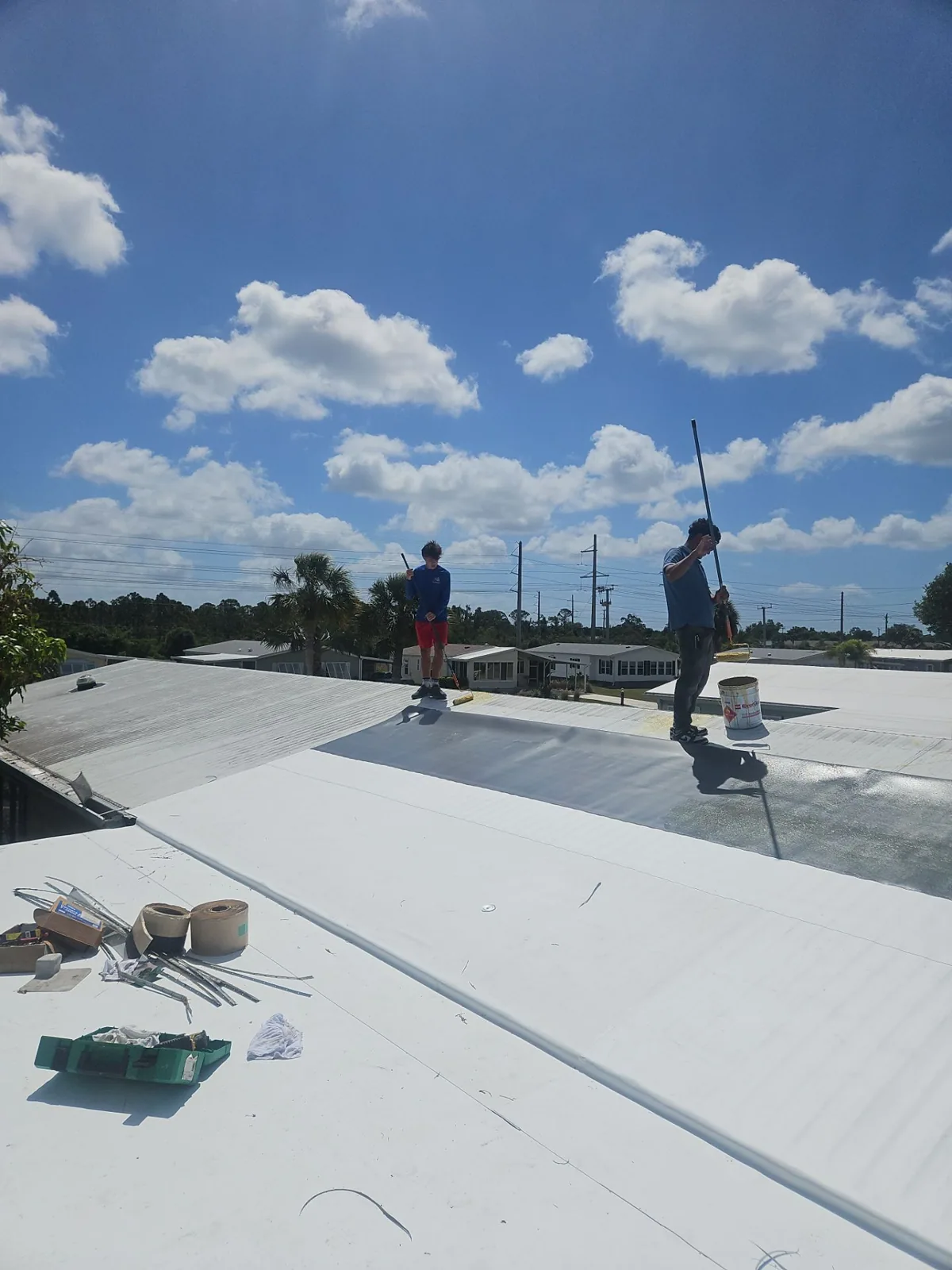
Each day's opening should match the time and crew needed to tear off, prep and seal it. Tricky curb shapes or unknown insulation conditions can slow that down. We set a safe stopping point before work starts. If the unit work is delayed, we explain the temporary protection in place and the permanent detail still pending. The operator needs that when planning room use. The crew is never held to an opening size that the actual roof conditions no longer allow them to finish.
Occupied building reroofing applies the same approach across a larger area. The deck, insulation and equipment work still have to be dealt with even when more of the roof is replaced. We compare a focused curb repair with a larger option when repeated failures support it. Each price explains what stays and what falls outside it. The owner can weigh both the prep and the operating commitments, so a bigger project is judged by what it delivers. Retail and restaurant operators we serve in nearby Novato get the same building-by-building scopes tied to each store's access and operating limits.
Keep each store's roof history
A chain's similar-looking stores can have different roof systems, equipment changes and repair histories. We keep each store's findings and closeout records with that store. Photos show the original problem and the prep work where it matters. One site's condition tells us nothing about the blocking or access at another. The owner can compare work across locations while each repair is explained on its own. A shared roof program stays useful without copying a repair method or quantity between buildings that have not been checked.
Property management companies running the stores should get a closeout that shows what was finished and what was left out. Equipment work by others keeps its own status. A later unit change can affect the roof near our repair. New leaks call for an inspection of the roof as it is then, using the dated records to compare. The next recommendation explains what we find and what we could not check. Each store's file keeps the original repair, later changes and open questions separate.
Commercial Roofing Questions
Does a curb leak always come from the roof flashing?
No. We check the flashing and the unit's own connections separately, and bring in the HVAC contractor if the unit is the likely source.
Should a planned unit change happen before the permanent flashing?
Usually, yes. Once the new unit and curb are confirmed, we install the flashing so a later lift does not damage it.
Can every restaurant roof use the same prep?
No. Grease, old coatings and patches vary from store to store. We check what is actually on the roof and choose compatible prep for that curb.
Who decides which rooms are affected?
The store's operator. We describe the work and they set the restrictions and approvals for each stage.
What should a chain keep for each repaired curb?
The original findings, prep work and finished detail by store, plus any equipment work by others and later changes.


Coordinate the roof repair with your store