Local weather advisory
Coastal Flood Advisory: Commercial Roof Help in Richmond
The National Weather Service has issued a coastal flood advisory covering Richmond. Heavy rain and drainage loading can expose roof leaks, blocked drains, and ponding water. This is a weather exposure advisory; it does not establish damage to a specific roof.
Do not access a roof during hazardous weather. Protect people first, avoid water near electrical equipment, and request roofing help when conditions permit.
National Weather Service · Updated Oct 28, 2026, 7:20 AM UTC
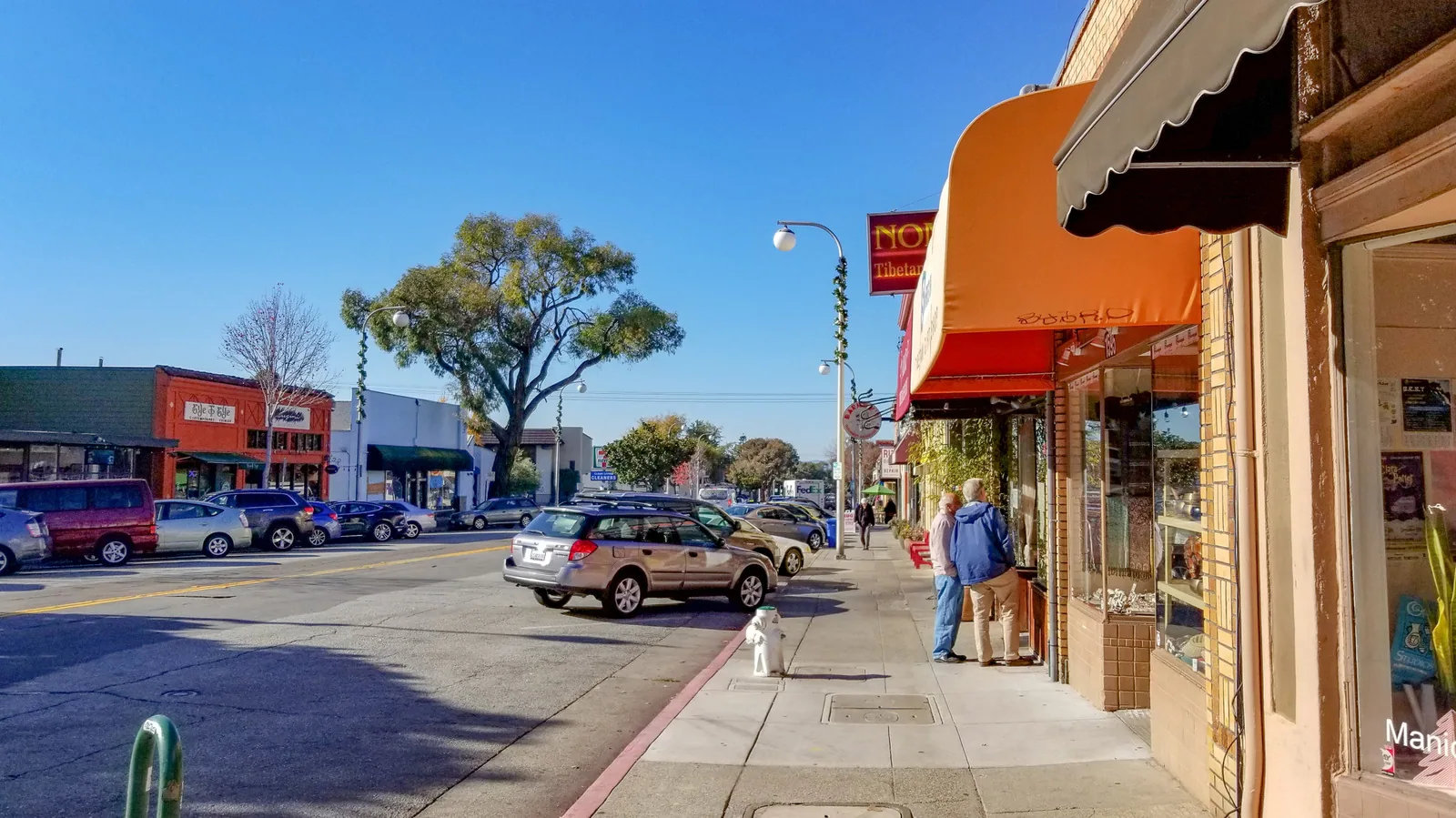
Commercial Roof Repair in Albany, CA
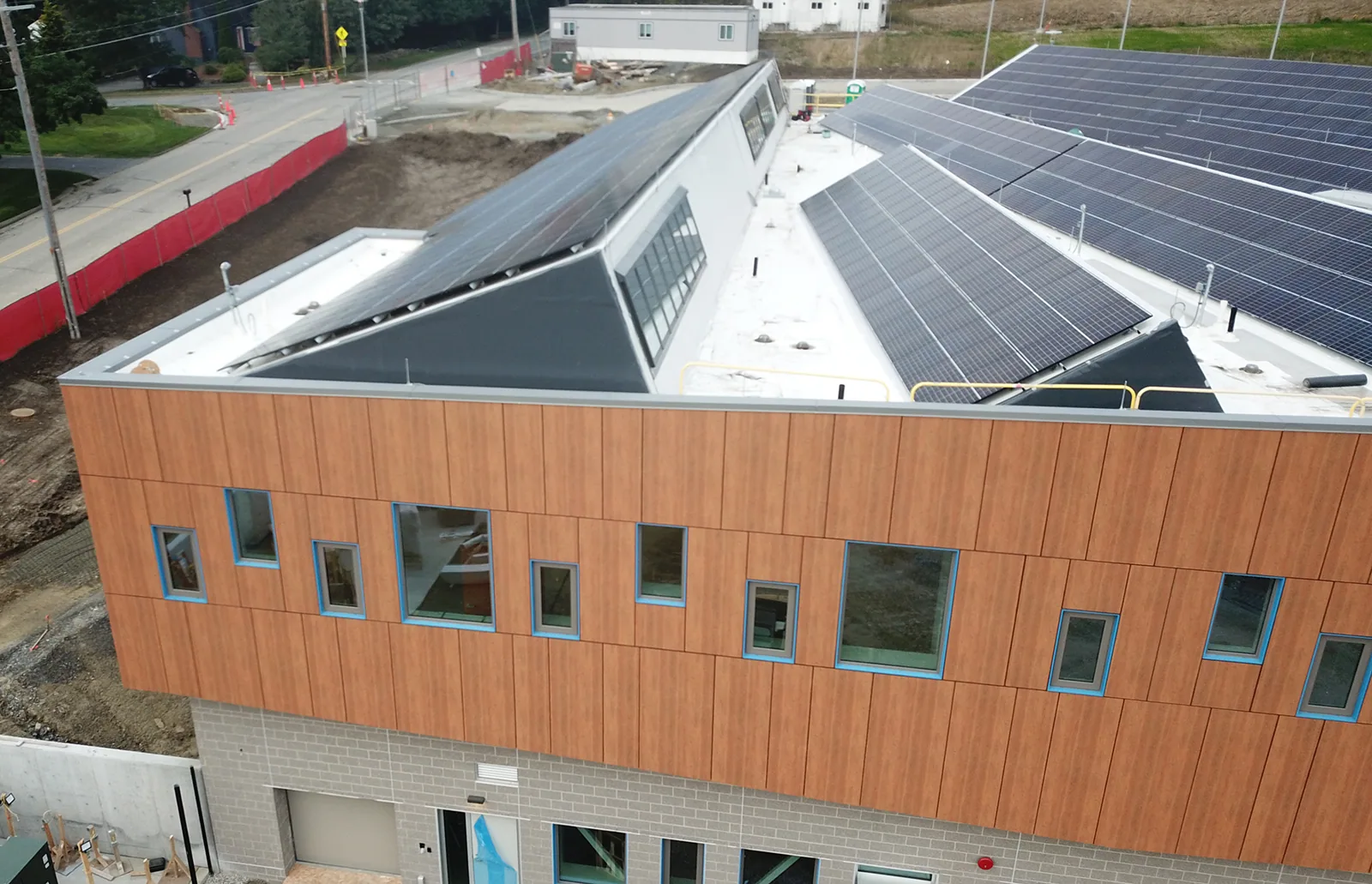
Many Albany commercial buildings have more than one roof level: a two-story section over a one-story wing, a raised roof over a storefront, or an addition built years after the original. The spot where those roofs meet is one of the most leak-prone details on the building. Water runs down the upper wall, hits the lower roof and finds any gap in the flashing. Fixing it properly means dealing with both roofs and the wall between them, not just the strip of flashing you can see. Albany sits on the east shore of San Francisco Bay along I-80, with Solano Avenue as its main commercial street.
We inspect the upper roof edge, the wall or step between levels and the lower roof where it turns up the wall. Each piece may be in different shape. The upper roof might be fine while the lower membrane is cracked at the base, or the wall itself might be letting water behind the flashing. A new strip of membrane over the joint can look finished and still leave a gap a foot away. Our estimate covers every part of the transition that needs work, along with temporary protection and cleanup, so you can compare a local repair with a larger tear-off on equal terms.
Both adjacent assemblies affect the connection
The flashing at a roof-level change has to tie into good material on both roofs. If the lower membrane is brittle or the upper edge metal is loose, a new flashing won't hold. We check the condition of each roof near the joint before deciding how much to remove. Often one side is in decent shape and the other needs more work. Two different roof systems, say a modified bitumen upper roof and a single-ply lower roof, also need a detail that suits both materials.
Our flashing failure repair work spells out how much of each roof we'll cut back and how the new flashing connects at the top and bottom. We'll tell you which sections can stay and which need to be opened up to check. That lets you weigh a repair along the joint against rebuilding a wider strip on each side. What you want to avoid is a strip of patch material laid over the visible gap while the membrane underneath it is still failing.
The upper route and lower symptom need examination
A stain on the ceiling of the lower floor doesn't always mean the lower roof is leaking. Water can get in at the upper roof's edge, behind the wall siding or stucco, or through a window or vent on the upper wall, then run down and show up on the level below. We trace the water from the roof side before blaming any one spot. If the wall itself is the source, that's often siding or waterproofing work, and the wall needs to be fixed before we install new roof flashing against it.
When we do commercial roof leak repair at a level change, we may water-test a section or open a small area to confirm the path. We'll explain why and how we'll seal it afterward. Then you can decide between repairing just the joint or also addressing the upper roof or wall. Interior protection is part of the plan throughout. A cheap fix on the lower roof can look complete on paper while the real leak keeps running down from above.
Underlying material changes the retained boundary
Water that's been getting in at a roof transition for a while usually soaks the insulation and sometimes rots wood blocking or nailers on both roofs. A moisture reading or a dark stain tells us where to look, but it doesn't tell us exactly how far the damage goes. We confirm with core cuts or by opening the area, then remove what's wet before installing new flashing on top.
Our commercial roof repair estimates list the insulation and blocking replacement for each roof separately. We'll show you what can stay and how the price could change if we find more once the area is open. That way you can compare a narrow repair with a wider one based on what each actually replaces, rather than buying new flashing over wet insulation that will cause trouble again.
When the extent of damage on one side could change the whole plan, we sometimes recommend a small test opening first. We tell you what we're checking, close it up the same day and use the results to price the full repair. Each roof still gets its own assessment and its own repair details.
At a two-level joint, water can travel along the upper wall before it ever reaches the lower roof. We check the upper edge, the vertical face and the lower membrane as one path and mark exactly where it failed. Each part may need different prep and a different way of tying in, so we don't cover one gap while leaving another open just above or below it.
The roof levels determine practical handling
Working on a roof with two levels takes more planning than a single flat roof. Materials may need to be lifted to the upper roof, carried across and lowered to the lower roof, or brought up a separate way. A repair in Albany starts by tracing the leak past the visible flashing and checking the surface it ties into, but the layout of the building decides how we stage the work. While the old flashing is off, the joint has to be sealed temporarily each night so rain doesn't get into the building.
For buildings that stay open, our occupied building reroofing approach lets you choose between doing the joint in sections or all at once. Several shorter visits mean repeated setup costs; one longer visit may need to fit around business hours or a tenant's schedule. We lay out those trade-offs once we know what each roof needs, so you can pick the timing that works with interior protection in place, rather than a schedule based only on the new flashing.
Related sites retain separate roof-level details
If you also own a building in El Cerrito, its roof transition may look similar but use different materials and need a different repair. We inspect each building separately before suggesting shared materials. Two roofs with the same shape can still need completely different flashing details, so each estimate stands on what we found on that roof.
For another property in Kensington, we can look at combining mobilization once we know the scope for both roofs. Inspection, staging and protection costs stay separate in each estimate, so you can see whether combining the work actually saves money. Stopping active leaks and replacing wet or failed material comes before cosmetic coatings or other optional work. That way you can schedule both jobs together where it makes sense without giving up the right repair on either roof.
Commercial Roofing Questions
Can one flashing material join any two roof systems?
No. The flashing has to be compatible with both roofs. A detail that works on a single-ply membrane may not work on modified bitumen or metal, so we confirm both materials before choosing the repair.
Does a stain on the lower floor mean the lower roof is leaking?
Not on its own. Water can enter at the upper roof edge or the wall above and run down to the lower level. We trace the path from the roof side before deciding what to repair.
How do you decide how much roof to remove on each side?
The condition of each roof near the joint. We check for wet insulation, brittle membrane or rotted blocking on both sides and remove only what's damaged, confirmed with core cuts or a test opening.
Why does a change in roof level add to the cost?
Getting crews and materials to two roof levels takes more handling, and the open joint needs temporary protection each day. Those costs are part of the job, not just the length of the new flashing.
Can repairs on two multi-level buildings be scheduled together?
Sometimes. Once both roofs are inspected, we can combine mobilization or material orders where it saves money. Each building still gets its own repair details and protection plan.
Get the roof-level transition fixed right