Local weather advisory
Coastal Flood Advisory: Commercial Roof Help in Richmond
The National Weather Service has issued a coastal flood advisory covering Richmond. Heavy rain and drainage loading can expose roof leaks, blocked drains, and ponding water. This is a weather exposure advisory; it does not establish damage to a specific roof.
Do not access a roof during hazardous weather. Protect people first, avoid water near electrical equipment, and request roofing help when conditions permit.
National Weather Service · Updated Oct 28, 2026, 7:20 AM UTC
Commercial Roof Repair in Martinez, CA
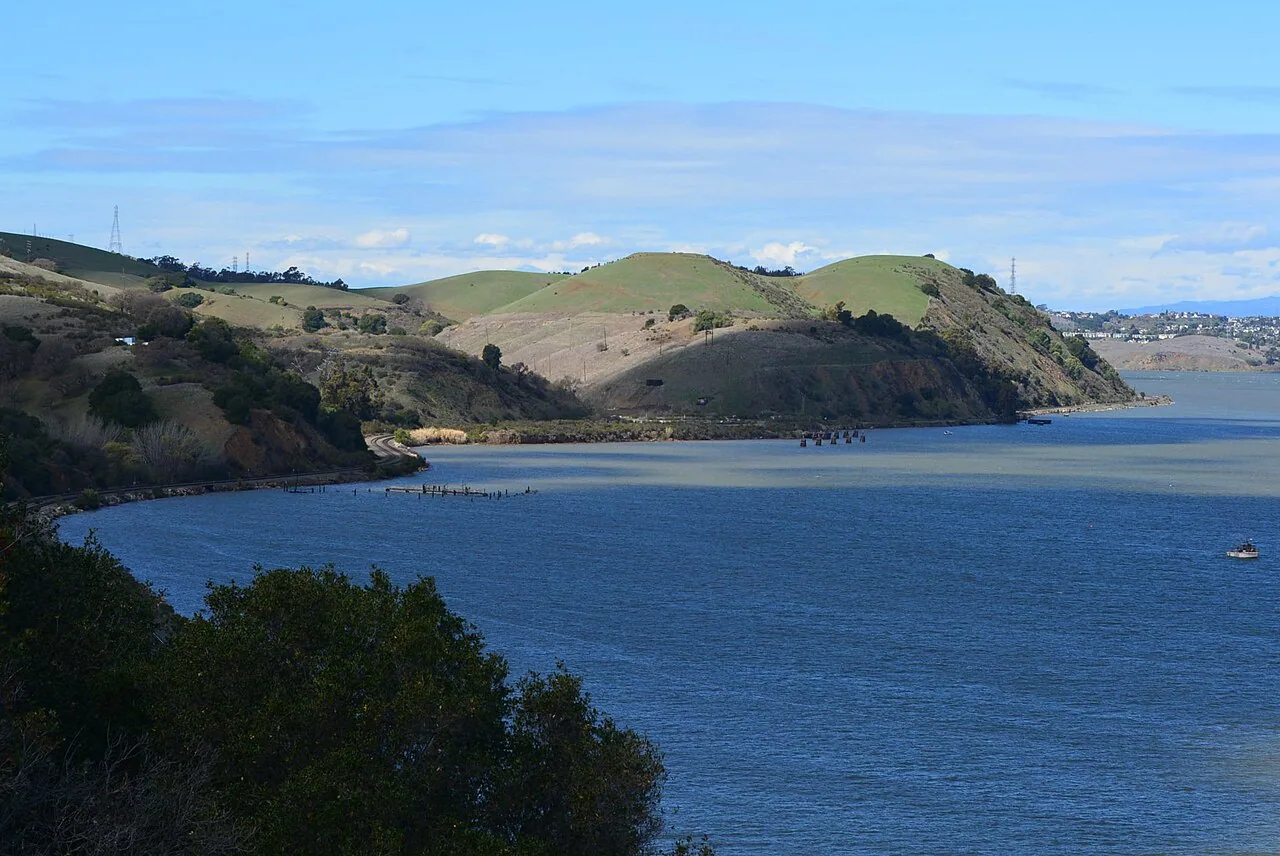
A drip near a skylight on a Martinez commercial building could be coming from the roof flashing around the curb, or from the skylight unit itself. Those are two different repairs, often by two different trades, and it pays to know which one you have before anyone starts cutting membrane. We inspect and repair commercial roofs out of Richmond, CA. Martinez is the Contra Costa County seat on the Carquinez Strait, reached by State Route 4, I-680 and Amtrak, and we plan truck access and material staging around each property.
Water around a skylight usually gets in one of three ways: through open or loose curb flashing, through a failed seal in the glazing or frame, or from a problem higher up the roof that runs down and shows itself at the opening. We trace the path before recommending anything. If the skylight unit needs work, we tell you so and coordinate with the glazing contractor. Our estimate covers the tear-out, interior protection, temporary dry-in and the finished flashing, so you are comparing complete prices and not a cheap curb patch that ignores a leaking frame.
The curb and the glass are separate problems
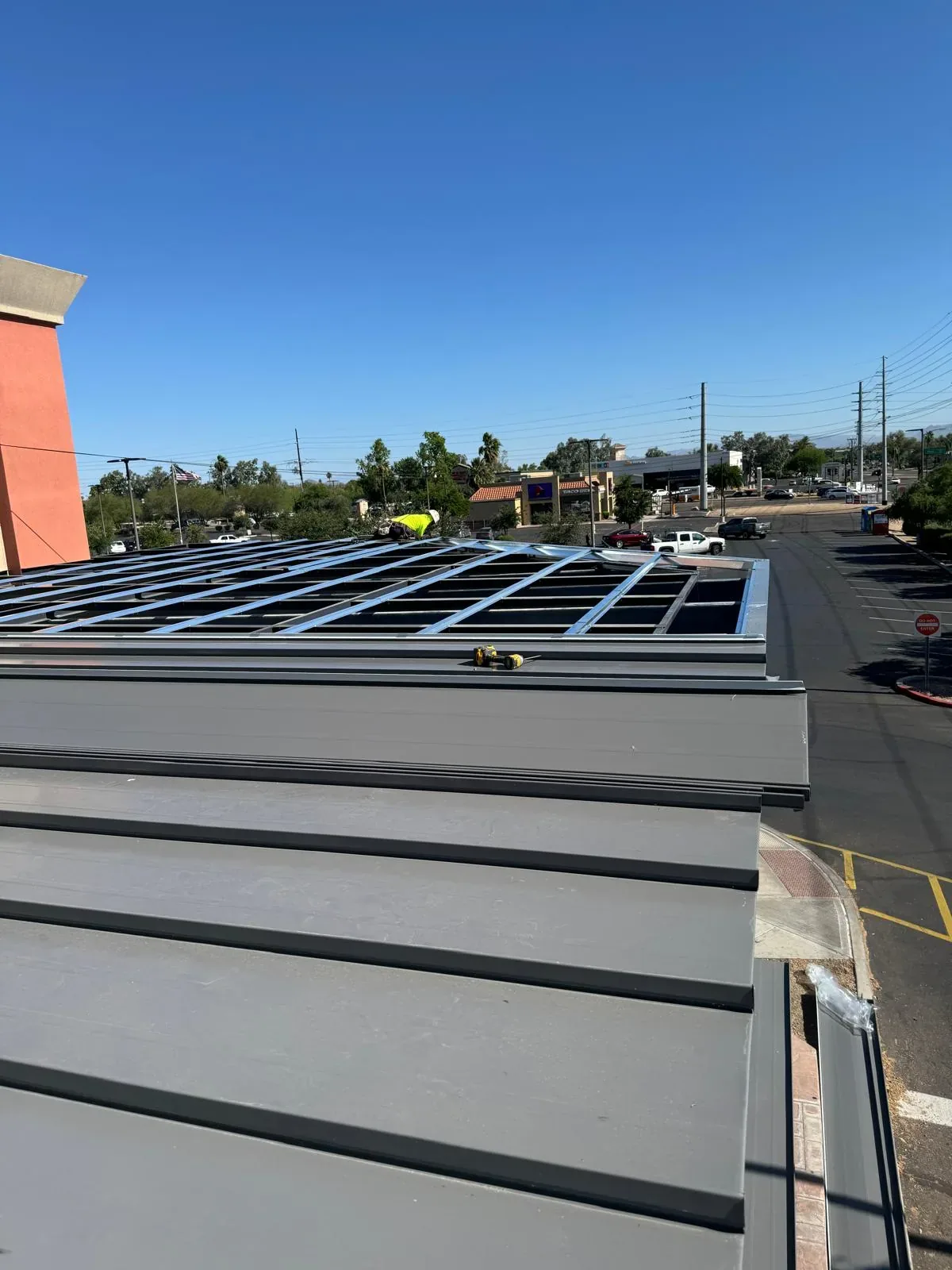
A skylight has its own glass, gaskets, frame and sealants, and any of them can leak in a spot that looks like a roof problem from inside. On the roof, we check the curb flashing, the corners and the counterflashing first, then look at the frame and glazing seals. New flashing will not stop water coming through a cracked gasket just because both sit over the same office. Before quoting roof work, we want to know which part actually failed, and if it is the skylight, the right trade needs to be involved.
Our skylight flashing repair starts from that finding. We explain exactly which detail we are rebuilding and whether the skylight needs service before we close it up. That way the decision is based on the real leak, and you do not pay for new flashing only to watch the same stain come back because the glass seal was never fixed.
The surrounding membrane sets the repair size
Curb flashing has to tie into the actual roof membrane around it, and that membrane has to be in good shape. We check how the flashing is attached and terminated, and how the field membrane looks for a few feet in every direction. Brittle, loose or separated material near the curb can push the repair wider than the visible gap. The method we choose depends on the roof system and the skylight's size and shape, not on a standard detail picked from a photo of the stain below.
Our roof repair around the skylight curb spells out how much membrane comes off and what goes back. We tell you what can stay and what still needs a closer look before the final size is known. You see the price of a repair that will hold, not a narrow flashing quote that leaves out the membrane it has to bond to.
Wet insulation around the curb needs checking
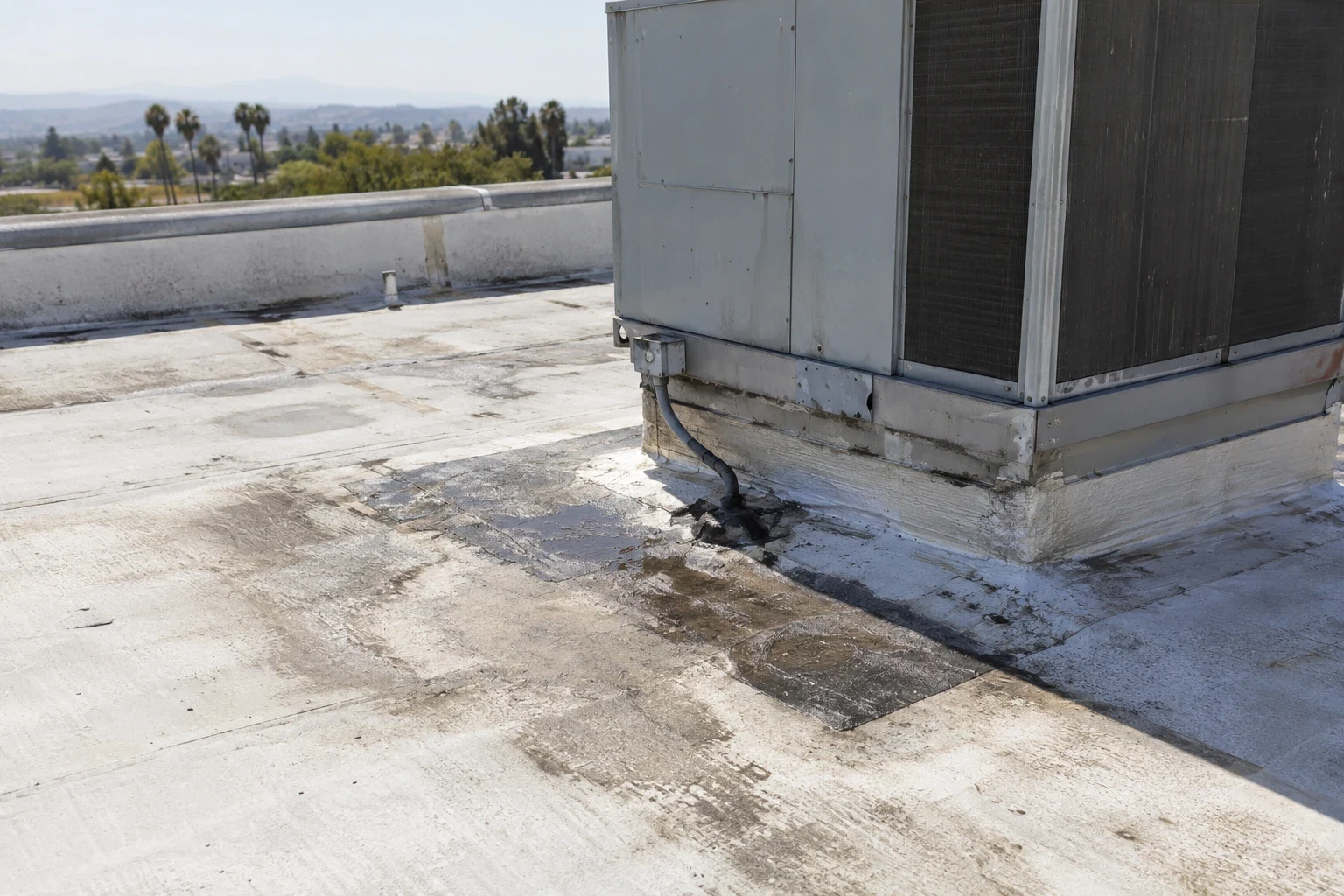
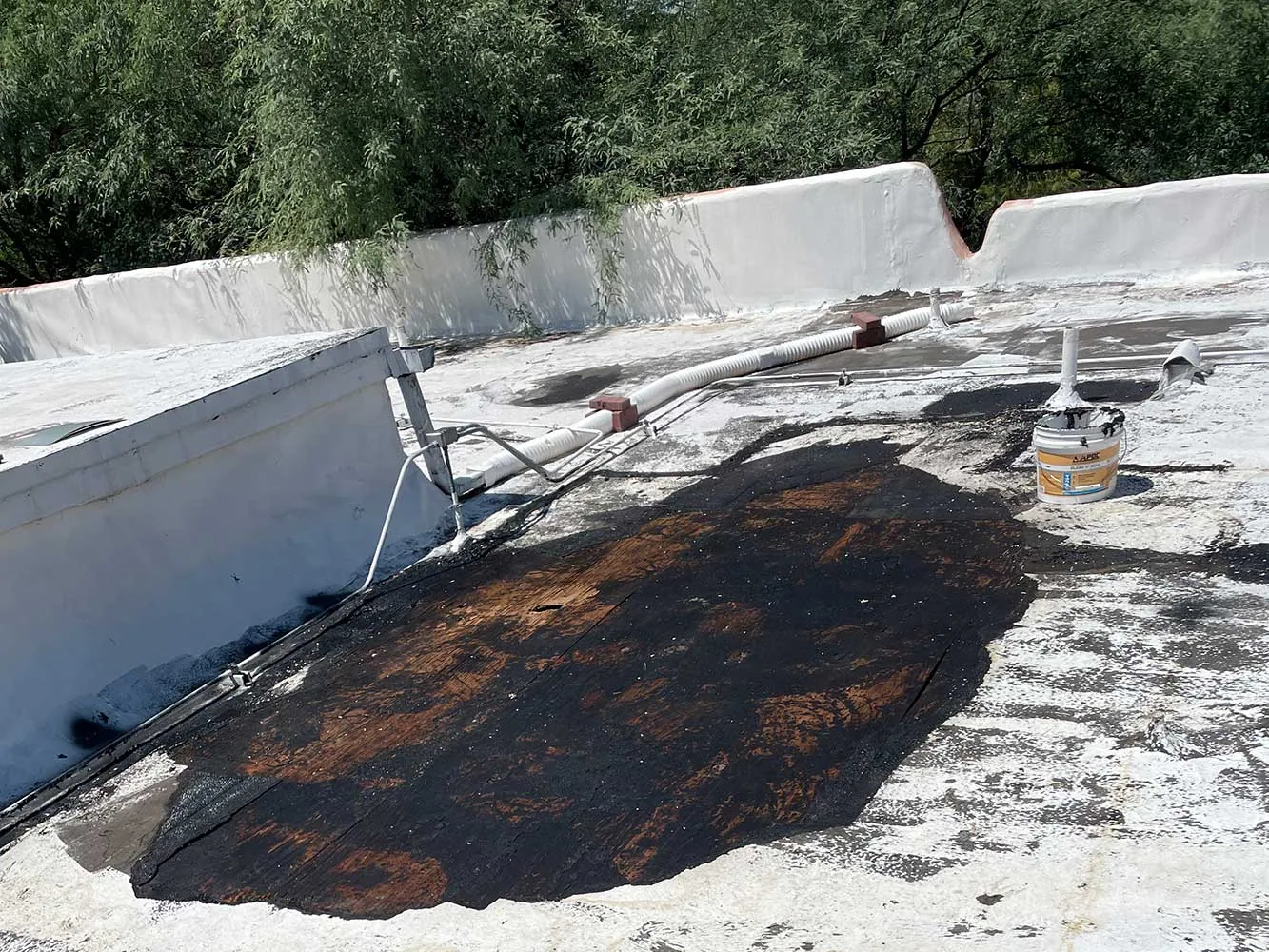
Water that gets past skylight flashing often soaks the insulation and cover board well beyond the damaged spot. We look for soft areas, staining and blistering, and take core samples where we need to know what is under the membrane we plan to keep. A soft spot tells us where to look; it does not tell us how much to tear out. Insulation that is confirmed wet or crushed gets replaced before new flashing goes on, because flashing over wet board will not last.
An infrared moisture survey can help map the wet area around a skylight when the weather and the roof type allow a useful scan. We explain what the scan can and cannot show and confirm suspect areas with cores before they change the quantities. That lets you compare a local repair with wider replacement based on what is actually wet.
When a test result could change the bigger recommendation, we tell you up front what the test is for and what it will cost to open and close.
At the curb itself, we look at the base flashing, the corners and the top edge,. If the skylight frame needs adjusting first, that step goes into the schedule ahead of the roofing. Then we flash the curb onto sound material and note how the roof work differs from the skylight contractor's part.
Skylight service comes before final flashing
If glazing or frame work happens after the new flashing is finished, it can damage it. On a Martinez skylight job we plan the curb, the flashing and any frame repairs by a skylight contractor as one schedule. The room under the skylight decides how much interior protection we need. We keep the opening dried in while the skylight work is done, then prep the curb and install the final flashing once nothing else needs to be disturbed.
For roof work over occupied space, we compare doing each skylight as its own short job with grouping them into one visit. Separate visits let you sort out the skylight question before committing, but each one adds setup time. One combined visit saves repeat mobilization once the scope is clear. We lay out both options next to the finished detail, so you choose timing based on the full job, including interior protection and coordination, rather than a quick application time that leaves those out.
Other skylights need their own inspection
A commercial roof in Benicia may have a different skylight style or a different membrane around it. We inspect it on its own before suggesting the same flashing materials. Each building gets its own diagnosis, its own repair size and its own note on what the skylight contractor needs to do, and any combined material order follows those findings rather than how the skylights look.
If you also have a building in Lafayette, we can look at combining mobilization once access and repair methods for both are settled. We list inspection, tear-out and protection costs separately for each site, then compare one combined schedule with two separate ones. Active leaks and failed membrane get fixed first; cosmetic coatings can wait. You can group the work to save money while each skylight still follows its own repair order.
Commercial Roofing Questions
Does a drip next to a skylight mean the flashing failed?
Not always. The curb flashing and the skylight's own glazing seals both need to be checked. We find the actual leak path and bring in a skylight contractor if the unit is at fault, so the repair matches the real cause and not just the drip's location.
Can roof flashing fix a leaking skylight seal?
No. Flashing and glazing seals do different jobs. We handle the roofing side and tell you when the skylight itself needs service before we finish. New roof flashing will not stop water coming through a failed gasket over the same room.
How do you decide how much roof to remove around the curb?
By the condition of the surrounding membrane and what we find underneath it. Where it matters, we take cores to check for wet insulation, then include prep and finish work in the price. The size follows the damage, not the skylight's outline.
Why should skylight work happen before the new flashing?
Because frame or glass work done afterward can damage the finished flashing. We agree the skylight contractor's work and the interior protection first, keep the opening dried in, then install the final flashing once the unit is done.
Can several skylight repairs share one material order?
Only after each skylight and its roof are inspected. Curb sizes, roof systems and skylight repairs vary. Once we know each one, we can combine materials where they truly match, while keeping each building's prep and protection separate.
Skylight leaks need the right trade in the right order