Local weather advisory
Coastal Flood Advisory: Commercial Roof Help in Richmond
The National Weather Service has issued a coastal flood advisory covering Richmond. Heavy rain and drainage loading can expose roof leaks, blocked drains, and ponding water. This is a weather exposure advisory; it does not establish damage to a specific roof.
Do not access a roof during hazardous weather. Protect people first, avoid water near electrical equipment, and request roofing help when conditions permit.
National Weather Service · Updated Oct 28, 2026, 7:20 AM UTC
Commercial Roofing in Richmond Field Station and Regatta, CA
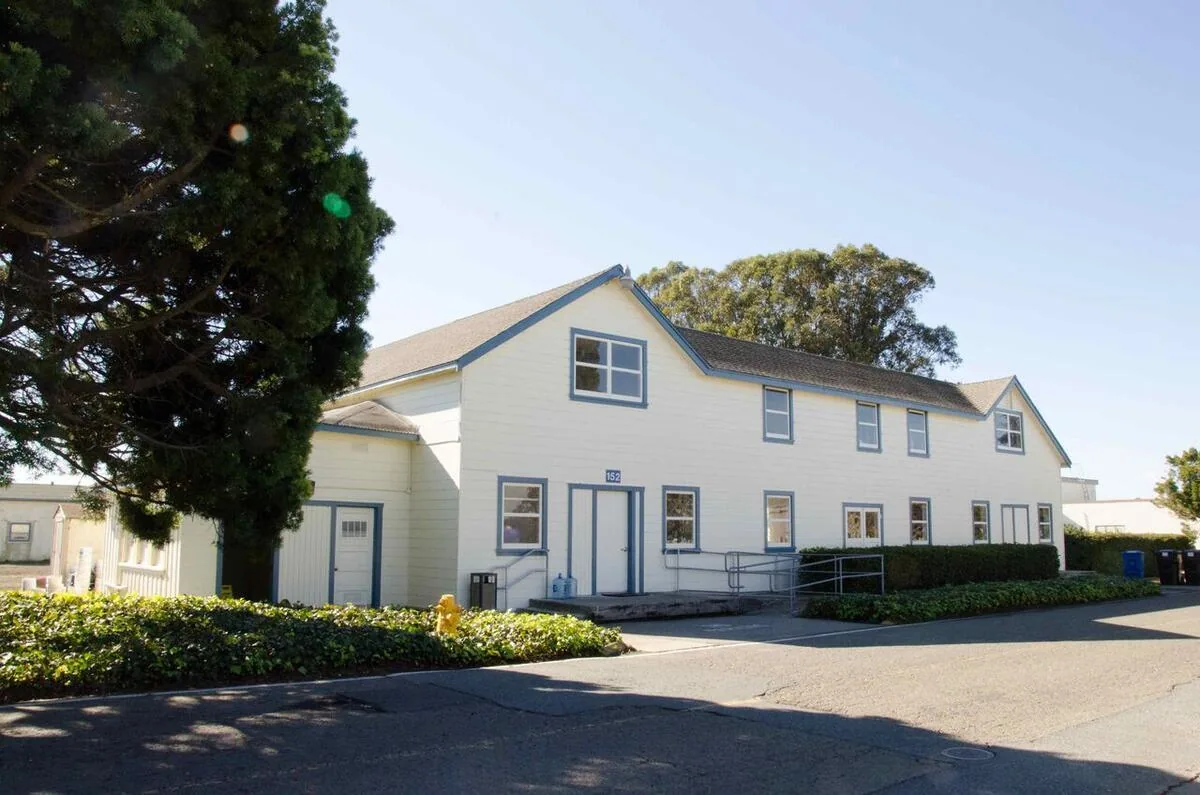
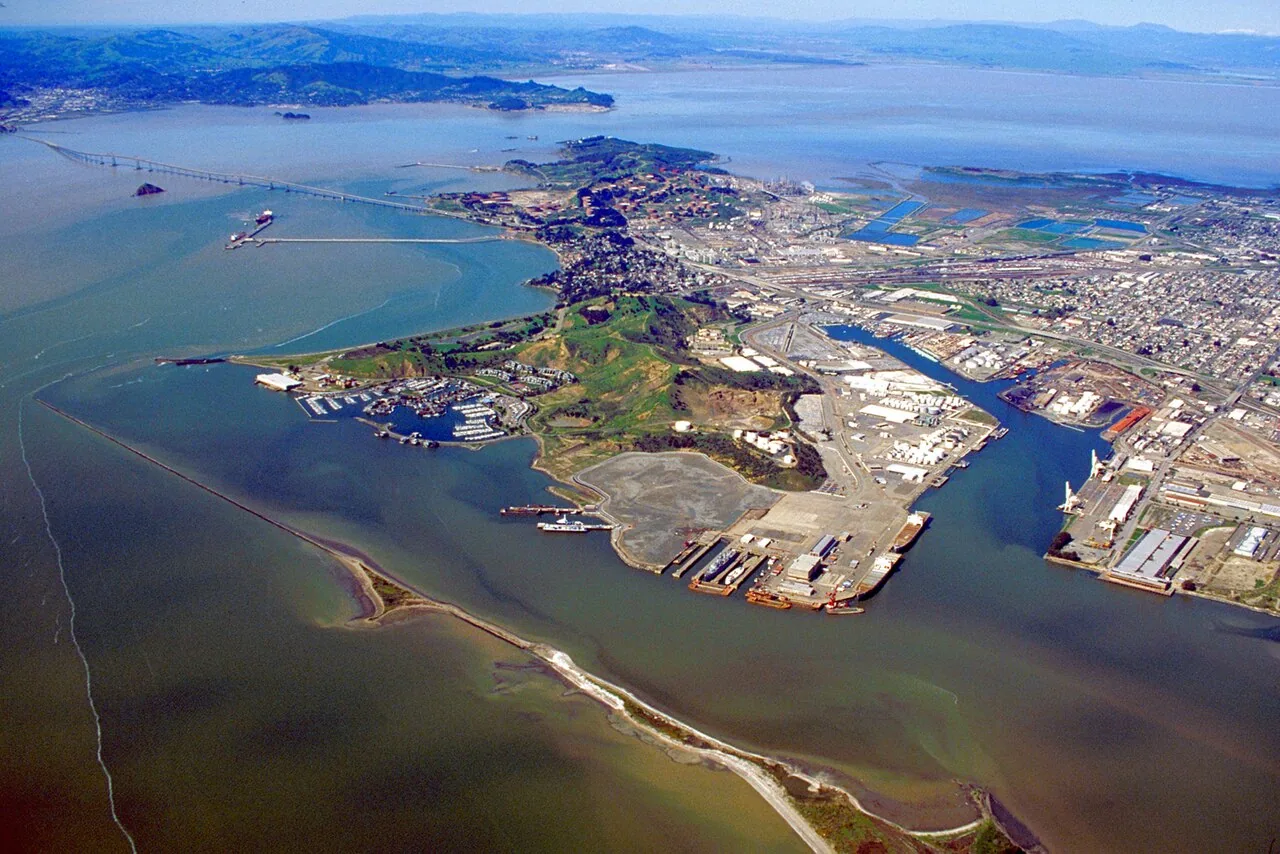
A split pipe boot or open conduit flashing over a commercial space near Richmond Field Station can let water straight into the room below, and the fix often depends on the pipe as much as the roof. We look at both before committing to a permanent repair on Richmond, CA commercial roofs, and we compare a repair with restoration or replacement when what we find supports it. UC Berkeley's Richmond Field Station covers about 125 acres together with the Regatta Industrial Center next door, so research buildings and industrial space sit side by side here. Penetration work in this area starts with the pipe or conduit itself, the curb or boot around it, and the membrane it seals to. The scope says which trade works first and when the roofer closes it up.
The leak might be the flashing, the clamp or seal at the top, or the pipe itself, which may need a plumber or electrician. We sort out who handles what and check the membrane around the penetration that we plan to keep. The repair has to tie into that roof once any other trade's work is done. The proposal covers testing, prep, interior protection and closing up the roof along with the new flashing. You can then compare a small fix with a bigger tear-off based on the full job, not a cheap flashing price that leaves the pipe work or wet insulation for later.
The pipe may need another trade first
A pipe or conduit that runs through the roof may need to be shut down, moved or modified before we can pull the old flashing and build a new one. We work that out with the plumber, electrician or mechanical contractor and spell out the roofing work that follows. On a campus that mixes research and industrial buildings, deliveries and access can be different at each building, so every roof gets its own material route and interior protection plan. A loose clamp might be a quick fix, while a cracked pipe or a shifted support needs a different order of work. The recommendation shows which problem each step fixes and what has to happen before the permanent flashing goes on.
Our pipe and penetration flashing repair ties that coordination to the roof prep and final seal. We look at the actual membrane and the shape of the penetration before picking a flashing. What's compatible depends on the roof system, not just the size of the pipe. That gives you a straight comparison between a roof-only fix and a coordinated job, with the other trade's part shown instead of buried outside a flashing line item.
The existing membrane decides the prep
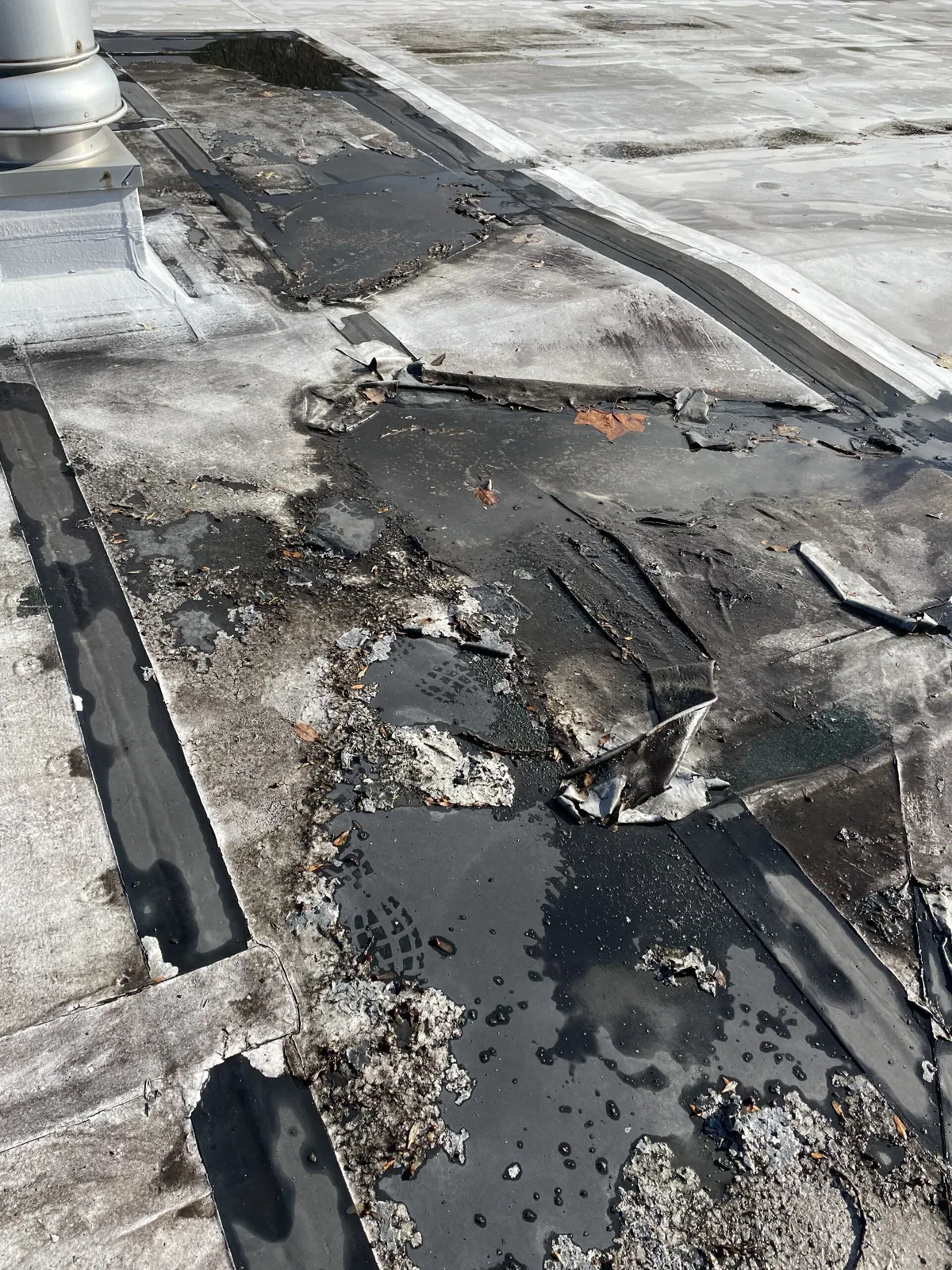
A new boot or pitch pocket needs sound membrane around it to seal to. We check that area for open laps, damage and old patches that affect how we prep it. Sometimes we have to cut back past the visible gap to reach good roofing. The method follows the roof system and the condition of the membrane we're keeping, so two pipes that look alike can still need different amounts of work.
The scope for repairing the roof around the penetration shows that prep next to the new flashing. We explain where the roofing is sound and what needs a closer look before we set the repair line. A small repair and a larger one are compared on the same prep. You see the full patching job, not one flashing price followed by a surprise once the pipe is ready.
Moisture confirmation affects the repair choice
Water that gets in at a penetration can soak insulation well beyond the boot. We check what we can see and recommend testing when the answer would change our recommendation. A damp reading is a reason to look closer, not proof of how much has to come out. Wet or crushed insulation gets replaced before the new flashing is finished, and any test holes are sealed as part of that first step.
Our roof inspection around penetrations separates open leaks from wet material hiding under the membrane. We connect what we find to repair, restoration or tear-off options and tell you what more testing could change the price. That gives you a clear order for spending money at the penetration. A coating or other surface upgrade can come later, after the leak and the wet insulation are fixed, instead of hiding a problem that would mean cutting the roof open again.
One round of testing can sometimes answer a question that affects several penetrations on the same roof. We explain what area the test covers and what it can't tell us before we price them together. Each penetration still gets its own check, and the repair schedule follows what the tests confirm, with the roof kept protected between steps.
Scheduling around plumbers and electricians
If a plumber or electrician works on the pipe after the new flashing is installed, they can tear it right back open. Near Richmond Field Station we plan roof access around the section being worked on and protection for the space under it. What's in the room below drives how much protection is needed and how much disruption is acceptable. Labs, offices and industrial bays each have their own traffic limits, so the scope names the affected area and the approved route for materials and debris. Those steps sit next to the flashing work, including any time another trade needs the pipe left open.
When we schedule roof work over an occupied space, we compare doing sections one at a time with doing the whole repair in one go. An extra visit can answer a pipe or material question before you commit, but adds setup. One combined visit cuts that repetition once everyone knows their part and the prep is clear. The proposal shows both options with protection included, so you can choose the timing based on the whole coordinated job, not just how long the flashing takes.
Related roofs keep different penetration details
A commercial building in El Cerrito may have different pipes and vents coming through the roof and a different membrane around them. We inspect that roof on its own before recommending the same materials or the same schedule. Leaks that look the same inside don't mean the same part failed. Each scope lists its own cause, prep and trade work, so coordinating jobs follows real findings and not a count of similar pipes.
For another property in Albany, buying materials together can be weighed once we know the flashing method and delivery route at each building. We keep each roof's prep, protection and tear-off costs separate while comparing repeat setups with one combined job. Active leaks get fixed before optional upgrades. That lets you coordinate several properties with a clear work order for each, while each building's equipment and roof details stay visible in the decision.
Commercial Roofing Questions
Can a penetration flashing be rebuilt before service isolation is arranged?
Not if the pipe or conduit needs to be shut off, moved or modified first. We work that out with the right trade and show the roofing work that follows. The permanent flashing goes on after the other work is done.
Does a similar pipe shape justify the same flashing material?
No. The roof system and the condition of the membrane around the pipe decide what works. Two pipes the same size can need different flashings or different amounts of tear-off on different roofs.
What changes a small detail repair into broader removal?
Wet insulation or damaged membrane around or under the penetration. If testing would settle how far that goes, we recommend it, then price the patching along with the new flashing.
Should several penetrations be examined in one visit?
Often, yes, when one round of testing answers a question that affects several of them. We explain what it can and can't tell us, and each penetration still gets its own check. Test holes are sealed the same visit.
How does trade coordination enter the construction period?
Any pipe or electrical work that would disturb the flashing gets done first, then we prep and install the new flashing. We compare a few workable schedules with protection and access included, and the timeline reflects that order.

Penetration repair that accounts for the other trades