Roof Insurance Claim Assistance in Richmond, CA
When a Richmond building owner finds a seam that has opened up or a new leak after a storm, two things have to happen. Someone needs to figure out what is wrong with the roof and what it takes to fix it, and the owner may want to file an insurance claim. We handle the first part: a careful inspection, clear photos and a written repair scope your adjuster can follow. We do not decide what your policy covers.
On an office building roof, that starts with getting to the problem area, which may mean going through tenant space or working around rooftop units. We photograph the damaged seam or detail, check the insulation around it and note anything we could not see or reach. The report says plainly what we found, what we recommend and what still needs a closer look. That gives you something solid to bring to the claim conversation, and it also stands on its own as a repair plan if the claim takes time or is denied. Before we visit, we ask who can let us onto the roof and which spaces we will need to pass through.
What we do and what the insurer does
Our job is the roof. We document the condition, explain the cause where we can tell it from the evidence and price the repair. Your insurer and adjuster decide what the policy covers and what it pays. A commercial roof inspection done for a claim records the roof type, the damaged areas and anything that needs more investigation. It does not assume that every leak in the building comes from the same event, and it does not promise coverage. Questions about your policy belong with your agent, broker or insurer.
Keeping those roles apart protects you. If a contractor writes a repair estimate that reads like a coverage decision, it can complicate the claim and hurt your credibility with the adjuster. Our estimate describes real work: what comes out, what goes back in, how we get the crew and material onto the roof, and what it costs. That estimate stays useful whether the claim is approved, reduced or still under review. A claim file cannot tell anyone whether the insulation under a damaged seam is dry or whether a patch material will bond to an old membrane. Only the roof can tell you that, and that is what we check.
When the damage showed up
A leak that shows up right after a windstorm may be storm damage, or it may be an old problem that the storm finally exposed. We record the date you first noticed it and any earlier photos or repair records you have, and we keep those apart from what we see on the roof today. If the roof needs storm damage repair, the scope covers what we can actually see and measure. We will not tell an adjuster that every layer was damaged by one storm unless the roof shows it.
A water stain on a ceiling tile does not always sit right under the roof leak, either. Water can travel along the deck, a beam or a pipe before it drips. We trace the path from inside to the roof and check nearby penetrations, rooftop units and walls. If the leak may be coming from a window, a wall or a mechanical unit, we say so and suggest who should look at it. The report lists what we confirmed and what is still unknown, so nobody has to guess later. Whether the cause qualifies under your policy is a separate question that we leave to the claim process.
Line items an adjuster can follow
If cores show the insulation under a damaged area is wet, it needs to come out and be replaced as part of the repair. Areas we only suspect are wet stay on a separate list until we confirm them. For a TPO roof, the scope names the membrane, the insulation and cover board below it, and the flashing details that go with the repair. Two roofs with damage of the same size can need very different work underneath, so we do not price from surface area alone.
Sometimes we open the roof and find more wet material than the cores showed. When that happens, we photograph it, measure it and send you the added quantity and cost for approval, keeping the roof sealed while you decide. You should keep those change records with the claim file. A low estimate that leaves out tear-off, disposal or new insulation may look similar to ours on paper, but it is not the same job. A complete, honest scope gives the adjuster something to evaluate without us making claims about what the policy will pay.
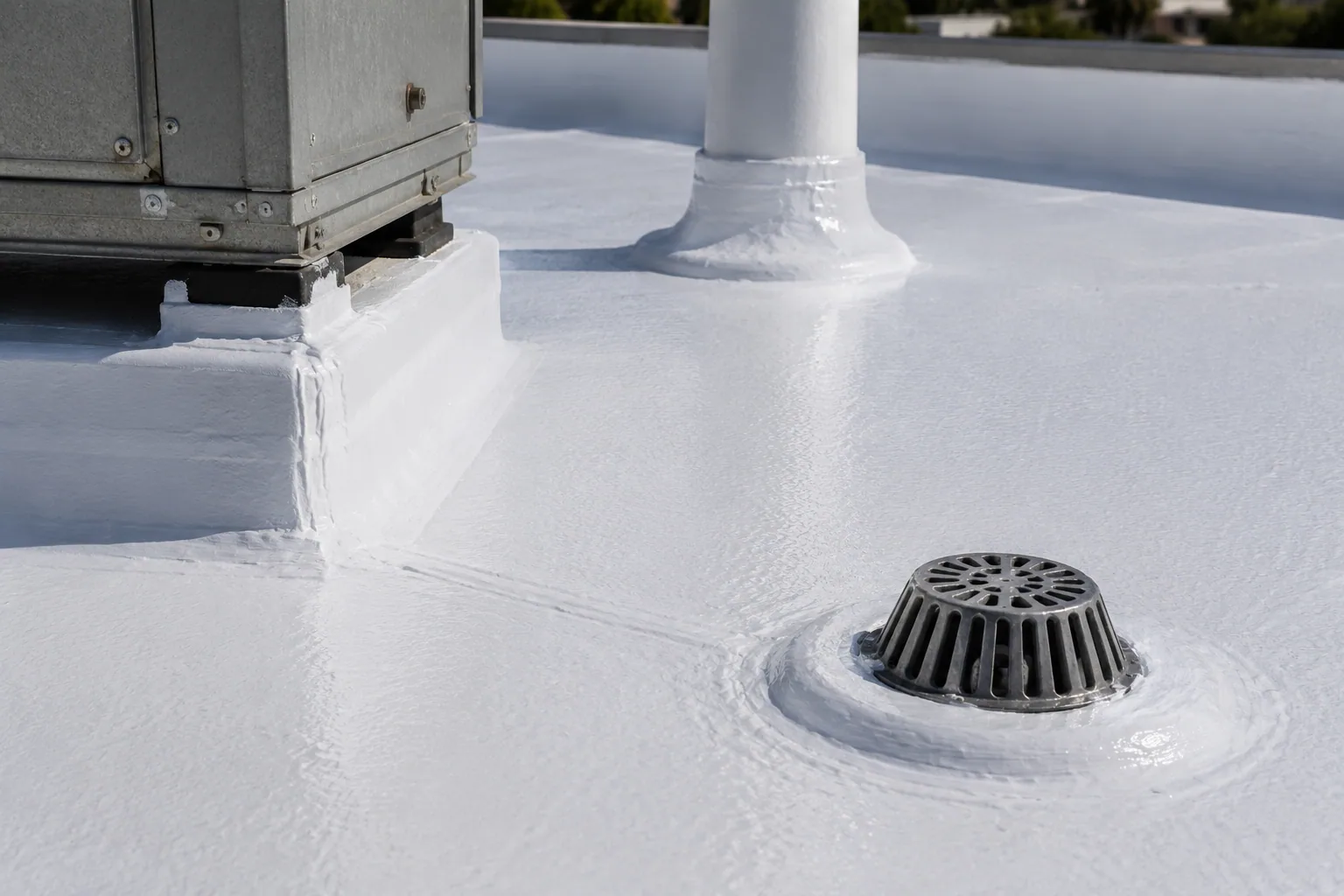
Each line item in our estimate ties to something you can see in a photo: a torn seam, a lifted flashing, a wet core sample. We list removal, new material, access setup and the final seal-up separately, with pictures showing where each task starts. Anything we could not confirm is listed as a step to verify, not rolled into a roof-wide guess. That makes the estimate easy to check against the inspection while the coverage questions stay with the insurer.
Access and the repair itself
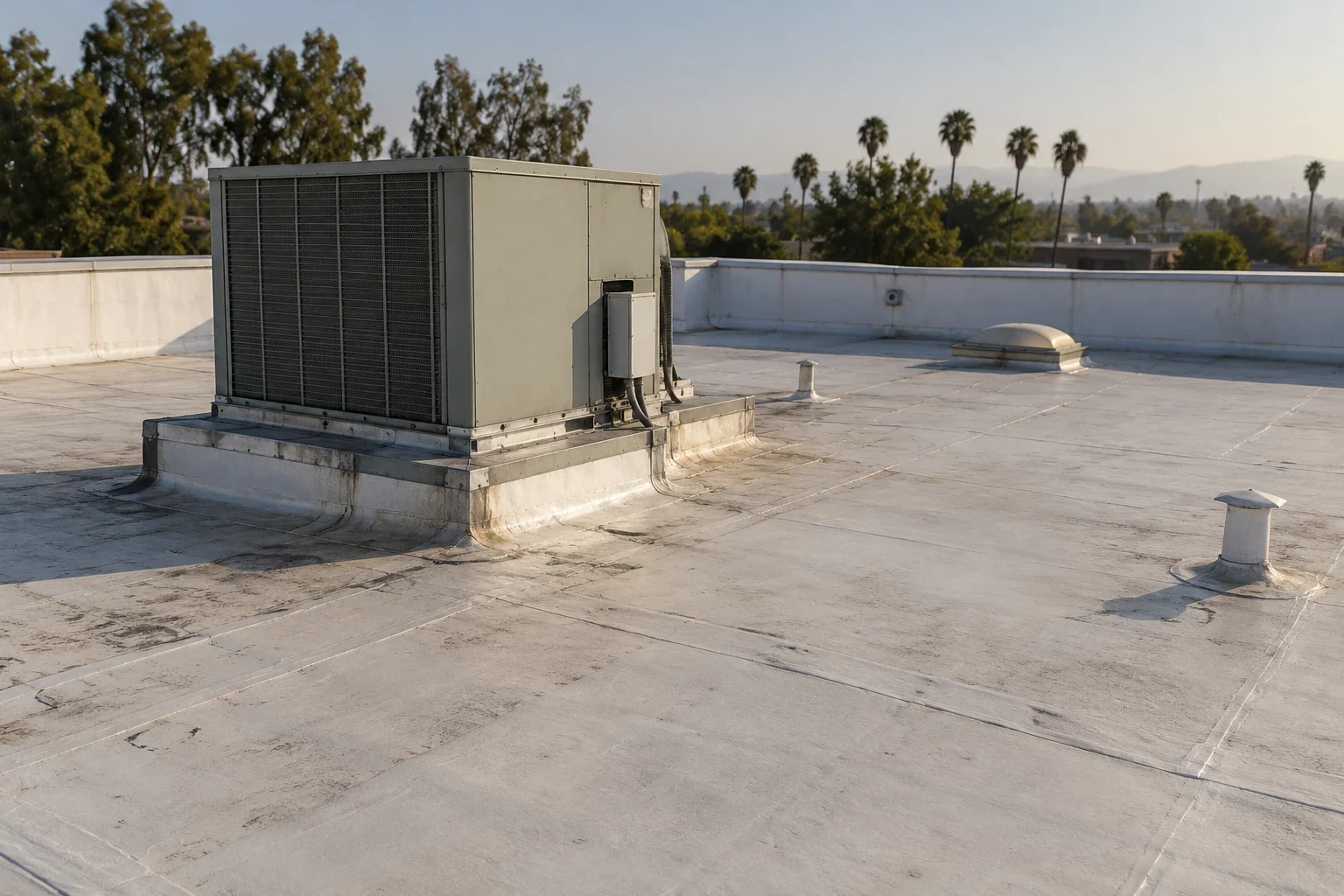
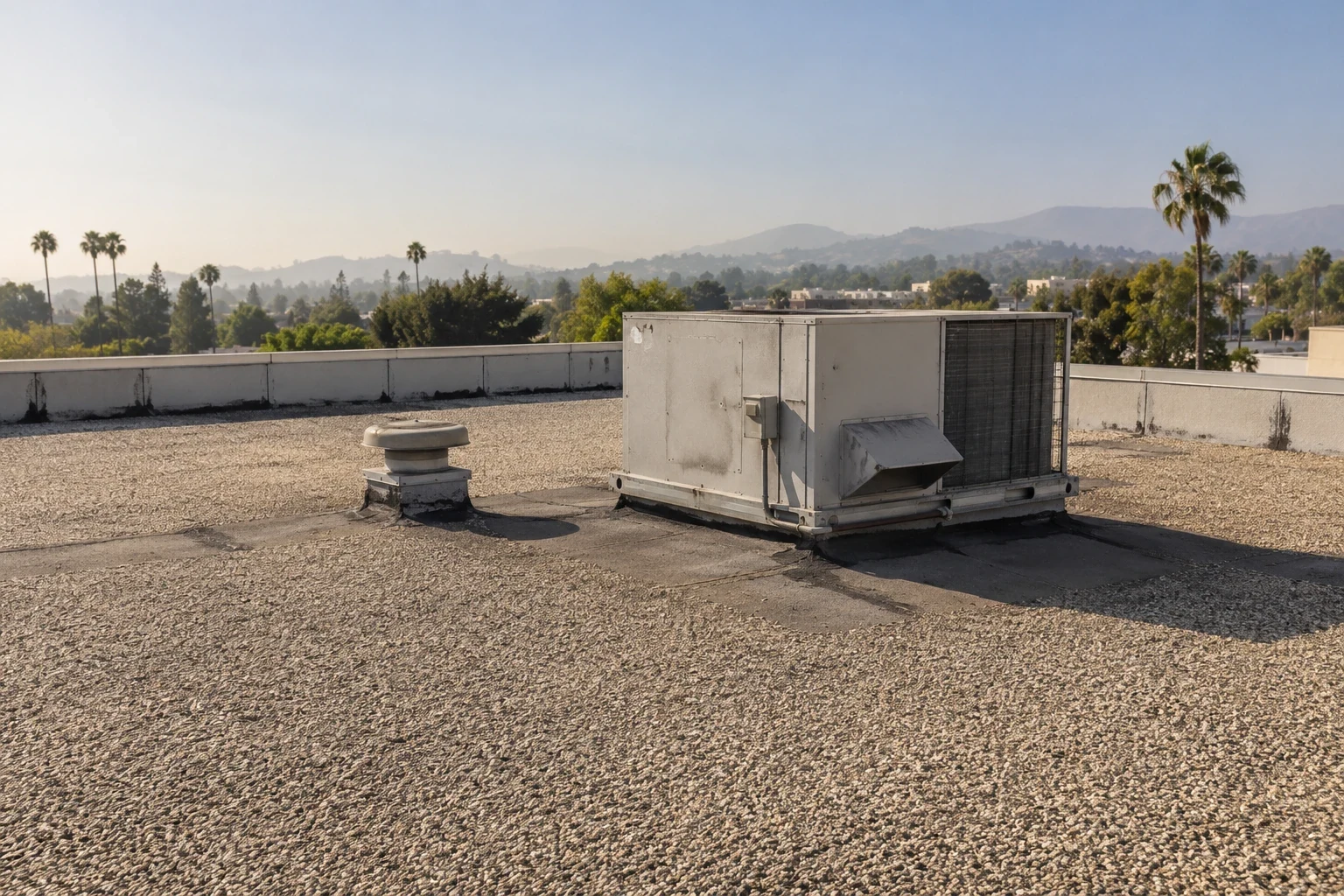
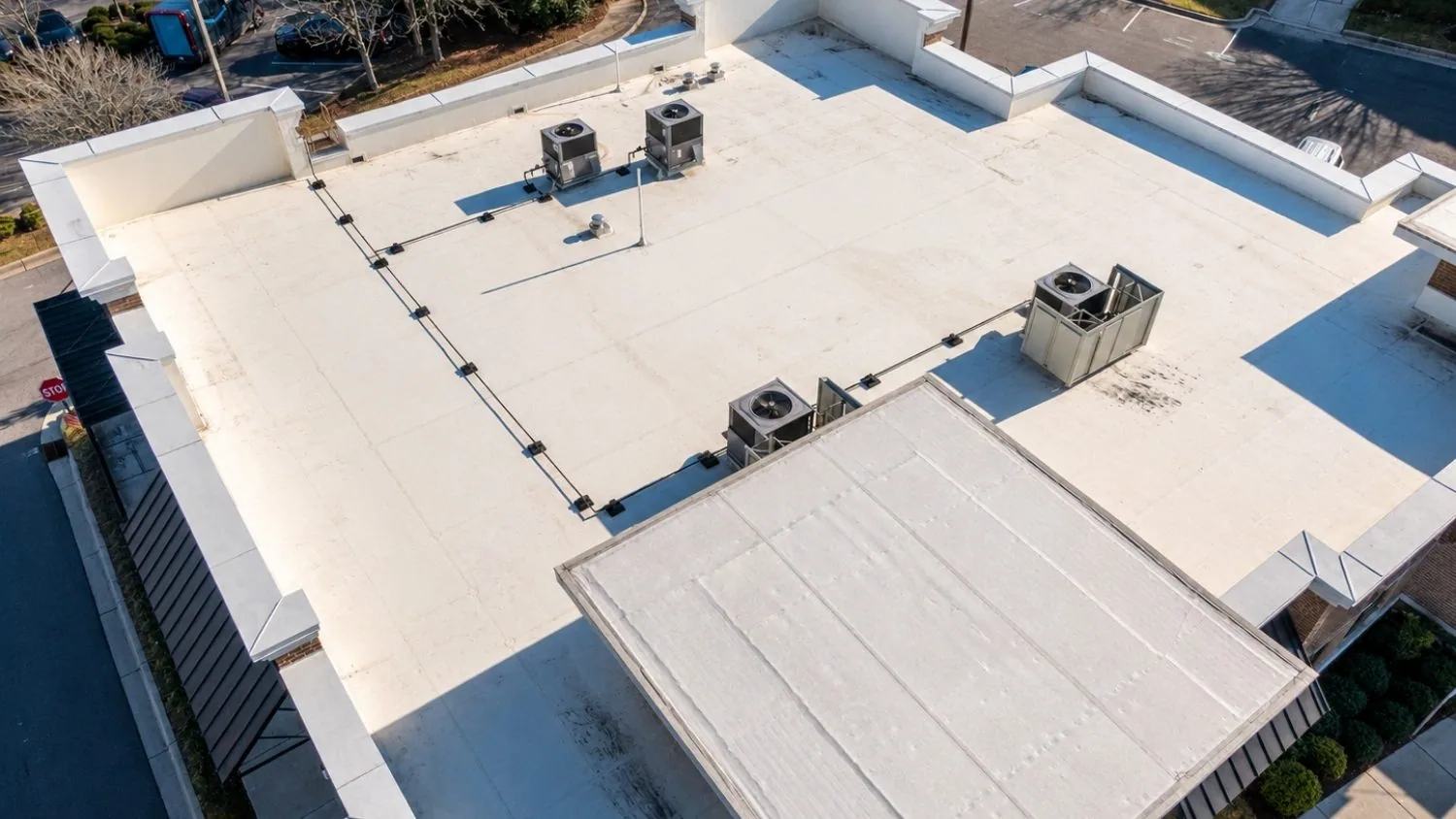
Some damaged details sit under or right beside rooftop equipment. If a unit has to be disconnected and lifted to reach a curb flashing, your mechanical contractor needs to do that, and the estimate says so. We note any area we could not inspect because equipment was in the way, so the claim file shows what we saw and what we could not.
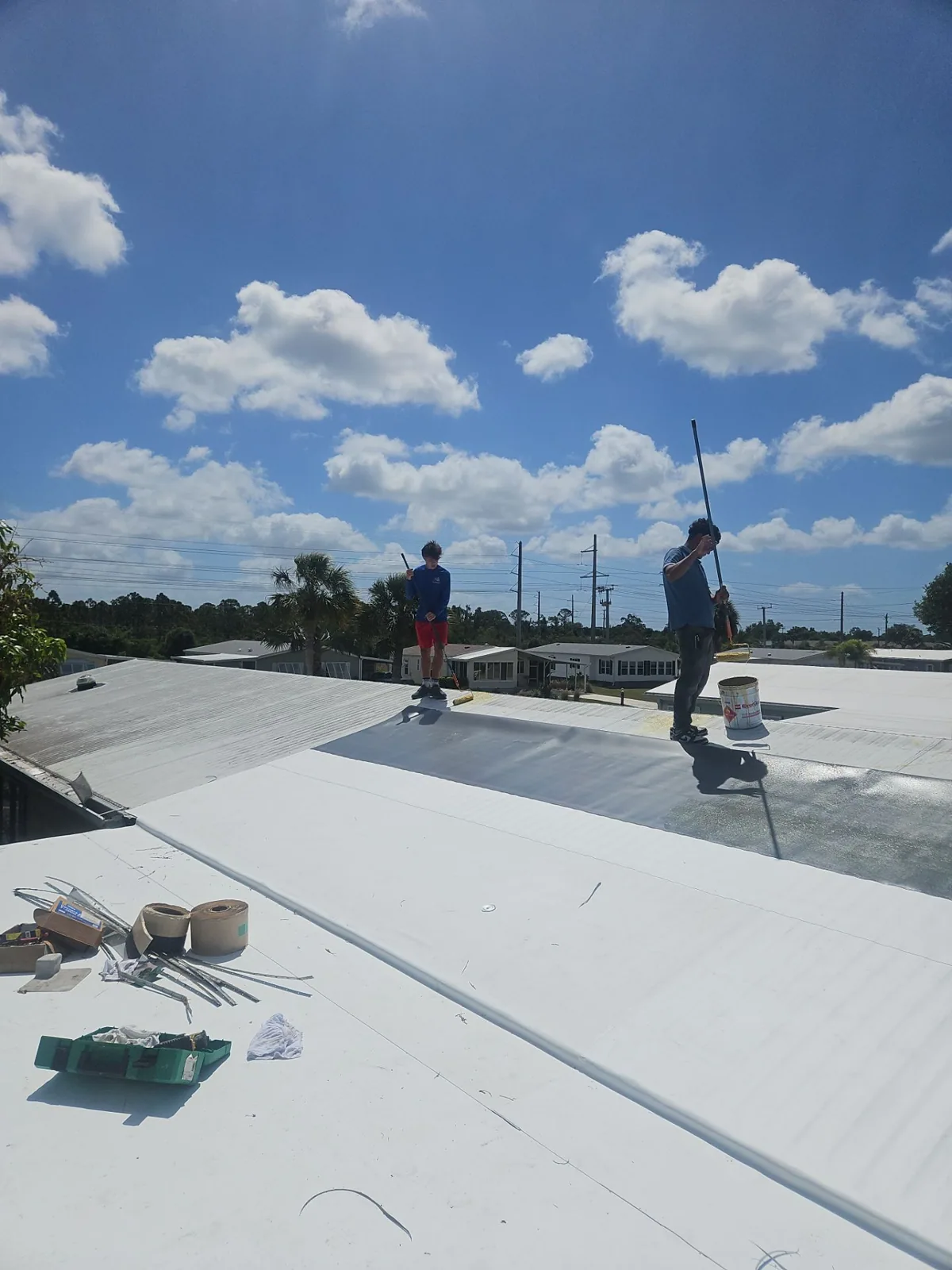
A commercial roof repair done after a claim still has to be a proper repair: compatible materials, dry insulation underneath and flashing that ties in correctly. Hoisting material, protecting tenant spaces and working in separate phases can add setup time and cost beyond the repair area itself, and those items belong in the estimate. It also helps to keep the inspection report, the repair estimate and the finished work as separate documents, so everyone knows which is which. On properties in nearby San Pablo, as in Richmond, we keep the same approach: observed damage, recommended repairs and the insurer’s coverage decision are three separate things, and our paperwork treats them that way.
Records after the work
After the repair, you get a roof condition report showing what we found, where we worked, what materials went in and photos of the insulation and flashing before the membrane was closed up. For owners around the Port of Richmond, that report also notes any access limits that affected the job. Anything still open, such as a unit that has to be reset by your HVAC contractor, stays on the list as open.
Keep any change orders and inspection checks with that report. If a leak comes back later, or you alter the roof, you can compare it against exactly what was repaired and where. If your roof carries a manufacturer warranty, the repair may need to follow that manufacturer’s rules to keep coverage in place, which is a separate matter from your insurance. We check those terms before we start. The goal is a plain record of what happened to the roof, what we fixed and what still needs attention. It supports your claim with facts while leaving coverage decisions to your insurer.
Commercial Roofing Questions
Can your roof report decide what my insurance pays?
No. We document the roof damage and write the repair scope. Your insurer and adjuster decide what the policy covers and what it pays.
What should I tell you about a new leak or damaged seam?
When you first noticed it, what the weather was like, and any older photos or repair records. We keep that history separate from what we see on the roof today.
What if you find more wet insulation once the roof is open?
We photograph and measure it, send you the added quantity and cost for approval, and keep the roof sealed while you decide. Those change records can go in your claim file.
What do I get after the repair is done?
A report listing the materials installed and where we worked, with photos taken during the repair. Any open items, like equipment another trade still needs to reset, are listed too.


Tell us what happened to the roof