Spray Polyurethane Foam Roofing in Richmond, CA
Spray polyurethane foam roofs depend on their top coat. The foam provides insulation and a seamless waterproof layer, but sunlight breaks it down quickly if the coating wears through. On a warehouse roof, the first worn spots often show up around rooftop equipment, where foot traffic, dropped tools and service work scuff the coating and expose the foam underneath.
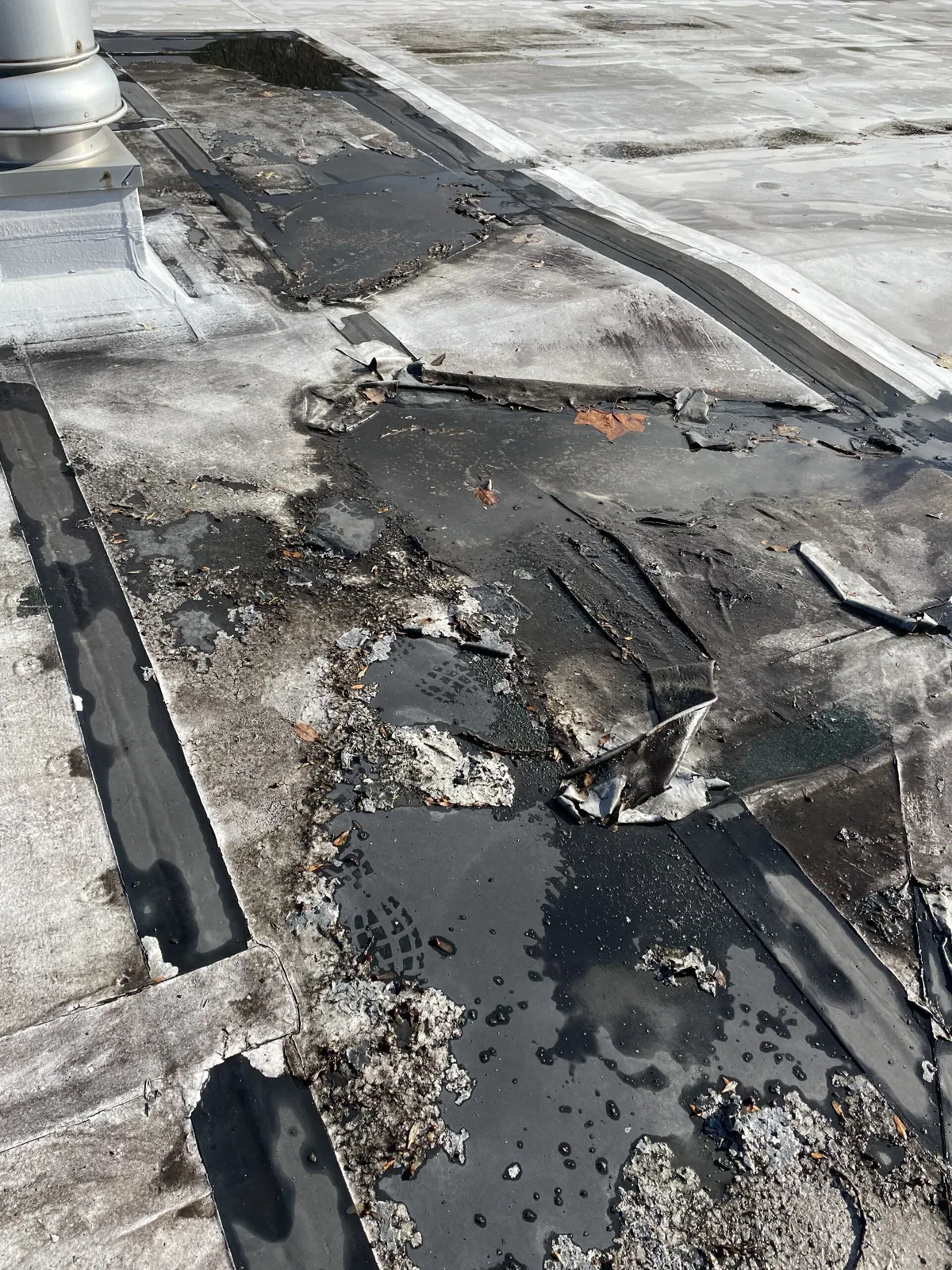
Once foam is exposed, it turns brown, then powdery, and water can start to get in through small cracks and holes. Birds sometimes peck at it too. Catching this early keeps a repair small. We look at the coating thickness, any bare or damaged foam, blisters and soft spots, and the condition of the roof around equipment and drains. Then we tell the owner what needs repair now, whether the whole roof needs recoating and how the costs compare with other options.
Inspect the foam and its coating
Foam roofs fail in a few predictable ways. The coating wears thin from weather and traffic. The foam gets punctured or crushed where people walk or set equipment down. Blisters form where the foam lost bond to the roof below or to a previous layer. Water can then soak into the damaged foam. During a roof inspection we walk the whole roof, check coating thickness at several points and probe any soft or discolored areas.
We pay close attention to the spots where most problems start: around HVAC curbs, at roof edges, at drains and anywhere the roof gets regular foot traffic. A small cut sample can tell us how deep the damage goes and whether the foam below is dry.
The owner gets a clear map of what we found: areas that only need recoating, areas where the foam must be cut out and replaced, and spots we could not fully assess. If the roof was coated with a silicone or acrylic before, we identify which one, because that affects what can go on top of it now. Knowing all this before work starts keeps the estimate accurate and avoids surprises once the crew is on the roof.
Repair the foam and recoat together
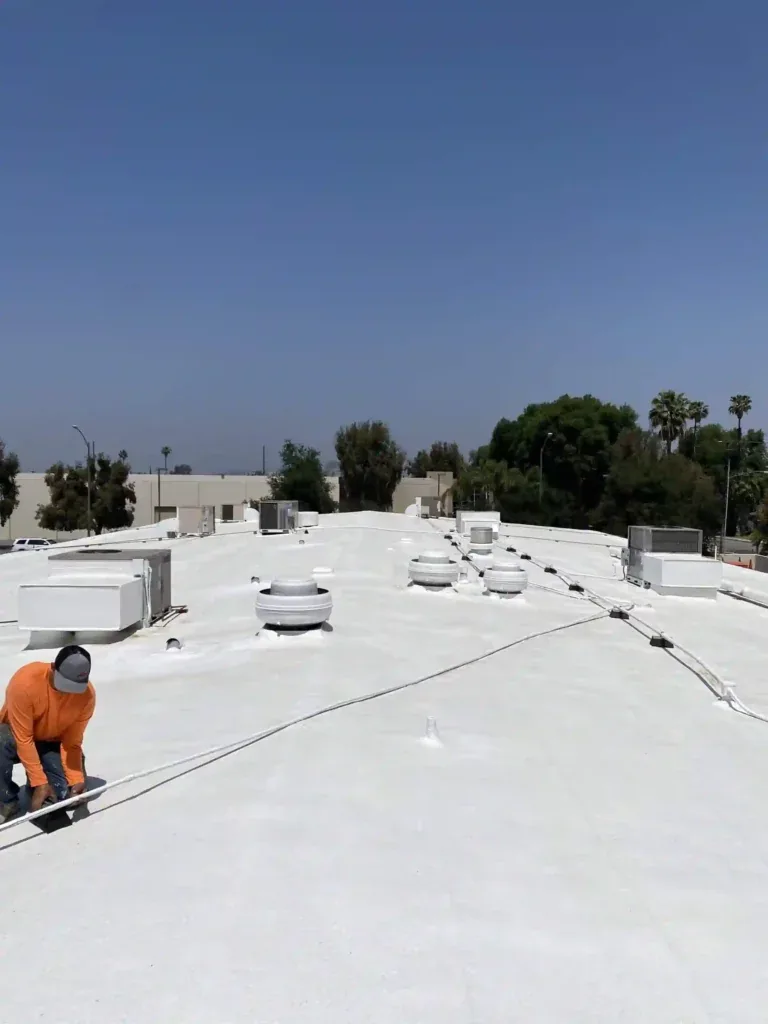
Foam and its coating work as one system. Manufacturers like Gaco pair their spray foam with approved coatings, and industry groups such as the Spray Polyurethane Foam Alliance treat the top coat as an essential part of the roof. Our roof coating restoration work on foam roofs covers both: repairing the damaged foam and then recoating to the right thickness.
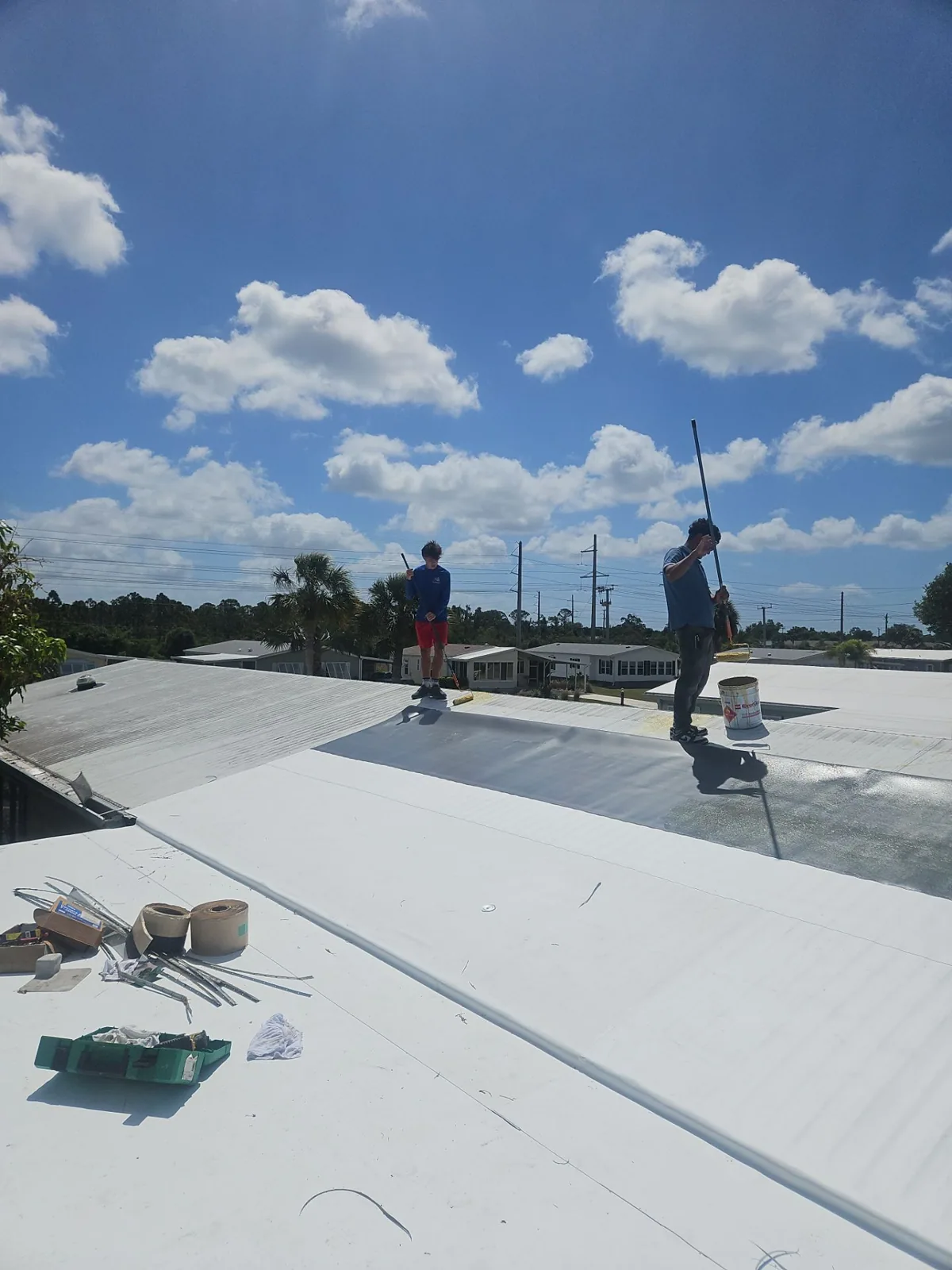
Small damaged areas are cut out, cleaned and filled with new foam or a compatible sealant, then coated. Larger damaged sections may be re-sprayed. The recoat has to match the existing coating type: silicone over silicone, for example, or an approved primer if switching. We also clean the roof thoroughly so the new coating bonds. The owner should see the foam repair and recoating priced together, because doing one without the other leaves the roof exposed. A cheap recoat over damaged foam will not last. Proper repair and coating together can extend the life of the roof for many years.
Find where the damage stops
Water that gets into a foam roof can travel along the bond line between the foam and the deck or old roof below. Damage can extend well past the visible spot. Before we decide how much to remove, we take cores and check moisture around the problem area. Our insulation and cover board assessment applies here too, especially on foam roofs installed over older insulation or built-up roofing.
We mark which areas are confirmed wet or debonded and which are only suspect, and price the confirmed removal. If the crew opens the roof and finds more damage, we stop, show the owner and get approval before continuing. The roof stays protected while that is decided. Comparing a repair with a larger fix only works if both options include the removal they really need. Spraying new foam over wet foam or wet insulation traps water and causes the same problem again, usually sooner than the owner expects. We would rather find the true extent of the damage first and price it honestly.
Rebuild the foam at the equipment
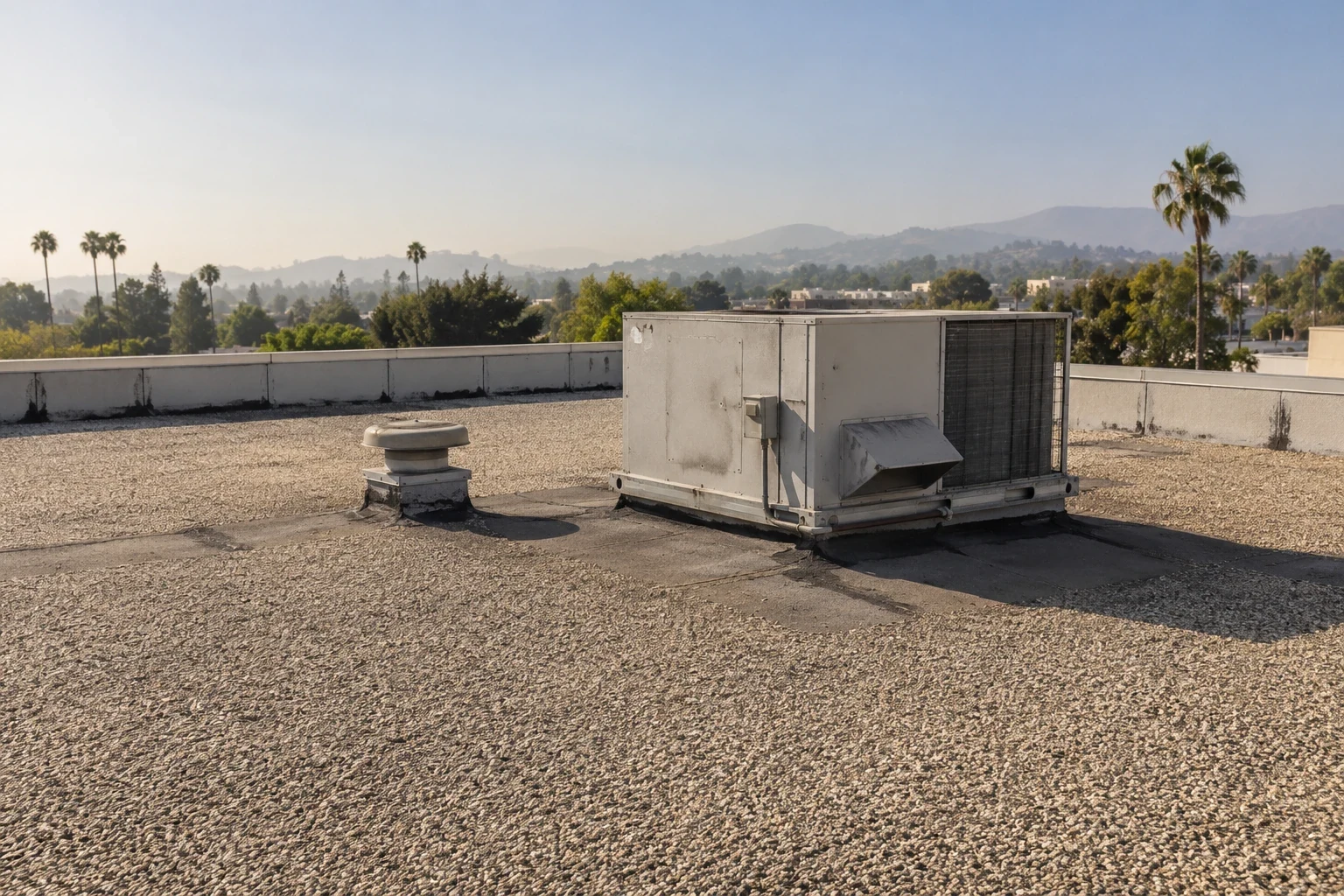
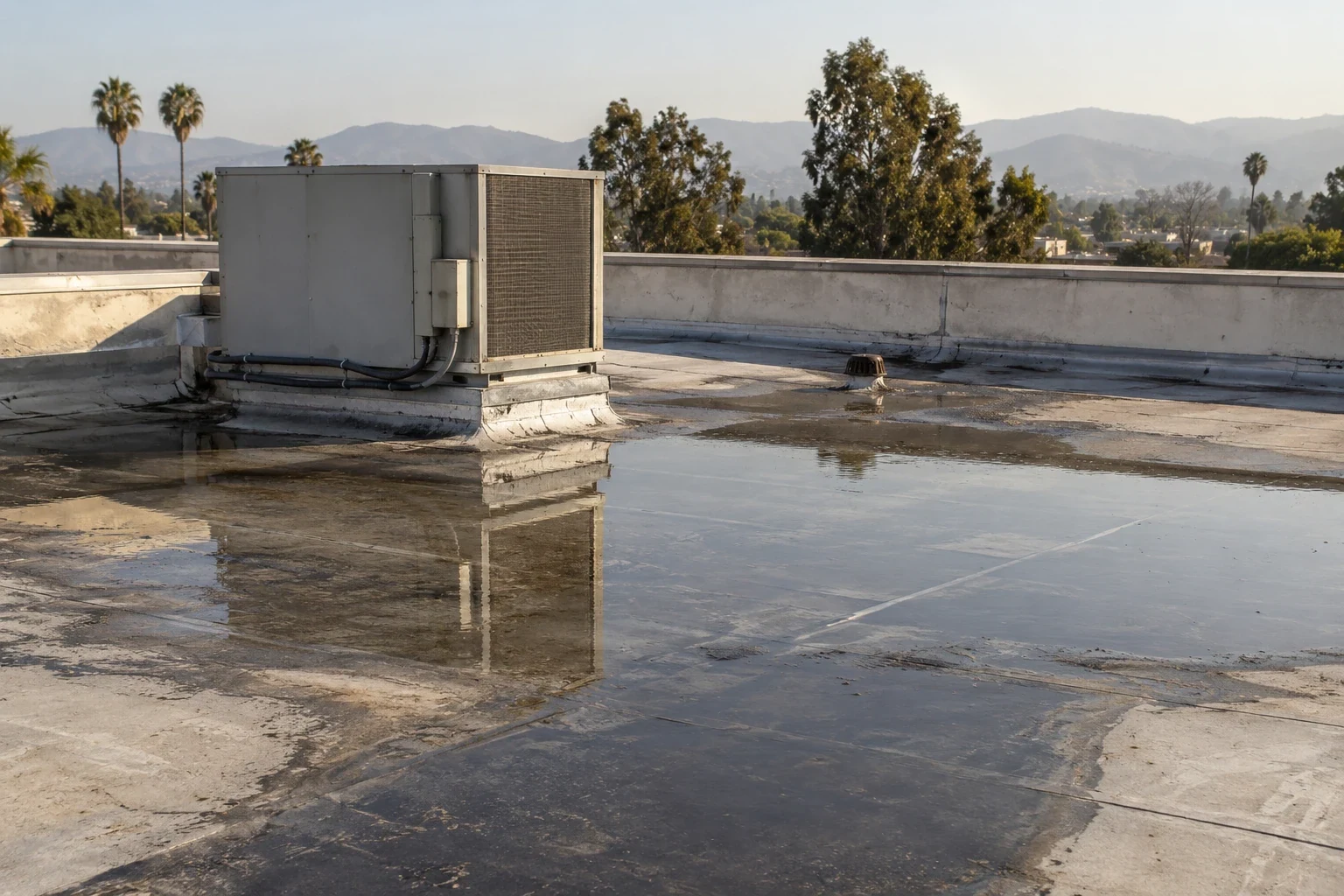
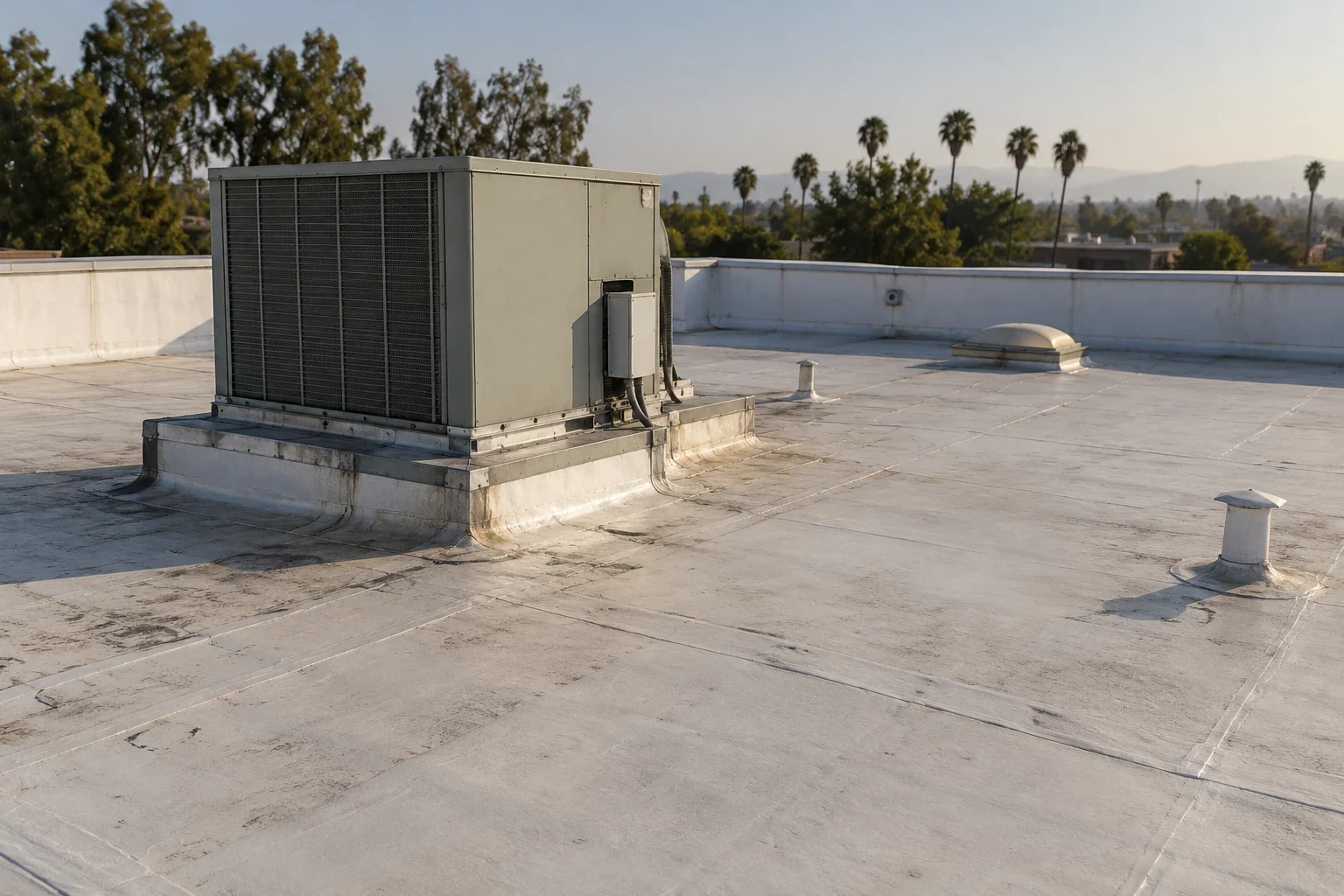
Rooftop units are where foam roofs take the most abuse. Technicians walk around them, set down tools and panels, and sometimes cut the foam to reach a line. Our rooftop equipment curb and support work rebuilds the foam around curbs, stands and penetrations so water sheds away from them.
If a unit has to be disconnected or lifted to reach the curb properly, that work usually falls to the HVAC contractor, and we schedule our repair right after. Walk pads around the unit help protect the new coating from future service visits. We list each of those items in the estimate so it is clear what the job includes. Spraying the open field is fast; the detail work around equipment takes longer and matters more. We also plan around operations below, the weather and the time the coating needs to cure before rain.
Compare foam with other roof options
When an owner is weighing options, the main choices for a foam roof are recoating with silicone or acrylic, or adding new foam before recoating. Silicone holds up well where water ponds and resists weathering. Acrylic is often less expensive and works well on roofs that drain freely, but it can wear faster in standing water. We price each option on the same repaired foam so the comparison is fair, and we explain the differences in cost, maintenance and how often each will need recoating.
For Port of Richmond warehouses and industrial buildings around Marina Bay and North Richmond, a foam roof can be a strong choice if it is maintained. When we finish, the owner gets photos of the repaired areas, coating type and thickness, and any warranty terms. Regular inspections, especially after equipment service, help catch damage before it spreads. A simple maintenance plan keeps the foam roof protected and the building dry, and it gives the next contractor accurate information to work from.
Commercial Roofing Questions
Does a fresh coat of coating mean the foam underneath is in good shape?
No. A new coat only protects the surface. We check the foam for damage, moisture and poor bond first and repair it before recoating.
How should we compare foam roof coating options?
Price each one on the same repaired foam. Then compare how each coating handles ponding, how long it lasts, its cost and what can go on top later.
Can you spray foam around a unit that has not been moved?
Not properly. If the curb is blocked, the HVAC contractor usually moves or lifts the unit first, and we rebuild the foam right after.
What records help with future foam roof care?
Photos of repairs, the coating type and thickness, warranty terms and inspection notes. Those make future recoats and repairs much easier to plan.




Tell us about the damaged foam and the roof around it