Local weather advisory
Coastal Flood Advisory: Commercial Roof Help in Richmond
The National Weather Service has issued a coastal flood advisory covering Richmond. Heavy rain and drainage loading can expose roof leaks, blocked drains, and ponding water. This is a weather exposure advisory; it does not establish damage to a specific roof.
Do not access a roof during hazardous weather. Protect people first, avoid water near electrical equipment, and request roofing help when conditions permit.
National Weather Service · Updated Oct 28, 2026, 7:20 AM UTC
Commercial Roof Coating Repairs in Novato, CA
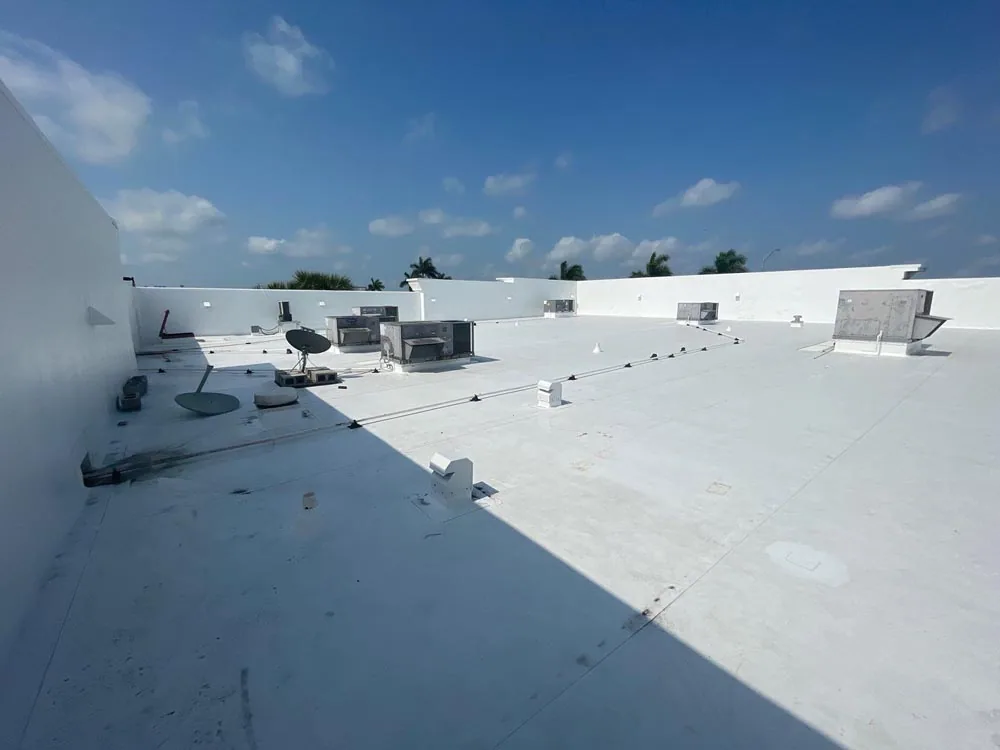
Blistered coating next to a roof penetration on a Novato commercial building can mean very different things. Sometimes only the coating has lost its grip and the membrane underneath is fine. Other times the blister is the first sign of trapped moisture, a failed flashing or a membrane that cannot take another coat. Rolling a fresh coat over it before anyone checks just hides the problem. We figure out which layer failed, then plan the prep and repair that will actually stay put.
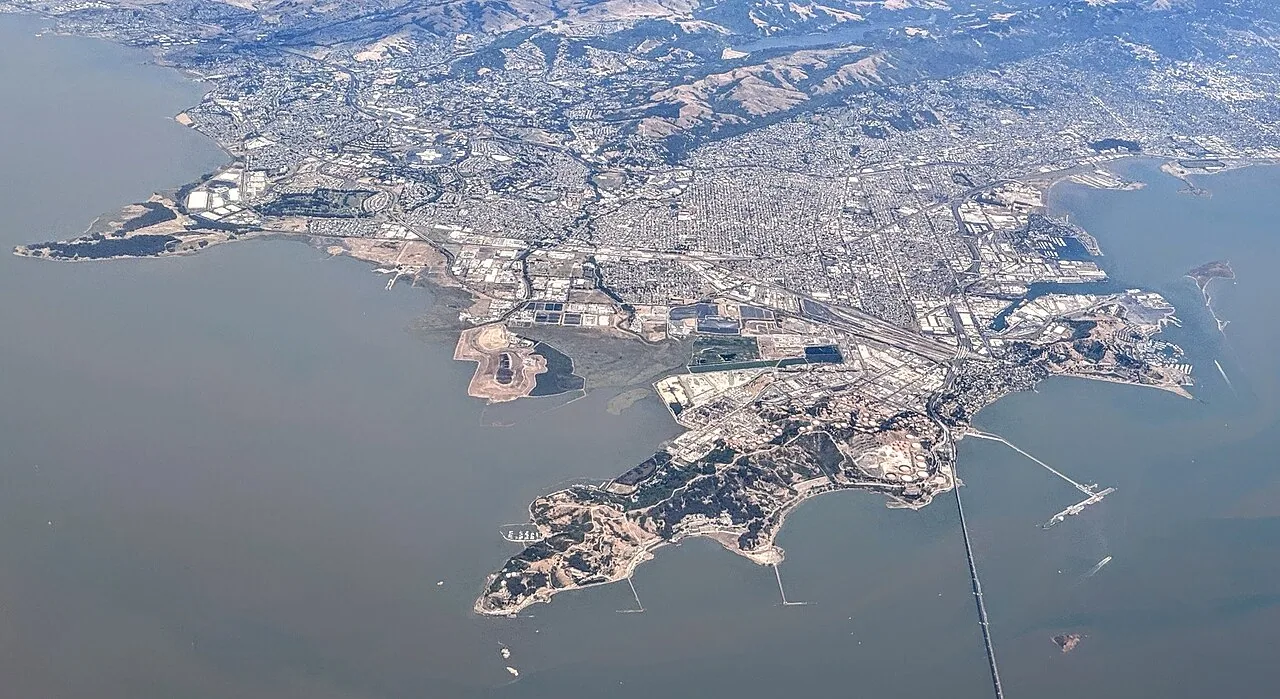
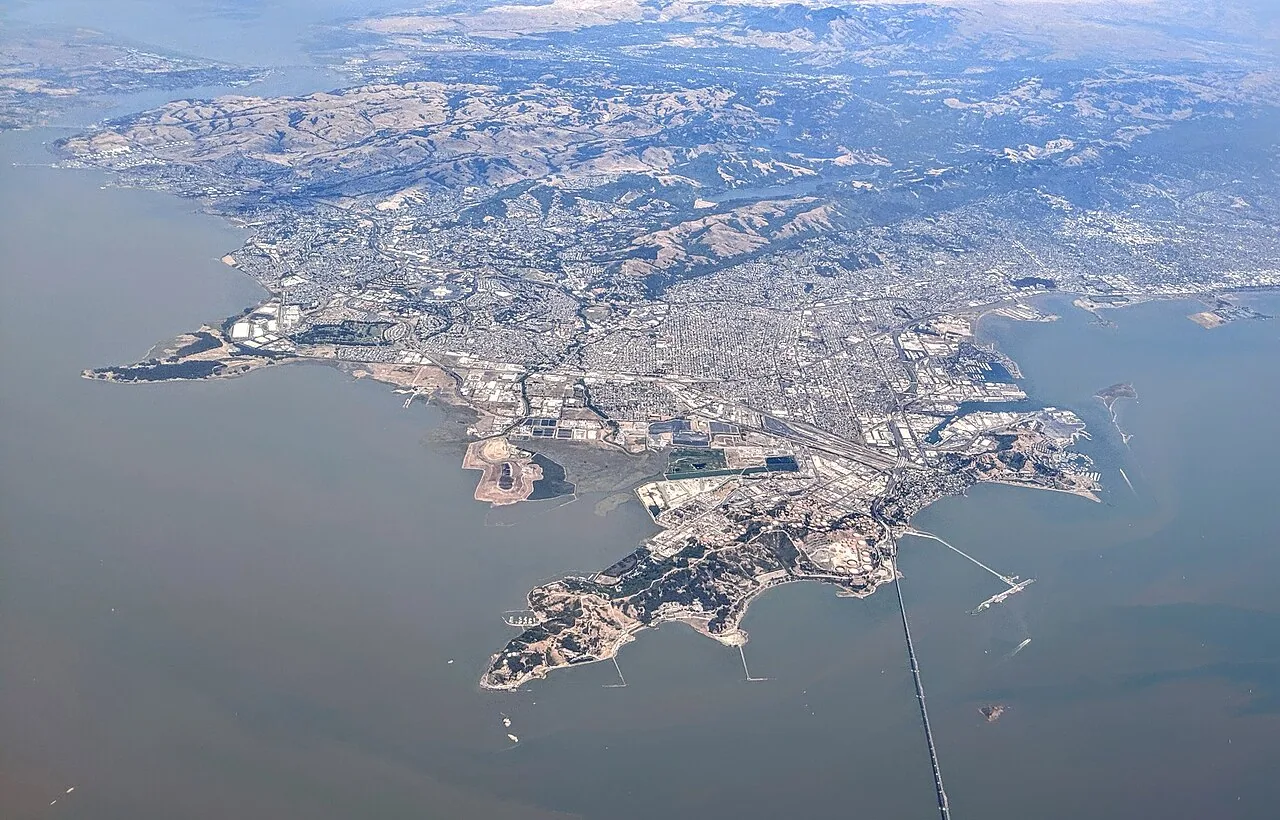
Our Richmond, CA crews cover Novato, where much of the commercial activity follows US 101 and State Route 37, from the biotech and research employers there to the redeveloped offices at the former Hamilton Field. Whatever the building, the roof still has to be looked at on its own terms. We do the same on our San Rafael commercial roof repairs: separate a coating failure from damage beneath it, and decide the repair method and material route before anything new goes down.
Find which layer the blister came from
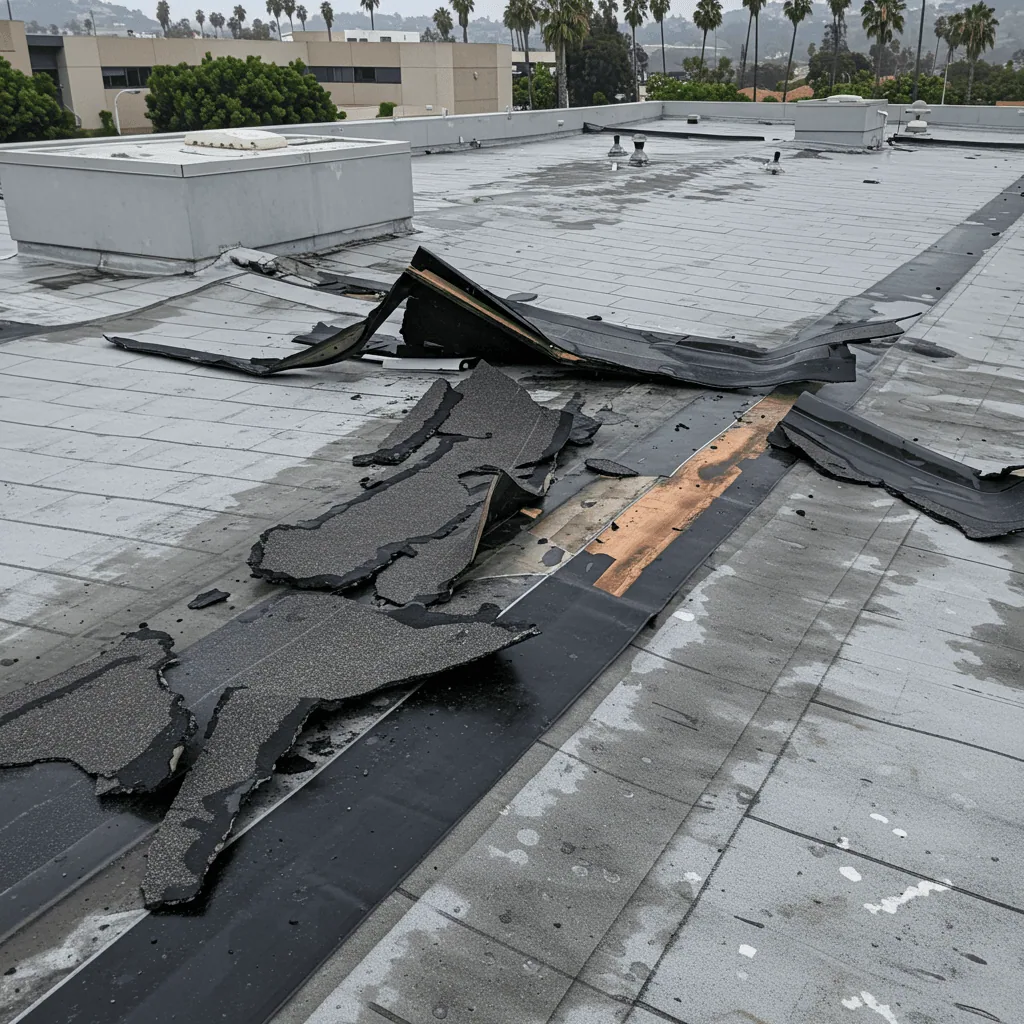
A raised area of coating can come from the coating splitting within itself, or from the coating letting go of the surface below. The blister alone will not tell you how the rest of the roof is doing. We cut into the affected area, look at how the coating bonded and check the membrane around it. Sometimes a core or adhesion test is needed before we can size the job. Then we tell you plainly what failed and whether the roof can take a local repair after proper prep.
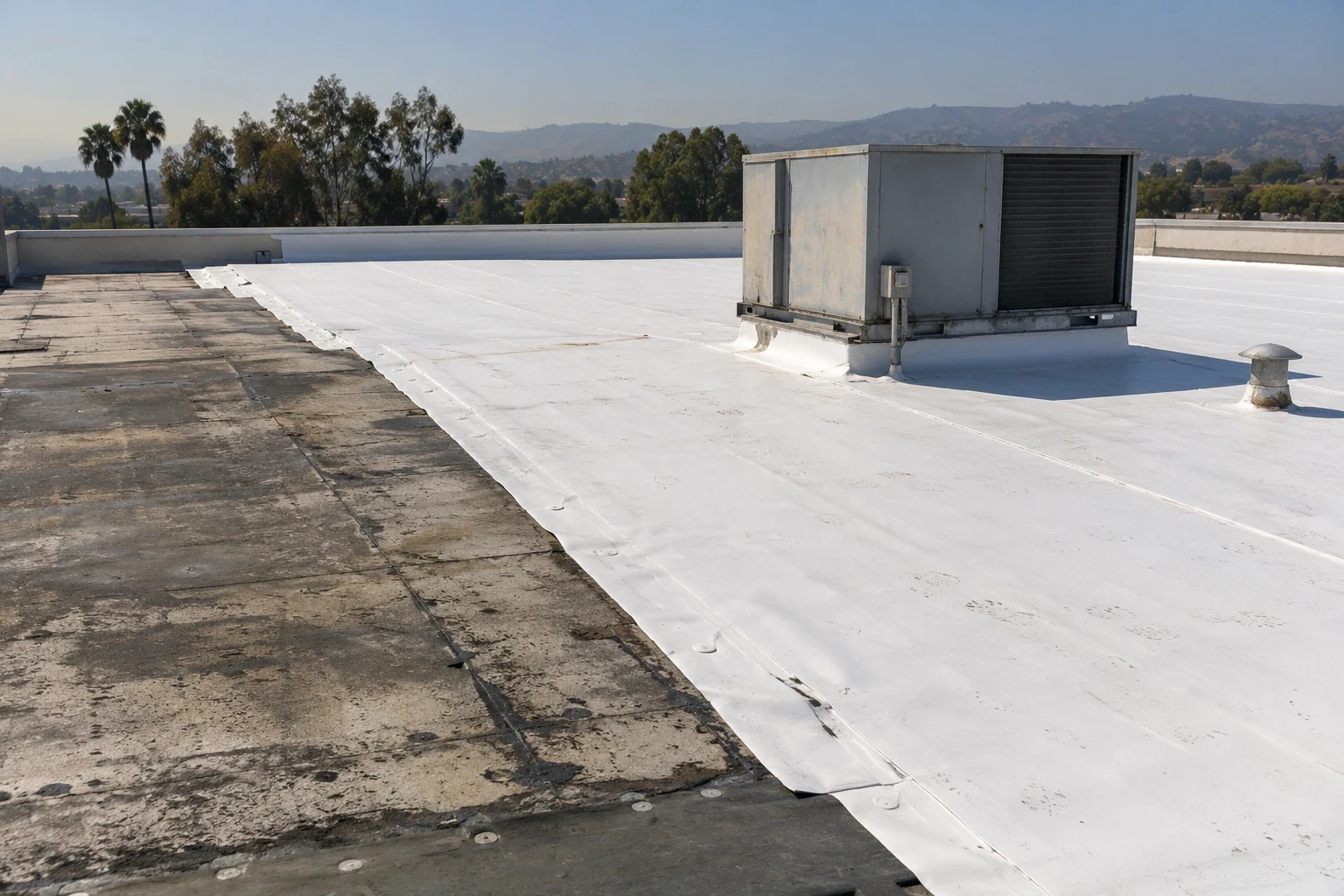
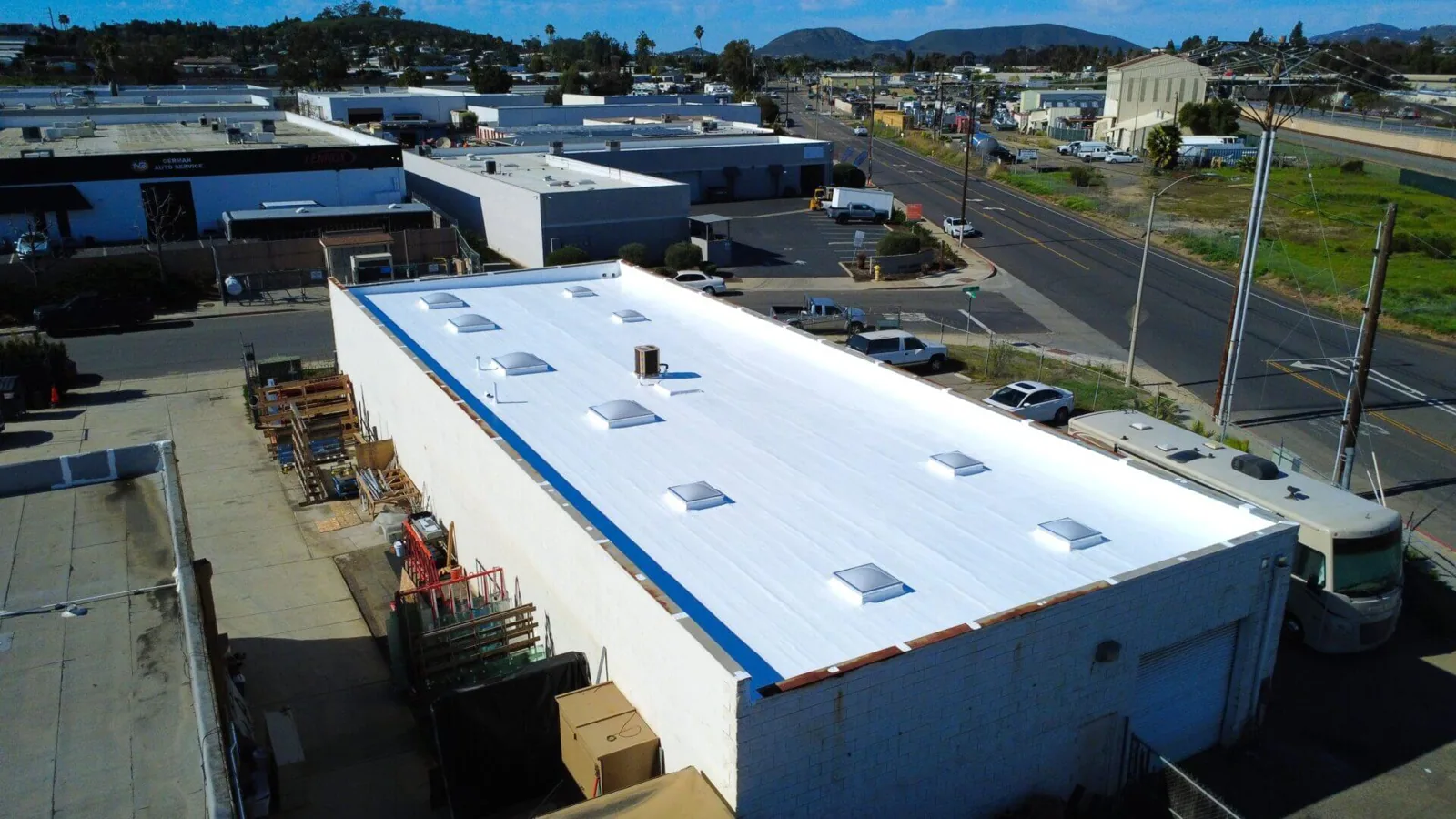
A coating can be a good part of a roof coating restoration, but it cannot fix a loose, wet or worn-out membrane by painting over it. Restoration starts with whatever needs repair first. We mark the areas that are not good candidates for coating and list the work they need beforehand. That way your decision is based on the roof you actually have, not on how uniform a new white surface looks the day the crew leaves.
The penetration needs its own repair
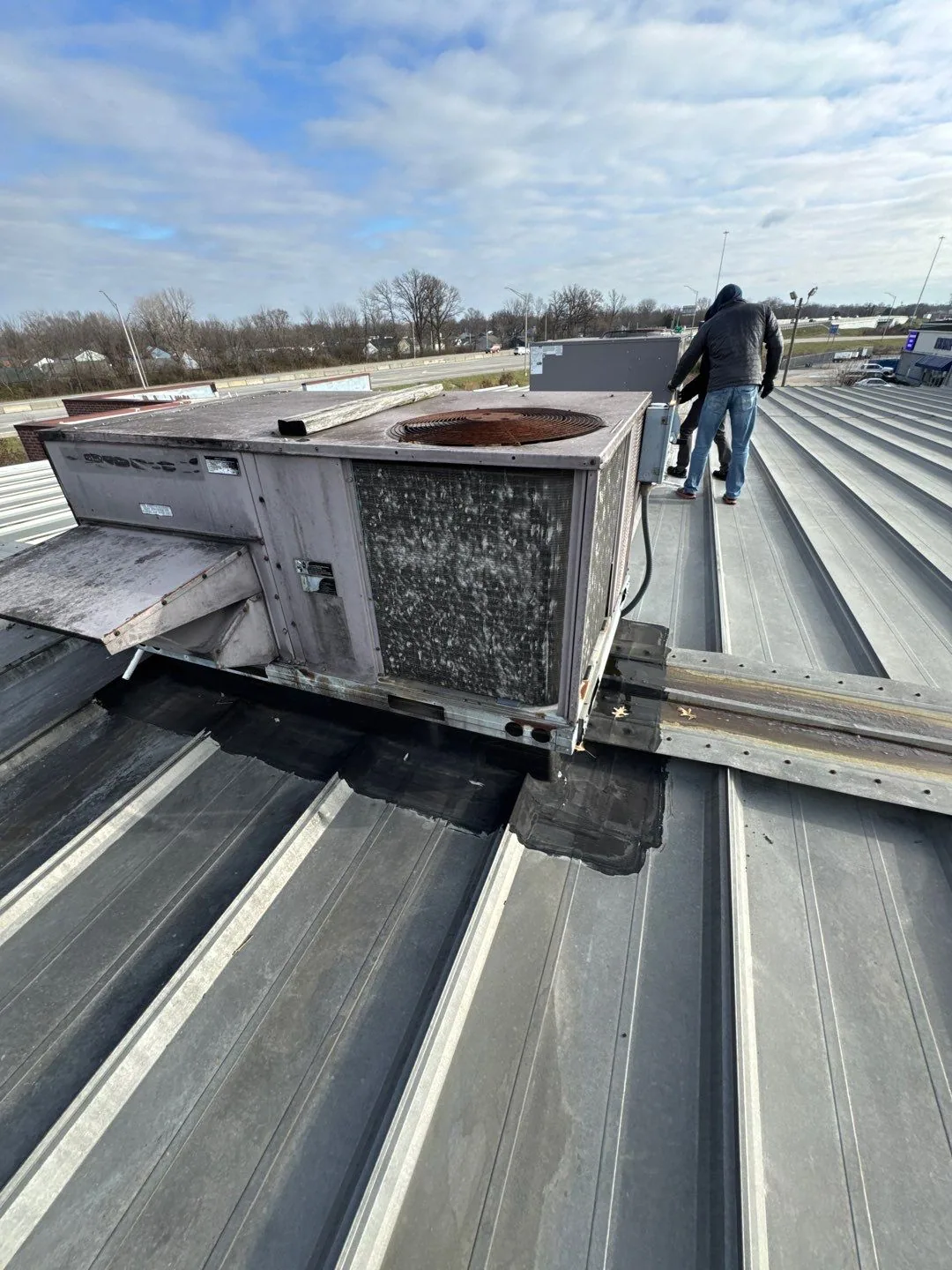
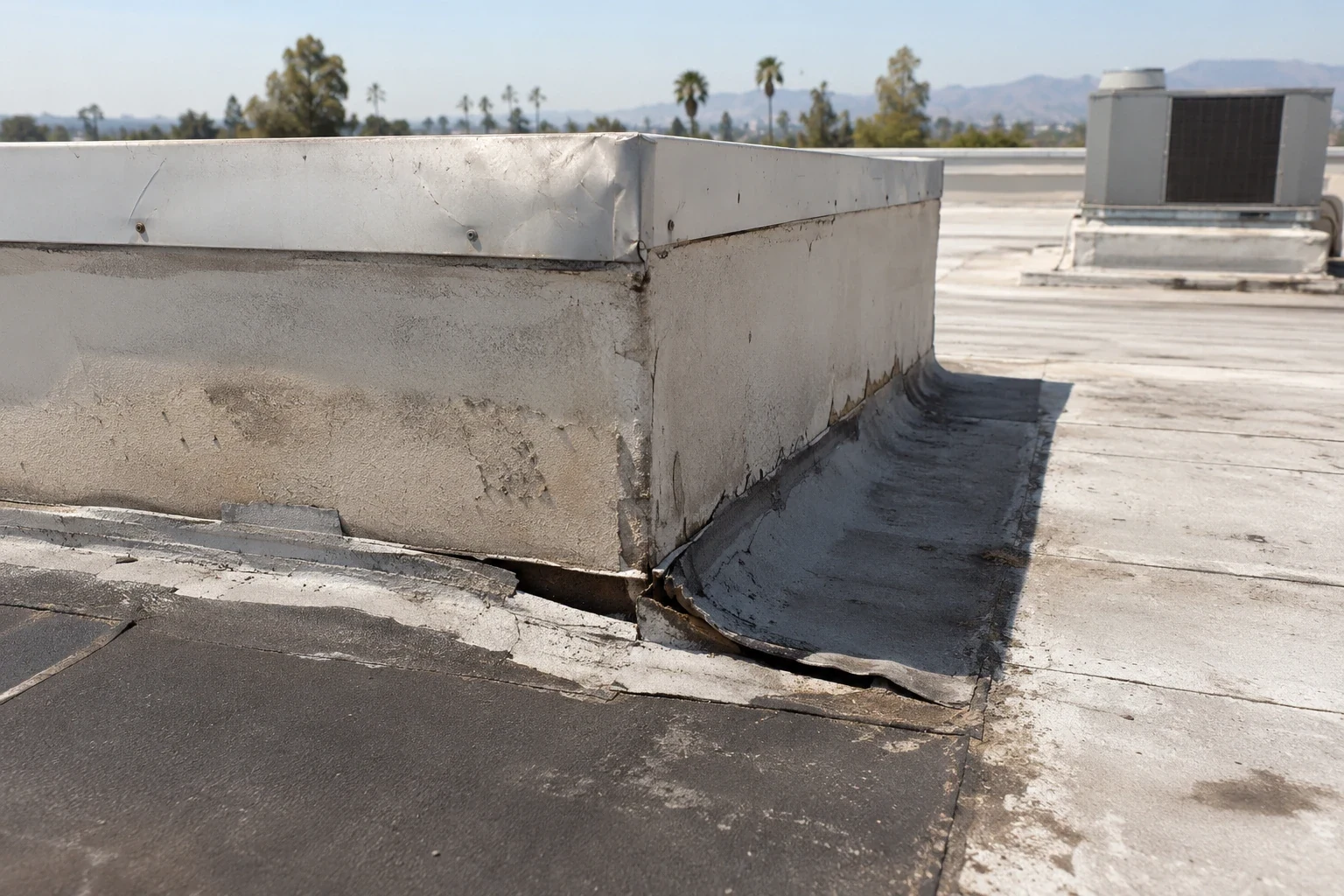
Coating that lifts around a pipe or curb often sits next to a flashing problem, but the two are not the same defect. We check the flashing at the penetration and the coating on the field separately. Fixing the coating on the flat area does nothing for a cracked pipe boot or a loose top seal. Our scope names which part failed and what prep has to happen before the flashing is closed up. Each item is listed on its own, even though both sit within a few square feet.
The roof system and the shape of the penetration decide how it gets repaired. We pick flashing materials that bond to the existing membrane and check whether there is enough sound roof around it for a local repair. Our penetration flashing repairs cover the base of the flashing and the top seal where needed. If a small repair would end on weak membrane, we extend it out to solid roof. The condition we find decides the size, not the size of the blister.
Check the layers underneath first
A blister does not prove there is water inside the roof, but it can be a good reason to check. We look at the evidence and choose test methods that suit the roof type, such as cores or a moisture meter. A suspect reading has to be confirmed before it turns into a tear-off. That keeps us from removing good roof by mistake, and from coating over insulation we know is wet. Any test cut gets patched, and we tell you why we are making it before we do.
If insulation or cover board has to come out, we check the deck once it is exposed and rebuild the area to match the roof around it. The new section then ties into the existing roof with a compatible detail. If you are considering an acrylic roof coating, the surface and the manufacturer's requirements need to be checked first. A coating that works on one roof may not stick to an older coating, a different membrane or a damaged detail on your building.
Plan the work area and material route
Coating repairs often start with scraping or grinding off failed coating before any new material goes on. We plan how the crew, equipment and debris move across the roof. You tell us which rooms and walkways below need to stay open, and we plan protection around them. We also check how much room there is at the penetration, since rooftop units and other obstructions can crowd the work area. All of that is settled before we open the roof.
We also confirm the delivery route, the roof access point and where materials can be lifted up. Our crews do the same for commercial roof work in Larkspur: check the real space available rather than guess. We explain which repairs underneath come first and how the coating follows. If an HVAC unit or flashing repair is involved, it gets a place in the schedule before the final coat goes on.
Keep a record of what is under the coating
Once the coating is down, you can no longer see what is under it. A good repair record shows the prep work and the layers beneath the finish, not just the new color. We note the failed coating, any wet or damaged material we replaced and the condition of the surface before application. Photos capture prep work that the coating will hide. You end up with a clear record of what was removed, what was replaced and which penetrations were repaired.
If blistering is widespread, it is worth stepping back before paying for more coating. We look at the pattern and the condition of the roof, then tell you whether spot repairs still make sense or another approach fits better. A roof survey before restoration can lay those choices out in order. Temporary repairs can keep water out while you decide.
Before recommending any new coating, we check whether the existing finish is well bonded, can be cleaned and prepped, and is compatible with the new product. Blisters, cracks and failed penetrations are treated as separate problems. The written scope shows what can stay, what needs repair first, and where a full restoration or replacement estimate would be the better comparison.
Commercial Roofing Questions
Does a blister prove the entire roof contains wet insulation?
No. A blister shows the coating has separated, not that the whole roof is wet. We check where the separation happened and test for moisture when the signs point that way. Only confirmed wet material changes the repair, and we keep the coating problem separate from any damage underneath it.
Can another coating layer cover the failed finish?
Not safely. The surface has to be sound and compatible with the new product. Loose or failed coating needs to be removed and the area prepped first. A fresh coat on top of a failed one usually peels again, and it hides the real problem instead of fixing it.
Why inspect flashing beside the blister separately?
Because the penetration has its own flashing and top seal, and coating the roof around it does not repair them. We check that detail on its own so the coating work and the flashing repair are each clearly defined and priced.
Why won't every coating work on every existing roof surface?
It depends on compatibility with the existing surface, the condition of that surface and the manufacturer's requirements. We identify what is on the roof now and what prep it needs. A product that works on one membrane or older coating may not bond to another.
Which part of the completion record helps assess future separation?
The notes and photos showing prep work, removed layers and the repaired flashing. They tell you what is under the new coating and which details were fixed. If a blister shows up later, it can be compared with what was actually done rather than just the finished surface.
Check what is under the coating first