Local weather advisory
Coastal Flood Advisory: Commercial Roof Help in Richmond
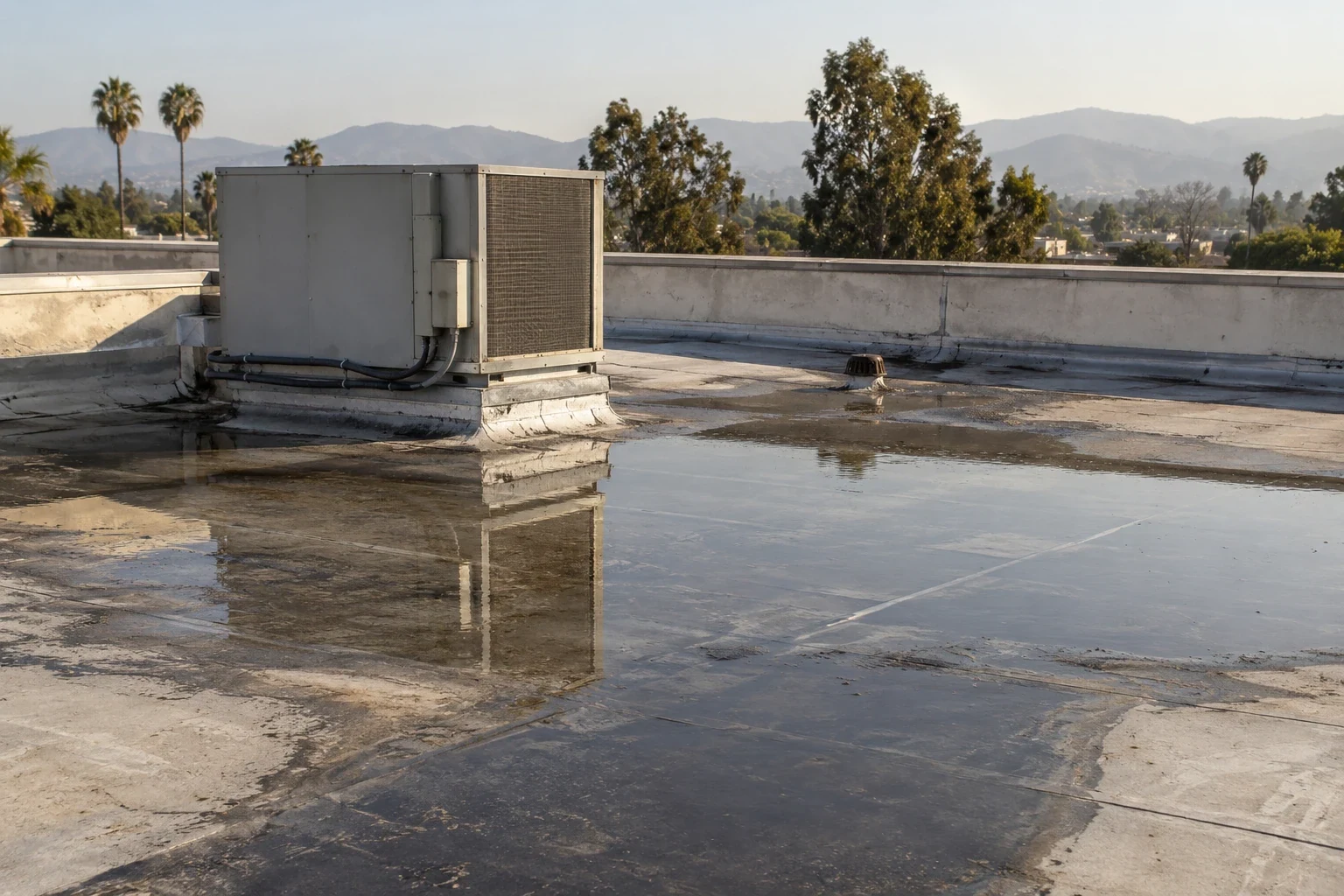
The National Weather Service has issued a coastal flood advisory covering Richmond. Heavy rain and drainage loading can expose roof leaks, blocked drains, and ponding water. This is a weather exposure advisory; it does not establish damage to a specific roof.
Do not access a roof during hazardous weather. Protect people first, avoid water near electrical equipment, and request roofing help when conditions permit.
National Weather Service · Updated Oct 28, 2026, 7:20 AM UTC
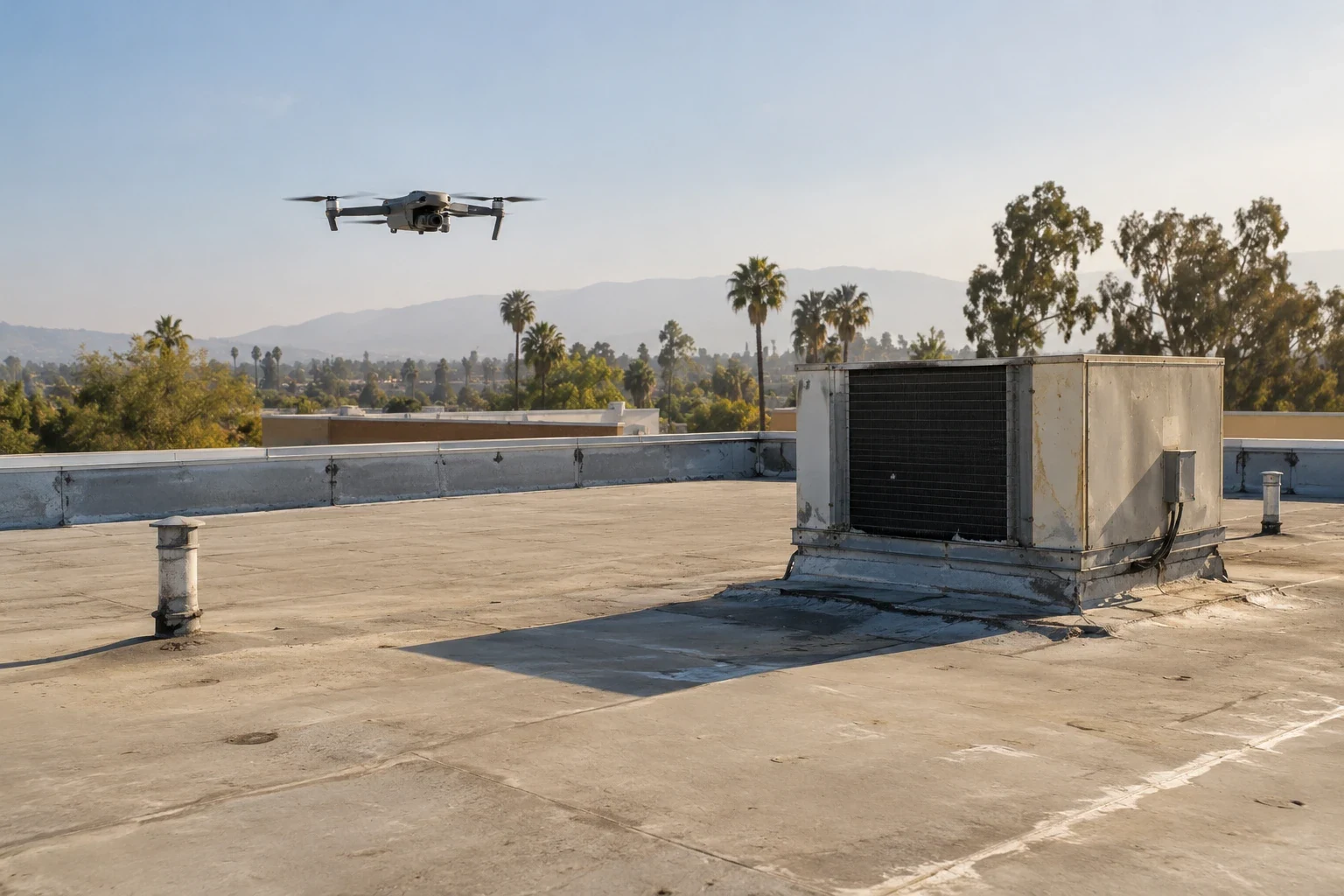
Drone Roof Inspection in Richmond, CA
A strip of loose edge metal on a big Richmond warehouse may be easy to spot from the air, but the photo will not tell you whether the fasteners pulled out of rotten wood or the wood is fine and the screws just backed out. Drone inspection is fast and safe for mapping a large roof. It shows where the problems are. It does not replace someone walking the roof, lifting the flashing and checking what is underneath. We use it for what it does well and say plainly where a hands-on check is still needed.
A warehouse roof can cover several acres, and walking every foot of it takes time. A drone flight gives us an overview of the whole roof in one visit, so we can go straight to the spots that need a closer look. The Port of Richmond handles bulk cargo, metals, vehicles and break-bulk goods, and many of the buildings that serve it have exactly this kind of large, low-slope roof. Before we fly, we confirm the property owner's permission, any site security rules and the airspace limits for that location. Then we plan the hands-on follow-up based on what the images show.
Set the image purpose
Drone photos are good at showing location: where an edge has lifted, where water is ponding, where debris has collected around a rooftop unit. How useful they are depends on the question you are trying to answer. Before the flight, we agree on which roof sections to cover and what you need to decide. If it is a repair, we focus on the problem areas. If it is a budget for next year, we cover the whole roof evenly.
After the flight, a roof inspection on foot covers the details the photos raised but could not settle. Each photo in our report is tied to its spot on the roof, and we point out where the view was blocked by equipment, shadows or a parapet wall. A membrane that looks continuous from the air can still have an open seam at the edge. We explain why a follow-up visit is needed and what it will check, so you are not making a repair decision from aerial photos alone.
Drone images work best as a map. We mark every visible problem, note where angles or obstructions limited the view and pair each item with a hands-on check whenever attachment, moisture or a flashing detail cannot be judged from above.
Locate the visible failure
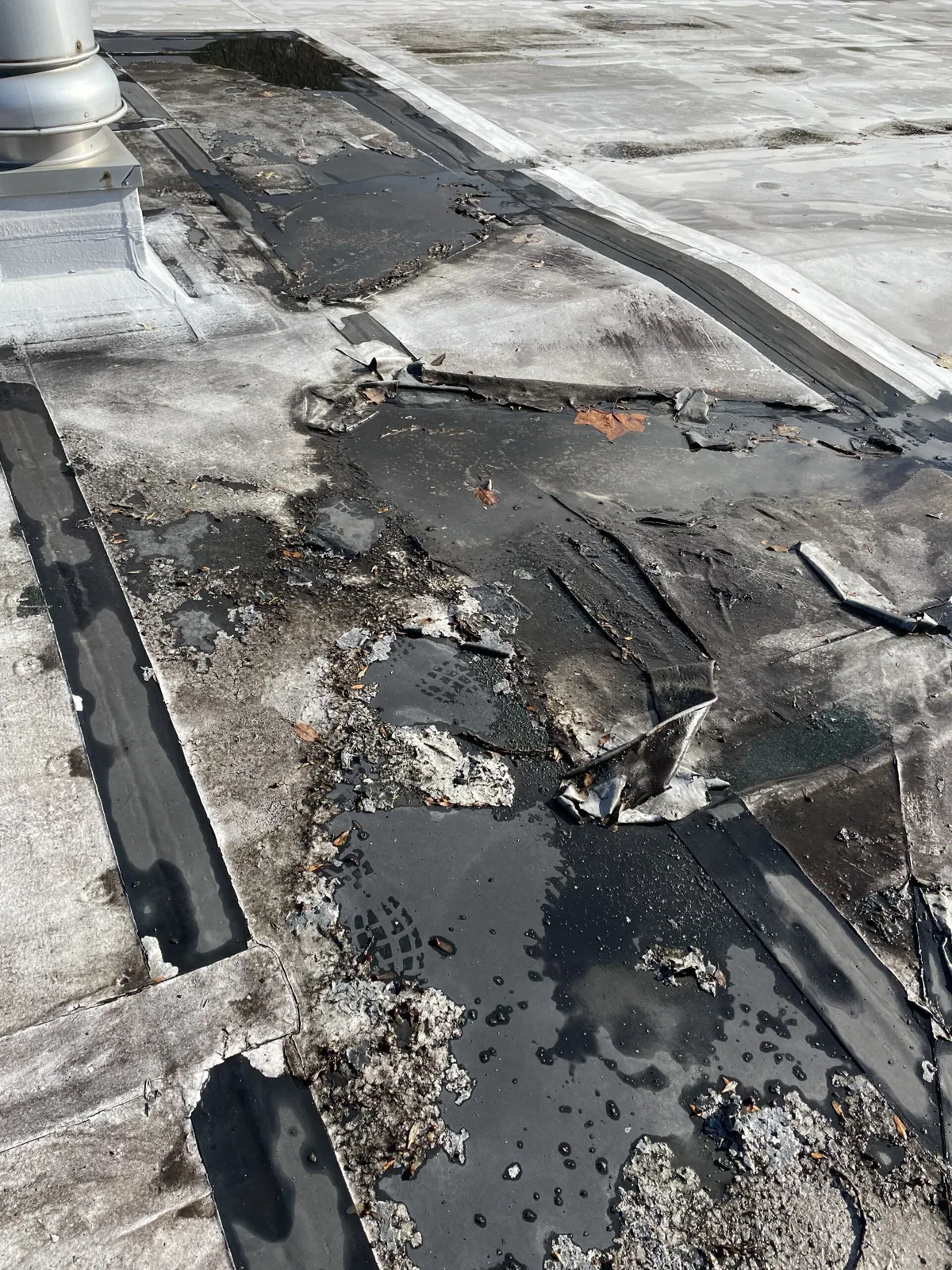
A lifted seam, a torn corner or a damaged section of field membrane in a drone photo tells us where to look. It does not tell us why it failed or how far the damage goes. We compare the photos with any roof records and with what you have seen inside the building, like when leaks show up and where. If a flashing failure repair is needed, we confirm the existing materials up close first so the new flashing matches and bonds properly.
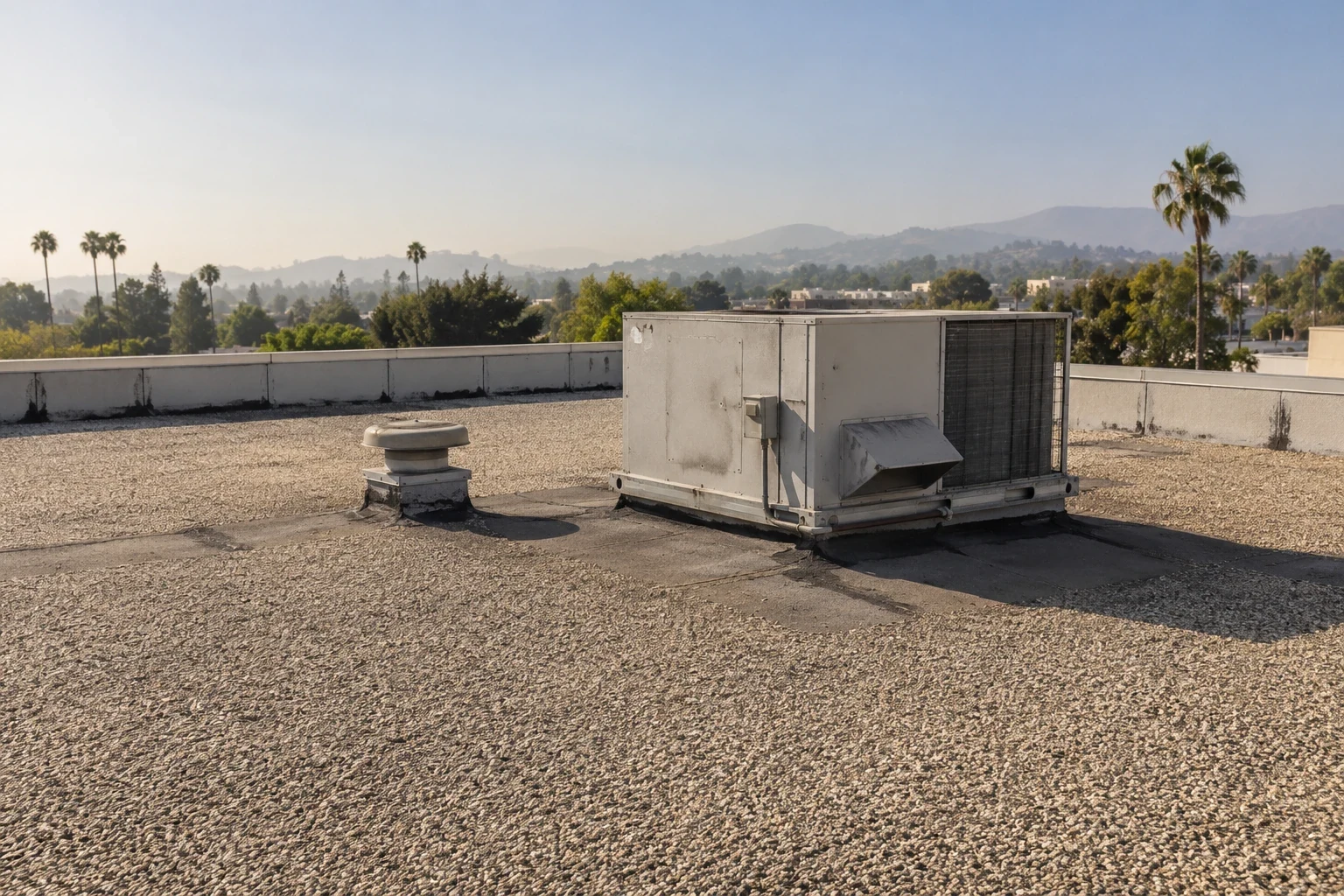
A ceiling stain inside may be several feet from where water is getting into the roof, so a nearby defect in a photo is not proof of the leak source. Rooftop equipment can also be the cause, and in that case your mechanical contractor needs to take a look. When a photo shows a problem but not how to fix it, we list the next step needed to find out. That keeps the drone survey useful without turning a picture into a guess about wet insulation, loose fasteners or parts of the roof the camera never saw.
Account for what the camera cannot see
A sharp photo cannot show wet insulation, a rotted cover board or loose fasteners under the membrane. Those questions need different tools. An infrared moisture survey can map likely wet areas, but it needs the right weather conditions and it still has limits, so we confirm its readings with core samples before anyone prices a tear-off. We pick the method based on your roof and the decision you are facing.
We keep confirmed wet areas separate from suspected ones until testing settles the question. If we need to cut into the roof to check, we get your approval first, mark the spot and seal it the same day. Only then do quantities go into an estimate. That way you are paying to fix what is actually damaged, not an area someone outlined on an aerial photo. Our report explains which findings came from the drone, which came from testing and what each one means for a repair or for keeping the existing roof in place.
Plan the follow-up visit
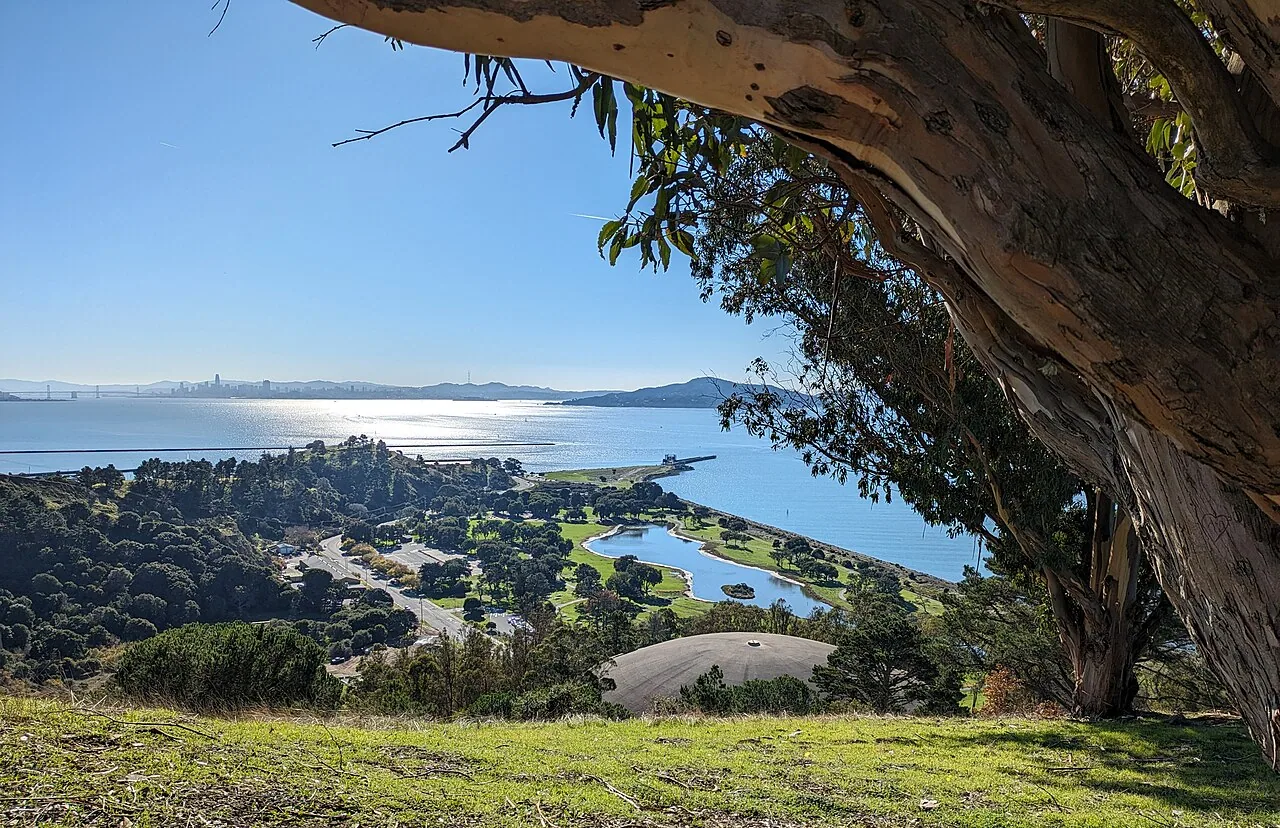
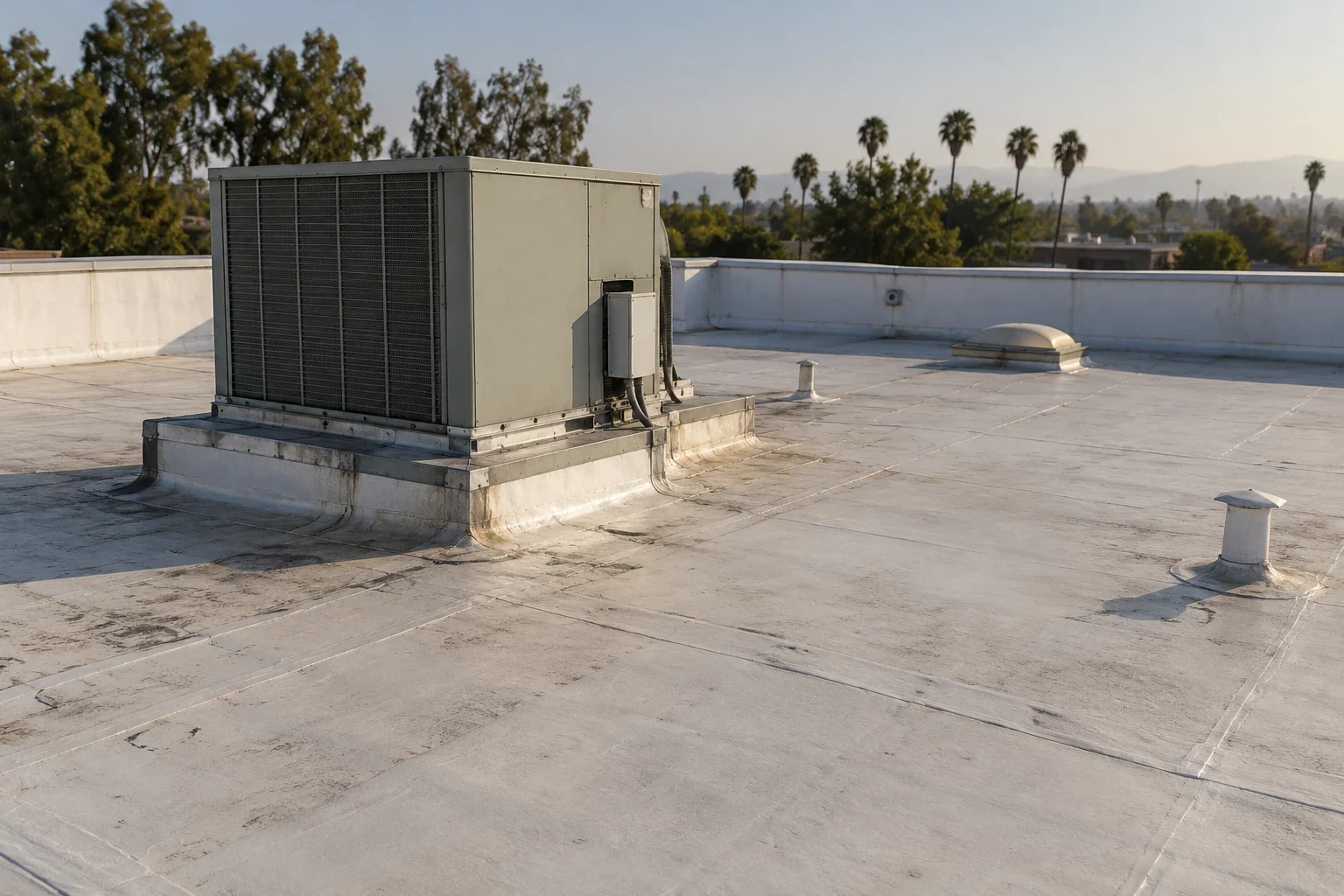
Some details are hidden from the camera and hard to reach on foot, like flashing tucked behind a large HVAC unit. Getting to them may need your mechanical contractor or facility team on site. Around Marina Bay, roofs facing the open Bay take steady wind and salt air. A drone photo can show where edge metal or a penetration looks damaged, but it cannot show whether the fasteners or the wood blocking underneath are still holding.
We list each detail that still needs a closer look, along with what has to happen first: a unit moved, a room unlocked or a lift brought in. Those steps can affect the repair visit differently than they affected the drone flight, so we do not lump them into a single line that says the roof is ready for work. You will know what we can tell you now and what still needs checking before a repair can be priced. Every problem in the photos gets a clear path to the next step.
Carry images into the decision
Our roof condition reports pair each drone photo with its location on the roof, what it shows and what still needs to be checked by hand. For flights near the Port of Richmond, we confirm the views you need and the approved way to reach the roof before we schedule. Photos show where problems are. Hands-on checks answer how the roof is attached and what is happening underneath. Later reports should note what new information was confirmed instead of borrowing conclusions from photos taken for another reason.
We link the photos and findings to the repair being considered, and anything waiting on another trade or on further testing is listed separately from work completed. If the roof has a manufacturer warranty, check its inspection and repair requirements before you rely on the report to plan work. You end up with a report that uses the aerial view where it helps and is honest about where it does not. It lays out the next visits and repairs in order, without treating a good-looking photo as proof that the whole roof is sound.
Commercial Roofing Questions
What can a drone photo tell you about a lifted roof edge?
It shows where the edge has lifted and how long the damaged section is. It cannot show whether the fasteners or the wood underneath have failed, so we check that up close.
Can a drone show whether my insulation is dry?
No. Wet insulation is hidden under the membrane. An infrared survey can point to likely wet areas, and core samples confirm them.
What if equipment blocks part of the roof in the photos?
We mark that spot as not inspected and list what is needed to check it, such as your mechanical contractor moving a unit. We do not assume it is in good shape.
How do drone findings turn into a repair proposal?
Each photo is tied to a location on the roof. We follow up with hands-on checks or moisture testing, then price the repair based on what we confirm.
Tell us what you are seeing and what you need to decide