Fire Damage Roof Repair in Richmond, CA
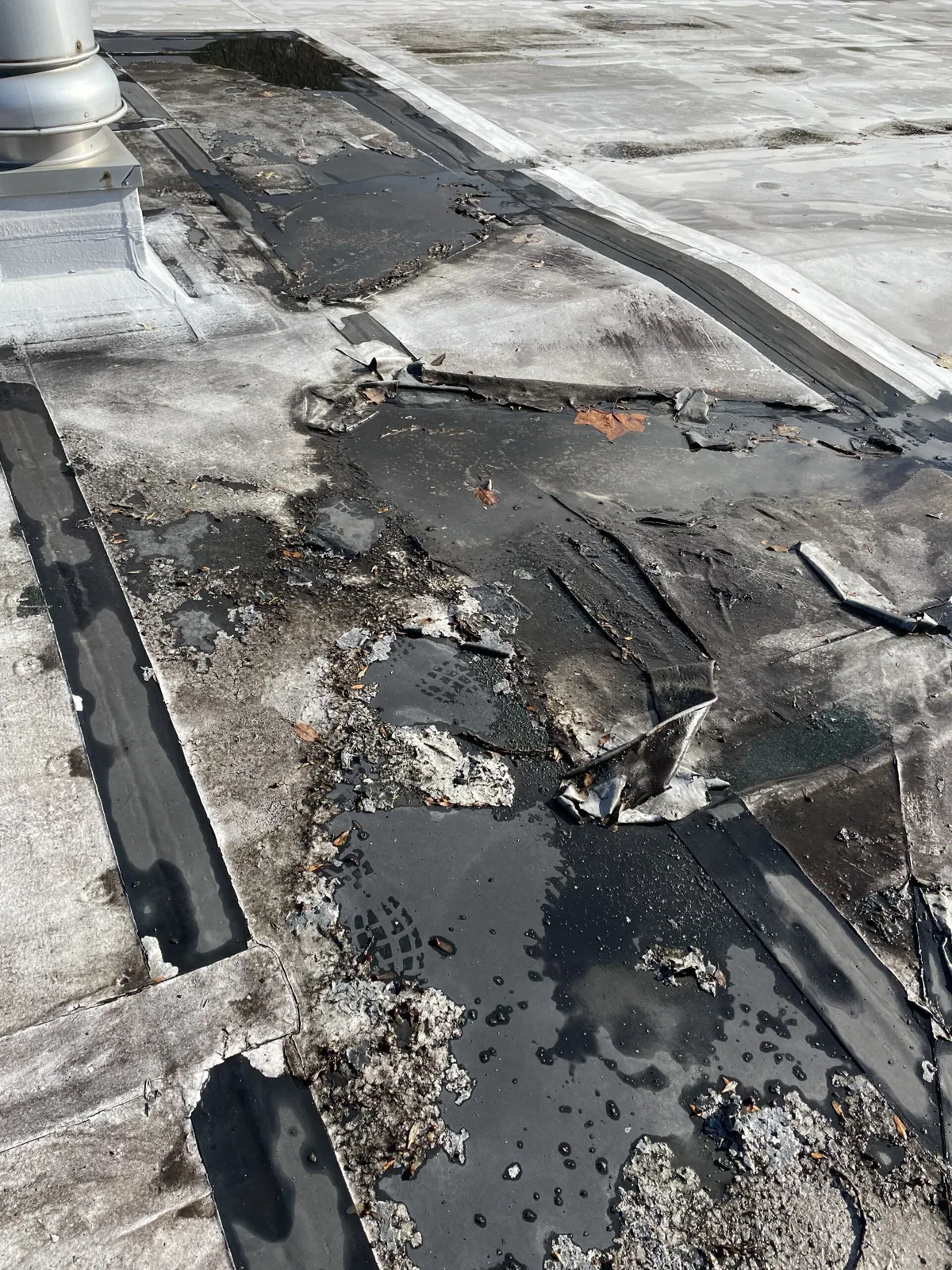
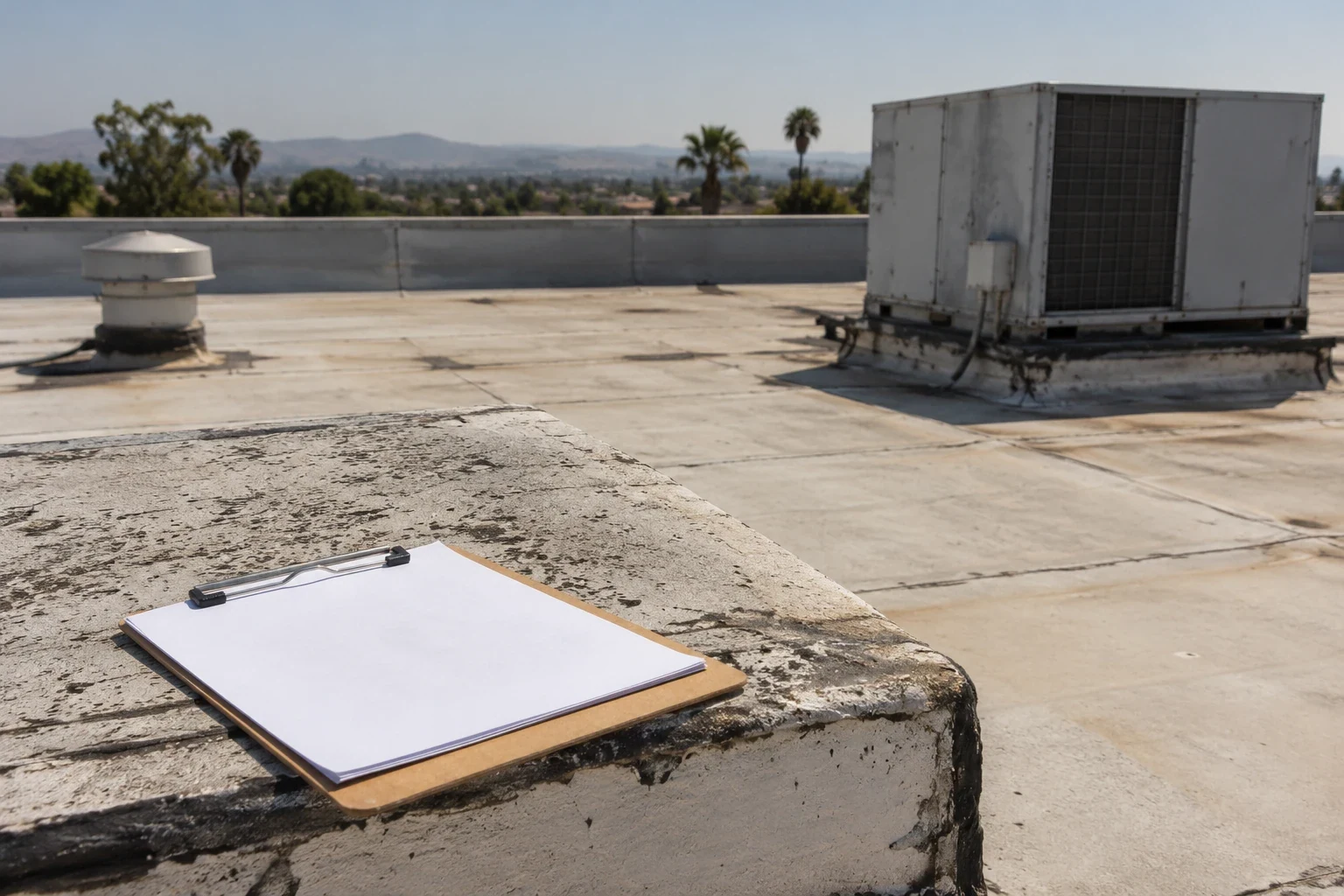
A scorched patch on a Richmond commercial roof can look minor from above while the insulation, cover board or deck underneath has taken real heat. Fire damage roof repair starts with an inspection of the burned area once the fire department, the owner and, where needed, an engineer have cleared the roof for access. We find which membrane, flashing and insulation was damaged and what still needs a closer look before anything is torn off. Safety and structural questions are settled before roofing work begins. The owner gets a clear write-up that separates the temporary dry-in from the permanent repair and lists anything that still needs another expert's review.
On buildings in Downtown Richmond, as anywhere, we confirm what survived before planning the permanent fix. We mark the damaged area against drains, units and walls and compare it with any photos or fire reports the owner can share. The fire tells us where to look; the roof itself tells us how much needs replacing. On an office roof, we report what we can see on the surface apart from what may be hidden in the deck, and the repair plan follows what we actually find on the roof.
Inspect the damaged membrane and flashing
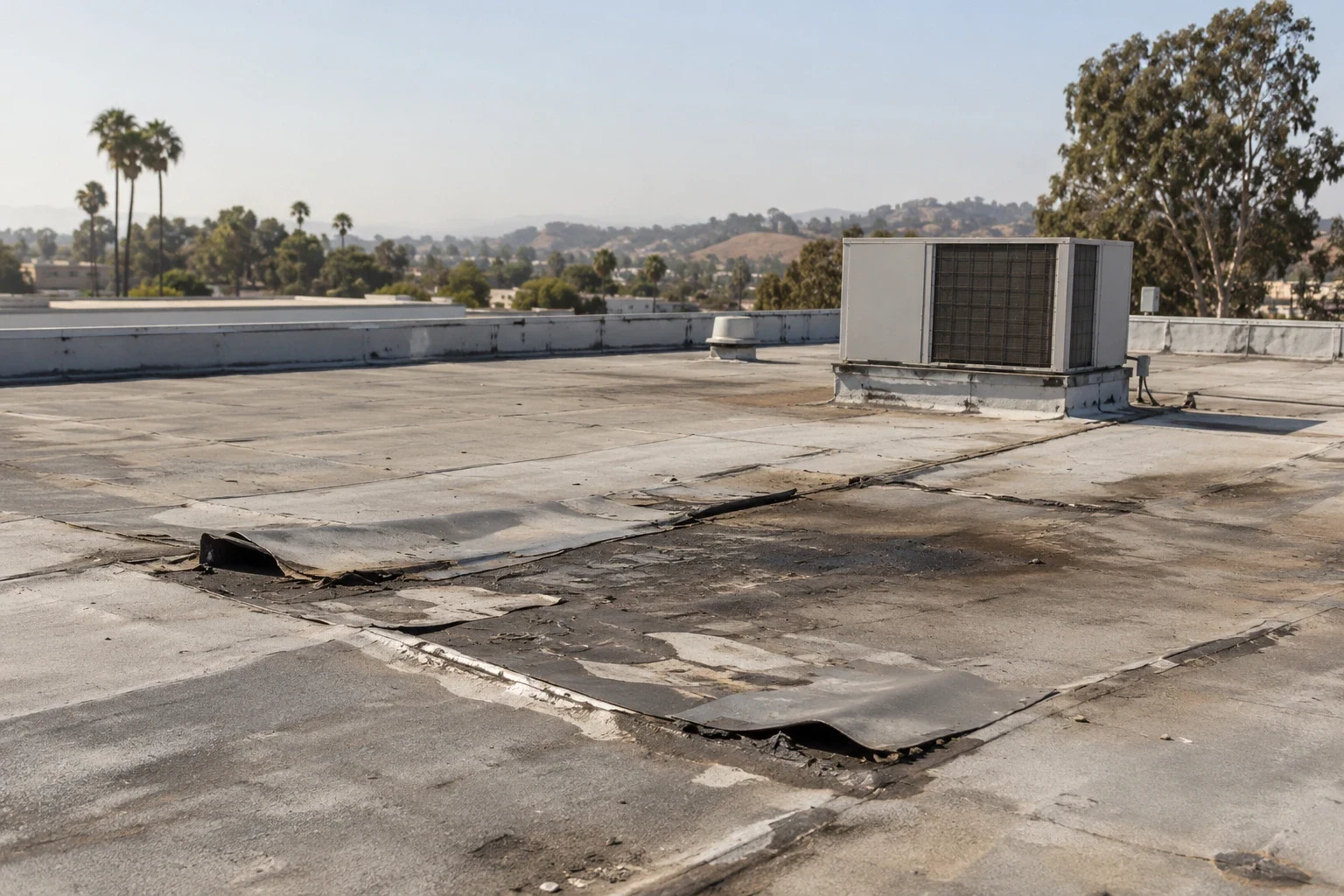
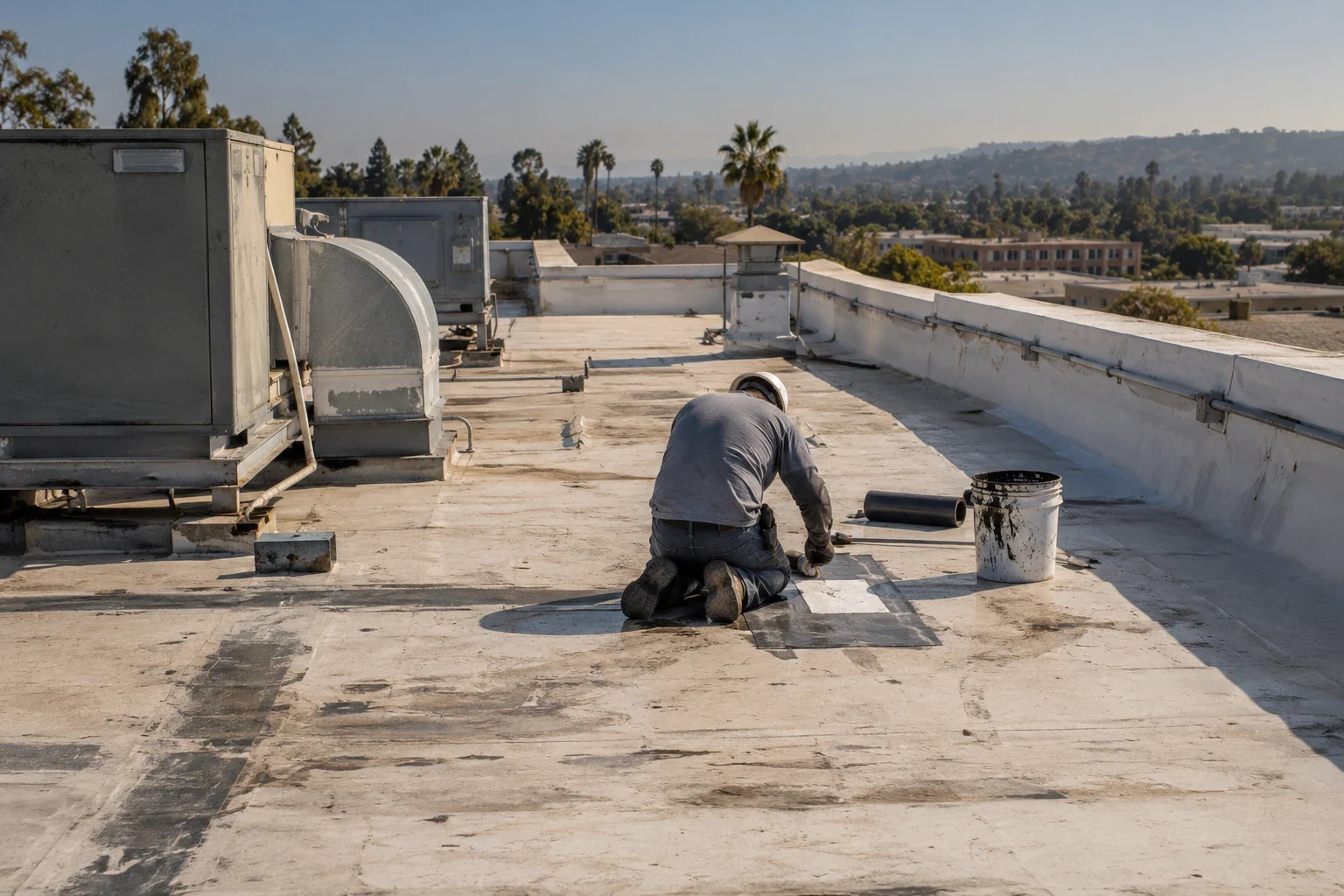
Blistered, melted or discolored membrane usually has to come out, and the material around it may need more preparation than undamaged roof. We inspect what is safe to reach and note every change we see. The surface alone does not tell us whether the insulation and deck below are still sound. A test cut shows the condition at that one spot, not across the whole area. We share those limits with the owner before a repair price is set, and we flag the questions that need an engineer instead of guessing at the condition of the whole roof from one burned patch.
Punctures in the membrane from falling debris, hoses or firefighting equipment are common after a fire, and each one gets its own location and repair. We note how each one relates to the burned area without assuming everything nearby was caused by the fire. The permanent repair explains what material comes out, what it gets tied into and how the new membrane laps onto the existing roof. That gives the owner and the insurance adjuster a repair plan they can review side by side, with what we saw on the roof kept separate from what we were told.
Check insulation, cover board and deck
Heat can damage layers that new membrane on top will not fix. Insulation can melt or shrink, adhesives can fail and a steel or wood deck can be weakened. Where the deck or structure is in question, we bring in an engineer before recommending a repair. Our report shows where we opened the roof, what we found and what remains unknown. Hidden damage is treated as unconfirmed until someone actually looks at it. The owner needs to know what can stay before choosing a repair, and a new roof surface should never suggest the structure has been cleared when it has not.
Wall and curb flashing near the fire often needs to be replaced once the deck and insulation are sorted out. Top terminations, corners and the flashing around units may each need different work. We compare the existing details with the planned repair. If the new insulation is thicker, the flashing heights at walls, drains and curbs change too. Those details go into the scope before materials are ordered, so the new roof is not installed before a damaged curb or wall has been dealt with.
Fire damage often reaches past the visible membrane. We check the surface, insulation, cover board and deck for anything that changes how far the repair needs to go, and we involve an engineer when the deck's strength is in doubt. Material that looks fine at the edge of the burn is not assumed to be sound until we have checked it. The estimate separates confirmed replacement from areas that still need investigation and explains how every opening will be kept dry and closed.
Get clearance for each stage of work
After a fire, getting on the roof, inspecting and starting repairs may each need separate sign-off. We confirm with the owner or property manager exactly what roofing work is cleared, while fire investigators, adjusters and engineers handle their own reviews. Tear-off creates debris and open areas over occupied space, so the building operator tells us which rooms must stay in use and we plan the work order around them. Permission for a quick look is not approval for demolition, crane lifts or moving equipment, and we ask for each separately.
The Port of Richmond's terminals, city-owned and private, handle different cargo and keep their own operating rules. When a fire-damaged roof is on an active site, the site manager sets access and safety rules before we open up the damaged layers. A building in North Richmond likewise has its own manager, entry route and material-handling limits. We agree on where materials will be dropped and how the crew moves within the work area. Heavy loads or crane picks get an engineering check where needed, all settled before delivery day.
Keep the roof dry until the permanent repair
An opening left by the fire or by tear-off needs a temporary seal while the permanent repair is planned and approved. We tell the owner where it is, what it protects and how long it is meant to last. The method depends on the size of the hole and how long the wait will be. A temporary dry-in is not the finished roof, and we say so clearly. If we find more damage when we open the roof, we measure it and send a change for approval, and the temporary cover stays in place until a decision is made.
Emergency roof repair after a fire should spell out what was sealed and what was not. The permanent repair may need a different access route, a crane or another trade. We sort those needs out before scheduling the next stage. A tarp or temporary membrane does not prove the layers underneath are sound or that a mechanical contractor has finished with a unit. The owner gets a clear order of work, so the emergency fix and the full repair each move ahead on their own approvals.
Records for the finished repair
Where insulation and cover board had to be replaced, the records show how far the new material runs and where it meets what was kept. We take photos of that work before the new membrane covers it up. The permanent roof system has to be compatible with what remains and meet the project's requirements. Structural or mechanical work done by others is recorded separately. We state what the roofing work covers and what is still open, so a restoration label is never mistaken for proof that every building system has been checked and put back in service.
The closeout package ties our inspection findings to the work we actually did. Fire reports and insurance questions handled by others are kept separate. A new roof surface does not answer those questions on its own. If new leaks appear or the building changes later, we inspect the roof as it stands at that time. The dated photos help find what changed and show how the earlier repair was built. The owner keeps a clear history of the roof, the support repairs and the work done by other trades.
Commercial Roofing Questions
Can you tell if the deck is damaged just by looking at the burned membrane?
No. Surface damage does not show what happened to the insulation or deck. We open test areas and bring in an engineer where the deck's strength is in question.
When can roof repairs start after a fire?
Once the building owner, and the fire department or engineer if involved, clears the roof. We confirm exactly what work is approved before starting.
What does a temporary dry-in cover?
It seals the openings left by the fire or tear-off. We tell you where it is, how long it should last and what permanent work is still needed.
Does finishing the roof mean the building systems are cleared too?
No. Structural, electrical and mechanical systems are checked by their own trades. Our records cover the roofing work we completed.
What should the tear-off records include?
Photos of the damage we found, the insulation and deck repairs made and the finished roof, kept separate from fire reports and insurance correspondence.

Schedule a fire damage roof inspection