Ponding Water Roof Repair in Richmond, CA
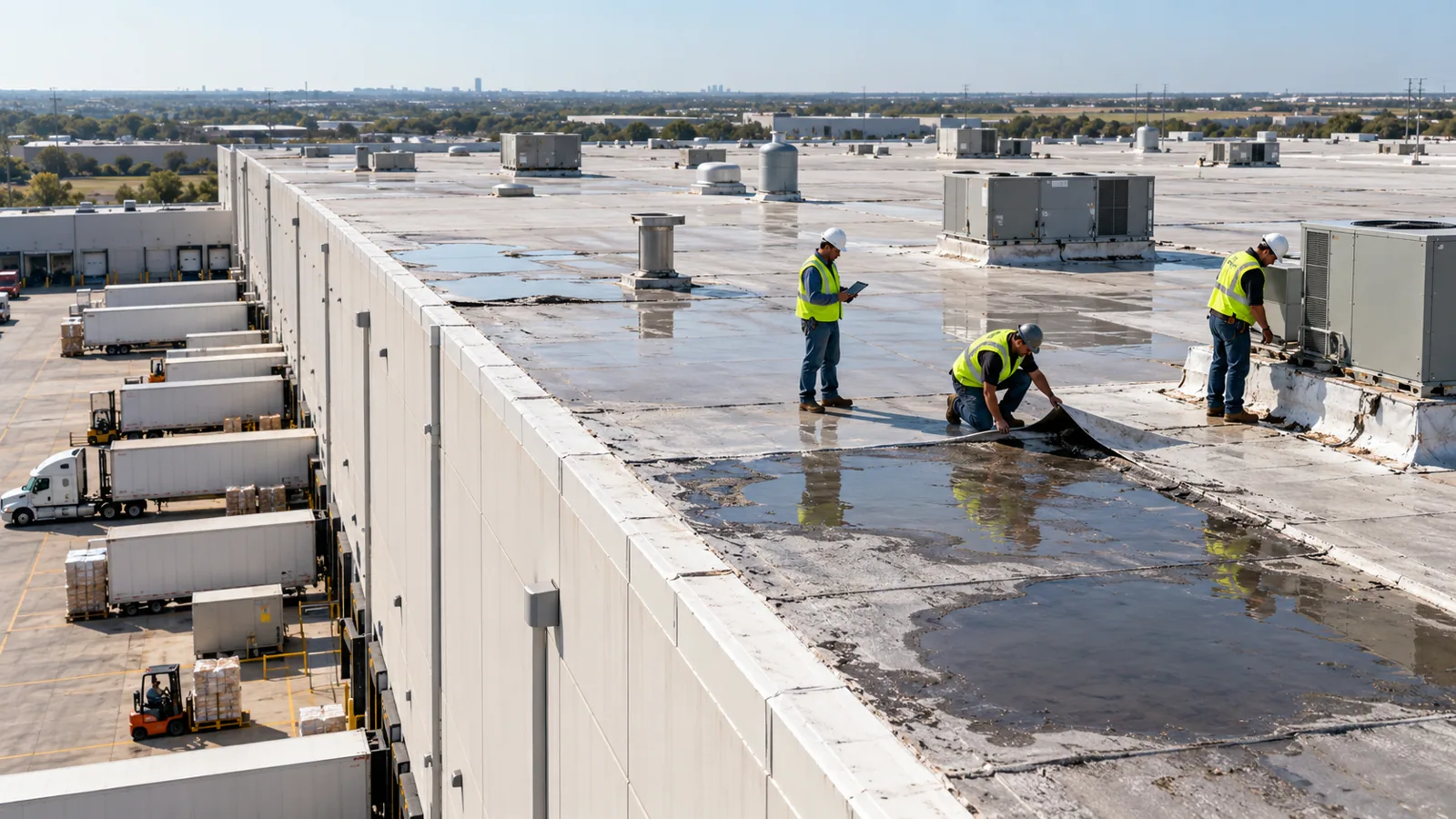
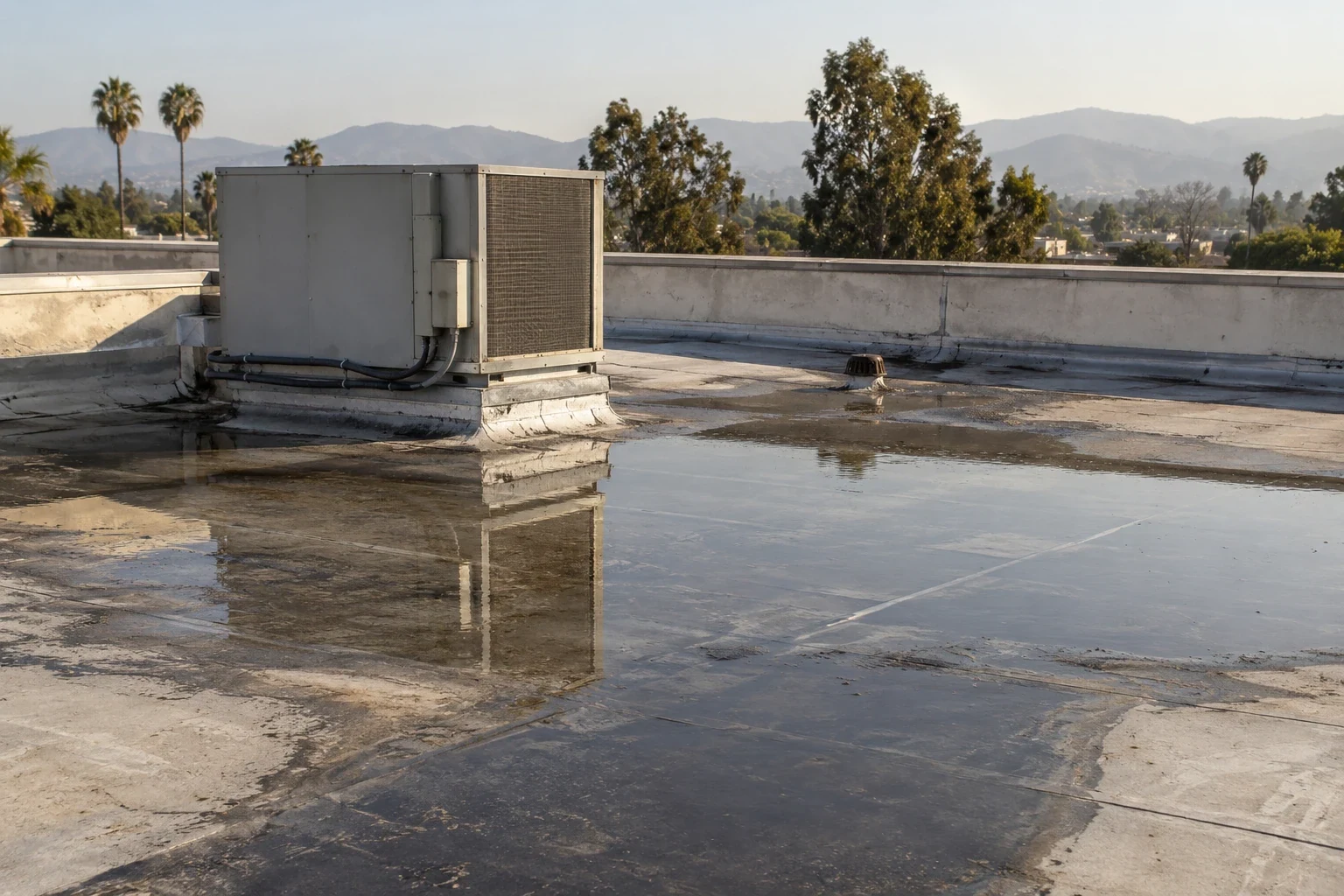
Standing water next to a drain on a Richmond office roof is not always fixed by pulling out leaves and debris. Ponding water repair looks at the drain, the roof around it and where the water goes once it leaves the roof. We note where the water sits and ask the building manager how long it stays after rain. How big the pond gets tells us where to look, but the roof's build-up decides the fix. A good repair explains where water will drain afterward and which details it changes, so the owner understands the work before approving a price or a larger tear-off.
For ponding repairs in Downtown Richmond, we check the drain and the insulation around it before recommending anything. We confirm the low area and how to get on the roof before relying on old drawings or photos. On office building roofs, we map the drain and the membrane around it so the problem spot is easy to find again. A water stain inside may come from somewhere else and needs its own trace. The repair plan keeps slope, membrane and plumbing questions separate, so the owner knows who should handle what.
Check the drain and the flashing around it
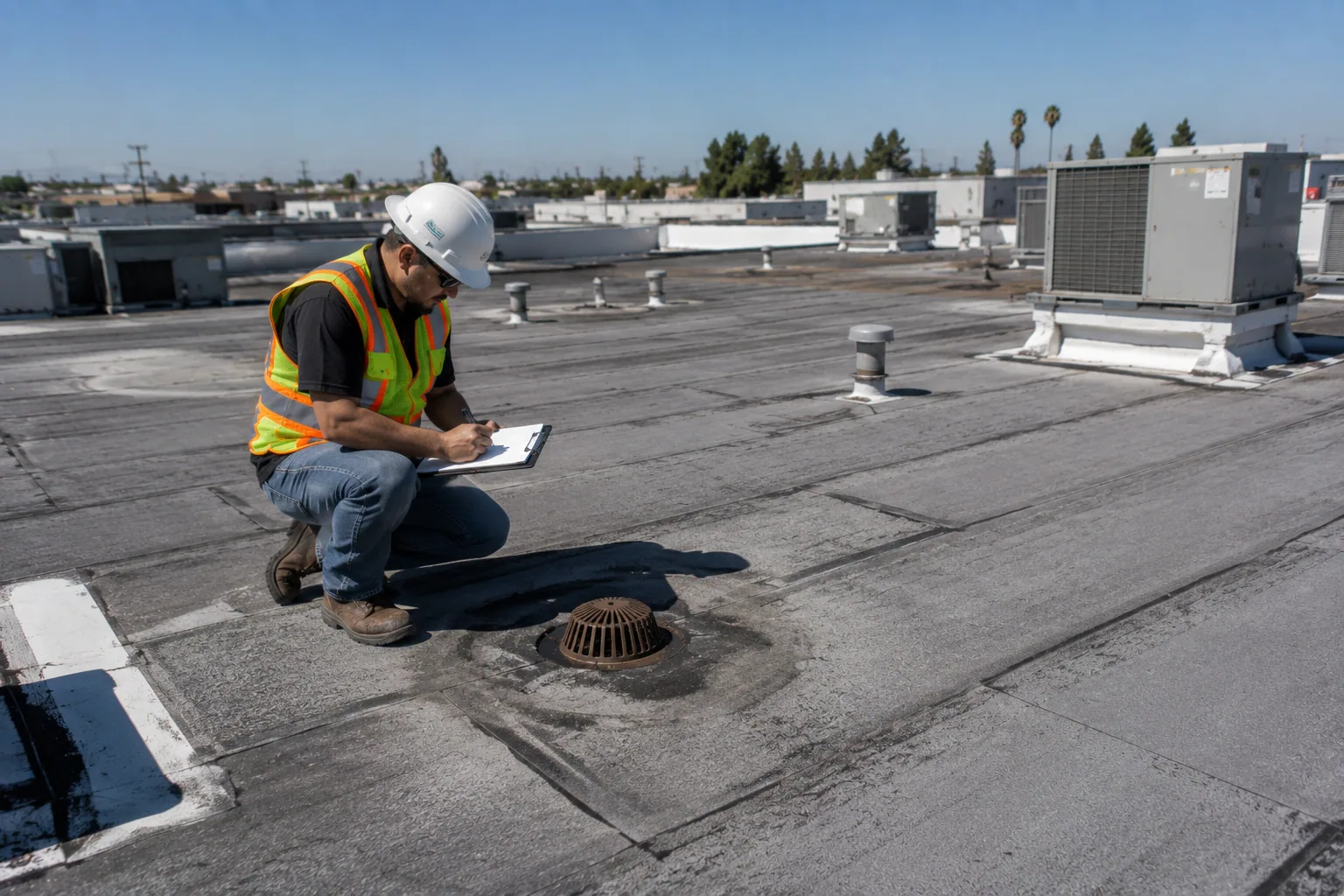
Debris can slow a drain while the real leak is in the flashing or clamping ring around it. We check the drain bowl or scupper and the membrane around it. Clearing a clog is worth doing, but we also look for split membrane, loose clamping rings or soft insulation that would affect the repair. Water can get in through a joint that cleaning never touches. The owner gets a short description of what each problem needs. A drain cleaning is still useful, but it should not be sold as a fix for every leak around that drain.
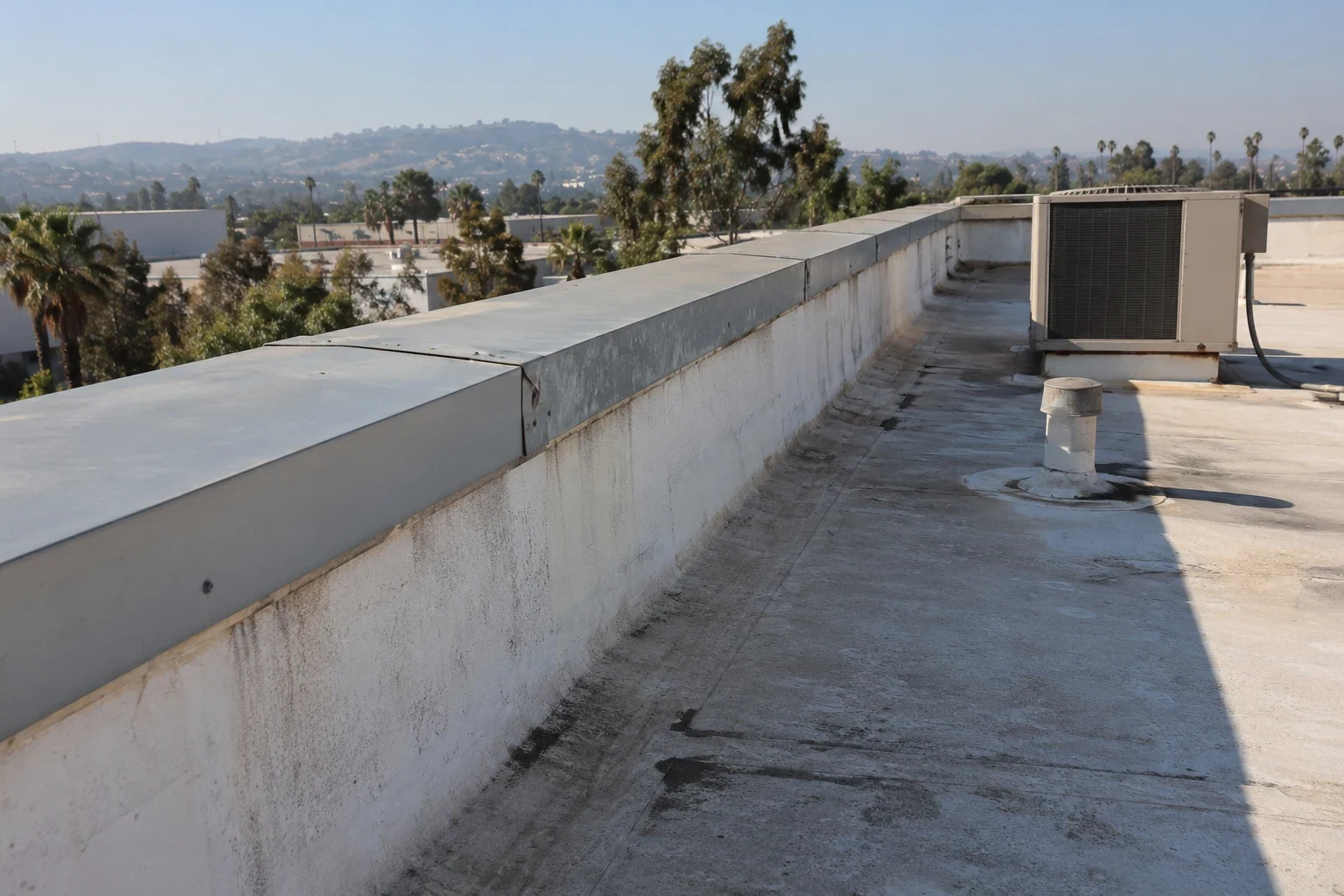
A flashing failure on a wall next to the pond gets its own repair. That wall flashing may need different work from the drain itself, and old patches can affect what materials will bond. We inspect each of those details and explain what the opening we found means. Where hidden wet insulation could change the repair, we say so plainly. The estimate keeps the drain repair and the wall repair as two line items, instead of lumping them into one promise to stop the ponding.
Look at the slope around the drain
Water that sits next to a drain often points to crushed insulation, a sagging deck or a drain set too high after an earlier reroof. We check how the roof surface meets the drain before choosing how to improve drainage. Adding tapered insulation should not raise the surrounding roof above the drain or leave the drain flashing too short to tie in. If the deck sag looks structural, an engineer reviews it. A puddle alone cannot tell us how much slope or which layers are needed to move water properly.
A failed seam inside the low area often needs repair along with the slope problem, because water sitting on a lap works it loose. The membrane on both sides has to be sound before we choose a seam repair, and wet insulation beneath it can change the plan. We take core samples where that decides what stays or goes, and our report notes exactly where we checked. The owner can then compare a seam repair with a larger insulation and slope fix, based on real conditions instead of a surface patch.
A ring of standing water does not say whether the cause is a clogged drain, a low section of roof or a blocked pipe downstream. We check the whole path the water takes, including changes in roof height, nearby penetrations and the drain connection. If the fix means adding slope, the scope explains how nearby drains and edge metal will meet the new surface. That keeps new insulation from choking a drain line or creating a second low spot right beside the repair.
Separate roof work from plumbing work
The roof drain and the pipe below it are often handled by different trades. A leak at the ceiling may need a plumber to check the drain line. We explain what we inspected on the roof and which connections are below it. Knowing that early lets the owner bring in a plumber before new membrane covers the drain. Our estimate says what the roofing work includes without suggesting we checked the pipes. When a problem crosses both trades, looking at it together beats two separate bids that each assume the other system is fine.
Drain and scupper repair requires knowing how the drain is built and where the water goes once it leaves the roof. Downtown Richmond and the Civic Center cover a lot of buildings, and each has its own manager, access route and rules about who can touch the equipment. Marina Bay mixes waterfront homes, retail and light industrial buildings. That means the drain and access have to be checked building by building before the scope is set. We sort out what each trade needs to do before scheduling, so the owner can line up the drain work with any other trades and tenants.
Prepare the roof around the drain
Changing the roof thickness around a drain can affect nearby walls and equipment curbs, so we check those before ordering materials. Wet or crushed insulation that has to be replaced gets clear limits and is rebuilt with compatible material. If we find more damage once the roof is open, we measure it and send a change for approval. A temporary seal stays in place while the owner decides. That way any added cost is tied to a real repair need, and the materials ordered actually fit the drain and the new roof surface.
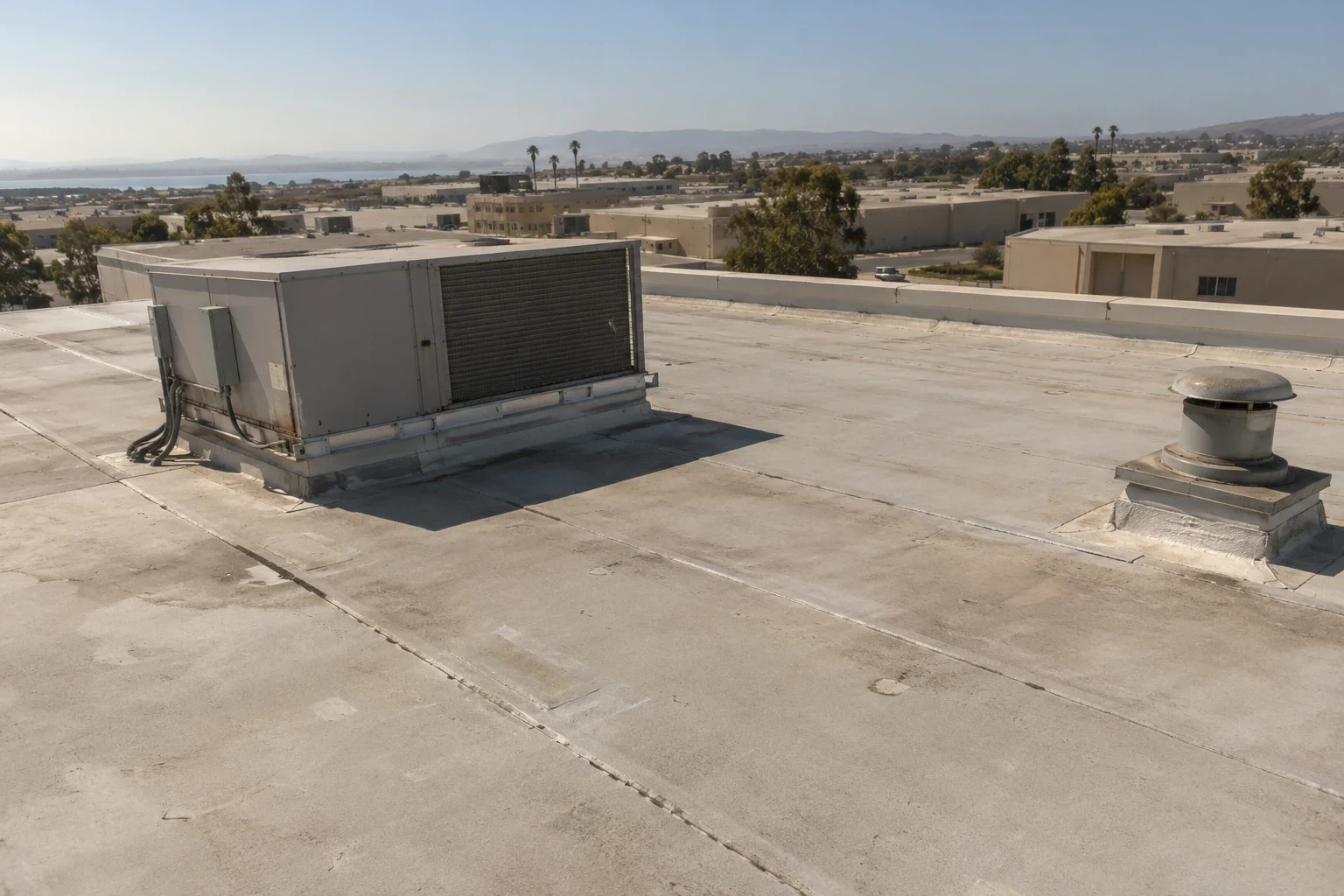
Insulation and cover board work for a drainage repair has to suit the existing roof build-up, and the estimate shows exactly where it runs. A larger tear-off may remove more wet material, while a smaller repair can still work if the roof around it is dry and sound. We explain what each option keeps and what it leaves alone. That helps the owner compare complete prices instead of choosing the cheapest surface fix while the wet insulation or drain height problem goes unaddressed.
Confirm the repair works
When the work is done, the owner gets photos of the original ponding area and what we changed. Pictures of the new insulation and the drain flashing are taken before they are covered. Any plumbing or structural work done by others is recorded separately. Checking the roof after a good rain shows whether water now drains, and our closeout lists the roofing work we completed. Anything still open is listed with what it needs next, so a new membrane is not mistaken for proof that every drainage issue on the building has been solved.
If ponding comes back, we inspect the roof as it is at that time. Leaves and debris, new equipment or other changes can affect drainage after a repair. We look at the area and compare it with our dated records before blaming the earlier work. A stain that keeps returning inside may come from a different leak and need its own trace. The records help the owner find what changed and plan the next step, while keeping our roofing work, new conditions and other trades' work clearly apart.
Commercial Roofing Questions
Does clearing a clogged drain fix ponding?
Sometimes, but not always. If the roof around the drain is low or the drain is set too high, water will keep sitting there after it is cleaned.
Can a patch fix the slope of the roof?
No. A patch seals a leak; changing how water drains usually takes tapered insulation or resetting the drain.
Who checks the drain pipe below the roof?
A plumber. We inspect the drain at the roof and tell you if the pipe below needs a plumber's look.
What happens to walls and curbs if the insulation gets thicker?
Their flashing may need to be raised. We check nearby walls, drains and curbs before ordering so the new roof ties in properly.
What should the closeout show for a drainage repair?
The original ponding area, the changes we made and any plumbing or structural items still open, with photos.

Find out why water is sitting on your roof