Johns Manville Commercial Roofing in Richmond, CA
A split seam on a Richmond commercial roof can let water into the insulation long before it shows up as a ceiling stain. Knowing the roof is a Johns Manville system helps, but it does not tell us whether the membrane next to the split is still good enough to take a permanent repair. We confirm which Johns Manville product is on the roof, inspect the failed seam and trace where the water has traveled before deciding how much needs to come out. The first estimate explains what we can fix right away, what needs a test cut to answer, and what access the building manager will need to arrange.
Johns Manville makes TPO, PVC, EPDM and APP or SBS modified bitumen roofing. Each one uses different seam materials and needs different prep. We do not assume that every patch and transition on the roof matches the product named on an old invoice. A commercial roof inspection ties what we see to a specific area of the roof, notes what the roof is built from where we can see it, and flags anything we still need to confirm before ordering material.
Identify the installed family
Thermoplastic sheets rely on a clean, compatible surface at the seam. A TPO seam repair begins with checking the membrane type, weld area, lap width and any coating or contamination that may affect a new weld. We test a representative area when the condition calls for it. If the material is brittle, split beyond the lap or bonded to a layer that cannot remain, a surface-only patch does not settle the repair boundary.
EPDM has a different connection method. An EPDM repair may use seam tape, primer or adhesive selected for the identified system. The edge has to be clean and properly prepared, and the repair must extend onto sound material. We inspect previous repairs as well as the original seam. A patch can hold at its center and still leave a loose perimeter, so the work record shows what was tested and how far the new connection reaches.
Trace the failed connection
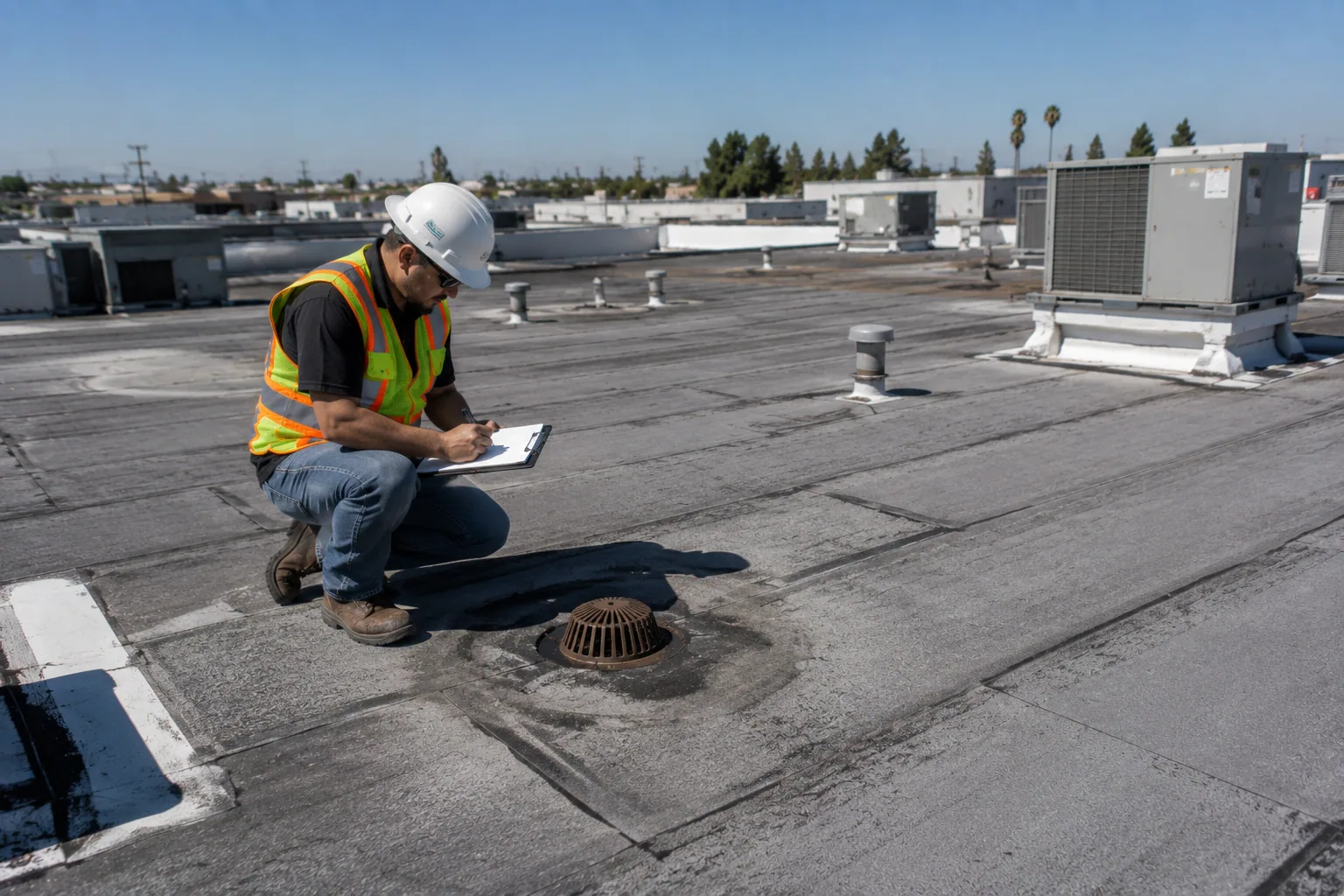
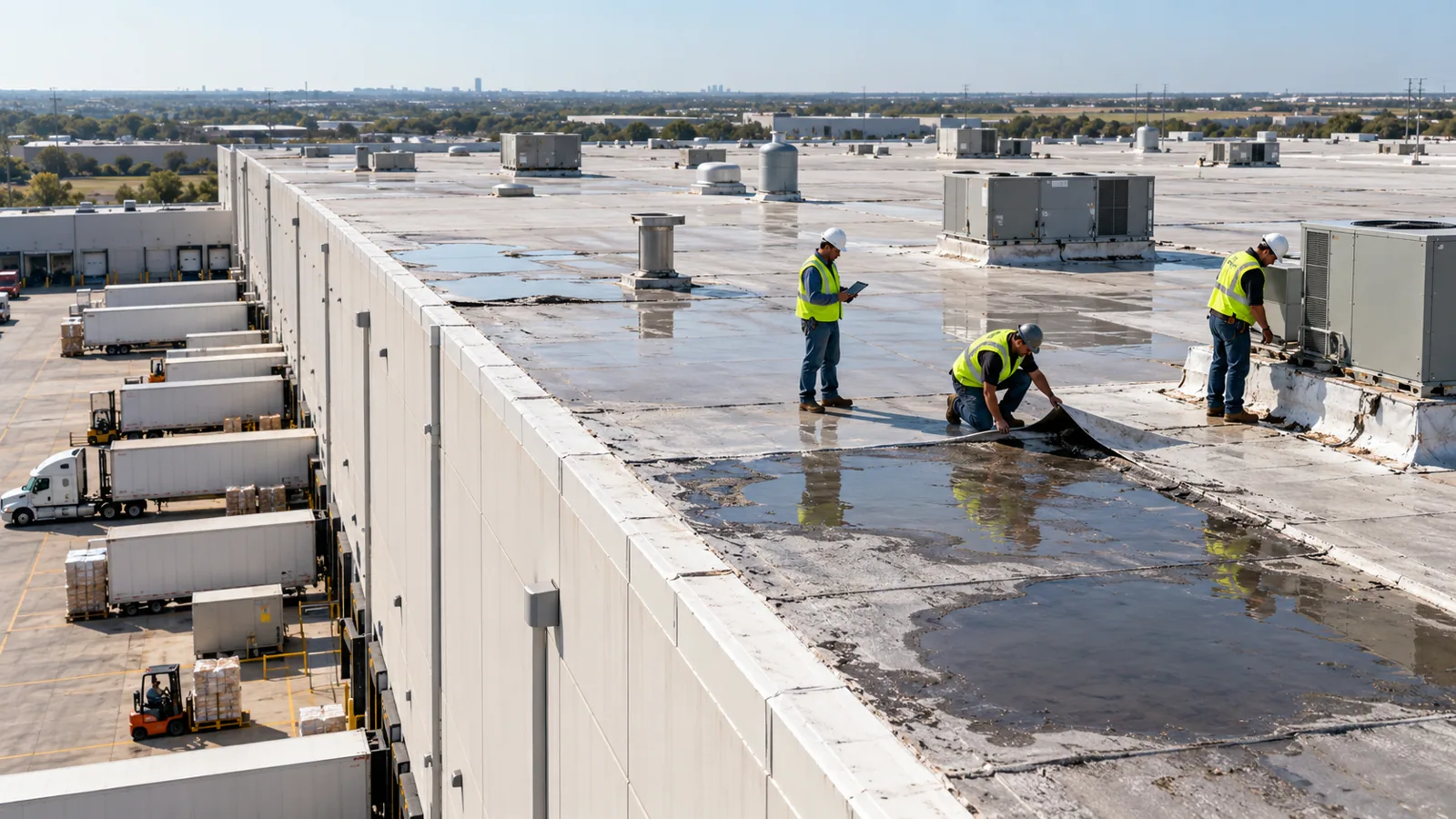
A lap split is one possible entry point, but water can move below the sheet before it appears inside. We compare the roof location with the reported ceiling area, then inspect nearby drains, curbs, penetrations and transitions. The inspection notes whether the membrane is loose, punctured or separated, and whether moisture is confirmed beneath it. An interior stain alone does not establish how much insulation or cover board needs removal.
Modified bitumen has seams and surfacing that require a separate repair method. A modified bitumen assessment identifies the APP or SBS product family, surfacing, existing layers and detail geometry before a repair material is selected. We avoid joining incompatible surfaces or covering a blister that needs further examination. If a test cut is needed, the scope states its size, temporary closure and the decision the result will inform.
Plan access around port operations
The Port of Richmond is made up of five City-owned and ten privately owned terminals that move bulk liquids, dry bulk, metals, vehicles and breakbulk cargo. If your building sits inside an active terminal or yard, the site's rules come first. Before we mobilize, we confirm gate and escort requirements, the delivery route, where trucks and lifts can and cannot go, where we can stage material, and who on your side can approve a change to the scope.
Getting material from the truck to the roof edge takes its own plan. We confirm whether a hoist, lift or stair route is allowed and whether a protected walkway is needed below the work area. Those choices affect setup time and how large an area we can safely open each day. The schedule spells out who opens the access route in the morning and who we check out with when the crew leaves.
Much of the waterfront falls within the City's Port Priority Use Area and the marine-industrial zoning along the Santa Fe and Harbour Channels, so roofs here often sit next to heavy truck traffic, rail and cargo handling. Every property still has its own rules. For work in the Port Priority Use Area, we plan the visit around the instructions you give us, and keep crew access and material deliveries out of the way of your operation. If a route or work window changes, we send you the updated schedule before the crew shows up.
Price the repair boundary
Cost depends on the length of seam to be repaired, the number of curbs and transitions, how deep the removal goes, the condition of the insulation underneath, access, protection and disposal. A short visible split can turn into a larger repair if the membrane or insulation around it is wet or too weak to hold a lasting tie-in. We list confirmed quantities separately from test cuts that could add to the scope. The written estimate states what is included, which areas have not been opened, and who signs off on extra work if hidden damage turns up.
When a repair goes down to the insulation or cover board, the replacement has to match the existing roof and sit flush with the surrounding area. A insulation and cover board repair may be needed before new membrane goes on. We photograph each layer as it comes off, keep the opening dried in, and check the surface before closing it up. If the insulation turns out to be dry and solid, you can compare a targeted repair against a larger replacement without paying to tear off good material.
Compare complete system choices
A local repair is useful when sound membrane remains around the defect and the selected material can form a continuous tie-in. Broader removal may be appropriate when seams have separated across multiple roof zones, moisture is confirmed beneath the surface or the existing assembly cannot provide a reliable receiver. We list the condition that supports each option, then compare labor, preparation, closure and disposal on consistent quantities. A leak repair scope should resolve the entry route, not merely cover its visible endpoint.
If an owner is considering another manufacturer, the comparison needs a defined assembly and connection detail. A GAF system option and a SOPREMA system option each require their own product and substrate review. We do not carry a Johns Manville accessory assumption into a different system. The estimate identifies removal, insulation, seams, edge work and transitions that each choice changes, so the owner can compare complete construction instead of a membrane roll alone.
Leave a record for the next decision
At closeout you get the confirmed product type, the roof area repaired, the materials used, photographs, and any areas set aside for later investigation. The report also notes how far the repair extended and why. If we could not reach part of the roof, that section is listed as not inspected rather than quietly treated as fine. A roof condition report carries those findings into your maintenance plan and lets the next inspection check the same locations.
For buildings at the Port of Richmond, it helps to keep roof records alongside the site's access rules and operating restrictions. We document what was repaired and what is still open; terminal rules and equipment stay with the people who run the site. To get started, tell us which room or roof area is leaking, send any product records you have, and let us know the access route and a good work window. Our scope will cover what we found, the confirmed quantities, the protection plan and anything that needs your approval before more material comes off.
Commercial Roofing Questions
Can an old Johns Manville invoice identify the current roof system?
It can tell us which product family was likely installed. We still inspect the roof to confirm the actual membrane, any later repairs, and the condition at the seam that failed.
Why would a seam repair extend beyond the split?
The repair has to tie into sound membrane. We probe and measure the area around the split, and only add removal when the membrane or insulation underneath is wet or too weak to keep.
When is a test cut worth doing?
When hidden moisture or an unknown layer could change the size of the repair. We tell you the size of the cut, how it will be sealed afterward, and what question it will answer.
How should an owner compare a different manufacturer?
Compare complete roof systems over the same repair area, including prep, insulation, flashings, access and closeout, and make sure each product is suited to the roof it will go over.
Tell us about the failed seam and site access