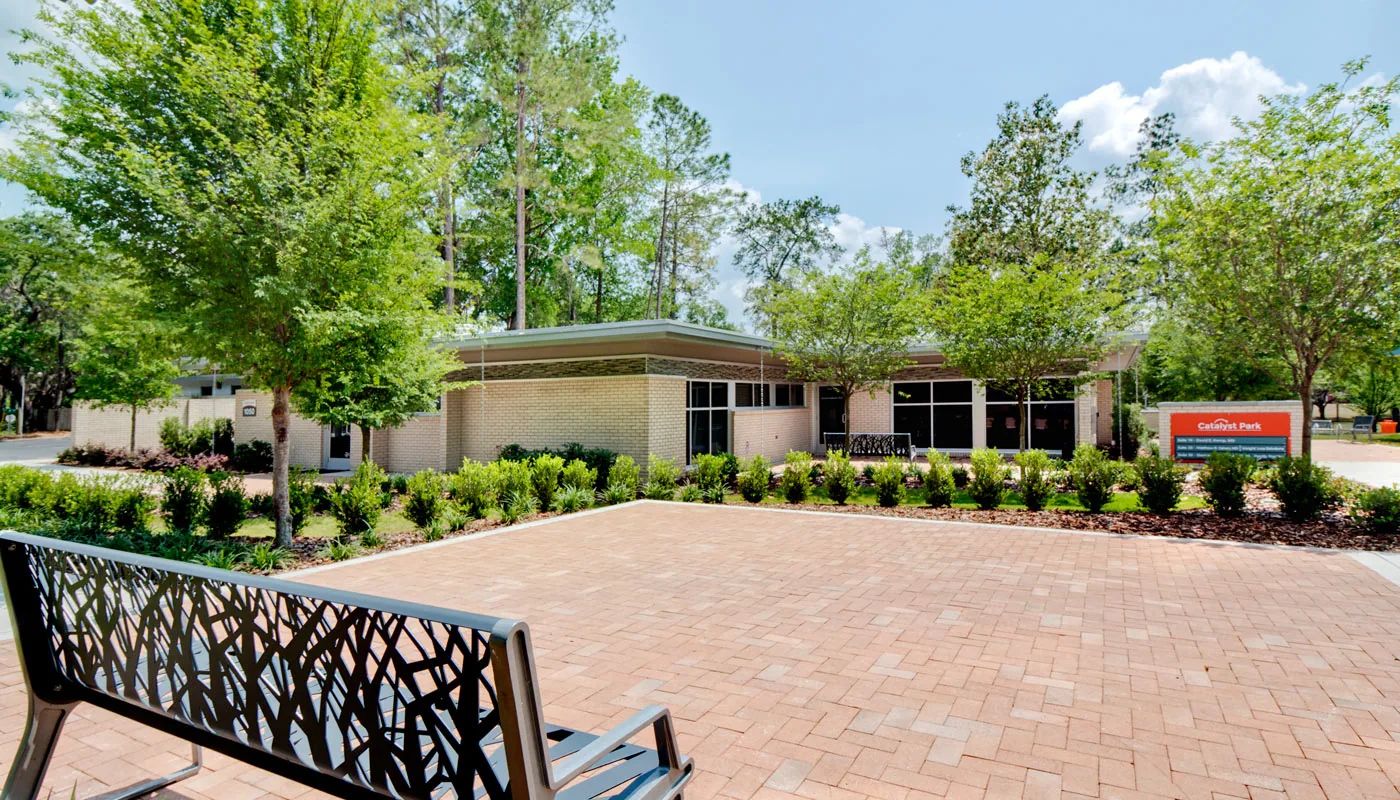
Fitness Center Roofing in Richmond, CA
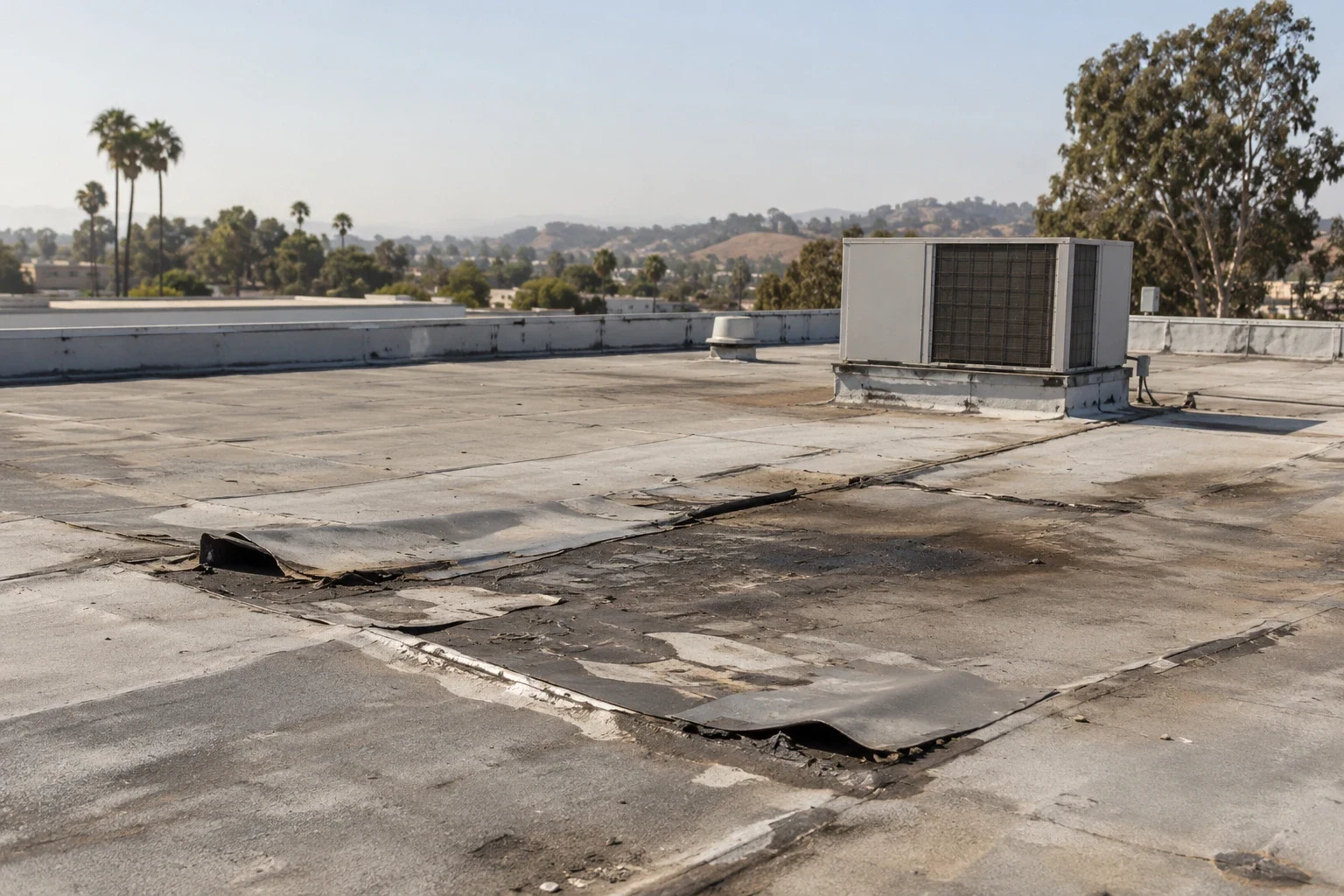
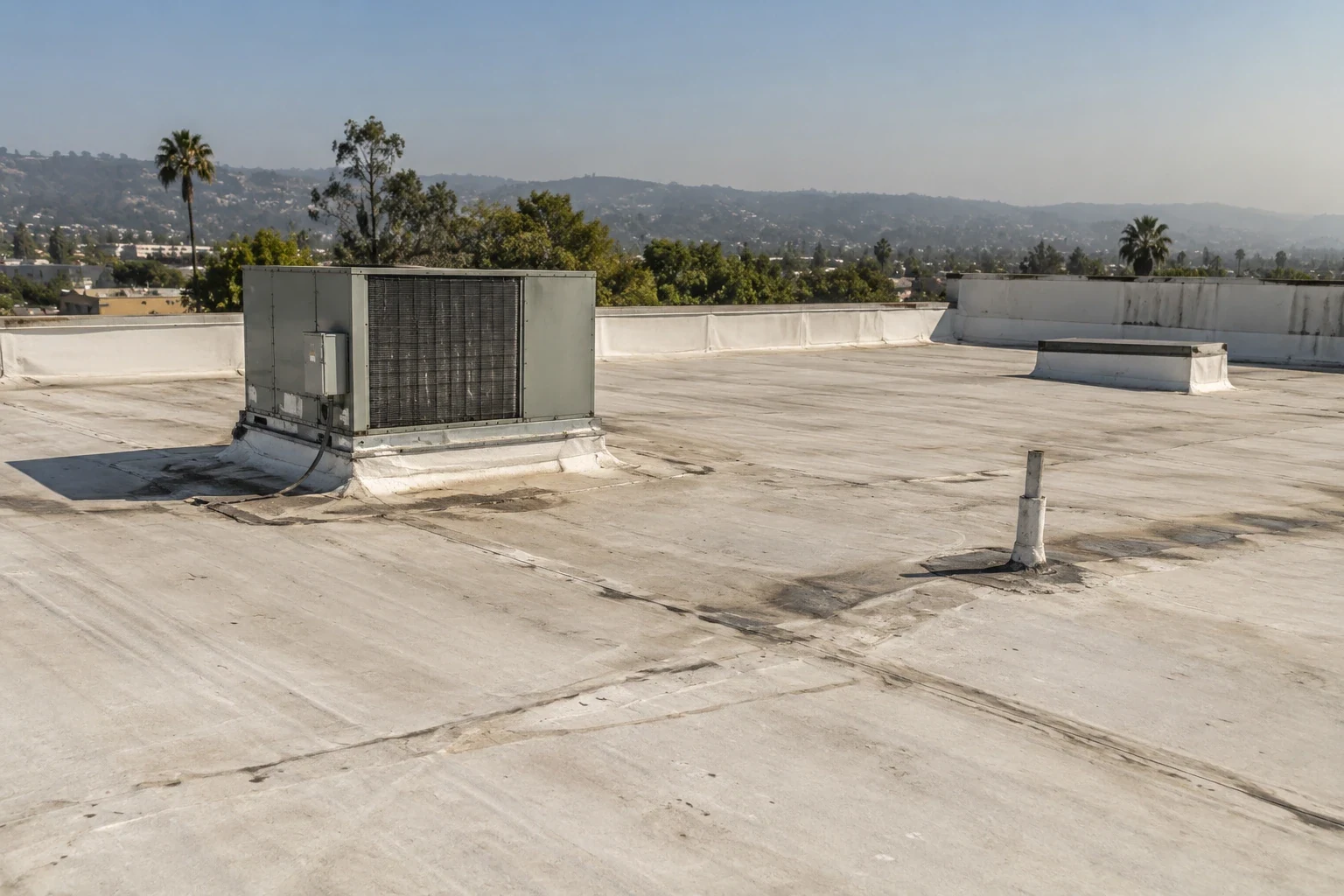
Many fitness centers sit under spray polyurethane foam roofs or older roofs that have been coated, and both hold up well as long as the coating keeps the sun off the foam. Once the coating wears thin or gets punctured, UV light starts breaking down the foam underneath, and water follows. Damaged foam has to be cut out and re-sprayed; it cannot simply be coated over. Areas where the coating is still sound only need cleaning and a fresh coat. The curbs for the big HVAC units these buildings need also have to be properly flashed, rather than just coated across. We inspect the foam and coating, find where the roof is still solid, and price the repair from there.
Gyms are full of people from early morning to late at night, and the floor below may hold treadmills, weight racks, locker rooms and a pool. Send us where you are seeing leaks or damage, plus any roof records. Your facility manager decides how equipment and members are protected and where material can be carried. We inspect the coating and foam before recommending a repair, and HVAC or electrical work goes to the trades that handle it. The comparison you get is based on this building's actual roof, including any test openings and their repairs.
Damaged foam needs more than a new coat
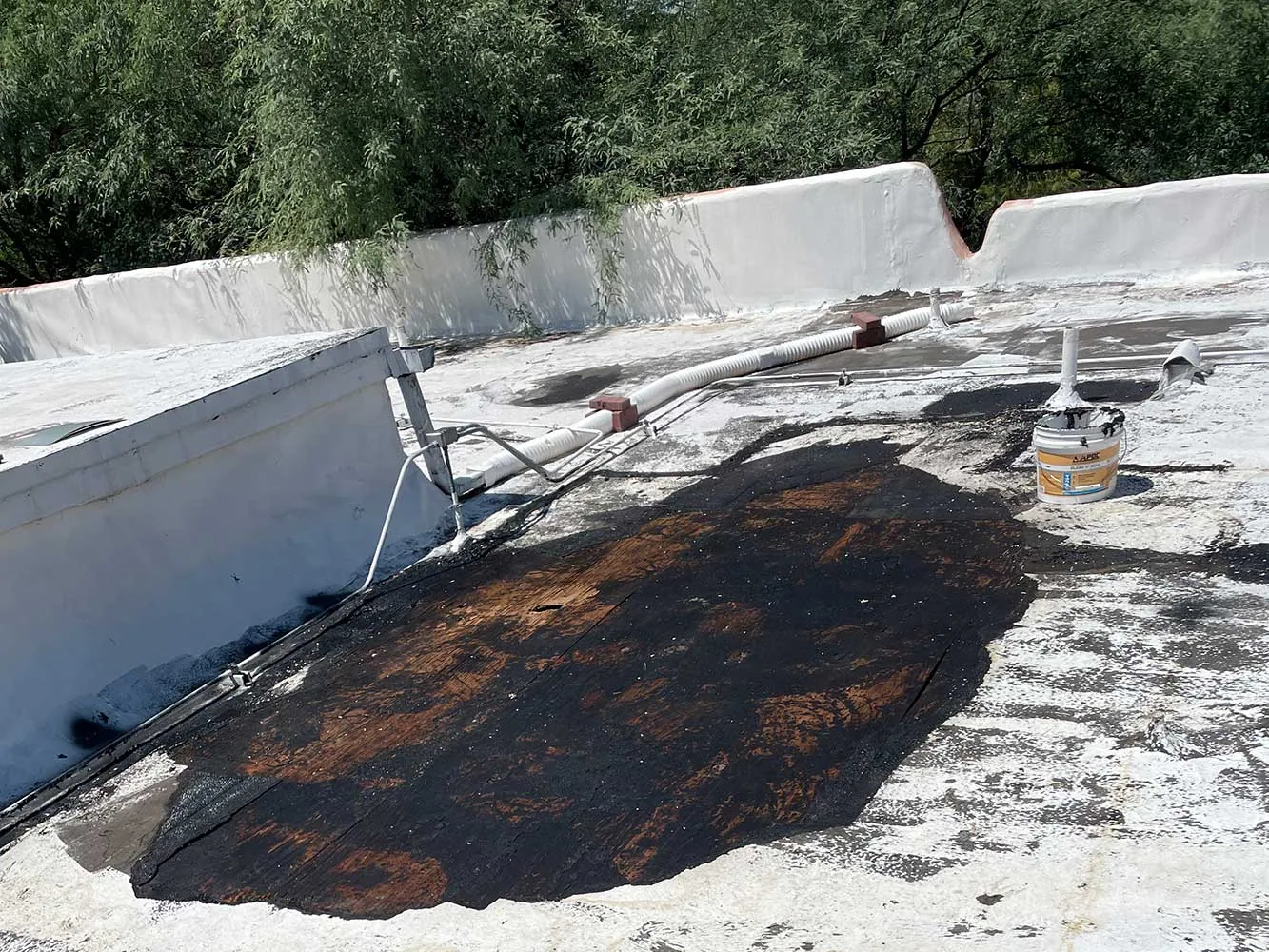
When the coating opens up, the foam below it can be in very different shape from the rest of the roof. Our spray foam roofing inspection checks how deep the damage goes and what prep the repair needs. Foam that is soft, wet or crumbling has to be cut out and replaced. Foam that is sound just needs to be cleaned. The roof's slope and the way it meets curbs and walls also matter when we re-spray an area. The repair is sized to sound foam, because a new coating over bad foam does not fix anything.
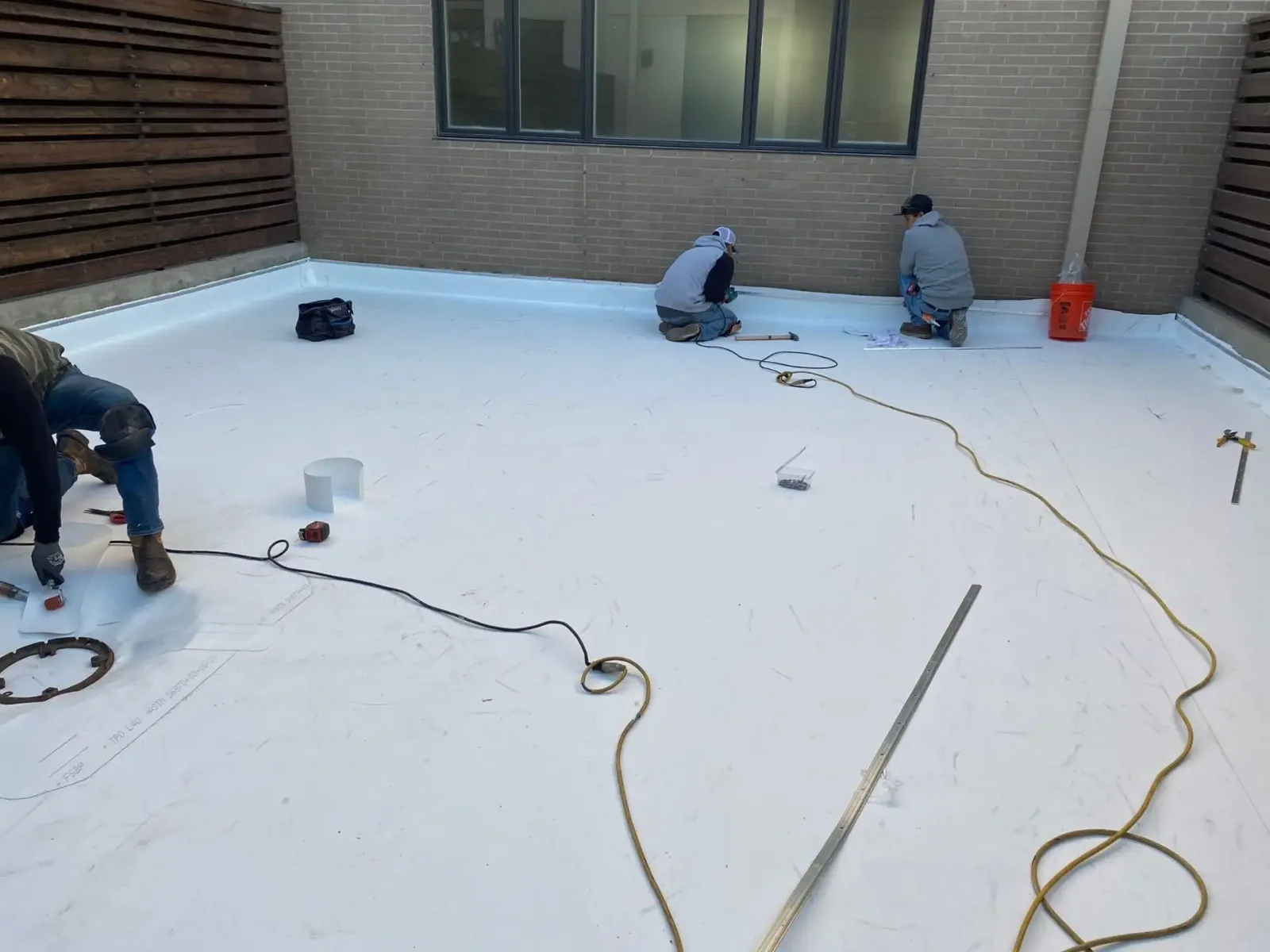
The new coating also has to be compatible with what is already on the roof and applied over a clean, prepared surface. Roof coating restoration ties that requirement to the actual roof and its curbs and edges. We explain which material can stay and what has to be fixed before a recoat will hold. Coating over a failed curb flashing will not stop the leak there. The bid keeps those repairs next to the coating price, so you can fairly compare a recoat with other roof options.
Curbs and rooftop units
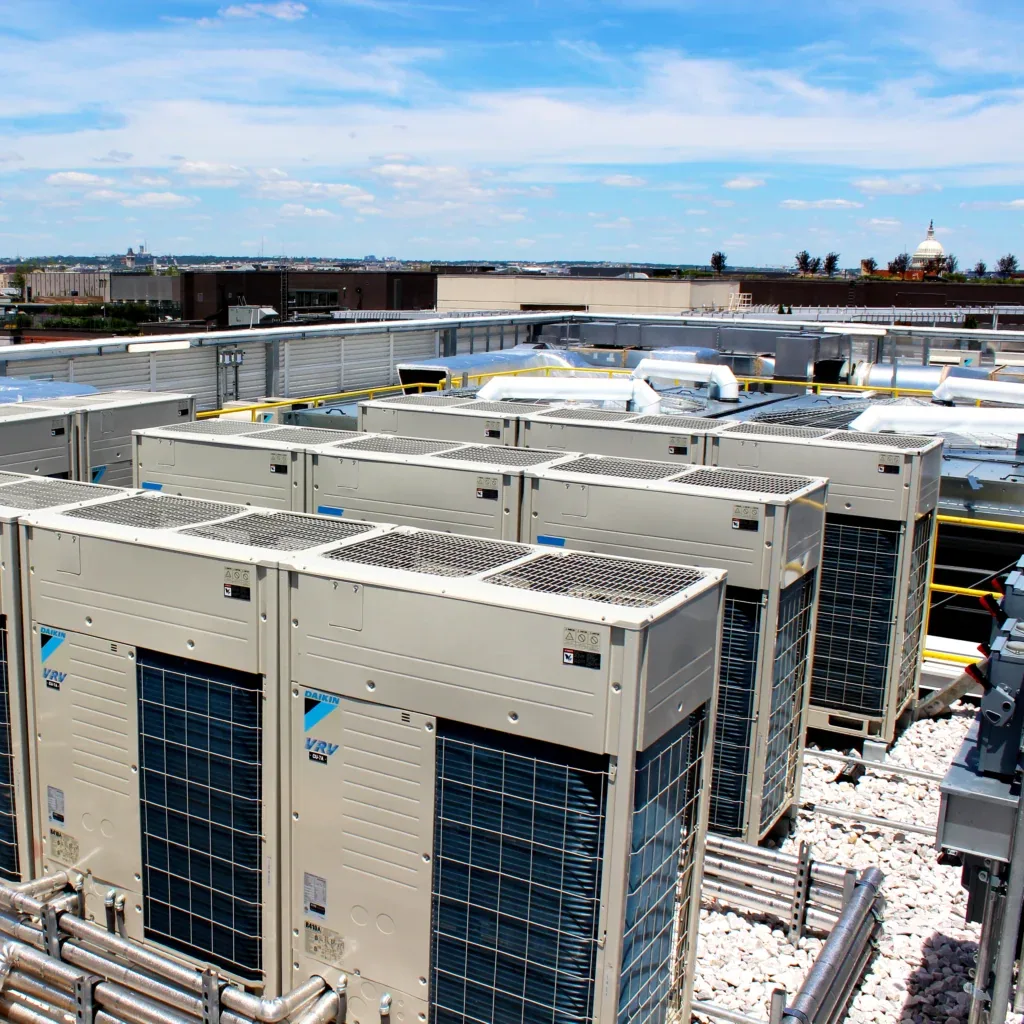
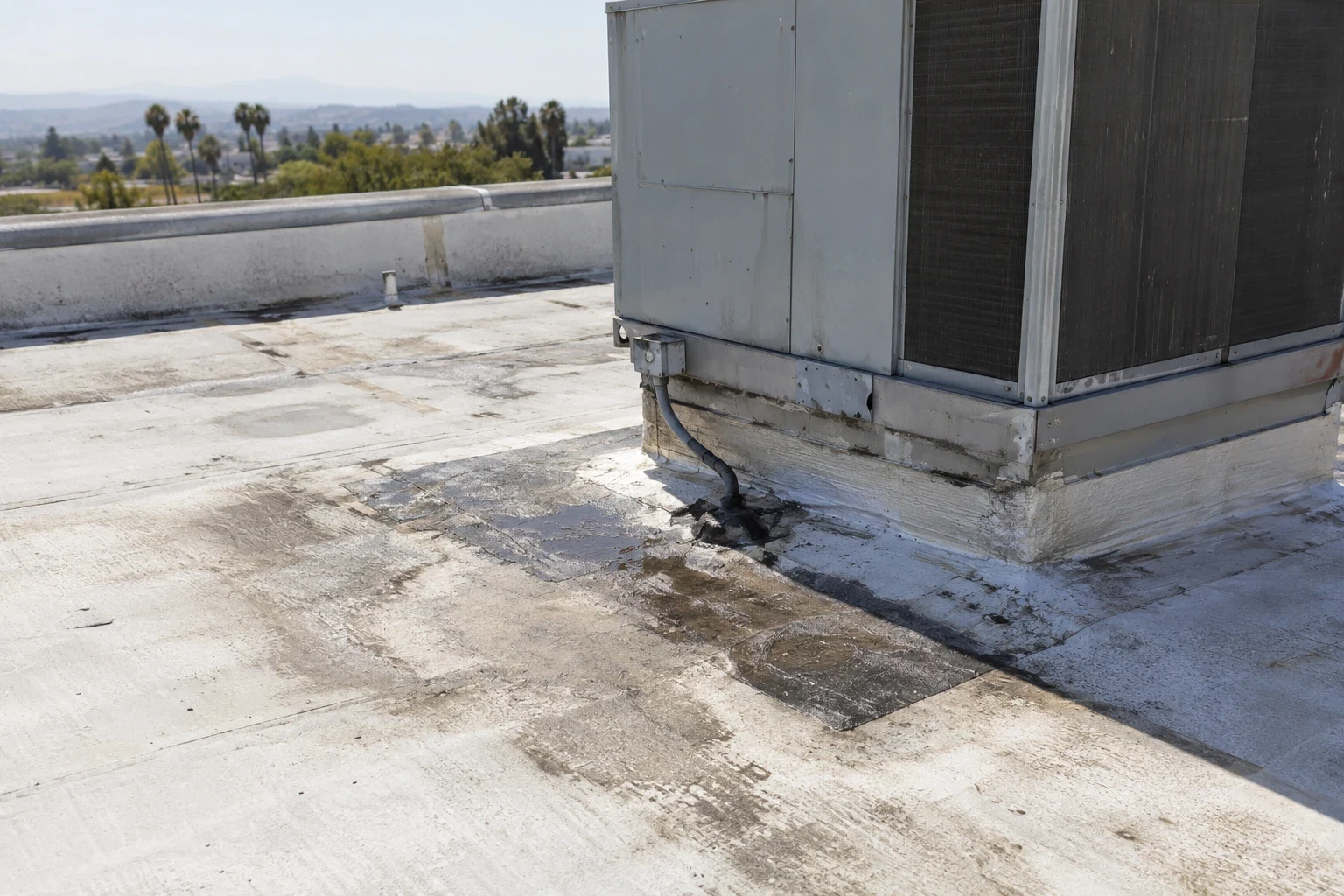
Where foam meets an HVAC curb, damage often runs right up the curb itself. Flashing failure repair at those spots checks the curb, the flashing and the foam around it. HVAC contractors handle the units and any clearance issues. Structural questions go to an engineer. We identify the roof repair that can be finished now and the work that has to wait on another trade. That way the order of work is clear, and a coat of material across the roof does not hide a curb that will keep leaking.
Adding foam or a new roof raises the surface, which can change how the roof meets curbs, drains and walls. The project designer and the HVAC contractor decide on any changes that affect their work. We list all the curb and edge work for each option before comparing it with simply repairing the damaged foam. Each option needs solid material underneath and a work plan that fits the building. A recoat that stops at a curb still waiting on the HVAC contractor leaves that spot unfinished, so the bid includes it.
Protecting equipment and members
An opening over a workout floor or hallway can affect more of the gym than where the leak first appeared. For reroofing occupied buildings like this, we share the planned openings, debris routes and material handling with the facility manager. They set protection and access for equipment and members. Electrical and HVAC work stays with those trades. Patching test openings is included in the price, so the bid does not assume one protection setup works for every room in the building.
If more damage turns up, the work area may reach other equipment or change how material gets to the roof. We explain the larger scope before removing more, and the facility manager reviews protection and access. Temporary repairs may stay in place while an HVAC or design question gets resolved. The operator tells us about class schedules, occupied rooms and rooftop equipment before we set the work route, and arranges our inspection access. Electricians check any affected equipment. Temporary patches are recorded separately from finished foam and coating work.
Checking what you cannot see
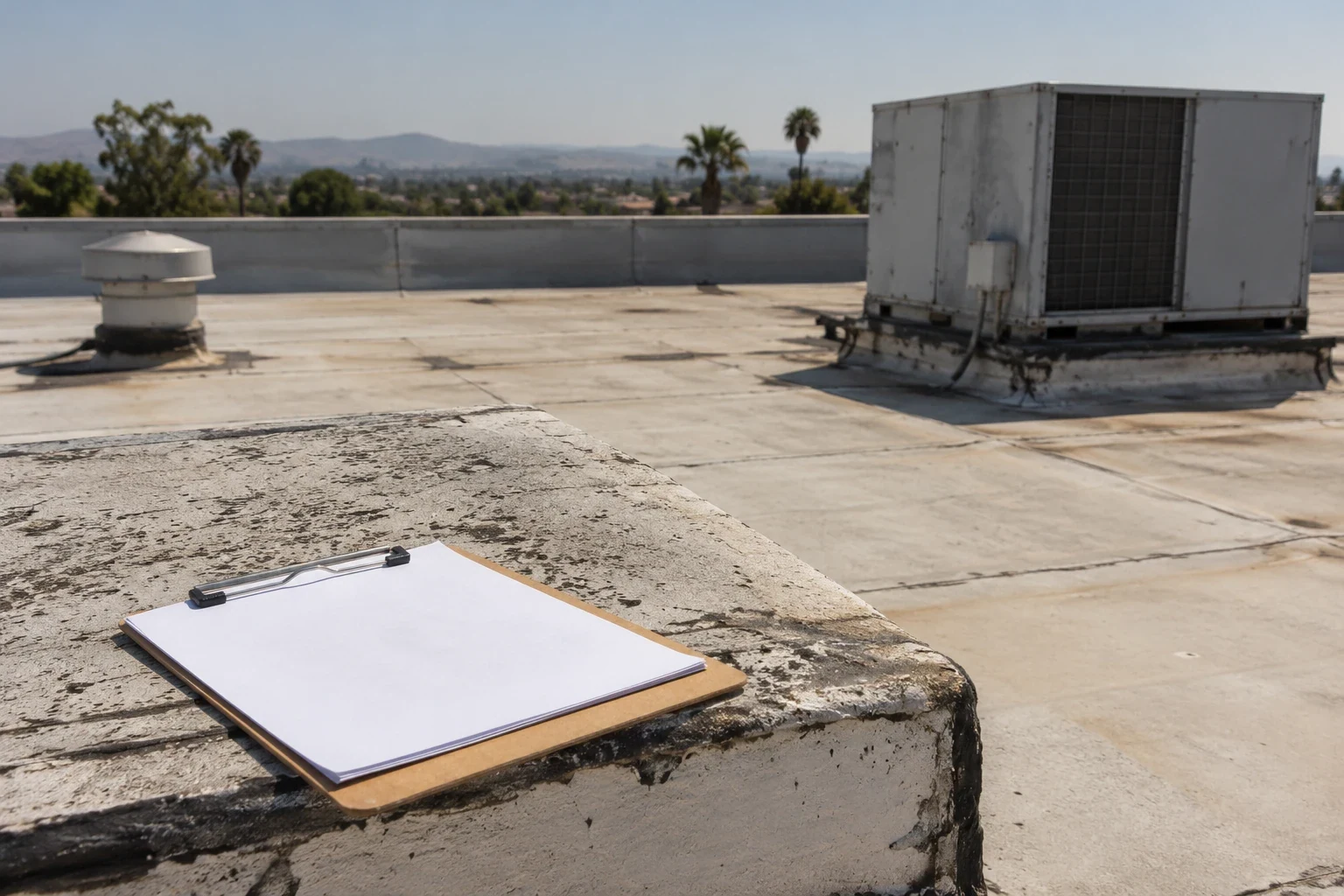
A coated surface can look intact while the foam or insulation below is wet. Moisture scans help, but the results depend on how the roof is built and the conditions during the scan. Where the decision to keep foam depends on it, we confirm with core samples. Each test spot is repaired, and the facility manager knows what is below. A scan points us to problem areas without telling the full story for the whole roof. You get findings tied to specific spots and how each one changes the scope, not a conclusion drawn from how the coating looks.
When the work is done, final photos show the replaced foam, the new coating and the finished curb details. Any work still pending for other trades is listed separately, along with temporary patches. That lets the next inspection go straight to the repaired areas. Protection notes stay with the work area they applied to, and future work in another part of the building gets its own review. You end up with a clear record of what is finished and what is still waiting. For gyms near the Port of Richmond, the schedule protects members and keeps rooftop units reachable for service.
Fitness center roofing in Richmond
For fitness center roofing in Marina Bay and nearby areas, roof work and HVAC coordination are handled as separate pieces of the job. Send us your roof records and the contact who handles interior protection. We inspect the roof before recommending a repair, and your team reviews the material route and access. The price follows how much foam and coating can stay on this building, with any test openings and their repairs listed.
Other buildings have similar roofs with different people and contents below. A school roof is usually worked around the school calendar. A big-box retail roof has store aisles and heavy HVAC service traffic. We document the gym's foam and coating repairs on their own. Future options can start from what we actually inspected and fixed here, since a roof that looks similar elsewhere may have very different foam and equipment conditions.
Commercial Roofing Questions
Can a new coating fix damaged foam underneath?
No. Soft, wet or UV-damaged foam has to be cut out and re-sprayed first. The coating then goes over sound, clean foam.
What else should be in the price besides the recoat?
Repairs at curbs, walls and edges, plus any HVAC work that has to happen first. A recoat is not complete until those details are fixed.
What happens if more of the roof needs work?
We stop and show the facility manager the larger area. They review protection for equipment and members below before we go further.
What should we keep for future roof decisions?
Photos of the replaced foam, new coating and curb details, plus a list of temporary patches and any open work for other trades.
Tell us about the gym roof and equipment below