Local weather advisory
Coastal Flood Advisory: Commercial Roof Help in Richmond
The National Weather Service has issued a coastal flood advisory covering Richmond. Heavy rain and drainage loading can expose roof leaks, blocked drains, and ponding water. This is a weather exposure advisory; it does not establish damage to a specific roof.
Do not access a roof during hazardous weather. Protect people first, avoid water near electrical equipment, and request roofing help when conditions permit.
National Weather Service · Updated Oct 28, 2026, 7:20 AM UTC

Commercial Roofing Repairs in American Canyon, CA
A scupper is the opening in a parapet wall that lets water drain off the roof. When the membrane lining that scupper pulls loose, water that should be leaving the roof runs straight into the wall or the building instead. The leak can come from the membrane where it turns into the scupper, from the metal scupper box itself, or from where the box passes through the wall to a downspout or leader head outside. Each needs a different fix, so we find the actual failure before we pick a repair, and we plan how to reach both the roof side and the outside of the wall.
Our Richmond crews regularly work in American Canyon, a southern Napa County city along the Napa River with Napa County Airport just to the north. Its commercial and industrial buildings vary a lot, so we look at each roof on its own terms: how the scuppers are built, what the roof is made of and how we'll get material on and off. We'll work out access and staging with the property manager before the job starts. Our commercial roofing in Vallejo follows the same approach, sizing the repair from what we find rather than from the first gap visible on the roof.
The outlet has an interior connection
The metal scupper box is only one part of the drain. The membrane has to run into it and seal to it, usually with a flashing sheet or a set-in-sealant flange. If that seal fails, water gets under the roof at the edge and into the wall. We check the roof side of the scupper first and identify what membrane is on the roof. A new metal box on the outside won't fix a torn membrane on the inside, so the estimate lists each part and how it will be sealed.
For roof drain and scupper repair, we also look at the downspout or leader head outside. A clog, a crushed or rusted scupper and a failed membrane seal are three different problems, and clearing a clog doesn't fix the other two. You get a short description of each and what we recommend. If the scupper looks too small for the roof area it drains, we'll flag it for an engineer or designer to review rather than just cutting a bigger hole in the wall.
The water level changes the investigation
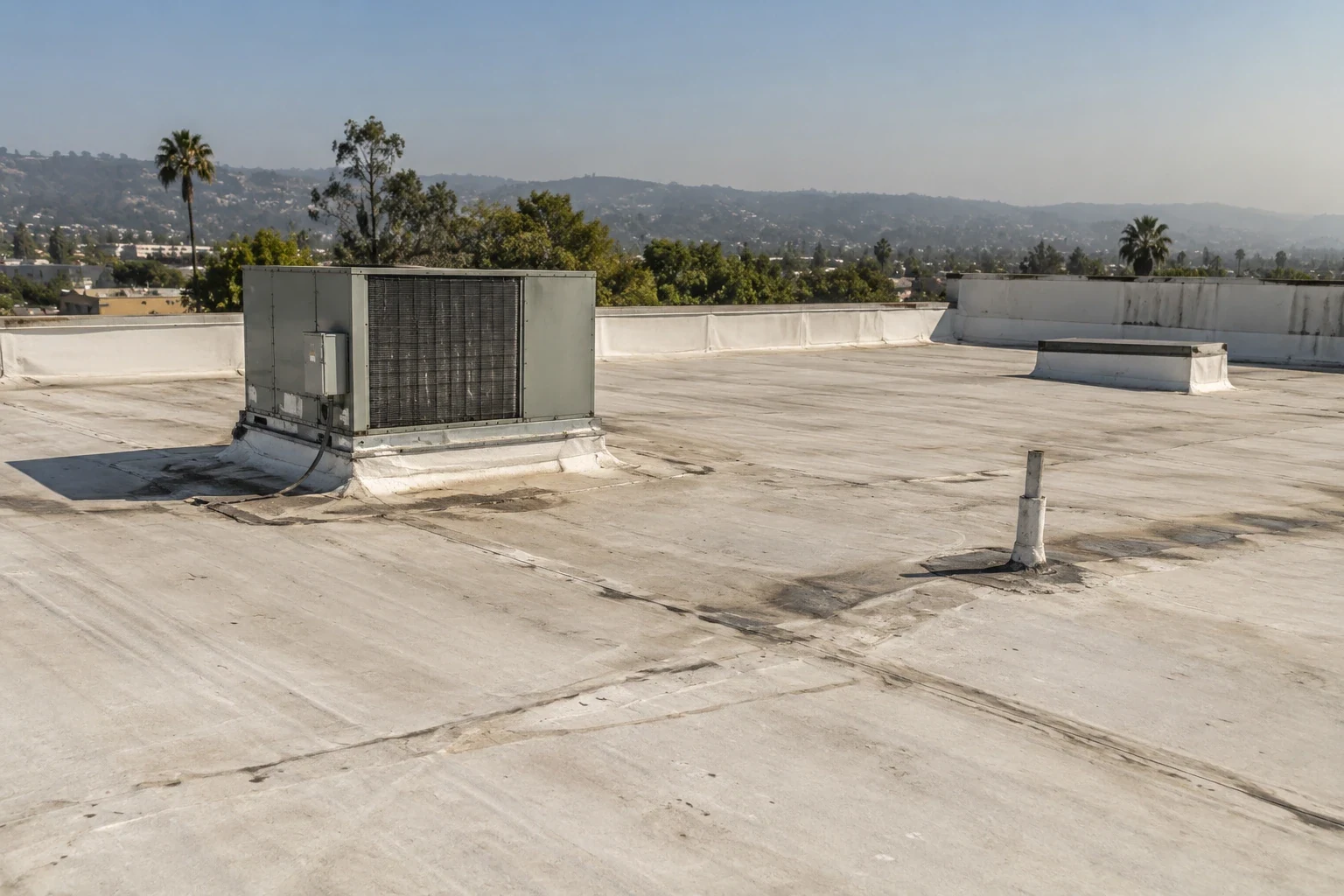
When water sits near a scupper instead of draining off, it puts pressure on any weak spot in the seal for hours or days after a storm. We check the slope of the roof toward the scupper and the path out through the wall, then see how the roof drains after the scupper is cleaned or repaired. A low spot next to the scupper is a different problem from a blocked opening, and a new lining won't fix water that can't reach it in the first place.
If water has gotten under the membrane, the insulation near the scupper may be wet. Moisture readings or core cuts tell us how far it goes. We separate the leak itself from the damage it caused, and our ponding water roof repair work deals with both: the low area on top and the wet material below. When we remove insulation, we check the deck underneath and replace what's damaged before rebuilding the scupper flashing.
The wall side may need another route
The roof side of a scupper might be easy to reach while the outside of the wall is over a driveway, a loading area or a sidewalk. We look at both sides before setting the work order. Tell us which entrances, walkways and parking areas need to stay open, and we'll plan ladders, lifts and debris removal around the building's height and layout. The schedule also accounts for how long the scupper will be open, so it's sealed temporarily or replaced the same day.
We'll confirm where trucks can unload and how material gets to each part of the roof before anything is delivered. On roof repairs in Benicia we plan the same way, separating how we get onto the roof from how we reach the outside face of the wall. Long pieces of metal and removed material need room to handle safely. If the wall around the scupper needs stucco or masonry work, we schedule it before the new scupper goes in, so the flashing isn't sealed against a damaged wall.
The lining repair needs compatible transitions
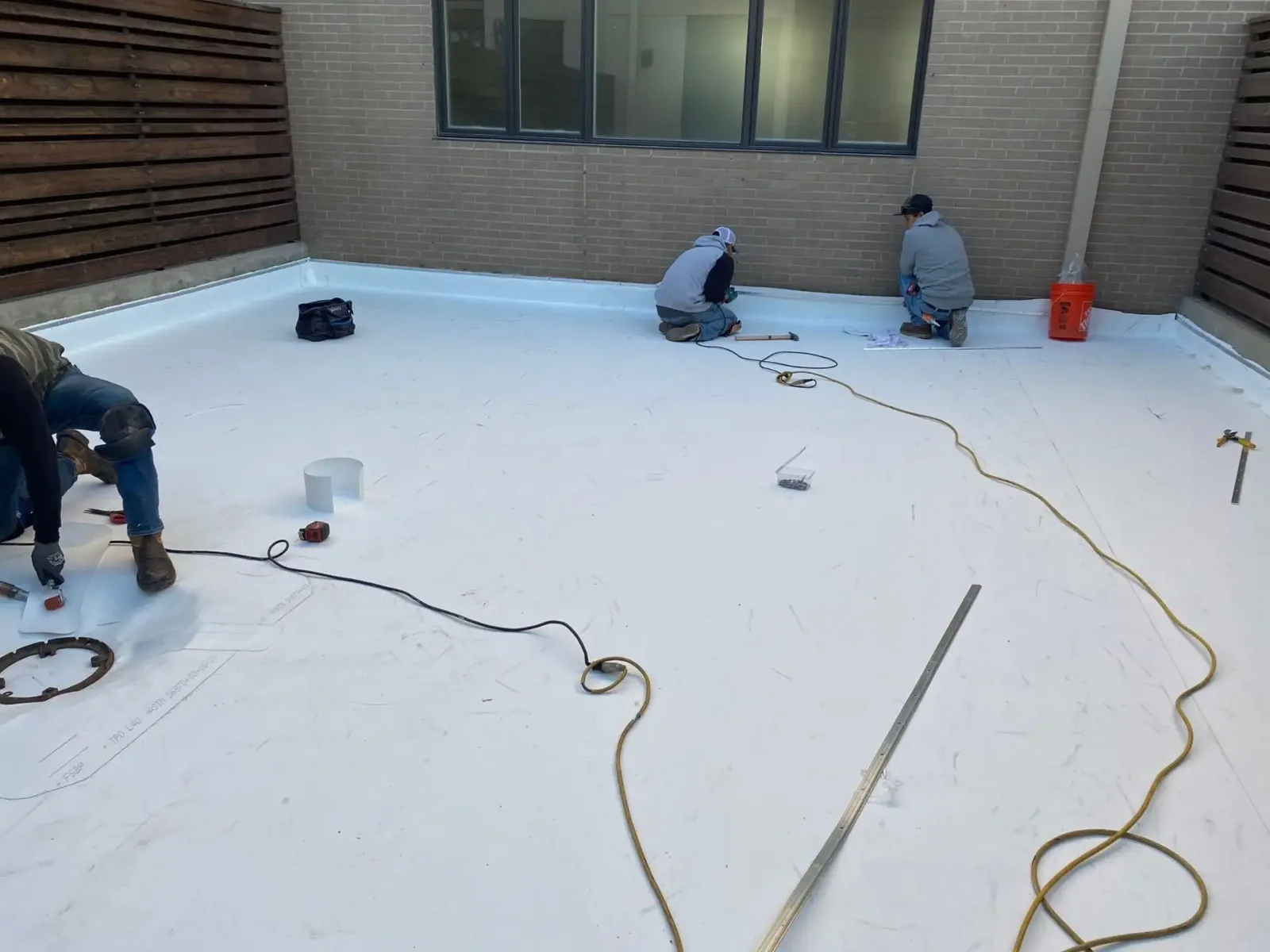
Replacing a scupper lining means tying new material into the existing roof around it, not just fitting a new box. We identify the roof system, find where the membrane is still in good shape, and prep that area for the new flashing. If the membrane right around the scupper is too old or damaged to bond to, the repair has to extend farther out onto the roof, and we'll show you why. The finished detail has to work as a unit: membrane into scupper, scupper through the wall, water out to the downspout.
On a PVC roof, the scupper flashing needs PVC-compatible accessories and a heat-welded seal to the field membrane. Other roof types use their own methods. We confirm the existing membrane before ordering parts, and we don't rely on a bead of caulk as the main seal. Once the work is done we check the membrane connection, the scupper box and the outlet, and we note any drainage or wall items that still belong to someone else.
The condition record keeps drainage separate
When the repair is finished, you should know which part failed and what we replaced. We photograph the membrane connection and the area around it while it's open, and our closeout notes list what was removed, what's new and what stayed. Any drainage or wall work handled by another trade is noted separately. That gives you a record of work that will be hidden once the roof is closed up, and makes clear whether the downspout or leader was part of our job.
If several scuppers on the same roof are failing, it may be worth a wider look before paying for another one-off repair. A roof condition report can separate the urgent fix from broader drainage or roof-age problems. When a scupper is leaking during a storm, emergency repair gets the building dry, but that temporary patch is different from the permanent flashing, and we keep the two clearly separate in the scope and invoice.
Our closeout also draws a clear line between the roof and the drainage downstream. We note the condition of the lining, the membrane around it, the scupper box and the point where water leaves the building. If the leader or downspout below still needs to be checked, we say so, so you can assign it instead of assuming it was covered by the roof repair.
Commercial Roofing Questions
Does clearing the outlet resolve a separated lining?
No. Clearing a clog gets water moving again, but a loose or torn lining still leaks. We check the scupper, the membrane around it and the outlet separately and repair each one that needs it.
Can an outer metal replacement repair the roof-side junction?
Not by itself. The membrane on the roof side has to be sealed to the new scupper. A new box on the outside won't stop water that's getting under a torn membrane, so we include the roof-side flashing in the repair.
Why examine the outside route before removing the scupper?
Because part of the work happens on the outside of the wall, sometimes above a driveway or walkway. We plan ladders, lifts and protection first so the scupper isn't left open while we figure out how to reach it.
What if water remains after the outlet is cleared?
Then the problem is likely the roof's slope or a low spot near the scupper. That may need tapered insulation or another drainage fix, and possibly a designer's review. We keep it separate from the scupper repair in our notes.
Which items should the completed repair account keep separate?
The membrane flashing, the scupper box and the outlet or downspout work, plus any insulation we replaced and any wall repairs. That makes it easy to compare the finished job with what you approved and see what's still open.

Get both sides of the scupper repaired