Local weather advisory
Coastal Flood Advisory: Commercial Roof Help in Richmond
The National Weather Service has issued a coastal flood advisory covering Richmond. Heavy rain and drainage loading can expose roof leaks, blocked drains, and ponding water. This is a weather exposure advisory; it does not establish damage to a specific roof.
Do not access a roof during hazardous weather. Protect people first, avoid water near electrical equipment, and request roofing help when conditions permit.
National Weather Service · Updated Oct 28, 2026, 7:20 AM UTC
Commercial Roofing in Vallejo, CA
A split beside a roof drain can leave a Vallejo commercial building with two separate problems: a tear in the membrane and wet insulation underneath it. Patching the tear alone can hide the second problem. We examine the drain connection, the surrounding membrane and the material below before setting the repair boundary. Commercial roofing work in Richmond, CA extends to Vallejo, with the access route and the order of work established before materials reach the roof.
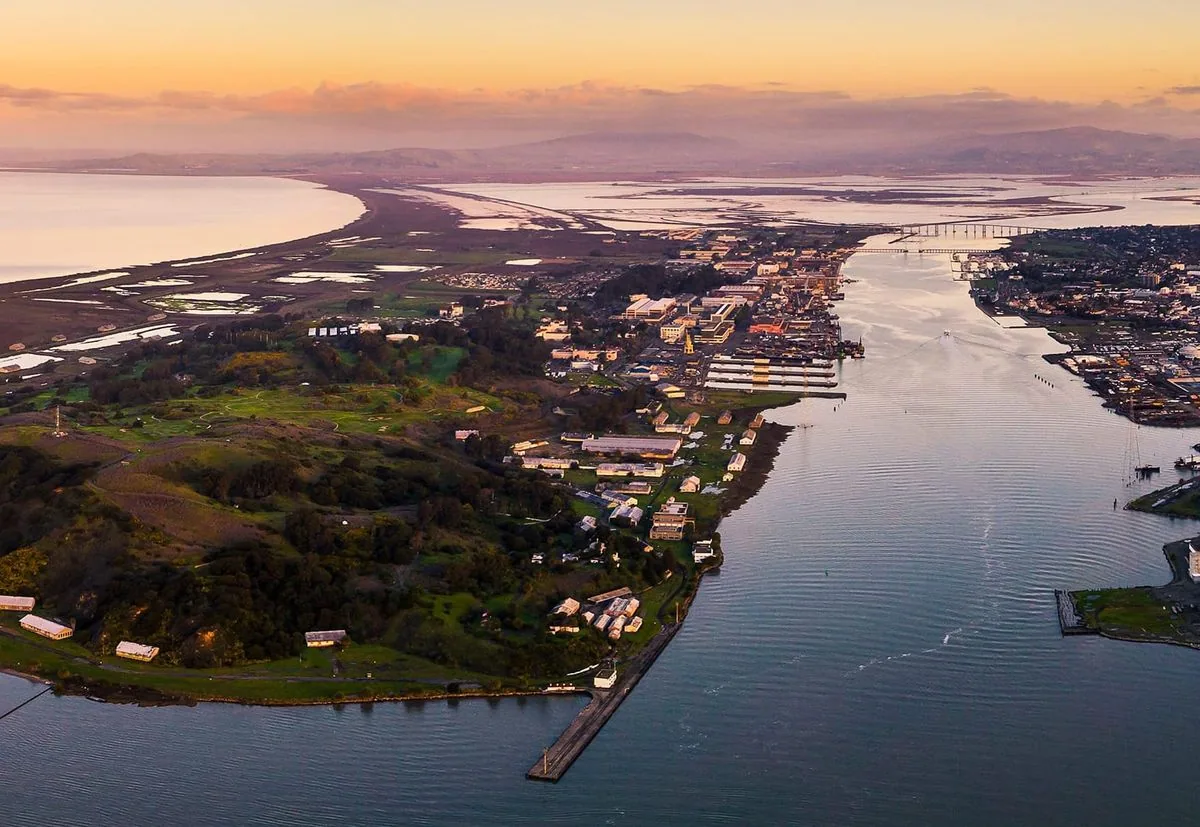
Vallejo's employment mix includes healthcare, education, recreation, and industrial activity. Mare Island's former Navy shipyard has been redeveloped for commercial and industrial uses, while the city is served by I-80, I-780, and a waterfront ferry. These citywide conditions provide context for access and operating questions, but the roof material and drainage still need confirmation at the property. Our work in neighboring Benicia follows the same distinction between finding the failure and arranging the repair.
The drain connection needs separation
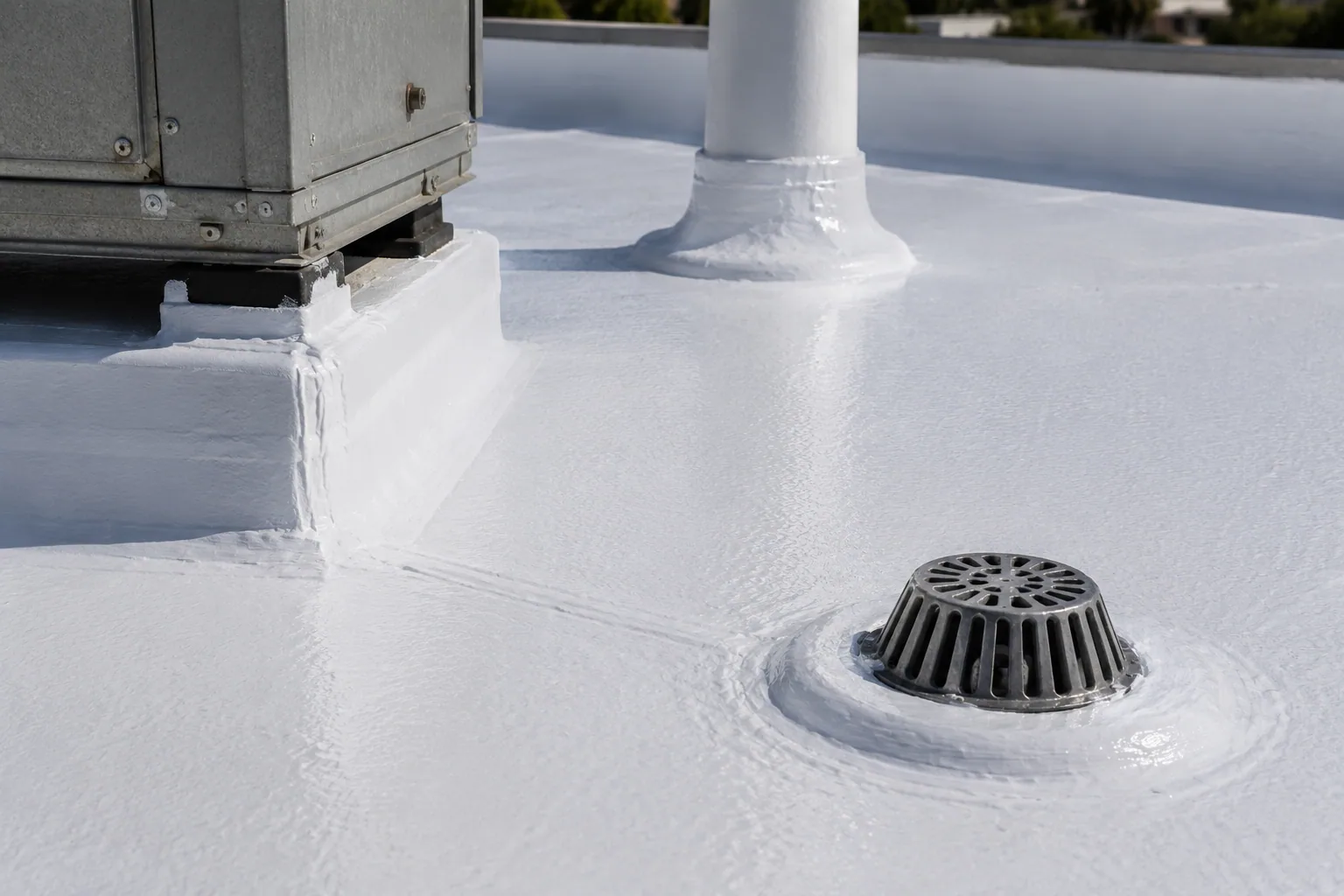
A drain bowl, its clamping ring and the membrane around it do different jobs. A gap in one does not establish that all three need replacement. We examine the visible connection and check whether the membrane is held correctly at the drain. A cracked bowl or a clog farther down the pipe needs a different repair from a torn membrane beside it. The repair description identifies the component that failed rather than calling everything a drain leak.
Water left near that connection may reflect blocked drainage, a low roof area or damaged material that has changed the surface profile. We clear the accessible obstruction where appropriate, then observe what remains. Work on roof drainage and overflow connections needs to preserve the intended discharge route. A membrane patch cannot correct an undersized outlet or a drainage layout that needs design review. Those findings enter the fix list separately so the owner can approve the right work.
The wet area sets the repair size
Softness beside a split can indicate damaged insulation, but a surface impression is not enough to map every affected layer. We compare what we see with what we know about the roof's layers and use a moisture scan or cores when needed. Limited openings may be necessary to confirm the result. The written finding distinguishes an observed opening from a suspected wet area and explains how the latter was checked before a permanent repair is selected.
Removing damaged layers changes the task below the visible membrane. We check the exposed deck and fix any rusted or soft spots before new material goes down. Replacement insulation and cover board must fit the existing assembly and support a sound transition. Our replacement of damaged insulating layers therefore includes the repair boundary, the layer arrangement and the closure detail. Spelling those out keeps a narrow surface repair from leaving wet insulation under the new membrane.
The delivery route comes first
A repair location beside a drain may be easy to identify while its material route is awkward. We check the building's available roof access, the permitted unloading position and the path between them. The owner identifies occupied rooms and any circulation that must stay open. Materials should reach the work area without turning a shared entrance or a tenant passage into an uncontrolled storage route. That arrangement belongs in the plan before the work starts.
The repair discussion near Santa Clara Street includes the entrance, the roof height and the available delivery space. We confirm those details at the building being assessed. Service arrangements for commercial properties in American Canyon include the available roof route and the position of neighboring occupied areas. Once the route is agreed, we identify how removed material leaves, where equipment is placed and what protection is needed along the path.
The transition determines the repair
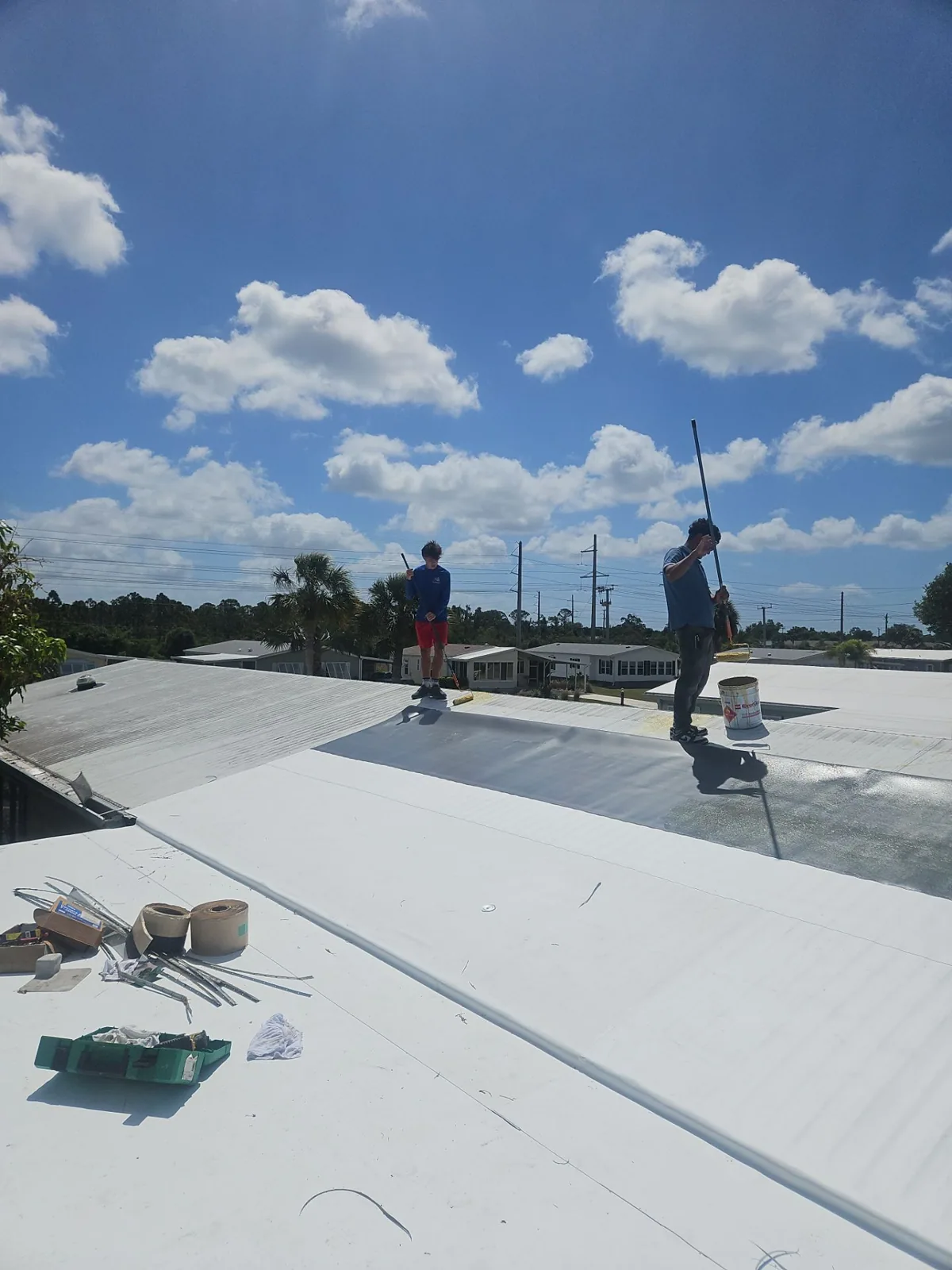
A patch attached to weakened material can fail at its new perimeter. We find solid membrane past the damaged area and identify the existing system before choosing the joining method. Thermoplastic membrane, rubber membrane and asphalt-based roofing do not share one repair procedure. Prep, compatible materials and the condition of the existing membrane decide whether the seam will hold. The scope names that seam instead of treating every roof membrane as interchangeable.
Where the drain detail cannot accept a reliable local repair, a larger replacement area may be necessary. That conclusion should follow the observed condition, including the surrounding layers and the available connection, not the size of the stain inside. Owners with PVC roof membranes need the membrane and accessory arrangement checked together. The repair is only finished once the existing membrane has been cleaned and prepped and the new piece is properly welded in.
The record separates finished work
A photo of a patched split shows a patch. It does not explain whether wet material was removed or whether the drain itself was repaired. We record the finding, the confirmed boundary and the work performed beneath the finished surface. Photographs taken during removal are useful because those layers become concealed again. The owner can then distinguish a membrane repair from drainage work and from replacement of damaged insulation when reviewing the invoice and the condition record.
A wider pattern of failure may justify planning beyond the immediate opening. Repeated detail problems, extensive confirmed moisture or a roof too worn to tie into require a broader comparison of repair and replacement. We can put those findings into a written roof condition assessment with an order of work. Urgent protection can proceed separately from that larger decision. We provide emergency response within agreed business terms, while keeping temporary closure distinct from the permanent scope.
At a drain repair, we check whether the membrane seals to the clamp ring, whether the bowl remains secure, and whether the surrounding field slopes toward the opening. A split beside a properly functioning drain may need membrane correction only. A damaged bowl or a restricted leader changes the work boundary, so the inspection records both the roof-side connection and any downstream condition that still requires confirmation.
Commercial Roofing Questions
Does a split beside the drain mean the drain must be replaced?
Not by itself. We check the membrane, the clamping ring and the drain component separately. A sound drain may accept a correctly prepared membrane repair. Damage to the bowl or an unsuitable connection changes that decision. The written scope identifies which component needs work and why.
Can the wet insulation be left beneath a new patch?
Confirmed damaged material needs its own removal and replacement decision. A new patch on top won't dry it out. We find the wet area with cores or a scan, check the exposed deck and specify the new layers for the repair.
What makes the same visible repair take longer on another building?
Access, hidden damage and the condition of the drain detail can change the work a lot. A clear material route does not eliminate a rusted deck or a difficult drain transition. We explain those separate timing drivers after examining the roof and agreeing the route through the property.
How will I know what was repaired under the membrane?
The repair record includes the confirmed layer condition and photographs made while the area was open. We distinguish material removed, components retained and the final connection. That gives you a usable account of concealed work rather than only a photograph of the finished patch.
Should I approve emergency protection and permanent work together?
They can be separate decisions. Immediate protection addresses the exposed condition, while permanent work may need investigation and a defined repair area. We explain what the temporary measure accomplishes and what remains unresolved so the next authorization follows a clear finding.
Arrange the drain repair and the material route