Local weather advisory
Coastal Flood Advisory: Commercial Roof Help in Richmond
The National Weather Service has issued a coastal flood advisory covering Richmond. Heavy rain and drainage loading can expose roof leaks, blocked drains, and ponding water. This is a weather exposure advisory; it does not establish damage to a specific roof.
Do not access a roof during hazardous weather. Protect people first, avoid water near electrical equipment, and request roofing help when conditions permit.
National Weather Service · Updated Oct 28, 2026, 7:20 AM UTC

Commercial Roof Repair in Pinole, CA
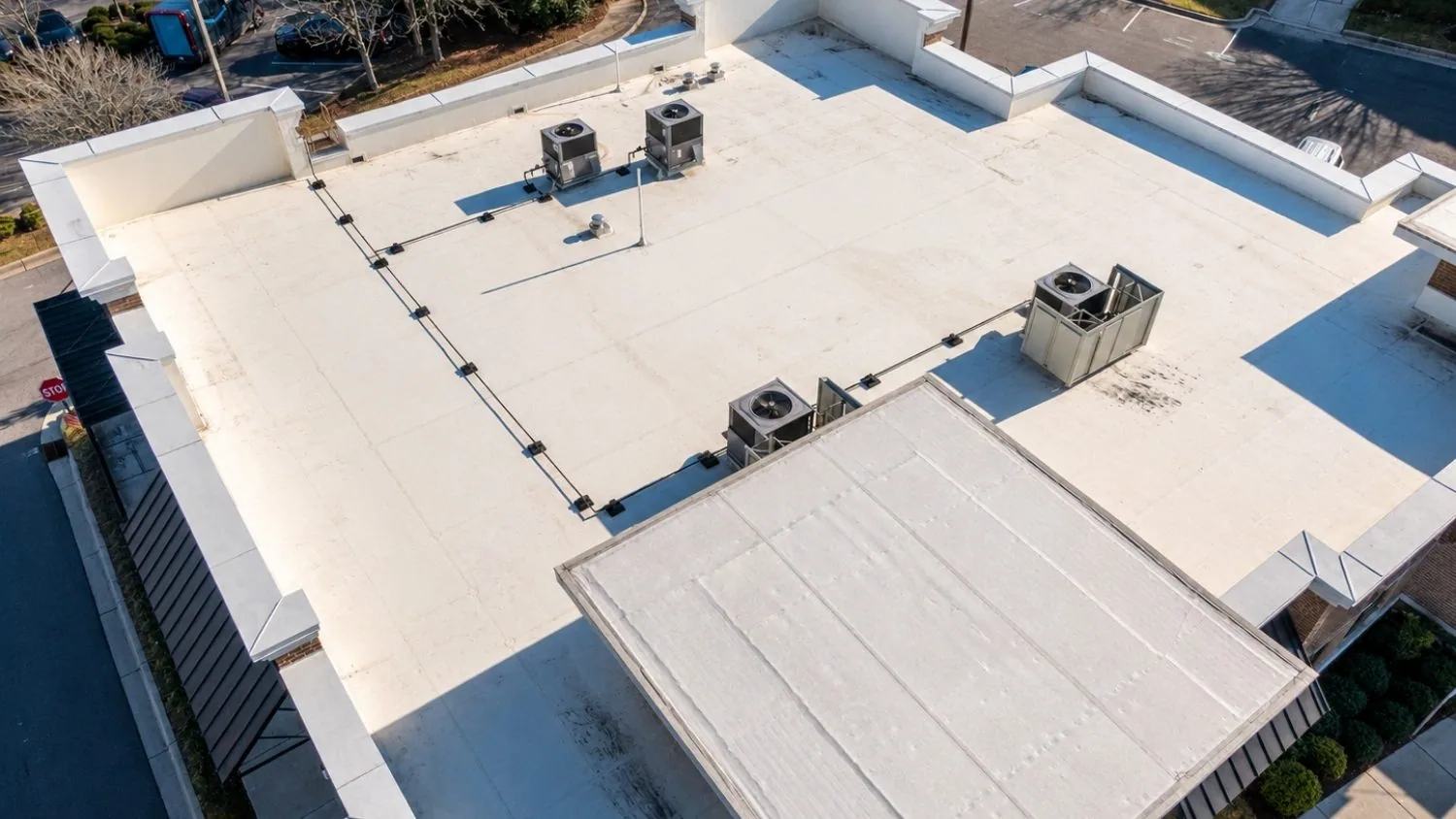
A leaking expansion joint on a Pinole commercial roof is tricky because the fix has to stop the water while still letting the building move. The joint is there so sections of the structure can shift with temperature and settling. We repair commercial roofs out of Richmond, CA, and once we have looked at the joint and the membrane around it, we can also price a wider repair or replacement for comparison. Pinole sits on San Pablo Bay, with I-80 and the Capitol Corridor rail line running through the city, and we plan roof access and material handling building by building.
The leak might come from the flexible joint cover, the membrane where it ties into the joint, or roofing next to it that has simply worn out. We check what we can reach and bring in a designer or another trade when the joint itself needs it. A lasting repair has to keep the joint flexible, not glue a stiff patch across it. Our estimate includes prep, protection and the finished detail, so you can compare a local fix with a bigger rebuild without hidden extras.
An expansion joint has a job to do
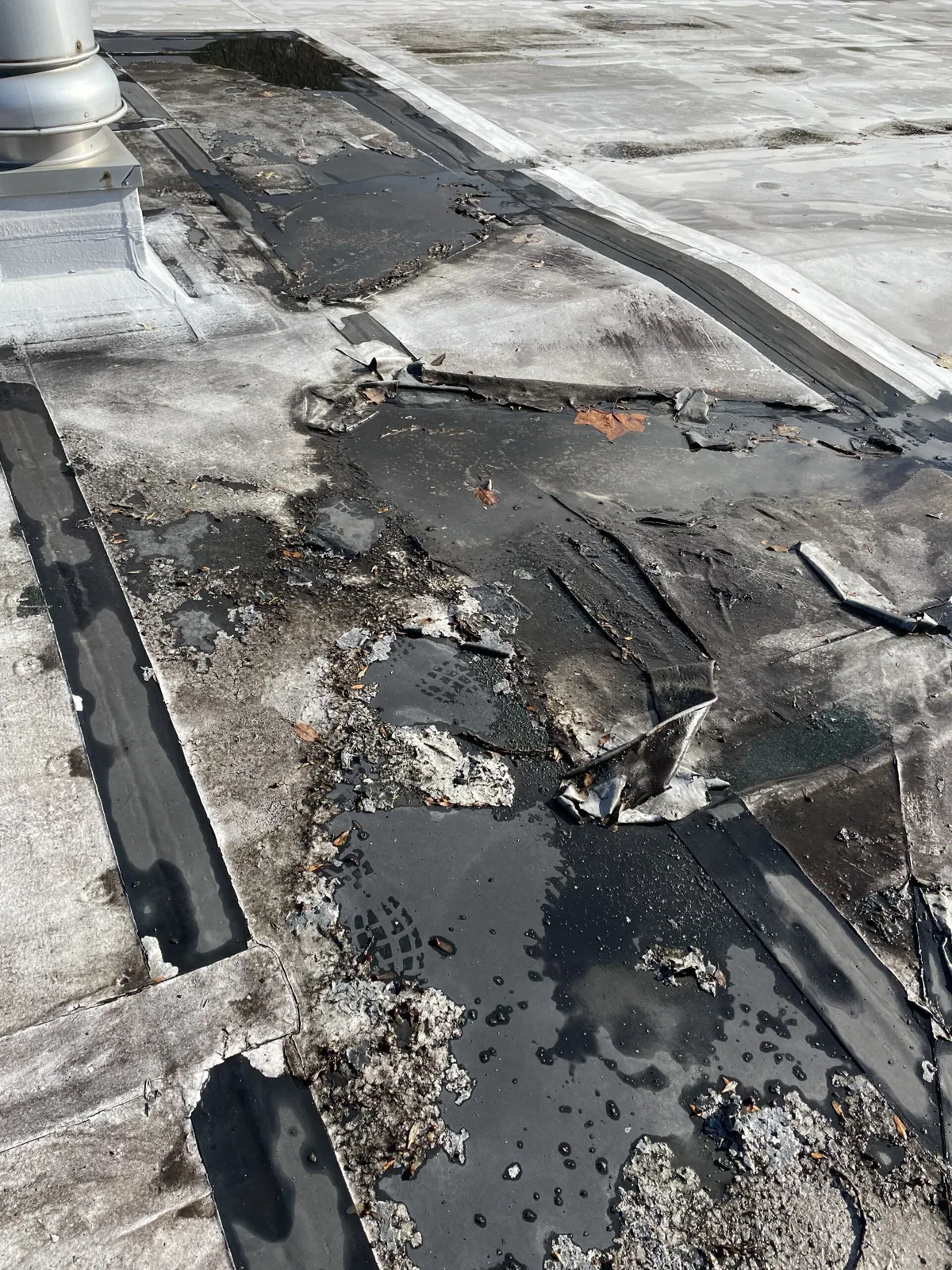
An expansion joint has to be built for the movement it is meant to take. We inspect the joint cover, its edges and the flashing on each side before proposing a repair. The membrane next to it needs to tie in without pinning the joint in place. A rigid patch across a flexible joint just moves the stress somewhere else, and the leak usually comes back nearby, under a surface that looks fine from above.
Our flashing failure repair work at expansion joints starts with what the joint needs to do. If there are open questions about movement or attachment, we bring in a design review. We explain how the new detail ties into the roof on both sides, and how that differs from a quick surface patch. You can then compare a local repair with a larger one based on whether each actually restores the joint.
The membrane beside the joint matters too
Sometimes the joint cover is still in decent shape and it is the roofing beside it that failed. We check both before deciding what to replace. Sound membrane may allow a small repair; worn membrane or an old failed patch may push the repair wider. The prep and materials follow the roof system that is actually there, not a guess based on what the joint cover looks like.
Our roof repair next to an expansion joint lists the roofing work separately from the joint itself. We point out which membrane can stay and where a closer look is still needed. A local repair can be compared with a larger rebuild, each priced with full prep and finish work. That way you keep the parts that still work, without tearing out the whole joint for no reason or leaving a failed tie-in under new material.
Water under the joint changes the repair
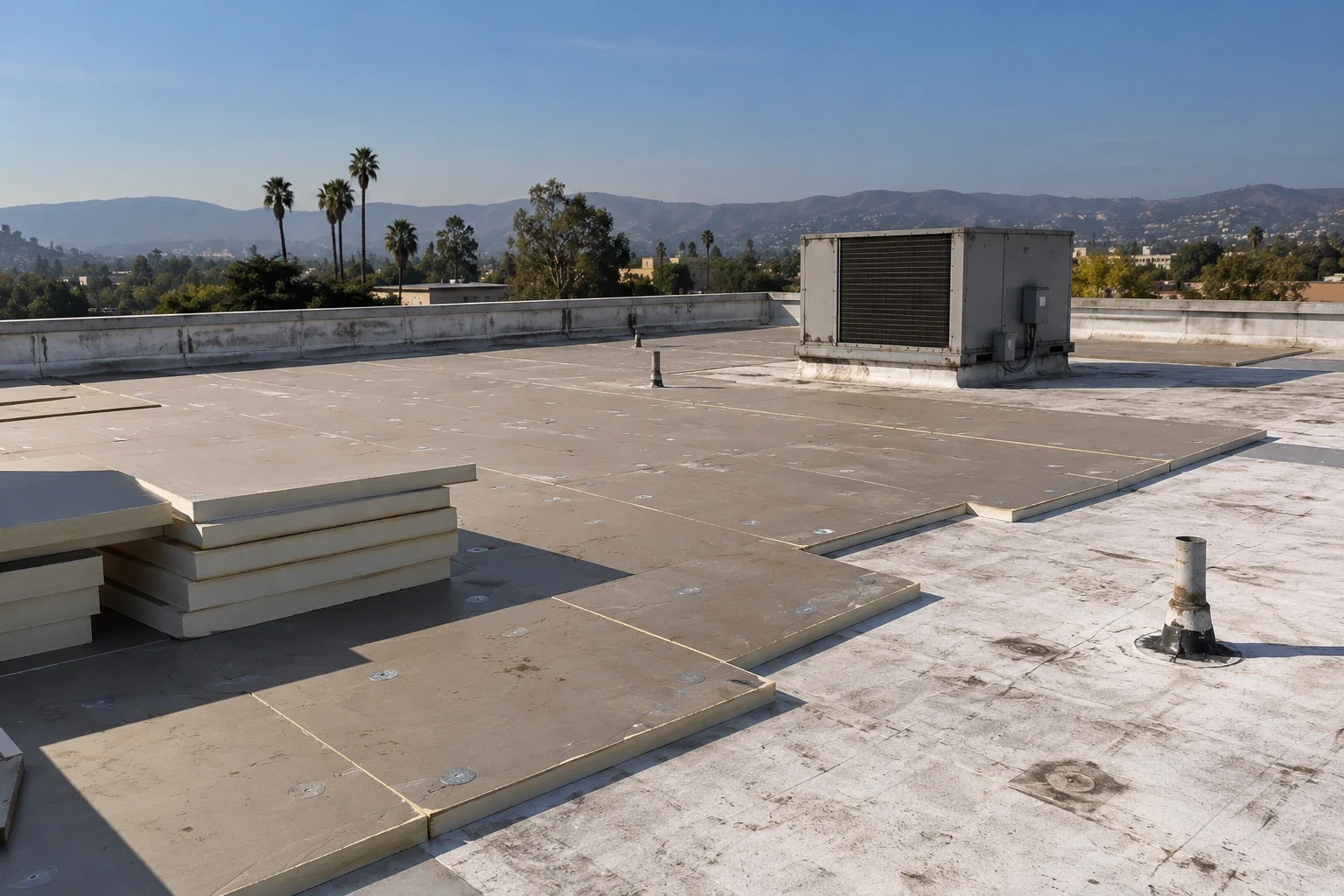
Water that gets in at an expansion joint can travel and soak insulation some distance from the visible opening. We check what we can see and take cores where we need to know what is under the roof we plan to keep. A wet reading tells us where to look; confirmed wet material is what changes the scope. Any wet or damaged insulation gets replaced before the new joint detail goes in.
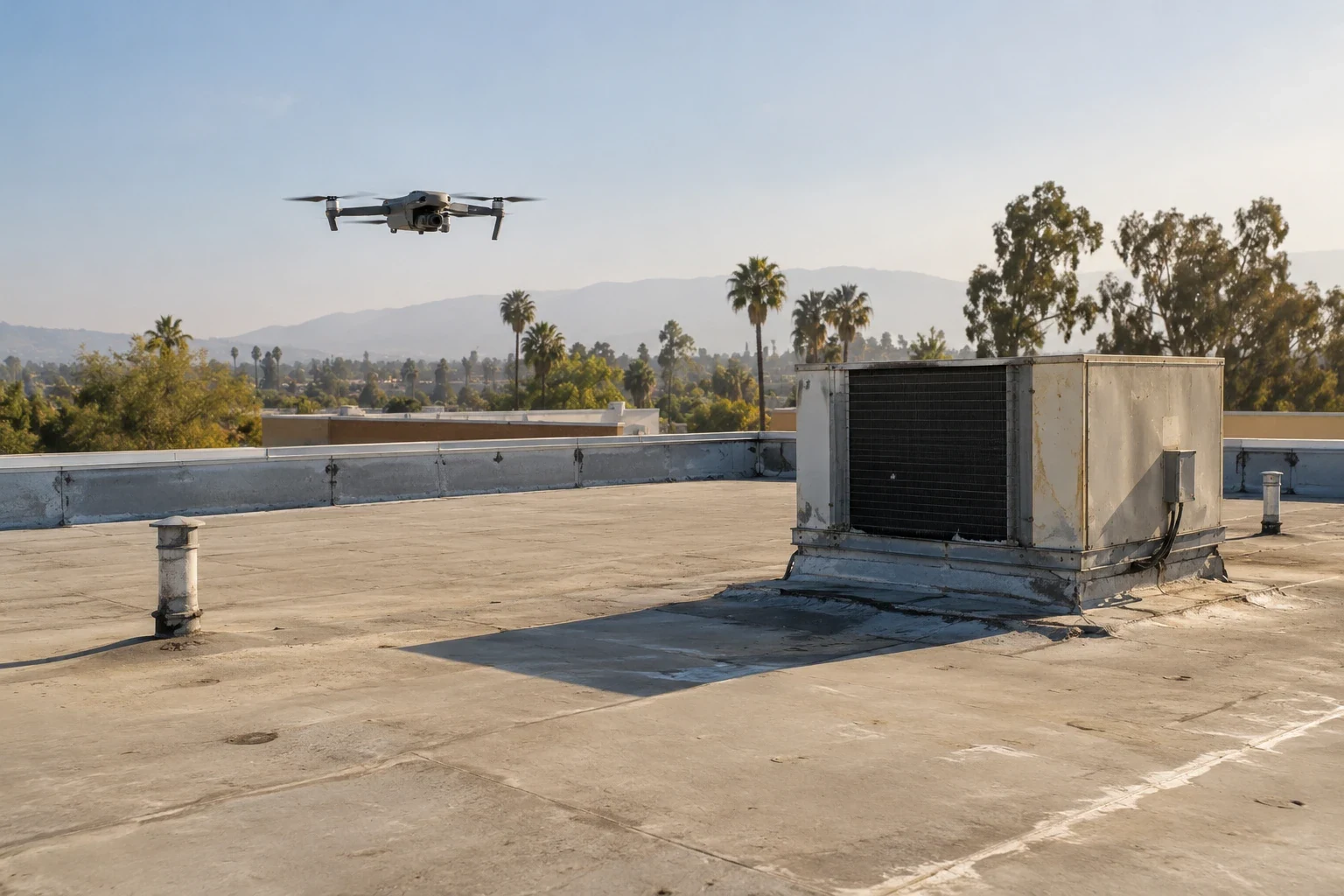
An infrared moisture scan along the joint can help when the roof type and weather allow a good reading. We explain what the scan can miss and confirm suspect areas before they become part of a tear-out. Test cuts are patched during the same visit, so the investigation and roof protection happen together.
When the test results could change whether a long run of joint can stay, we do that testing before giving you the larger price. We tell you up front what it will show and include the patching. The final price then reflects the roof as it actually is.
On the roof, water can follow the joint well past the top cover. We look at the flexible piece, both edges and the membrane nearby before deciding how much to keep. Any replacement keeps the joint free to move. The proposal covers the tie-in and the protection needed while the joint is open.
Keep the space below dry during the work
Opening an expansion joint can leave the space below exposed while several pieces are being prepped. A Pinole joint repair needs compatible flexible parts and sound membrane along the full length being fixed. We keep each open section dried in as tear-out and prep move along. Those steps, not just the length of the joint, set how long the job takes.
For roof work over occupied space, we compare doing the joint in short sections that close each day with doing it all at once. Several short visits add setup cost, while a single larger push may need tenants to adjust their schedule. We lay that out once the repair is defined. You get a realistic timeline that includes interior protection and finish work.
Every expansion joint is different
A commercial building in Hercules may have a different kind of expansion joint and a different membrane around it. We inspect it separately before suggesting the same parts. Two joints that look alike can be built for different movement. Each one gets its own repair plan, and any combined material order follows the inspection, not appearances.
If you also own a building in El Sobrante, we can look at shared purchasing or scheduling once both repairs and access routes are clear. Testing and repair costs stay listed per building. Active leaks and failed membrane come before cosmetic work. You can coordinate both jobs while each roof keeps a joint that still moves the way it should.
Commercial Roofing Questions
Can a stiff patch be used over an expansion joint?
No. The joint has to keep moving. A rigid patch pins it in place, and the stress usually cracks the roof somewhere nearby. We check how the joint is built and what movement it needs before picking a repair, and bring in a design review when needed.
Does one failed edge mean replacing the whole joint?
Not necessarily. We inspect the flexible cover and the roofing on each side separately. If the cover and most of the membrane are sound, a local repair at the failed edge often works.
How do you decide how much wet material to remove around the joint?
By confirming which insulation is actually wet, usually with core samples. A scan can point us to suspect areas, but only confirmed wet material changes the scope. The price includes prep and finish work for that area.
Why can a short joint repair take longer than expected?
Because the prep, dry-in and finish work around the joint add time beyond its visible length. We agree protection and material handling for the building, then compare schedules that keep the joint working and the space below dry.
Can two buildings use the same joint cover?
Only if inspection shows they need the same movement and tie into similar roofs. We check each joint on its own first. Joints that look alike can still need different parts and prep.
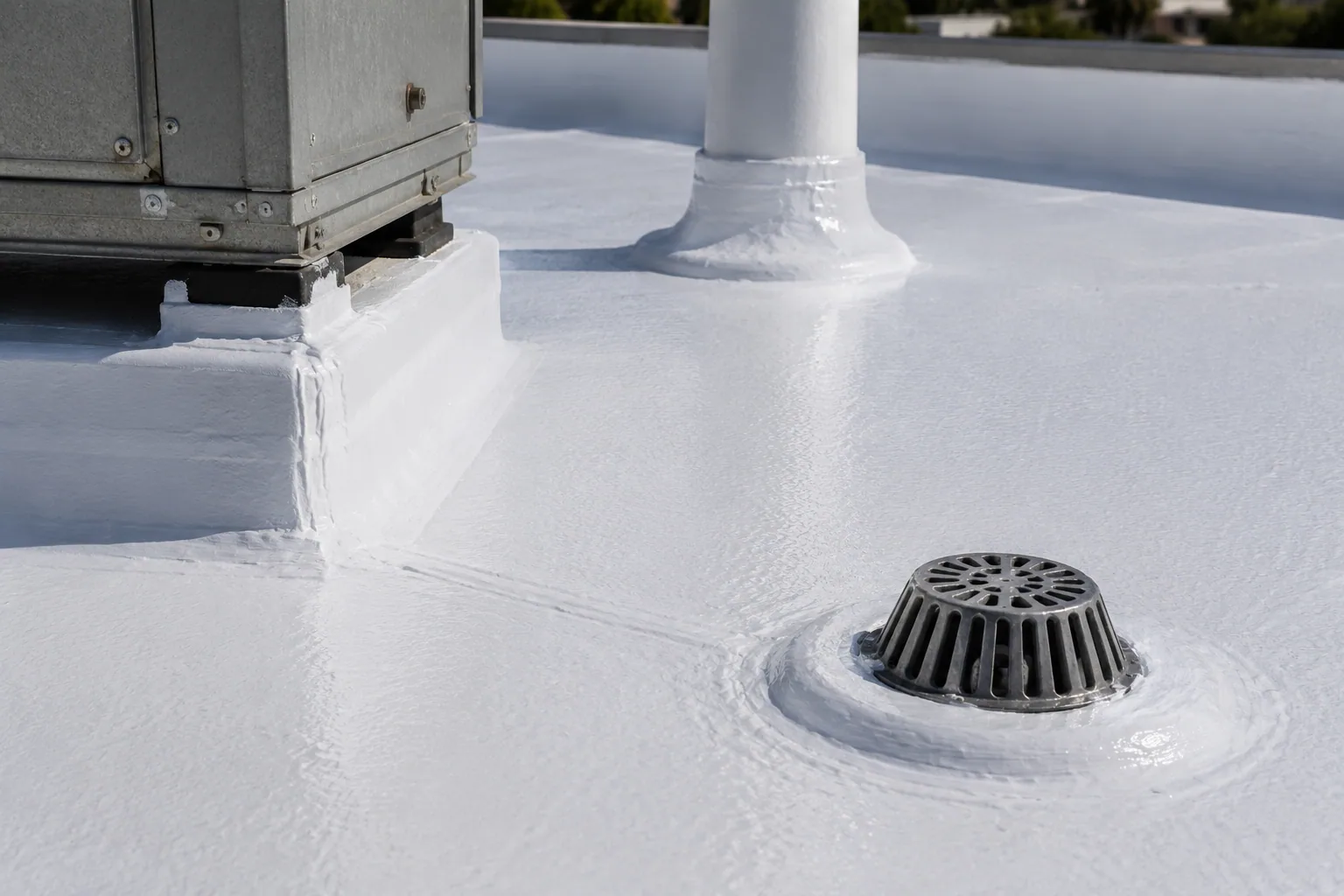

Repair the joint without locking it in place