Local weather advisory
Coastal Flood Advisory: Commercial Roof Help in Richmond
The National Weather Service has issued a coastal flood advisory covering Richmond. Heavy rain and drainage loading can expose roof leaks, blocked drains, and ponding water. This is a weather exposure advisory; it does not establish damage to a specific roof.
Do not access a roof during hazardous weather. Protect people first, avoid water near electrical equipment, and request roofing help when conditions permit.
National Weather Service · Updated Oct 28, 2026, 7:20 AM UTC

Commercial Roof Repair in El Sobrante, CA
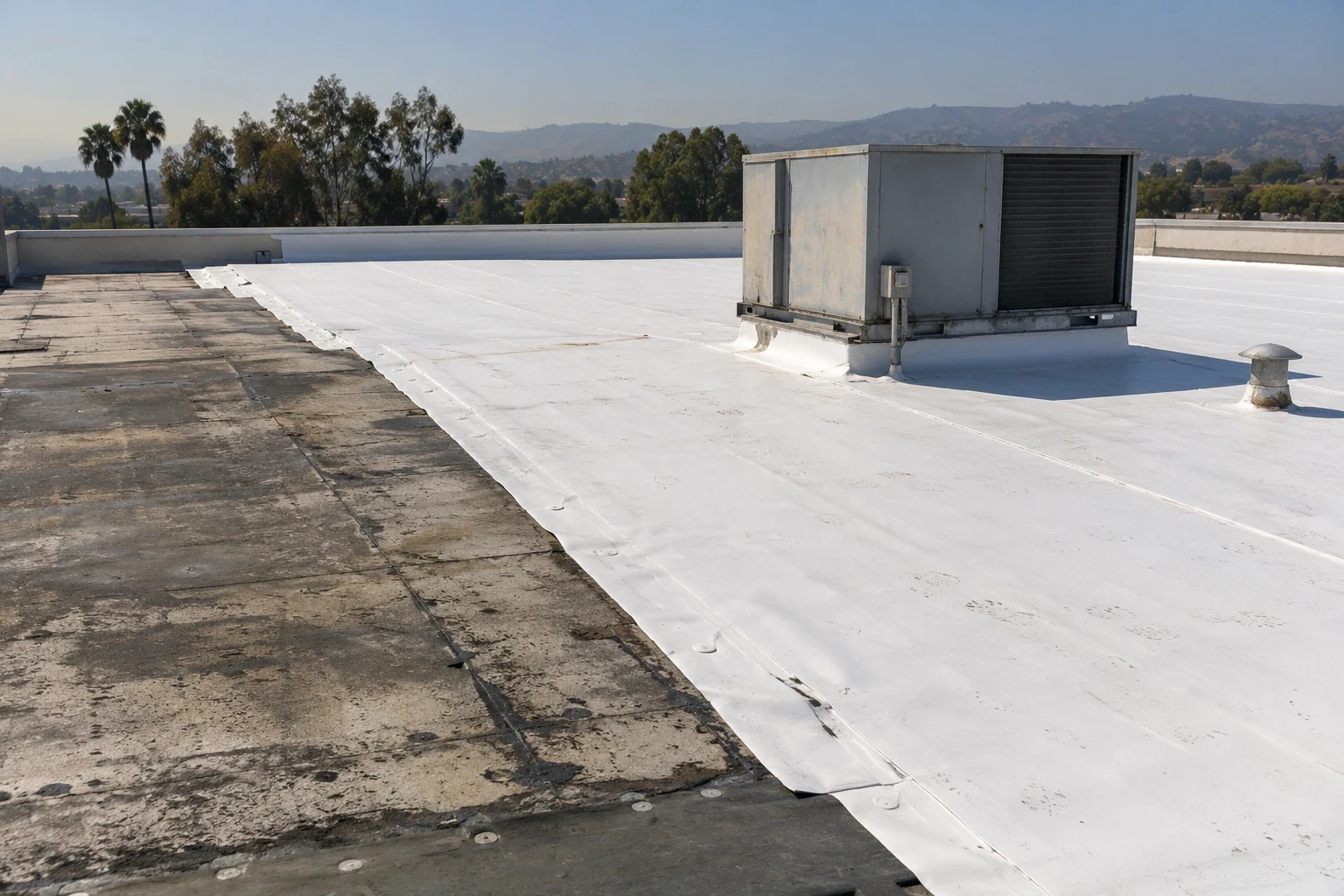
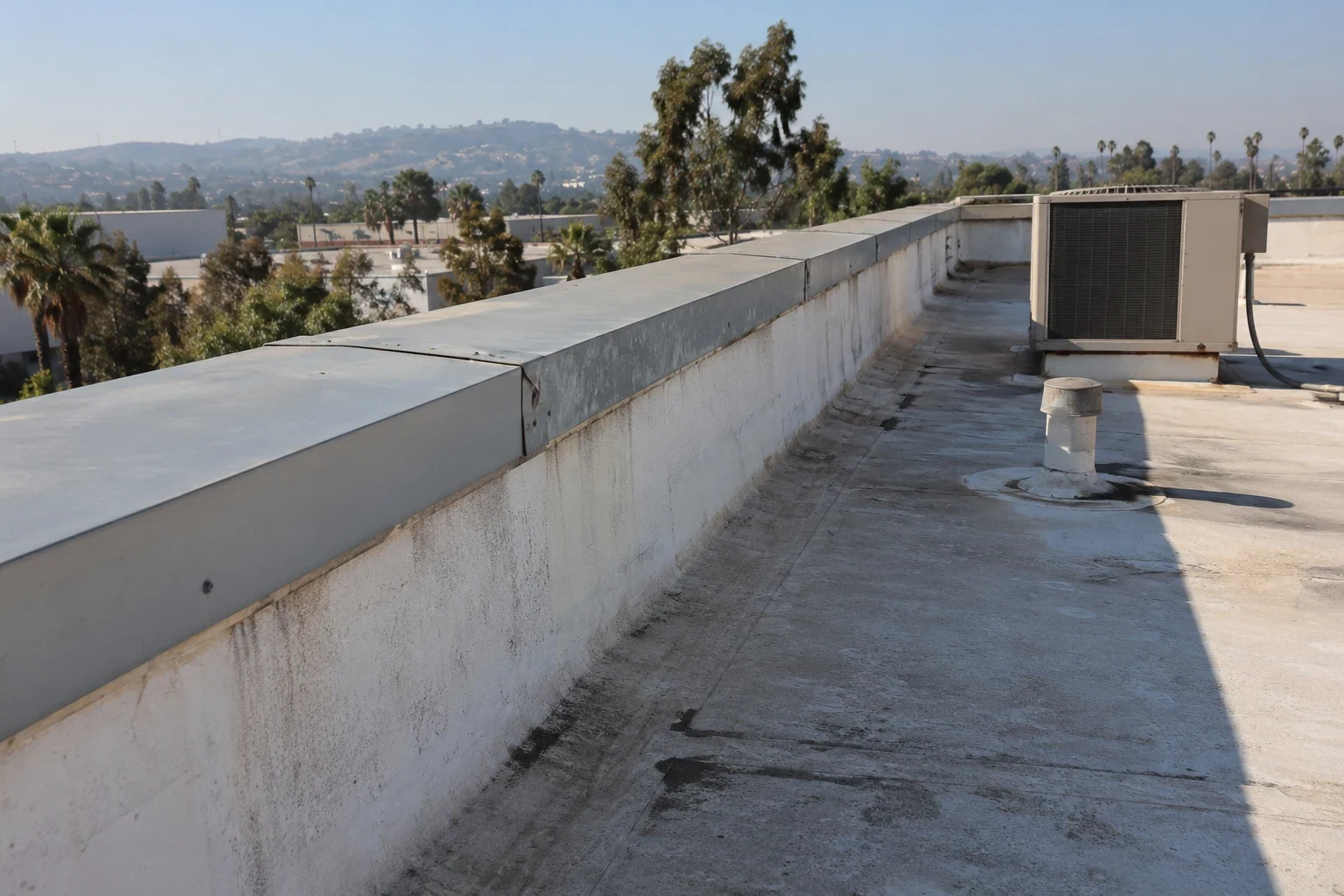
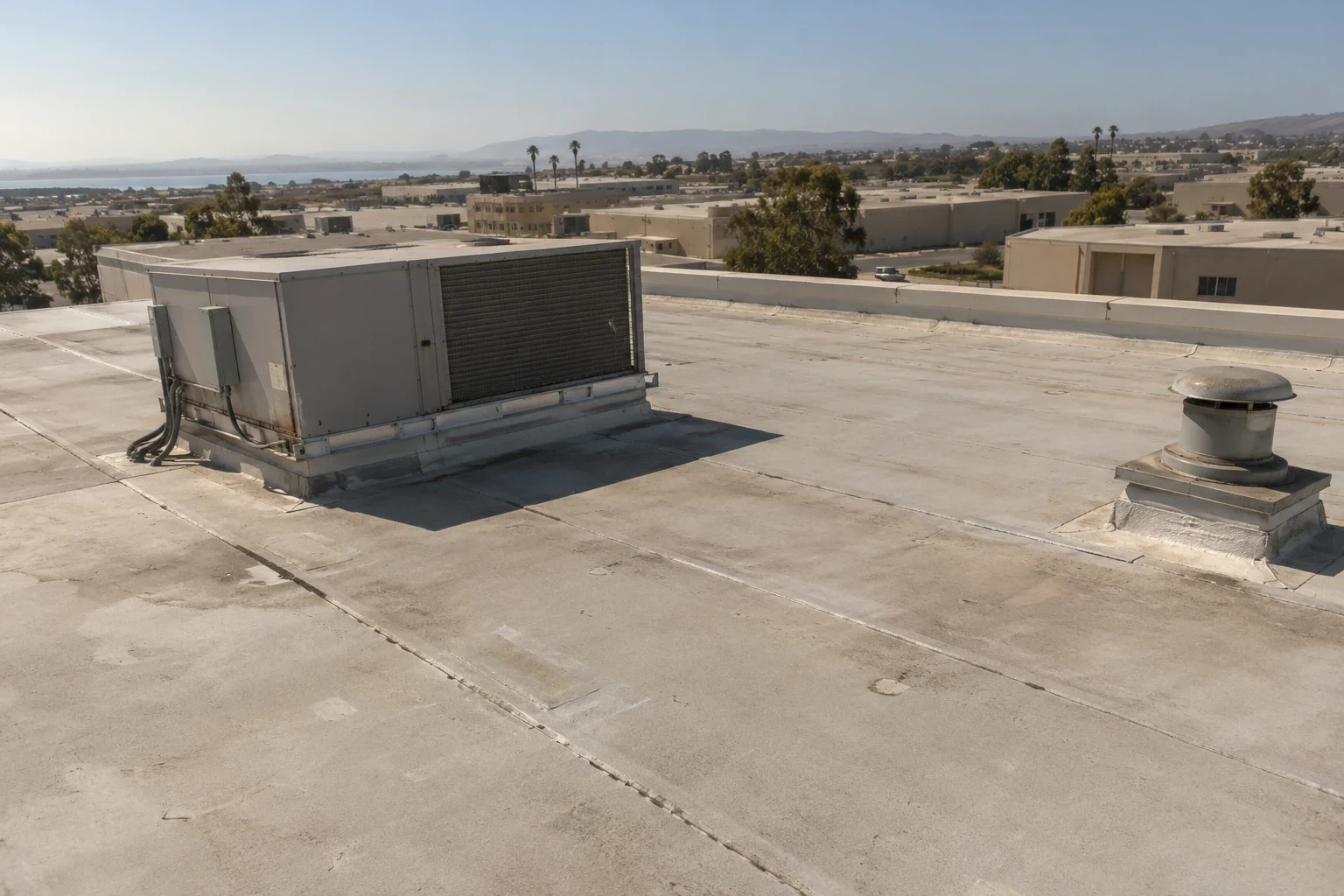
When a rooftop equipment support shifts or sinks on an El Sobrante commercial building, it can tear or crush the membrane underneath it. Water gets in, and the fix usually needs some coordination before any new roofing goes down. We inspect, repair, restore and replace commercial roofs around Richmond, CA, and with support damage we work out the order of the job first. Most buildings we serve here are along San Pablo Dam Road or near Appian Way, which both lead out toward I-80. The building, the support and the route to the roof decide how the job gets staged.
Just because the support damaged the membrane does not mean roofing is the only work needed. We look at the damage and decide whether the HVAC contractor or an engineer needs to weigh in on the support itself, especially if it is carrying a heavy unit. The new roofing goes in after that work is done, so it is not disturbed later. Our estimate covers the coordination, the prep and a watertight finish. That lets you compare a local repair with a larger replacement honestly, rather than paying for a patch that leaves a bad support sitting on top of it.
The support arrangement needs a separate decision
Sometimes a support has to be raised, reset or rebuilt before the roof under it can be fixed. We look at how it is set up and figure out who needs to be involved, usually the mechanical contractor and sometimes a structural engineer. A roof patch cannot fix a support that is sinking or overloaded. We keep the roofing work and the support work as separate line items, but we schedule them together.
Our rooftop curb and equipment support work ties that support fix into the tear-off and close-up order. We mark which part of the roof the equipment work will affect and what roof detail goes back afterward. You can compare doing everything at once with checking the support first. That way the price covers both pieces clearly, instead of a small patch that ignores a support problem and gets torn up again later.
How far the membrane damage goes
The tear under a support is often bigger than the spot where the support touches the roof. Rubbing, crushing and ponding water can damage the membrane around it too. We inspect the surrounding membrane and identify the roof type before choosing how to repair it. The patch has to tie into sound membrane, and its size comes from what we find, not from the size of the support's footprint.
Our membrane puncture and tear repair includes cutting out the damaged area and installing new membrane. We tell you what can stay and where a closer look might make the job bigger. A small patch is compared with a larger repair, with prep and sealing included either way. You keep good roofing in place where you can, and you see the full repair up front instead of a single patch outline drawn before anyone checked what is under it.
What is under the membrane matters
Water that gets in under a support can soak insulation well beyond the support itself. We look for wet spots and soft areas, and where the plan depends on what is underneath, we cut a core or open a small area to check. A meter reading tells us where to look. It does not set the size of the tear-out. Anything we confirm is wet or crushed gets replaced before the new membrane goes on.
An infrared moisture survey can help on the right roof in the right weather. We explain what the results mean and where they can be off before using them to price the job. Then you can compare a small repair with a bigger one based on what is actually wet. Any test holes get sealed right away, and the permanent repair follows the option you pick, so a clean new surface does not end up hiding wet insulation.
If checking one support could change the recommendation for the whole roof, we will say what that check is meant to answer before you commit to a bigger job. We explain the scope of the test and how it will be sealed. Every other repair still follows what we find in that spot, and the roof stays protected while the results come in.
A support affects the roof in three ways: the weight it carries, how it is attached and how it is flashed. We keep those questions separate. If load is a concern, an engineer looks at it first, and the roofing tear-out is defined on its own. New membrane should not go down around a support that still needs to be moved or reset. The work order lists who disconnects the unit, how the roof is protected and how the support is flashed, so each trade finishes its part in order.
The service sequence affects roofing closure
If the HVAC contractor adjusts a support after new roofing is down, they can damage the new flashing. In El Sobrante, as anywhere, equipment work should happen before the new flashing goes in if it might disturb the curb detail later. The room below decides how much protection is needed and whether any shutdown is required. We keep the roof temporarily sealed while the equipment work happens, then prep and install the permanent roofing once the support is final.
For roof repairs over occupied space, we compare small sections that close up each day with one larger job when that works. Separate visits can answer the support question before you commit, but they add setup cost. Doing it all at once can save trips once everyone knows what needs doing. We show both options with protection and the equipment coordination included, not a schedule based only on laying down a patch.
Every equipment support is different
A roof in Kensington might show the same kind of damage under a support, with a different support and a different roof system. We inspect each one before recommending the same materials or the same steps. Similar marks on the membrane do not mean the same support setup or the same tear-out size. Each estimate lists its own prep, any engineering review and who handles the equipment, so material orders follow what we find.
If you also have a building in Pinole, we can look at sharing setup once the support fix and access are worked out. Testing, tear-out and protection costs stay listed separately for each roof. Active leaks and wet insulation get fixed before any coating work. That lets you line up the jobs sensibly, keep small repairs small where possible, and let each roof's equipment work set its own order.
Commercial Roofing Questions
Can roof repair fix a bad equipment support?
No. Roofing fixes the membrane and flashing around the support. If the support is sinking, overloaded or poorly built, the mechanical contractor or an engineer needs to fix it. We coordinate with them and keep the roof protected until the support is final.
What sets the repair size under the support?
The extent of damaged membrane and any wet or crushed insulation around it. We check both, then choose a repair method that fits the roof type. The repair often extends past the support's footprint so it ties into good membrane.
Does moisture near a support mean a large tear-off?
Not necessarily. What we confirm is wet decides the size. We explain how we test and what the results can miss. A meter reading tells us where to check, not that everything around the support has to come out.
Why does equipment work come before the roof repair?
Because moving or adjusting a support after new roofing is down can tear the new flashing. We agree on the equipment work and who handles it first, keep the roof temporarily sealed, then install the permanent roofing once the support is set.
Can several support repairs share materials and setup?
Yes, once each roof and support has been inspected. We keep each repair's tear-out, equipment work and protection separate, then group material orders and visits where the conditions really match.
Fix the support first, then the roof