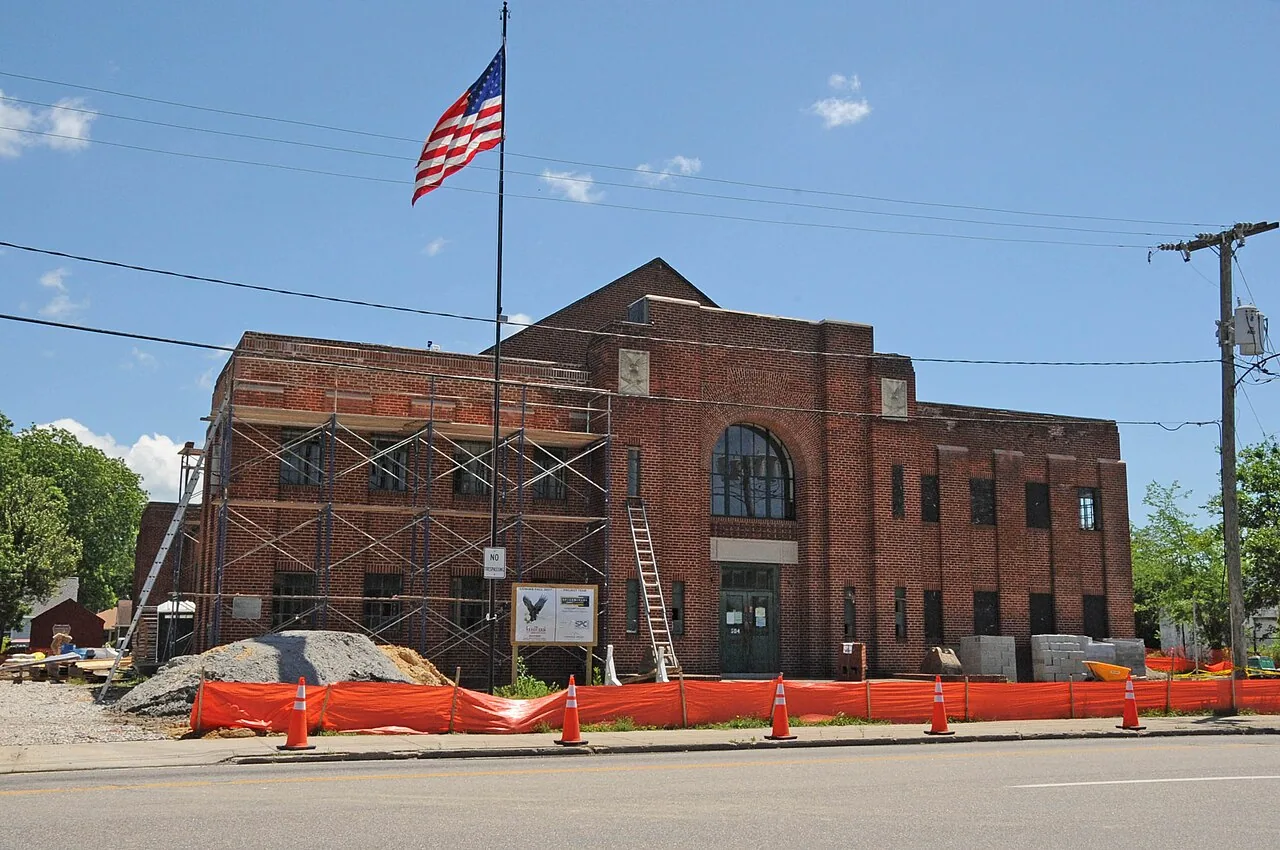
National Guard Armory Roofing in Richmond, CA
Armories are often older masonry buildings with tall parapet walls around a large drill floor roof. The most common leak is where the roof membrane turns up the wall. Over the years the base flashing pulls loose, the counterflashing or reglet above it cracks, and mortar joints in the wall open up and let water in behind the flashing. That makes it two jobs: the roofing repair at the base of the wall, and masonry or wall repairs above it that a mason or wall contractor should handle. We inspect both, tell you which is causing the leak, and plan the work around the access rules for the building.
For armory roof work in Pittsburg and around the region, the building and its access rules shape how the work is done. Some armories, like the one on Power Avenue in Pittsburg, are historic buildings, which can affect what materials and details are acceptable on the walls. Send us the leak locations and any construction records. We inspect the roof before recommending a repair, and wall, equipment and design questions go to the right professionals. The facility's staff set protection and material handling based on how the building is used. The price follows what we find at the roof-to-wall joint, including patching any test openings.
Roof flashing and wall repairs are separate jobs
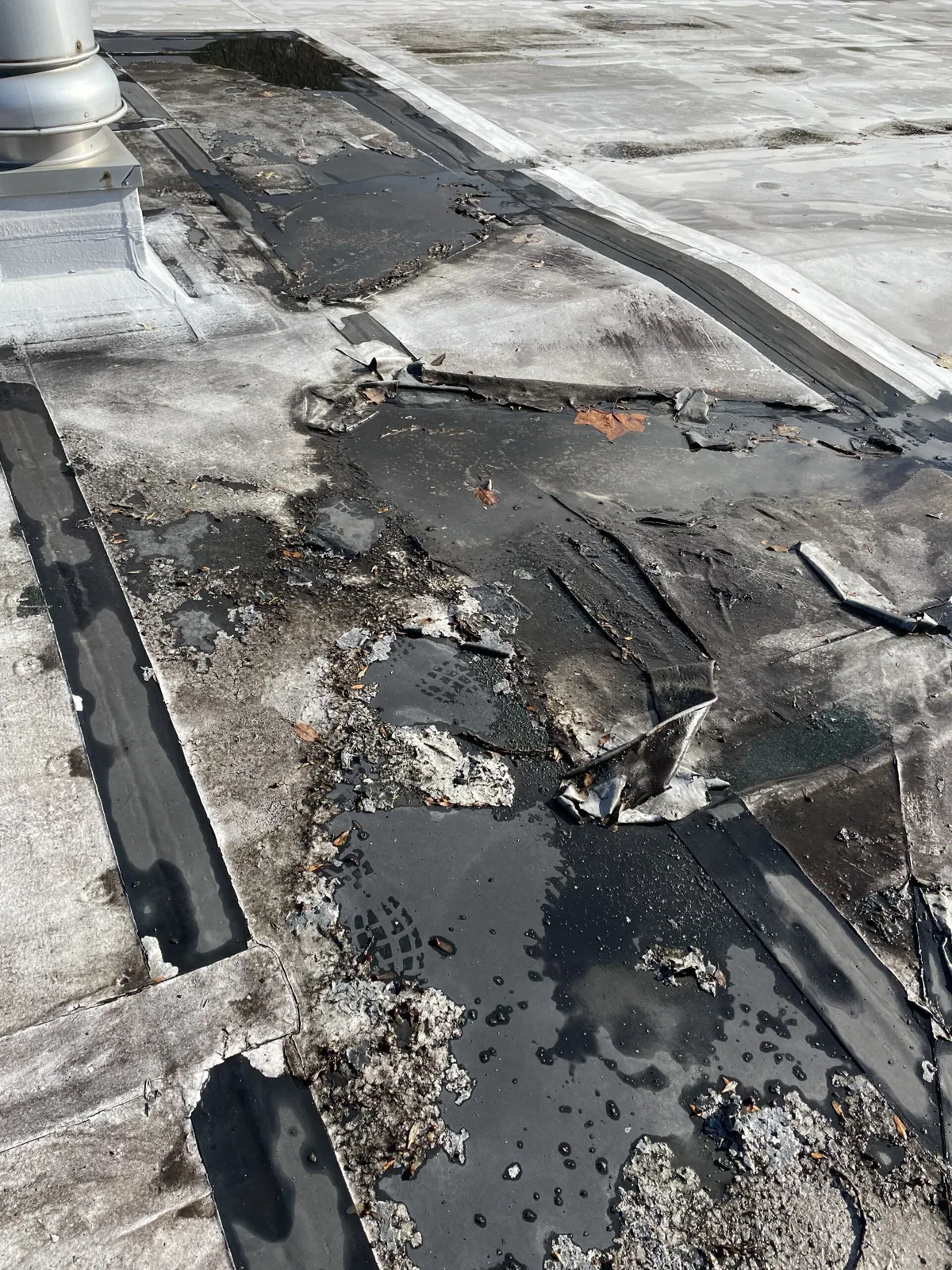
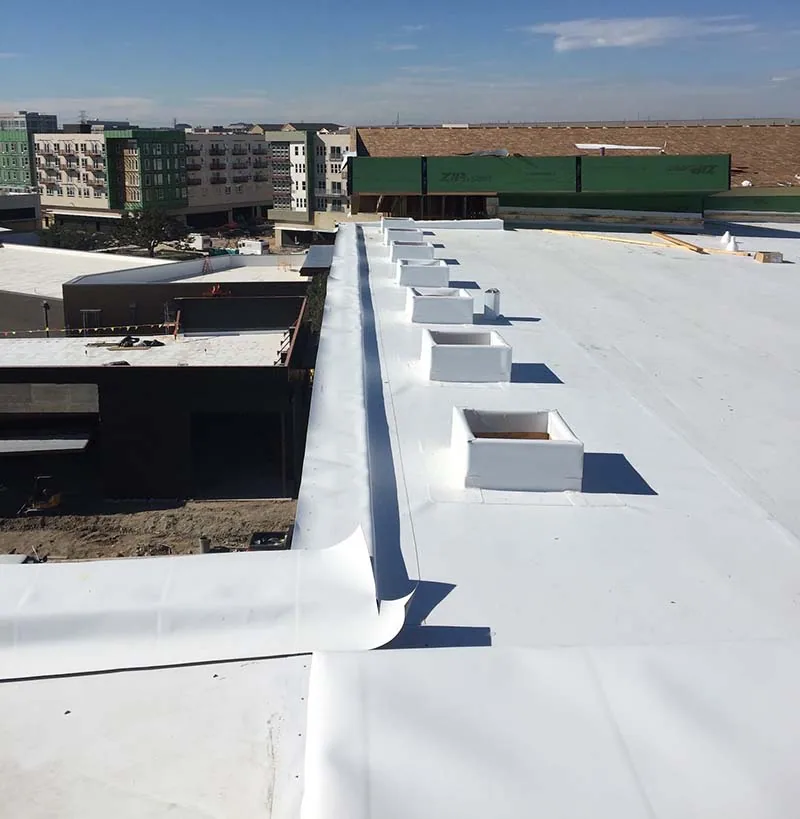
The membrane at the base of a wall can split while the wall above it is also letting water in. Flashing failure repair at roof-to-wall joints checks the base flashing, the counterflashing and the wall surface. We separate the roofing work from masonry or coping repairs that belong to another trade. If the wall moves or needs a new connection detail, the designer decides. New flashing over a cracked wall will not keep water out, so the bid lists the wall work in the order it needs to happen.
The membrane at the wall also has to be in good enough shape for the new flashing. Raised wall and curb flashing work identifies membrane that can still be used. TPO and PVC flashings are heat-welded to clean, sound sheet; other roofs use their own methods. We remove membrane that cannot hold a lasting repair and clean what can stay. A repair priced only along the visible split can stop before reaching sound roofing, so the price covers the full length that needs new flashing.
What sits behind the flashing
The wood nailers, insulation and deck behind a leaking wall flashing are often wet or rotted even when the surface looks fine. Insulation and cover board repair starts with checking what is actually there. Structural and load questions go to an engineer, which matters on older armory decks. We explain which findings make the repair larger. Any opening we make is patched, and building staff review protection inside. The surface cannot tell you everything that is hidden, so the price is tied to what we actually find along that wall.
Infrared scans can point to wet areas, but the results depend on how the roof is built and the conditions during the scan. We confirm with core cuts wherever the decision to keep insulation depends on it. A scan helps us decide where to look but does not prove the condition of the whole roof. Each confirmed finding is tied to the part of the price it changes, and test openings are patched. Building staff review protection for the space below. You get a comparison that includes dry insulation and proper flashing, instead of a coating that leaves the real question unanswered.
Access and protection at the armory
Opening the roof at a wall can affect drill floors, offices or storage areas beyond where the leak was reported. For roofing on military installations, we share the planned openings, debris routes and material handling with the building's staff. They set access and protection rules, and any procedures tied to military operations stay with them. Electrical and equipment issues go to the right trades. Patching test openings is included in our price, so the cost ties to the actual wall repair and the rooms below.
If more damage turns up, the work may reach another area or change how material is delivered. We explain the larger area before removing more roof, and staff review access and protection. Temporary roofing may stay in place while a wall repair or design question gets resolved. The building contact tells us about drill schedules, access and the protection needed for the roof work, and arranges our inspection. Electricians handle any affected equipment. Temporary patches are recorded separately from finished roof-to-wall repairs.
Comparing a wall repair with a reroof
A new roof or added insulation raises the roof surface, which can shorten the flashing height at the walls and affect drains and equipment. The designer and other trades decide on those changes. We list the wall flashing work for each option before comparing a full reroof with a local repair. Every option needs sound insulation and a work plan that fits the building's access rules. A new roof that runs up to a wall still waiting on masonry repair leaves the leak in place, so the wall work belongs in every option.
Final photos show the new wall flashing and the condition of the wall above it, with any masonry or design items still pending listed separately. Temporary protection is noted apart from finished work. Future repairs can start from the insulation we confirmed and any wall item still waiting. Protection notes stay with the area that was opened, and future work in another part of the building gets its own review. That record makes it clear what was finished and what still needs attention after the crew leaves.
Armory roofing in the region
For National Guard armory roofing in Pittsburg and elsewhere in the area, the building and its access rules shape the work. Send us the leak locations and any records. We inspect the roof before choosing a repair. Building staff review protection and material access, and wall repairs are listed beside the roofing. Test openings are patched, and the work follows the right order: wall repairs, then insulation, then flashing.
Other public and military buildings have similar roof-to-wall details with different rules. A government building roof often sits over public spaces with set hours. An Army installation roof comes with base access and approval steps. We document each armory repair on its own, so a future project starts from what we actually inspected there. Another building that looks similar may have very different insulation and protection needs.
Commercial Roofing Questions
Can one new layer fix both the roof and the wall?
No. The wall above the flashing may need masonry or coping work from another trade. We fix the roof flashing once the wall is sound.
What makes the repair at the wall larger?
Wet insulation or rotted nailers behind the flashing. We confirm with core cuts and patch each opening as part of the work.
What happens if more roof needs to be opened?
We stop and show building staff the larger area. They review protection and access before we go further.
What gets recorded if a temporary repair stays in place?
The wall or insulation item holding up the permanent fix, plus photos of the finished roof-to-wall work kept separate from the temporary patch.
Tell us about the armory walls and access